
Written and Analyzed By Joe Pasma, PE | PGS Consulting LLC, Licensed Professional Engineer | 40+ Years in SIP Engineering, Manufacturing, and Forensic Analysis | Published October 9, 2026
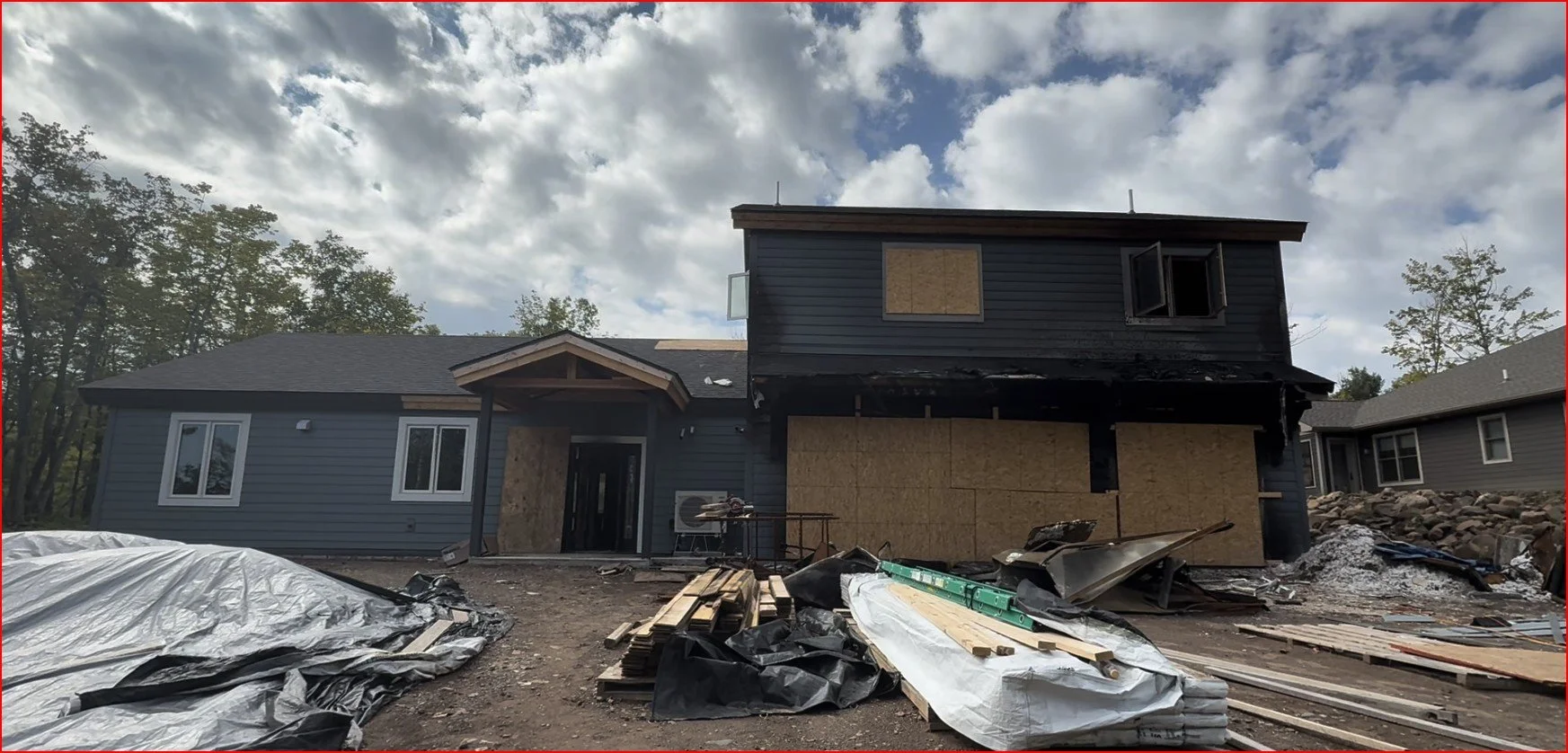
House Fire Involving SIP Roof and Wall Panels
When a house built with structural insulated panels (SIPs) catches fire, everyone asks the same question: does the whole thing have to come down? In this case, the answer was no. Some panels had to be replaced. Many others came through the fire structurally sound, sometimes just a few feet from areas that burned badly.
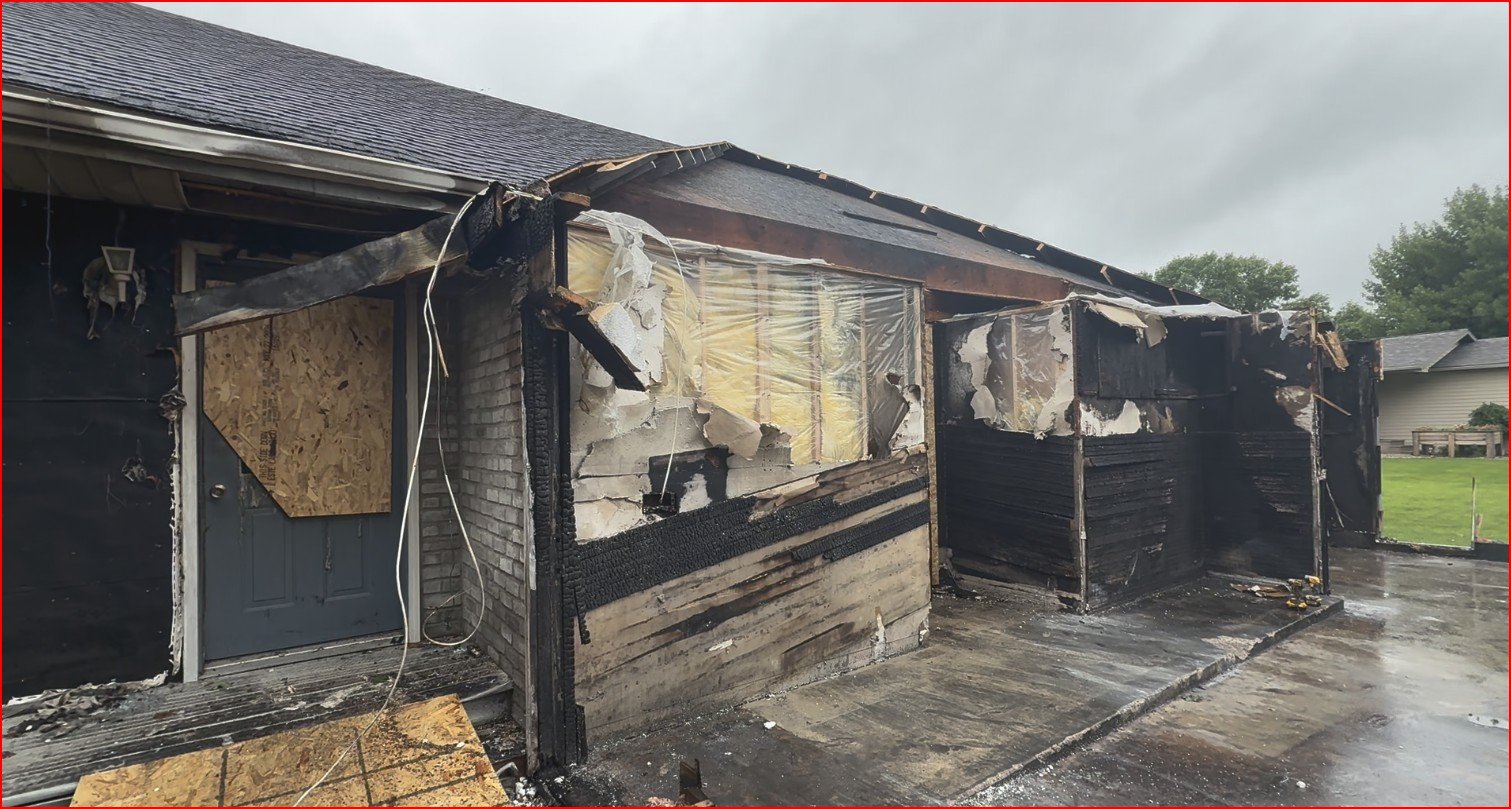
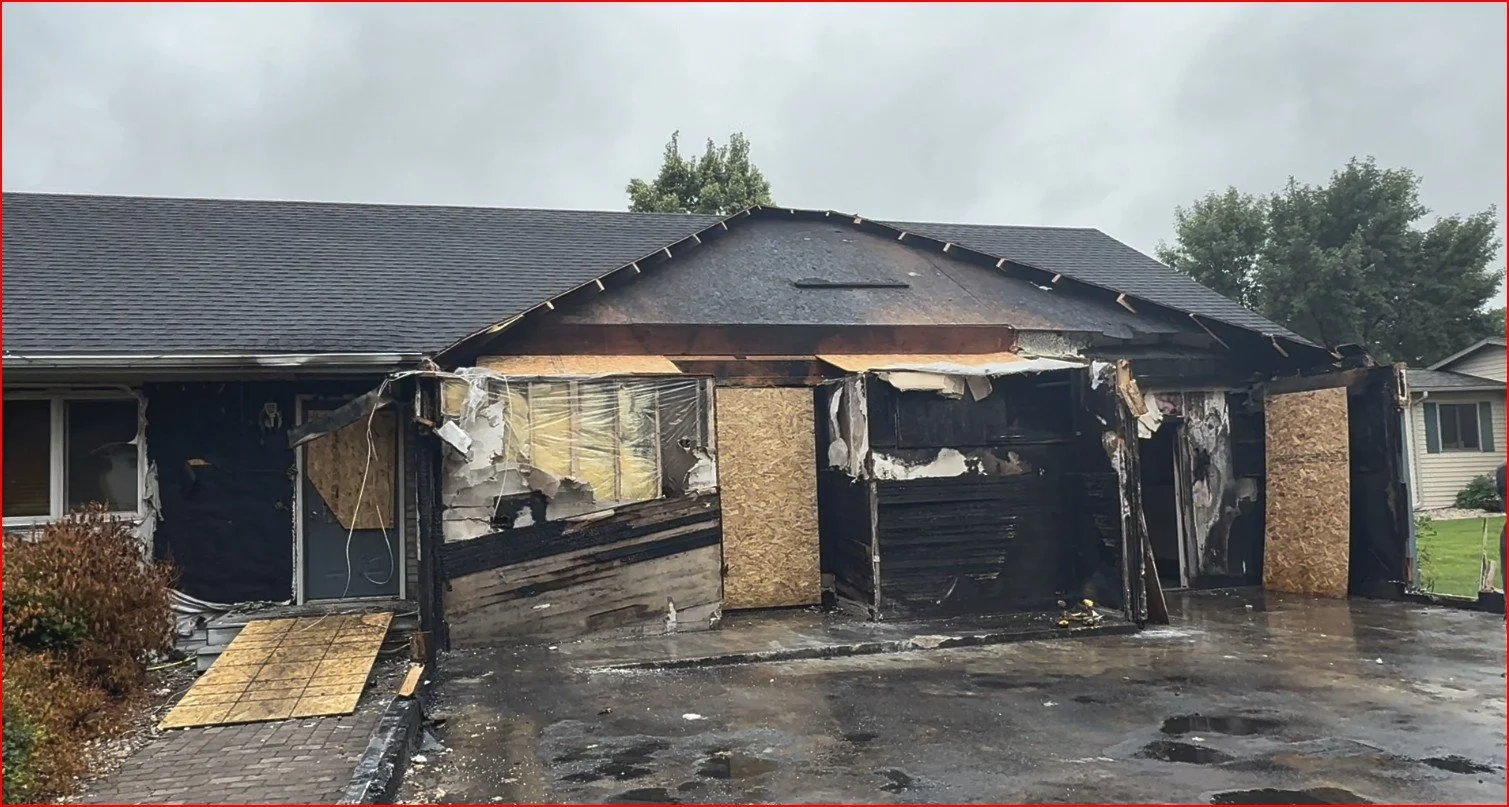
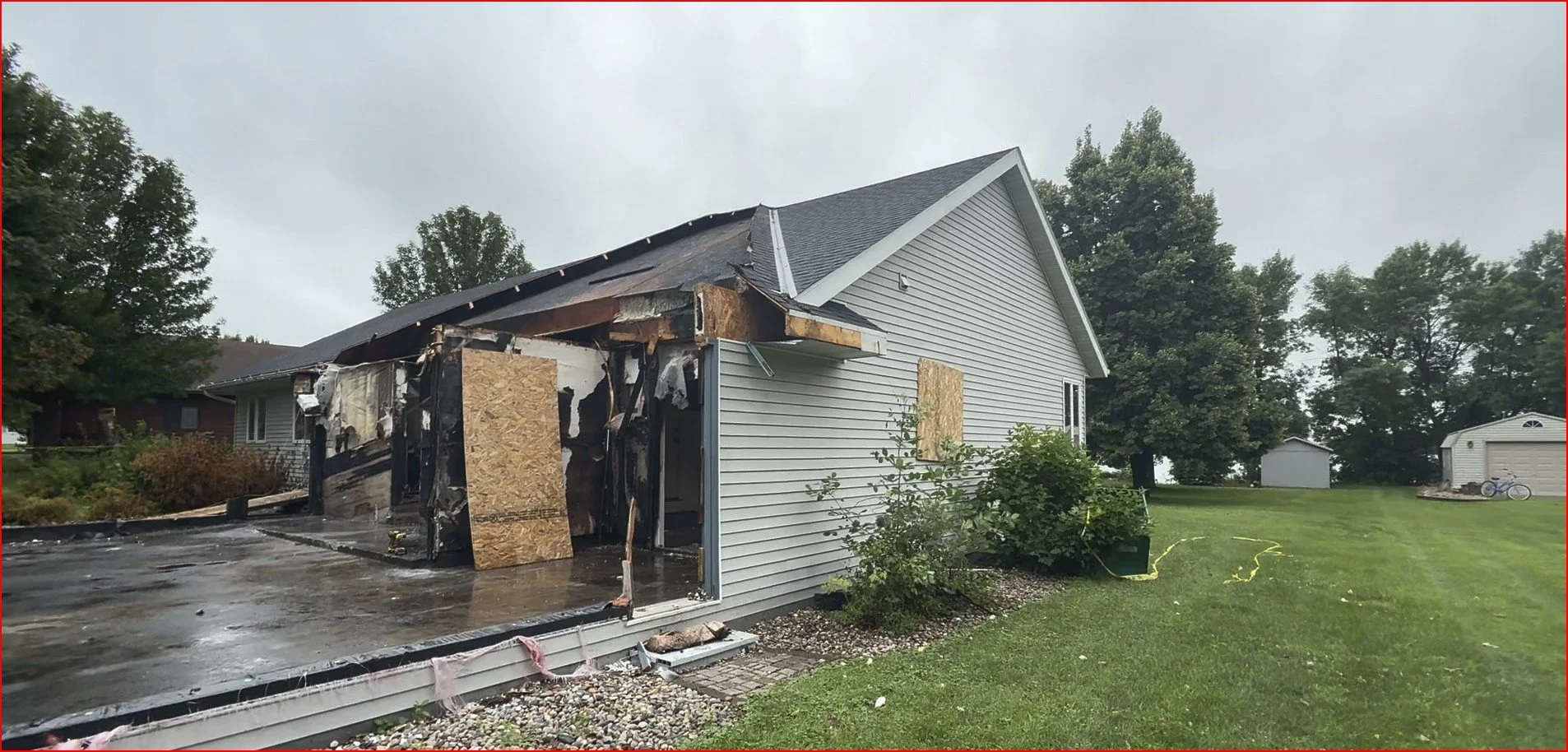
In August 2026, PGS Consulting LLC investigated a residential SIP fire in Duluth, Minnesota. The home was nearing completion but was still under construction. The fire started in the garage and spread into parts of the home and garage's SIP walls and roof. We cut 18 core samples, reviewed 87 videos, and went room by room to sort out what was damaged, what wasn't, and why.
If you read our SIP Fire Myths article, this is the house behind it. Below is the full room-by-room breakdown, so you can see exactly what fire does to a SIP and what it doesn’t.
← Swipe to view full table →
| Detail | Summary |
|---|---|
| Location | Duluth, Minnesota |
| Investigation date | August 2026 |
| Project type | Residential home under construction, SIP exterior walls and roof |
| Fire origin | Attached garage |
| Evidence reviewed | 18 core samples, 87 videos, photo documentation |
| Areas studied | 8 zones, from untouched to total loss |
| Outcome | Panels protected by drywall, siding, plywood, or wood ceilings stayed sound. Some panels hit by direct, sustained flame lost their structural bond and were replaced. |
Key Takeaways
The fire did not damage the house evenly: some SIPs were a total loss, while others a few feet away had no structural damage at all.
Coverings made the biggest difference: drywall, siding, plywood, and wood ceilings shielded the panels behind them, even when those coverings were badly charred.
Burnt wood on the surface is not the red flag: the real warning sign is foam that has melted away from the wood skin, called EPS melt-back.
Core samples settle the question: of 18 samples, 8 showed a solid bond and 10 showed a failed bond. Every failed sample came from an area the fire hit hard and directly.
Structural framing held up differently: the garage door headers came through undamaged, even though SIP material right around them had to be replaced.
Repair vs. replace is a panel-by-panel call: this home needed targeted replacement, not a teardown.
SIPs 101: The 30-Second Version
A SIP is a sandwich, like an Oreo cookie with vanilla wafers. In the middle is a thick layer of rigid foam called EPS (expanded polystyrene). On each side is a wood panel called OSB (oriented strand board), which we'll call the "skin." The foam and the skins are glued together.
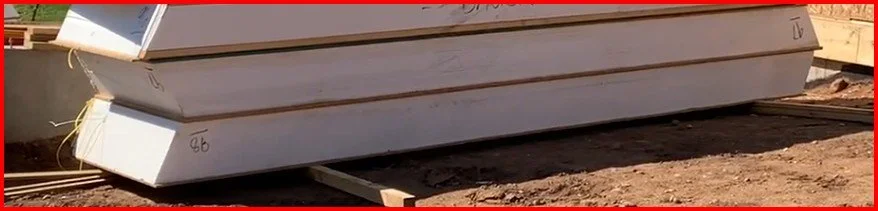
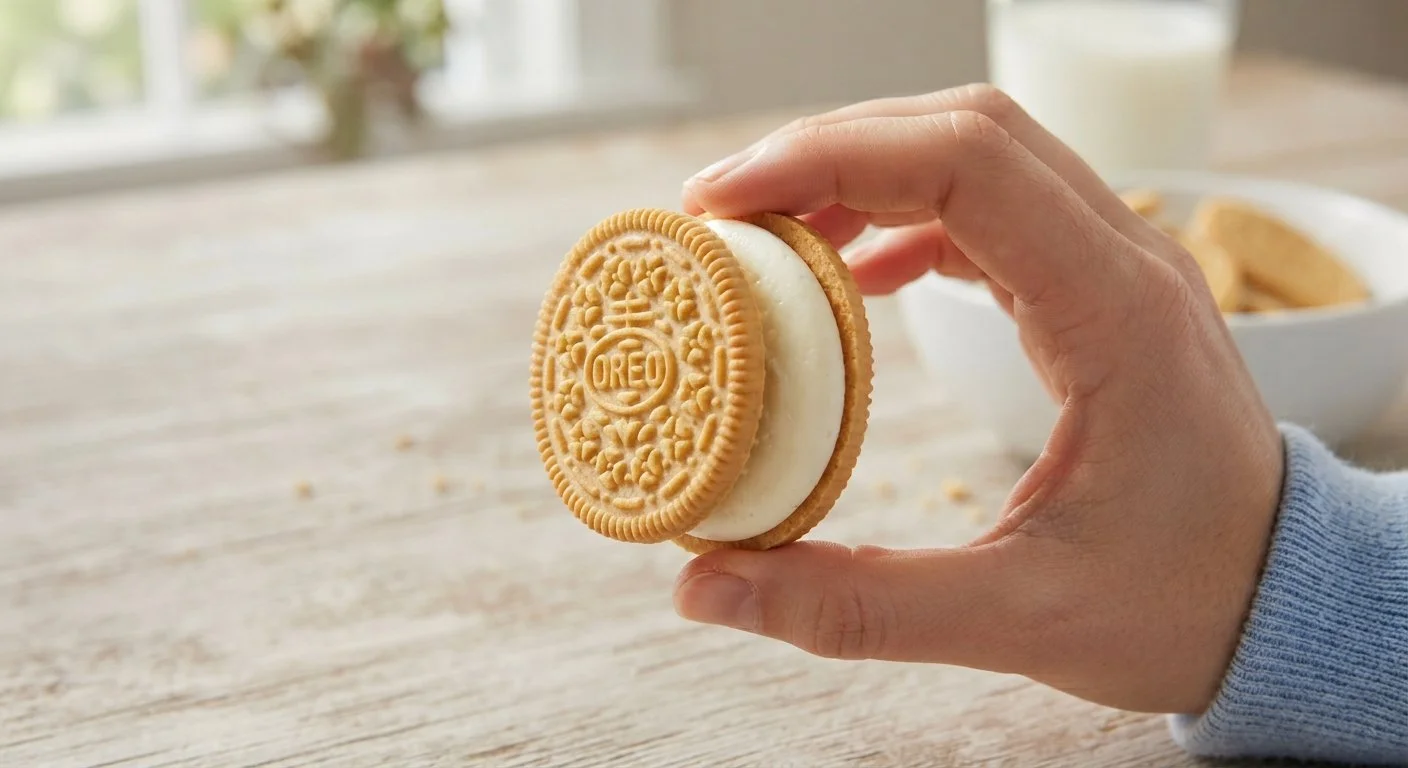
That glue bond is the secret to a SIP's strength. On their own, foam and OSB aren't very strong. Bonded together, they work as one stiff, strong panel, the same way an I-beam is stronger than its separate parts. Engineers call this "composite action."
So when we investigate a fire, we're not just asking "did it burn?" We're asking one specific question: is the glue bond between the foam and the skin still holding? If yes, the panel is usually still doing its job. If no, that part of the panel has lost its strength.
New to SIPs? Start with What Are SIPs? or our guide to SIP core types and materials.
EPS foam starts to soften once it gets hot, and it begins losing its structural integrity at roughly 180°F. That's well below the temperature it takes to burn wood. OSB reacts differently: when heated, its surface chars first, and that char layer acts like a heat shield that slows heat from reaching the foam underneath. That's why a panel can look scorched on the outside and still have a perfectly good bond inside. You can't tell which is which by looking. You have to cut a sample.
What Happened in Duluth
The fire started in the attached garage and spread into parts of the home. The house was still under construction, with SIPs used for the exterior walls and roof. That detail matters, because it meant the home was a mix of finished and unfinished areas:
Some SIPs were already covered with drywall, siding, plywood, or a tongue-and-groove wood ceiling.
Other SIPs had no covering at all, with the bare OSB skin exposed to the room.
Firefighters cut openings in some walls and roof sections to check for hidden fire.
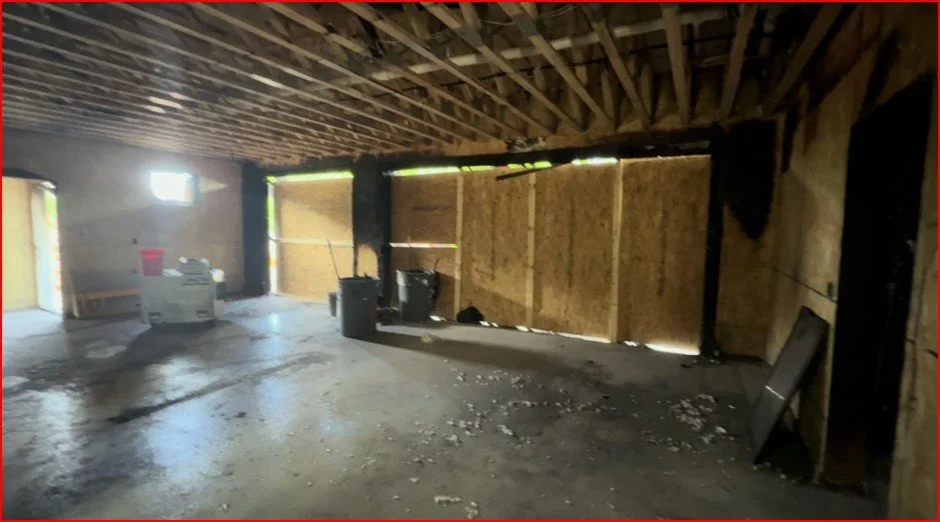
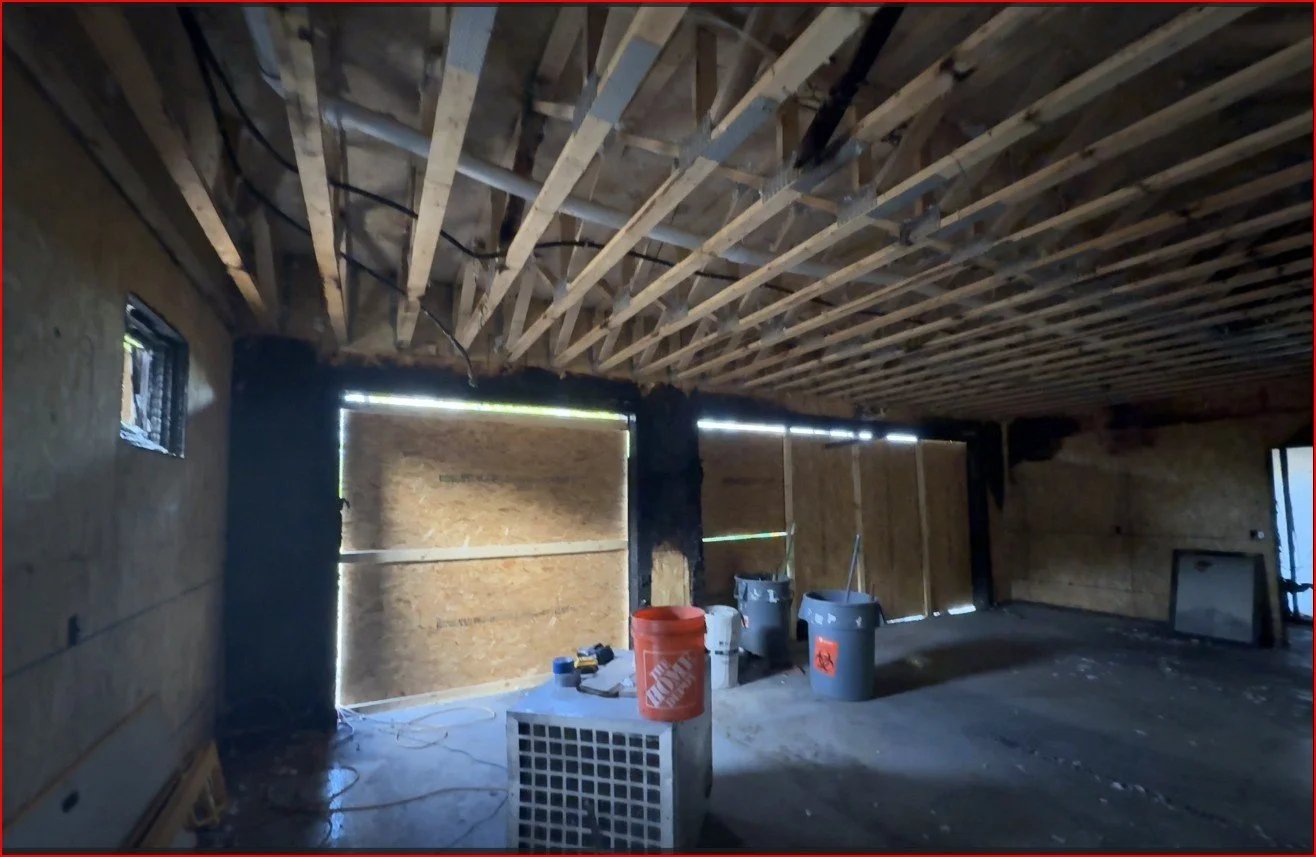
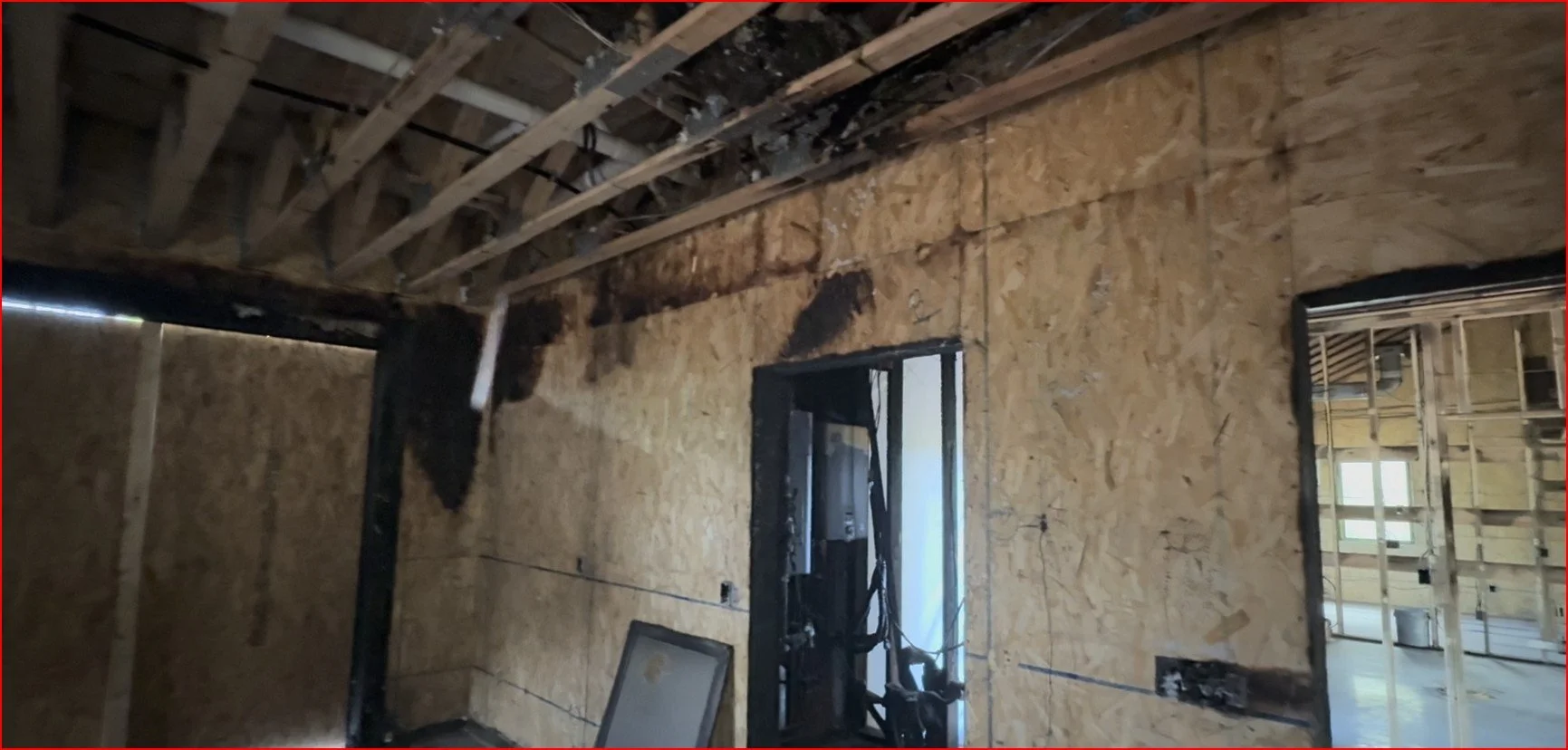
The mechanical room between the house and the garage was a total loss.
That mix of covered and uncovered panels turned the house into a natural side-by-side test. We could compare protected and unprotected SIPs that went through the same fire.
How We Investigated: What a Core Sample Is (and Why It Matters)
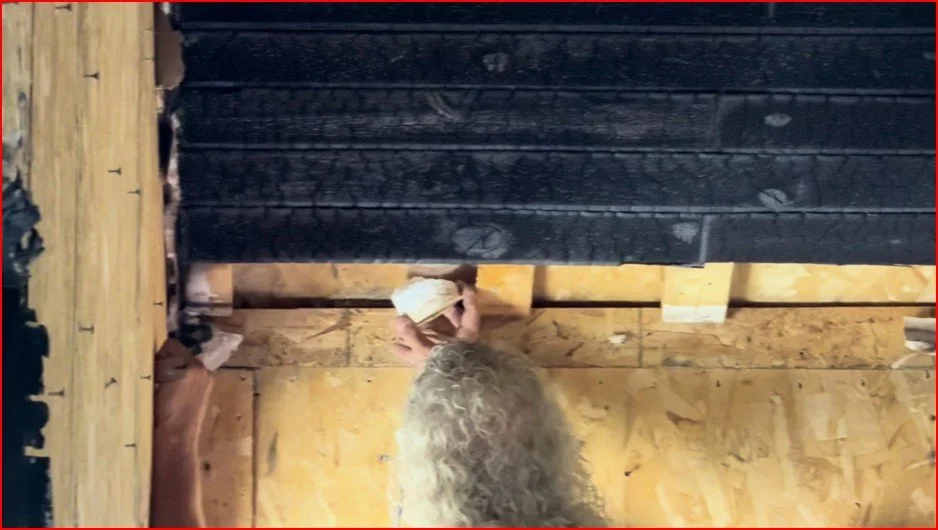
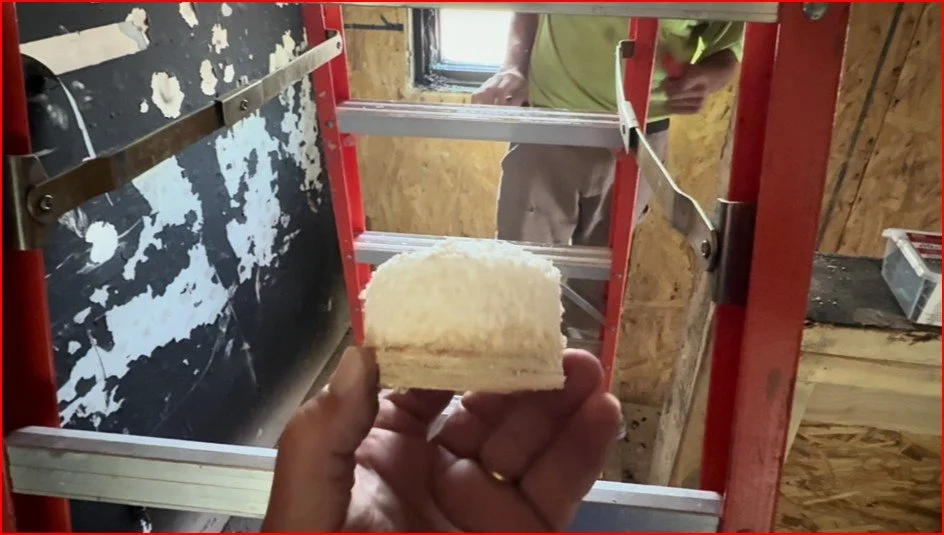
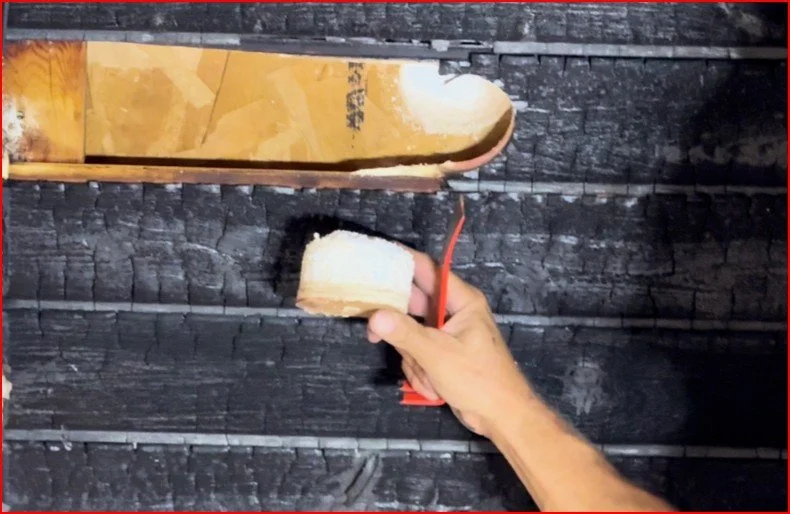
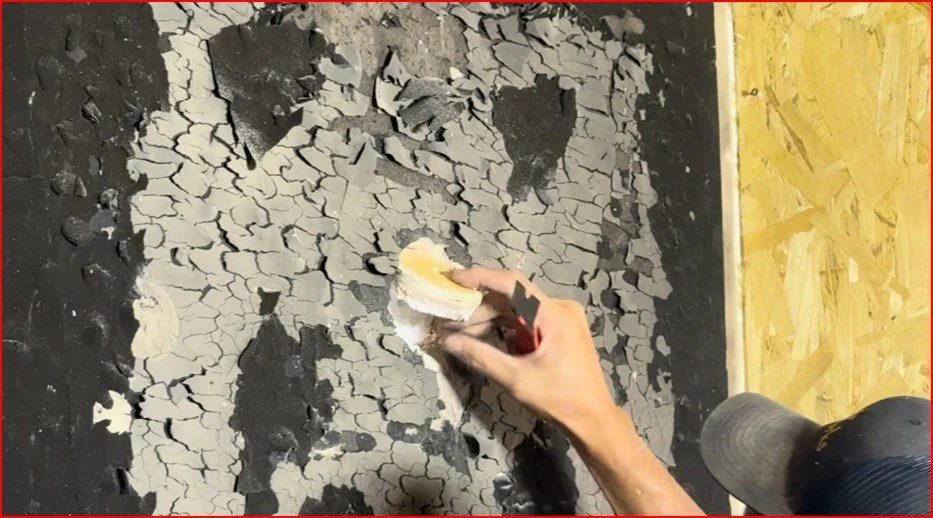
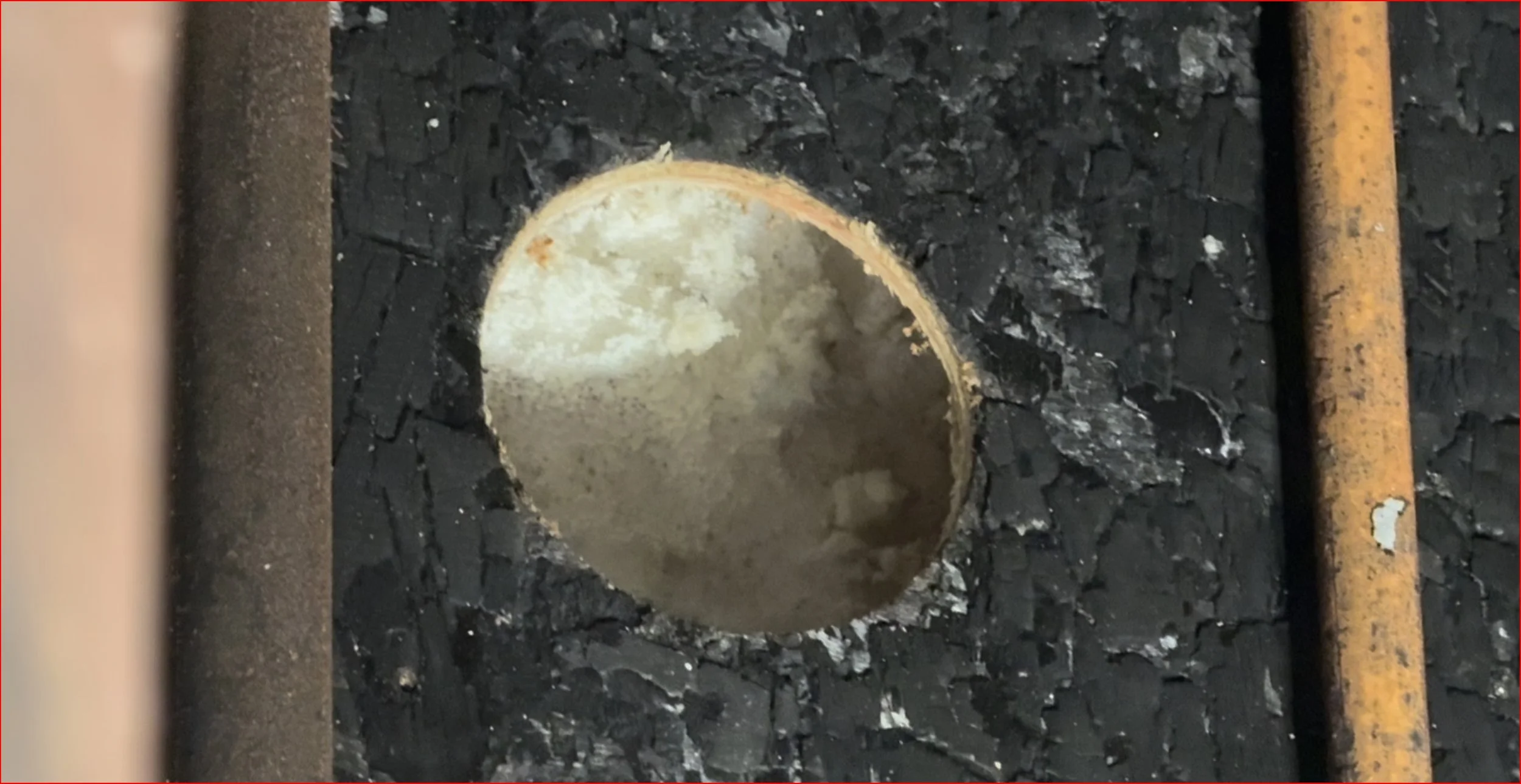
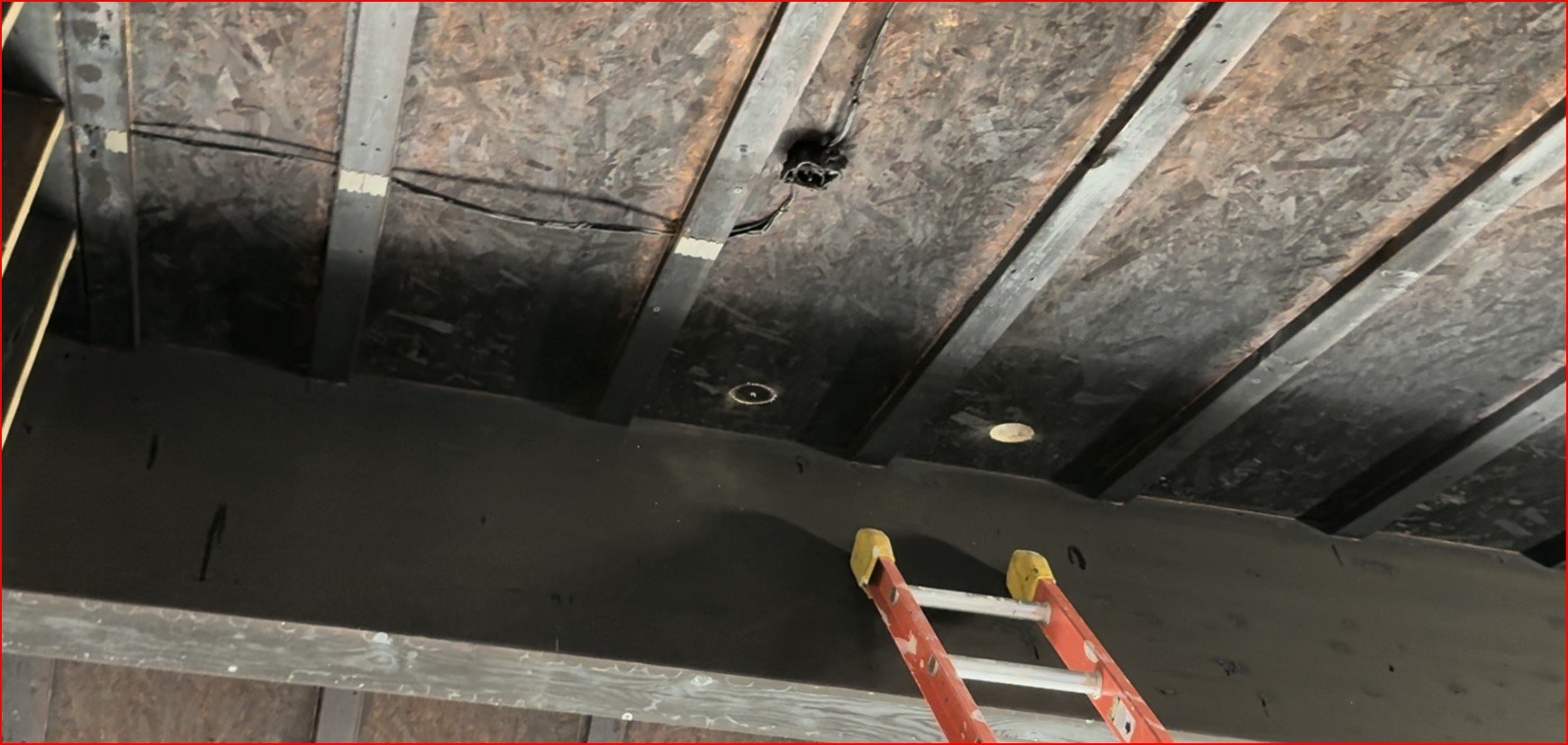
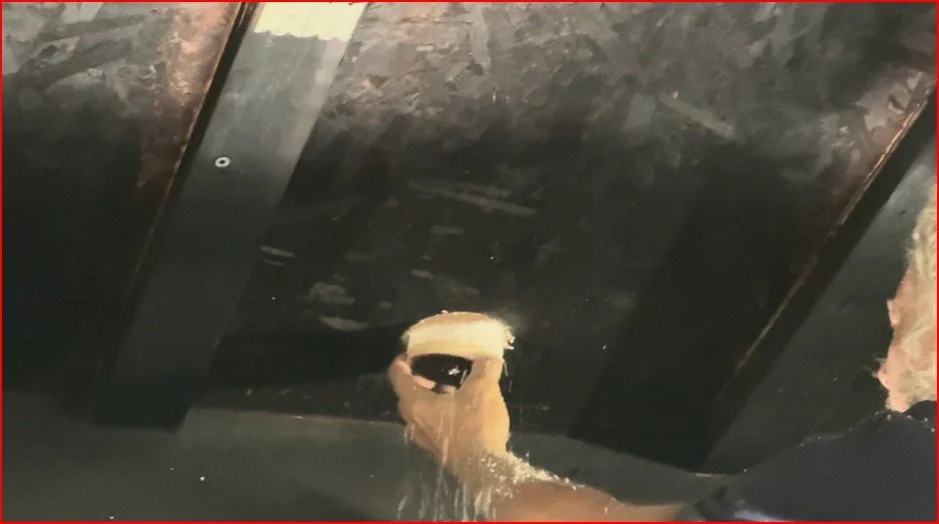
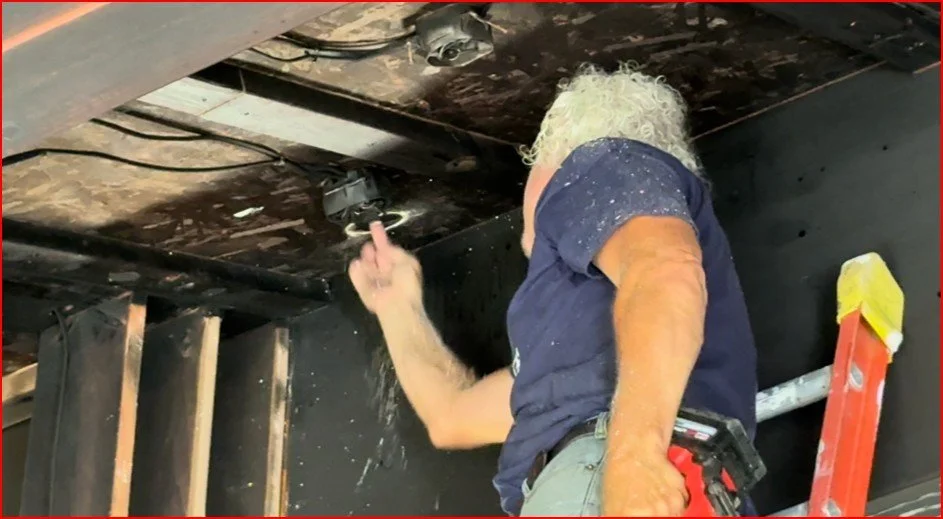
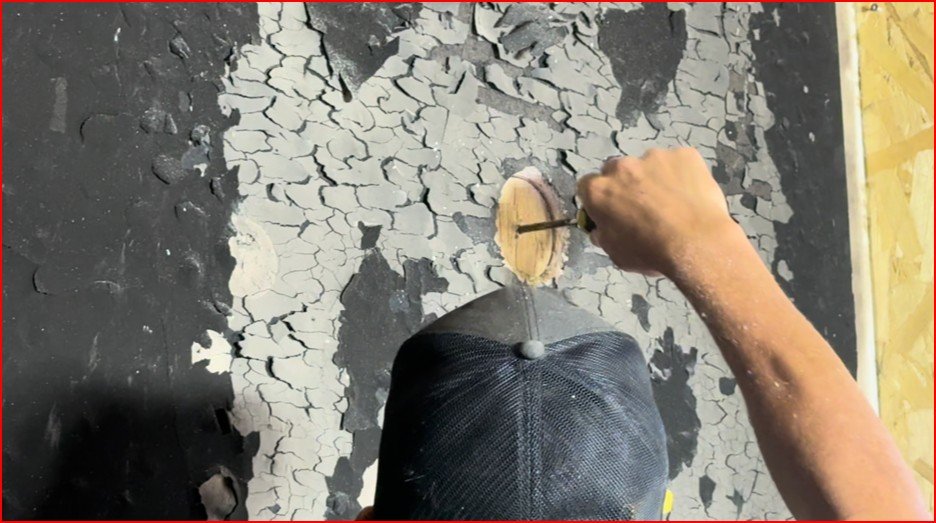
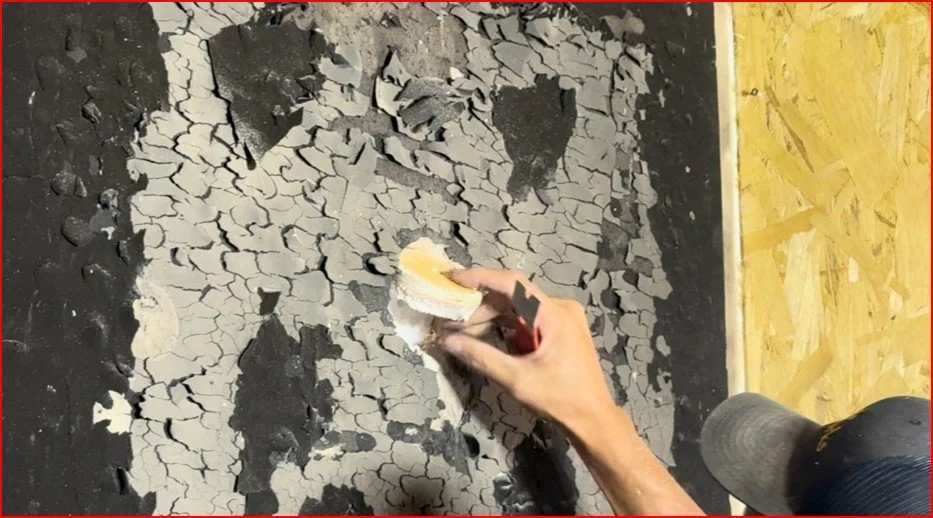
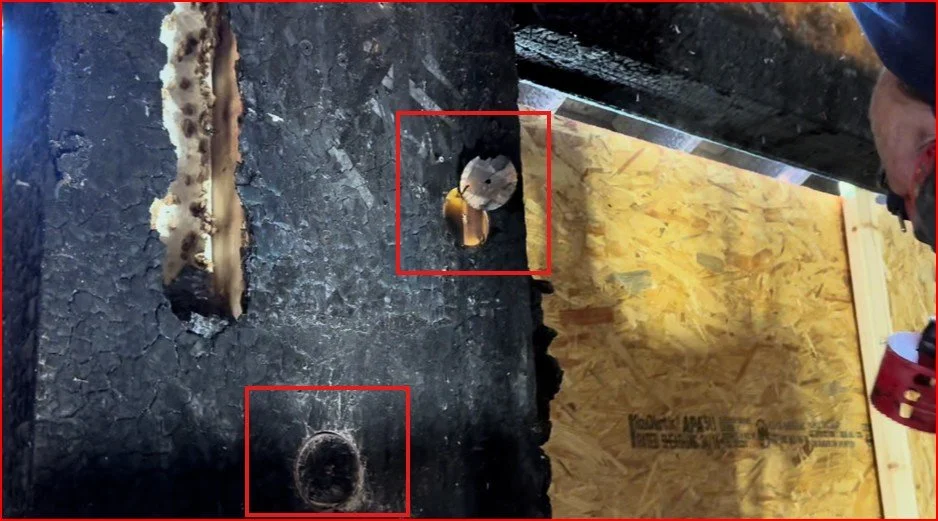
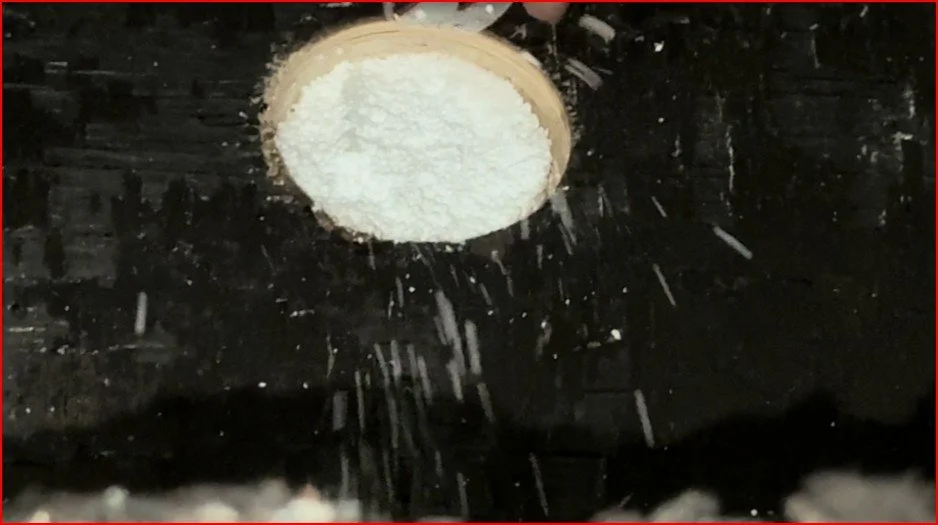
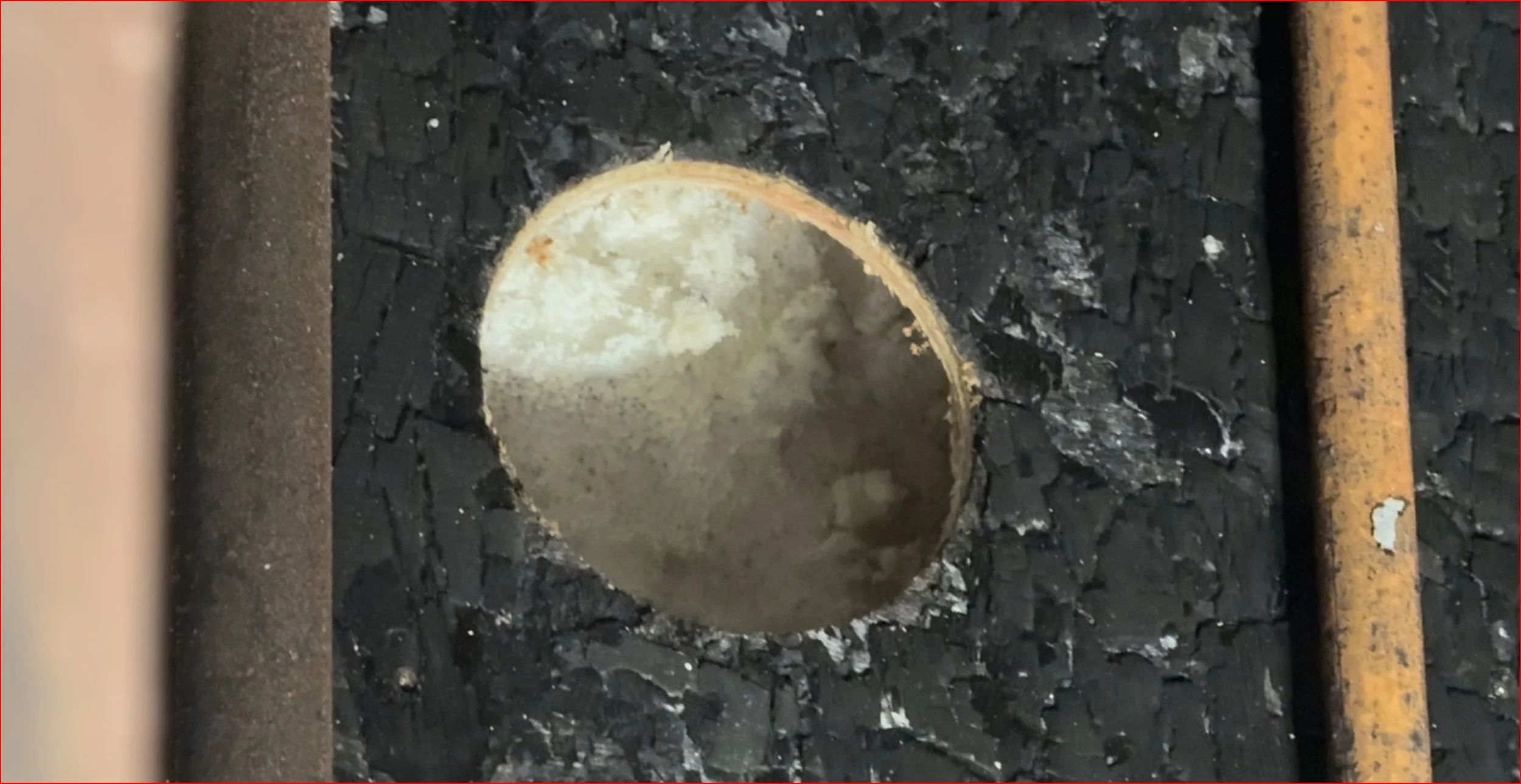
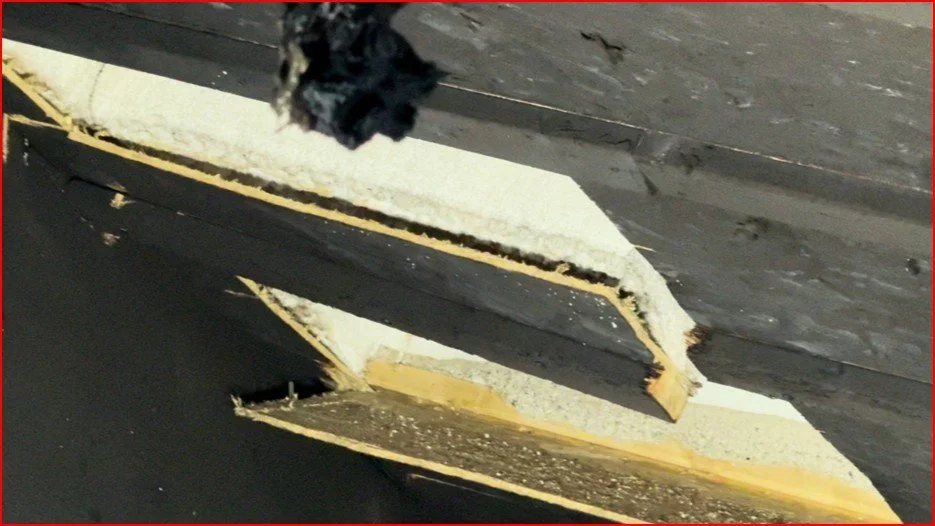
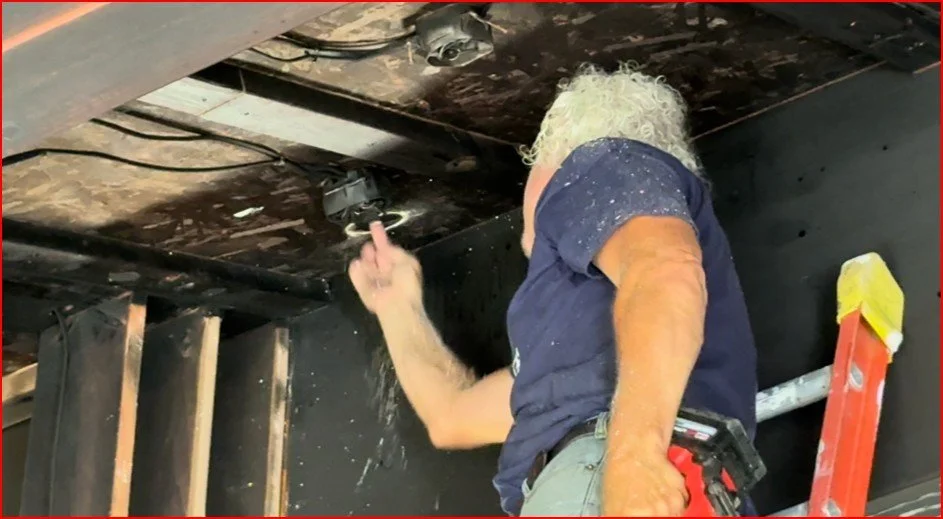
A core sample is a round plug cut through the panel skin with a hole saw. It shows you all three layers (skin, adhesive, foam) exactly as they are inside the wall or roof. panel Think of it like cutting a slice out of a layered cake to see whether the frosting is still holding the layers together.
Here's what we look for:
A good bond: when you pull the skin away, chunks of foam stay stuck to the wood. This is called "foam tear-out," and it means the glue is stronger than the foam itself. That's a healthy panel.
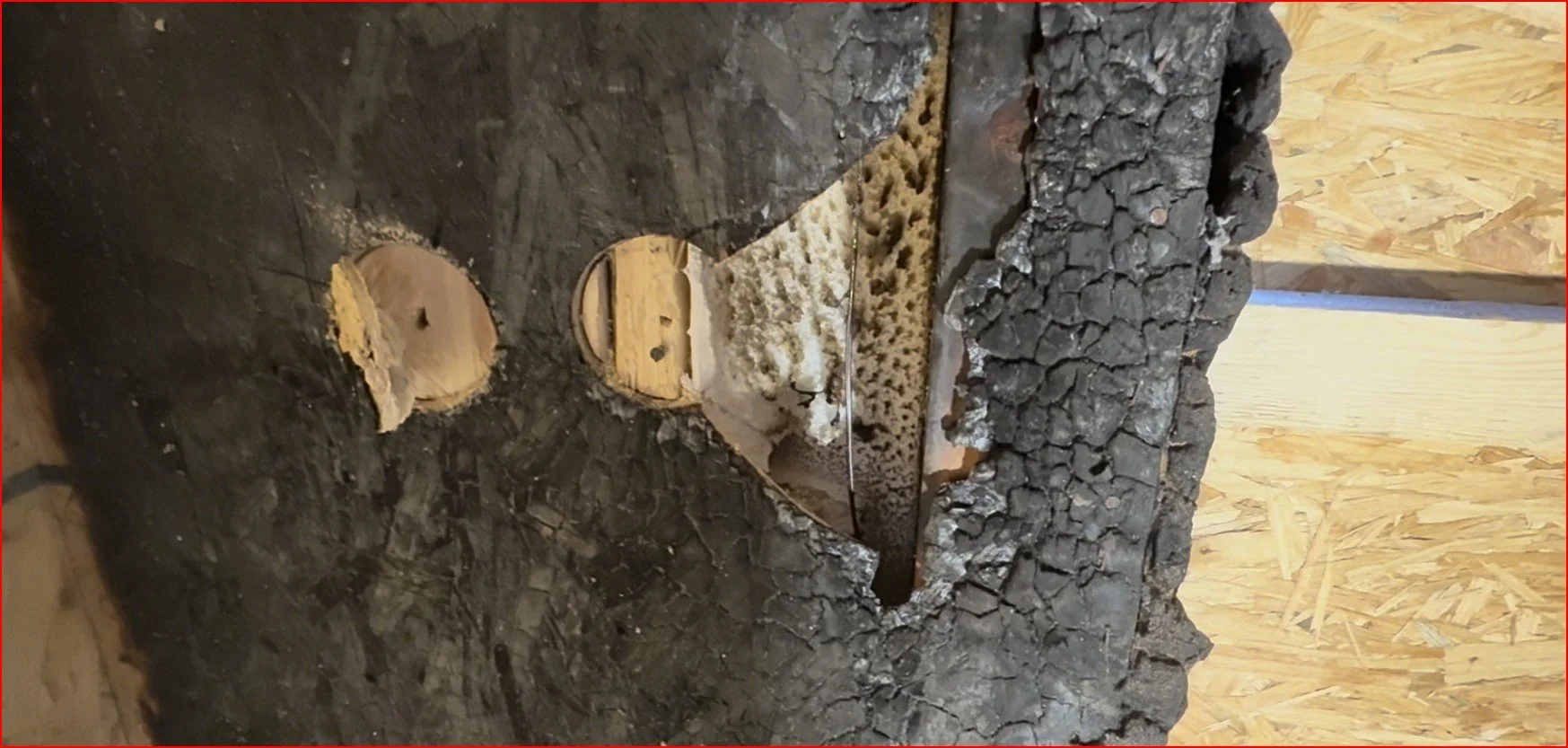
A failed bond: the foam has melted back and pulled away from the skin, leaving a clean gap where the glue line used to be. That section has lost its strength.
Looking at the surface can't tell you this. A badly charred skin can sit on top of a perfectly healthy panel, and that's exactly what we found in several rooms.
← Swipe to view full table →
| What You See | Bond Held | Bond Failed |
|---|---|---|
| Foam on the skin | Foam chunks stuck to the OSB (tear-out) | Clean separation, no foam attached |
| Foam core | Full thickness, no melting | Melted back away from the skin |
| OSB skin | Clean, or charred on the surface only | Often charred deep into the wood |
| Panel strength | Still working as one panel | Lost in that area |
| Typical next step | Keep, clean, or repair | Engineer decides repair or replacement |
Room-by-Room: What the Fire Did
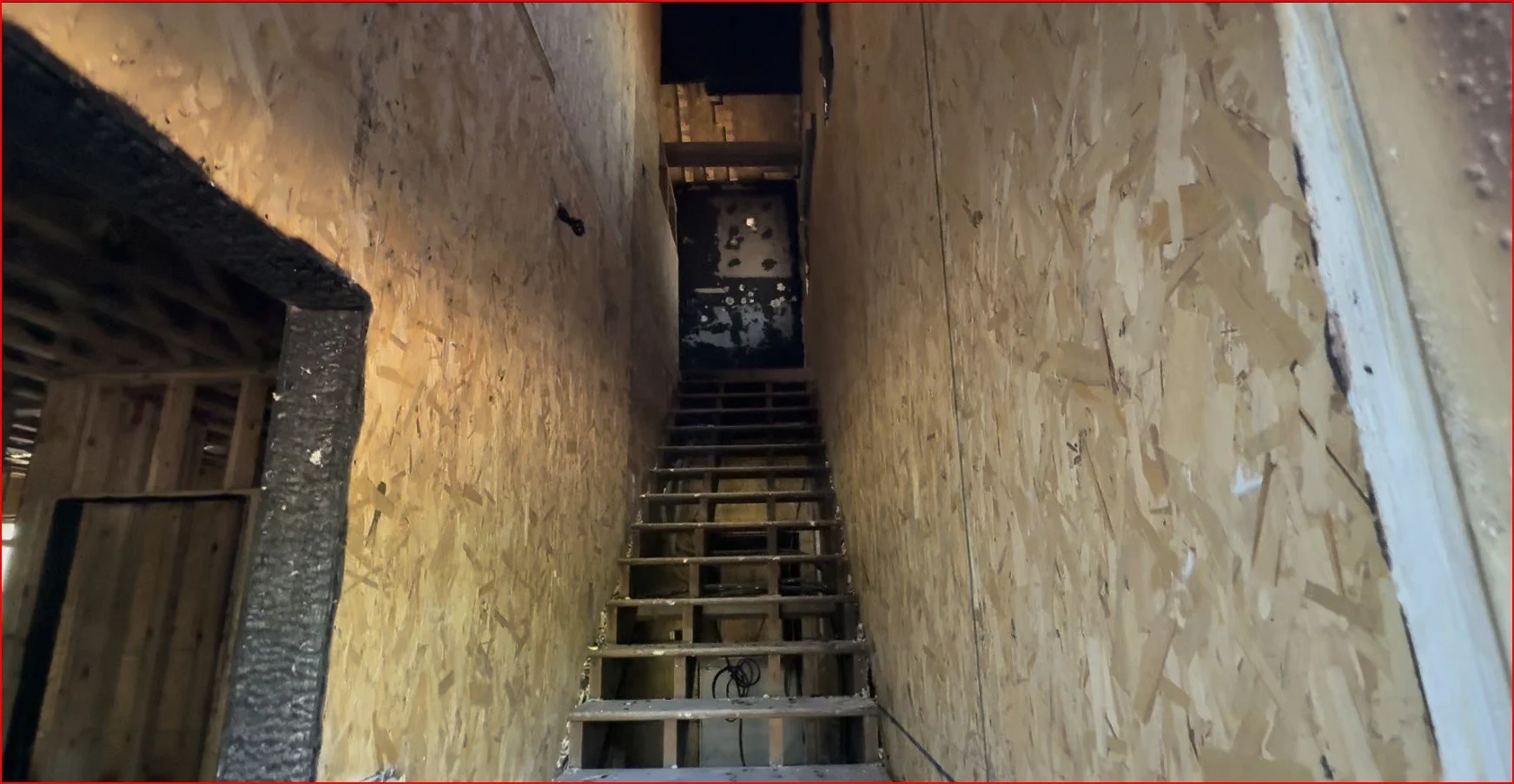
1. Stairway to the Second Floor
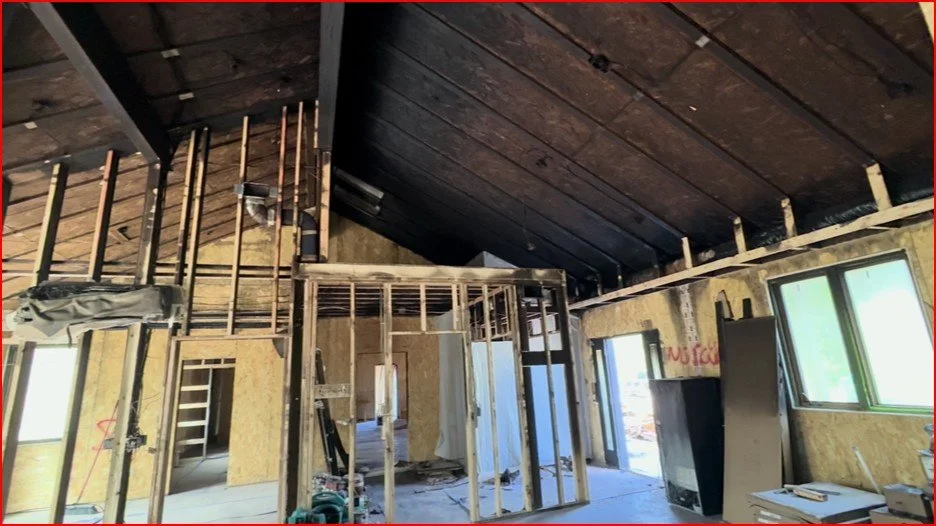
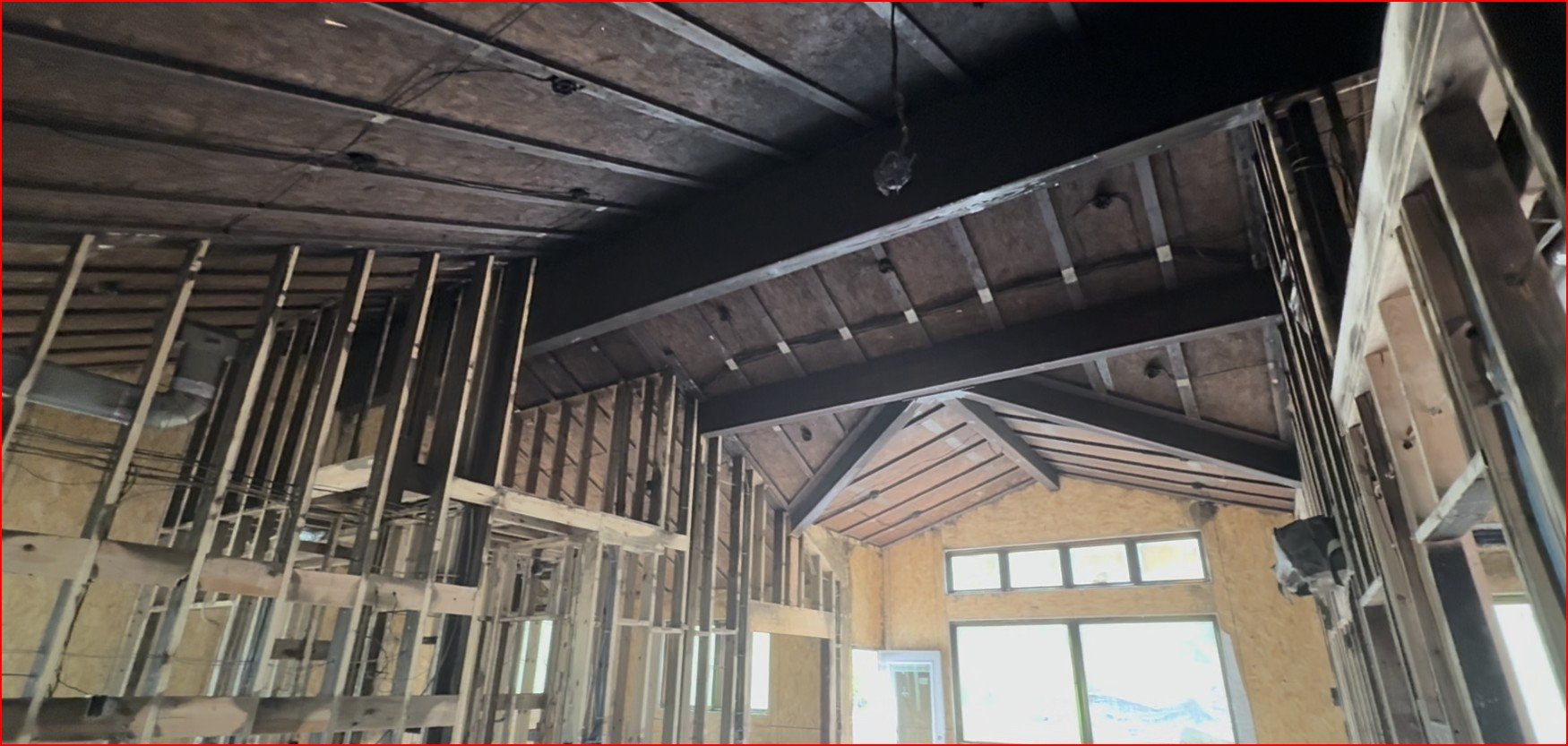
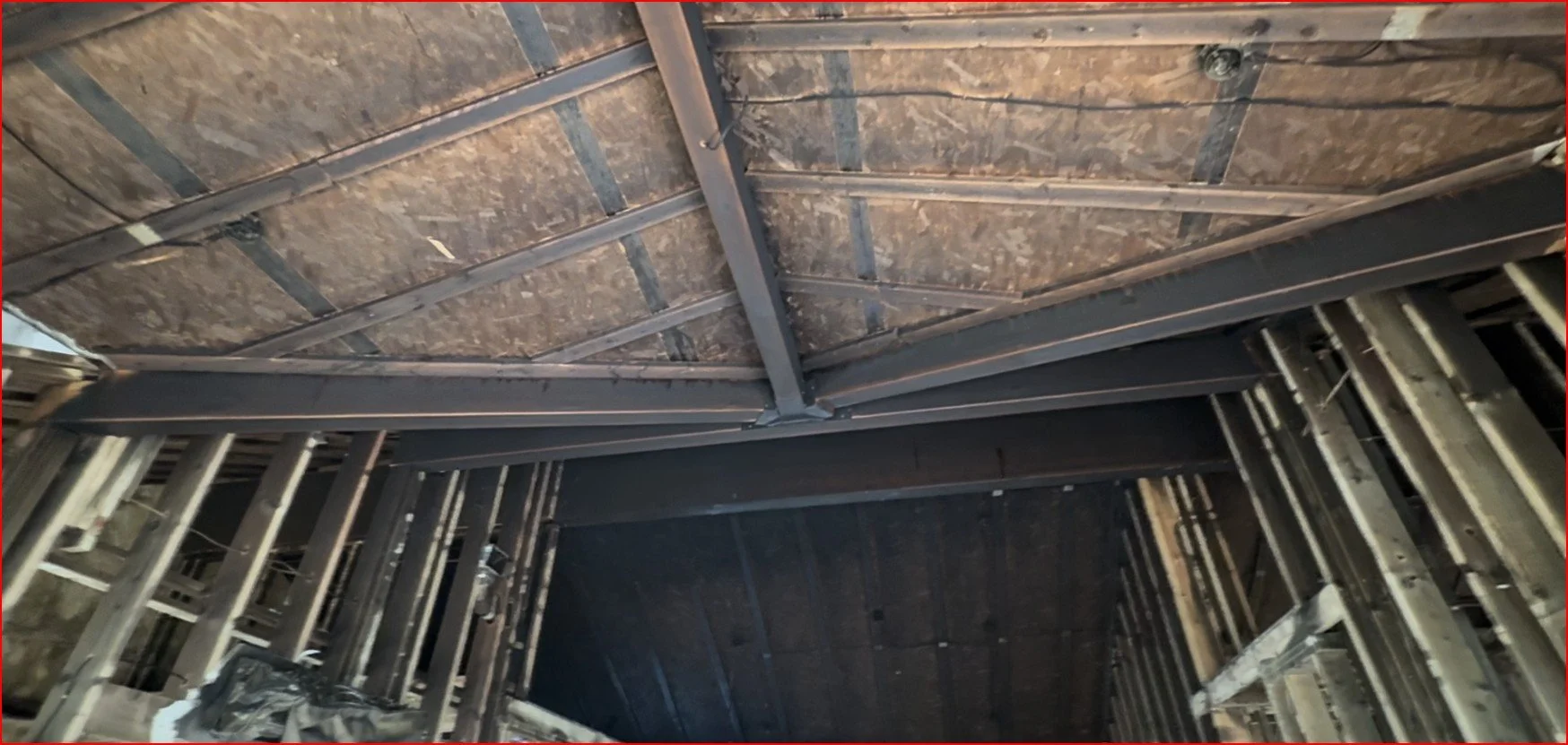
The drywall here was removed after the fire so we could see behind it. The SIP skins underneath had no fire damage. Above the stairs, the wood ceiling was charred, but the SIP roof panels behind it were fine. Core samples 1, 2, and 3 from the roof panels showed no foam melt-back.
Verdict: Panels were protected and structurally sound.
2. Second Floor, South Wall
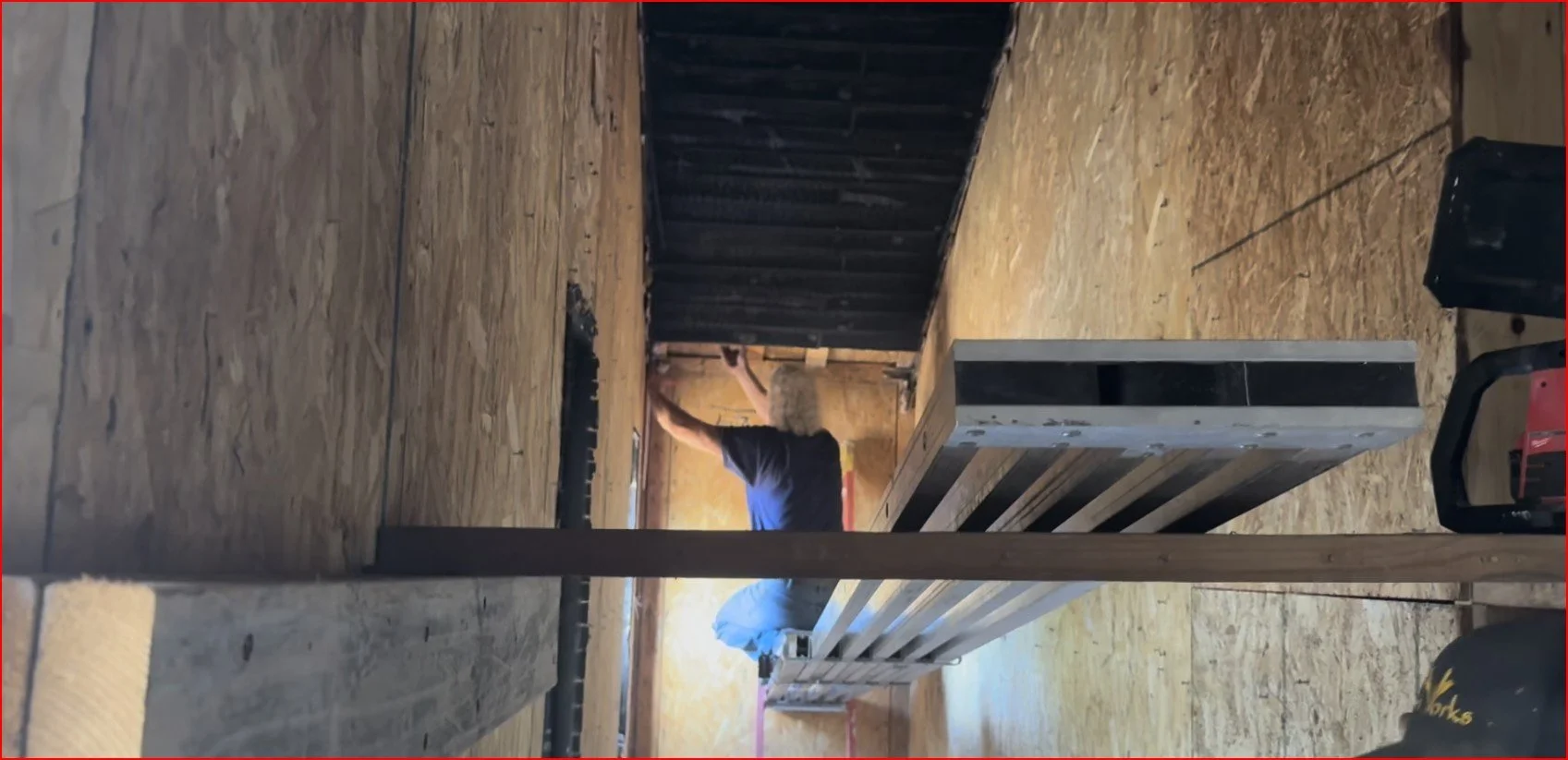
Core samples 4 and 5 showed no fire damage. The skins were still firmly bonded, with foam tear-out visible.
Verdict: Panels remained structurally sound.
3. Second Floor, North Wall
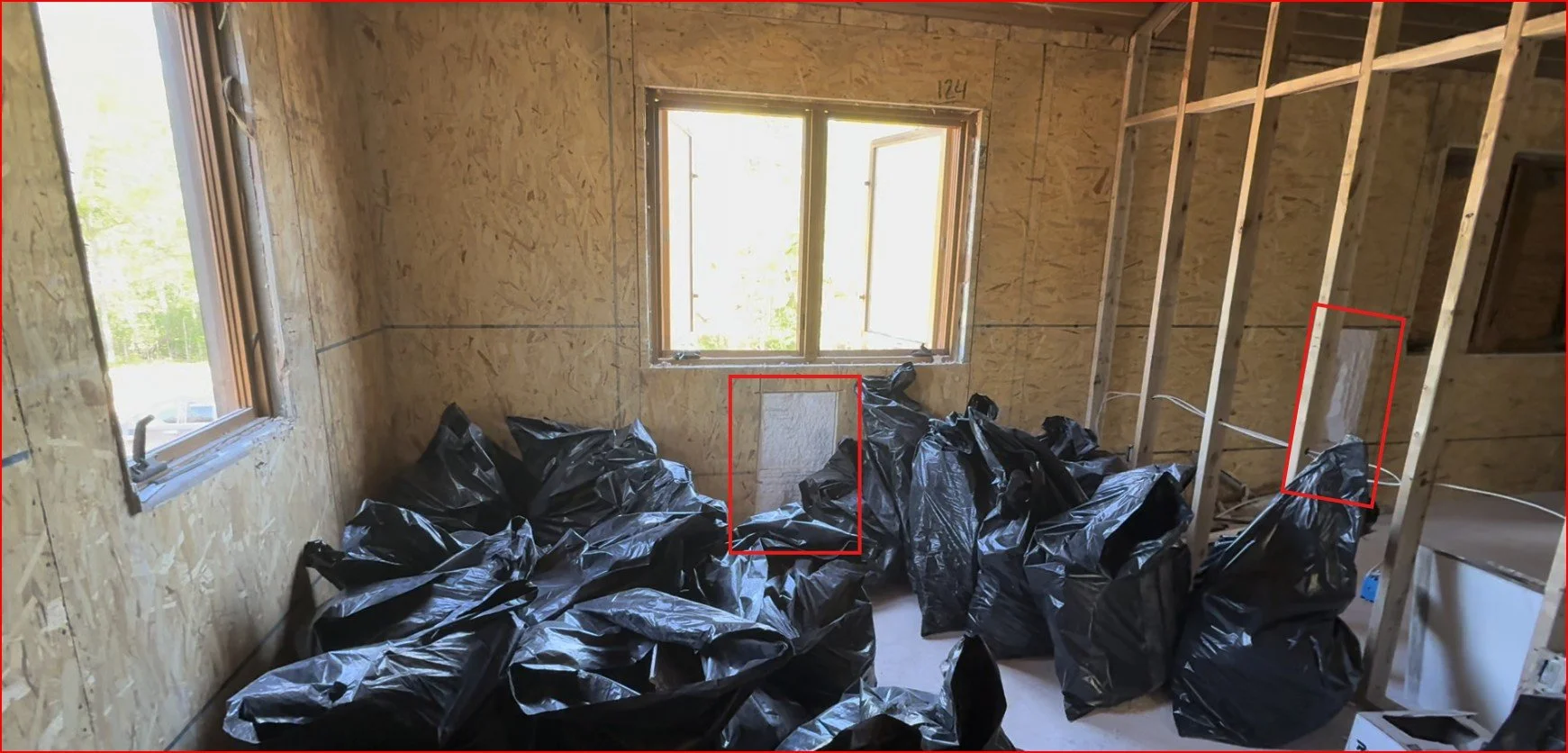
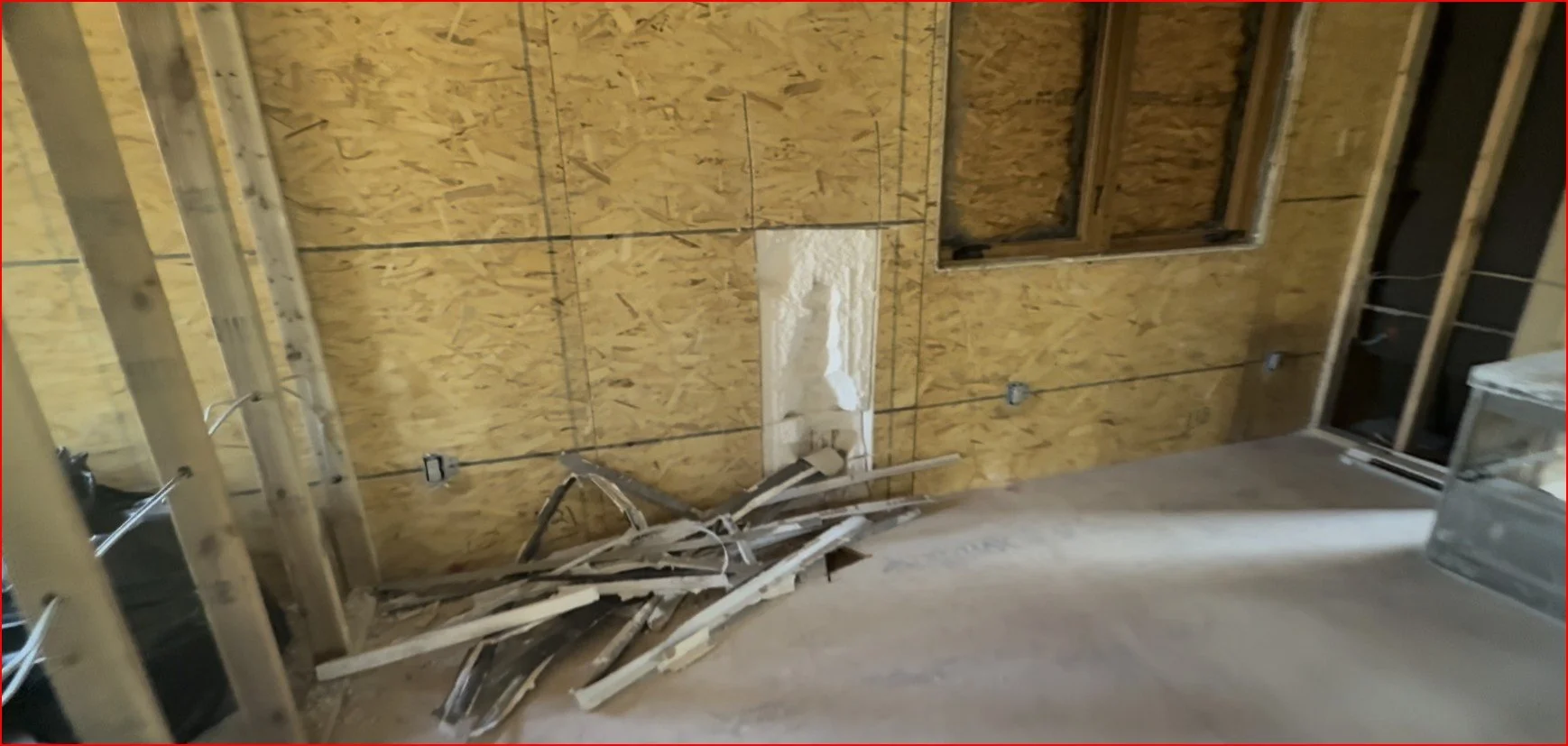
Firefighters cut rectangular openings here to check for hidden fire inside the wall. There wasn't any. The heat never made it into the panel.
Verdict: No fire damage inside the panels.
4. Garage Door Wall
This was some of the worst SIP damage in the house. The OSB skins were heavily charred, and core samples 6 through 10 all showed foam melt-back with a clean split at the glue line. The melting reached well behind the skins, which tells us the heat here was intense enough to destroy the bond.
Verdict: Panels lost their strength and were repaired because structural elements in the panels were undamaged and carried the structural loads.
5. Garage Door Headers
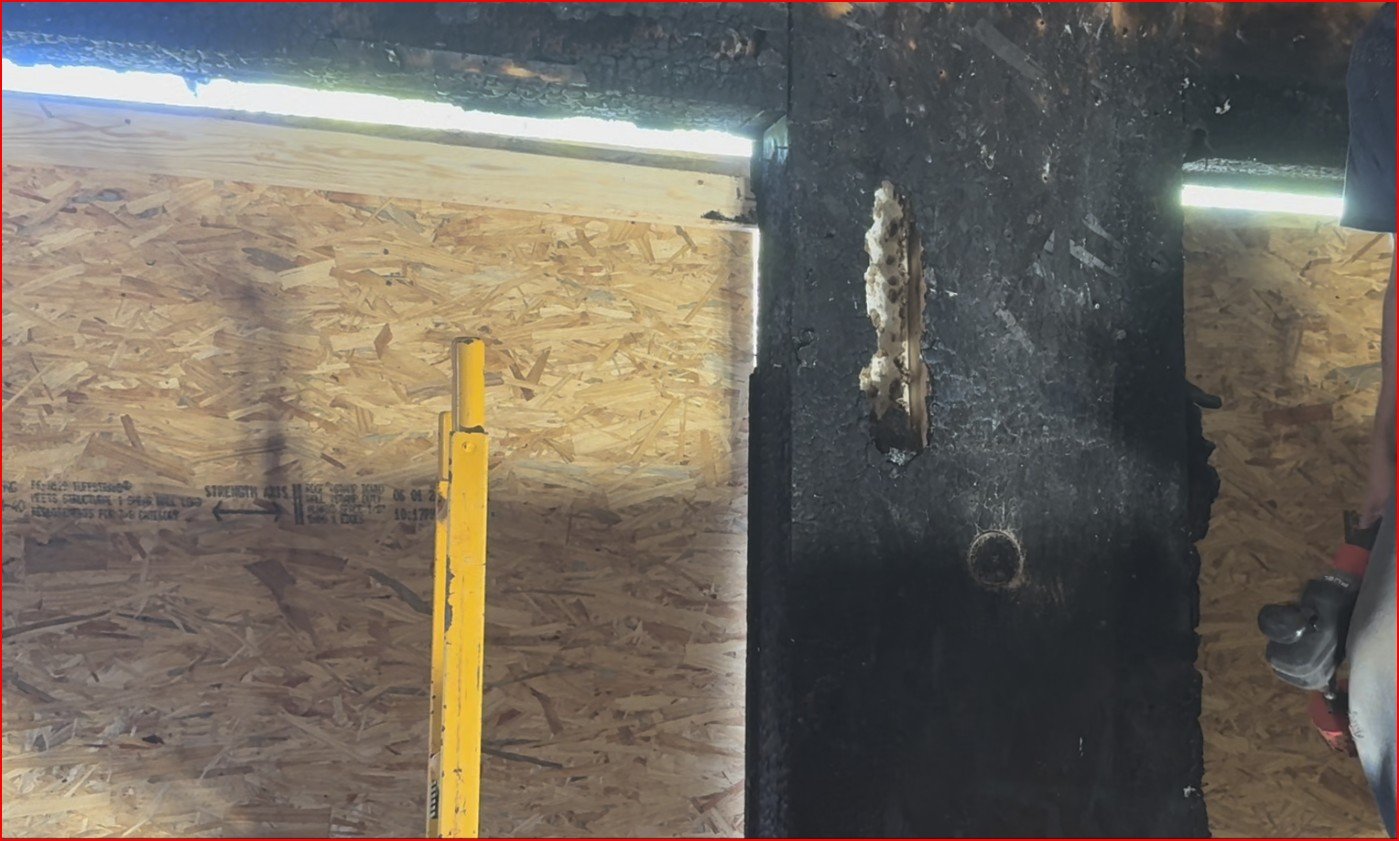
This area holds the most useful lesson in the whole investigation. A header is the beam over the garage door that carries weight down around the opening. The SIP material below the headers was badly damaged. But the OSB skin directly over the engineered headers had no fire damage, because a drywall ceiling attached to the floor trusses shielded that zone.
Verdict: The headers held. The damaged SIP material around them was replaced.
The point: the parts of a SIP wall that carry load through framing don't fail in the same way as foam-only areas. That's why repair decisions have to be made by someone who knows where the load actually travels. (We saw the same thing in Myth 6 of our SIP Fire Myths article.)
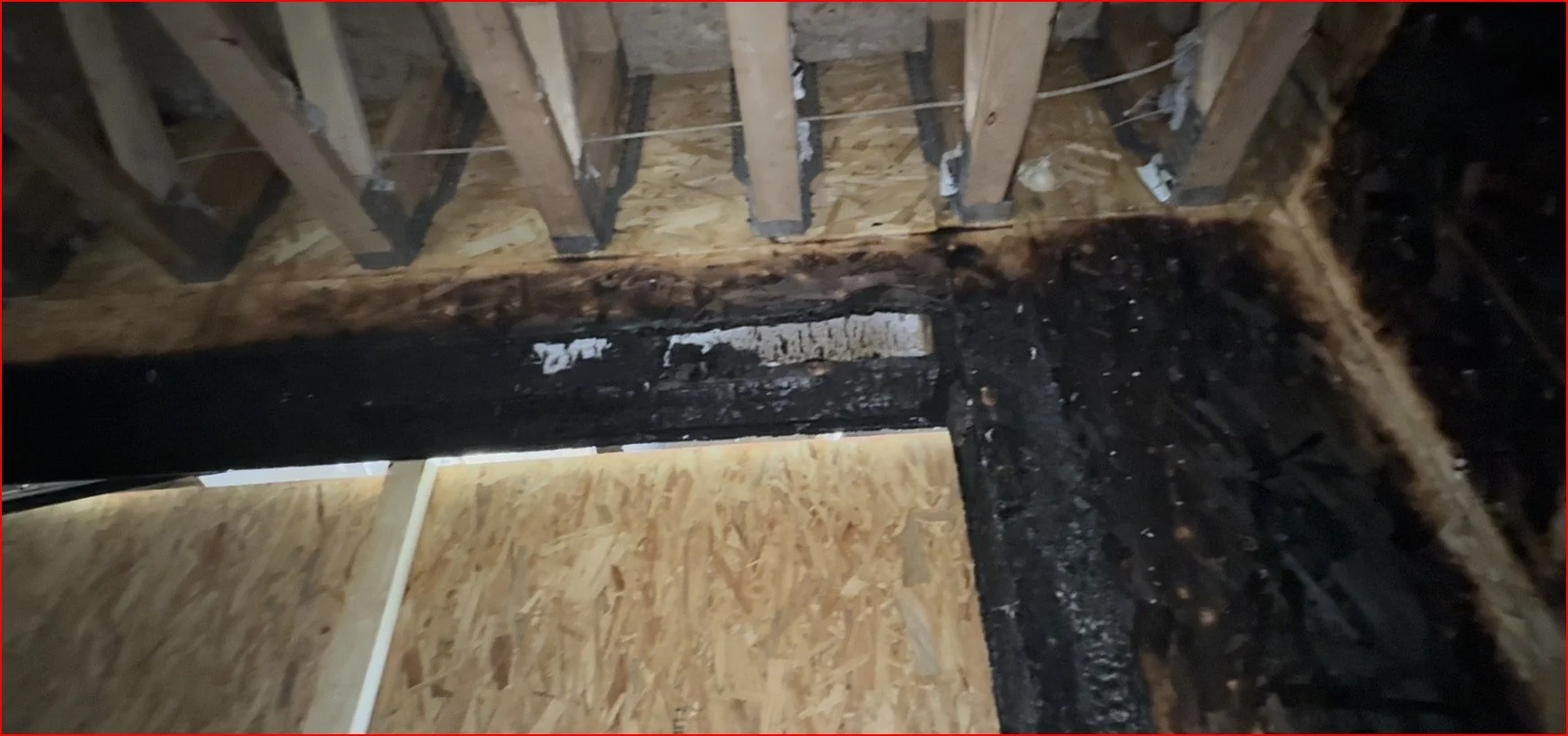
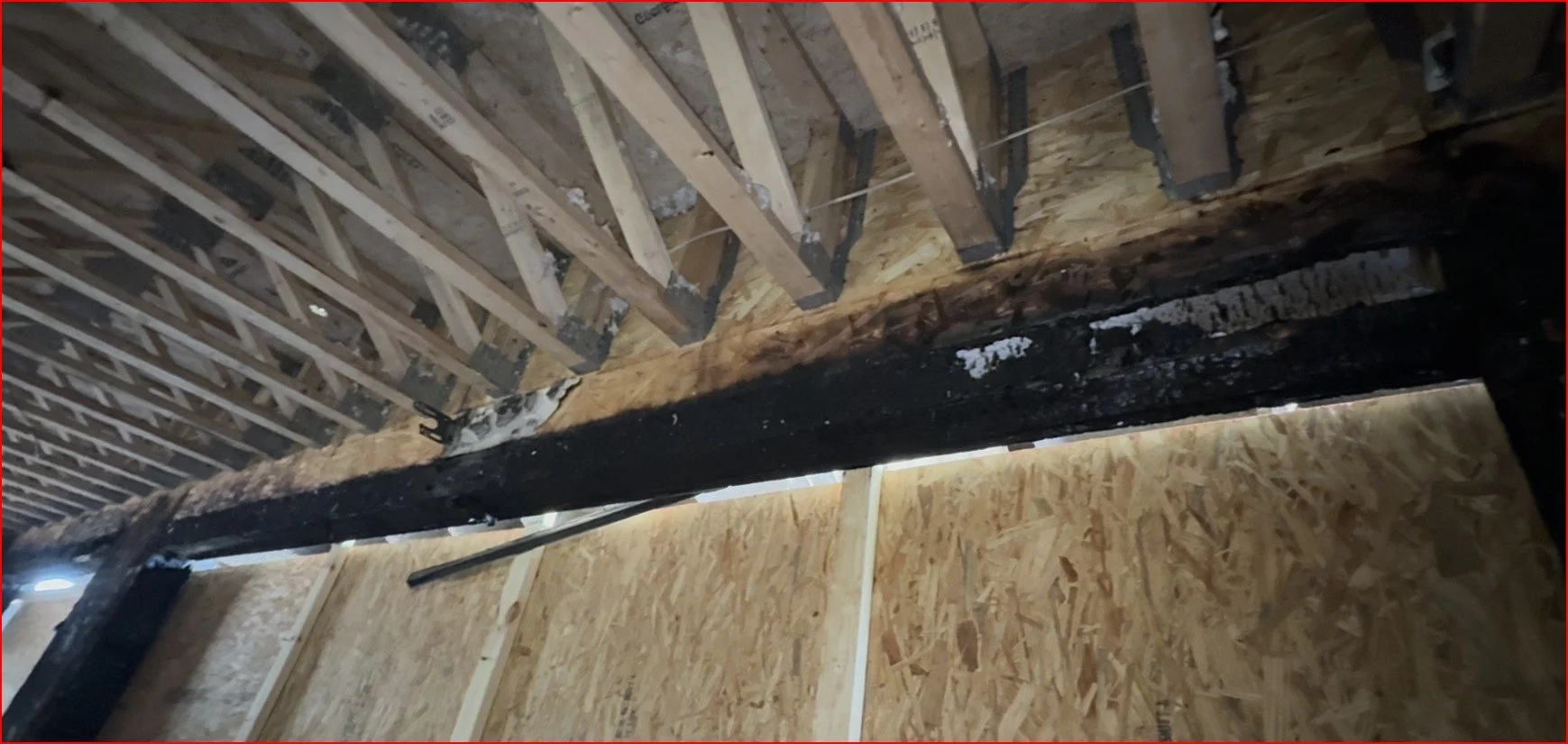
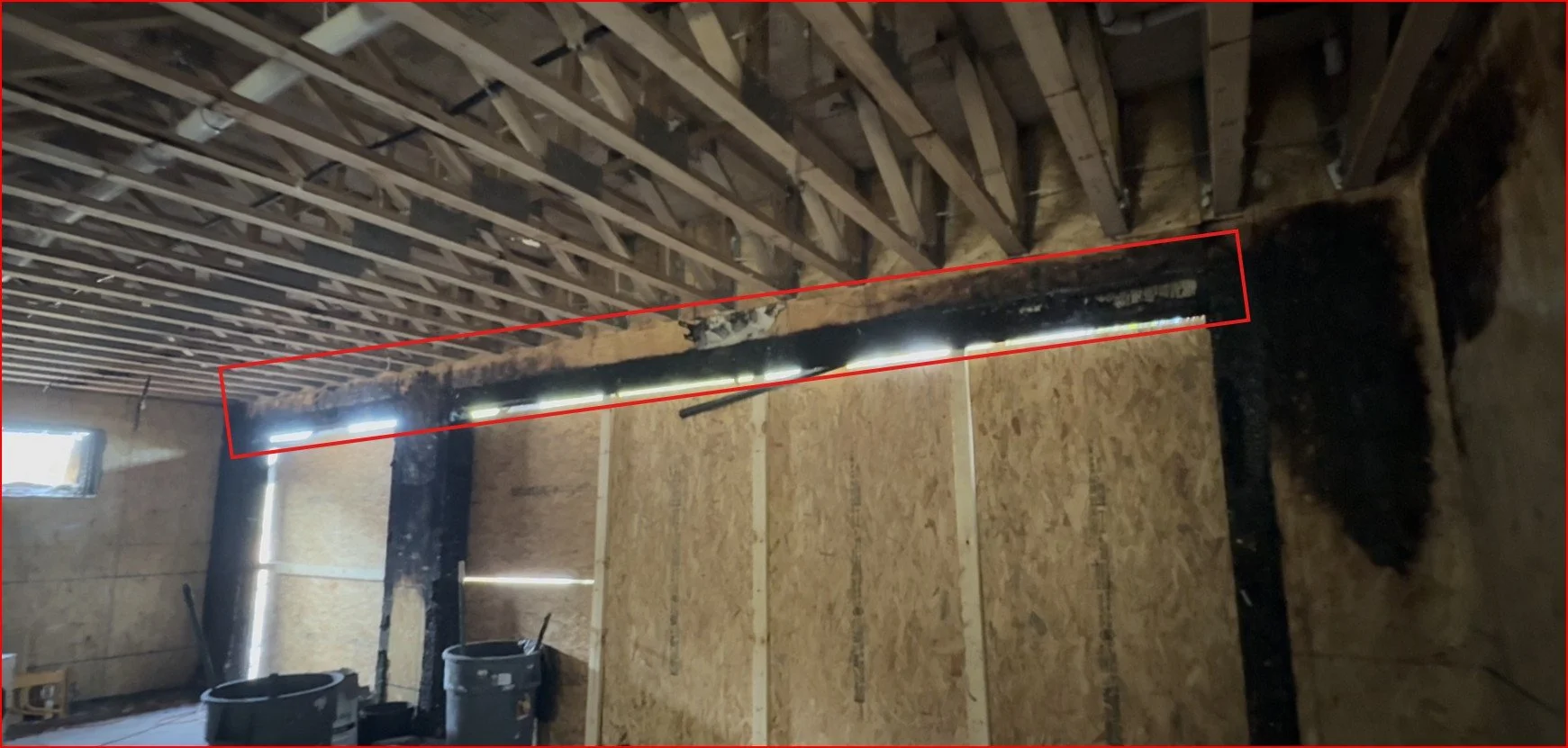
The garage door headers are the part of this job I'd want every adjuster to see. The SIP material right next to them was gone, and someone eyeballing it could easily call the whole wall a loss. But the headers were carrying the load, and the drywall ceiling kept them out of the worst of the heat. If you don't know where the load is going, you'll replace things that don't need replacing.
-- Joe Pasma, PE6. Mechanical Room
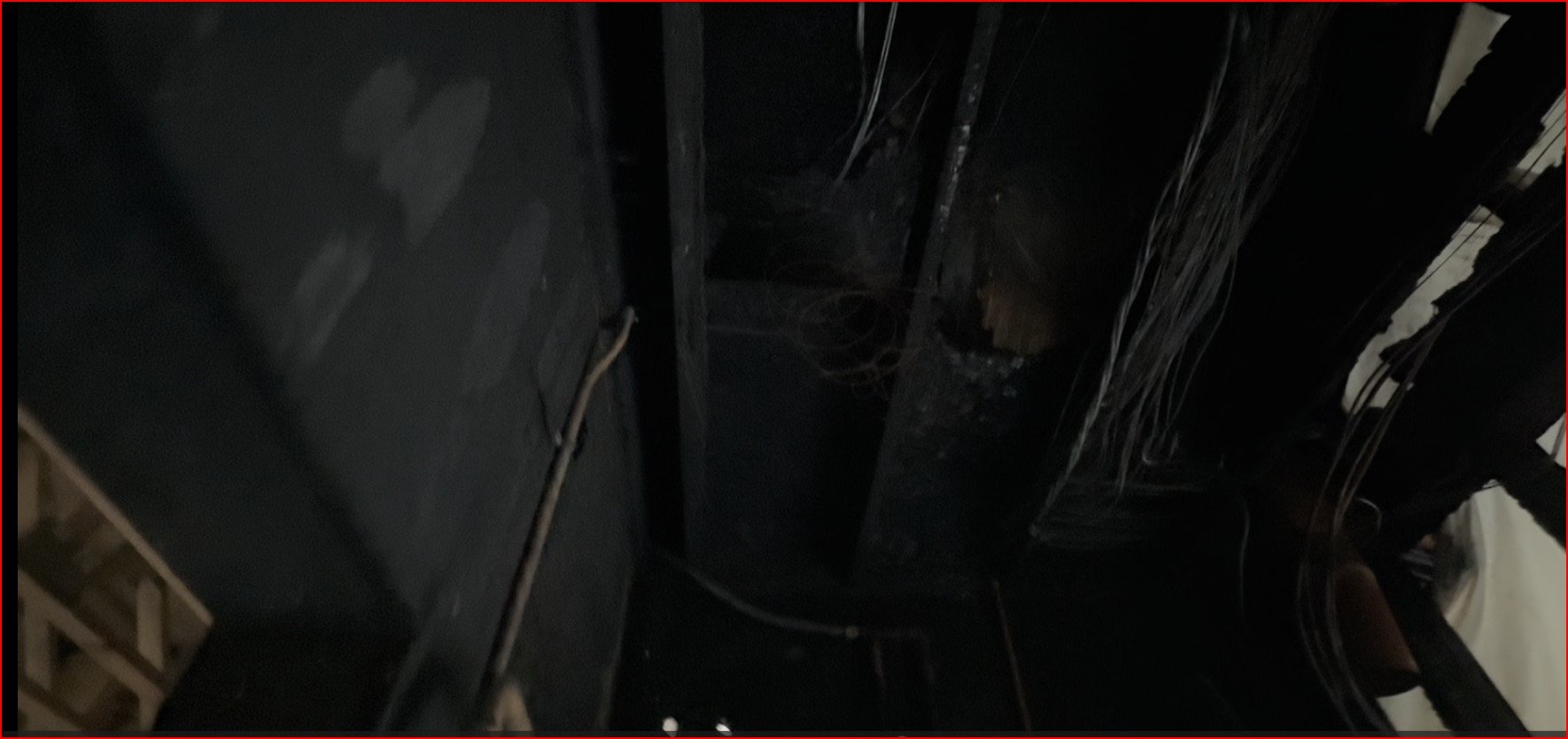
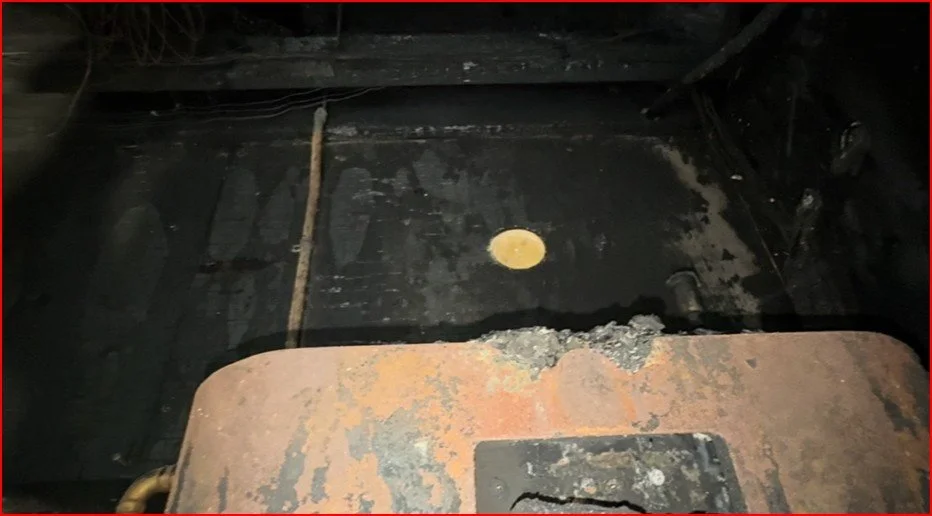
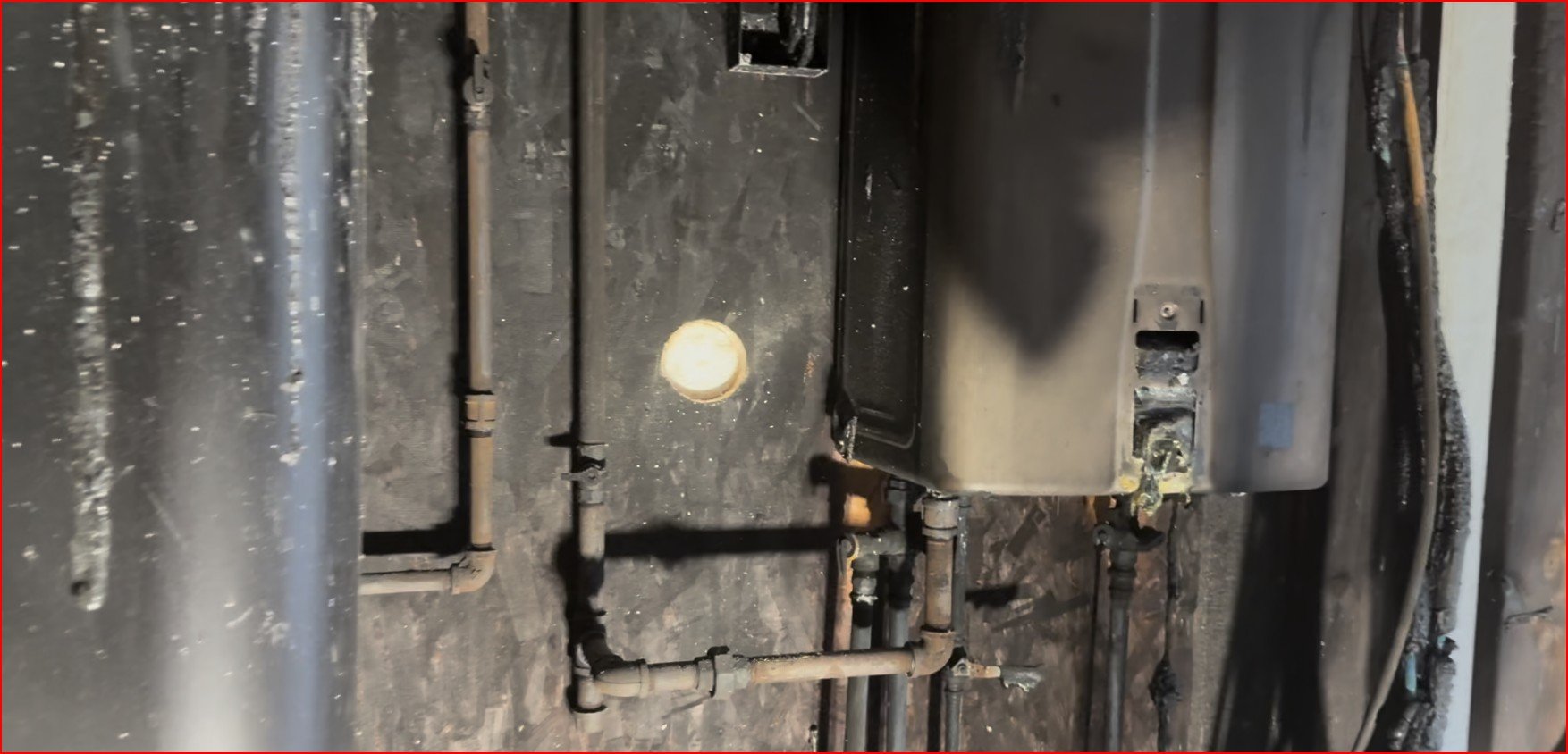
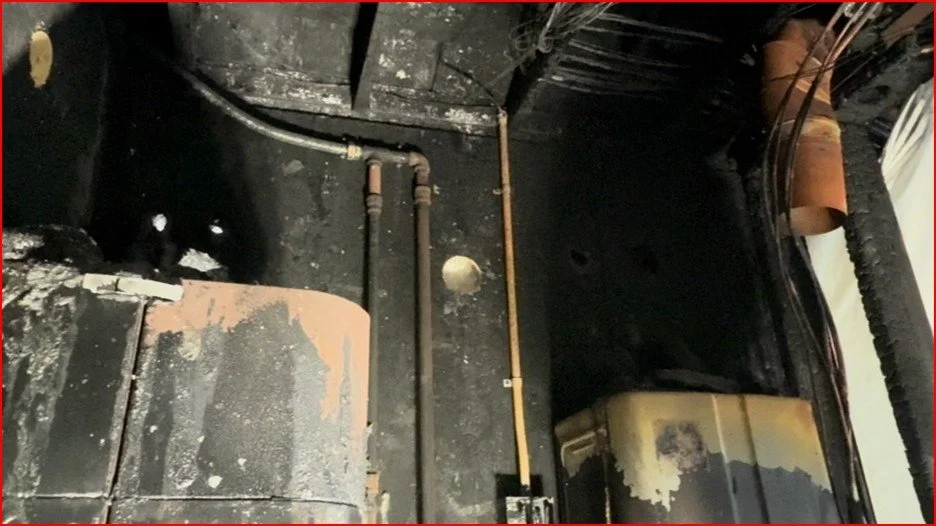
This room had the most severe damage. The OSB skins on the inside, south wall, had no covering yet, so they faced the fire directly. The roof panels above had heavy charring and foam melt-back, and the wall panels showed different levels of charring. Core samples 12 and 13 showed melt-back and failed bonds.
There was one important exception. The west wall, the common wall between the garage and the mechanical room, had a plywood covering. The plywood charred, but core sample 11, taken behind it, showed the SIP skin and foam were completely intact.
Verdict: The roof panels were replaced. Wall sections that had a covering held up, the south SIP wall was replaced.
7. One-Story Area, North Roof Slope
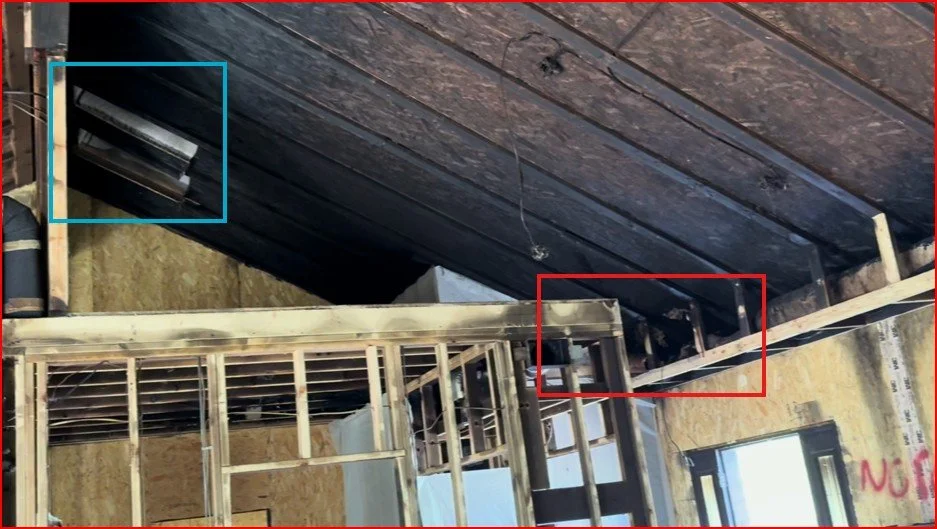
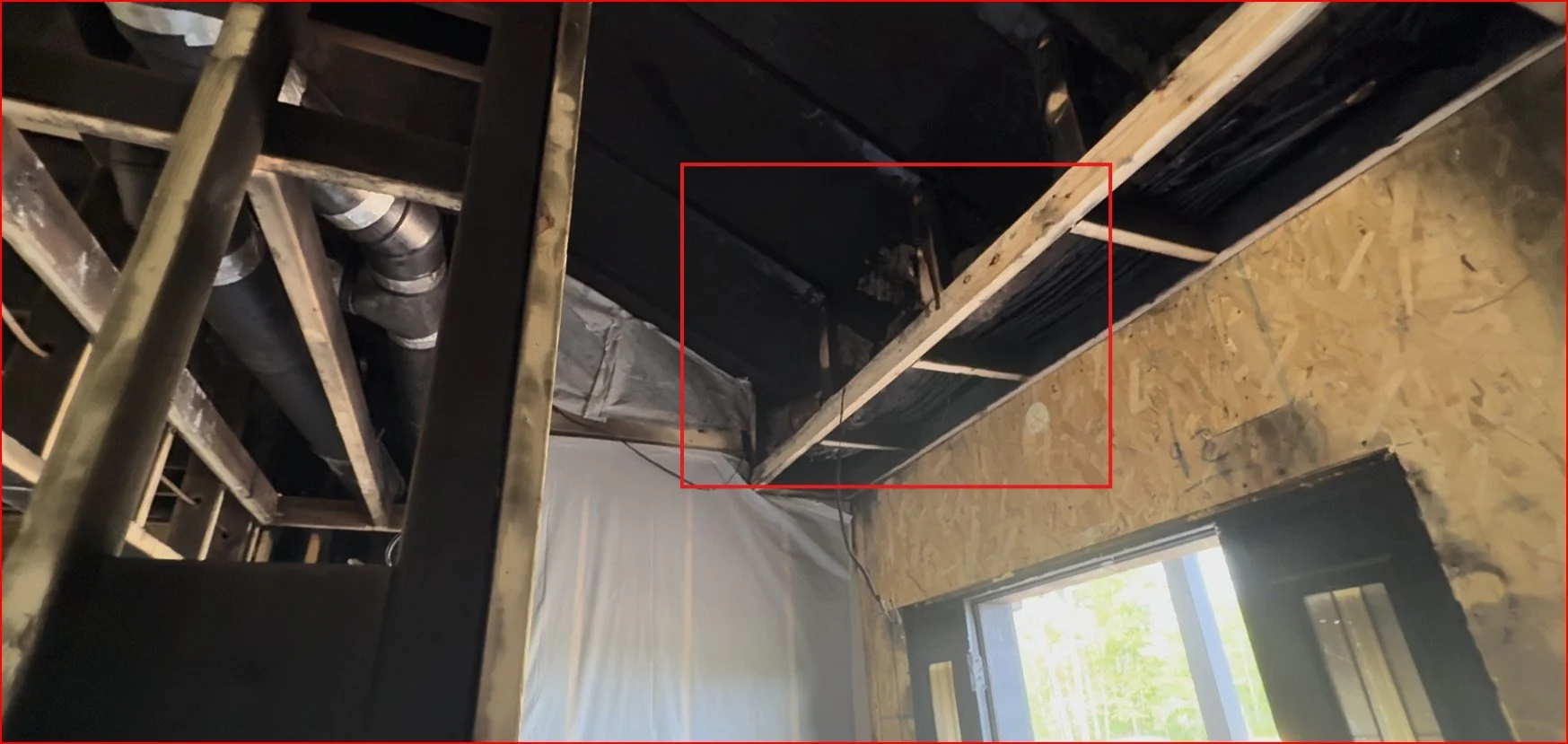
Above the front entrance, the roof panels had severe charring and foam melt-back, plus firefighter cuts. Core samples 14, 15, and 16 all showed failed bonds.
Verdict: Panels were replaced.
8. One-Story Area, South Roof Slope
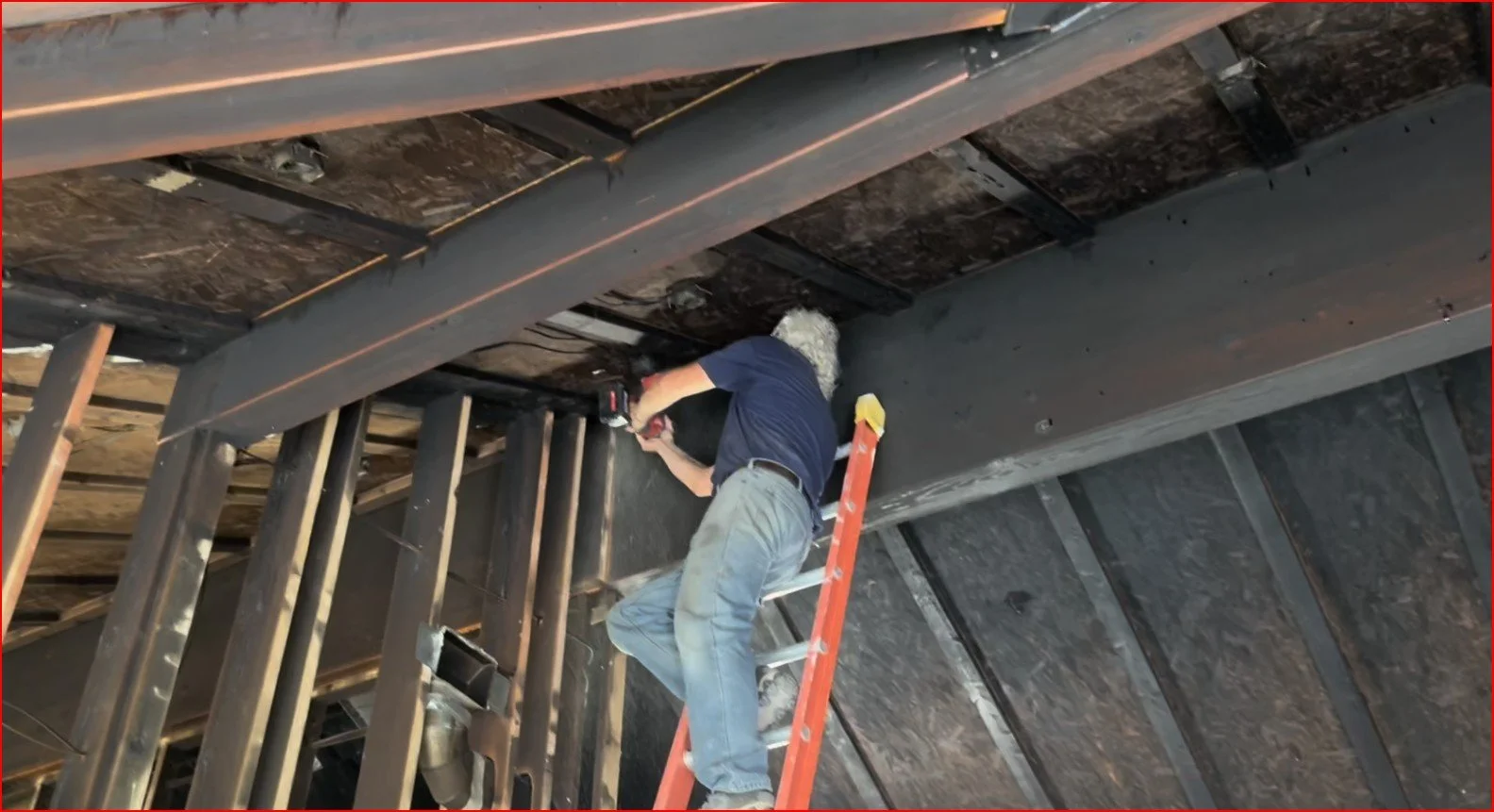
The other side of the same roof only had soot on it, with minimal charring. Core samples 17 and 18 showed no melt-back.
Verdict: Panels remained sound. Soot is a cleaning job, not a structural problem.
← Swipe to view full table →
| Area | What Protected It (or Didn't) | Core Samples | Result |
|---|---|---|---|
| Stairway | Drywall and wood ceiling | 1-3: bond held | Sound |
| 2nd floor, south wall | Distance from fire | 4-5: bond held | Sound |
| 2nd floor, north wall | Heat never reached panel | Firefighter cuts showed no damage | Sound |
| Garage door wall | Direct, sustained flame | 6-10: bond failed | Repaired, other structural elements carried the load |
| Garage door headers | Drywall ceiling shielded header zone | Visual: no damage over headers | Headers held, surrounding SIP replaced |
| Mechanical room south wall & roof | Uncovered, direct flame | 12-13: bond failed | Replaced |
| Mechanical room west wall | Plywood covering | 11: bond held | Sound |
| North roof slope | Direct flame | 14-16: bond failed | Replaced |
| South roof slope | Soot only | 17-18: bond held | Sound, cleaned |
Repair or Replace? How the Decision Was Made
The investigation didn't end with "the house had a fire." It ended with a clear, panel-by-panel list.
Areas that stayed or could be repaired:
Stairway walls and roof panels
Second floor south wall
Second floor north wall
Garage door wall panels, since other members were carrying structural load
Covered sections of the mechanical room west wall
One-story south roof slope (cleaning only)
Areas that needed replacement:
SIP material below the garage door headers
Mechanical room south wall and roof panels
One-story north roof slope
The deciding factor was never "how bad does it look?" It was "did the bond fail, and is that section carrying load?" If the bond held, the panel stayed. Small, localized damage in a sound panel can often be fixed by patching the OSB skin or injecting expanding foam. Where the bond failed in a section the house depends on for strength, we replaced that section. This is an engineering call made one panel at a time, which is why a general fire damage estimate often gets SIPs wrong in one direction or the other.
Dealing with fire or smoke damage on a SIP home and not sure which panels can stay? Talk to Joe Pasma, PE: he'll tell you what core sampling would show before anyone signs off on a repair scope.
Same Lessons, Different House
This isn't the first SIP fire we've documented. Our earlier SIP fire case study found the same patterns:
Foam melted back where the panel edges had no protective trim.
Charred OSB on its own did not mean the panel had failed.
Smoke spread soot far from the fire without causing structural damage.
Two different fires, different houses, panels from different manufacturers, and the same result. SIPs don't fail randomly. They fail in predictable, diagnosable ways, which is good news for anyone who has to decide on a repair.
Heard That SIPs Burn Like Crazy?
This case study shows the evidence. Our SIP Fire Myths article takes the seven most common fire fears about SIPs and checks each one against what we found in this house.
Read SIP Fire MythsWhat This Means for You
If You Own or Are Buying a SIP Home
Your drywall is doing real fire-safety work. Code requires it over interior SIP surfaces for exactly this reason, and this fire showed why. Keep it continuous, and don't leave panels exposed in finished spaces.
If You're a Builder
A SIP home is most vulnerable during construction, before the drywall, siding, and trim go on. The same is true of a stick-framed house. In Duluth, the worst damage happened where panels had no covering yet. Getting coverings on promptly and protecting exposed panel edges with trim reduces that risk. See our SIP Installation Guide for detailing basics.
If You're an Insurance Adjuster
Don't price a SIP fire claim from the surface. Char, soot, and smoke smell don't tell you whether a panel lost its strength. Core samples do. A SIP-specific forensic evaluation keeps you from paying to replace panels that only needed cleaning, and from missing panels that really did fail.
Frequently Asked Questions
What is EPS melt-back in a SIP fire?
EPS melt-back is when heat causes the foam core of a SIP to shrink and pull away from the wood skin. It starts once the foam gets hotter than about 180°F. When the foam pulls away, the glue bond that gives the panel its strength is lost in that area. It's the most important warning sign in a SIP fire investigation.
Does charred OSB mean a SIP panel has failed?
No. When OSB heats up, its surface chars, and that char layer actually slows heat from reaching the foam inside. In Duluth, several panels had charred coverings or surfaces but a perfectly good bond underneath. A panel has only failed when the char comes with foam melt-back and a broken bond.
Why were some SIPs undamaged when materials right next to them burned?
Because they were covered. Drywall, siding, plywood, and wood ceilings absorbed the heat and kept the panels behind them below the temperature where foam starts to melt. In the mechanical room, a plywood-covered wall survived intact while the uncovered roof above it had to be replaced.
How did the garage door headers survive when the SIPs around them didn't?
A drywall ceiling attached to the floor trusses shielded the header zone from the worst heat. Headers are structural framing that carries load, so they behave differently than foam-only parts of a panel. The SIP material below them was replaced, but the headers themselves held. Read more in our SIP Fire Myths article.
Why do you need core samples after a SIP fire? Can't you just look?
You can't see the glue bond from the outside. A core sample cuts a round plug through the panel skin so you can see whether the foam is still stuck to the skin. It's the only reliable way to know if a panel is still structurally sound. Learn more about SIP forensic analysis.
Can fire-damaged SIPs be repaired instead of replaced?
Often, yes. If the bond between the foam and the skin is still holding and the damage is limited to the surface or a small area, repairs like patching the OSB skin or injecting expanding foam can be realistic. A licensed engineer should make that call for each panel.
When do fire-damaged SIPs need to be replaced?
When the bond between the foam and the skin has failed in a section the building depends on for strength. In Duluth, that was the mechanical room roof, and the north roof slope above the front entrance. Those areas had melt-back and failed core samples.
Are SIP homes more vulnerable to fire during construction?
Yes, and so is every other type of house. Before drywall, siding, and trim go on, the panels don't have the protective layers a finished home has. In Duluth, the most severe damage happened where the SIP skins had no covering yet, or the fire was so intense that it consumed the drywall and the SIP panel. Code-required drywall in a finished home is there for exactly this reason.
Is smoke damage on a SIP a structural problem?
No. Smoke and soot are a cleaning problem. On the south roof slope in Duluth, the panels were covered in soot, but core samples showed no melt-back and a solid bond. Only sustained heat damages the bond.
What should insurance adjusters look for in a SIP fire claim?
Look for foam melt-back, check the bond with core samples, note which areas had protective coverings, check the condition of headers and other structural framing, and separate smoke-only areas from areas with direct flame. For background on how SIPs handle fire and code requirements, see Are SIPs Combustible?
Go Deeper
SIP Fire Myths: What's True and What's Not: the seven most common SIP fire fears, checked against this investigation.
SIP Fire Performance Case Study: how SIPs respond to full flame, high heat, and smoke-only exposure.
Are SIPs Combustible?: materials, drywall thermal barriers, and what the building code requires.
How SIPs Perform in Wildfire Zones: what solid-panel construction means for ember resistance.
SIP Forensic Analysis: What It Is, When You Need It, and How It Works: what a real SIP investigation looks like.
SIP Problems and Failure Modes: the most common ways SIP assemblies fail and how to spot them.
Fire Damage on a SIP Home?
PGS Consulting LLC provides independent, SIP-specific fire investigations, including core sampling and panel-by-panel repair vs. replacement recommendations, backed by 40+ years of engineering, manufacturing, and forensic experience.
Talk to Joe Pasma, PE