
SIP RESOURCES
How Much Do SIPs Cost?
A realistic SIP pricing guide for builders, owners, and developers, written by Joe Pasma, PE, with more than 40 years of SIP manufacturing, engineering, and field experience | Published May 2, 2026 | Updated October 19, 2026
Quick Answer
SIP panels cost between $7 and $20 per square foot of panel face. Depending on the panel type you order, the thickness required for your climate zone, how far panels need to ship, and your project size. The biggest single driver of that range is which panel type you choose: Blank, Prefabricated, or RTA. Each type carries a different material cost, a different labor requirement, and a different level of field risk.
SIP panels are not priced like lumber. There is no single number on a commodity board — the price you pay depends on what you order, how far it ships, how thick the panels need to be, and what the manufacturer includes in the quote. That range is wide enough to matter enormously to your project budget.
This guide breaks down exactly what drives SIP pricing, what each panel type realistically costs, and how to think about SIP costs in the context of your full project. We have been inside the plants, worked through the quotes, and helped owners, builders, and developers navigate these decisions for years. The goal here is to give you the clearest, most grounded picture of SIP costs available — so you can plan with confidence and avoid the surprises that derail budgets.
Key Takeaways
SIP panels range from $7 to $20 per square foot of panel face, before shipping and installation
Panel type (Blank, Prefabricated, or RTA) is the single biggest cost driver — it can shift your material cost by 40 to 60 percent before anything else changes
On a material-only basis, SIPs typically cost 10 to 25 percent more per square foot of wall than stick framing — but that comparison excludes insulation, sheathing, labor savings, and long-term energy costs
Shipping distance, panel thickness, roof-to-wall ratio, and spline type all move the final quote meaningfully
Roof panels run 15 to 25 percent more per square foot than wall panels on the same project
A finalized set of construction documents is required before you can get a reliable SIP quote
Jump to a section:
Why SIP Pricing Varies More Than You'd Expect
SIPs are not a commodity product. Unlike dimensional lumber, which trades on a fairly predictable board-foot market, SIP pricing is driven by several variables stacked on top of each other. The spread between the low end and high end is wide enough to matter significantly to your project budget.
Here is what moves the number:
Panel type is the biggest variable. Whether you order Blank panels, Prefabricated panels, or a Ready to Assemble (RTA) kit can shift your material cost by 40 to 60 percent before any other factor enters the picture. This is a systems decision, not just a cost decision. The panel type you choose affects labor hours, construction schedule, and field error risk as much as it affects the material line item.
Panel thickness drives both cost and performance. SIPs are commonly available in 4.5", 6.5", 8.25", 10.25", and 12.25" thicknesses. Thicker panels cost more at every step up the ladder. In higher climate zones that require high-performance envelopes, thicker panels are not optional. They are code-required. Expect a meaningful cost increase above 8.25".
Project size and order volume create economies of scale. A single custom home and a 50-unit production development do not price the same per unit, even with the same manufacturer. If you are a production builder or developer working at volume, that leverage is worth negotiating explicitly. First-time buyers on a single custom home typically pay near the top of the published range.
Shipping distance can surprise you. SIPs are delivered on flatbed trucks with specific offload requirements. Freight costs can add $0.50 to $3.00 per square foot or more, depending on how far you are from the nearest plant. Regional manufacturers exist across the U.S., but coverage is uneven. Sourcing from the closest plant is not always the best decision once you factor in fabrication capability and lead time.
Regional labor and installation costs vary significantly. A SIP crew in the Upper Midwest prices differently than one in the Pacific Northwest or Southeast. If you are bringing in a specialty crew from outside your area, mobilization costs add up fast. Understanding your local labor market and whether experienced SIP installers are available is part of the total cost picture.
First Cost vs. Total Cost
SIPs often carry a higher material cost than stick framing — but that first-cost comparison can mislead you. SIPs reduce on-site labor hours, minimize job-site waste, shrink HVAC sizing requirements, and deliver long-term energy savings that compound over the life of the building. When you evaluate a SIP quote, build a total cost of ownership model, not just a line-item comparison. For a deeper look at how the full 30-year comparison works, see our guide: SIPs vs. Stick Framing →
The Three SIP Panel Types — and What They Cost
The single biggest factor in SIP pricing is which type of panel you order. Here is how Blank, Prefabricated, and RTA panels differ in cost, labor requirement, and best use. Choosing the right type for your project is one of the most consequential decisions you will make before breaking ground.
Blank SIP Panels
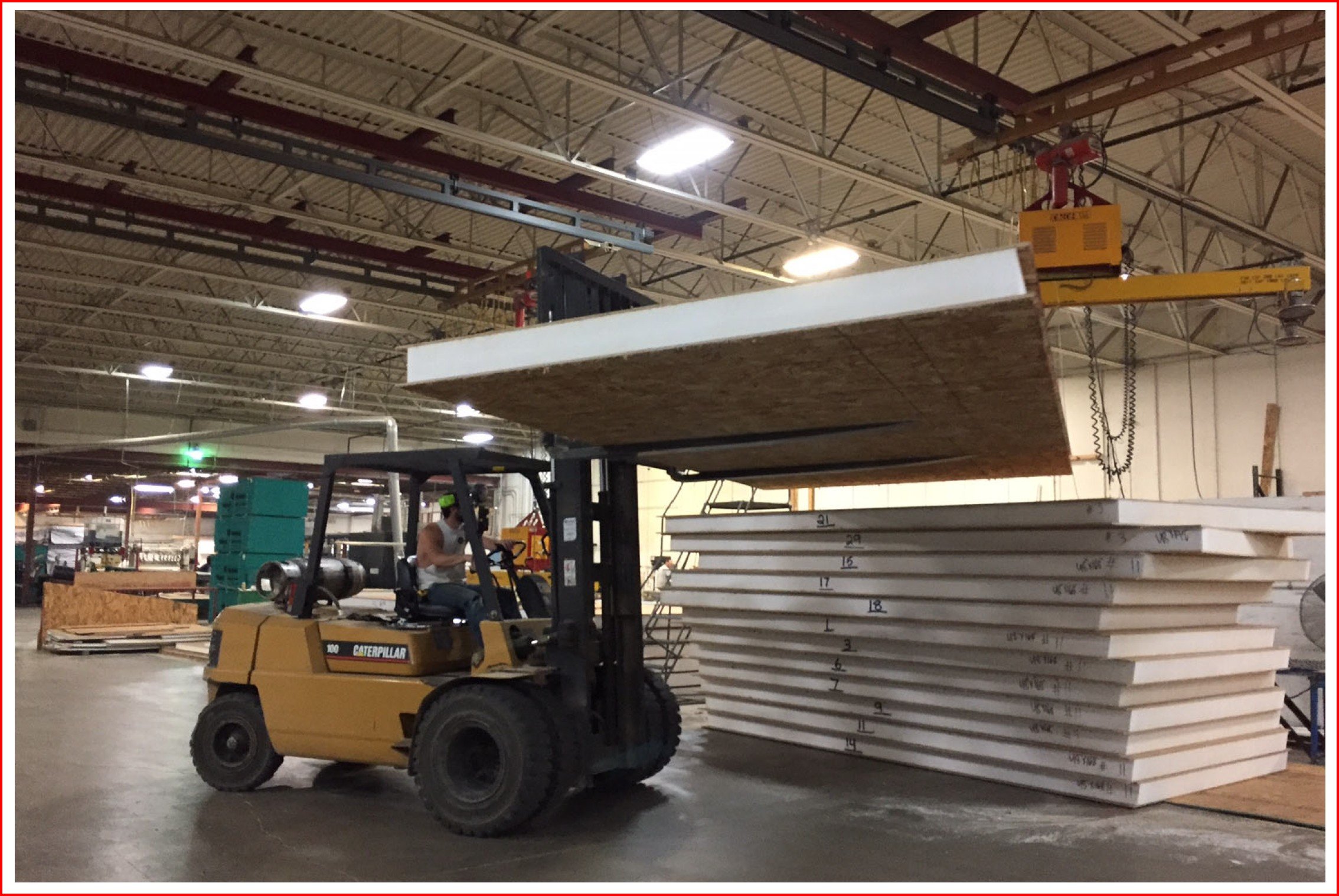
Blank panels are raw, uncut SIPs shipped directly from the manufacturer with no openings, no layout work, and no fabrication. They come exactly as they leave the press. Blank panels represent the lowest material cost of the three types, typically running $6 to $9 per square foot of panel face, with the range driven primarily by thickness and current market conditions.
The trade-off is field labor. Your crew handles all layout, cutting, window and door openings, spline installation, and electrical chase routing on-site. This requires genuine SIP experience — not just product familiarity, but crews who have worked from engineered drawings under real job-site conditions. When it goes well, a skilled crew can build efficiently and stay at the low end of total project cost. When it goes poorly, field cutting errors are expensive to fix and can cost more than the material savings you gained by skipping fabrication.
Best for: Experienced SIP crews, design-build firms with in-house cutting capability, or projects where the design is still evolving and field flexibility matters. If your plans are not finalized, Blanks give you room to adapt — but that flexibility comes with responsibility.
Prefabricated SIP Panels
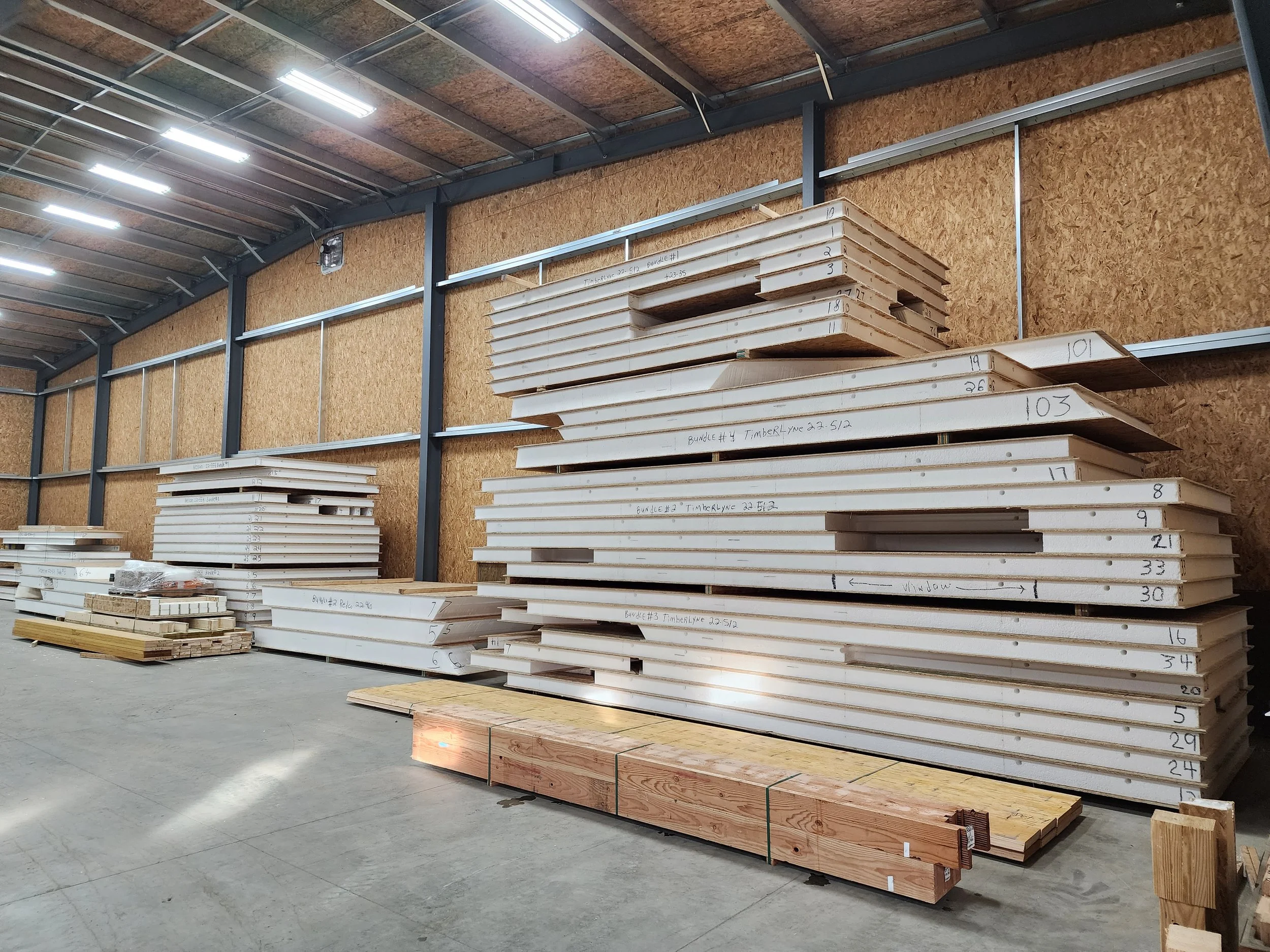
Prefabricated panels are cut to your engineered plans by the manufacturer before they ship. Window openings, door openings, spline locations, header pockets, and electrical chase channels are all pre-done in a controlled factory environment. You pay a fabrication premium, typically landing in the $9 to $14 per square foot range, but you get precision that is very difficult to match in the field.
The SIP manufacturer will typically supply the lumber required for sill plates, top plates, opening bucks, and other SIP framing material, but that material will not be pre-installed in the panels. Check with your specific manufacturer, since what is included varies.
Field labor is significantly reduced. Panels arrive numbered and sequenced to match your layout drawings, so the crew's job becomes assembly, not fabrication. Speed and accuracy on commercial projects, production homes, and any job where schedule certainty matters make Prefabricated panels a common choice among professional builders working at scale.
Best for: Commercial projects, production builders, and any project where speed, precision, and predictable labor hours are priorities. One important constraint: fabrication requires a finalized, SIP-engineered set of construction documents. If your drawings are still in flux, you are not ready to order Prefabricated panels.
RTA (Ready to Assemble) SIP Panels
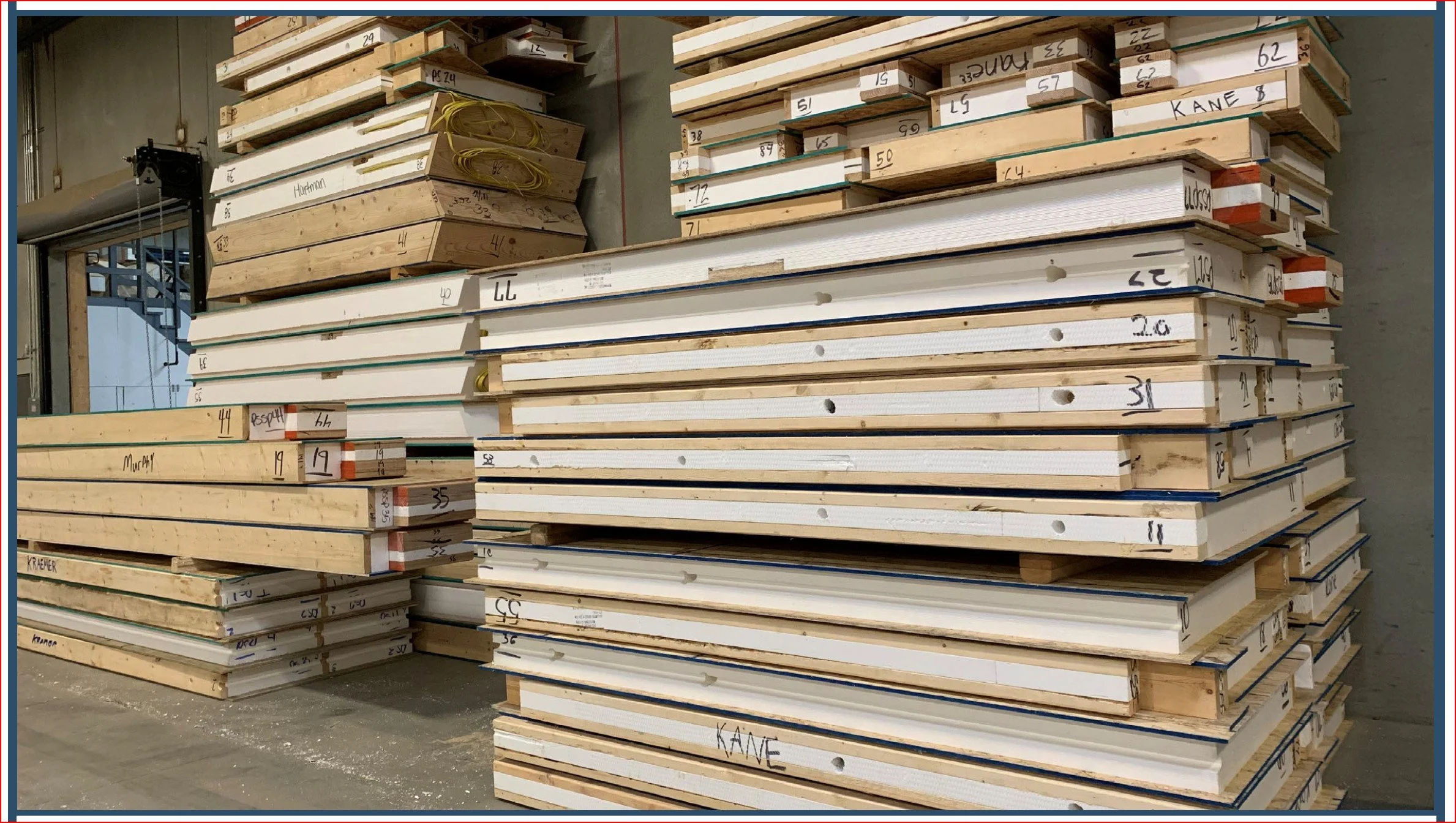
RTA panels are factory-cut to your plans, like Prefabricated panels, but they are typically delivered as a numbered kit with layout drawings, connection hardware, plating material, bucking material, and a step-by-step assembly guide designed to walk your crew through the build sequence. Pricing generally runs $10 to $20 per square foot, with the higher end reflecting the value-added packaging, documentation, supporting beams, lumber, and hardware inclusion.
The RTA format was developed largely for markets where speed of SIP installation is critical. Out-of-box usability is the highest of any panel type, and when the kit instructions are followed carefully, field error risk is low. The trade-off is flexibility: once panels are fabricated to the kit configuration, field modifications are difficult and costly. Changes after fabrication starts can mean reordering panels.
Best for: Markets where installation speed is the priority. If you value a guided build process and system integrity over field adaptability, RTA is worth the premium.
Panel Type Cost and Labor Comparison
On mobile, swipe left to view the full table.
| Panel Type | Typical Material Cost (per sq ft) | Field Labor Required | Best For | Key Risk |
|---|---|---|---|---|
| Blank | $6 to $9 | High | Experienced crews, evolving designs | Field cutting errors |
| Prefabricated | $9 to $14 | Moderate | Production builders, commercial projects | Requires finalized plans before order |
| RTA | $10 to $20 | Low | Speed-driven markets, guided installs | Limited field flexibility after fabrication |
Ranges reflect face square footage and vary by panel thickness, manufacturer, and region. Always request quotes from multiple suppliers. PGS does not sell panels — we help you evaluate them.
SIP Costs vs. Stick Framing — The Number Everyone Wants
Here is the direct answer: on a material-only basis, SIPs typically cost 10 to 25 percent more per square foot of wall than stick framing. That number is real, and we are not going to minimize it. But the material-only comparison is also one of the least useful numbers in the conversation — because it does not account for what SIPs replace or what they save.
A SIP wall panel replaces structure, continuous insulation, and exterior sheathing in a single component. When you build the comparison correctly — SIP panel cost versus framing lumber plus batt insulation plus continuous foam plus sheathing plus associated labor — the premium shrinks considerably. On well-run SIP projects, labor savings alone can offset 30 to 50 percent of the material cost premium. Add reduced HVAC sizing, lower long-term energy costs, and faster dry-in schedules, and the total cost picture often looks quite different from the first-glance material comparison.
It is also worth noting that the gap between SIPs and stick framing has narrowed meaningfully since 2020. Lumber price volatility — including the historic spikes seen post-pandemic — has made SIPs increasingly cost-competitive at the material level. When framing lumber is expensive and supply is unpredictable, the relative stability of SIP pricing becomes a real advantage for project budgeting. Always build your comparison against current lumber pricing, not historical averages.
The Comparison Trap
Most SIP cost comparisons pit panel price against lumber cost alone. That is an apples-to-lumber comparison, and it consistently overstates the SIP premium. A SIP wall panel replaces structure, insulation, and sheathing in a single component. Build the comparison to reflect the full enclosure system, including labor, or you are not comparing the same thing. We build project-specific SIP cost models. Contact PGS Consulting LLC before you commit to a quote.
What Affects Your Final SIP Quote
Trying to figure out what SIPs would actually cost on your specific project, not just the published range? Joe Pasma, PE can help you build an accurate, apples-to-apples cost model for your plans, climate zone, and panel type before you commit to a quote.
When you sit down with a manufacturer's quote, these are the variables most likely to move the number. Understanding them before you go to bid helps you compare proposals accurately and ask the right questions.
Panel thickness. Driven by your climate zone's energy code requirements. Higher climate zones require thicker panels, and each step up the thickness ladder adds cost. Expect a meaningful jump above 8.25".
Window and door openings. Each opening requires cutting, header framing, and spline work. More openings mean more fabrication time and cost, particularly on Prefabricated and RTA orders.
Roof panel vs. wall panel ratio. Roof panels are typically thicker than wall panels, carry more structural engineering considerations, and generally run 15 to 25 percent higher per square foot than wall panels on the same project. If your design has significant roof panel area — as many contemporary or shed-roof designs do — that ratio matters for your overall budget.
Spline type. The connection method between panels — surface spline, dimensional lumber spline, I-Joist, or LVL spline — affects both structural performance and material cost. LVL splines offer the highest strength and stiffness and are the most expensive option.
Supplied lumber and framing materials. The ancillary framing materials included in a quote vary by manufacturer. Items that may or may not be included: top and bottom plates, cap plates, dimensional lumber for opening bucks, and structural supporting beams and trusses. Always request a line-item breakdown and compare complete packages, not just panel prices.
Delivery distance from the plant. Freight on SIPs is substantial. A plant 100 miles away and one 800 miles away can produce dramatically different landed costs even if their panel prices are identical.
Project timeline and lead time. Most SIP manufacturers run 4 to 8 week production queues. Rush orders carry premiums. Build your procurement schedule early.
Structural engineering and stamped drawings. Required in most jurisdictions and necessary before fabrication begins on Prefabricated or RTA orders. Engineering fees are a real project cost — budget for them explicitly rather than treating them as a surprise.
SIP Panel Thickness and Typical Cost Range
On mobile, swipe left to view the full table.
| Panel Thickness | EPS R-Value | GPS R-Value | Common Use | Relative Cost |
|---|---|---|---|---|
| 4.5” | R-16 to R-20 | R-18 to R-23 | Mild climates, interior party walls | Lowest |
| 6.5” | R-24 to R-30 | R-27 to R-33 | Most residential wall applications | Low-moderate |
| 8.25” | R-33 to R-38 | R-37 to R-42 | Cold climate walls, roof panels | Moderate |
| 10.25” | R-42 to R-48 | R-47 to R-52 | High-performance and net-zero walls and roofs | High |
| 12.25” | R-50 to R-58 | R-55 to R-62 | Extreme climates, net-zero roofs | Highest |
Panel thickness determines more than price. It determines whether your building meets code. For a full breakdown of how SIP insulation values are measured by climate zone, how EPS and GPS cores compare at each thickness, and what real-world thermal performance looks like, see the SIP R-Value and Energy Performance guide.
Frequently Asked Questions About SIP Costs
Are SIPs cheaper than traditional framing?
Not at the material level — but total project cost often tells a different story. When you factor in insulation, sheathing, reduced HVAC sizing, and labor efficiency, SIPs frequently close the gap or come out ahead, especially on tighter building envelopes. The right answer depends on your specific project, your local labor market, and how you build the comparison. See our SIPs vs. Stick Framing guide for a full breakdown.
How do I get an accurate SIP quote?
Start with a finalized construction plan. Manufacturers price from actual panel square footage, panel thickness, and fabrication complexity. A concept sketch will not get you a reliable number. If your plans are not SIP-ready yet, that gap is worth addressing before you go to bid. It is something we routinely help clients navigate. Learn more about what SIPs are if you are still early in the evaluation process.
Do SIP panels cost more for roofs than walls?
Yes, typically. Roof panels are often thicker to meet higher R-value requirements, and they carry more structural engineering considerations than wall panels. Expect roof panels to run roughly 15 to 25 percent higher per square foot than comparable wall panels on the same project. If your design has significant roof panel area, that ratio matters for your overall budget.
What is included in a typical SIP package price?
It varies meaningfully by manufacturer. Some quotes include splines, connectors, adhesive, and shop drawings as part of the package price. Others price those items separately, which can make an apparently lower quote look better than it actually is. Always request a line-item breakdown. When comparing proposals, make sure you are comparing complete packages, not just panel prices.
Can PGS help me evaluate SIP bids?
Yes — that is exactly what we do. We help clients compare SIP proposals on equal footing, identify scope gaps, understand what a quote actually includes, and make a well-informed decision before they commit. We do not sell panels, which means our only interest is helping you make the right call for your project. Learn more about our consulting services.
What is the price difference between EPS and GPS SIP panels?
GPS panels typically carry a modest premium over EPS — often 5 to 15 percent more per square foot — in exchange for higher R-values per inch. That premium may allow you to use a thinner panel to meet code requirements in a given climate zone, which can partially offset the per-square-foot price difference. The right choice depends on your performance targets and what thickness range your project requires.
Explore the SIP Resources Library
This page is part of the PGS Consulting LLC SIP Resources hub -- an independent, engineer-authored library covering major aspects of SIP construction.
What Are SIPs?
A structural overview of Structural Insulated Panels: how they are built, how they perform, and why engineers specify them.
Read More →SIPs vs. Stick Framing
A detailed comparison of SIP and stick framing across cost, performance, speed, and long-term value.
Read More →SIP R-Value and Energy Performance
How SIP insulation values are measured, what real-world thermal performance looks like, and how SIPs compare to code minimums.
Read More →SIP Building Codes and Compliance
Code pathways, IRC and IBC provisions, evaluation reports, and what engineers and AHJs need to know.
Read More →SIP Installation Guide
Installation sequencing, connection details, common errors, and what proper field execution requires.
Read More →SIP Problems and Failures
The most common SIP failures, why they happen, and what forensic analysis reveals about root cause.
Read More →SIP Manufacturers
An independent review of the SIP manufacturing landscape: who makes them and what to evaluate before buying.
Read More →SIP FAQ
Answers to the most common questions about SIP construction, costs, performance, and code compliance.
Read More →About the Author
Joe Pasma, PE is a licensed professional engineer with more than 40 years of experience in SIP structural engineering, manufacturing operations, installation oversight, and forensic analysis. He has worked inside SIP plants across North America, reviewed hundreds of SIP projects from design through construction, and provided expert witness analysis in SIP-related litigation. PGS Consulting LLC provides independent SIP consulting, not tied to any manufacturer.
Learn About Our Consulting Services →