
Step 1
Intake and document review
Plans, shop drawings, engineering calculations, installation photos, weather history

Startup modular factories rarely fail for lack of demand. They fail when the build is too complicated to repeat. Here’s why SIPs make the factory simpler.
Written by Joe Pasma, P.E. | PGS Consulting LLC | SIP Engineering & Consulting | Published October 20, 2026
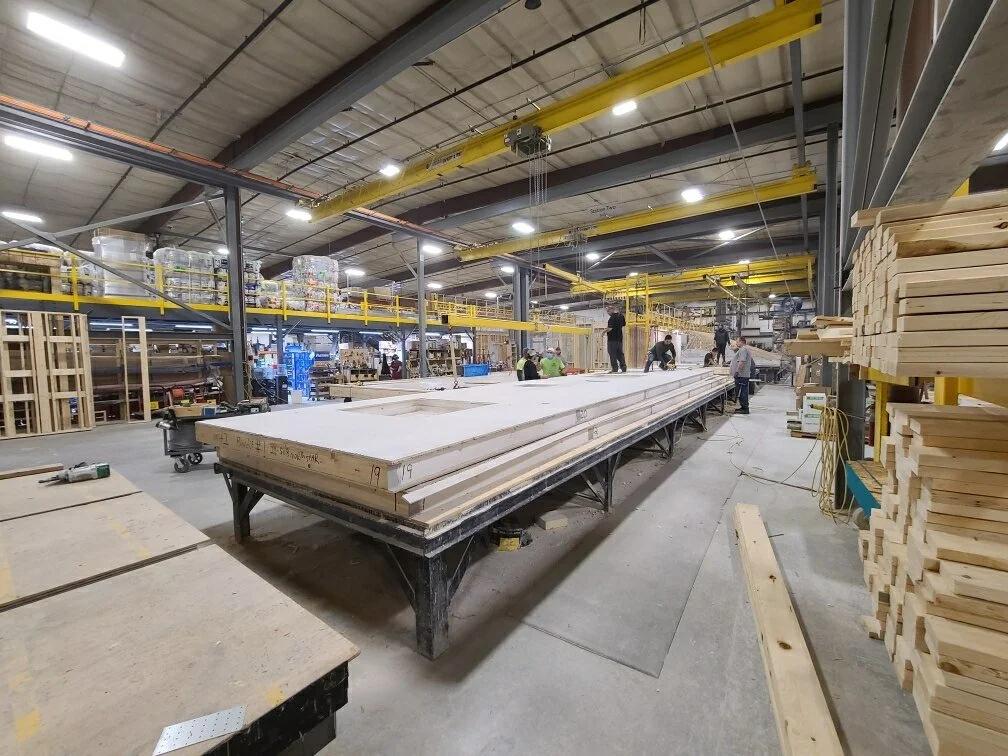
Starting a modular home factory is hard. Plenty of modular companies have closed their doors, and it usually isn’t because nobody wanted the homes. It’s because the factory couldn’t build them quickly, consistently, and without costly mistakes during its first couple of years.
The wall and roof system you choose has a lot to do with that. Builders call it the building envelope. Structural Insulated Panels (SIPs) give a new factory a simpler way to build a high-performance home: fewer steps, fewer trades, and fewer chances for something to go wrong. Here is what that means, and where the biggest opportunity is.
Most startup modular factories struggle because the build process is too complicated to repeat consistently, not because of a lack of demand.
SIPs combine framing, sheathing, and insulation into one factory-made panel, so a modular plant manages one envelope system instead of several components and multiple separate steps.
Fewer steps mean faster module production, easier training for new workers, and fewer places for quality problems to hide.
SIP-built homes are tight, quiet, and energy-efficient, which helps a new modular brand stand out with buyers, renters, and build-to-hold developers.
The biggest opportunity for SIP-based modular plants is in smaller towns outside major metro areas, where housing demand is greater than local builders can keep up with.
SIPs lower startup risk, but they don’t replace good engineering, ventilation planning, or careful detailing.
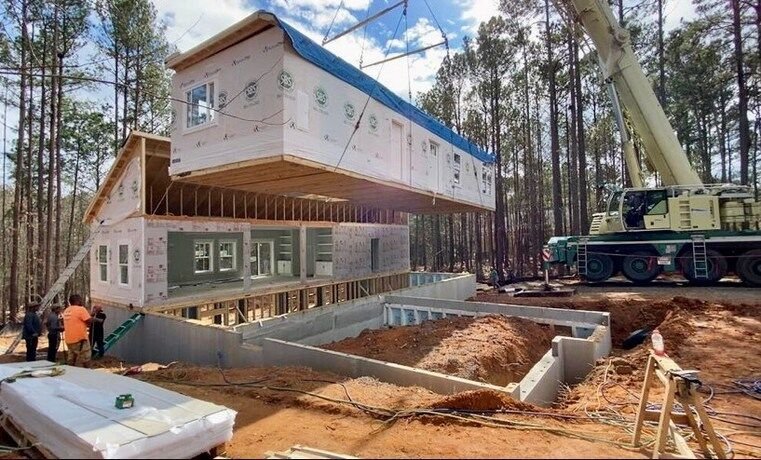
Modular construction means building most of a home inside a factory, in large finished sections called modules. The modules are trucked to the site and set on a foundation with a crane. Modular homes are built to the same state and local building codes as homes built on site. That’s different from manufactured homes, which are built to a federal HUD standard.
SIPs are a simple idea: a rigid foam core sandwiched between two structural skins, usually OSB (oriented strand board). One panel does the job of the framing, the sheathing, and the insulation all at once. If you’re new to them, start with What Are SIPs? A Plain-Language Guide.
SIPs show up in factory-built housing in two ways:
Panelized: flat wall and roof panels are shipped to the site and assembled there.
Modular (volumetric): panels are assembled into finished, three-dimensional boxes inside the factory, then shipped.
This article focuses on the second one: using SIPs as the envelope system inside a modular factory.
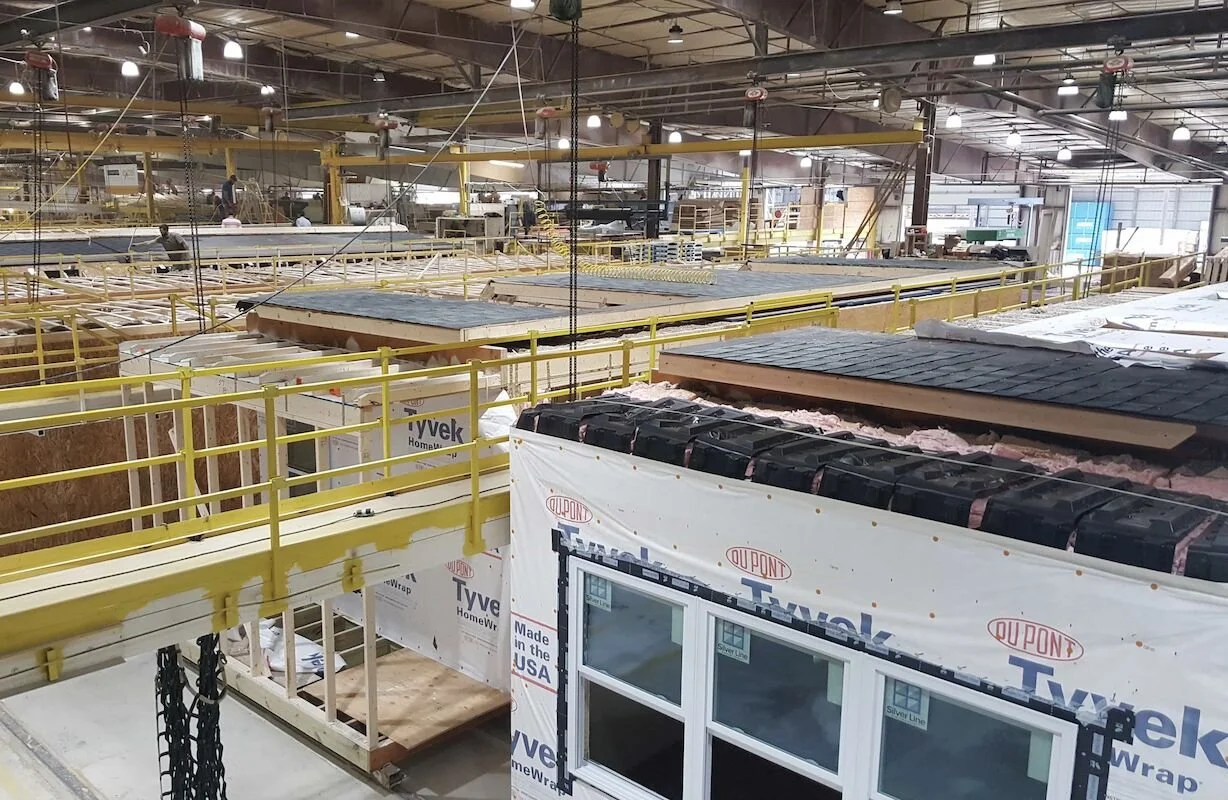
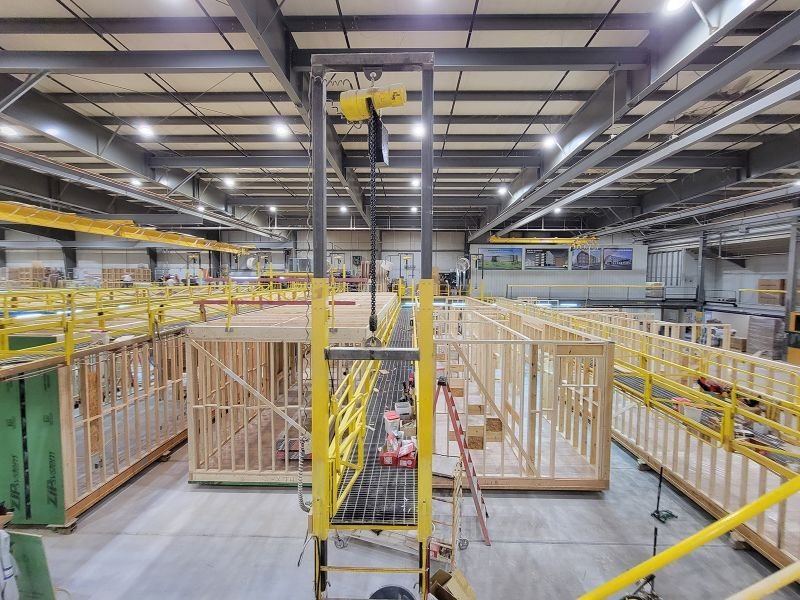
A factory makes money by doing the same thing well, over and over. Trouble starts when a new plant tries to copy site-built stick framing indoors.
A typical stick-framed wall isn’t one job. It’s several jobs stacked on top of each other: framing, sheathing, insulation, air sealing, and fixing thermal bridges (the spots where heat escapes through the studs). Each step needs its own skills and its own inspection, and each is a new chance for a mistake. An established factory with experienced crews can manage that. A startup with new hires and tight cash feels every extra step as lost time and money.
SIPs combine most of those steps into one panel that arrives cut to the plan. Here is how the two approaches compare on the factory floor.
← Swipe to view full table →
| Factory Factor | Stick Framing in the Factory | SIPs in the Factory |
|---|---|---|
| Wall build steps | Framing, sheathing, insulation, and air sealing done separately | One panel covers framing, sheathing, and insulation |
| Precision | Depends on each crew member's skill on each wall | Panels arrive pre-cut to the plan |
| Training new workers | Several different skills to learn | One repeatable assembly process |
| Quality checks | Many hidden layers to inspect | Fewer layers, fewer places for mistakes to hide |
| Insulation | Fit between studs, gaps are common | Continuous foam core, no gaps between studs |
| Airtightness | Depends on careful sealing at every layer | Fewer seams, though panel joints still need sealing |
A modular factory lives or dies by throughput: how many finished modules it can ship each week. SIPs help in three ways.
SIPs can enclose a module in hours, not days. Once the walls and roof are up, the next crews can start sooner: electrical, plumbing, and mechanical first, then finishes. Modules ship sooner, and the factory gets paid sooner. (Wondering how wiring and plumbing work inside a solid panel? See Are SIPs Hard to Wire or Plumb?)
In a stick-framed factory, work tends to pile up at framing, sheathing, insulation, air sealing, and thermal-bridge fixes. SIPs fold most of those steps into one, so there are fewer stations where a module can sit waiting.
Factories run best on repetition, and SIPs repeat by nature. A SIP line uses the same splines (the connector strips that join panels together), the same fastening patterns, the same panel thicknesses, and the same joint details, module after module. That repetition is what makes a factory efficient.
A startup factory only becomes efficient when the building system is simple, predictable, and repeatable. Startup modular factories need a high-performance envelope that is easy to manufacture, easy to train, and easy to scale. SIPs are not just a building system. They are a factory strategy.
-- Joe Pasma, PEA new modular company needs a reason for buyers to pick it over everyone else. SIPs give it a product people can feel, even if they never learn why.
Comfort: Continuous insulation keeps indoor temperatures steady, without the cold rooms and drafts common in leaky houses.
Quiet: A tight, solid wall cuts down on outside noise, which matters a lot in apartments and townhomes.
Lower utility bills: SIP envelopes can reduce heating and cooling loads by roughly 20 to 50 percent, depending on climate and design. More on that in SIP R-Value and Energy Performance.
Fewer hiding spots for moisture and pests: No hollow wall cavities means no loose insulation to settle and fewer places for moisture or critters to collect. Seams and penetrations still need proper sealing. See Why OSB Rots in SIPs and How to Prevent It.
Durability: A well-detailed SIP envelope holds its shape and performance for decades.
This matters most to the people who buy and own modular buildings long term. Build-to-hold developers care about maintenance calls, utility costs, and tenants who renew their leases. SIP apartment projects like PrairiE Lofts in Luverne, Minnesota have shown what this looks like in real buildings. Read more in SIPs for Rental Housing: A Build-to-Hold Developer’s Guide.
A tight SIP module needs a plan for fresh air. Because so little air leaks through the walls and roof, the home depends on mechanical ventilation, usually a balanced Energy Recovery Ventilator (ERV), to bring in fresh air and remove stale, humid air. Build the ventilation design into the standard module from day one rather than treating it as an add-on.
The next wave of modular growth isn’t likely to happen in big cities. It’s more likely in second- and third-ring communities: smaller towns and regional hubs outside major metro areas.
These communities often have:
Land that’s available and affordable for a factory
Less competition for workers
Strong demand for workforce housing
Local banks willing to back a local business
City leaders looking for economic development wins
They also need exactly what a SIP modular plant can build: small apartment buildings, townhomes, workforce housing, ADUs (accessory dwelling units), and small commercial buildings. A SIP modular plant can deliver those with lower operating costs for owners, less maintenance, faster move-in dates, and happier tenants. It also creates local jobs, which helps earn trust with city councils and lenders.
FORT+HOME (Fort Homes LLC) is a modular manufacturer in Grand Junction, Colorado, building homes with SIP construction in a year-round factory. Its product line runs from small detached cottages to multifamily workforce housing, serving communities across the Rocky Mountain region.
The model is a good blueprint for a SIP-based modular startup: a SIP shell, standardized layouts, repeatable window and door openings, predictable assembly, and a simpler factory workflow. It’s also located in exactly the kind of regional market described above.
Planning a modular factory or adding SIPs to your production line? Every plant is different. Product mix, shipping distance, panel supplier, and your state’s modular approval process all change what will work. Talk to Joe Pasma, PE, for an independent SIP review with no manufacturer affiliation, so you get a straight answer before you invest in tooling.
New modular factories tend to get hurt by the same few problems: framing errors, insulation gaps, air leaks, moisture issues, inconsistent quality control, and slow production. SIPs reduce that risk in three key areas.
Training risk: New workers can learn basic SIP assembly in days, not months. Speed and consistency keep improving over the first several modules. (See Are SIPs Hard for Subs to Learn?)
Quality control risk: Panels arrive engineered and cut to the plan, so there are fewer measurements and cuts to get wrong on the line.
Moisture risk: A SIP module is enclosed quickly, and its solid walls have no hollow cavities to trap water. Modules still need to be wrapped and protected for shipping and setting.
A modular plant is only as consistent as the panels coming in the door. Browse North American and international SIP manufacturers in one place, then compare your options before you commit to a supplier.
View the SIP Manufacturers DirectorySIPs make a factory simpler. They don’t make it automatic. A few things still need real attention:
Engineering still matters. A module has to handle normal building loads plus the stress of being trucked down the highway and lifted by a crane. Headers, point loads, and panel connections all need to be designed correctly. See Do SIPs Need an Engineer?
Details still matter. Unsealed panel joints and poorly flashed openings can still cause moisture problems. See Common SIP Problems and Failures.
Design decisions happen earlier. Panels are cut before they arrive, so late changes cost more. Lock in layouts and openings up front.
Code approvals still apply. Modular homes still go through state modular programs and inspections. See SIP Building Codes and Compliance.
SIPs aren’t a business plan. Financing, a sales pipeline, and a realistic shipping radius still decide whether a plant survives.
Many modular startups pitch energy efficiency, sustainability, and resilience. SIPs back that pitch up. Minimal thermal bridging and a tight envelope help homes meet modern energy codes without complicated wall assemblies. Lower energy use cuts operating carbon year after year. SIPs also perform well in cold climates and, when detailed correctly, in wildfire-prone areas. Learn more in Can SIPs Be Used in Moist or Cold Climates? and How SIPs Perform in Wildfire Zones.
A startup modular factory needs a simple, predictable, high-performance envelope. SIPs give it one. They simplify the factory floor, speed up production, reduce early risk, and produce a home buyers and renters can feel the difference in. They also open the door to the market with the most room to grow: smaller communities that need quality housing and don’t have enough builders to supply it.
As modular construction scales across the country, SIPs are well positioned to help make it happen.
Yes. SIPs work well in modular construction because they combine framing, sheathing, and insulation into one pre-cut panel. In a modular factory, SIP wall and roof panels are assembled into finished modules indoors, then shipped and set on site.
A startup factory needs a build process that’s simple and repeatable. SIPs replace several separate steps (framing, sheathing, insulation, and much of the air sealing) with one panel. That means faster production, easier training, and fewer quality problems during the factory’s critical first years.
Modular homes are built in a factory to the same state and local building codes as site-built homes, then set on a permanent foundation. Manufactured homes are built to a federal HUD standard instead. SIPs are most commonly used in modular and panelized construction.
With panelized construction, flat SIP wall and roof panels are shipped to the job site and assembled there. With modular construction, the panels are assembled into finished three-dimensional modules inside the factory, then shipped and set by crane.
Generally, yes. SIPs provide minimal thermal bridging and a tight envelope, which can reduce heating and cooling loads by roughly 20 to 50 percent compared to typical framing, depending on climate, design, and mechanical systems.
Basic SIP assembly can typically be learned in days rather than months, because the process repeats the same panel connections and fastening patterns. Speed and consistency keep improving over the first several modules.
SIPs have no hollow wall cavities, which removes many of the places moisture typically collects. Moisture problems can still happen if panel joints, roof edges, or penetrations aren’t properly sealed and flashed, or if the home lacks proper mechanical ventilation.
Yes. Modules must handle normal building loads plus the stress of highway transport and crane lifting. An engineer experienced with SIPs should review panel layouts, headers, point loads, and connections before production begins.
Smaller towns outside major metros often have affordable land, less competition for workers, strong demand for workforce housing, and local lenders and city leaders who want to support local jobs. SIP modular plants can deliver the small multifamily buildings, townhomes, and ADUs these communities need.
Yes. Developers who plan to own a property long term benefit from the lower utility costs, reduced maintenance, and quieter, more comfortable units that a tight SIP envelope provides, along with the faster delivery of modular construction.
PGS Consulting LLC provides independent SIP structural engineering, module design review, and production guidance for modular manufacturers and developers, backed by 40+ years of engineering, manufacturing, and installation oversight experience.
Talk to Joe Pasma, PE
A room-by-room look at a real SIP house fire in Duluth, Minnesota: what burned, what didn’t, and how 18 core samples decided which panels could stay and which had to go.
Written and Analyzed By Joe Pasma, PE | PGS Consulting LLC, Licensed Professional Engineer | 40+ Years in SIP Engineering, Manufacturing, and Forensic Analysis | Published October 9, 2026
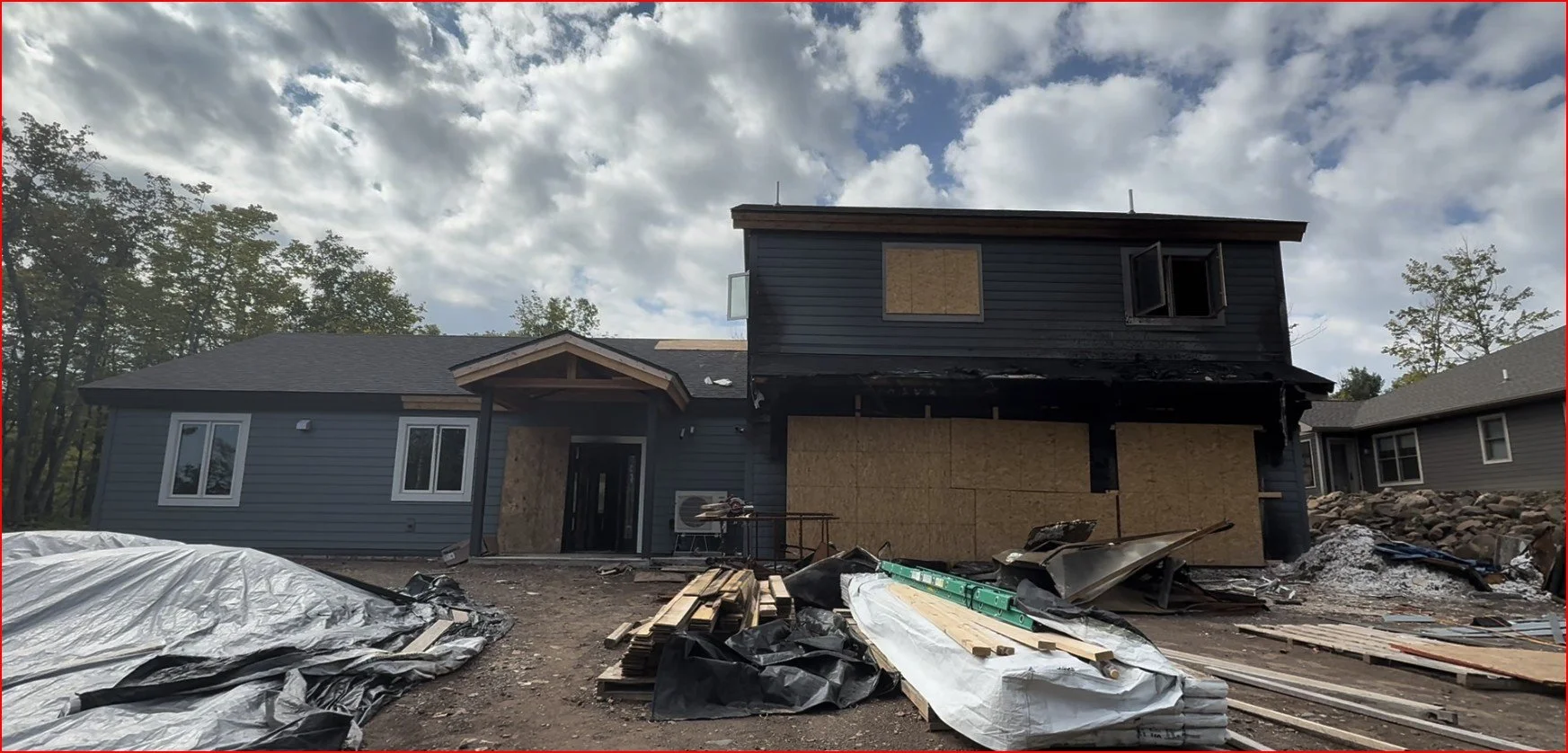
House Fire Involving SIP Roof and Wall Panels
When a house built with structural insulated panels (SIPs) catches fire, everyone asks the same question: does the whole thing have to come down? In this case, the answer was no. Some panels had to be replaced. Many others came through the fire structurally sound, sometimes just a few feet from areas that burned badly.
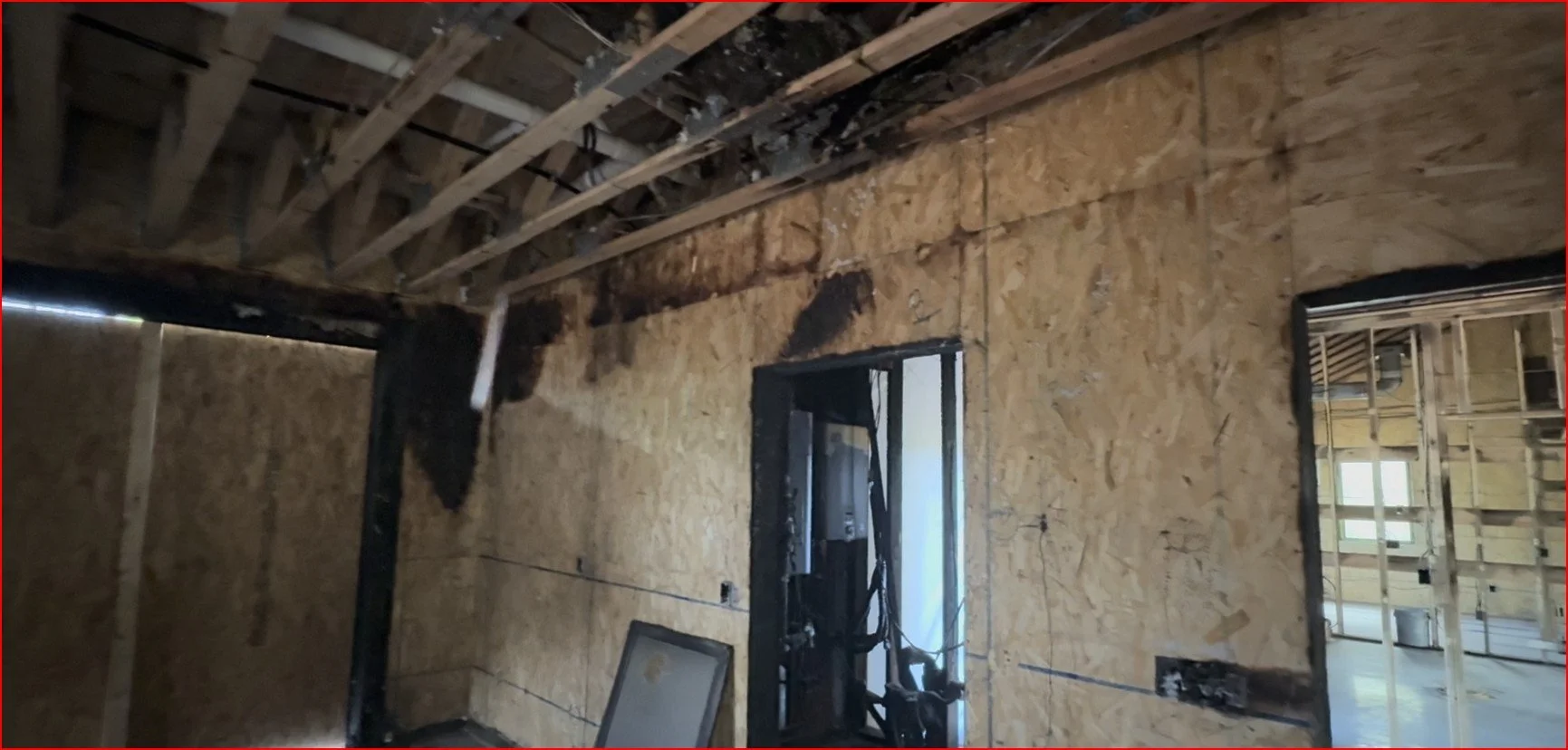
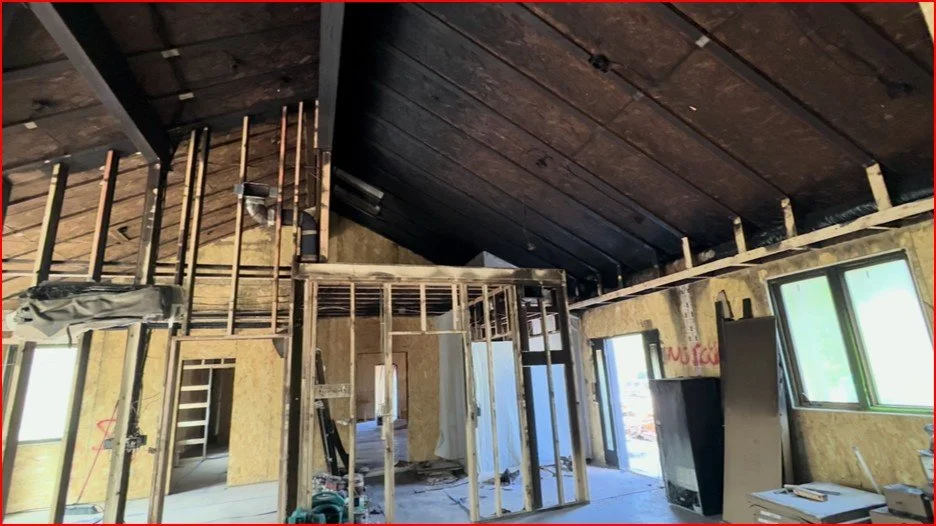
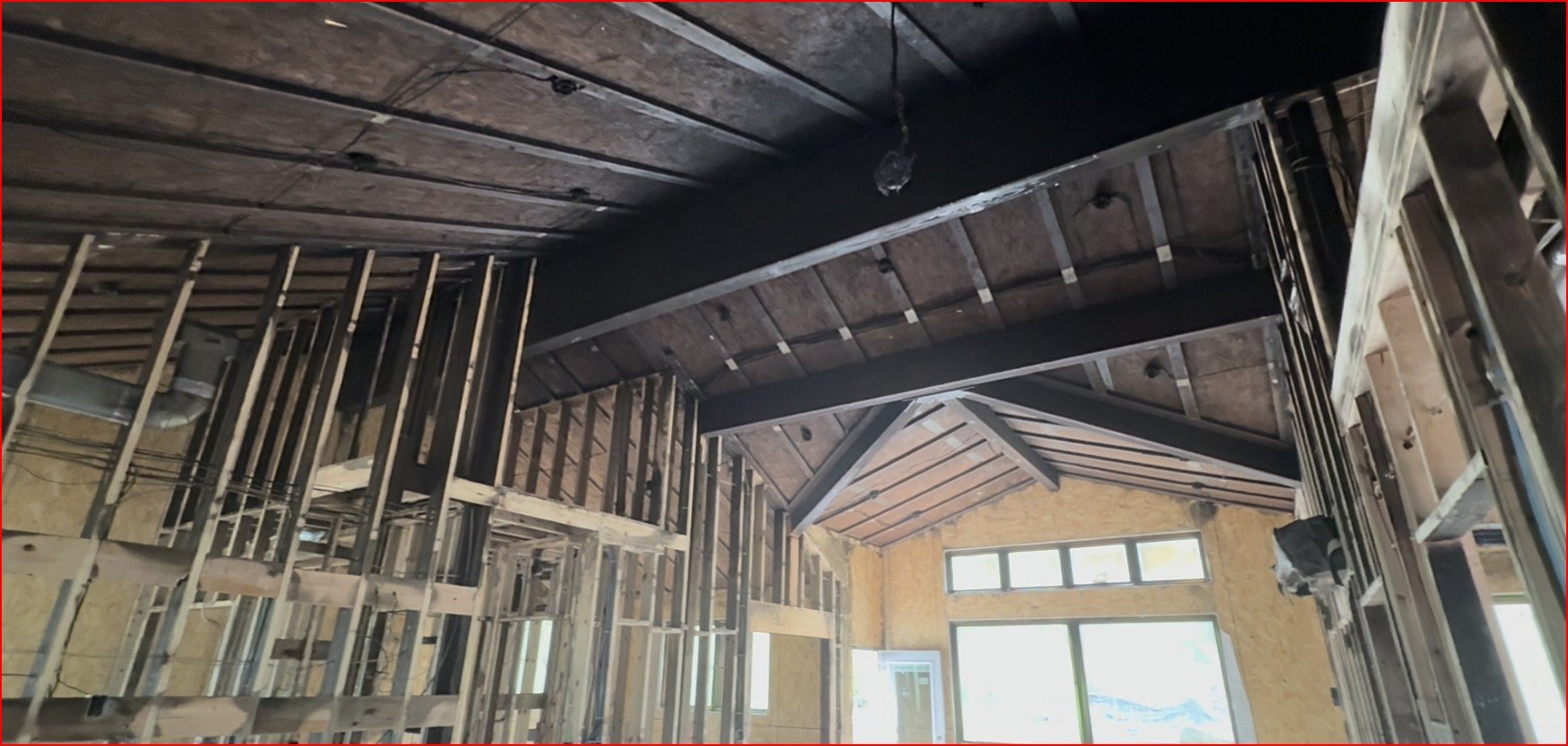
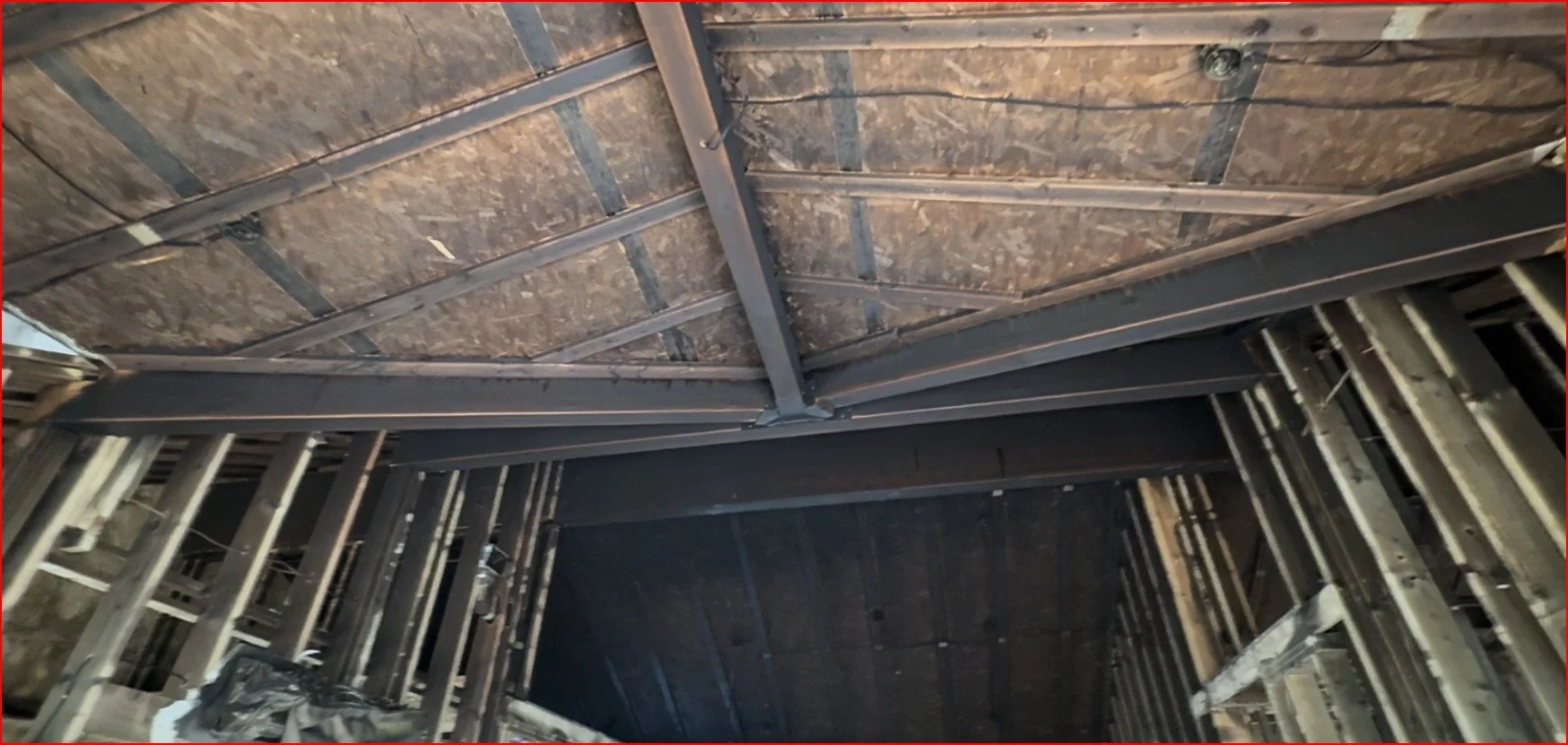
In August 2026, PGS Consulting LLC investigated a residential SIP fire in Duluth, Minnesota. The home was nearing completion but was still under construction. The fire started in the garage and spread into parts of the home and garage's SIP walls and roof. We cut 18 core samples, reviewed 87 videos, and went room by room to sort out what was damaged, what wasn't, and why.
If you read our SIP Fire Myths article, this is the house behind it. Below is the full room-by-room breakdown, so you can see exactly what fire does to a SIP and what it doesn’t.
← Swipe to view full table →
| Detail | Summary |
|---|---|
| Location | Duluth, Minnesota |
| Investigation date | August 2026 |
| Project type | Residential home under construction, SIP exterior walls and roof |
| Fire origin | Attached garage |
| Evidence reviewed | 18 core samples, 87 videos, photo documentation |
| Areas studied | 8 zones, from untouched to total loss |
| Outcome | Panels protected by drywall, siding, plywood, or wood ceilings stayed sound. Some panels hit by direct, sustained flame lost their structural bond and were replaced. |
The fire did not damage the house evenly: some SIPs were a total loss, while others a few feet away had no structural damage at all.
Coverings made the biggest difference: drywall, siding, plywood, and wood ceilings shielded the panels behind them, even when those coverings were badly charred.
Burnt wood on the surface is not the red flag: the real warning sign is foam that has melted away from the wood skin, called EPS melt-back.
Core samples settle the question: of 18 samples, 8 showed a solid bond and 10 showed a failed bond. Every failed sample came from an area the fire hit hard and directly.
Structural framing held up differently: the garage door headers came through undamaged, even though SIP material right around them had to be replaced.
Repair vs. replace is a panel-by-panel call: this home needed targeted replacement, not a teardown.
A SIP is a sandwich, like an Oreo cookie with vanilla wafers. In the middle is a thick layer of rigid foam called EPS (expanded polystyrene). On each side is a wood panel called OSB (oriented strand board), which we'll call the "skin." The foam and the skins are glued together.
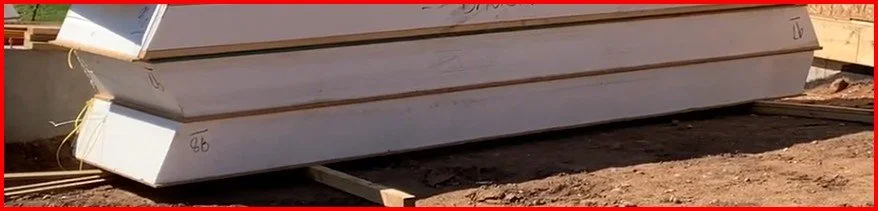

That glue bond is the secret to a SIP's strength. On their own, foam and OSB aren't very strong. Bonded together, they work as one stiff, strong panel, the same way an I-beam is stronger than its separate parts. Engineers call this "composite action."
So when we investigate a fire, we're not just asking "did it burn?" We're asking one specific question: is the glue bond between the foam and the skin still holding? If yes, the panel is usually still doing its job. If no, that part of the panel has lost its strength.
New to SIPs? Start with What Are SIPs? or our guide to SIP core types and materials.
EPS foam starts to soften once it gets hot, and it begins losing its structural integrity at roughly 180°F. That's well below the temperature it takes to burn wood. OSB reacts differently: when heated, its surface chars first, and that char layer acts like a heat shield that slows heat from reaching the foam underneath. That's why a panel can look scorched on the outside and still have a perfectly good bond inside. You can't tell which is which by looking. You have to cut a sample.
The fire started in the attached garage and spread into parts of the home. The house was still under construction, with SIPs used for the exterior walls and roof. That detail matters, because it meant the home was a mix of finished and unfinished areas:
Some SIPs were already covered with drywall, siding, plywood, or a tongue-and-groove wood ceiling.
Other SIPs had no covering at all, with the bare OSB skin exposed to the room.
Firefighters cut openings in some walls and roof sections to check for hidden fire.
The mechanical room between the house and the garage was a total loss.
That mix of covered and uncovered panels turned the house into a natural side-by-side test. We could compare protected and unprotected SIPs that went through the same fire.
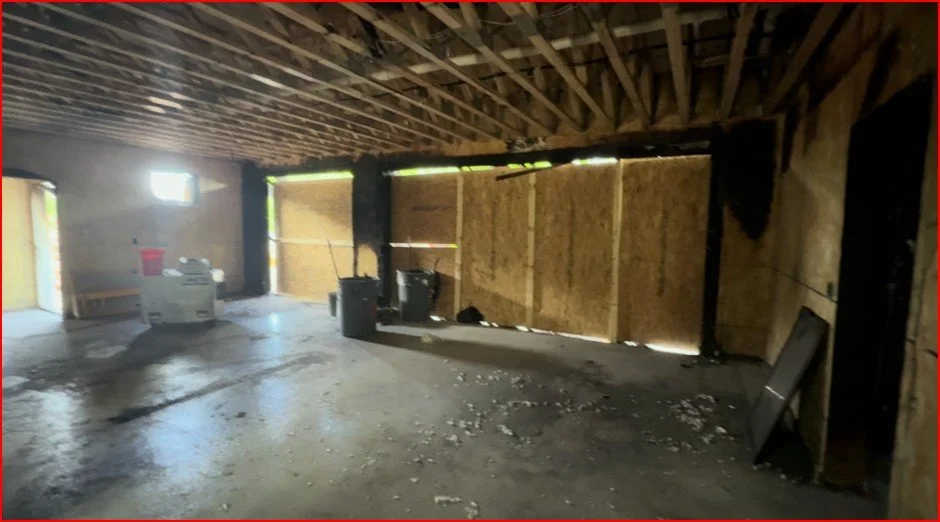
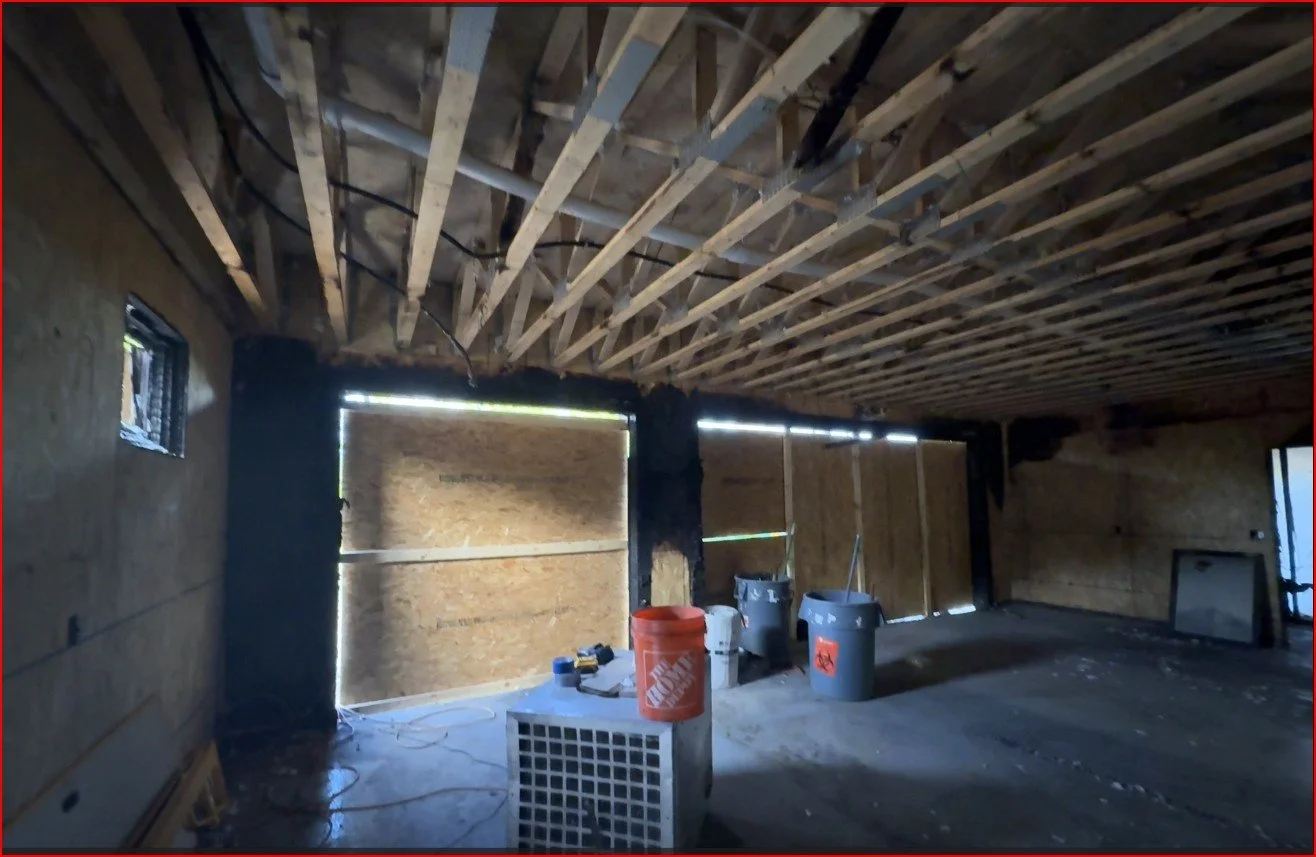
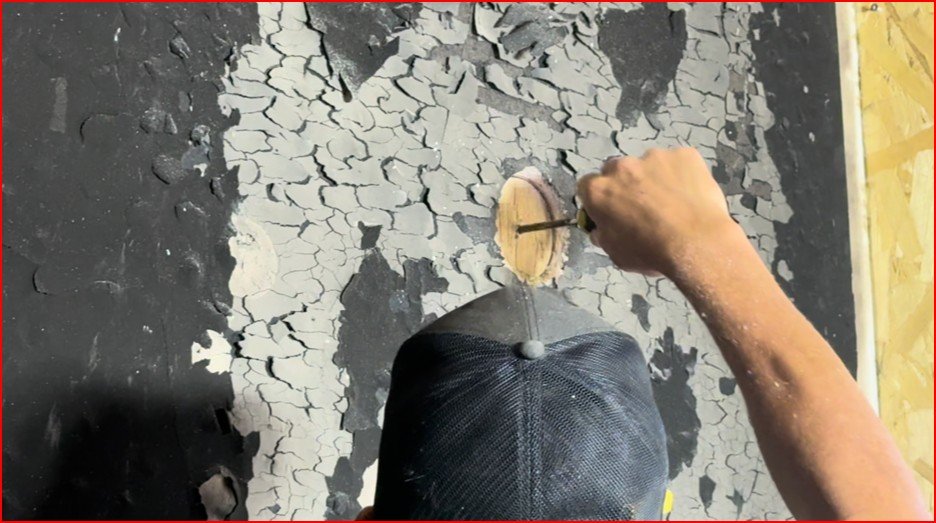
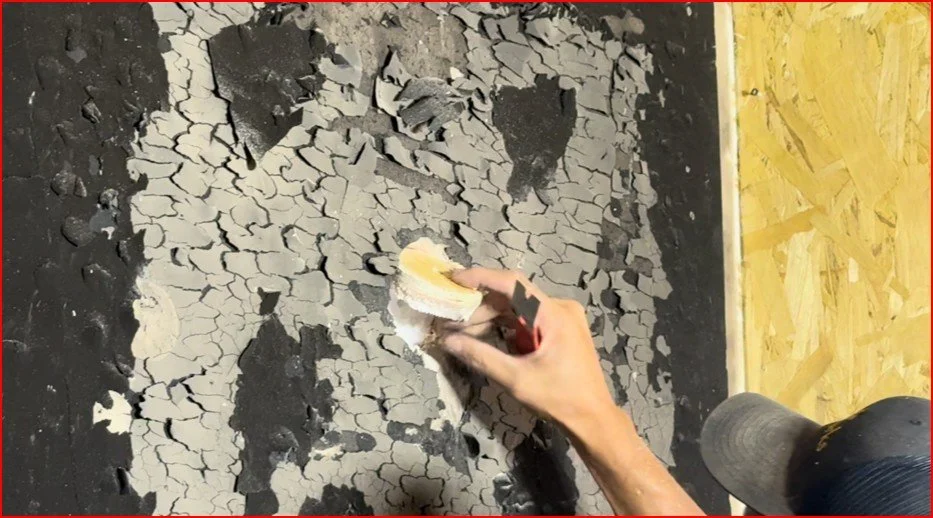
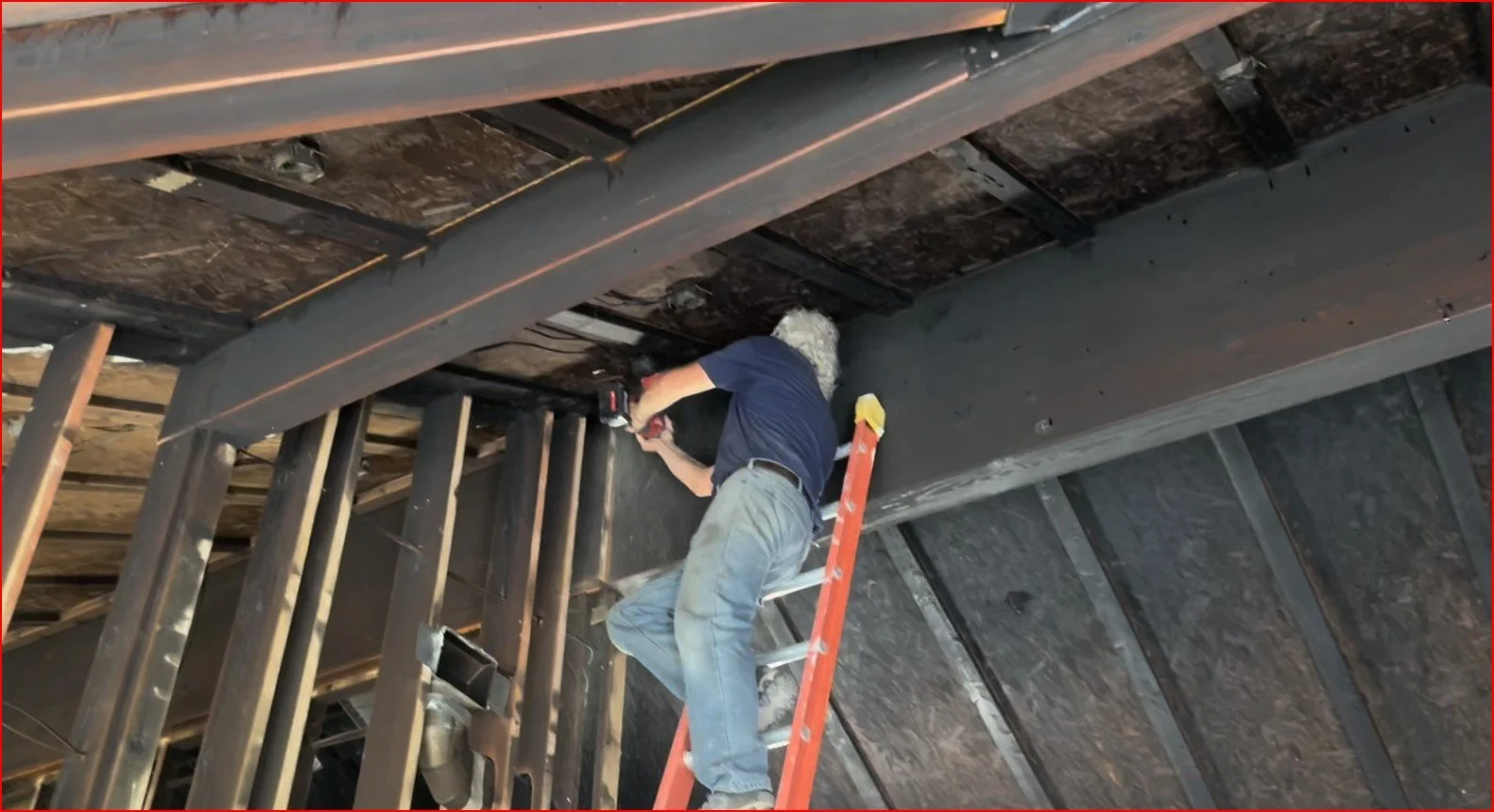
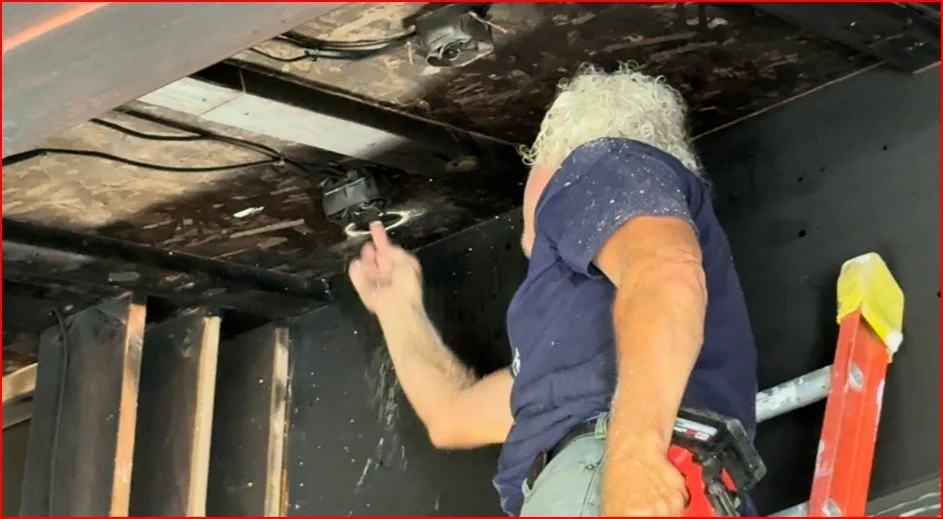
A core sample is a round plug cut through the panel skin with a hole saw. It shows you all three layers (skin, adhesive, foam) exactly as they are inside the wall or roof. panel Think of it like cutting a slice out of a layered cake to see whether the frosting is still holding the layers together.
Here's what we look for:
A good bond: when you pull the skin away, chunks of foam stay stuck to the wood. This is called "foam tear-out," and it means the glue is stronger than the foam itself. That's a healthy panel.
A failed bond: the foam has melted back and pulled away from the skin, leaving a clean gap where the glue line used to be. That section has lost its strength.
Looking at the surface can't tell you this. A badly charred skin can sit on top of a perfectly healthy panel, and that's exactly what we found in several rooms.
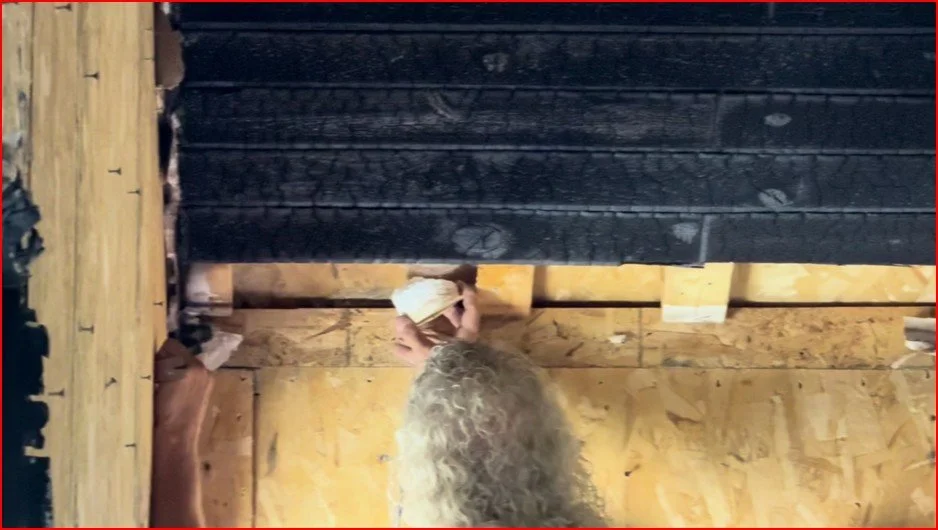
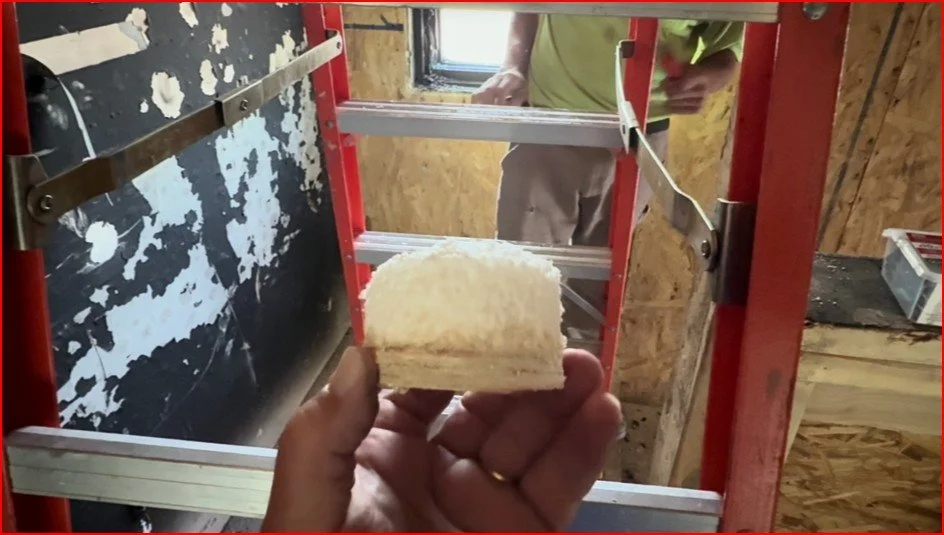
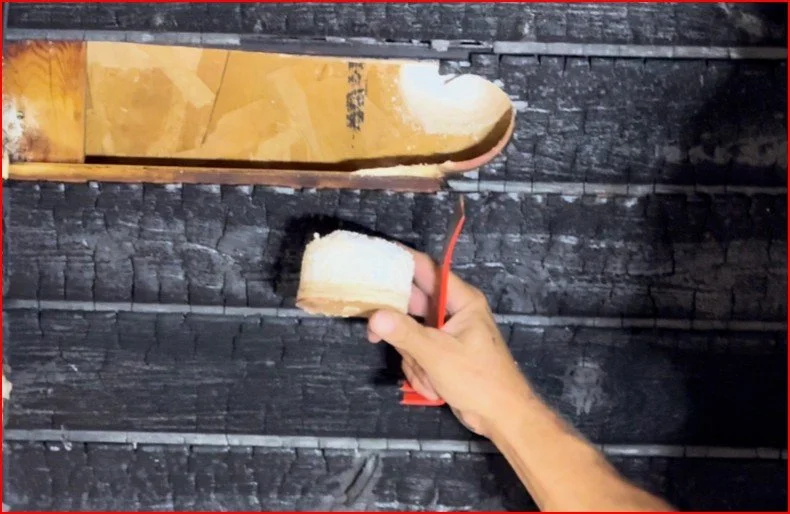
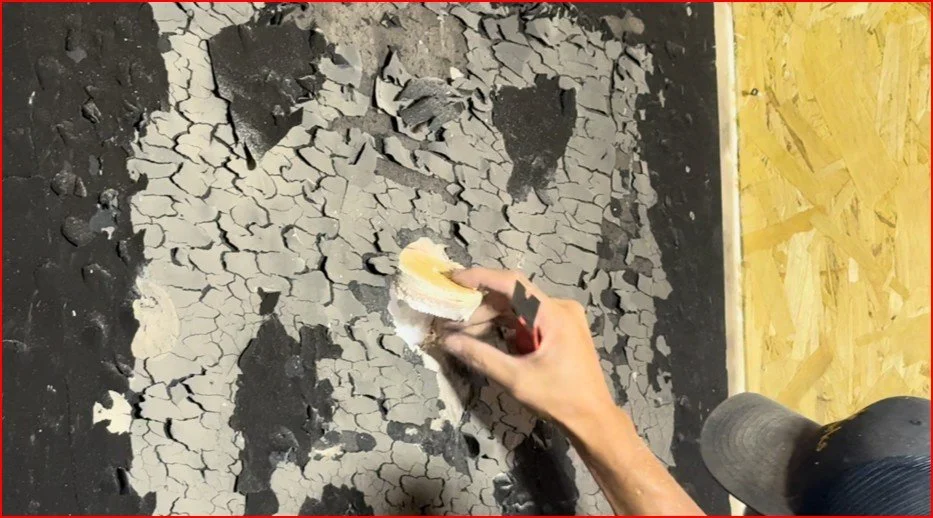
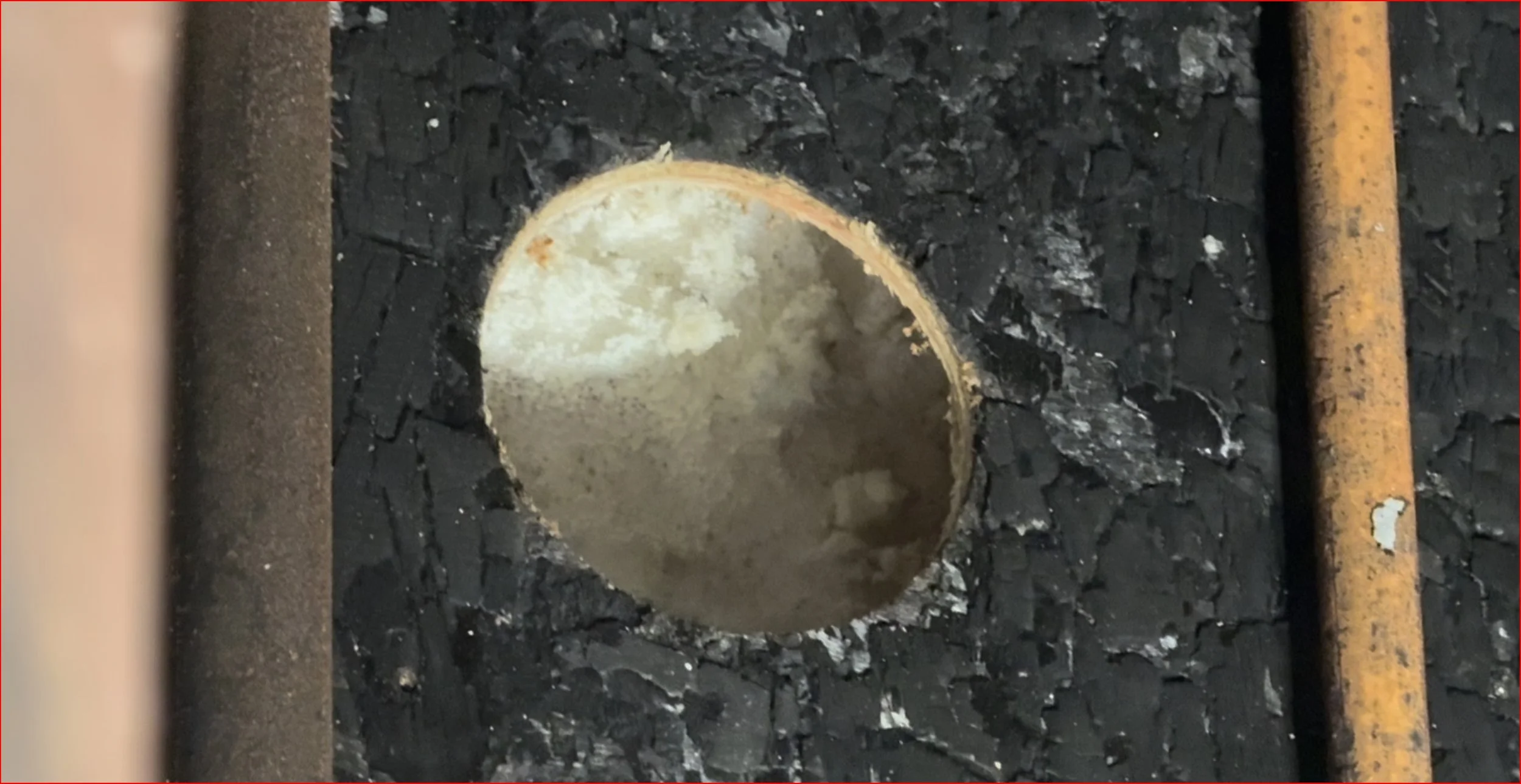
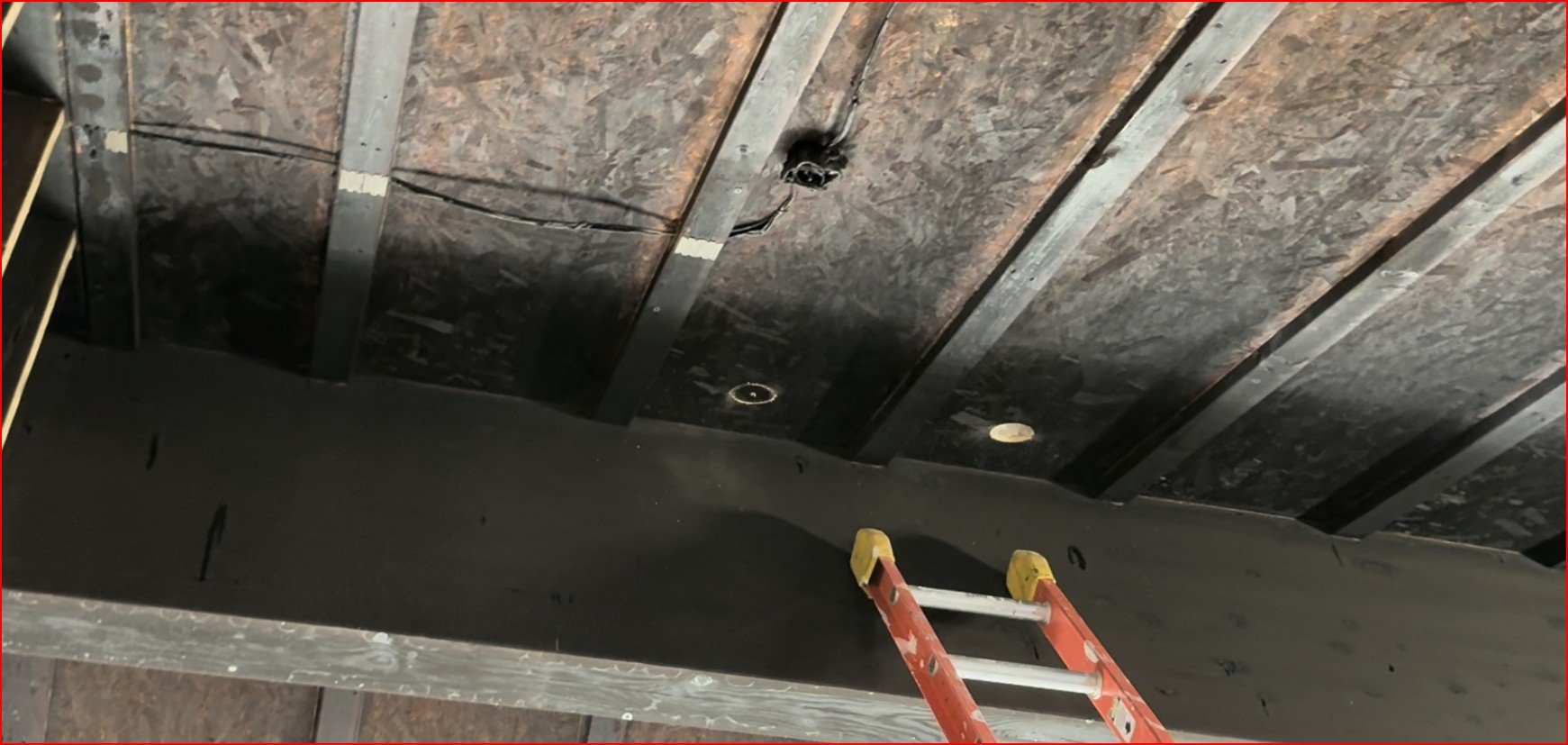
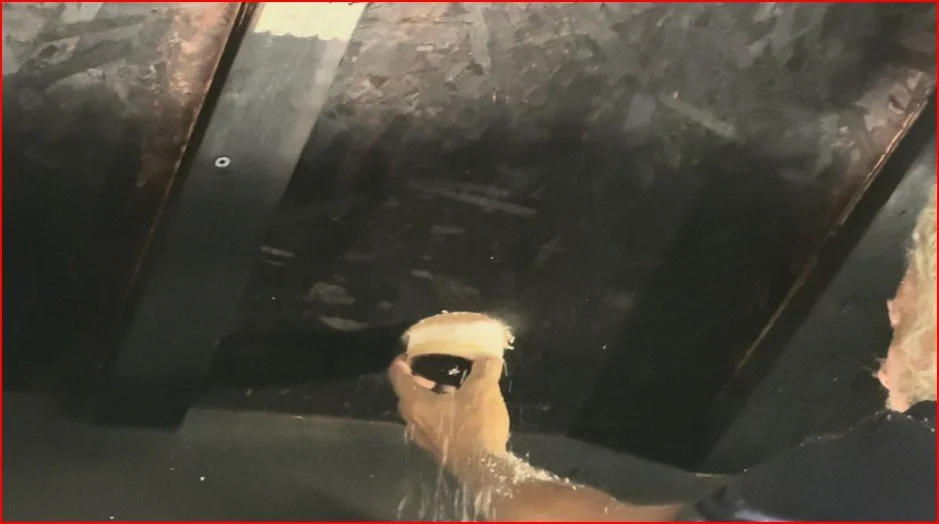
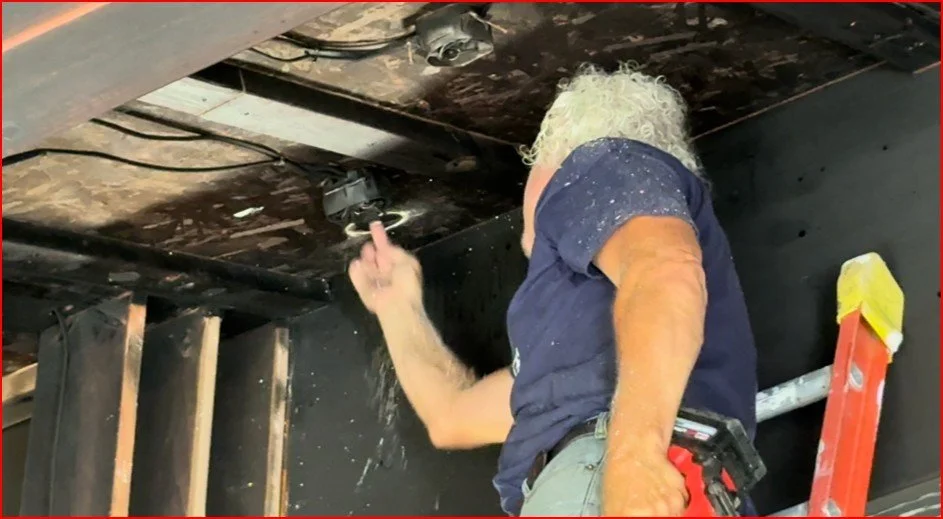
← Swipe to view full table →
| What You See | Bond Held | Bond Failed |
|---|---|---|
| Foam on the skin | Foam chunks stuck to the OSB (tear-out) | Clean separation, no foam attached |
| Foam core | Full thickness, no melting | Melted back away from the skin |
| OSB skin | Clean, or charred on the surface only | Often charred deep into the wood |
| Panel strength | Still working as one panel | Lost in that area |
| Typical next step | Keep, clean, or repair | Engineer decides repair or replacement |
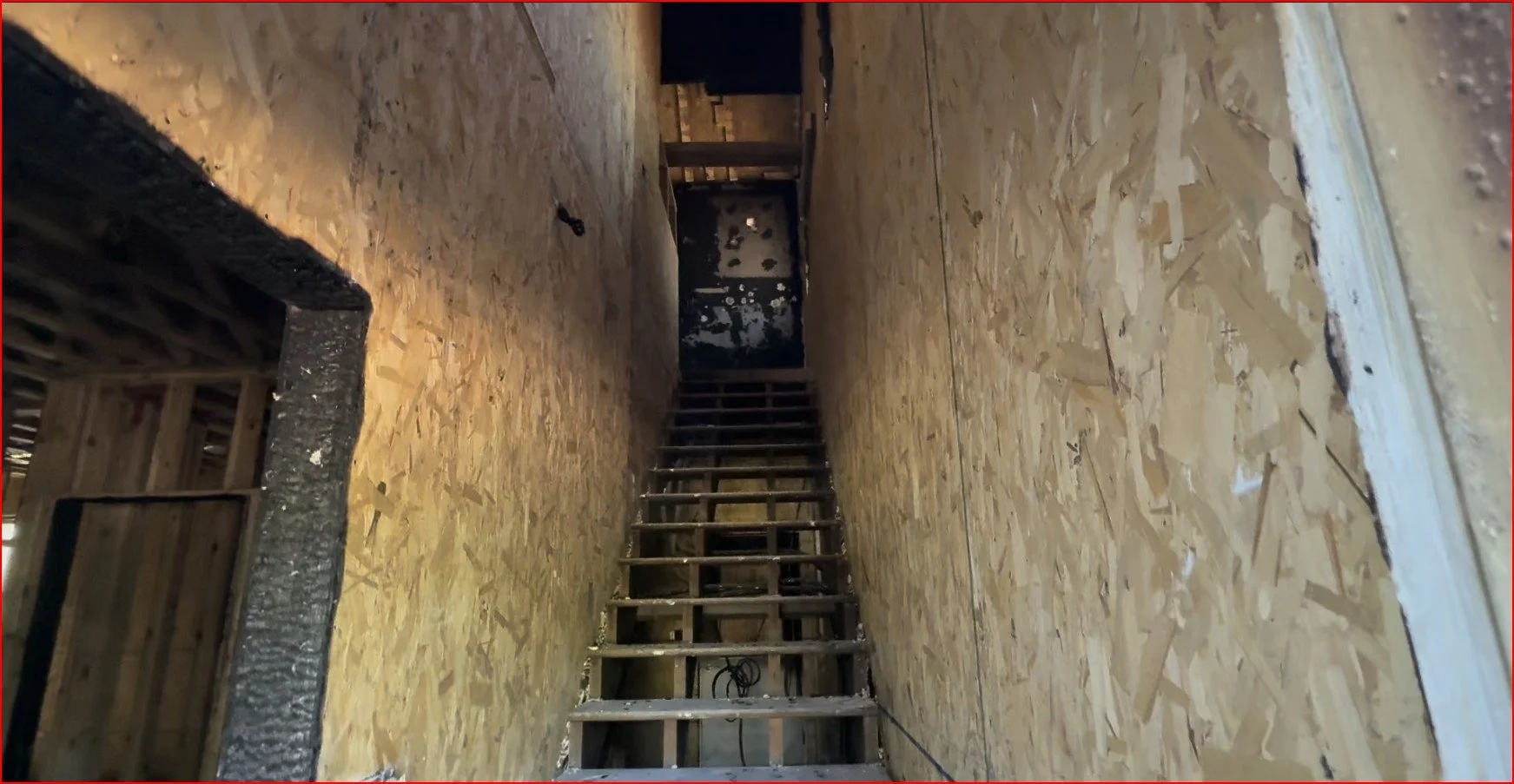
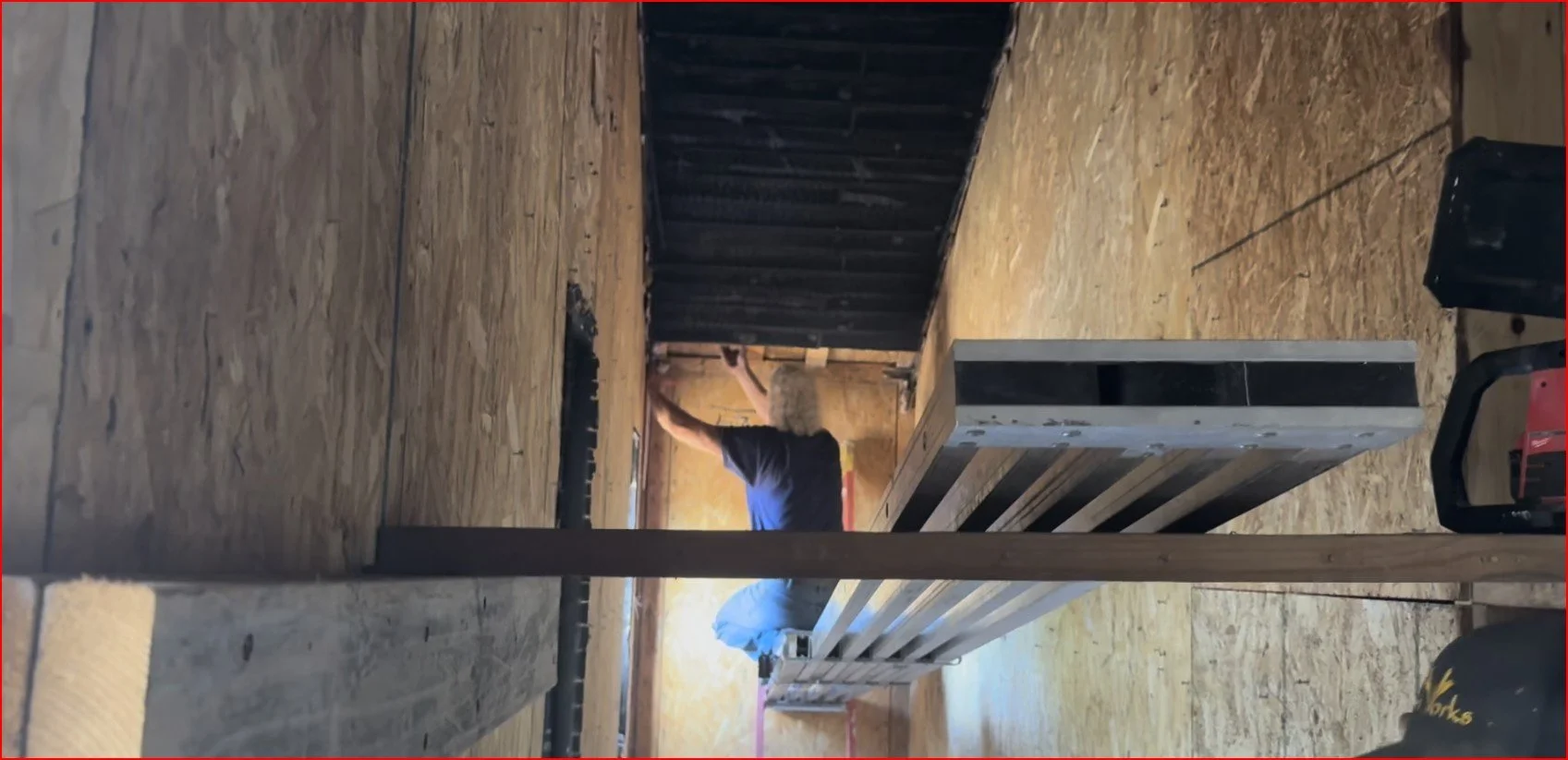
The drywall here was removed after the fire so we could see behind it. The SIP skins underneath had no fire damage. Above the stairs, the wood ceiling was charred, but the SIP roof panels behind it were fine. Core samples 1, 2, and 3 from the roof panels showed no foam melt-back.
Verdict: Panels were protected and structurally sound.
Core samples 4 and 5 showed no fire damage. The skins were still firmly bonded, with foam tear-out visible.
Verdict: Panels remained structurally sound.
Firefighters cut rectangular openings here to check for hidden fire inside the wall. There wasn't any. The heat never made it into the panel.
Verdict: No fire damage inside the panels.
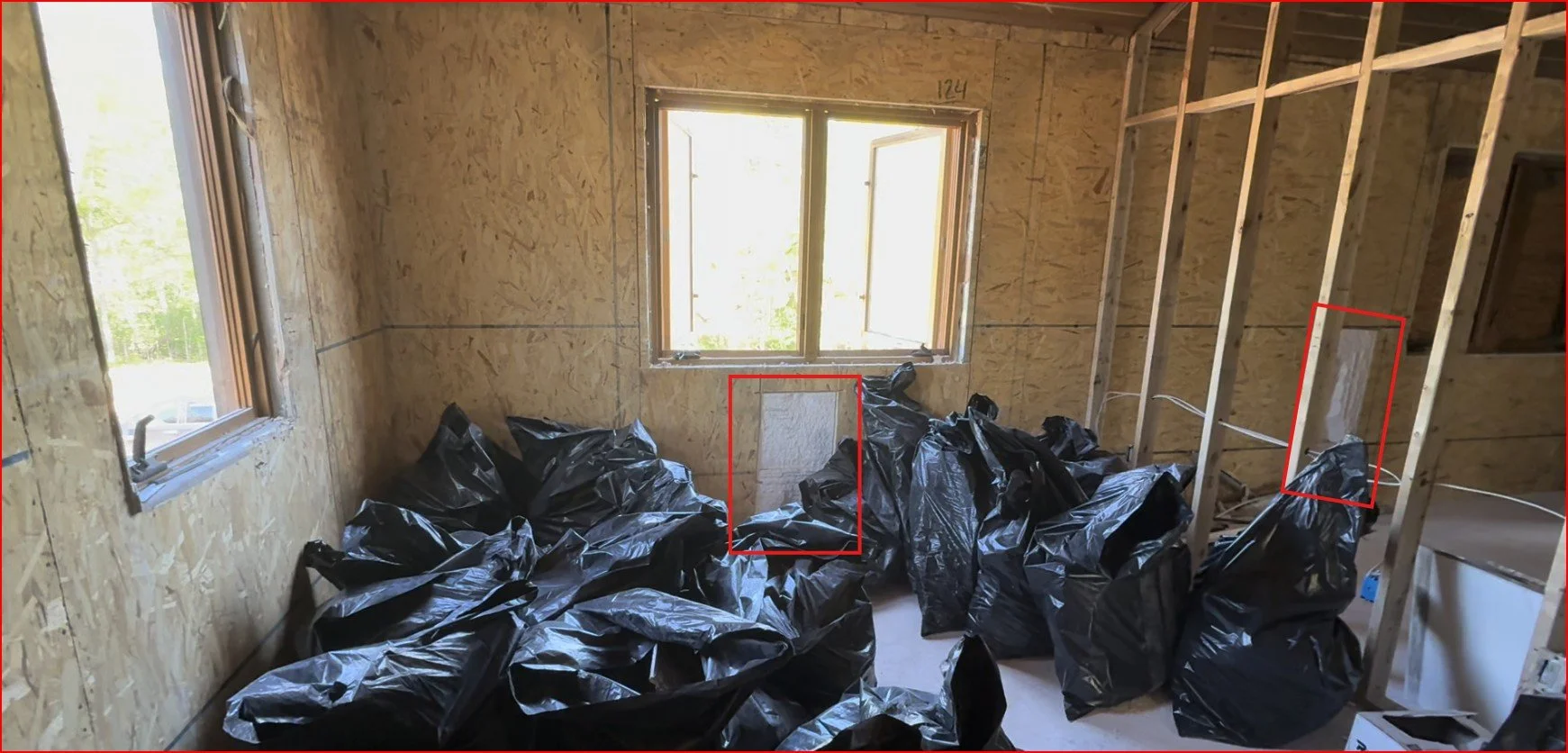
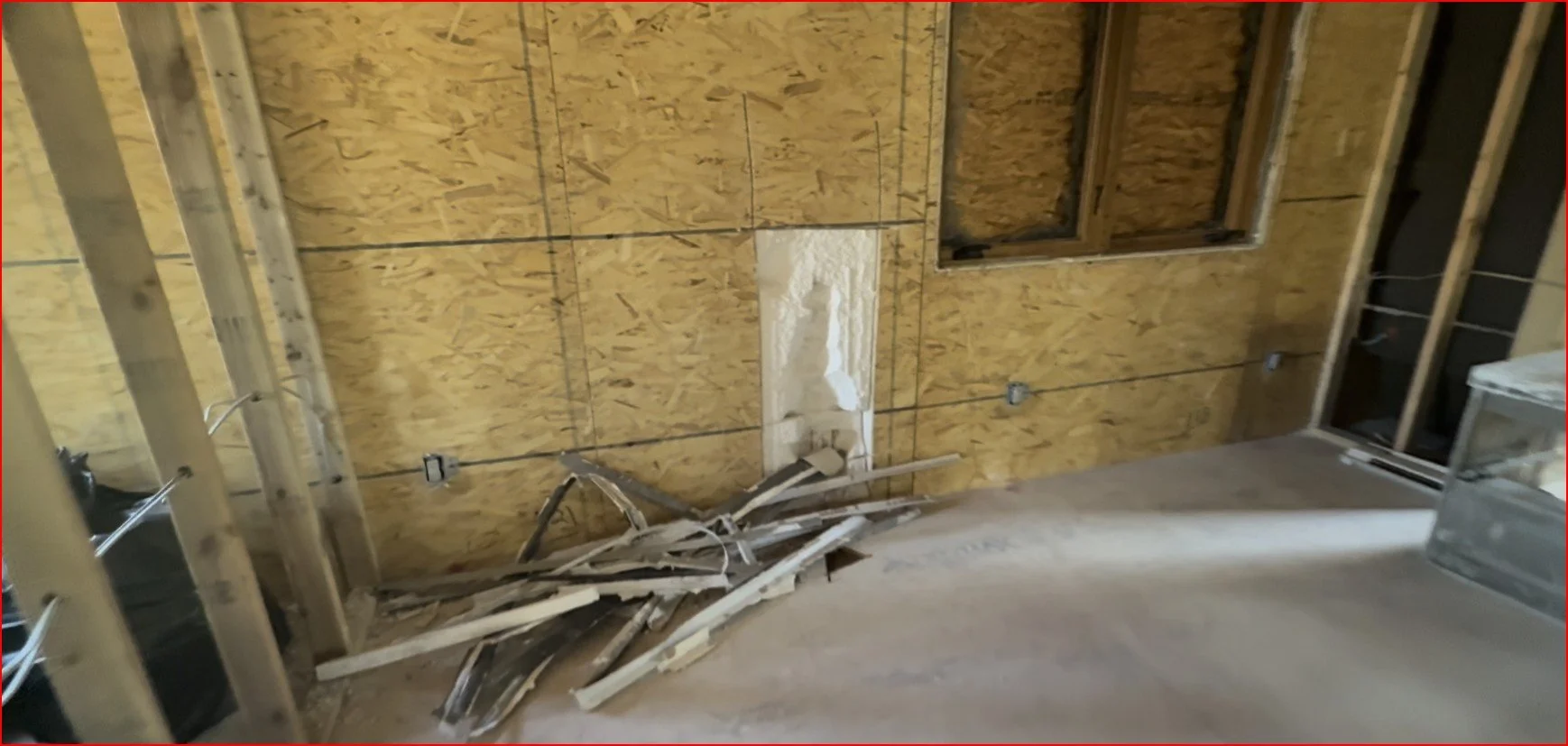
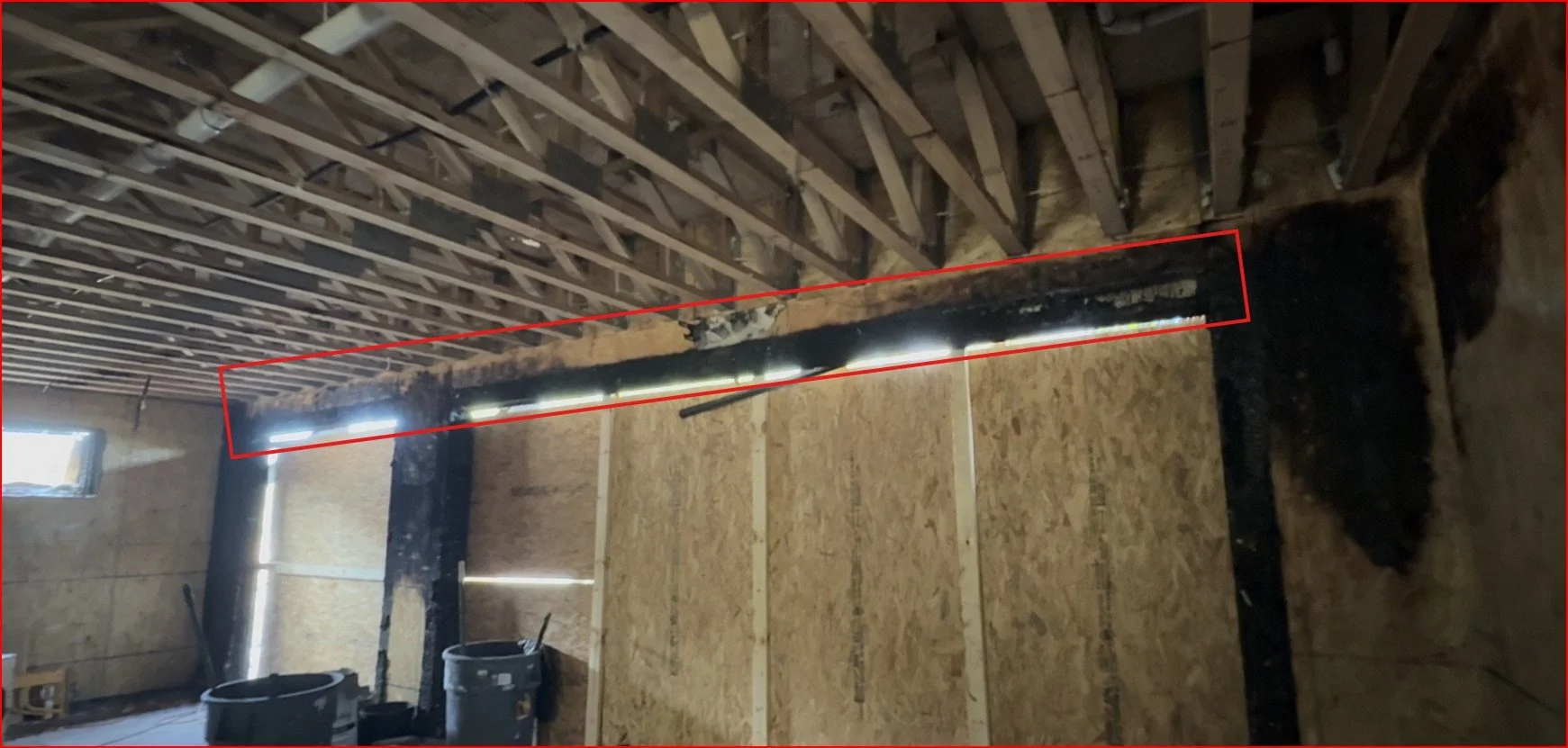
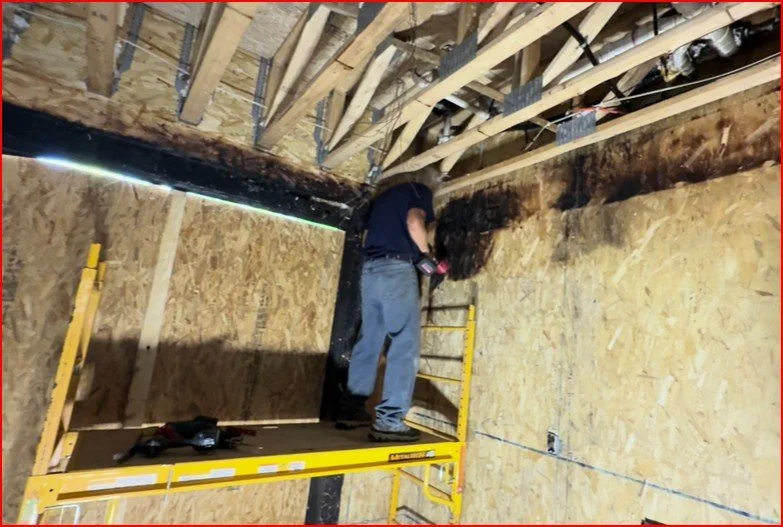
This was some of the worst SIP damage in the house. The OSB skins were heavily charred, and core samples 6 through 10 all showed foam melt-back with a clean split at the glue line. The melting reached well behind the skins, which tells us the heat here was intense enough to destroy the bond.
Verdict: Panels lost their strength and were repaired because structural elements in the panels were undamaged and carried the structural loads.
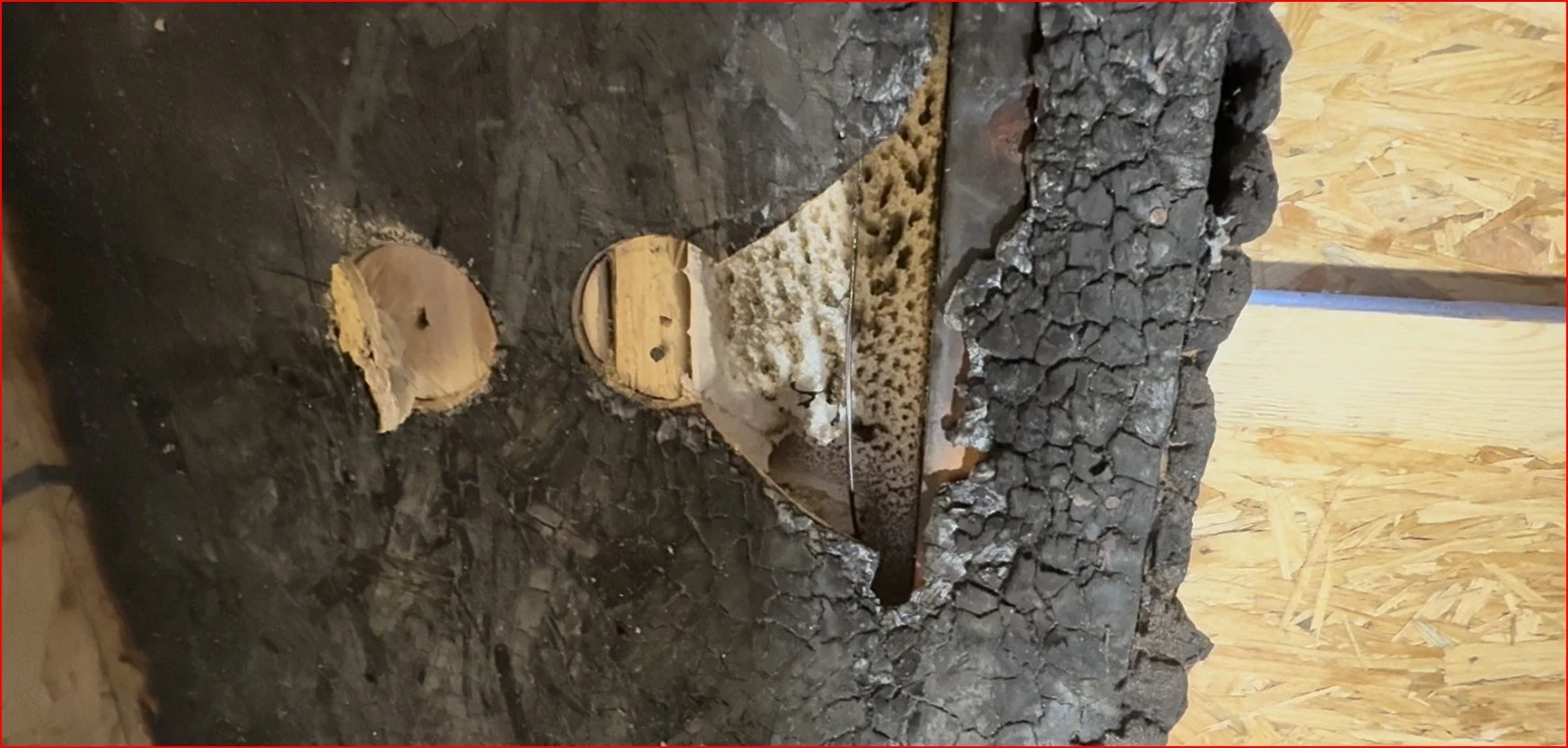
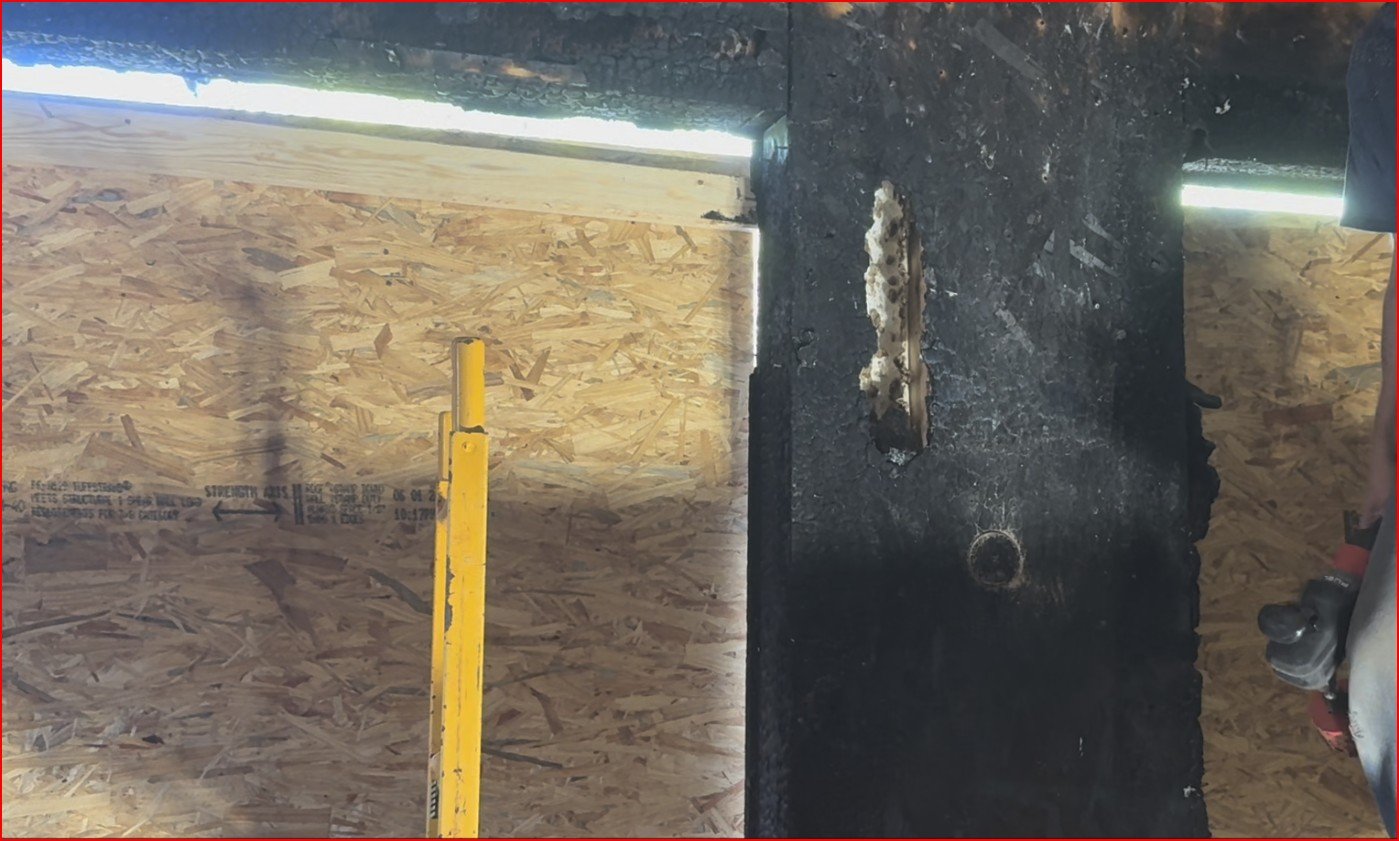
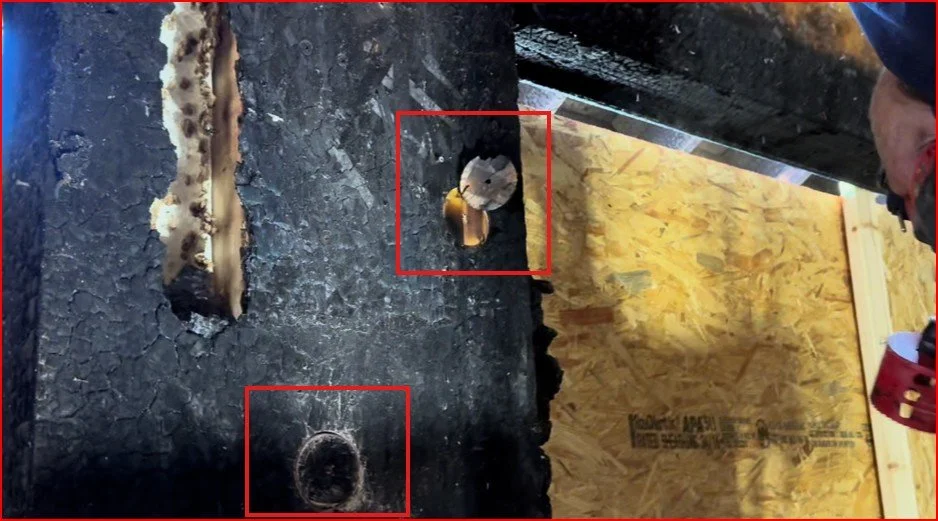
This area holds the most useful lesson in the whole investigation. A header is the beam over the garage door that carries weight down around the opening. The SIP material below the headers was badly damaged. But the OSB skin directly over the engineered headers had no fire damage, because a drywall ceiling attached to the floor trusses shielded that zone.
Verdict: The headers held. The damaged SIP material around them was replaced.
The point: the parts of a SIP wall that carry load through framing don't fail in the same way as foam-only areas. That's why repair decisions have to be made by someone who knows where the load actually travels. (We saw the same thing in Myth 6 of our SIP Fire Myths article.)
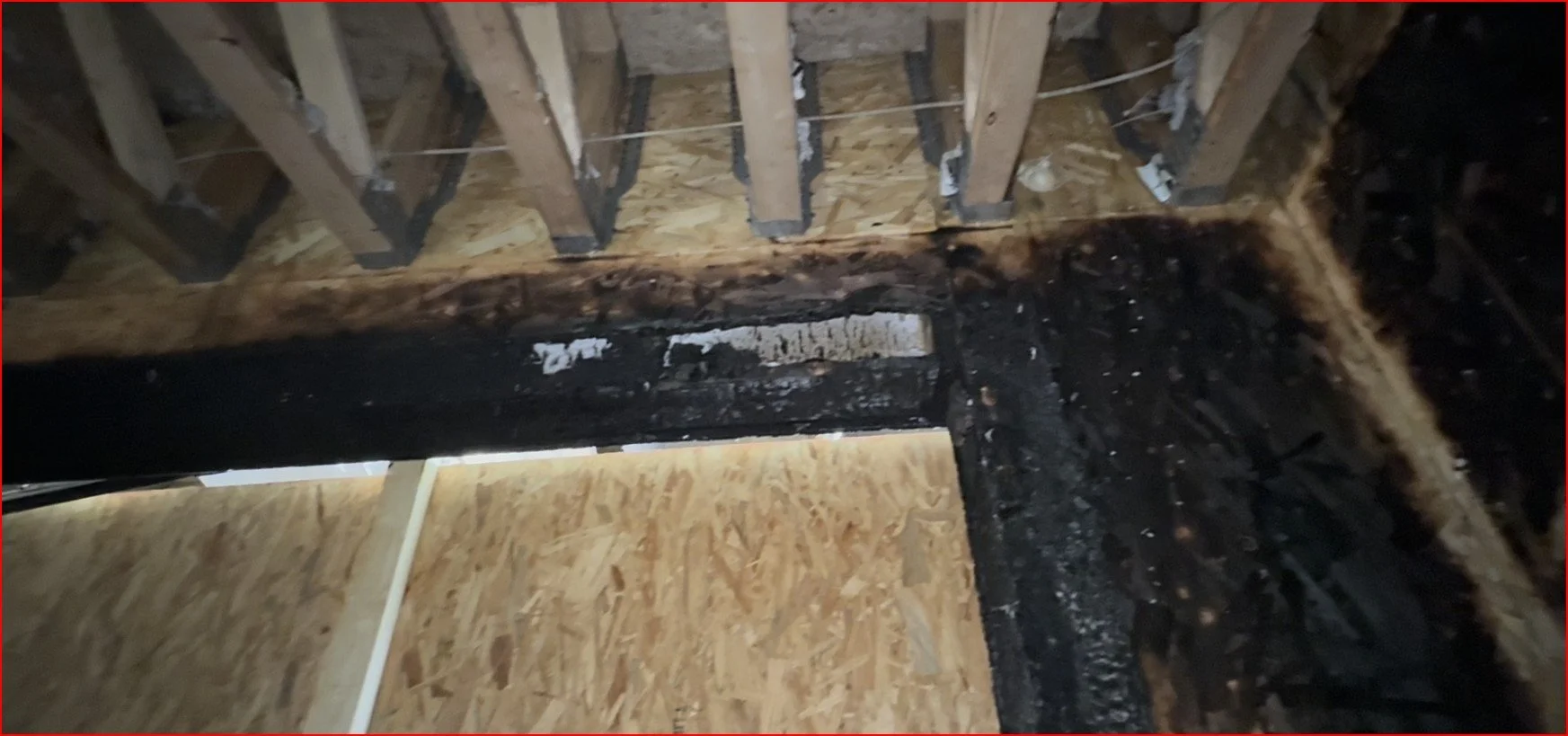
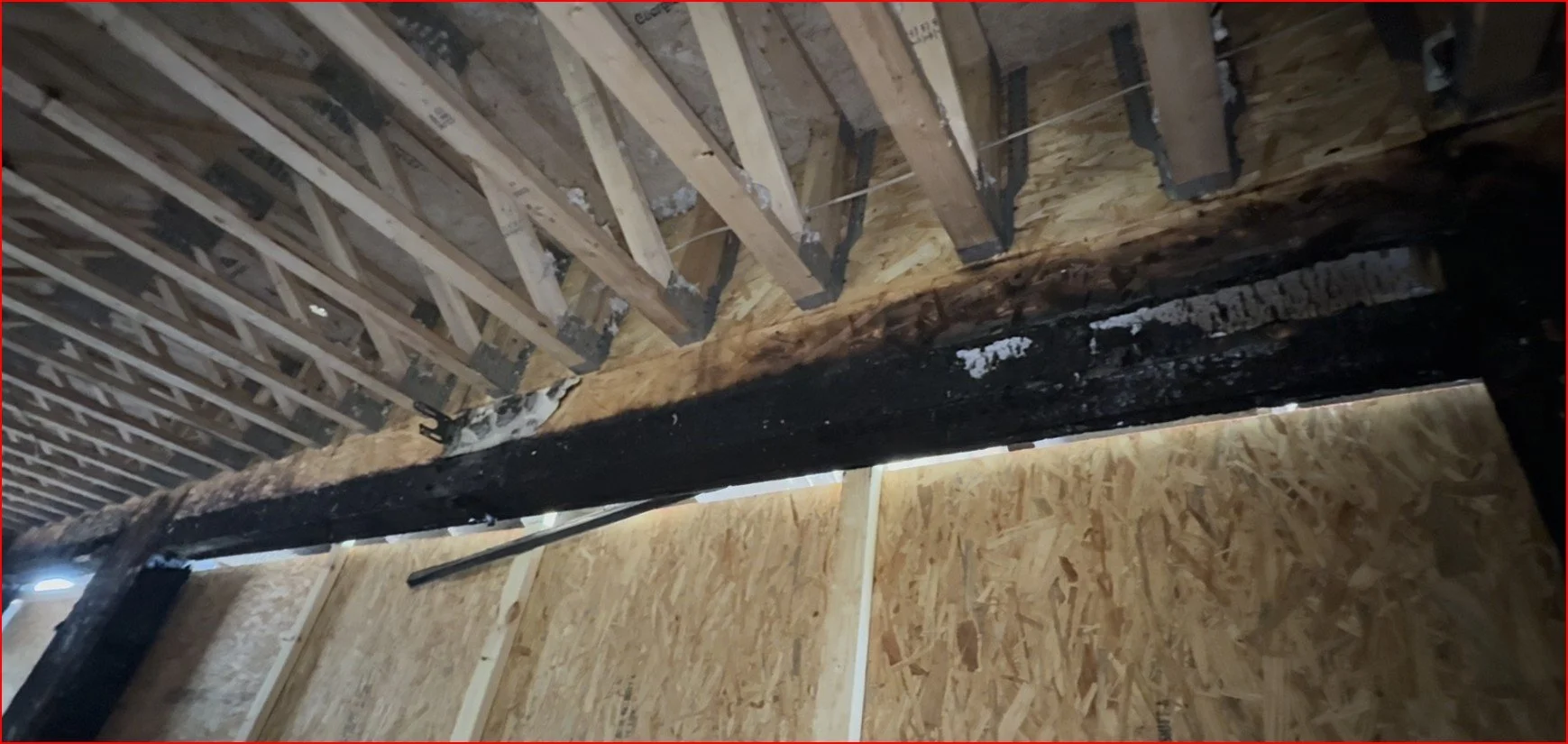
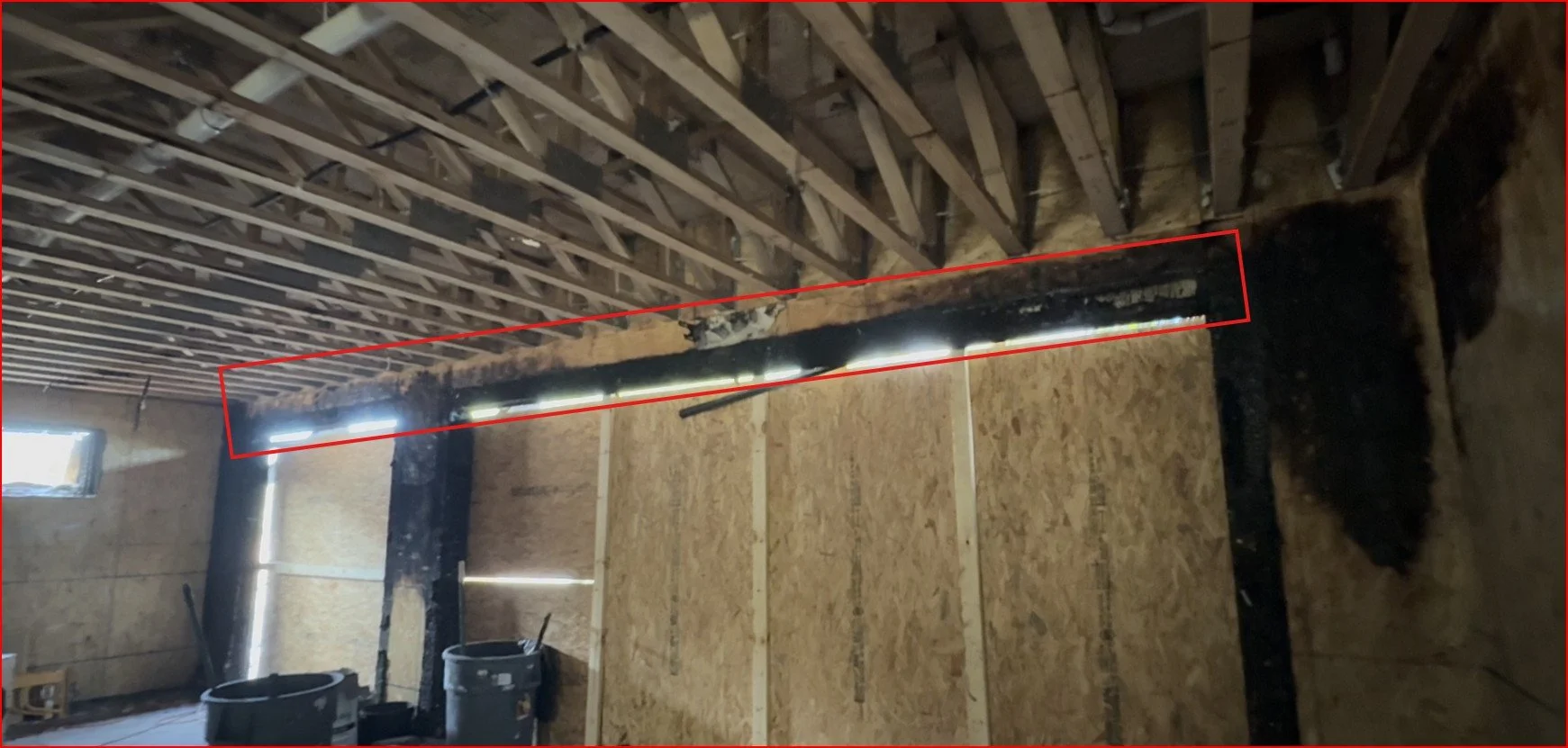
The garage door headers are the part of this job I'd want every adjuster to see. The SIP material right next to them was gone, and someone eyeballing it could easily call the whole wall a loss. But the headers were carrying the load, and the drywall ceiling kept them out of the worst of the heat. If you don't know where the load is going, you'll replace things that don't need replacing.
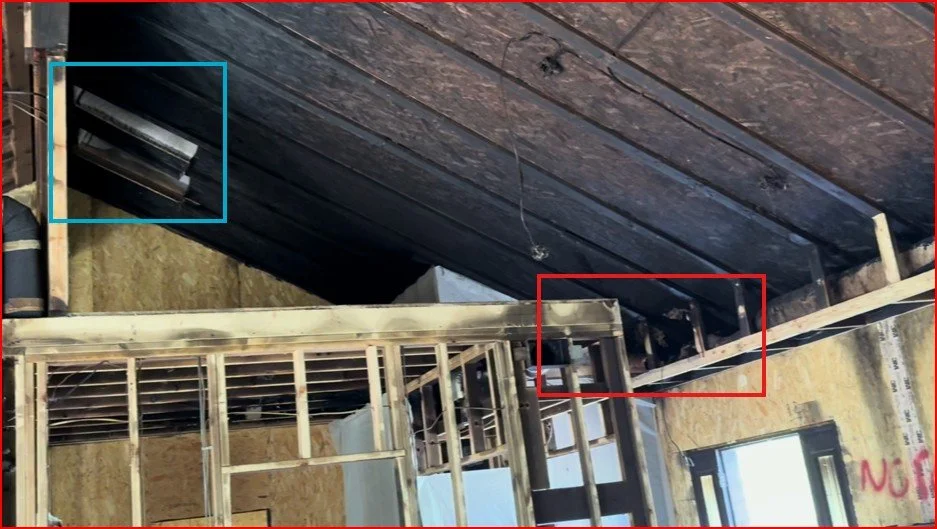
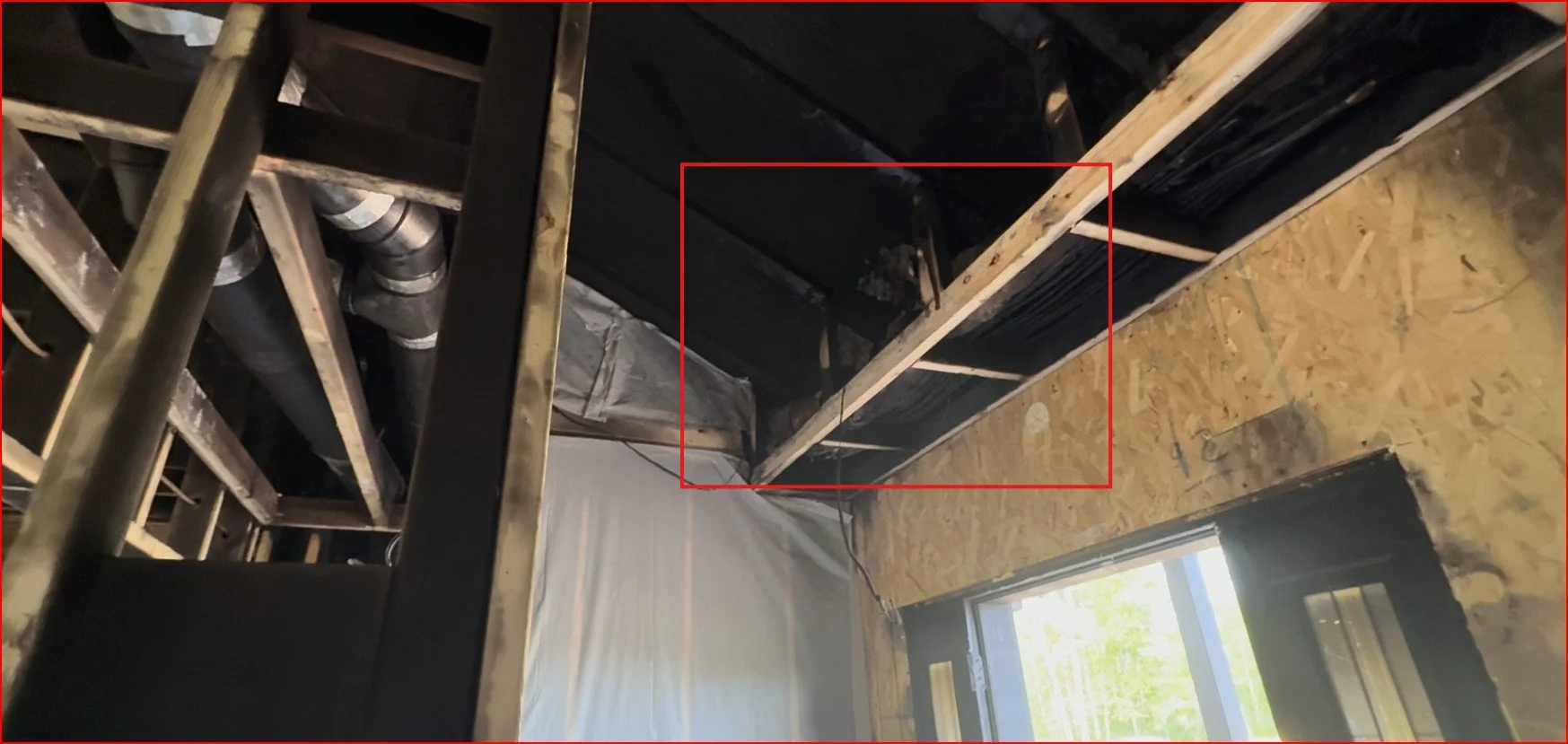
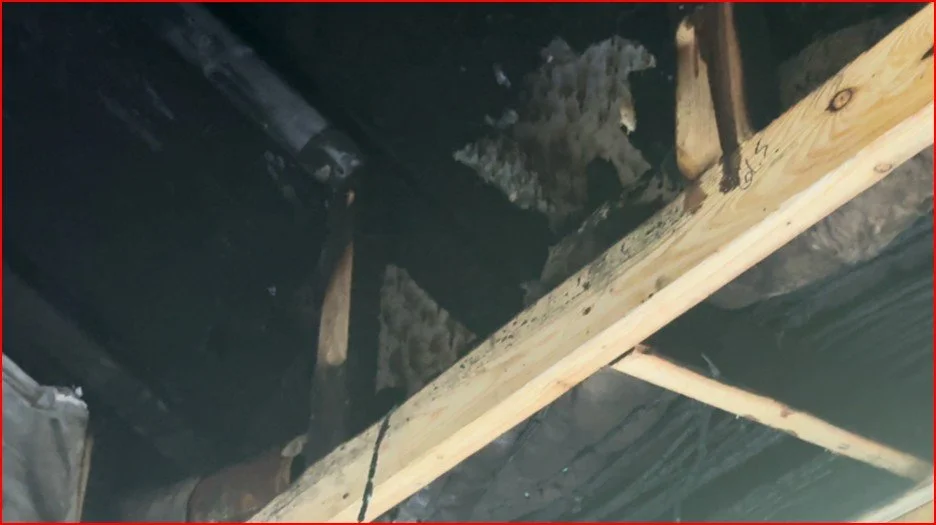
-- Joe Pasma, PEThis room had the most severe damage. The OSB skins on the inside, south wall, had no covering yet, so they faced the fire directly. The roof panels above had heavy charring and foam melt-back, and the wall panels showed different levels of charring. Core samples 12 and 13 showed melt-back and failed bonds.
There was one important exception. The west wall, the common wall between the garage and the mechanical room, had a plywood covering. The plywood charred, but core sample 11, taken behind it, showed the SIP skin and foam were completely intact.
Verdict: The roof panels were replaced. Wall sections that had a covering held up, the south SIP wall was replaced.
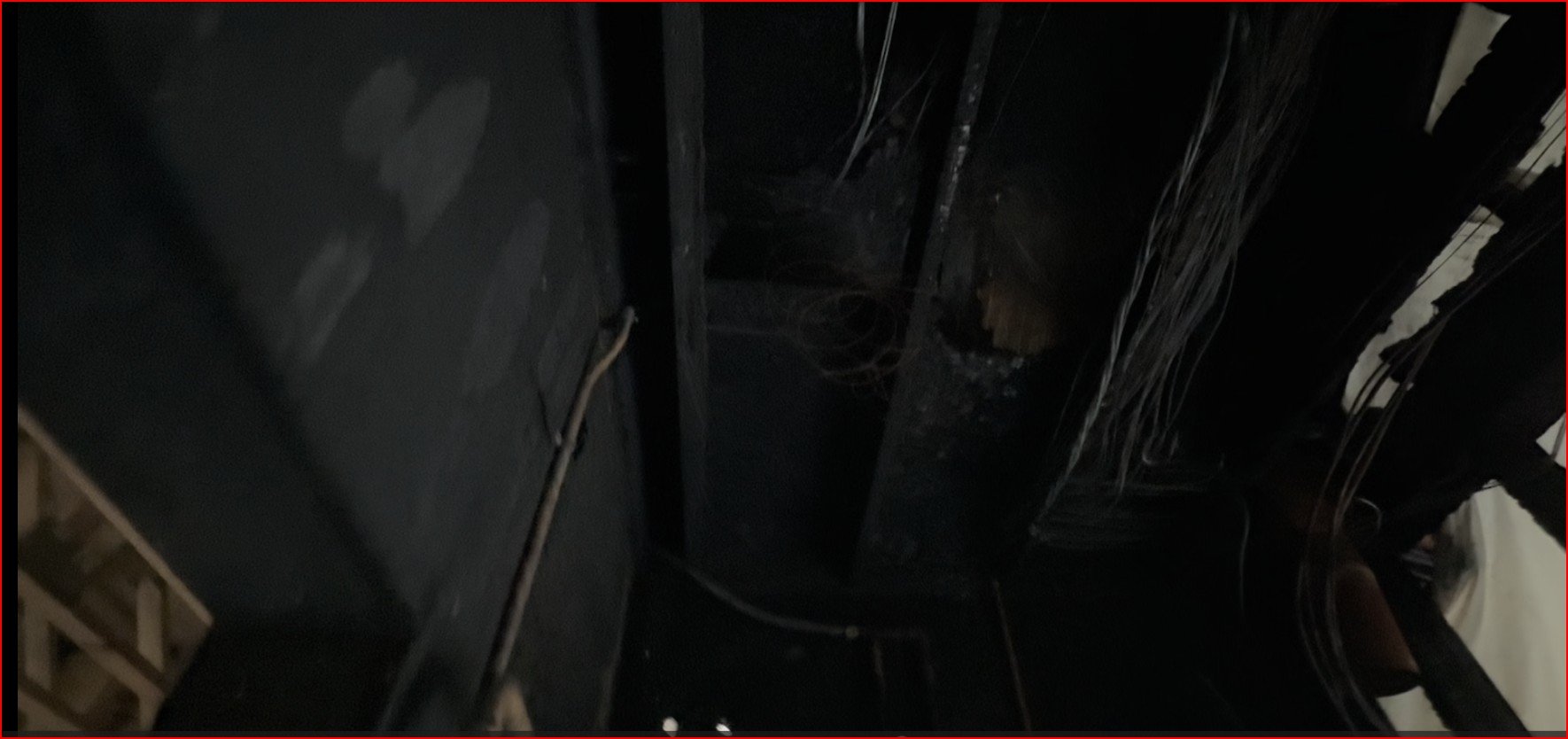
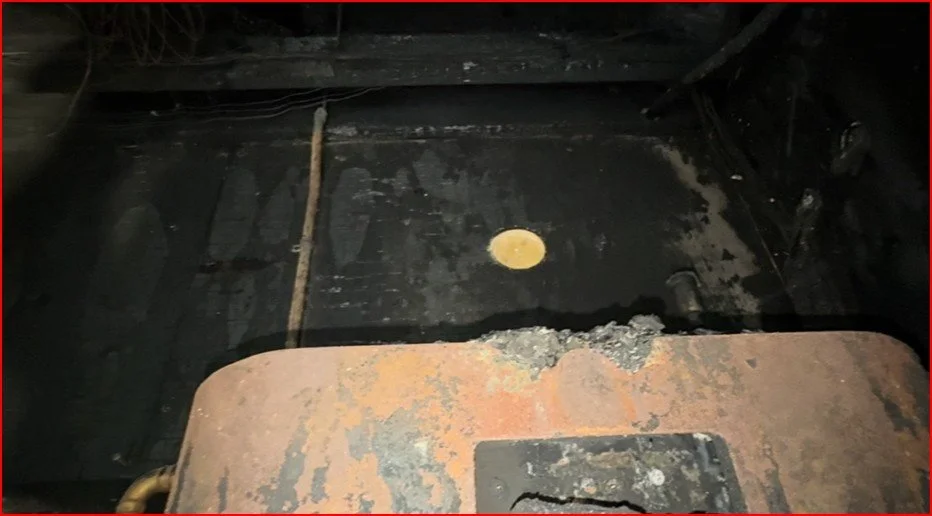
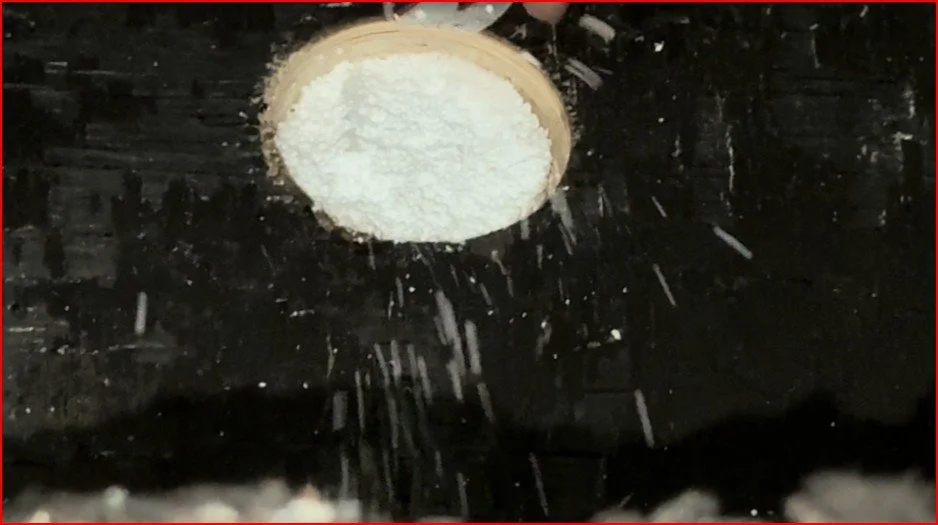
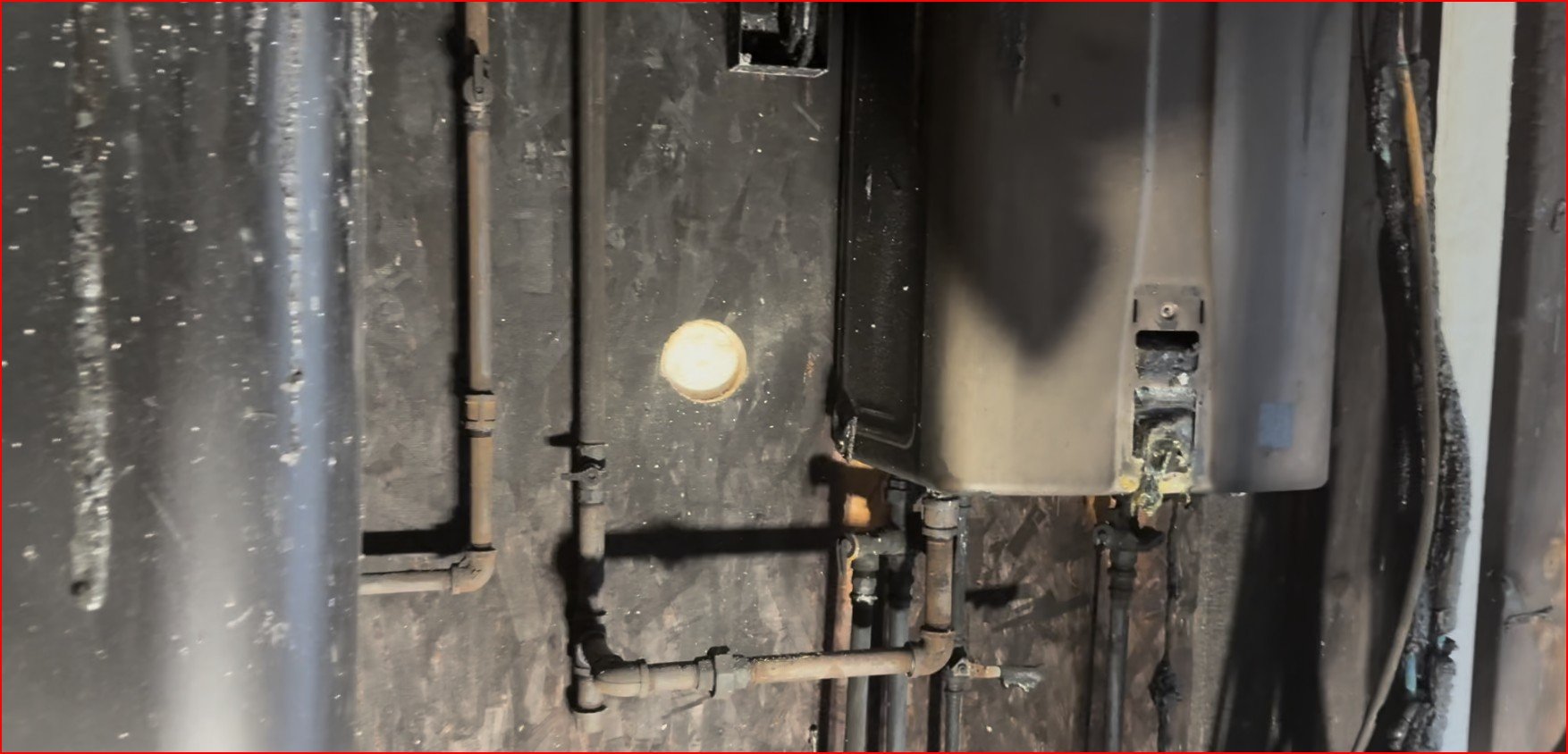
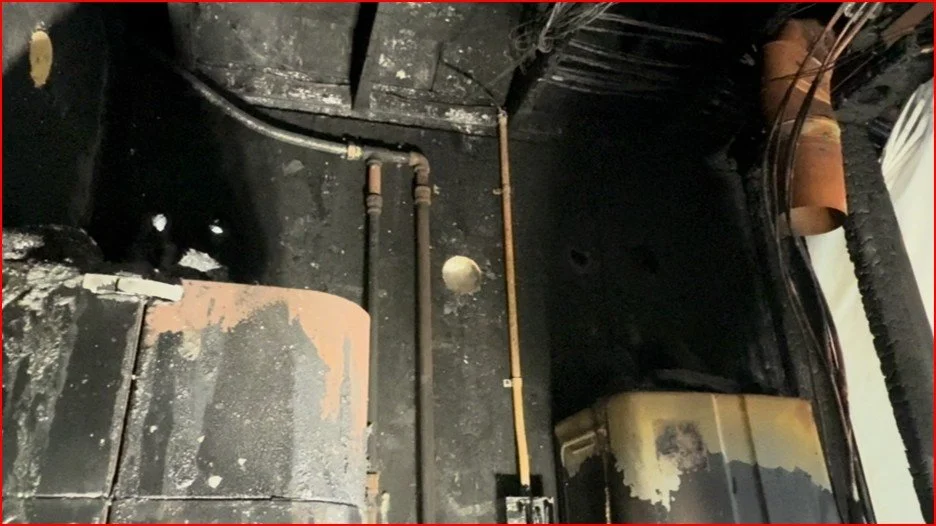
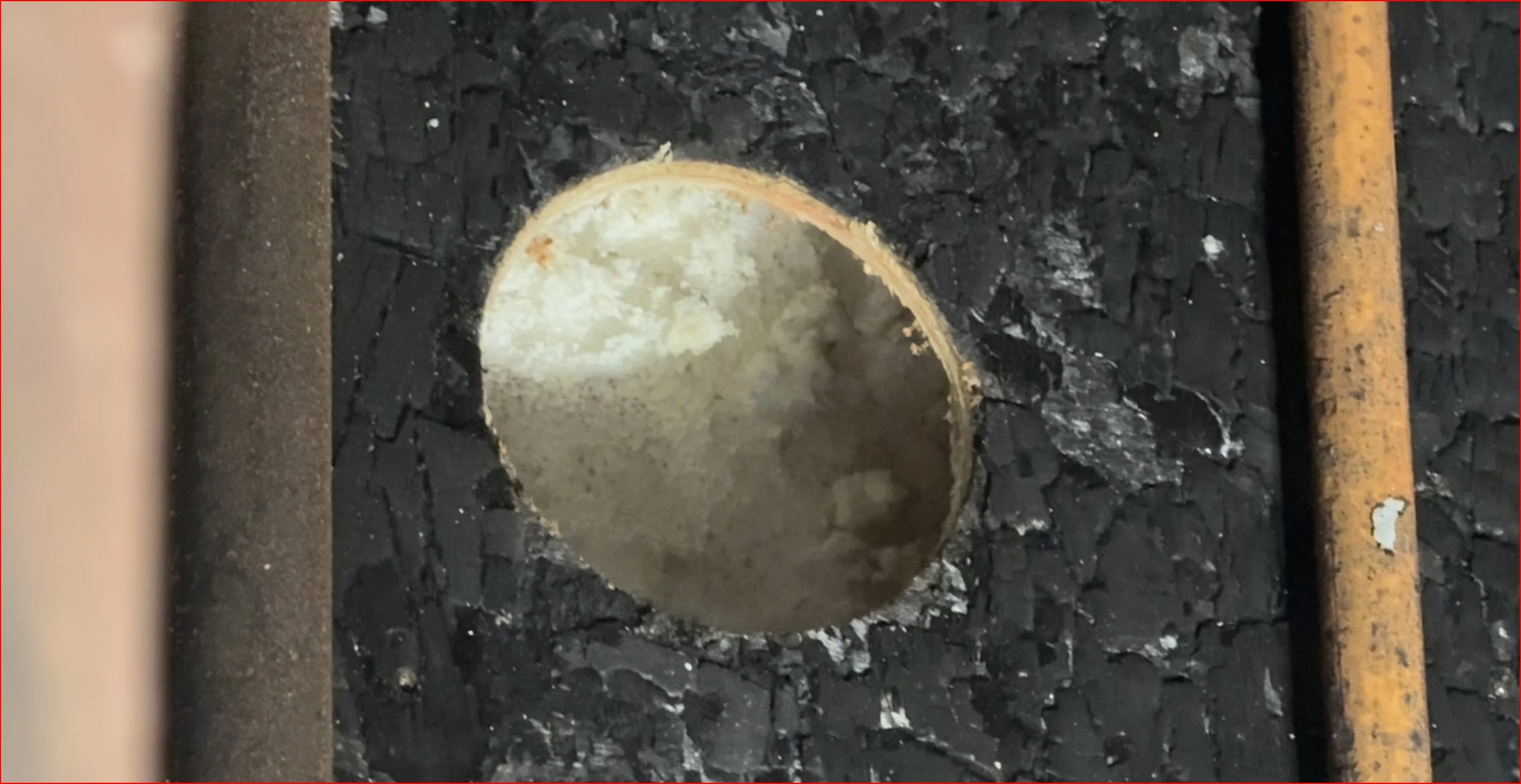
Above the front entrance, the roof panels had severe charring and foam melt-back, plus firefighter cuts. Core samples 14, 15, and 16 all showed failed bonds.
Verdict: Panels were replaced.
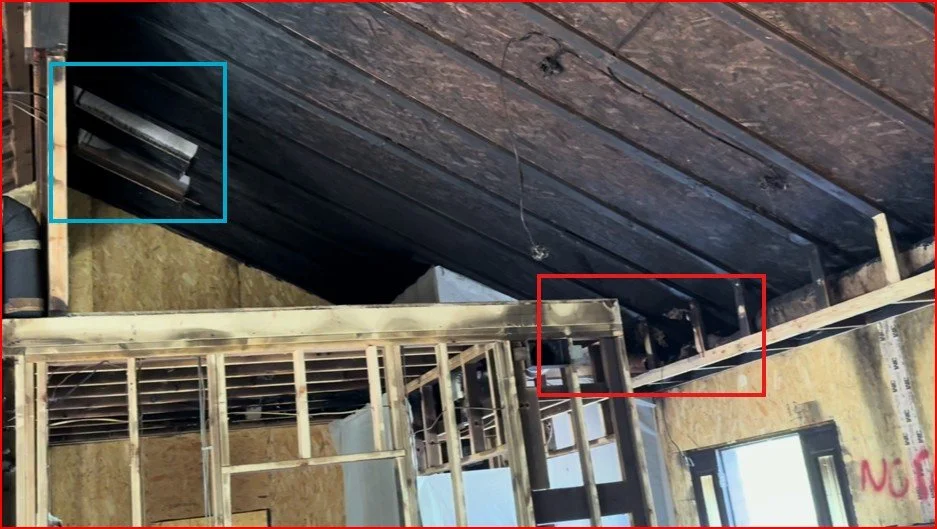
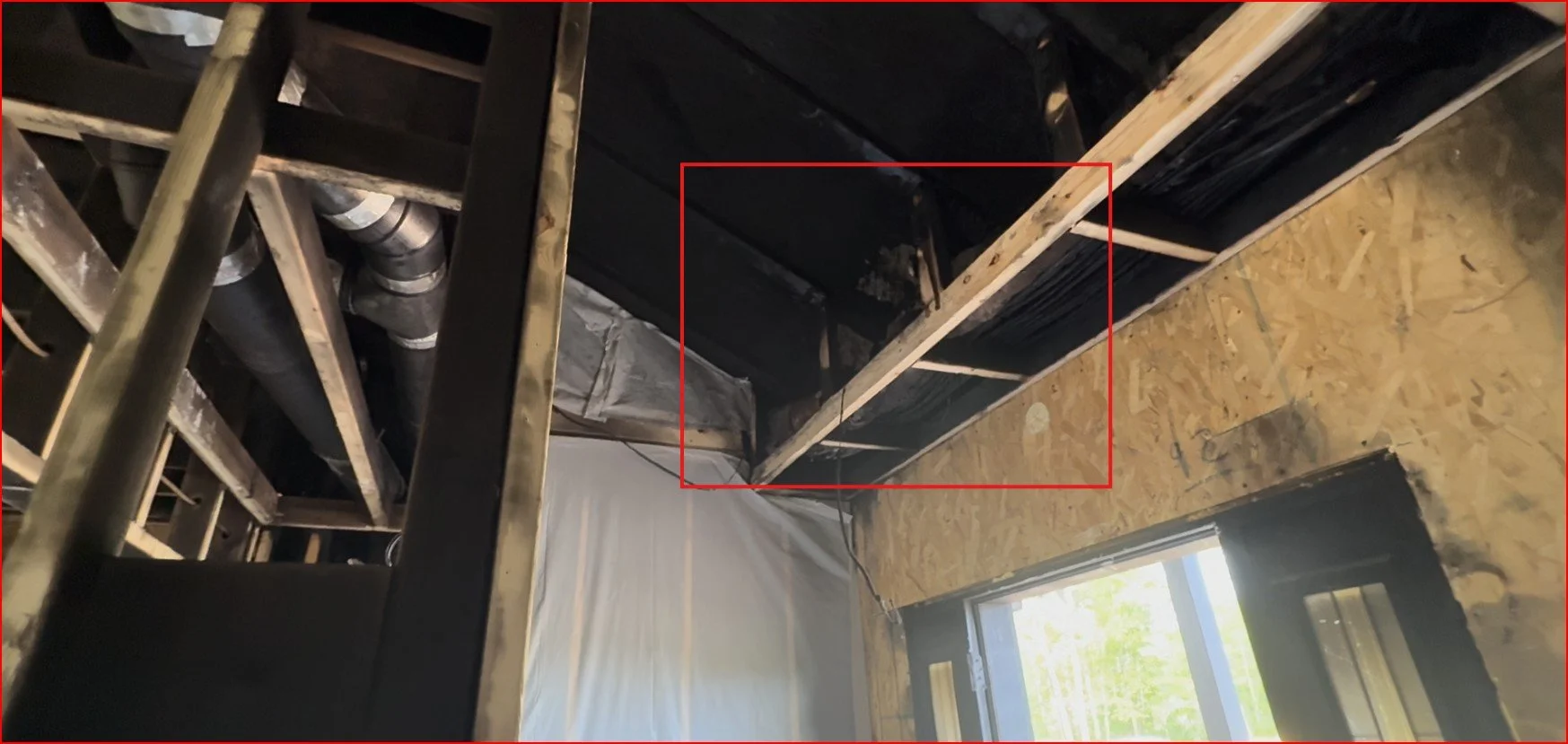
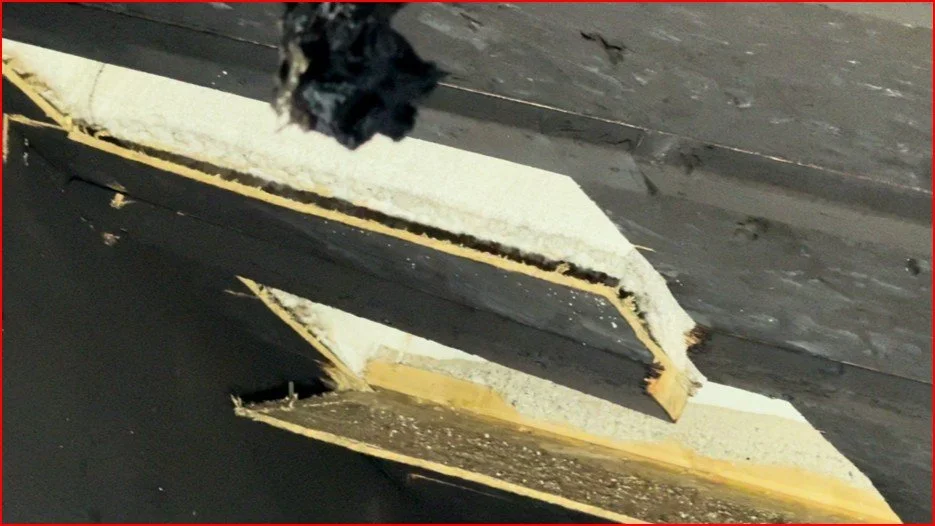
The other side of the same roof only had soot on it, with minimal charring. Core samples 17 and 18 showed no melt-back.
Verdict: Panels remained sound. Soot is a cleaning job, not a structural problem.
← Swipe to view full table →
| Area | What Protected It (or Didn't) | Core Samples | Result |
|---|---|---|---|
| Stairway | Drywall and wood ceiling | 1-3: bond held | Sound |
| 2nd floor, south wall | Distance from fire | 4-5: bond held | Sound |
| 2nd floor, north wall | Heat never reached panel | Firefighter cuts showed no damage | Sound |
| Garage door wall | Direct, sustained flame | 6-10: bond failed | Repaired, other structural elements carried the load |
| Garage door headers | Drywall ceiling shielded header zone | Visual: no damage over headers | Headers held, surrounding SIP replaced |
| Mechanical room south wall & roof | Uncovered, direct flame | 12-13: bond failed | Replaced |
| Mechanical room west wall | Plywood covering | 11: bond held | Sound |
| North roof slope | Direct flame | 14-16: bond failed | Replaced |
| South roof slope | Soot only | 17-18: bond held | Sound, cleaned |
The investigation didn't end with "the house had a fire." It ended with a clear, panel-by-panel list.
Areas that stayed or could be repaired:
Stairway walls and roof panels
Second floor south wall
Second floor north wall
Garage door wall panels, since other members were carrying structural load
Covered sections of the mechanical room west wall
One-story south roof slope (cleaning only)
Areas that needed replacement:
SIP material below the garage door headers
Mechanical room south wall and roof panels
One-story north roof slope
The deciding factor was never "how bad does it look?" It was "did the bond fail, and is that section carrying load?" If the bond held, the panel stayed. Small, localized damage in a sound panel can often be fixed by patching the OSB skin or injecting expanding foam. Where the bond failed in a section the house depends on for strength, we replaced that section. This is an engineering call made one panel at a time, which is why a general fire damage estimate often gets SIPs wrong in one direction or the other.
Dealing with fire or smoke damage on a SIP home and not sure which panels can stay? Talk to Joe Pasma, PE: he'll tell you what core sampling would show before anyone signs off on a repair scope.
This isn't the first SIP fire we've documented. Our earlier SIP fire case study found the same patterns:
Foam melted back where the panel edges had no protective trim.
Charred OSB on its own did not mean the panel had failed.
Smoke spread soot far from the fire without causing structural damage.
Two different fires, different houses, panels from different manufacturers, and the same result. SIPs don't fail randomly. They fail in predictable, diagnosable ways, which is good news for anyone who has to decide on a repair.
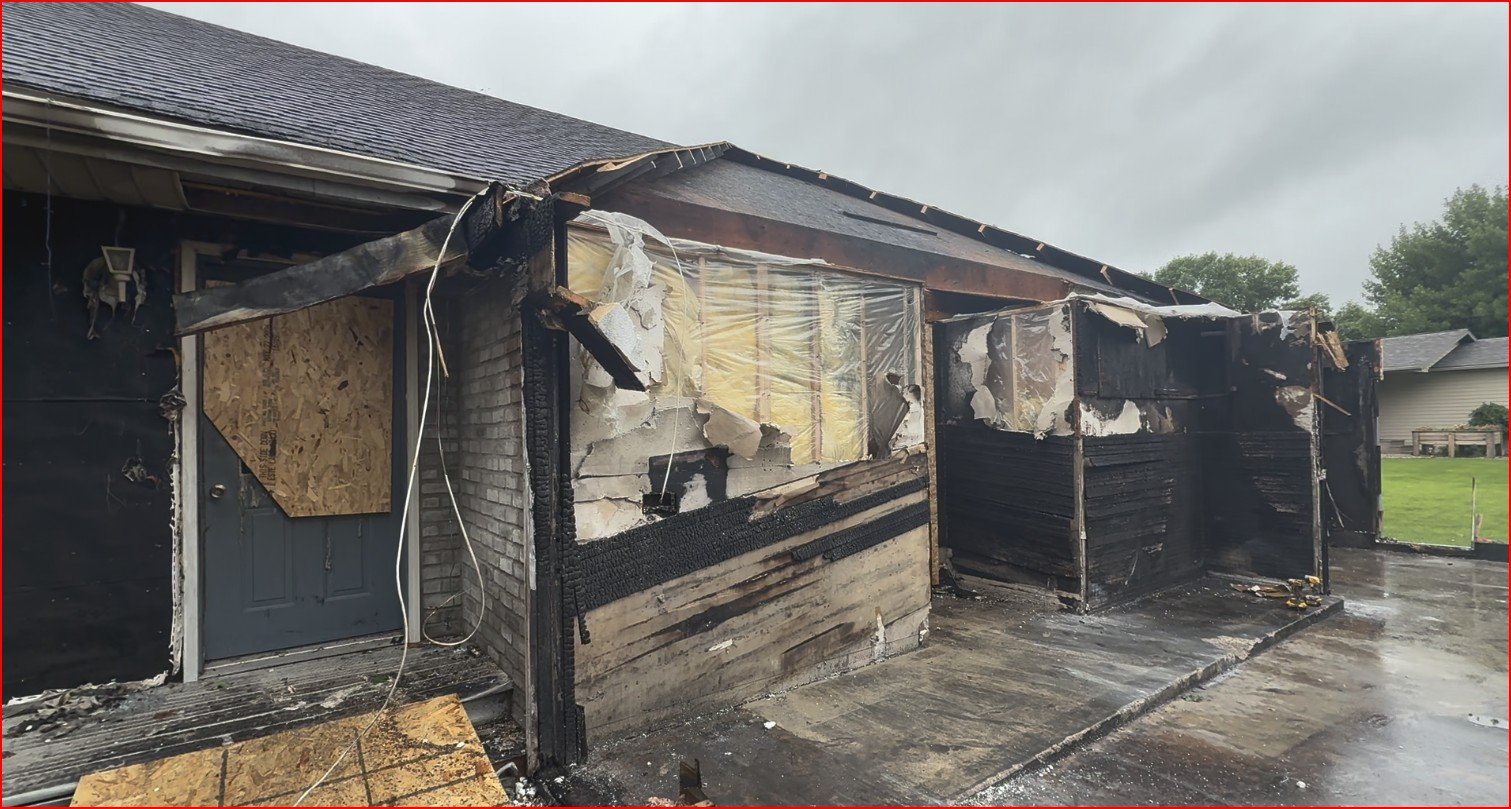
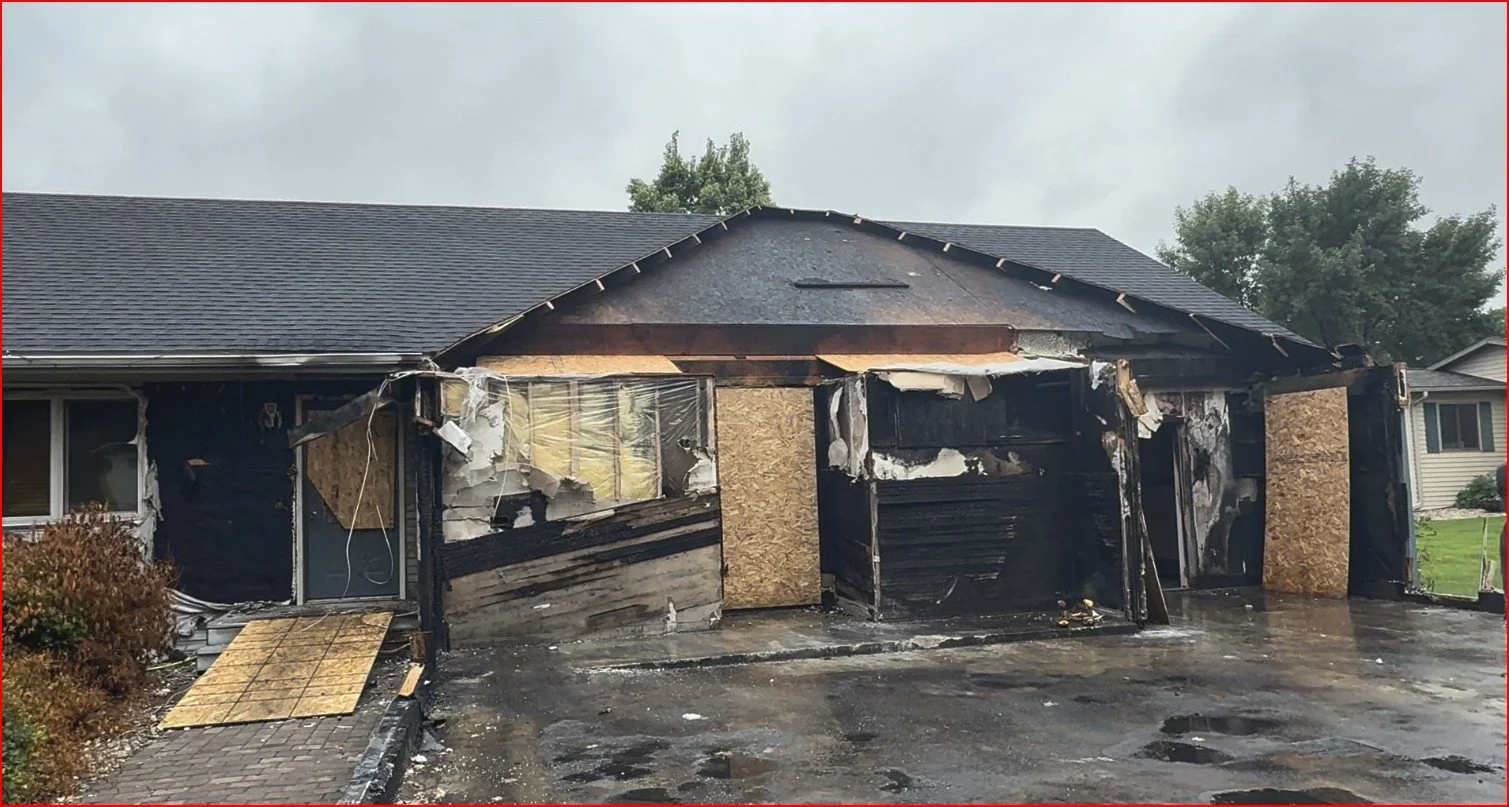
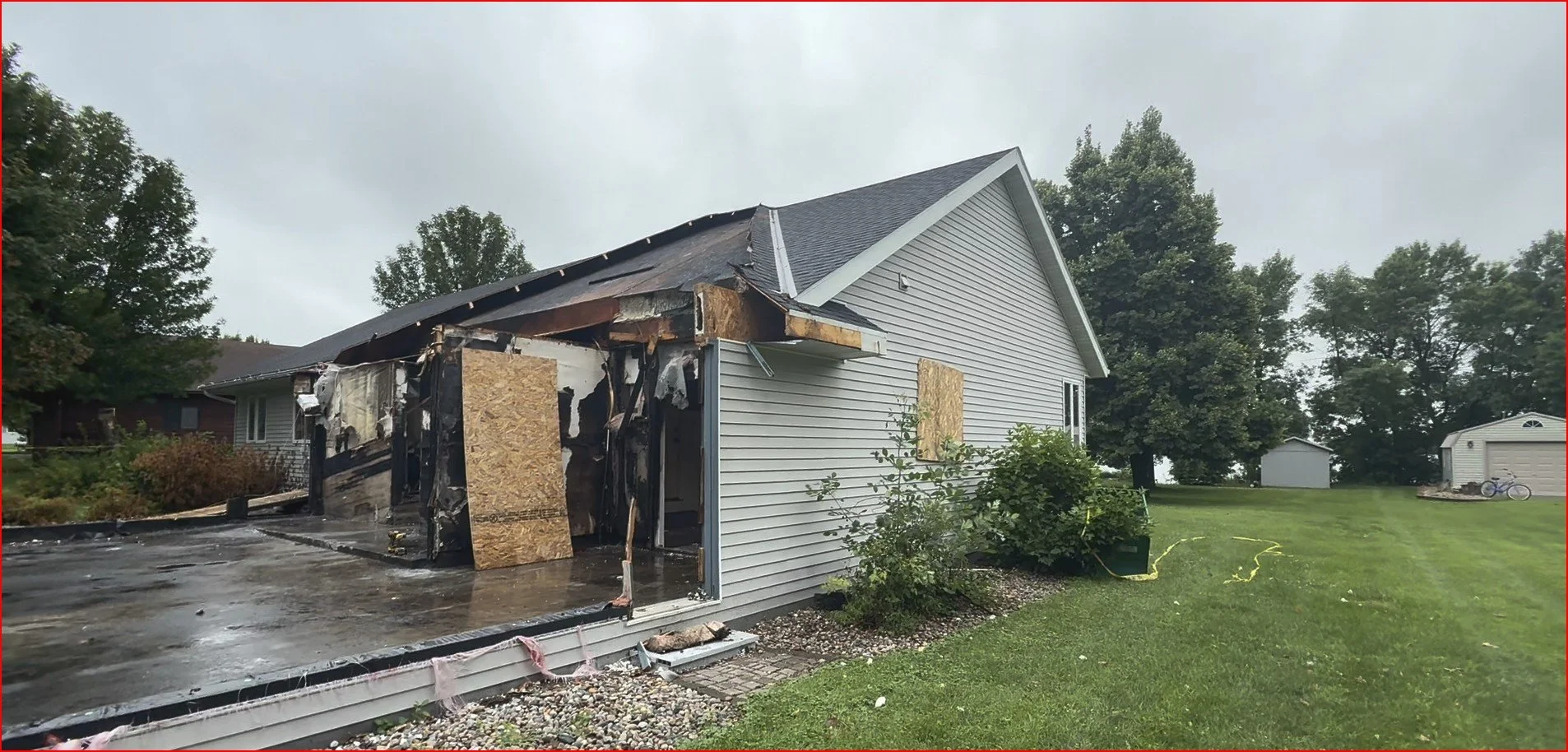
This case study shows the evidence. Our SIP Fire Myths article takes the seven most common fire fears about SIPs and checks each one against what we found in this house.
Read SIP Fire MythsYour drywall is doing real fire-safety work. Code requires it over interior SIP surfaces for exactly this reason, and this fire showed why. Keep it continuous, and don't leave panels exposed in finished spaces.
A SIP home is most vulnerable during construction, before the drywall, siding, and trim go on. The same is true of a stick-framed house. In Duluth, the worst damage happened where panels had no covering yet. Getting coverings on promptly and protecting exposed panel edges with trim reduces that risk. See our SIP Installation Guide for detailing basics.
Don't price a SIP fire claim from the surface. Char, soot, and smoke smell don't tell you whether a panel lost its strength. Core samples do. A SIP-specific forensic evaluation keeps you from paying to replace panels that only needed cleaning, and from missing panels that really did fail.
EPS melt-back is when heat causes the foam core of a SIP to shrink and pull away from the wood skin. It starts once the foam gets hotter than about 180°F. When the foam pulls away, the glue bond that gives the panel its strength is lost in that area. It's the most important warning sign in a SIP fire investigation.
No. When OSB heats up, its surface chars, and that char layer actually slows heat from reaching the foam inside. In Duluth, several panels had charred coverings or surfaces but a perfectly good bond underneath. A panel has only failed when the char comes with foam melt-back and a broken bond.
Because they were covered. Drywall, siding, plywood, and wood ceilings absorbed the heat and kept the panels behind them below the temperature where foam starts to melt. In the mechanical room, a plywood-covered wall survived intact while the uncovered roof above it had to be replaced.
A drywall ceiling attached to the floor trusses shielded the header zone from the worst heat. Headers are structural framing that carries load, so they behave differently than foam-only parts of a panel. The SIP material below them was replaced, but the headers themselves held. Read more in our SIP Fire Myths article.
You can't see the glue bond from the outside. A core sample cuts a round plug through the panel skin so you can see whether the foam is still stuck to the skin. It's the only reliable way to know if a panel is still structurally sound. Learn more about SIP forensic analysis.
Often, yes. If the bond between the foam and the skin is still holding and the damage is limited to the surface or a small area, repairs like patching the OSB skin or injecting expanding foam can be realistic. A licensed engineer should make that call for each panel.
When the bond between the foam and the skin has failed in a section the building depends on for strength. In Duluth, that was the mechanical room roof, and the north roof slope above the front entrance. Those areas had melt-back and failed core samples.
Yes, and so is every other type of house. Before drywall, siding, and trim go on, the panels don't have the protective layers a finished home has. In Duluth, the most severe damage happened where the SIP skins had no covering yet, or the fire was so intense that it consumed the drywall and the SIP panel. Code-required drywall in a finished home is there for exactly this reason.
No. Smoke and soot are a cleaning problem. On the south roof slope in Duluth, the panels were covered in soot, but core samples showed no melt-back and a solid bond. Only sustained heat damages the bond.
Look for foam melt-back, check the bond with core samples, note which areas had protective coverings, check the condition of headers and other structural framing, and separate smoke-only areas from areas with direct flame. For background on how SIPs handle fire and code requirements, see Are SIPs Combustible?
SIP Fire Myths: What's True and What's Not: the seven most common SIP fire fears, checked against this investigation.
SIP Fire Performance Case Study: how SIPs respond to full flame, high heat, and smoke-only exposure.
Are SIPs Combustible?: materials, drywall thermal barriers, and what the building code requires.
How SIPs Perform in Wildfire Zones: what solid-panel construction means for ember resistance.
SIP Forensic Analysis: What It Is, When You Need It, and How It Works: what a real SIP investigation looks like.
SIP Problems and Failure Modes: the most common ways SIP assemblies fail and how to spot them.
PGS Consulting LLC provides independent, SIP-specific fire investigations, including core sampling and panel-by-panel repair vs. replacement recommendations, backed by 40+ years of engineering, manufacturing, and forensic experience.
Talk to Joe Pasma, PE
Most SIP span tables look like simple lookup charts, but the numbers behind them come from full-scale panel testing, not a formula. Here's how spans are actually calculated, and why no two manufacturers' tables ever quite agree.
By Joe Pasma P.E. | PGS Consulting LLC | SIP Engineering & Consulting | Published October 2, 2026
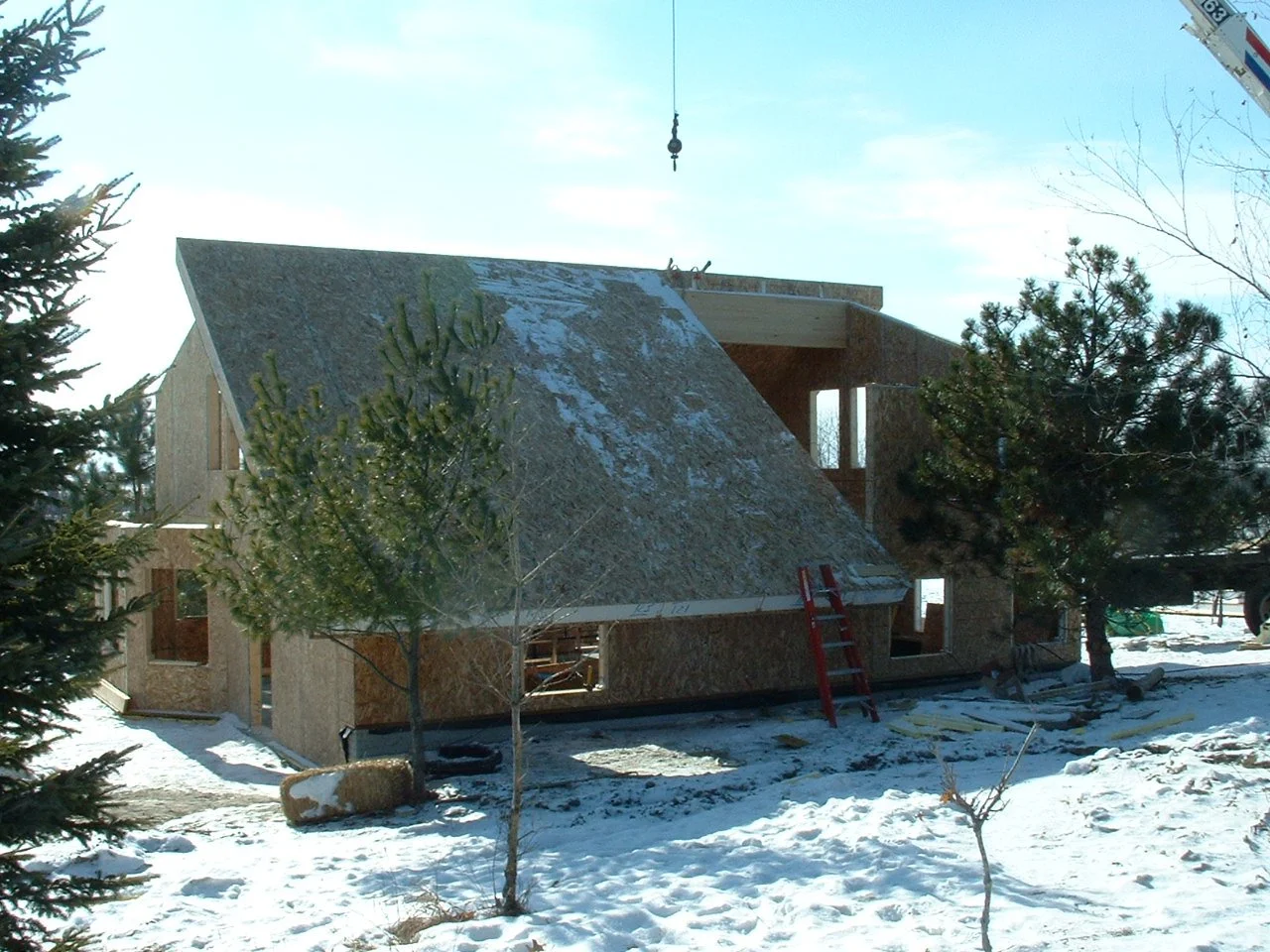
How far can it go?
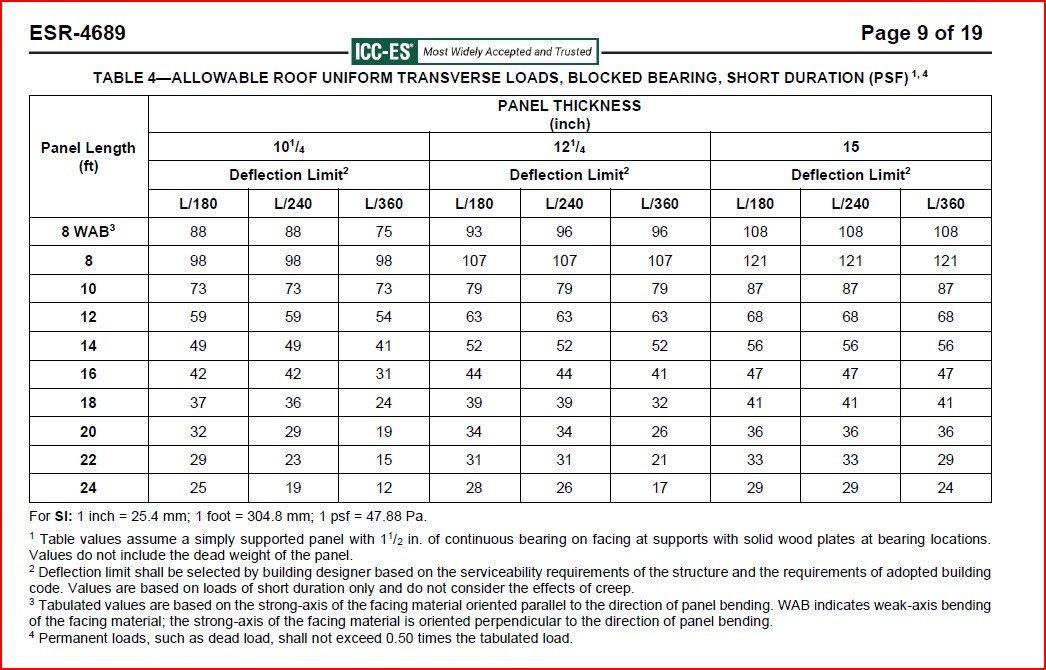
Almost every SIP manufacturer publishes span tables: charts that say a panel of a certain thickness can cross (span) a certain distance. What most of those charts don't explain is where those numbers actually come from, or why one brand's 8 1/4 inch roof panel is rated for 12 feet while another brand's is rated for 14. I've spent decades testing, specifying, and investigating SIP buildings, and I want to walk through what's actually happening behind those numbers, in plain language, so you can read any span table with a clearer eye instead of just trusting the page it's printed on.
A span table isn't telling you how far a panel can go before it breaks. It's telling you how far it can go before it sags, bounces, or stresses its materials beyond a safe limit.
Span depends on more than thickness. Roofing weight, snow load, wind, and even the type of connector (spline) between panels all change how far a panel can safely go.
In the United States, SIPA, Structural Insulated Panel Association, manufacturer SIP panel allowable loads come from a method called ADT, short for Average Divided by Three. Manufacturers test real panels to failure and use one-third of the average result. That's one of the actual reasons two brands of the same-thickness panel can list different spans.
The foam core flexes more than solid wood, so "shear deflection" alone can account for 30 to 60 percent of a panel's total sag (deflection). This matters far more in SIPs than in standard lumber or I-joists.
A span table only covers standard, ideal conditions. Once a project has heavy roofing materials, high snow, big openings, or unusual connections, the span table stops being the final word, and an engineer needs to run the actual numbers.
A span table isn't only answering "how far can this panel go before it breaks." It's answering a quieter question: "how far can this panel go before it bends, bounces, or stresses its materials more than people find acceptable." Engineers call this a serviceability limit, and it's almost always what actually limits a SIP panel's span, not raw strength.
Every span table is built on a stack of assumptions:
The load is spread evenly across the panel
The connections between panels may act as stiffeners
SIP grade OSB sheathing is used
Specific EPS foam density is used
A standard amount of sag is considered acceptable
The allowable loads come from the ADT method described further down in this article
Change any one of those assumptions on a real project, and the number printed in the table may no longer apply to your building.
Picture a SIP as a ream of copy paper with a plastic wrapper on top and bottom of the ream. The two OSB skins on the outside of the SIP act like the plastic wrapper of the ream of paper when the ream is bent. They stretch and compress as the panel (ream) bends under load. The bottom stretches and the top compresses. The foam core in the middle (the sheets of paper) does a different job: it resists shear, which is the sliding force between the top and bottom skins. The two only work well together because they're glued into one solid unit. That teamwork is called composite action, and it's the reason a panel just a few inches thick can be so stiff for how little it weighs. It's also why the foam core's own flexibility matters more in a SIP than it would in a solid wood beam or an engineered I-joist.


Dead load is the weight the panel carries just sitting there: its own weight, sheathing, roofing, ceiling finishes, and anything mechanical hung from it, things that a typically stationary and are not moving. It's easy to overlook because SIPs are lightweight, but a heavier-than-expected roofing choice can shift which load actually governs the design.
For most SIP roofs, snow load is the bigger factor. Building codes typically assume a baseline live load of 20 psf, but converted snow loads can run well past that, commonly into the range of 30 to over 100 psf depending on region, and higher in the heaviest snow zones (300 psf). Span tables usually assume standard exposure and no snow drift, and real roofs often see more than that.
For SIP floors, a 40 psf live load is typically used. This equates to people, furniture, appliances, things that may move around from time to time.
Wind is a different kind of problem altogether. Wind can exert uplift or pressure depending on where it acts on the building. Often it can be a bending problem; but in other conditions it's a connection problem: negative pressure tries to pull the roof assembly upward, and what actually resists that is the strength of the splines, plates, fasteners, and bearing at the supports. In coastal or high-wind areas, uplift often governs the design more than the weight the roof is holding up.
← Swipe to view full table →
| What the Table Assumes | What Could Be Different on Your Project |
|---|---|
| Roofing weight | Heavier roofing (clay tile, heavy architectural grade shingles) adds dead load the table may not include |
| Snow load | Drifting, valleys, and unusual roof shapes can push the real load above the table's assumption |
| Wind exposure | Coastal or open-terrain sites often carry a higher exposure category than the table assumes |
| Panel connections | Table values usually assume an ideal, stiff connection, not whatever spline is on hand |
| Deflection limit | A stricter finish (tile, plaster, rigid flooring, brick, windows) may require a tighter limit than the table used |
Going thicker increases a panel's span capability a lot, but not in a straight line. Jumping from a 6 ½-inch panel to an 8 ¼-inch panel can add roughly 40 percent more load capacity or allowable span, while going from 8 ¼ inches to 10 ¼ inches adds closer to 30 percent. That’s why the span jump between thicknesses on a manufacturer's table looks uneven instead of a linear progression.
This flattening curve happens because panel thickness isn't the only thing deciding the span. Foam is "shear soft" compared to wood, meaning it flexes more easily when a sliding force runs through it. In a SIP, that core shear flex can make up 30 to 60 percent of the panel's total sag, especially on shorter spans carrying heavier loads. Manufacturers measure this directly through full-scale testing (commonly ASTM E72), which is one of the biggest differences between how a SIP behaves versus a solid wood beam. Add enough thickness, and eventually the connection details at each end—not the panel itself—become the actual structural limit.
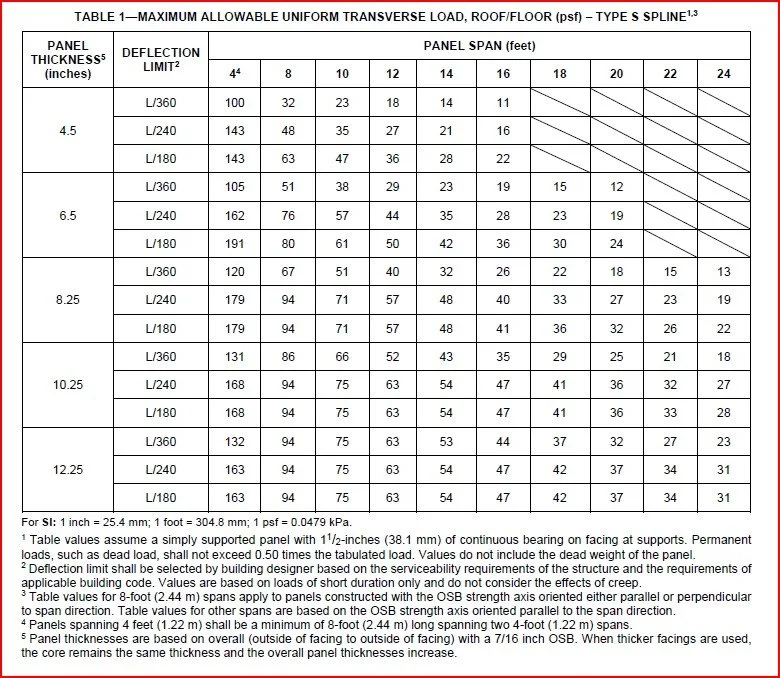
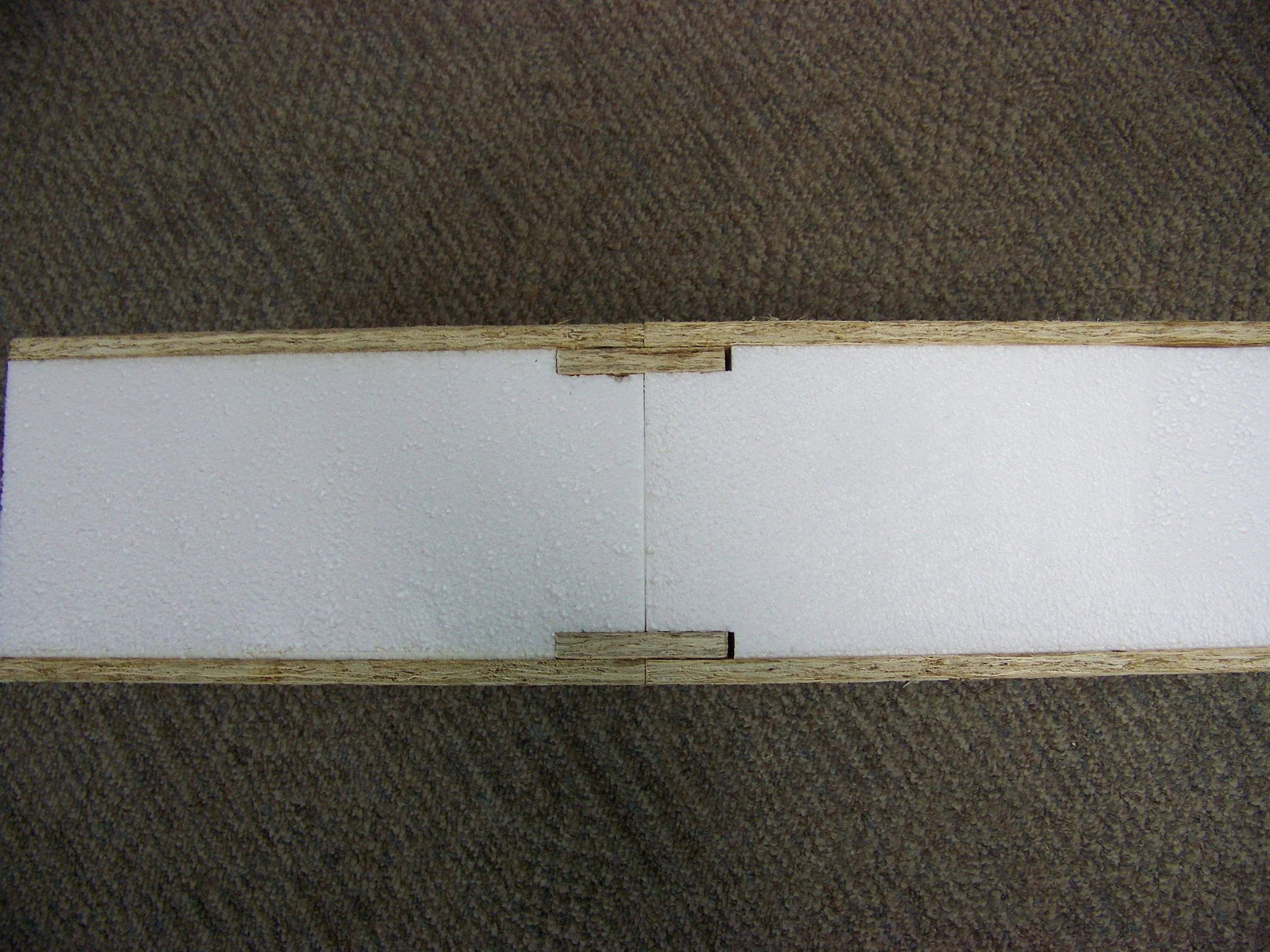
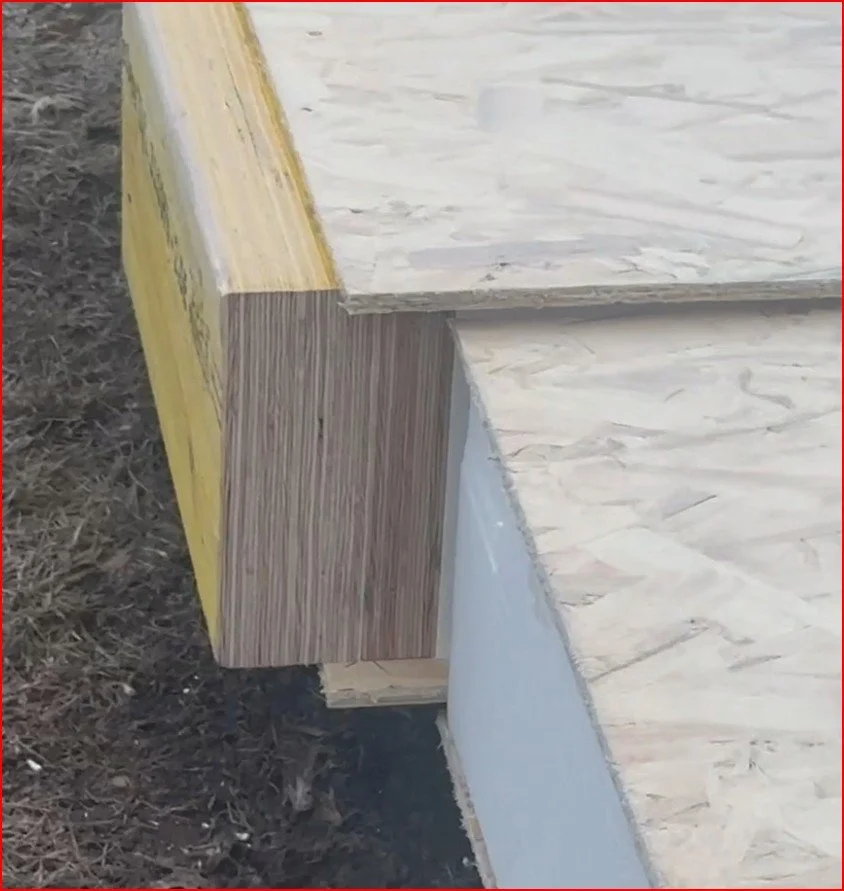
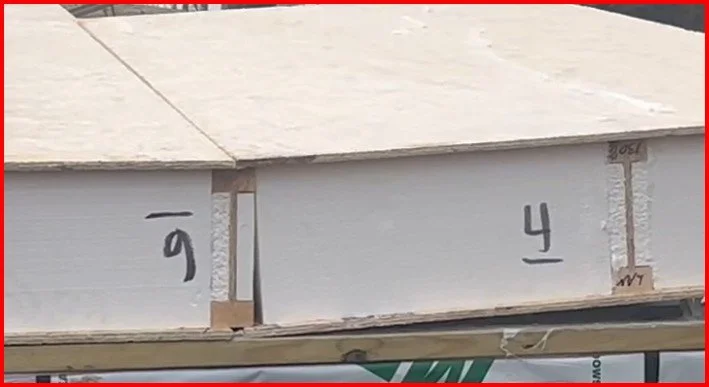
Span tables assume an "ideal" connection between panels, but real job sites use different splines: OSB spline, LVL spline, I-joist spline, lumber or a manufacturer's own structural spline. That choice affects deflection, vibration, wind uplift resistance, and how load moves from one panel to the next. Two roofs built with the exact same panel thickness can perform noticeably differently if one uses OSB splines and the other uses LVL, even though the table lists a single number for both.
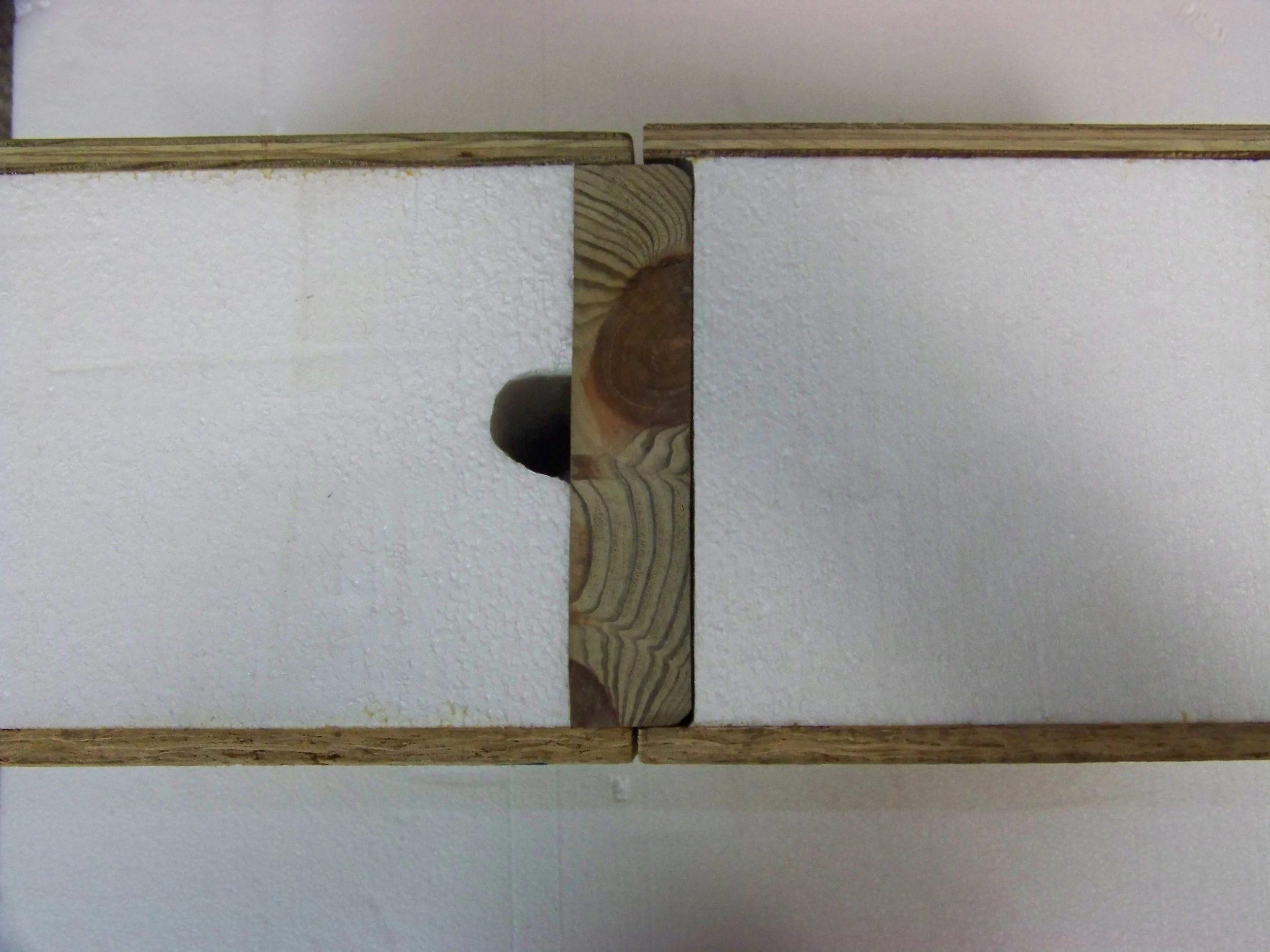
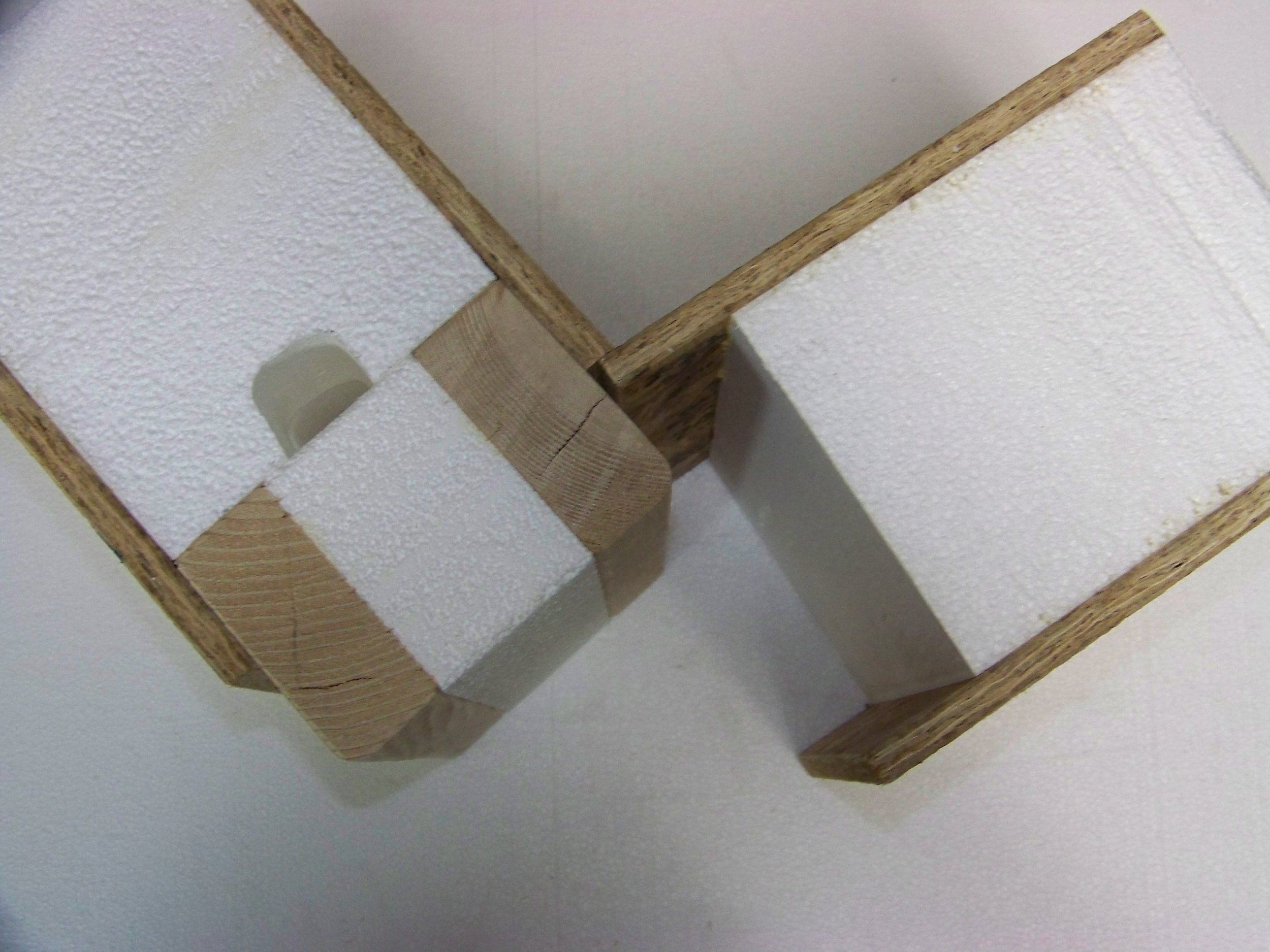
Deflection limits describe how much sag is considered acceptable for a given span, commonly written as a fraction like L/240 or L/360. In plain terms, a 12-foot span under an L/360 limit is allowed to sag about 0.4 inches before it's considered outside the acceptable range. SIPs typically hit that deflection limit well before they'd ever hit a strength limit. That's part of why span tables read conservatively, and it's also why an engineer running the actual numbers for a specific project can sometimes justify a longer span than the generic table shows.
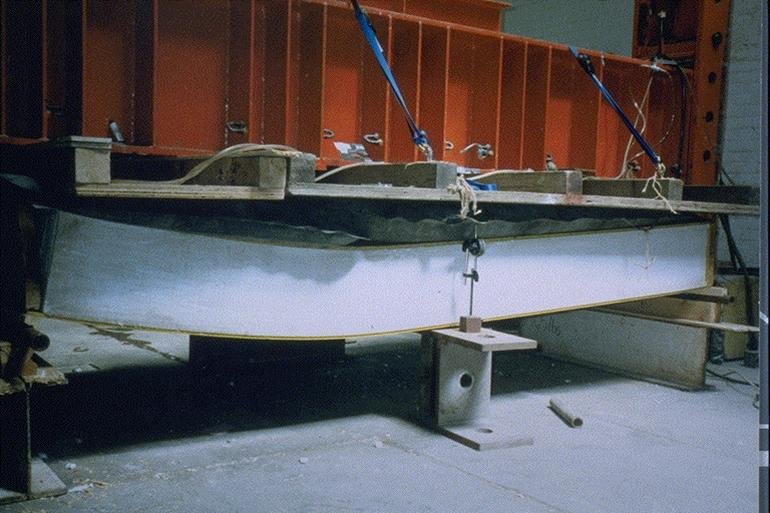
Here's the part almost no manufacturer PDF explains. SIPs aren't designed using the same methods as a piece of dimensional lumber. They use a method defined in SIPA's Engineering Design Guide called ADT, short for Average Divided by Three.
The idea is straightforward: manufacturers build several full-size panels and load each one to failure in a lab, typically using ASTM E72 testing. They average the failure loads together, then divide that average by three. The number that comes out the other end becomes the allowable design value on the span table based on the SIPs capacity or strength.
Why test instead of calculate from a formula? Because a SIP's real-world performance depends on things that are hard to predict on paper: the strength of the glue bond between skin and foam, the foam's own shear stiffness, whether a thin skin buckles under compression, and how much the panel creeps over years of sustained load. Full-scale testing captures all of that at once. Dividing by three then builds in a safety margin for manufacturing variation, environmental effects, and long-term creep. In essence, testing comes first, then the theory and formula follow. Theory and formula are developed to predict the actual tested results. This is especially important when dealing with a composite material like SIPs.
This is also the direct answer to why span tables differ between brands. Each manufacturer is testing and averaging its own panels, made with its own OSB supplier, foam density, adhesive, press process, and quality control tolerances. Different test results produce different averages, different averages produce different allowable loads, and different allowable loads produce different spans, even for two panels that look identical on paper.
Looking at a span table for your own project and not sure the number on it actually accounts for your roof's loads, snow zone, or connections? Talk to Joe Pasma, PE; he can tell you what your project's numbers actually need to be.
Span tables assume uniform load, ideal connections, specific sheathing, specific foam, and standard deflection limits. Real projects often don't match all of that: snow drift, heavier-than-typical roofing, large openings, non-standard splines, or a high-wind site. Engineered design accounts for those variables directly. A table can't.
The most common mistakes I see builders make with span tables:
Using the raw ground snow load number instead of the converted roof snow load
Ignoring drift entirely
Assuming any spline material is automatically structural
Forgetting to add dead load on top of live or snow load
Treating one manufacturer's span table as if it applies to a different manufacturer's panel
Here's what running the actual numbers can look like. Take an 8 1/4 inch roof panel under a 50 psf design snow load. Add roughly 7 psf of dead load (panel weight, roofing, ceiling finish) and the panel is carrying about 57 psf total. Once that's checked against the panel's ADT bending and shear capacity, shear often limits the span, typically around 12 to 13 feet for this thickness. Deflection frequently caps it around the same 12 feet. Swap in a plain OSB spline instead of a stiffer connection, and the allowable span can drop by roughly another foot or more. The result lands somewhere around 11 to 12 feet, not necessarily whatever number is printed on a generic table. This is a simplified illustration of the process, not a design value. Every real project needs its numbers checked against the actual manufacturer's tested data.
Before trusting a number on a span table, check:
What loads it assumes (live, snow, wind)
What deflection limit it uses
What connection type it assumes
The skin thickness and core type
The footnotes, which usually carry the most important caveats
Whether it's based on ADT-derived allowable loads
Two tables can look nearly identical on the surface and still differ by 20 to 30 percent in allowable span once you check what's actually behind the numbers.
Most of the calls I get about a SIP roof sagging or bouncing more than the homeowner expected don't trace back to a bad panel. They trace back to someone reading the headline number on a span table and skipping the footnotes underneath it. The footnotes are usually where the real story is.
-- Joe Pasma, PEWhen a SIP roof or wall does run into a real problem, it's rarely a sudden structural collapse. The failure modes I see in the field are almost always serviceability issues: excessive deflection cracking a finish, a connection loosening enough to allow uplift or separation, shear softening enough to create a noticeably soft spot, or vibration that's uncomfortable to occupants even though the structure itself is fine. None of that means the panel was defective. It usually means an assumption behind the original span number, weather load, connection type, or deflection limit, didn't match what actually got built.
A quick way to sanity-check dead load on an 8 1/4 inch roof panel: panel self-weight runs around 4 psf, roofing and underlayment typically add 2 to 3 psf, and a ceiling finish adds about 1 psf more. That puts total dead load around 7 to 8 psf before snow or live load is even added, and it's often lower than builders assume until they add it up.
A span table is a shortcut, not a rulebook. It's built on tested data through the ADT method, standard assumptions about loads and deflection, and ideal connections. Once a project moves outside those assumptions, the table stops being the final word, and an engineer's calculation is worth more than any printed chart. Understanding why the numbers are what they are is the difference between blindly trusting a PDF and actually knowing whether your project is covered.
SIP span tables published by SIPA, Structural Insulated Panel Association, manufacturers are based on full-scale testing, commonly ASTM E72, not theoretical beam equations. Manufacturers load multiple panels to failure, average the results, and divide by three (the ADT method) to determine allowable bending, shear, and connection values. Those values are then checked against deflection limits to produce the final span.
ADT stands for Average Divided by Three. It's the design methodology defined in SIPA's Engineering Design Guide: take the average failure load from full-scale tests and divide by three to get the allowable load. ADT accounts for variability in foam, OSB, adhesives, and long-term creep, which is why SIP span tables are conservative and grounded in real test performance.
Because ADT values differ by manufacturer. Each one uses different OSB suppliers, foam densities, adhesive systems, press methods, and quality control tolerances. Those differences change the average failure loads, and therefore the allowable spans. Two 8 1/4 inch panels from two different brands can have spans that differ by 20 to 30 percent.
Snow load governs most SIP roof designs. Live load defaults to 20 psf under most US codes, while converted roof snow loads often run well above that depending on region. Dead load matters too, since SIPs are lightweight and roofing choice can shift the total. In coastal zones, wind uplift can govern instead of gravity load.
Foam cores are shear-soft compared to wood. In a SIP, shear deflection can account for 30 to 60 percent of total deflection. That means SIP spans are often limited by serviceability (how much it sags) rather than raw strength, and it's one of the main reasons SIPs behave differently from lumber or I-joists.
Engineered design is needed when loads aren't uniform (drift), roofing is heavier than standard, spans are longer than typical, splines are non-standard, wind uplift is high, or the project falls outside the assumptions built into the span table. Span tables assume ideal conditions. Engineered design accounts for what's actually on your project.
PGS Consulting LLC provides independent span verification, structural review, and engineering support for SIP roofs and walls, backed by 40+ years of engineering, manufacturing, and forensic experience.
Talk to Joe Pasma, PE
Ever gotten "it depends" when you asked what a SIP project costs? It's not a dodge, the price really does depend on a handful of specific things. Here's what they are, explained with a grocery-cart comparison instead of engineering jargon.
By Joe Pasma P.E. | PGS Consulting LLC | SIP Engineering & Consulting | Published September 14, 2026, Updated October 19, 2026.
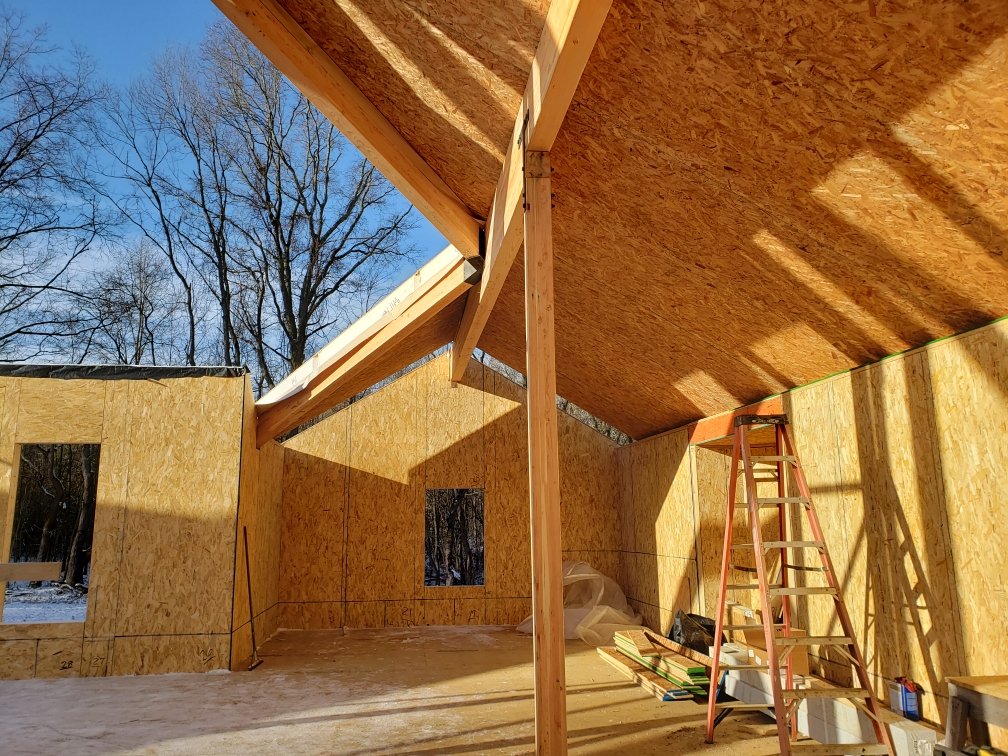
How much does it cost? It depends.
If you have ever asked a Structural Insulated Panel (SIP) manufacturer or contractor what a project costs and gotten "it depends" as the answer, you were not being given the runaround. SIP pricing really does depend on a handful of specific things, and once you know what those things are, the whole topic stops feeling like a mystery.
The easiest way to understand it is to stop thinking about SIPs as one product with one price, and start thinking about them the way you'd think about a bag of groceries.
SIP project cost is not one number. It depends on panel type, engineering scope, installation complexity, and logistics, the same way a grocery bill depends on what's in the cart, not how big the bag is.
The three main panel types, Blanks, Prefabricated, and Ready-to-Assemble (RTA), sit at different price points because each one shifts a different amount of work from the factory to your job site.
The cheapest panel option upfront (Blanks) often costs more once you add field labor, cutting waste, and a longer schedule.
Engineering, installation labor, shipping, and ancillary framing materials all add to the total, on top of the panels themselves.
Square-foot pricing alone can be misleading. Two SIP projects with the same square footage can land at very different final costs because their scope is different.

How much does a bag of groceries cost?
A bag of groceries does not have a fixed price. It depends entirely on what you put in it. A bag full of rice, beans, and bread costs very little. A bag the same size, full of ribeye steaks and prepared meals, costs a lot more. Same size bag, completely different total.
A SIP project works the same way. It is not one product, it is a bundle of choices:
Which type of panel you use
How much engineering the project needs
How precisely the panels were manufactured and cut
How complicated the installation is
How far the panels have to ship, and how they're delivered
Two projects can have the same square footage and still land at very different total costs, because the size of the "bag" was never the thing driving the price. What's inside it was.
Almost every SIP cost conversation starts with panel type, because it's the biggest lever in the whole project. There are three main options, and each one trades cost for convenience differently.
Blanks are the simplest SIP product. They come out of the factory laminated, but not cut, so there's no CNC shaping, no pre-cut openings, no factory layout. They're the cheapest panel option on paper, but that lower price comes with a catch: all the complexity that the factory didn't handle gets pushed onto your job site.
In practice, that means the lowest price tag upfront, but the most field labor, the most cutting and waste, the highest risk of tolerance problems, and usually a longer installation schedule. Blanks look inexpensive on the invoice. They often cost more once the crew is actually on site cutting and fitting them by hand, and they limit how far a panel can span without extra structure added in.
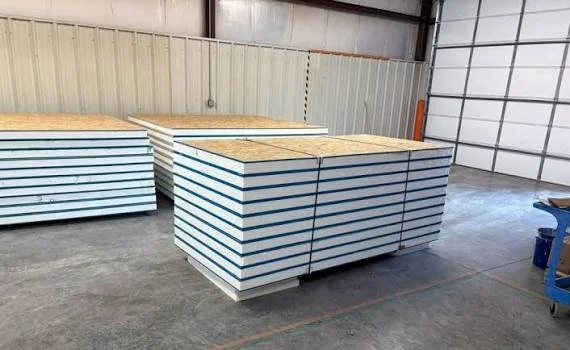
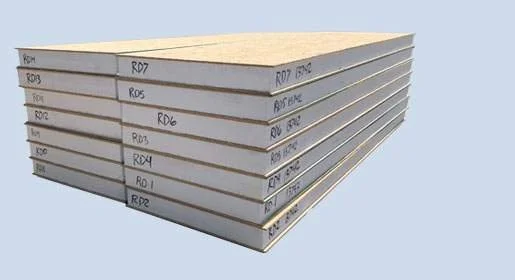
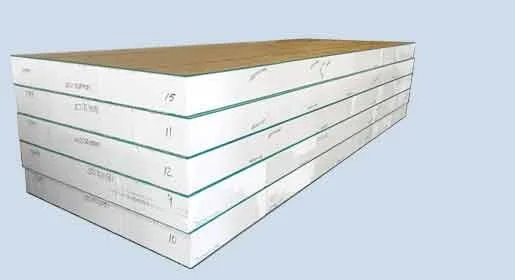
Prefabricated panels come out of the factory already cut to size, with openings, bevels, and layout built in. That shifts a meaningful amount of work off the job site and back into a controlled factory environment.
The tradeoff is a moderate step up in panel cost, in exchange for less field labor, better tolerances, less waste, and a shorter installation schedule. For many projects, this is the sweet spot: not the cheapest panel on the shelf, but the best overall value once you account for what happens after delivery.
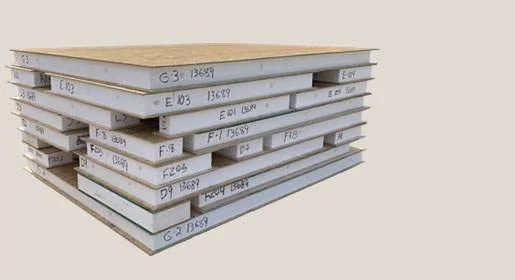
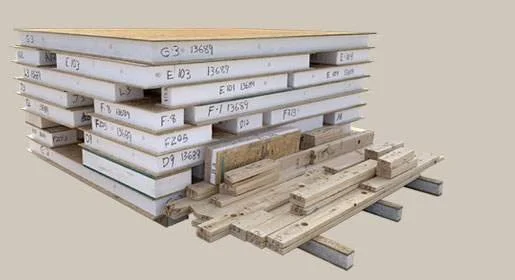
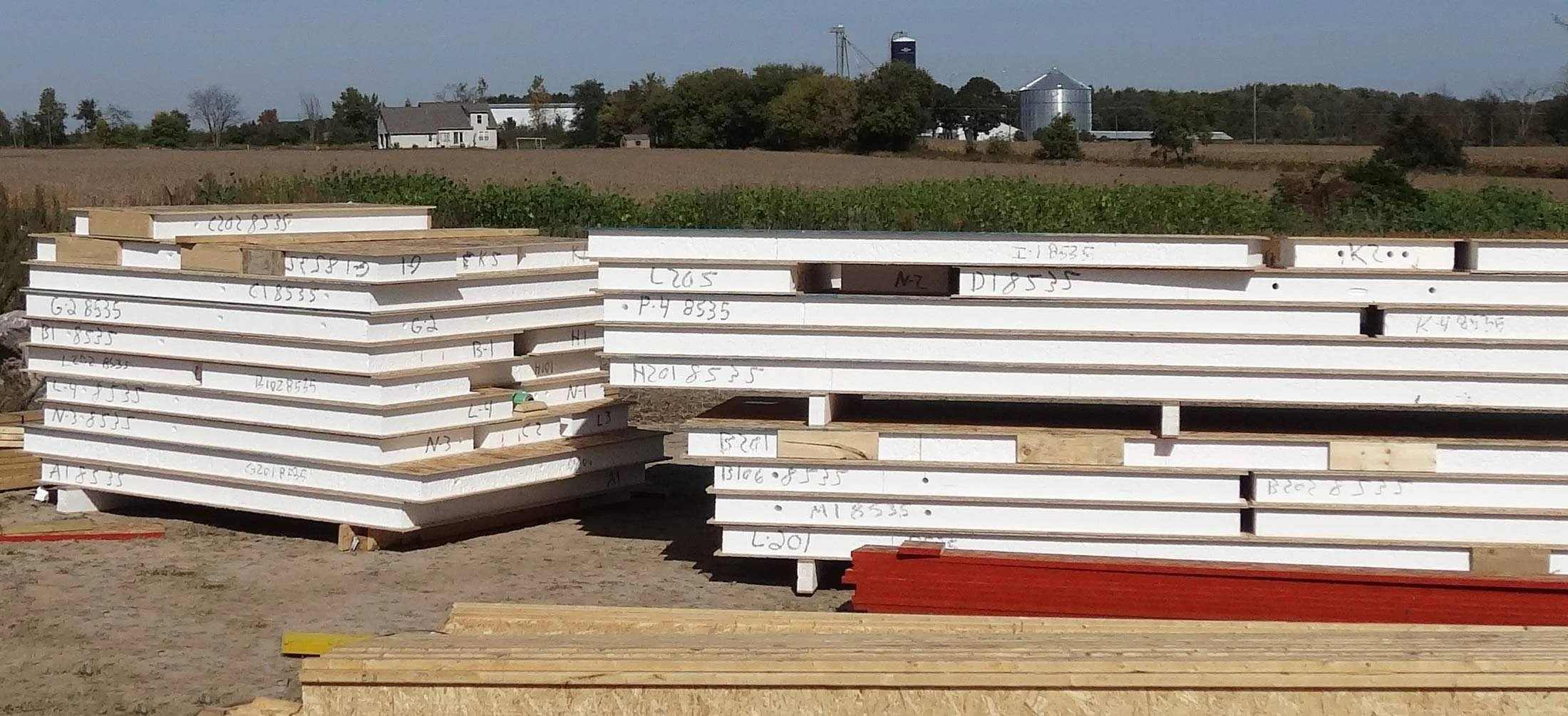
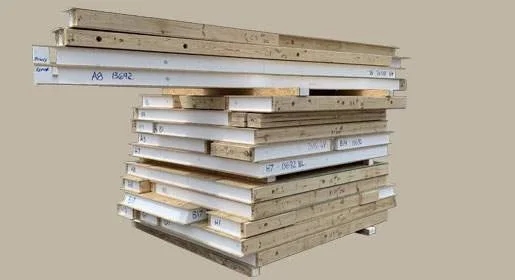
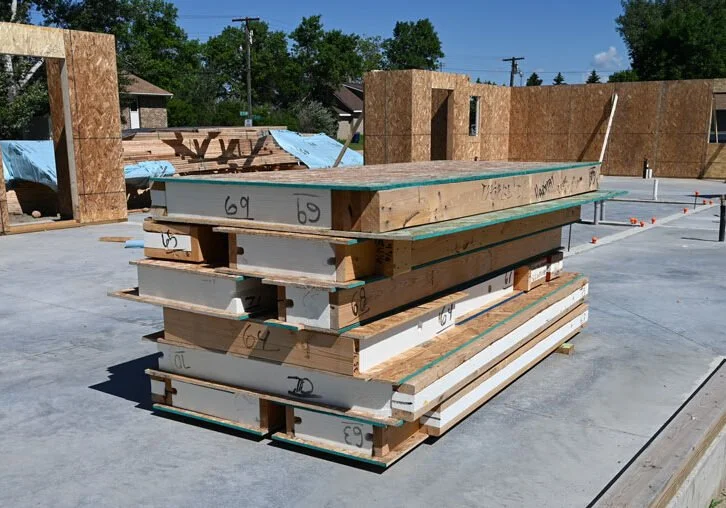
RTA panels arrive ready to install. Splines are already in place, assemblies are pre-built, and structural members are already installed at the factory.
This is the highest price at checkout, but it comes with the lowest field labor, the fastest installation, the lowest risk of on-site mistakes, and the best schedule compression. Think of it as the difference between buying raw ingredients and having a prepared meal delivered. You're paying more per item, but you're buying back time, predictability, and reduced risk of something going wrong in the field.
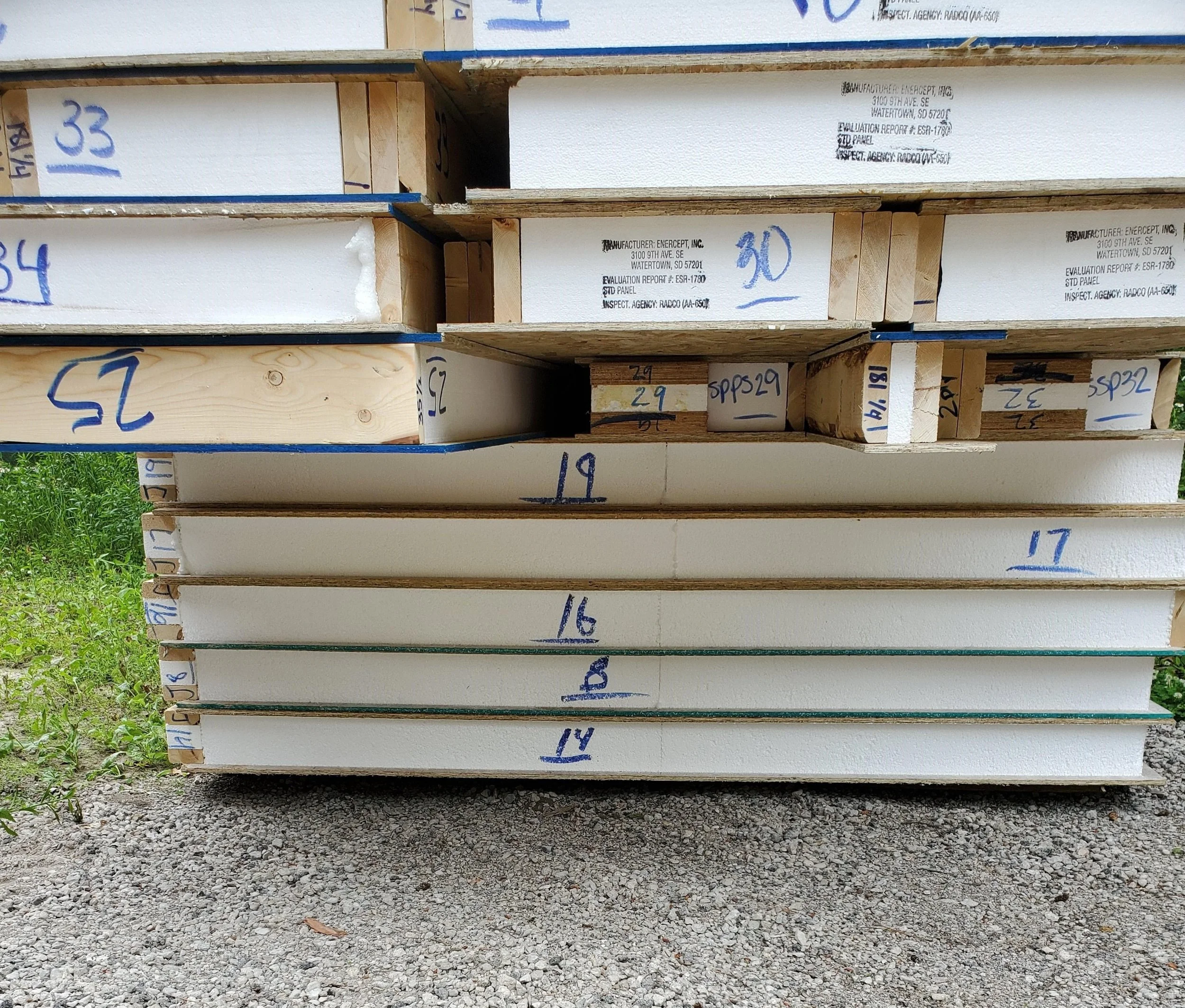
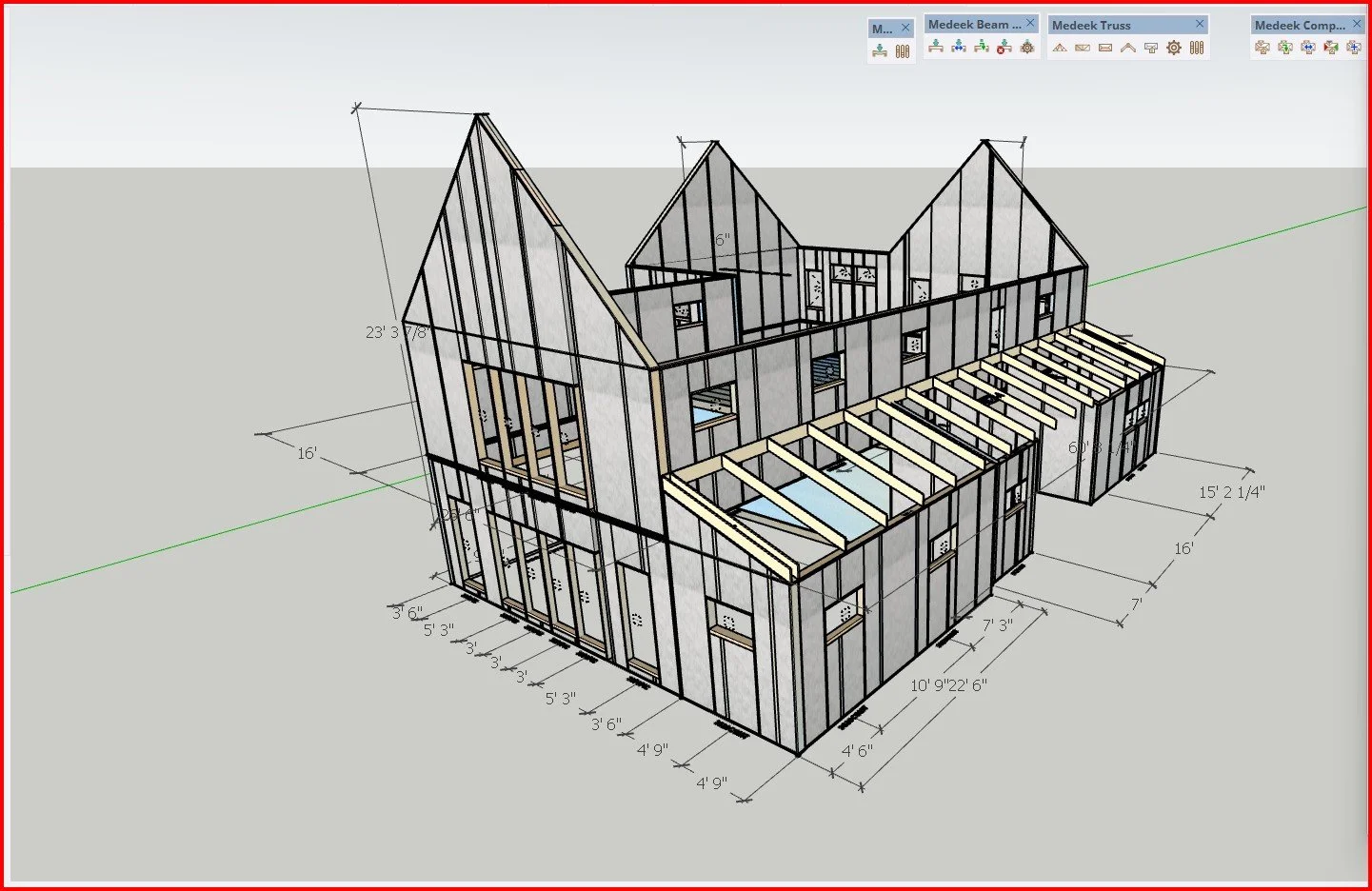
Panel type is the biggest factor, but it's not the only one. A handful of other things ride along in the same "cart" and shape your final number.
Engineering is like the recipe and the spice rack. Structural design, connection details, and load-path verification all determine whether the finished project actually performs the way it's supposed to, especially for long spans, and in high seismic and high wind areas.
Installation is the cooking labor, and it affects cost more than most people expect. Crew experience, roof pitch, multi-story work, weather, crane access, and how carefully tolerances are managed all add or subtract from the final bill. Blanks need a lot of "cooking." RTA panels need almost none.
Shipping is the delivery fee. It moves based on distance, how efficiently the load is consolidated, whether the site is rural or urban, and whether a crane is required. Shipping often makes up a meaningful slice of total SIP cost, so it's worth asking about early rather than treating it as an afterthought.
Wildfire detailing is a premium ingredient, not a different recipe entirely. In wildfire-prone zones, ignition-resistant detailing at vents, soffits, and any gap where embers could get behind the assembly may add cost, but it meaningfully reduces risk. You can read more about how that works in How SIPs Perform in Wildfire Zones.
Air-barrier continuity is the packaging. It's what keeps everything inside the envelope working the way it was designed to. Better packaging at the seams, joints, and penetrations means better long-term performance, and usually a lower chance of costly problems down the road.
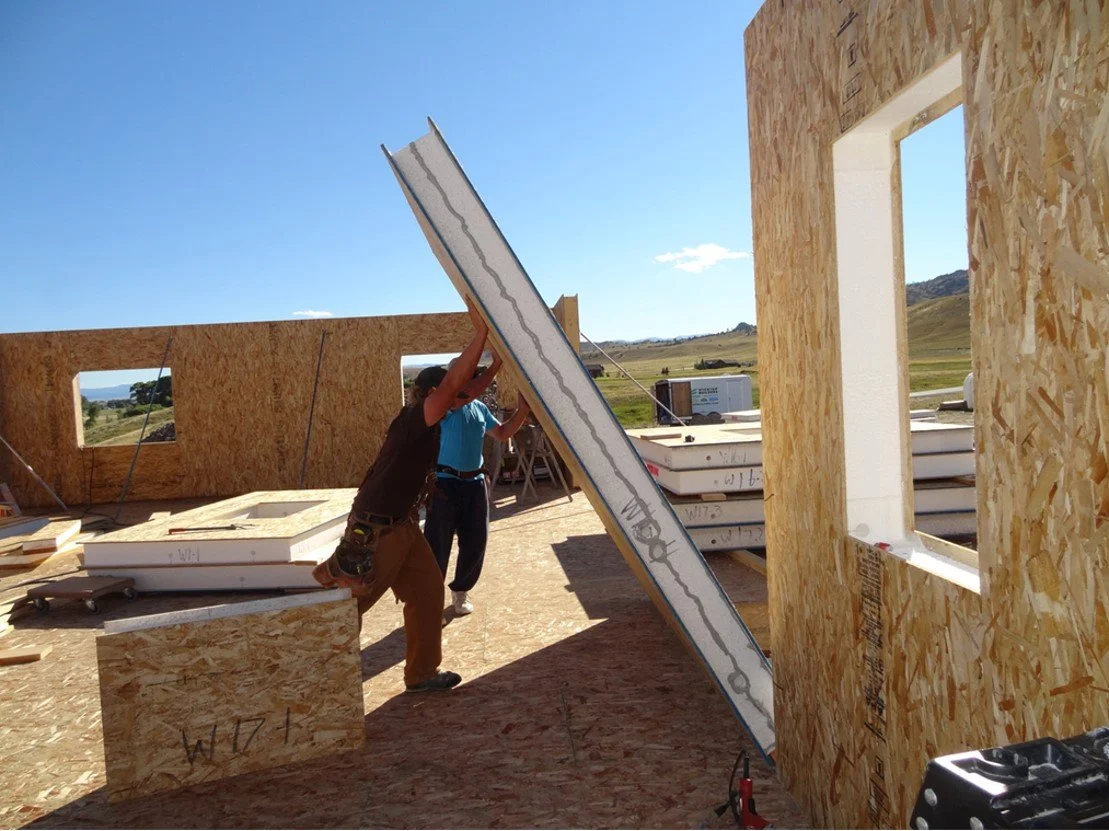
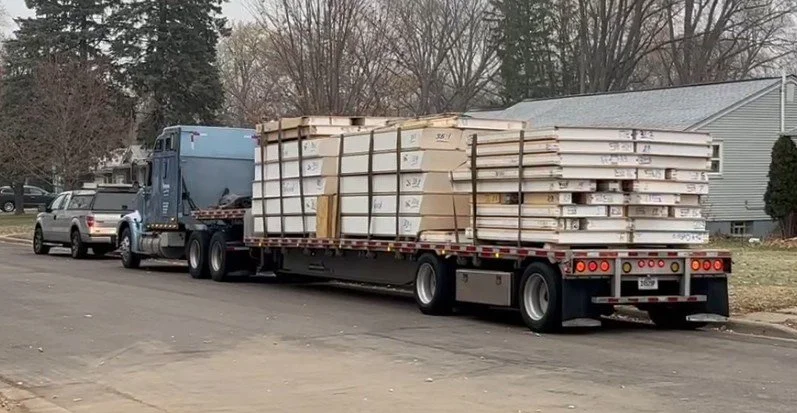
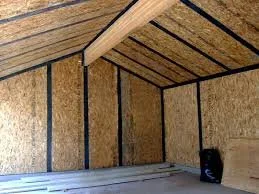
Wildfire-resistant detailing usually doesn't mean a different panel. It means extra attention at the places embers can get behind the assembly: vents, soffits, roof-to-wall transitions, and any small gap that looks harmless until an ember finds it. That's why a project in a wildfire zone can carry a higher installation and detailing cost even when the base panel price looks identical to a standard project.
It's tempting to think of engineering as a line item you could trim to save money. In practice, it's closer to the recipe that makes everything else in the cart actually work together. Load paths, connection details, and structural support members all get decided at the engineering stage, before a single panel is manufactured. Get that stage wrong, and no amount of premium panel material fixes it later.
The projects that blow up their budget almost never blow up on the panels themselves. They blow up on decisions made before a single panel was ordered: a roofline that wasn't finalized, an opening added after the shop drawings were locked, a crew installing SIPs for the first time without experienced guidence. Get the scope right at the front end, and the panel invoice stops being the scary part.
-- Joe Pasma, PETrying to figure out which of these cost drivers actually apply to your project: Talk to Joe Pasma, PE, he can look at your specific scope and tell you straight where your budget is actually going.
Once you line all of that up, the pattern gets easy to see.
← Swipe to view full table →
| SIP Scope | Grocery Comparison | What It Means for Your Budget |
|---|---|---|
| Blanks | A bag of pantry staples | Lowest price on the shelf, but more of your own time and labor to turn it into a finished result |
| Prefabricated | Staples plus produce and good meat | Costs more than staples, but most of the prep work is already done for you |
| Ready-to-Assemble (RTA) | Premium ingredients plus prepared meals | Highest price at checkout, but the fastest, lowest-risk path to a finished result |
| Full engineering + installation package | The whole cart, plus someone else doing the cooking | Highest total investment, but the most predictable outcome |
This article explains why SIP pricing moves around so much. For actual current price ranges by panel type, plus everything else that can shift a quote up or down, the SIP Cost Guide breaks it down further.
See the SIP Cost GuideHere's the real point underneath all of this: a single price-per-square-foot number sounds simple, but it hides almost everything that actually determines your cost. Two projects with identical square footage can land at very different totals because they made different choices on panel type, engineering depth, manufacturing precision, installation strategy, performance detailing, and logistics.
That's not a flaw in how SIPs are priced. It's just what happens when a building product is really a bundle of decisions rather than a single item off a shelf. This is exactly why a generic quote can be hard to compare against another generic quote: they may not be quoting the same scope at all, even if the square footage on the cover page matches.
This is also the reason PGS Consulting LLC exists as an independent voice in this process. The goal is to help you define the right scope up front, so you don't end up with a "bag of groceries" full of things you didn't actually need, or missing something you did.
If a quote you're comparing looks unusually low or unusually high next to everything above, that's worth a second look at what's actually included, not an automatic red flag. The SIP Cost Guide linked earlier breaks the price range down further by panel type, which is a good place to start checking a quote against.
There isn't one fixed number. Panel pricing itself generally runs in a wide range depending on panel type, and the full project cost on top of that depends on engineering, installation, shipping, and any special detailing your site needs. See the SIP Cost Guide for current panel-type price ranges.
Because square footage only measures size, not scope. Panel type, engineering depth, installation complexity, and logistics can all be different between two projects that happen to be the same size, and those are the things that actually set the price.
Not usually. Blanks have the lowest price on the panel invoice, but they push more cutting, labor, and schedule time onto your job site, which often erases some or all of the upfront savings.
For projects where speed, predictability, and reducing field risk matter most, often yes. You're paying more per panel in exchange for less field labor and a faster, more controlled installation.
Shipping can be a meaningful slice of total project cost, and it varies with distance, load consolidation, and whether the site needs crane access. It's worth asking about specifically rather than assuming it's a minor line item.
The only reliable way is to have someone look at your actual scope, not a generic square-foot number. Talk to Joe Pasma, PE for an independent read on what your project actually needs.
PGS Consulting LLC helps manufacturers, builders, and developers define the right scope before the panels are ever ordered, so your budget reflects the project you're actually building, not a guess. Backed by 40+ years of engineering, manufacturing, and forensic experience.
Talk to Joe Pasma, PE
Think SIPs burn like foam cups? Real forensic evidence from a house fire investigation shows why that's not how it actually works.
Written By Joe Pasma, PE | PGS Consulting LLC, Licensed Professional Engineer | 40+ Years in SIP Engineering, Manufacturing, and Forensic Analysis | Published September 11, 2026, Updated September 13, 2026
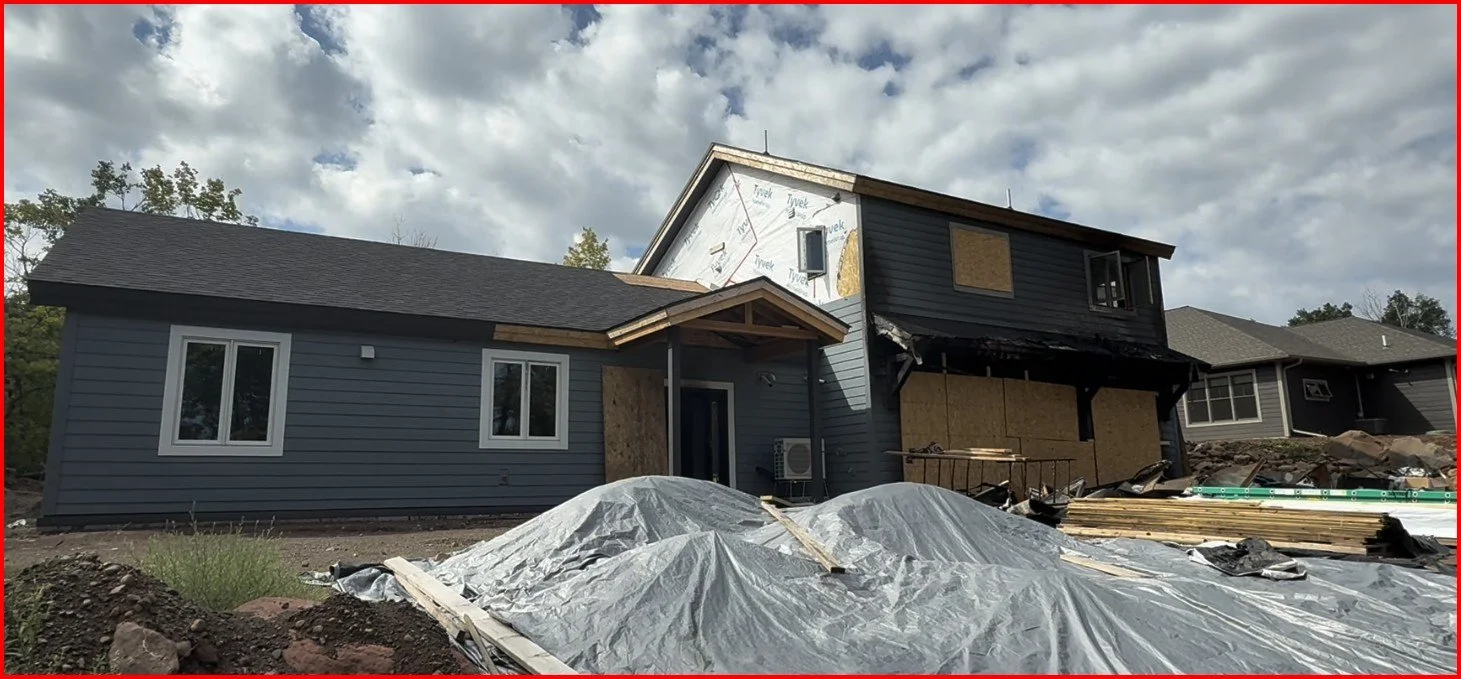
House Fire Involving SIP Roof and Wall Panels
If you've looked into building with structural insulated panels (SIPs), you've probably run into a scary-sounding claim: "they're basically foam and OSB, so they must burn like crazy." It's an understandable worry. It's also mostly based on speculation, not on what actually happens when a SIP building catches fire.
We recently investigated a real house fire involving SIP construction, took core samples from the walls and roof, and documented exactly what burned, what didn't, and why. That kind of hands-on forensic evidence is a lot more useful than speculation. Below we walk through the most common SIP fire myths and tell you what the evidence actually shows.
Yes, SIPs are combustible: the EPS foam core and the OSB skins can both burn. Nobody in the SIP industry claims otherwise.
But fire safety isn't decided by the material; it's decided by the whole system: the drywall, the finishes, and how carefully the seams were sealed matter more than what's inside the panel.
Real forensic evidence backs this up: in our fire investigation, SIP sections protected by drywall and finishes came through with no fire damage at all, even a few feet from areas that burned heavily.
The EPS foam doesn't drip or spread flame: it shrinks away from heat, similar to how ice retreats from a heat lamp, and it only ignites in the presence of a sustained, direct flame.
Solid panels don't hide fire the way stud walls can: there's no hollow cavity for smoke and flame to travel through unseen.
SIPs meet the same fire-code testing as standard framing: including ASTM E119 hourly fire-resistance testing and code required ignition barriers.
← Swipe to view full table →
| The Myth | The Reality |
|---|---|
| SIPs ignite instantly because they're made of EPS foam | The EPS foam is flame-retardant treated and code requires it to be covered by drywall; it doesn't ignite on contact |
| One flame touching a SIP means the whole panel fails | Only the area with sustained heat, direct flame is damaged; the rest of the panel stays intact |
| Smoke damage means the panel's strength is compromised | Smoke and soot are cosmetic; only sustained heat affects the panel's structural bond |
| Burning EPS foam drips and spreads fire | The EPS foam shrinks away from heat instead of melting into dripping, flaming liquid |
| Fire can hide and smolder inside SIP walls | SIPs are solid, so there's no hollow cavity for fire to travel through unseen |
| Any melted foam means the whole panel must be replaced | Replacement depends on whether the OSB-to-EPS foam bond failed, not on foam damage alone |
| SIPs can't be used where fire-rated walls are required | SIP assemblies are tested to ASTM E119 and documented in third party evaluation reports, same as standard framing |
Most of the fear around SIPs and fire comes from focusing on one ingredient: the EPS foam. But no SIP wall or roof panel is ever just EPS foam sitting exposed in a room. A SIP panel is a sandwich: an EPS foam core in the middle, wood panels (called OSB, or oriented strand board) glued to both sides, and then, once it's built into a house, a layer of drywall, siding, or another finish on top.
Fire cares less about what a panel is made of than what's protecting it and how well the whole assembly was put together. That's true whether you're talking about a SIP panel or a traditional stick-framed wall or roof. We cover the code and material side of this in more detail in our guide, Are SIPs Combustible? This article focuses on what actually happened when we put that question to the test in a real fire.
Reality: The foam inside a SIP, called EPS (expanded polystyrene), has a flame-retardant additive built into it. That doesn't make it fireproof, but it does mean it won't keep burning on its own once the flame source is gone. When EPS gets hot, it melts and shrinks away rather than catching and spreading.
On top of that, building code requires every interior SIP surface to be covered with at least half an inch of drywall. Add exterior siding, ceiling finishes, and plywood overlays, and the foam is rarely actually exposed to open flame in a real building. In our fire investigation, we pulled core samples from behind badly charred interior wall and ceiling finish material and found the foam and OSB underneath completely undamaged. The finish took the hit. The panel didn't.
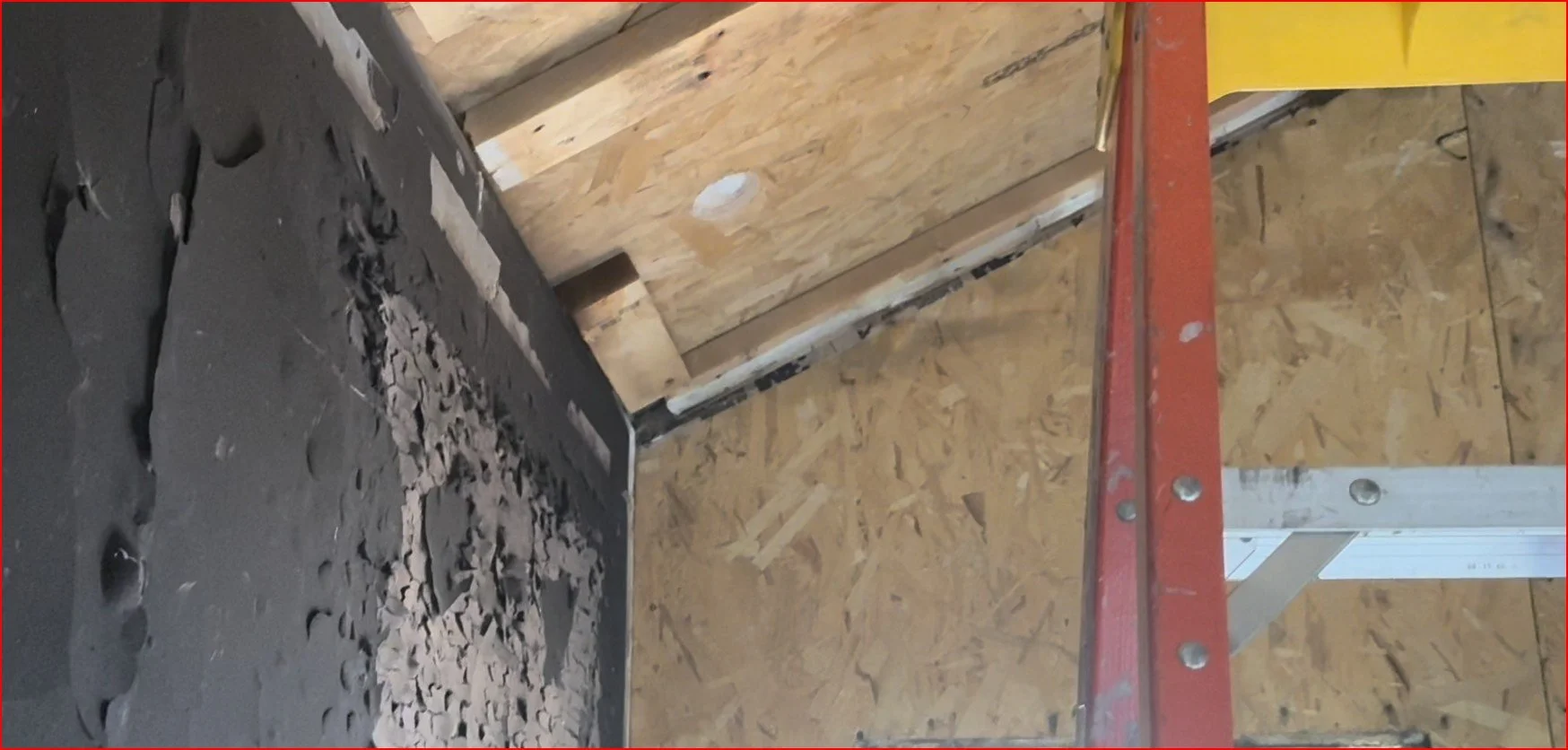
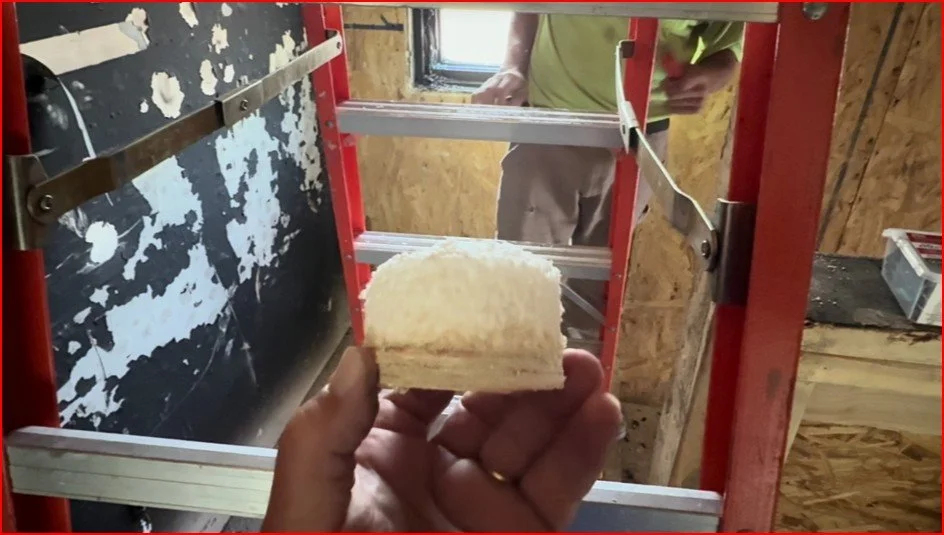
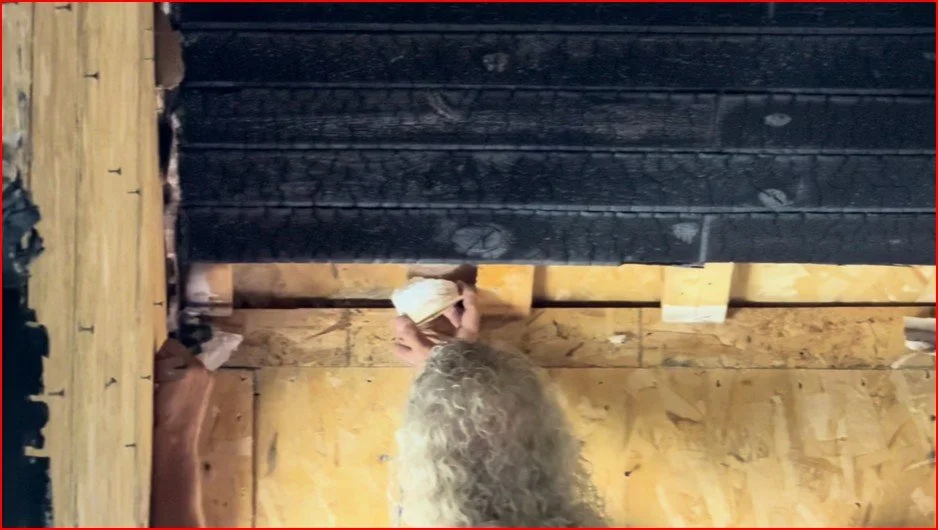
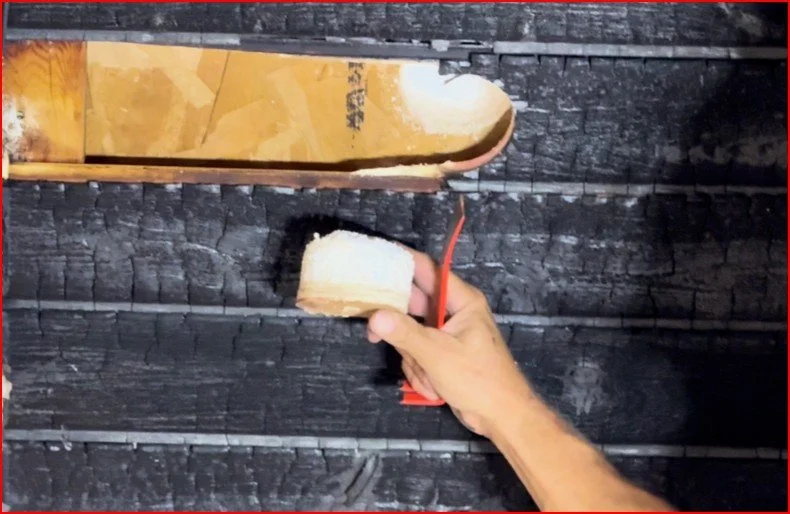
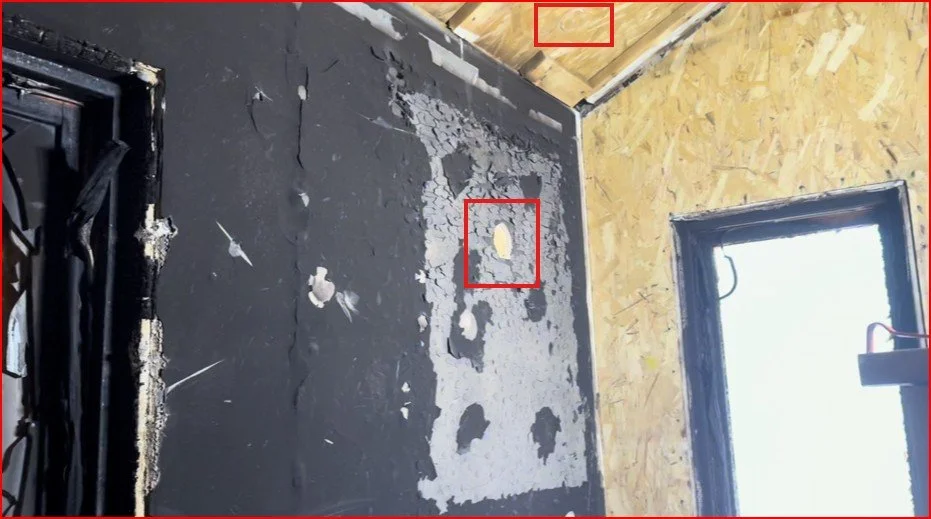
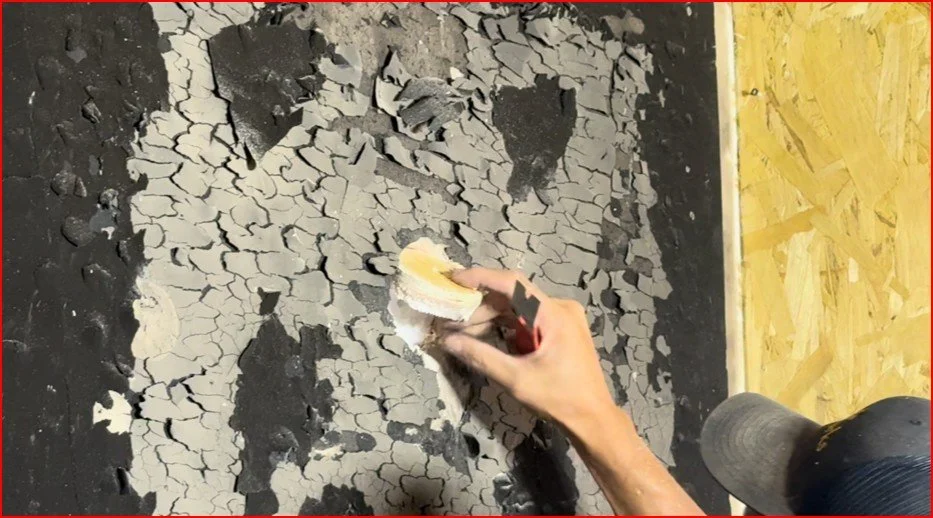
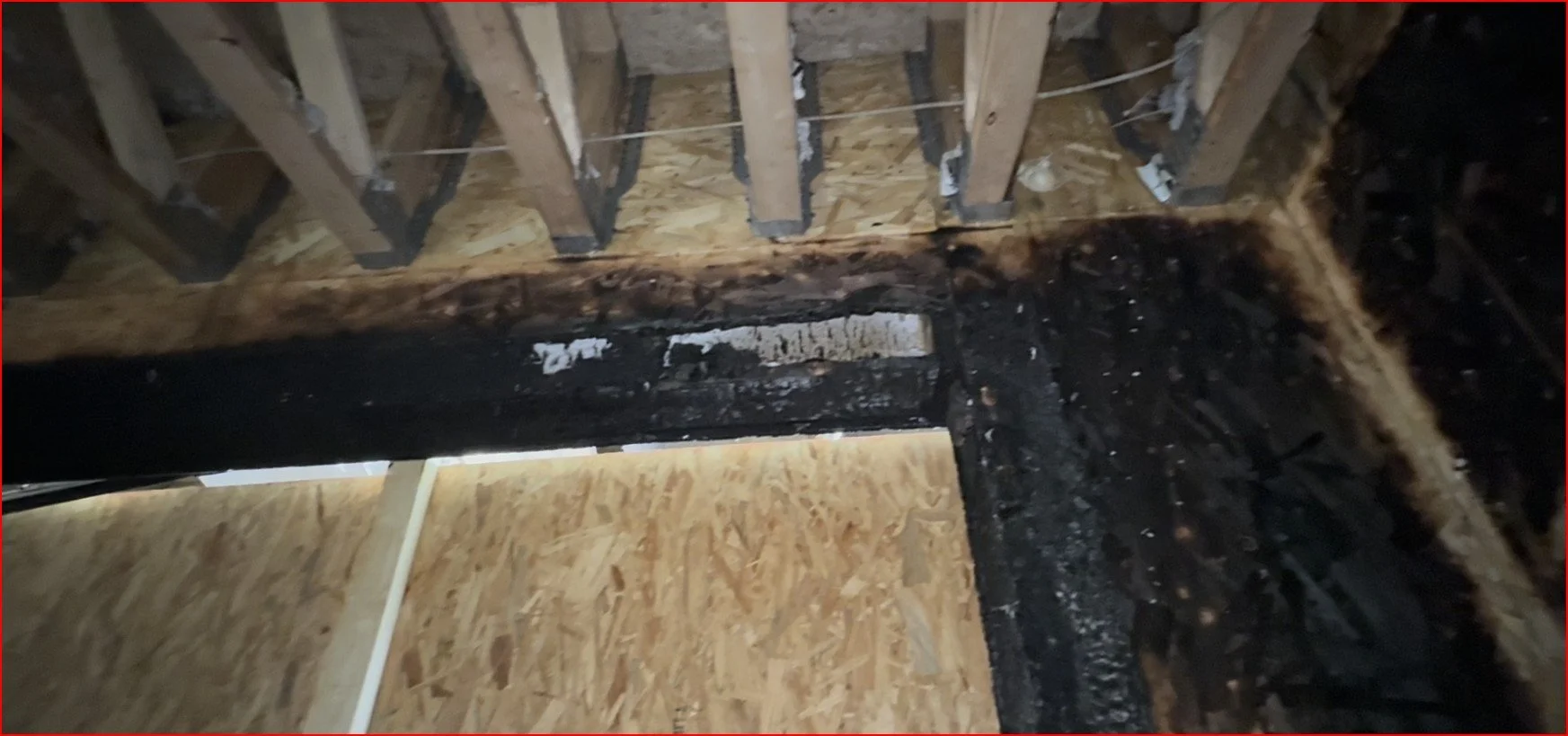
Reality: SIP fire damage stays local to wherever the flame actually sat. A section of wall or roof that saw sustained, direct flame for a long time will char and lose strength in that spot. A few feet away, a section that was only exposed to smoke or heat (not direct flame) typically comes through fine.
That's exactly the pattern we documented: some core samples taken from heavily burned areas showed serious charring and EPS foam melt-back, while samples taken from nearby areas, some in the same room, showed no fire damage at all. That's not a coincidence; it's how SIPs are supposed to behave. Damage is localized, not catastrophic, the same way a stick-framed wall doesn't collapse the moment a fire starts somewhere in the house.
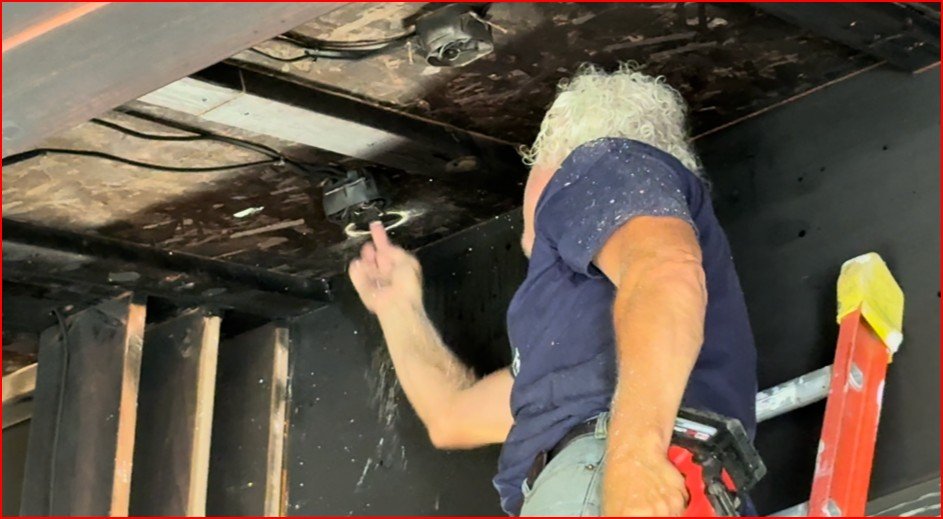
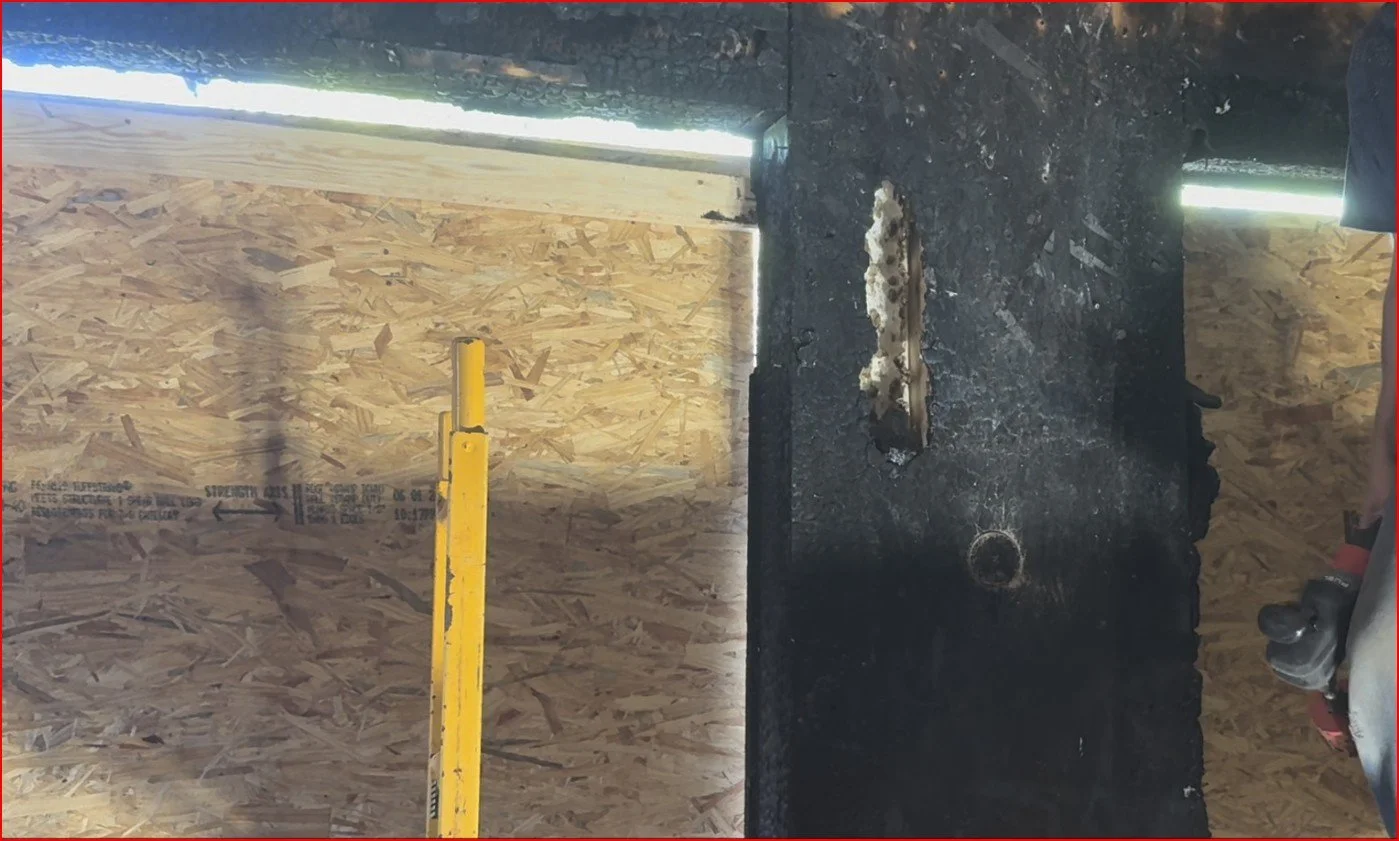
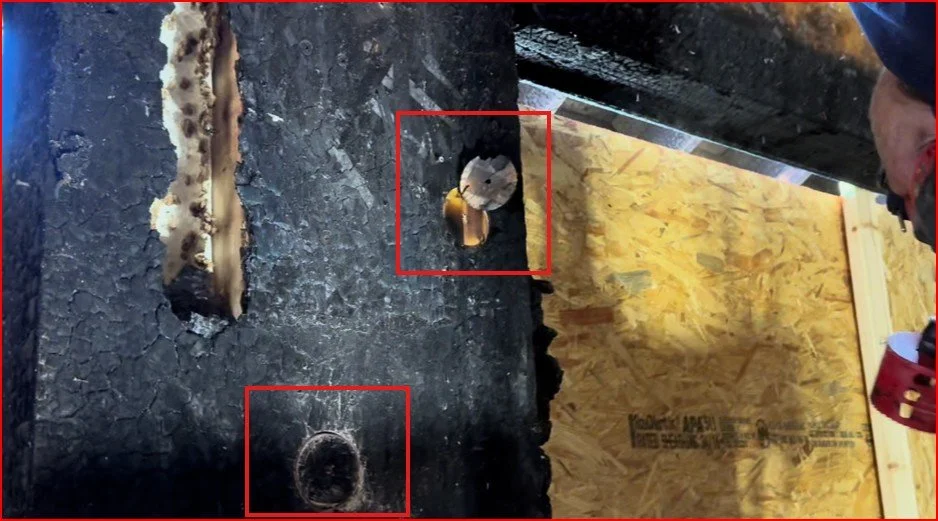
During our investigation of a residential SIP fire in Duluth, Minnesota, we cut core samples from multiple locations across the roof and walls. Samples taken from areas with direct, sustained flame exposure showed heavy charring on the OSB skin and EPS foam that had visibly melted back from the surface. Samples taken just a few feet away, in areas that saw smoke and heat but not direct flame, showed no damage at all to either the OSB or the EPS foam underneath. Side-by-side comparisons like this are how engineers confirm that flame exposure, not the presence of EPS foam, is what determines the outcome.
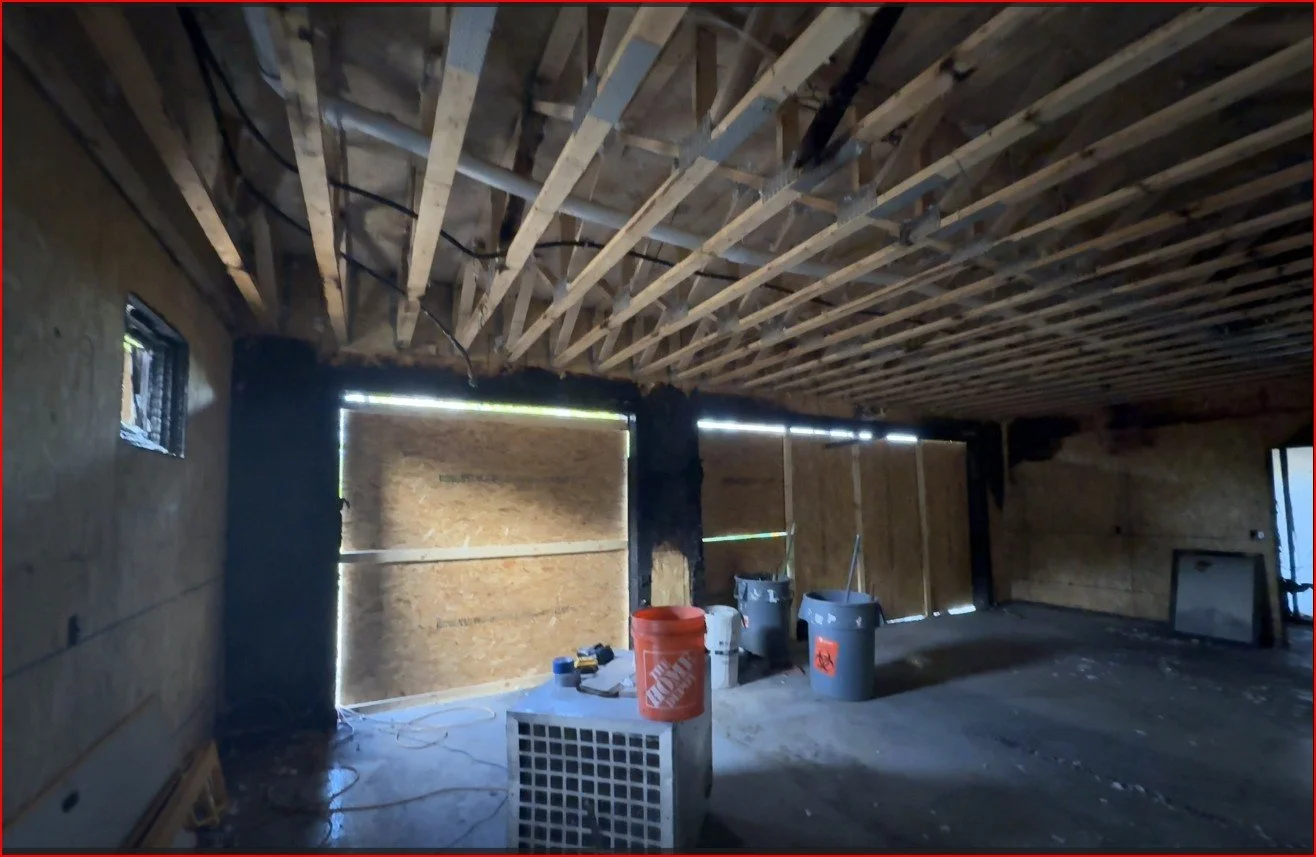
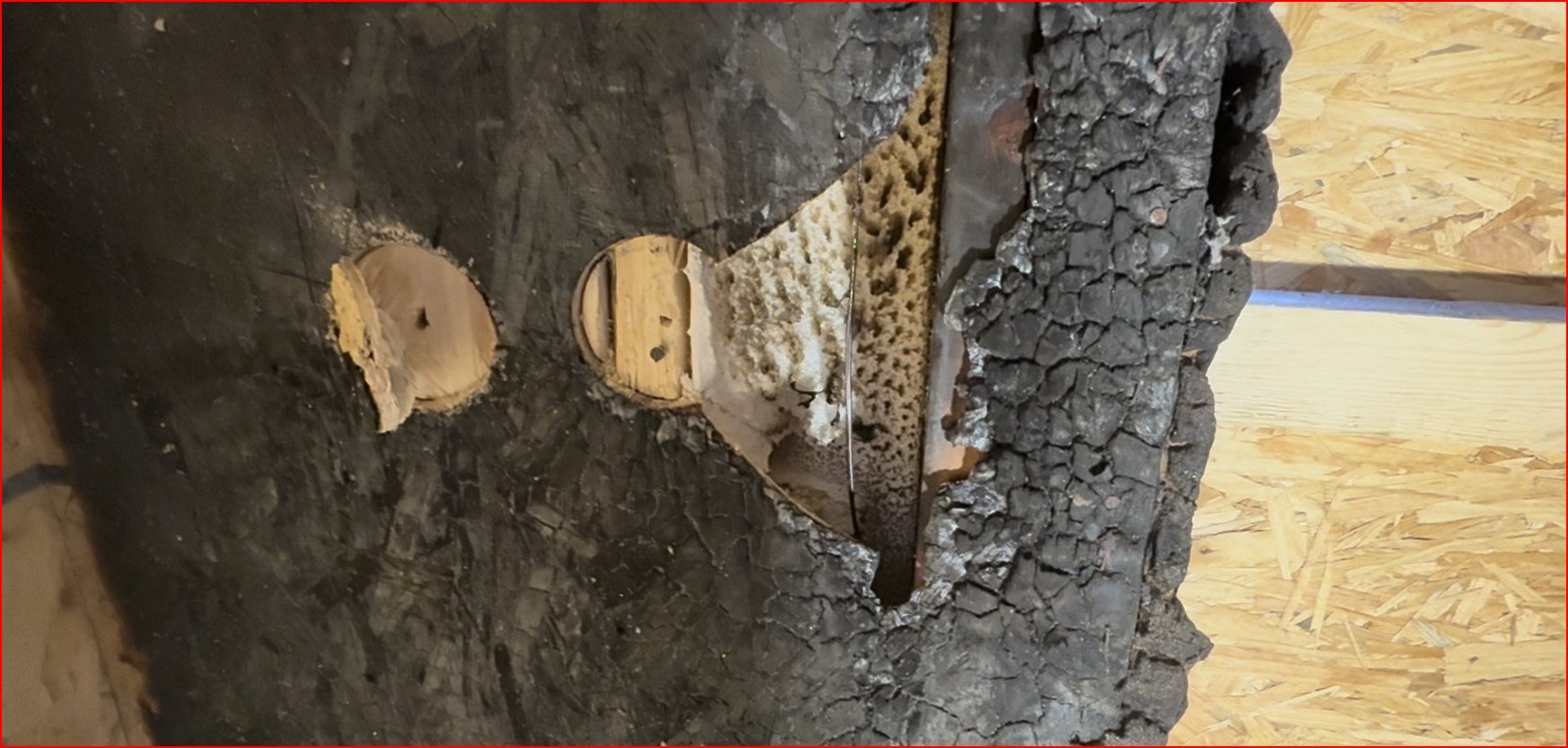
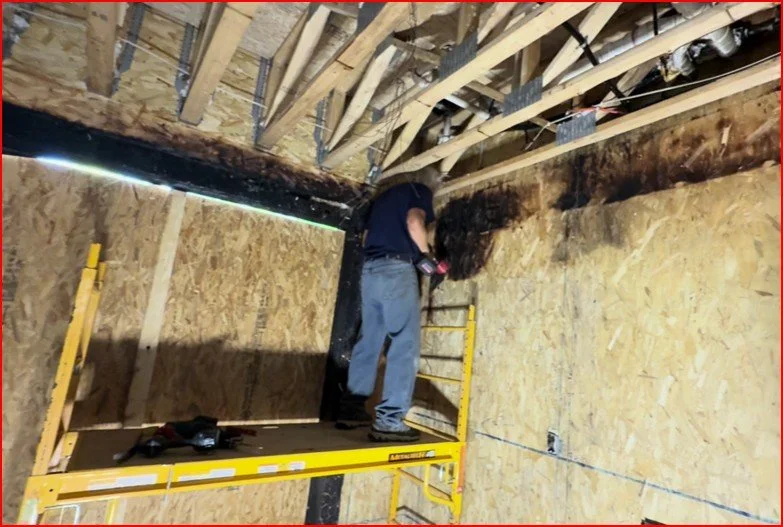
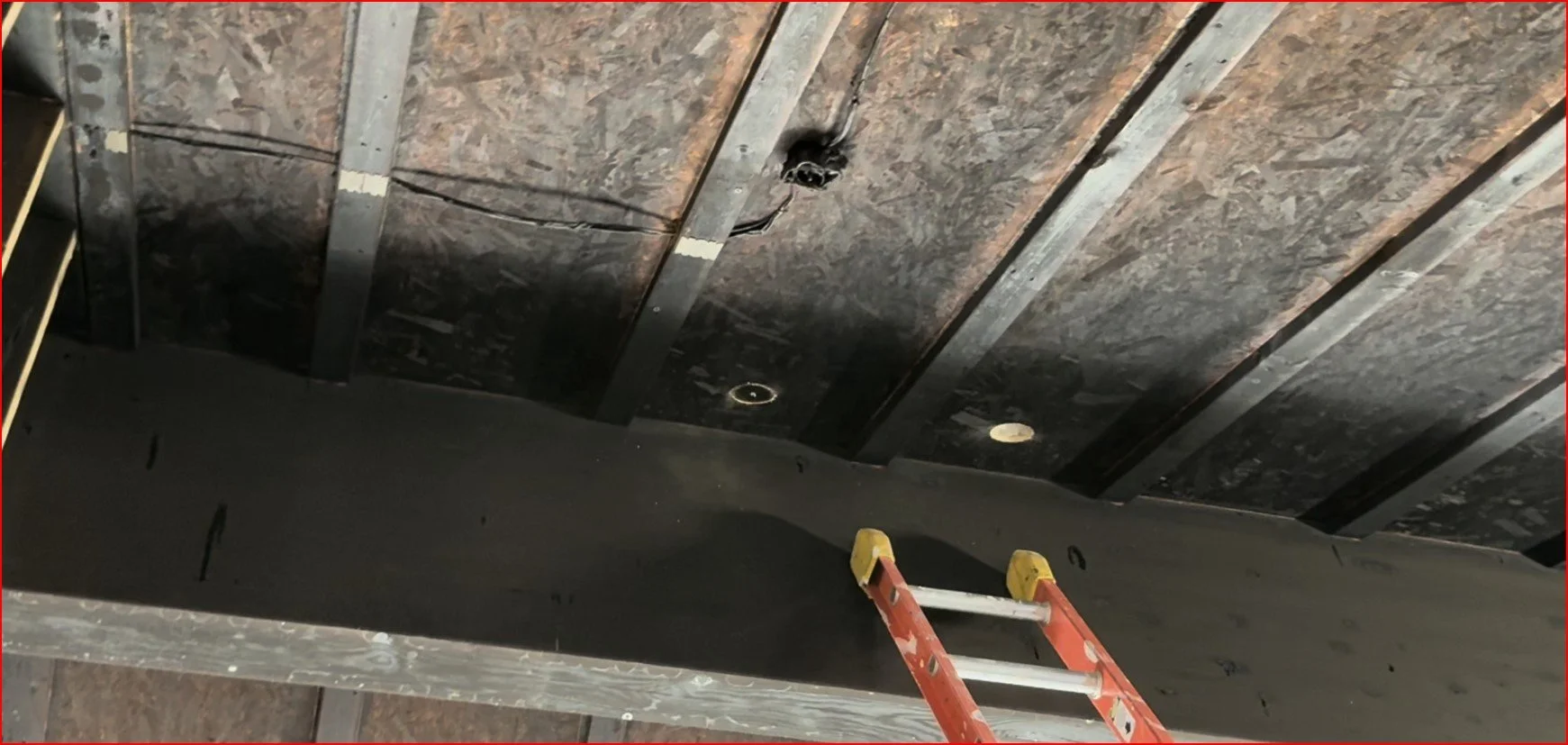
Reality: Smoke and soot are a cosmetic problem, not a structural one. What actually weakens a SIP is sustained heat breaking down the glue bond between the OSB skin and the EPS foam core. Smoke alone doesn't get hot enough or last long enough to do that.
In our investigation, areas where the OSB skin was covered in smoke residue, but hadn't been exposed to direct flame, showed no charring and no bond damage underneath. In other words, a smoky-smelling, soot-covered SIP panel isn't automatically a panel that needs to be torn out. It needs to be inspected, not assumed to be a total loss.
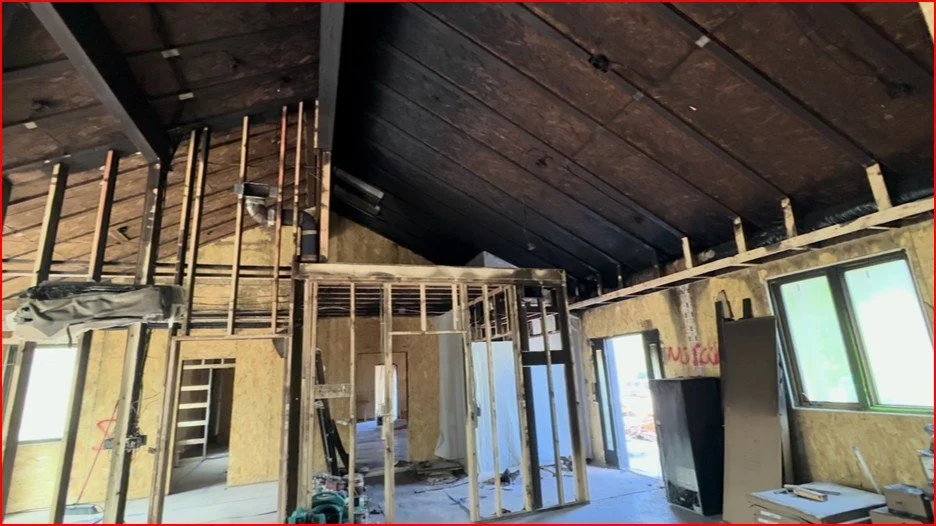
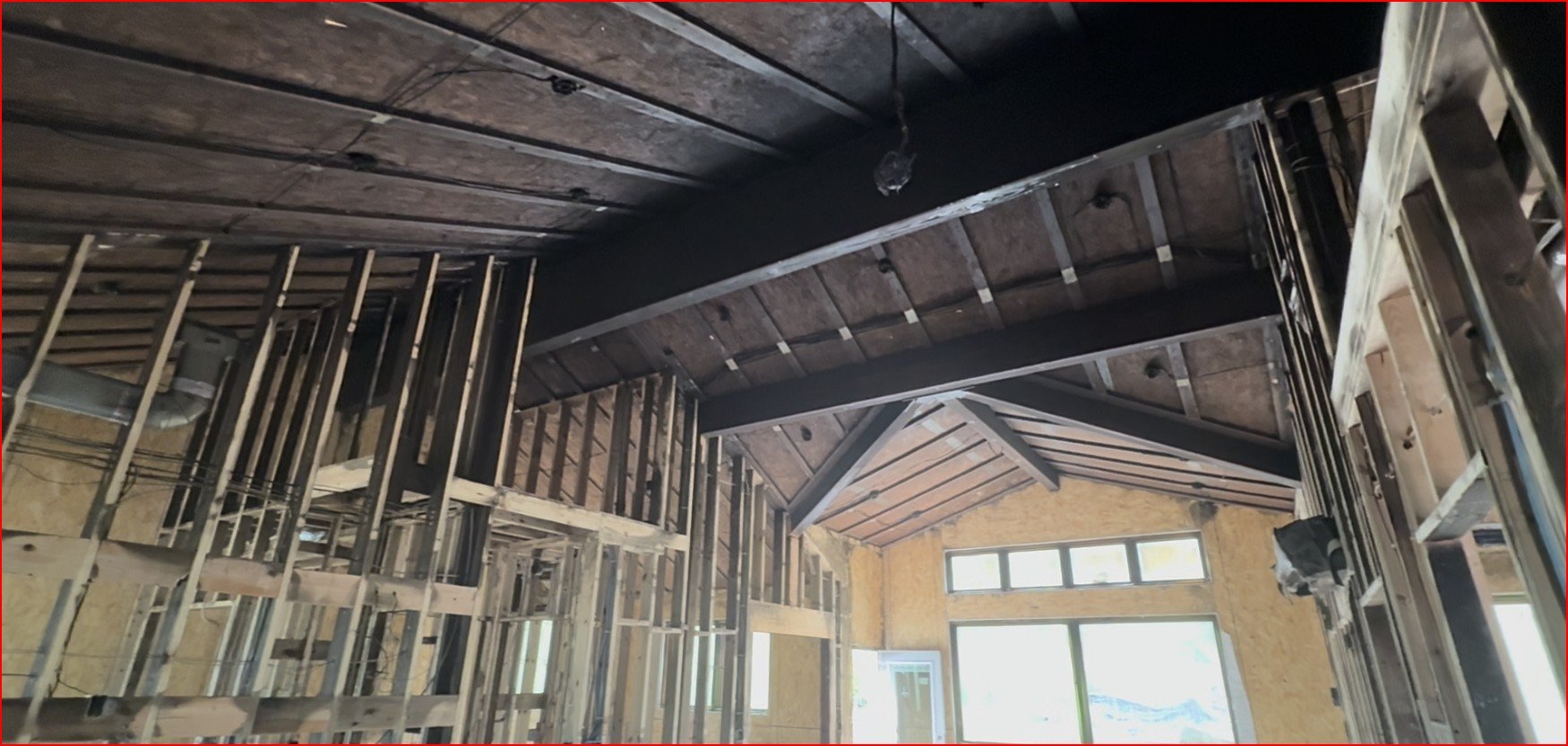
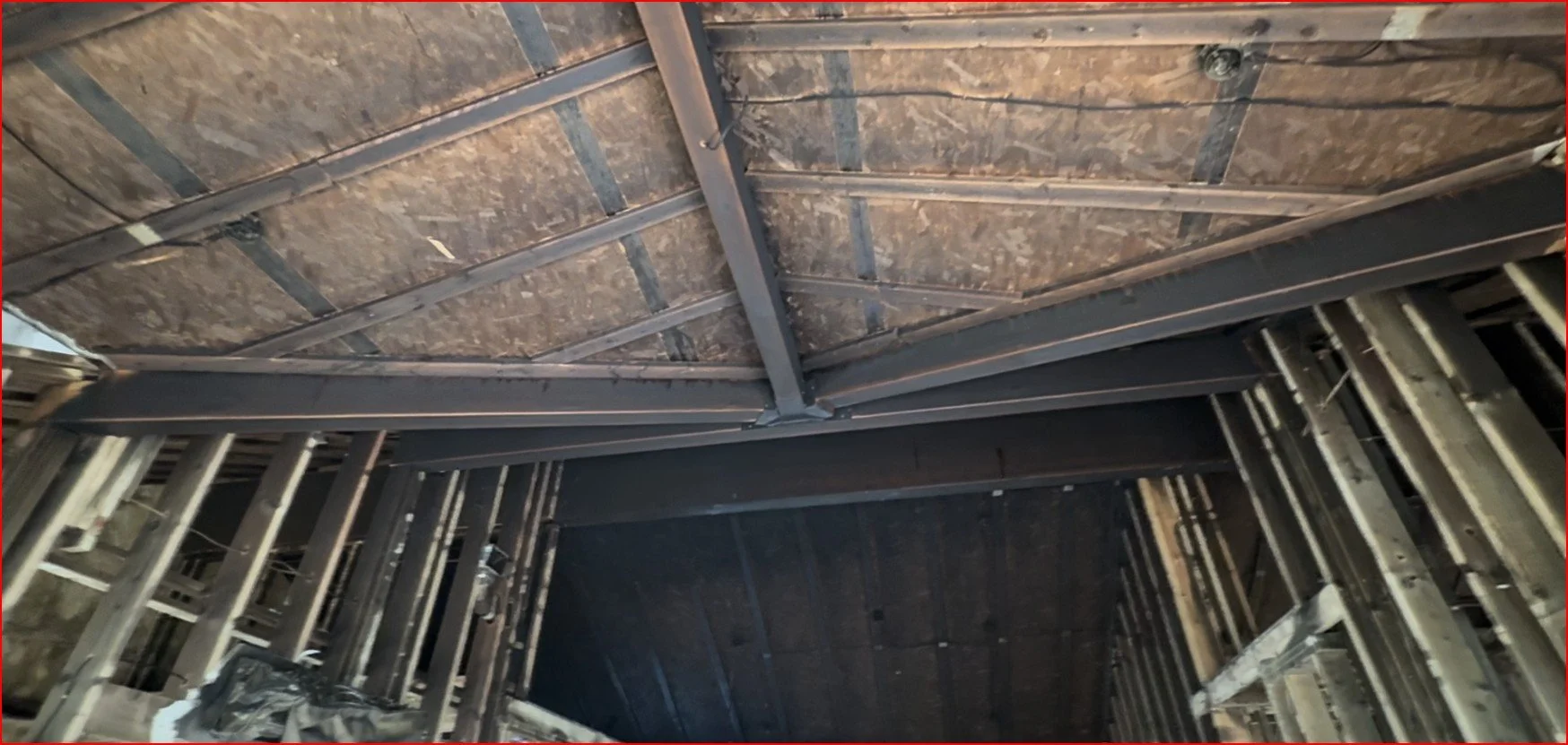
Reality: This is one of the most common fears about EPS foam-based construction, and it doesn't match how EPS in SIPs actually behaves. EPS melts by shrinking back and away from the heat source. It does not turn into a dripping, flaming liquid the way some people picture "melting plastic" behaving because construction grade EPS has a flame retardant additive in it.
In every sample we examined, the melted EPS foam pulled back from the heat in a clear, directional pattern, essentially showing us which way the heat traveled. It never occurred in areas that only saw smoke, and it never showed any sign of dripping or spreading flame to a new location.
Reality: This is actually one of the places SIPs have a real advantage over standard stick framing. A traditional stud wall has an open, hollow cavity behind the drywall. Granted the cavity is typically filled with insulation, but along with the insulation is the ability for air to move in the cavity. That cavity can act like a chimney, letting fire and smoke travel upward or sideways, unseen, before it shows up somewhere else in the house.
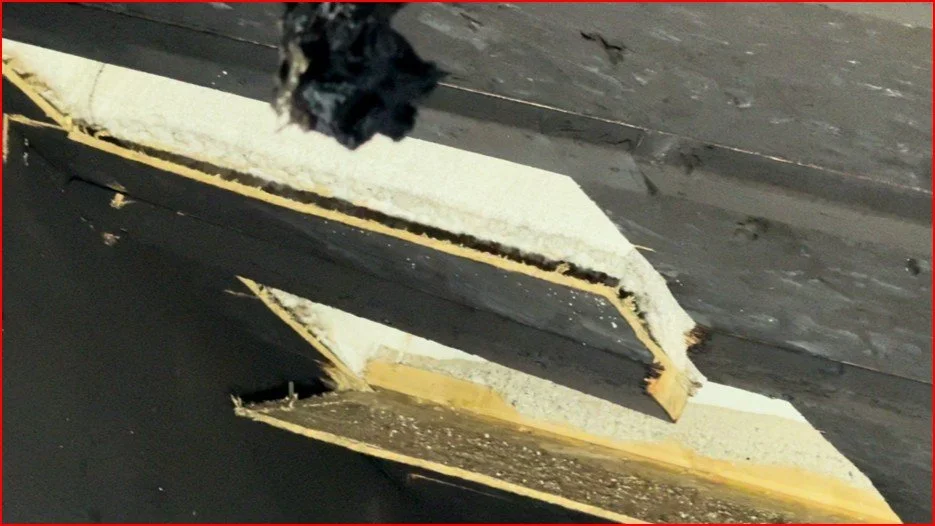
SIPs don't have that hollow cavity. The EPS foam core fills the entire space between the two OSB skins, so there's nowhere for fire to travel or hide. When firefighters cut open SIP sections during our investigation to check for hidden fire, they didn't find any smoldering or hidden charring behind intact OSB skins. That's a structural difference built into the panel itself, not something that depends on installation.
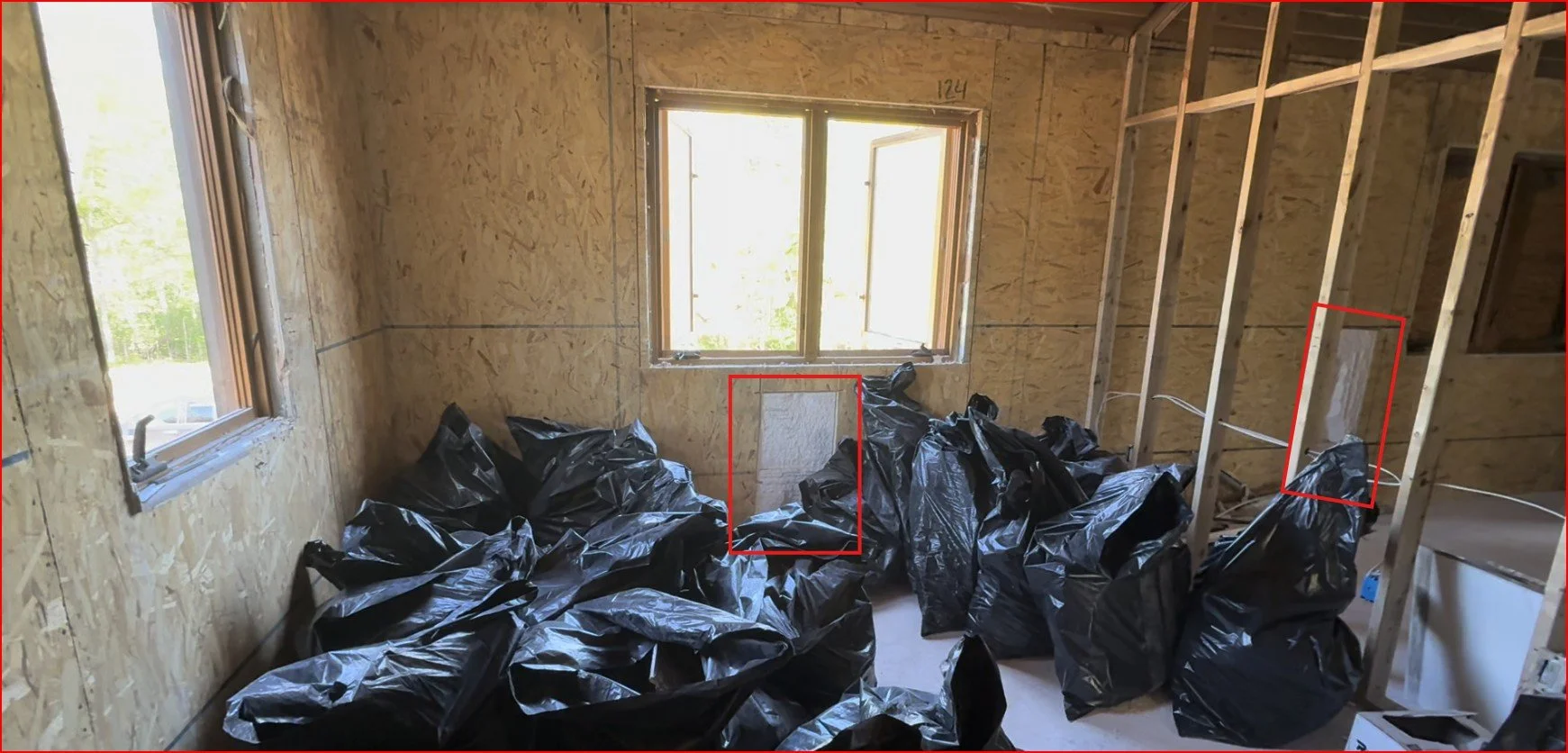
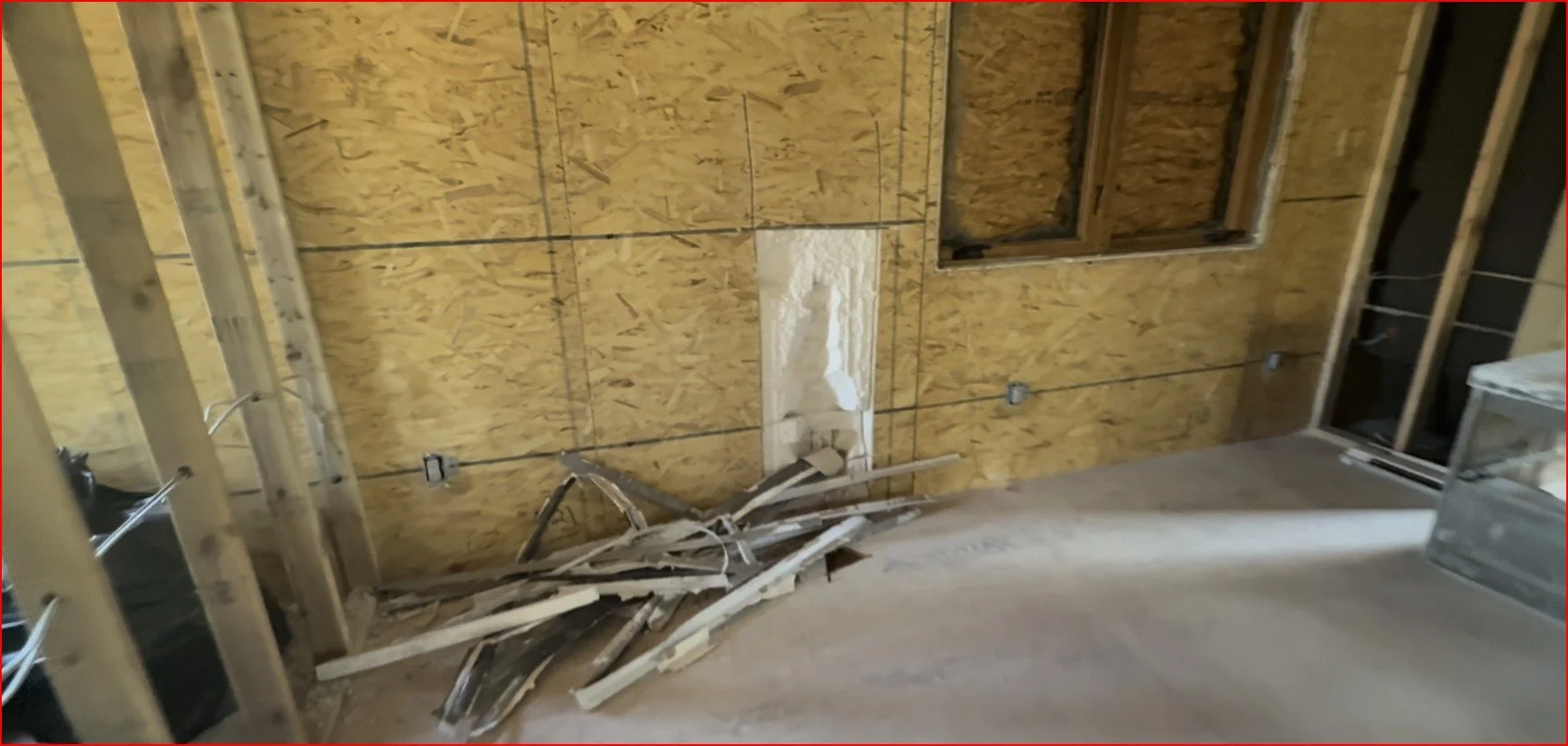
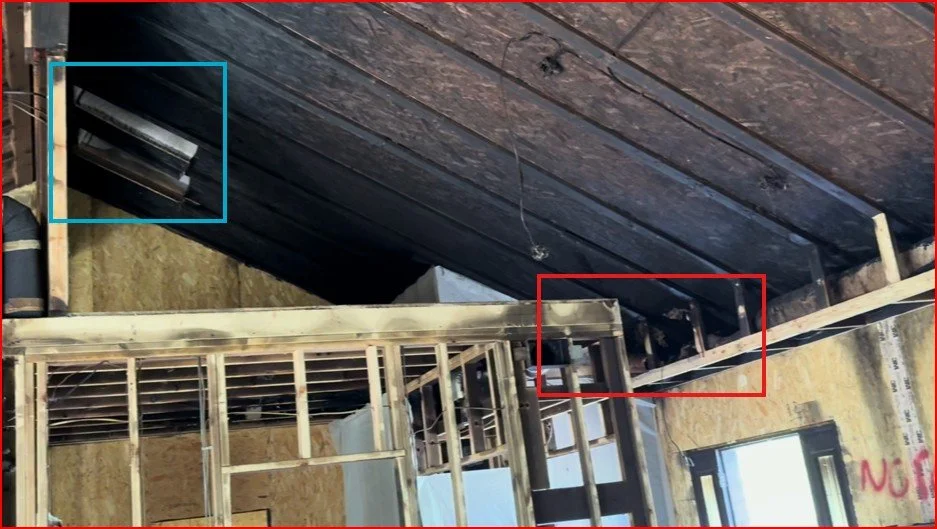
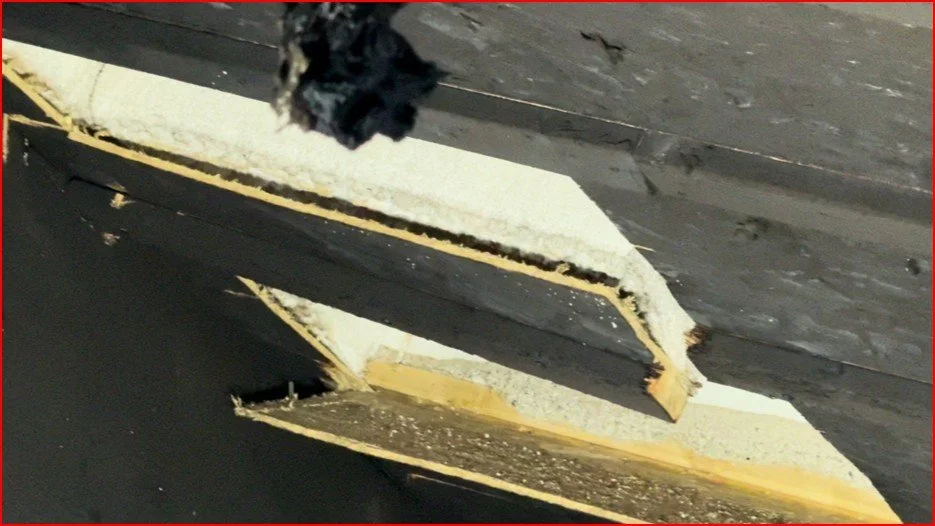
Reality: Whether a damaged SIP can be repaired or needs to be fully replaced comes down to a few questions: is the glue bond between the OSB skin and the EPS foam still solid; is the panel load bearing; does the panel have structural members in it carrying the load? If the bond is intact and the damage is limited to the surface or localized areas, repairs like patching the OSB skin or injecting expanding foam are often realistic. If the bond has failed in a load-bearing area, that section may need to be replaced if only the OSB skins were carrying the load.
This is a case-by-case engineering call, not a blanket rule. For example, a garage door header supported by separate wood framing can often stay structurally sound even if nearby EPS foam in a non-structural area was damaged. This is exactly the kind of judgment call that benefits from having an engineer look at the specific damage rather than assuming the worst (or the best) based on a general rule of thumb or speculation.
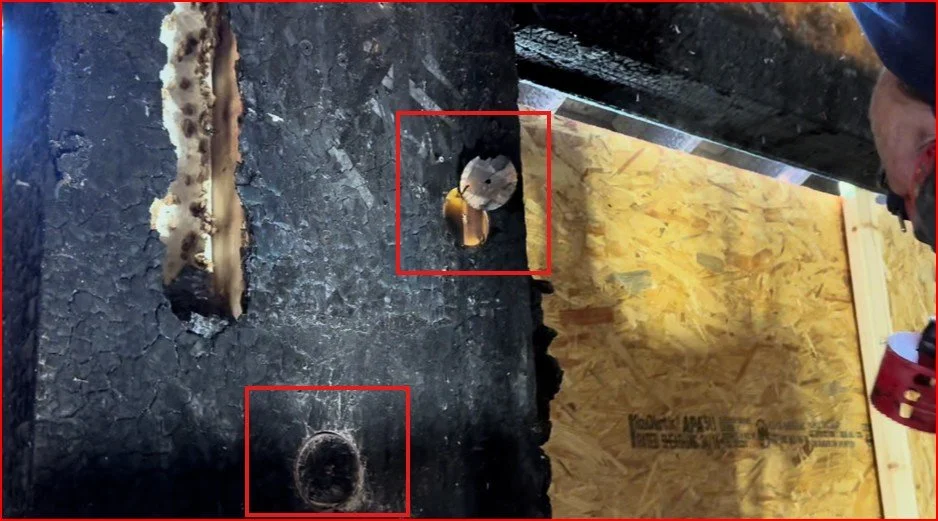
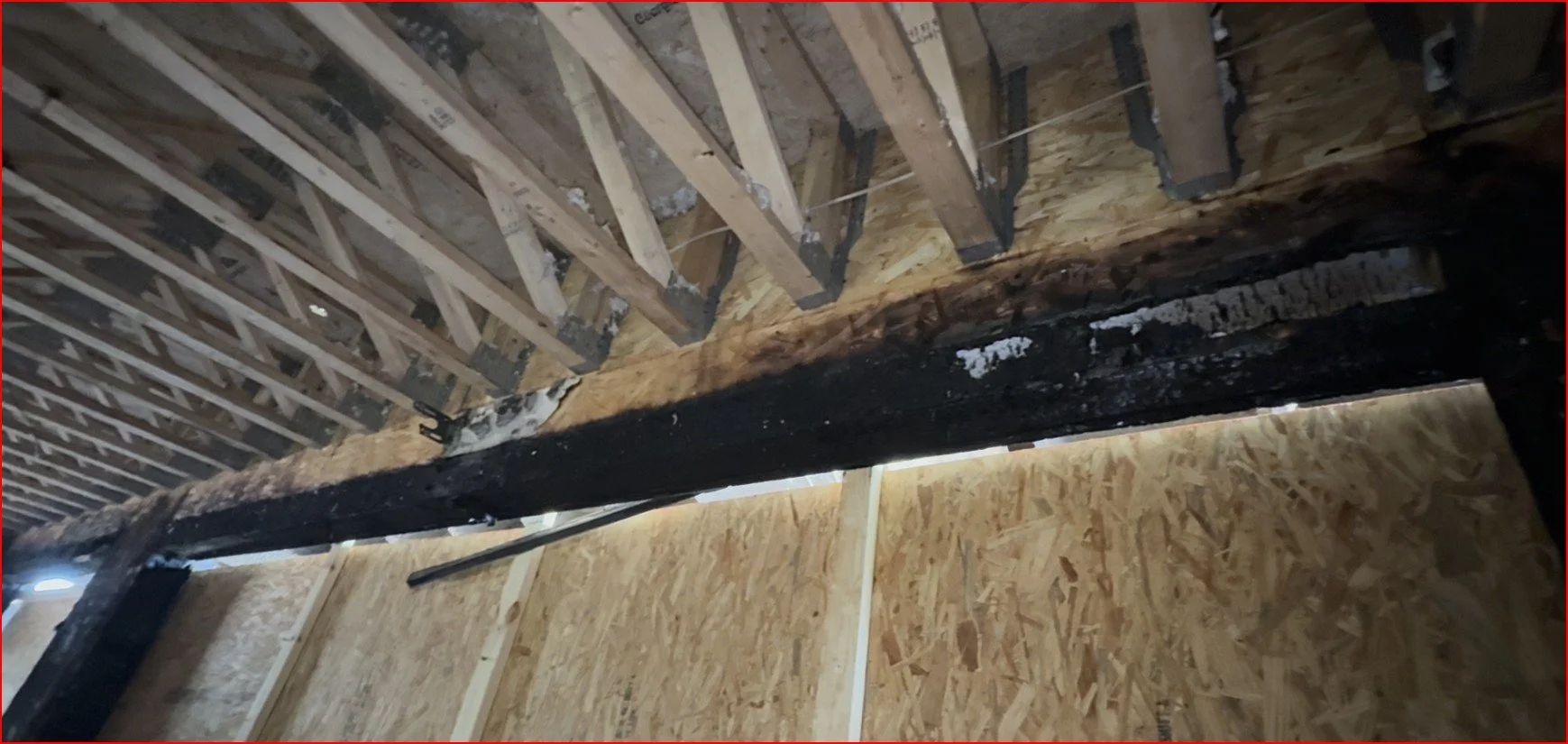
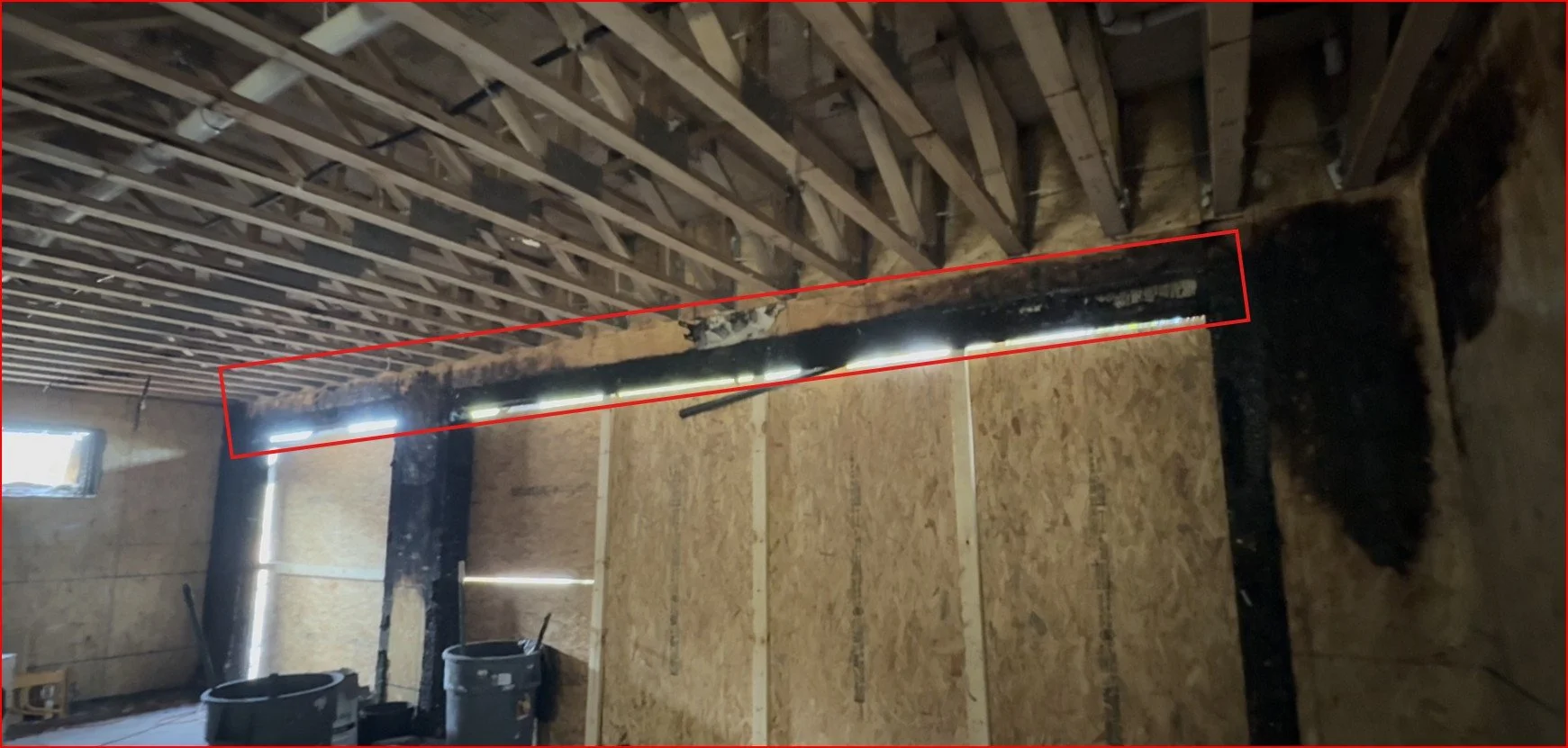
Reality: SIP manufacturers publish tested, fire-rated wall and roof assemblies, the same way lumber and steel-framing manufacturers do. These assemblies are put through ASTM E119 fire-resistance testing and documented in third party evaluation reports, which is the same approval pathway used across the building industry. If your project requires a fire-rated wall or roof, there's almost always a tested SIP assembly that meets it, you just need to build to the manufacturer's documented detail.
Once you strip away the myths, SIP fire behavior comes down to three layers doing three different jobs:
The OSB skin chars on the surface. Like a marshmallow blackening over a campfire, that char layer actually protects what's underneath by slowing down how fast heat gets through.
The foam core shrinks away from heat. Instead of catching fire and spreading, it retreats from the heat source, similar to how ice pulls back from a heat lamp instead of catching fire itself.
The wall only structurally "fails" when the glue bond between the wood and foam breaks down. That takes sustained, direct heat, not a quick flare-up or smoke exposure.
Put simply: an intact bond means the section is likely repairable. A broken bond in a load-bearing area means it needs some type of repair or replacement. That's the whole story, and it's a story about heat and protection, not a mystery about foam.
Dealing with fire or smoke damage on a SIP building and not sure what's actually salvageable? Talk to Joe Pasma, PE: he can walk you through what a forensic assessment would actually look for before you or your insurer make a repair-or-replace decision.
None of this means SIPs are magically fireproof. Fire performance depends heavily on how the building was actually detailed and finished.
Damage stays localized instead of spreading unpredictably through the wall
No hollow stud cavities for fire or smoke to travel through unseen. No mini-chimneys.
Drywall and finishes do most of the protective work, and that's by design, not luck
Solid exterior panels and sealed penetrations give wildfire embers fewer gaps and cavities to catch in
Direct, sustained flame exposure, the same as any building material
Missing or damaged drywall and interior finishes
Exposed or unprotected wood-skin edges
Poorly sealed panel joints
Unprotected roof edges and vents in wildfire-prone areas
A few practical habits go a long way toward getting the fire performance SIPs are designed to deliver:
Keep drywall and interior finishes continuous, with no gaps or missing sections
Use a Class A rated roof covering
Make sure panel joints are properly sealed during construction, not just taped and forgotten
Protect any exposed wood-skin edges, especially at openings and transitions
In wildfire-prone areas, use ember-resistant details
Follow the manufacturer's tested, fire-rated assembly details exactly; don't improvise on this part
People ask me if SIPs are "safe in a fire" like it's a yes-or-no question. It isn't. I've stood in a burned-out SIP building and pulled core samples ten feet from a section that never even charred. The panel itself doesn't decide whether a building survives a fire. The drywall, the sealing, and the details around every seam and penetration decide that. Get those right, and the panel does exactly what it's engineered to do.
-- Joe Pasma, PEThis article covers the myths. Our full case study walks through exactly how the fire moved through the building, what the core samples showed room by room, and what it meant for the repair decision.
Read the Full Case StudySIPs are combustible. That's true, and PGS Consulting LLC has never claimed otherwise. But combustible doesn't mean unsafe, and it doesn't mean unpredictable. Real forensic evidence shows SIPs resist ignition when they're protected by gypsum wallboard and finishes, fail only where flame is direct and heat is sustained, don't hide fire the way stud walls can, are often repairable rather than a total loss, and meet the same fire-rating requirements as any other framing system.
Understanding SIP fire behavior means understanding heat, protective layers, and how well the building was put together, not repeating myths about foam.
Yes, when they're built and finished the way code requires. SIPs are combustible, but code-required drywall and finishes protect the panel, and forensic evidence shows SIPs stay intact in areas shielded from direct flame.
No. The EPS foam used in SIPs includes a flame-retardant additive that stops it from continuing to burn once the flame source is removed. It melts and shrinks away from heat rather than igniting easily or dripping flaming material.
No. Smoke and soot are cosmetic. Only sustained heat affects the glue bond between the OSB skin and the EPS foam core, and our forensic samples confirmed that smoke-only areas showed no bond damage.
No. SIPs are solid panels with no hollow stud cavity, so there's no hidden space for fire or smoke to travel through unseen the way it sometimes can in traditional framing.
It shrinks away from the heat source instead of dripping or spreading flame. How far it melts back is actually a useful clue for investigators about how much heat a given area was exposed to.
When the glue bond between the OSB skin and the EPS foam has failed in a load-bearing section. If that bond breaks down, the panel can no longer do its structural job and needs to be replaced.
Often, yes, if the OSB-to-EPS foam bond is still intact and the damage is limited to the surface. Repairs can include patching the OSB skin or injecting expanding foam, especially in non-structural areas.
Yes. SIP assemblies are tested to ASTM E119 fire-resistance standards and documented in third party evaluation reports, the same approval pathway used for conventional wall and roof assemblies.
SIPs remove the open stud cavity that can let fire and smoke travel upward or sideways unseen inside a traditional wall or roof. That's a structural advantage built into the panel, not a matter of better installation.
Drywall, ceiling finishes, exterior siding, and finish material overlays all shield the panel's OSB skin from direct heat. In our investigation, most areas protected by these layers came through without fire damage underneath.
Are SIPs Combustible? Fire Performance, Codes, and What Actually Keeps You Safe: the full breakdown of materials, gypsum thermal barriers, and code requirements behind SIP fire safety.
SIP Fire Performance Case Study: the complete room-by-room forensic findings from the fire investigation referenced throughout this article.
How SIPs Perform in Wildfire Zones: what solid panel construction means for ember resistance and wildfire-prone building sites.
What Are SIPs?: a plain-English primer if you're new to structural insulated panel construction.
SIP FAQ: answers to the most common questions we get about SIP construction, cost, and performance.
PGS Consulting LLC provides independent forensic investigation, fire damage assessment, and repair planning for SIP buildings, backed by 40+ years of engineering, manufacturing, and forensic experience.
Talk to Joe Pasma, PE
Why do ice dams still form on a tight, well-insulated SIP roof? A PGS Consulting engineer breaks down the real physics, in plain English, and explains the fix for heavy-snow climates.
By Joe Pasma, P.E. | PGS Consulting LLC | SIP Engineering & Consulting | Published September 6, 2026, Updated September 13, 2026
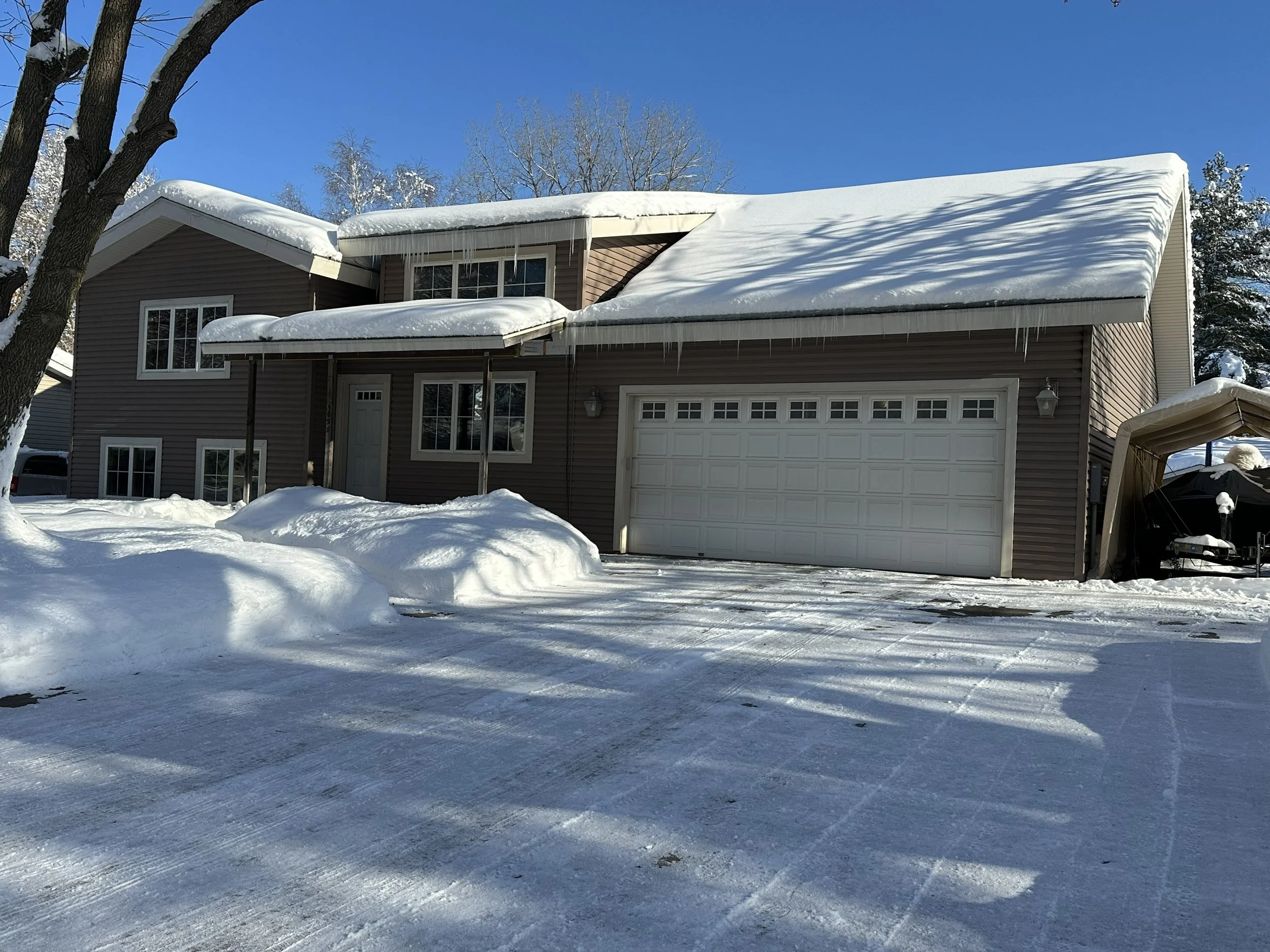
Ice Dams on my SIP roof - MN 2023
If you've ever watched ice creep up under your shingles during a Minnesota winter, here's what's actually going on, and why even a tight, well-built roof isn't automatically immune.
Ice dams need three things at once: a roof deck warmer than 32°F, outside air colder than 32°F, and snow sitting on the roof.
Warm air leaking up from your living space is the most common cause — and the one most builders already know to fix.
Snow itself acts like a blanket. A couple feet of it can warm your roof deck even on an airtight, well-insulated roof.
A tight SIP roof solves the air-leak problem, but it can't cancel out the snow-blanket problem on its own.
In heavy-snow regions (Minnesota, Wisconsin, Michigan's U.P., Vermont, the mountain West), the real fix is a vented "cold roof" built over the SIP roof.
Until that's in place, a roof rake and clear gutters are your best short-term defense — skip the heat cables and never chip at the ice.
If you live somewhere warm (Phoenix, Austin, Charlotte), you've probably never given a dam about ice dams. But if you live in Minnesota, Wisconsin, Michigan's Upper Peninsula, Vermont, the mountain West, or anywhere else winter actually shows up, you already know exactly what one looks like: that thick ridge of ice along your roof edge, with water backing up underneath it and finding its way into your ceiling.
Ice dams aren't just an eyesore. They soak insulation, stain ceilings, pull gutters off the house, and drop dangerous chunks of ice on whoever's standing below. And here's the part that catches a lot of homeowners off guard: even a tight, well-insulated, well-built roof can still get them. Below walks through why, and what the building-science research says actually fixes it.
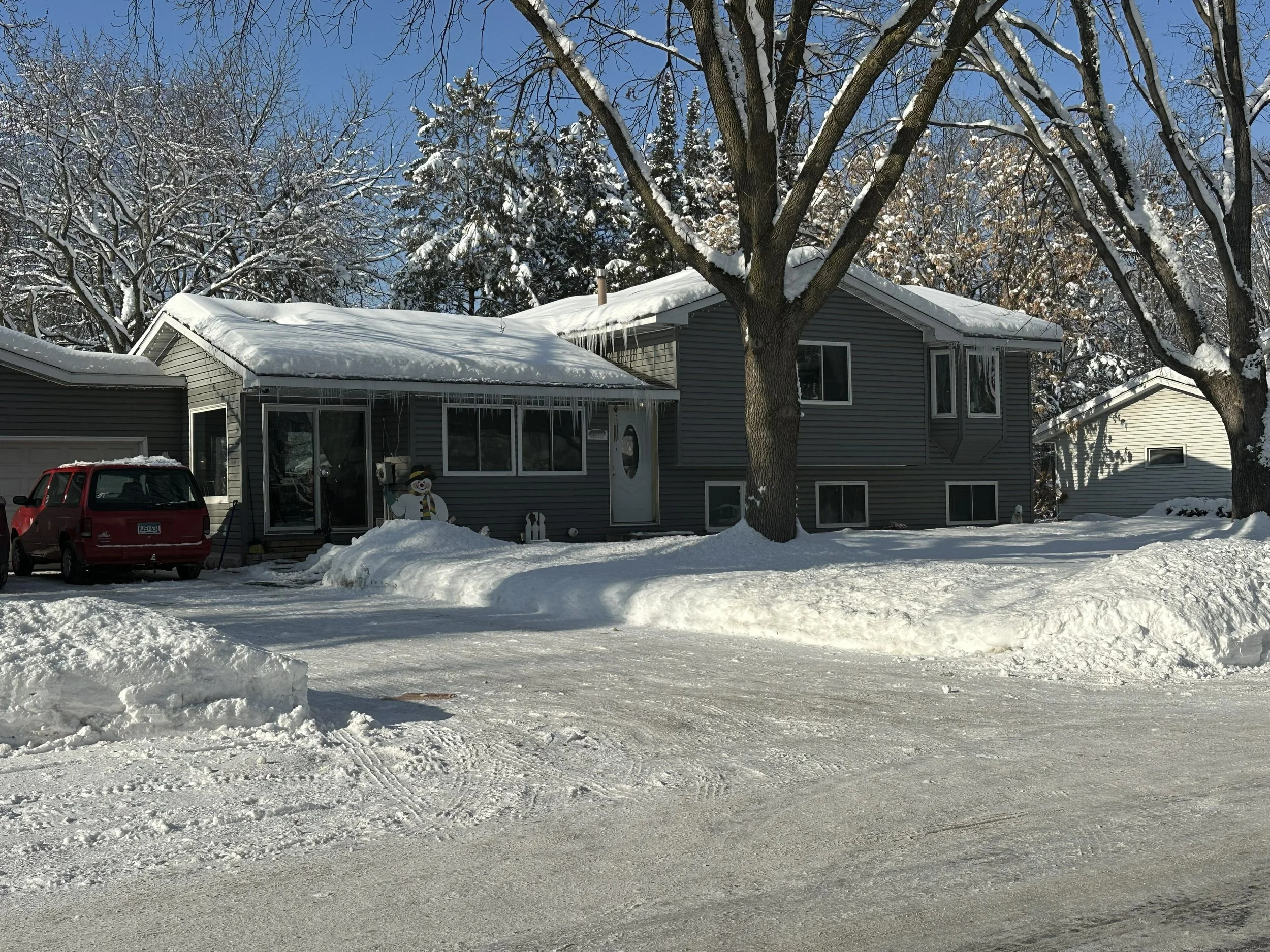
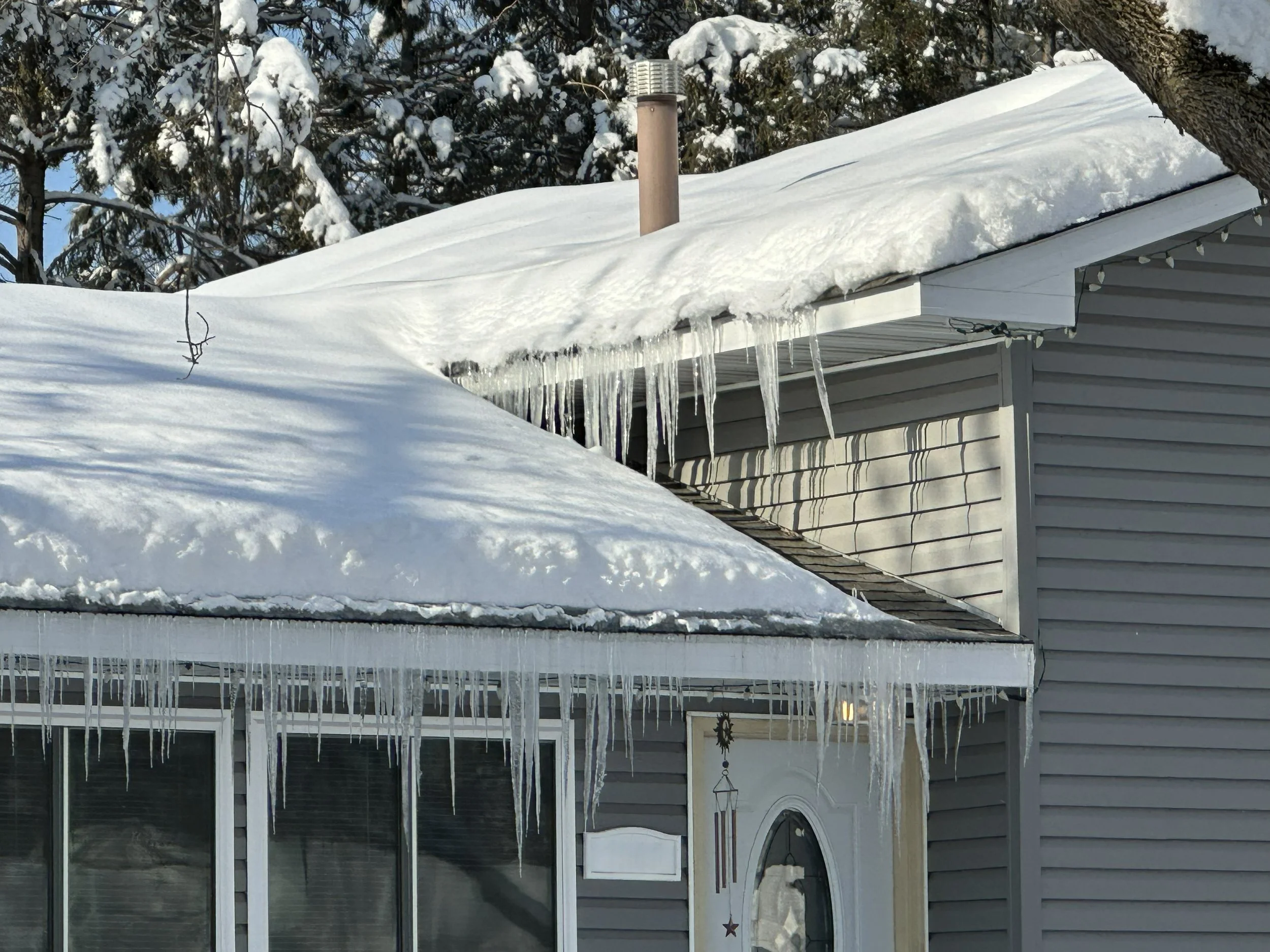
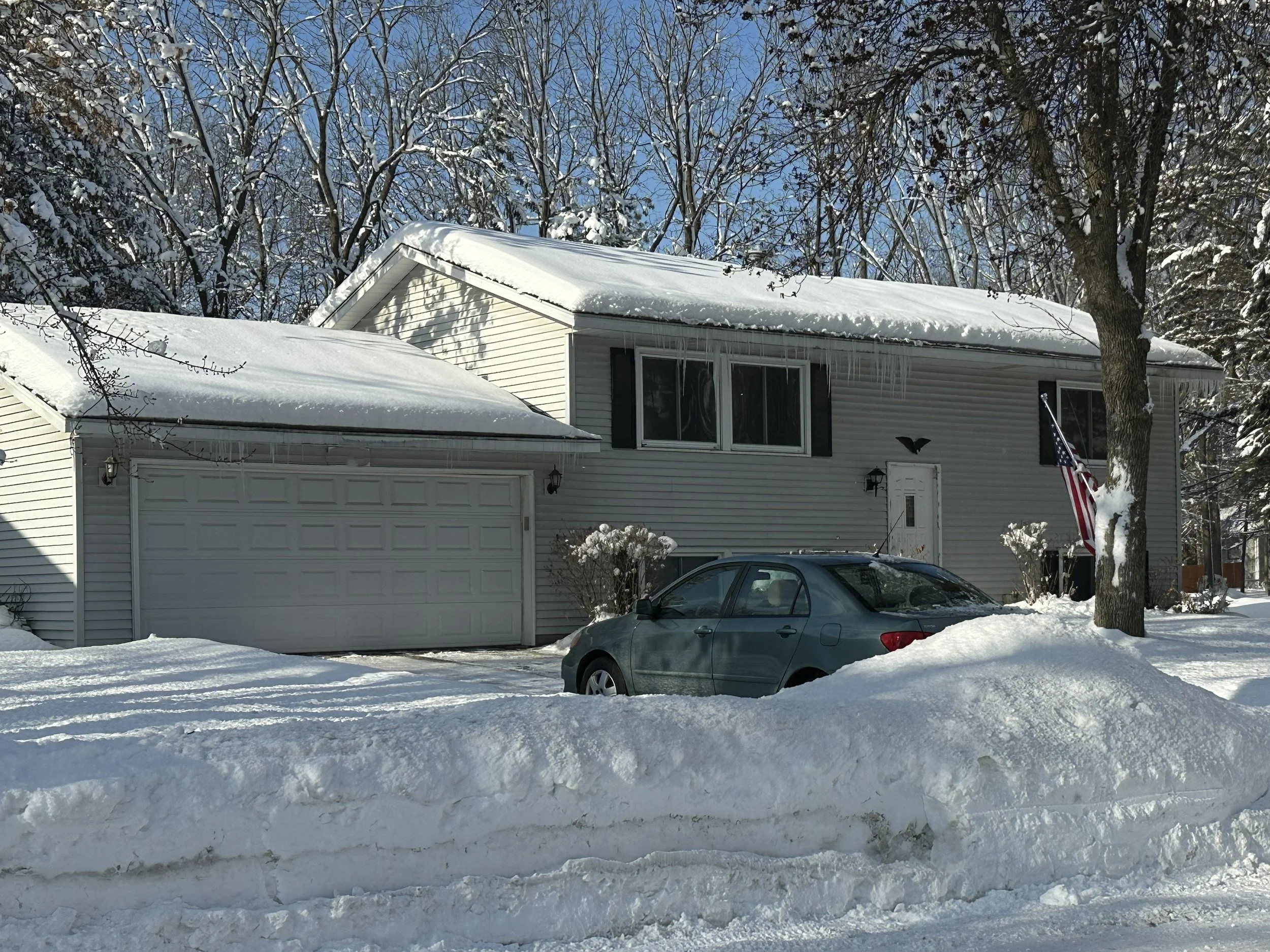
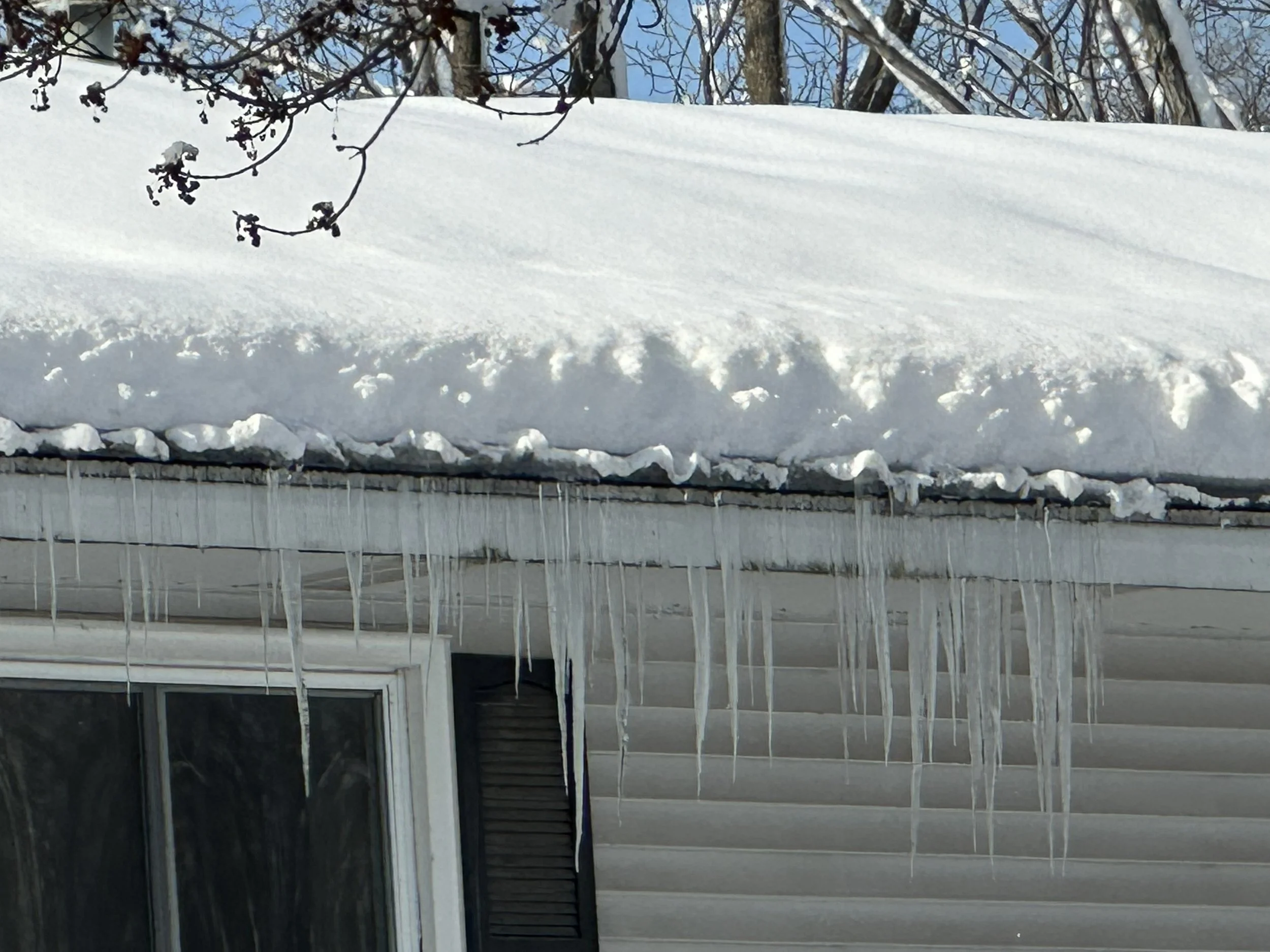
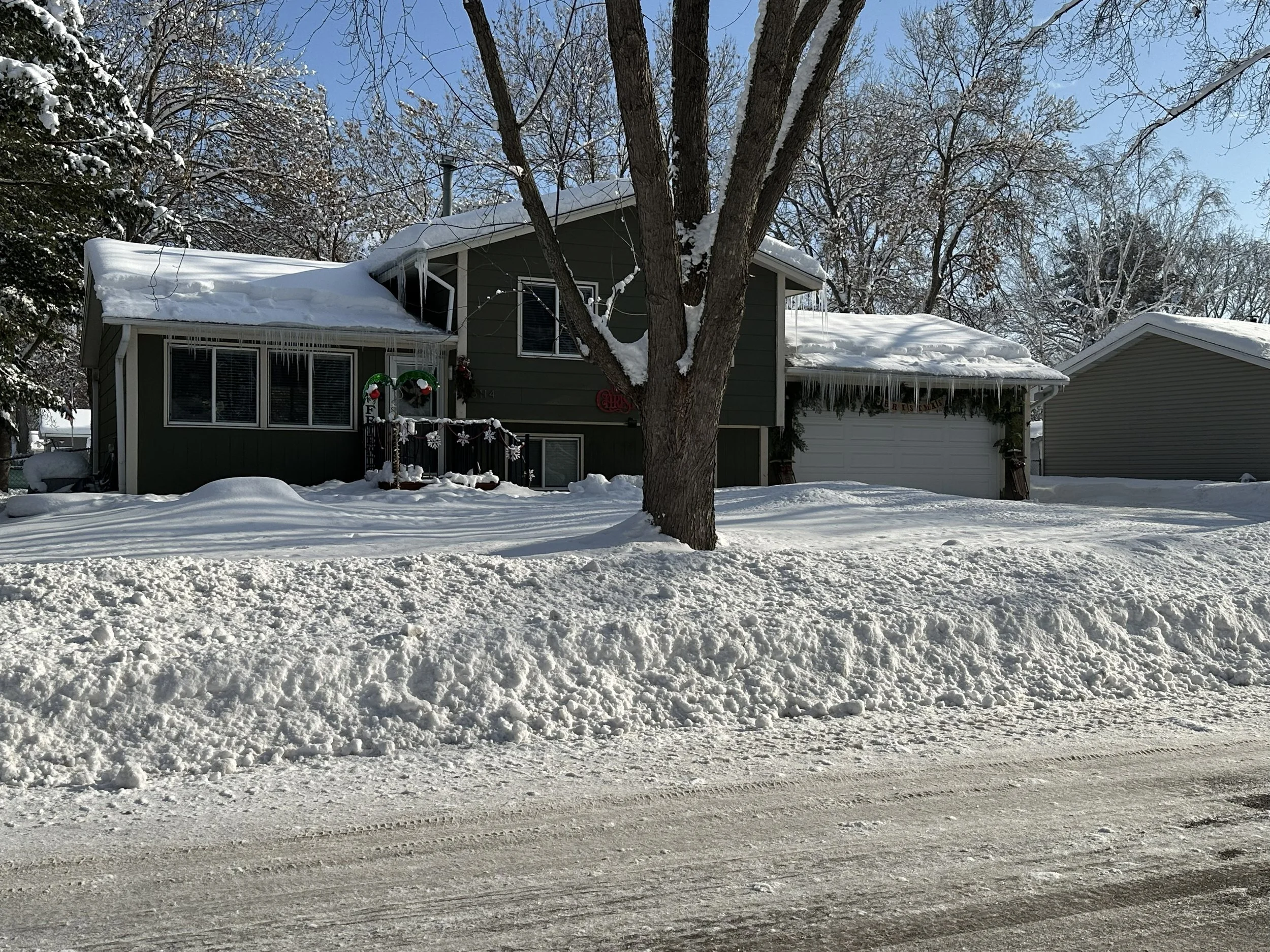
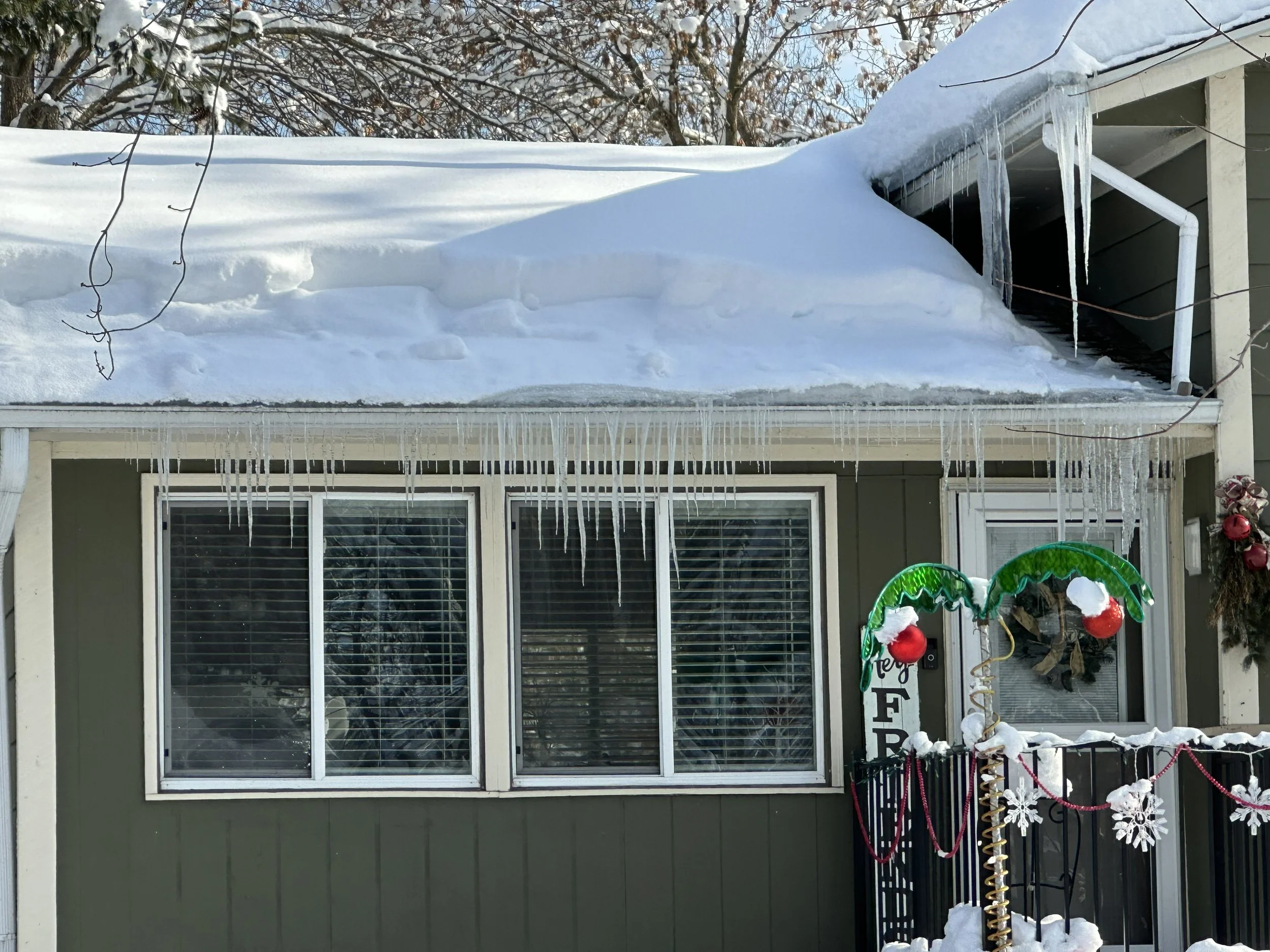
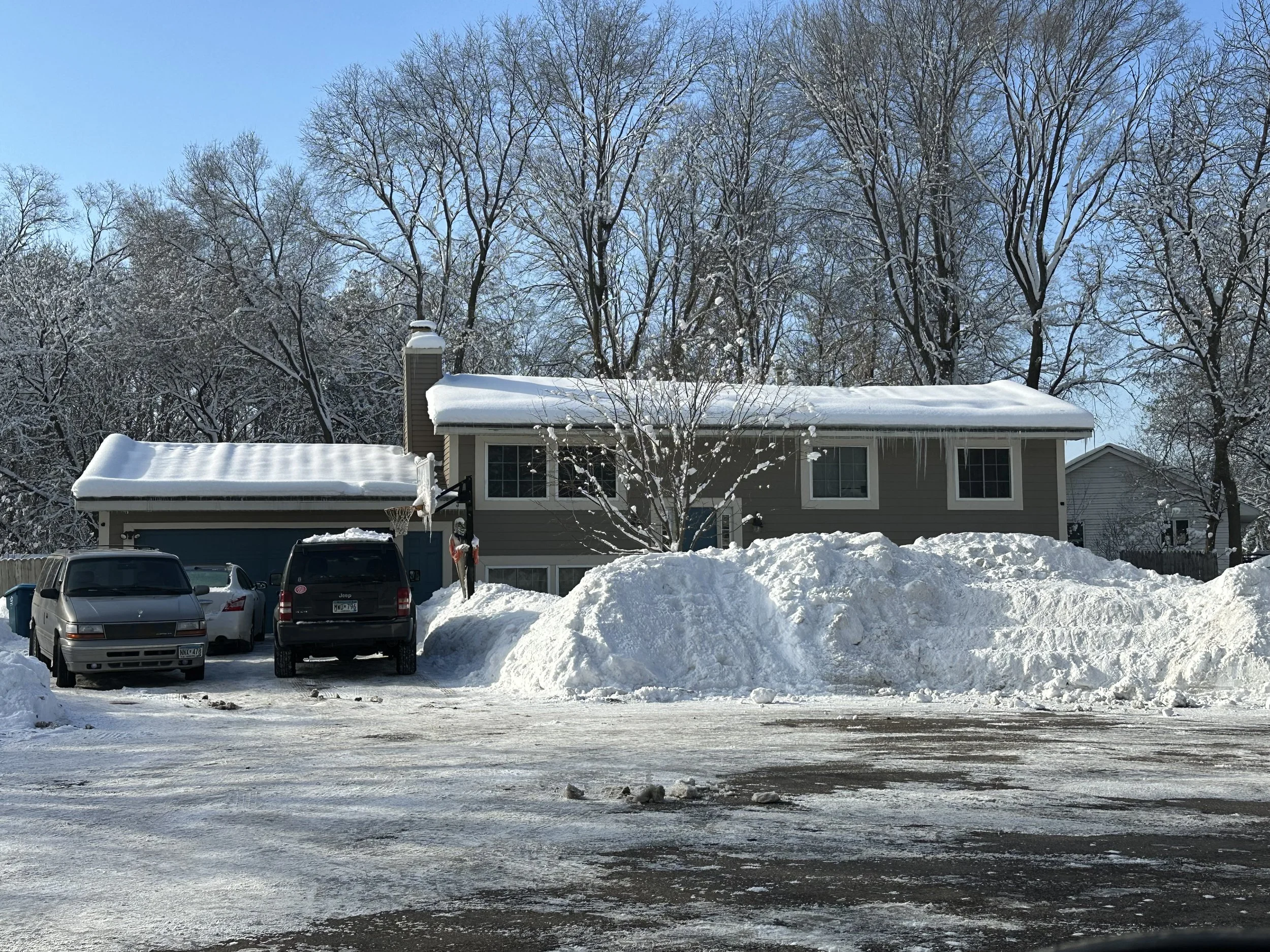
An ice dam forms when three things are happening on your roof at the same time:
The roof deck (the wood surface under your shingles) is warmer than 32°F
The outside air is colder than 32°F
There's snow sitting on the roof, usually a lot of snow
When those three line up, the warm roof deck melts the bottom of the snowpack. That meltwater trickles down the slope of the roof until it reaches the overhang, which stays cold because there's no heat coming from inside the house underneath it and it is usually exposed to the below 32°F outside temps. The water freezes there, builds up layer by layer, and eventually backs up under your shingles and into your house.
Building scientist Joseph Lstiburek put it simply:
"The warm roof deck causes the snow on top of the roof deck to melt, and the melt water runs down to the edge of the roof where the water freezes leading to a buildup of ice. At the roof edge and roof overhang, the deck is much colder, and the drainage gap freezes solid causing the water to back up."
-- Joseph Lstiburek, Building Science Corporation, BSI-046: Dam Ice DamThis is the cause most people already know about. Warm air from inside your living space leaks up into the roof through gaps most homeowners never think about:
Unsealed openings around the ceiling
Poorly insulated spots where the roof meets the walls
Leaky ductwork running through a vented attic
Recessed "can" lights punched through the ceiling
That warm air raises the temperature of the roof deck above it, which kicks off the melt-and-freeze cycle right at your eaves. This is exactly why ice dams tend to show up over heated rooms and stop cold over an unheated garage or porches: the roof deck above the unheated space simply never warms up in the first place.
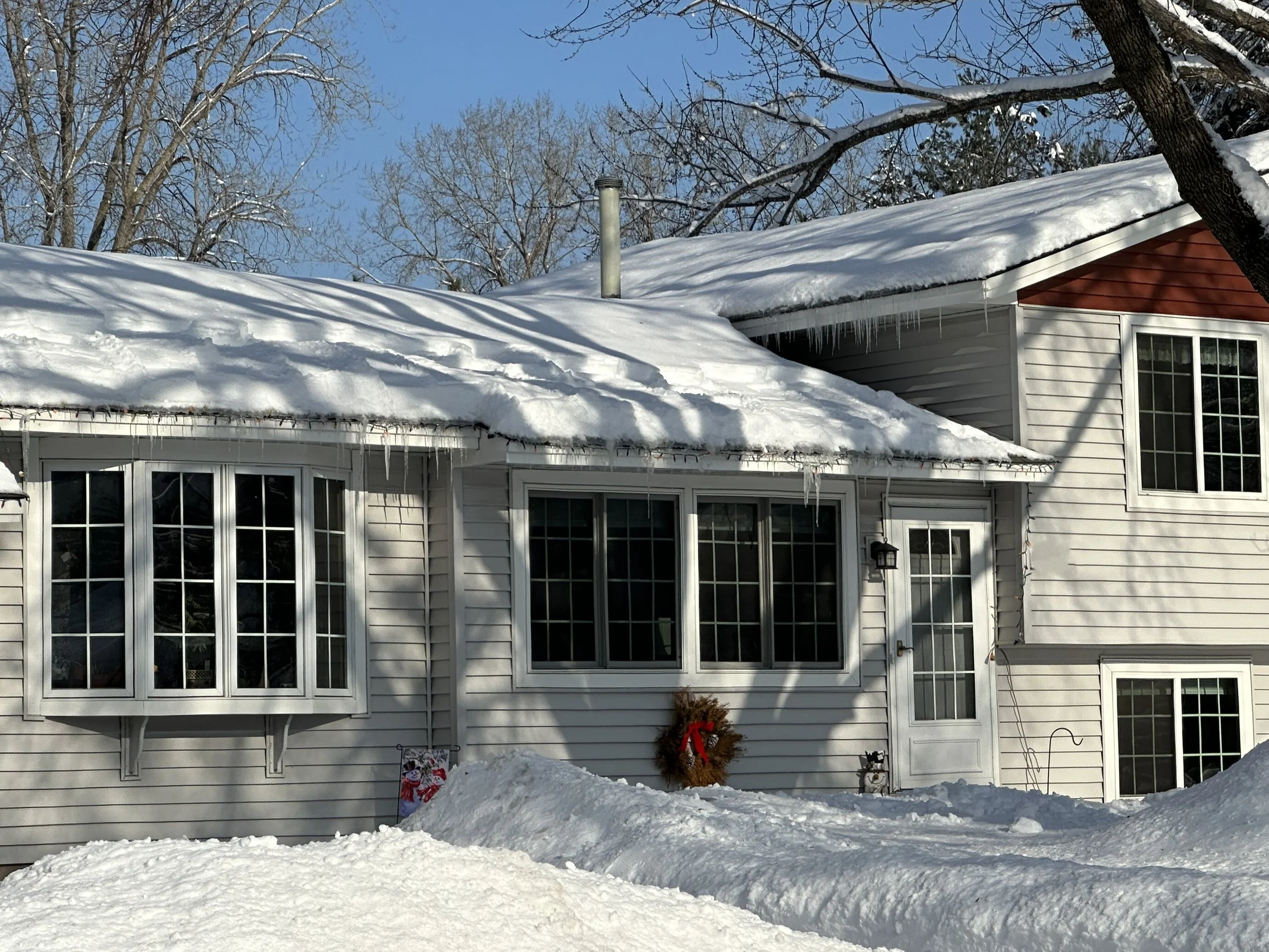
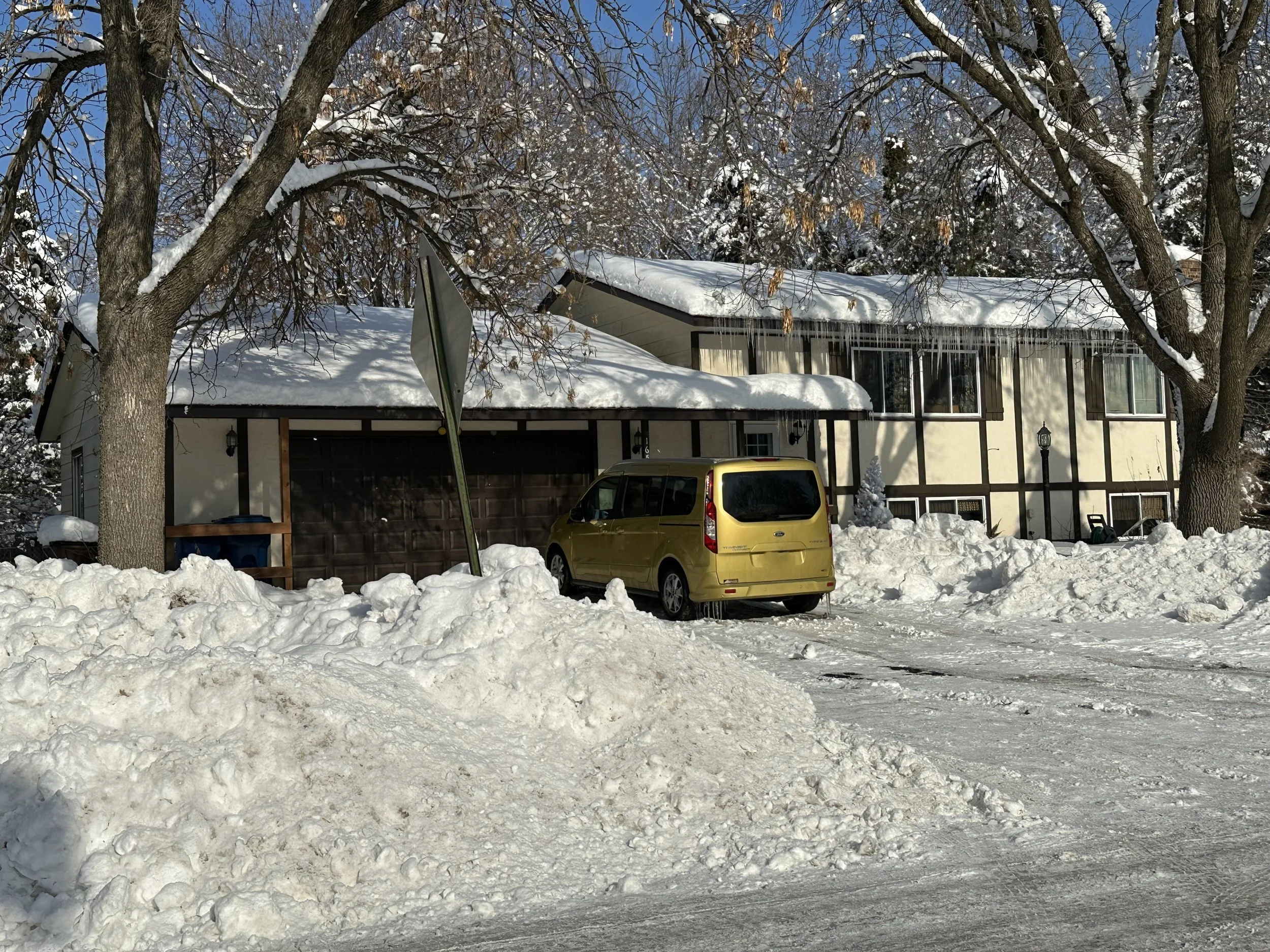
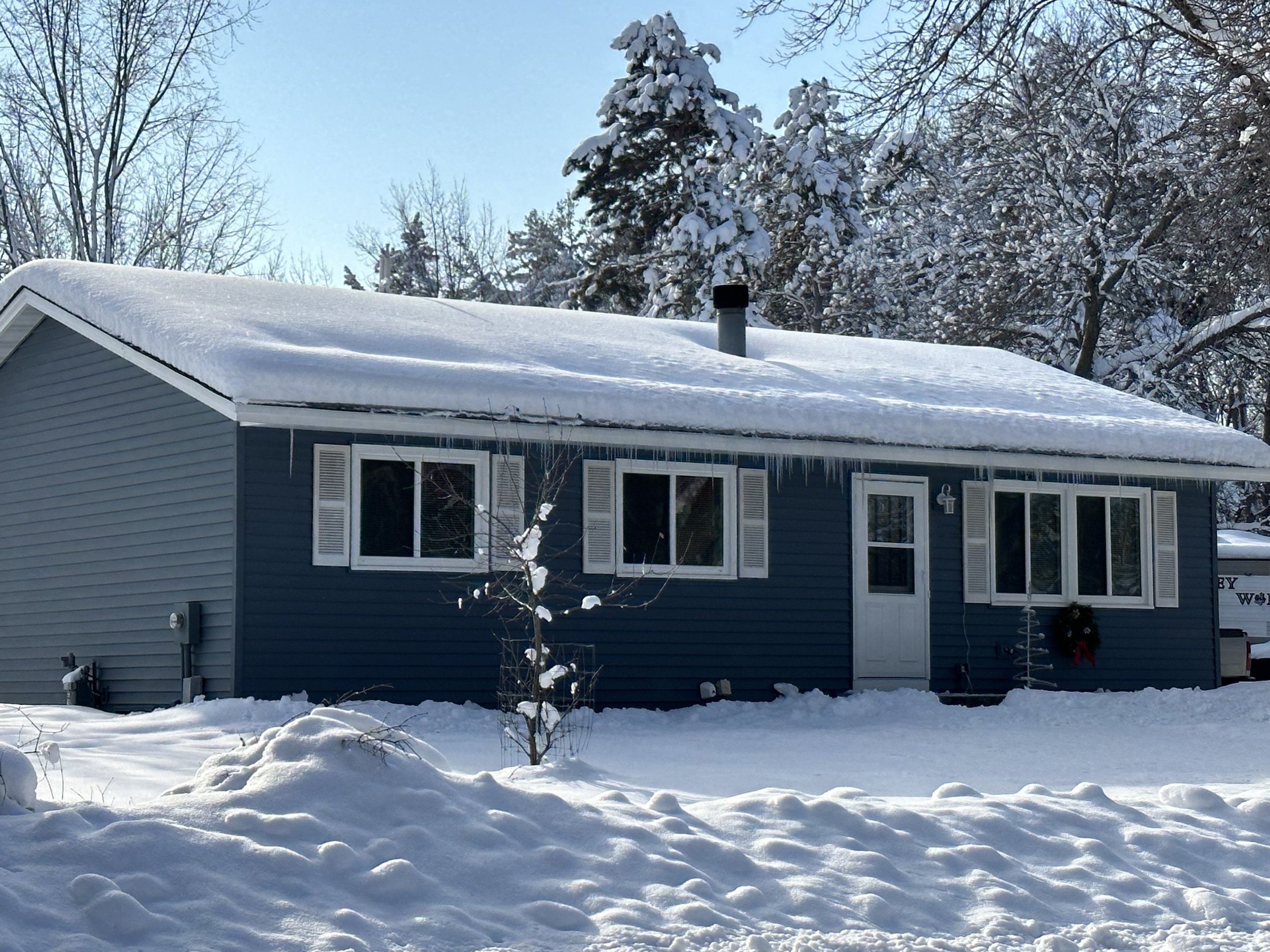
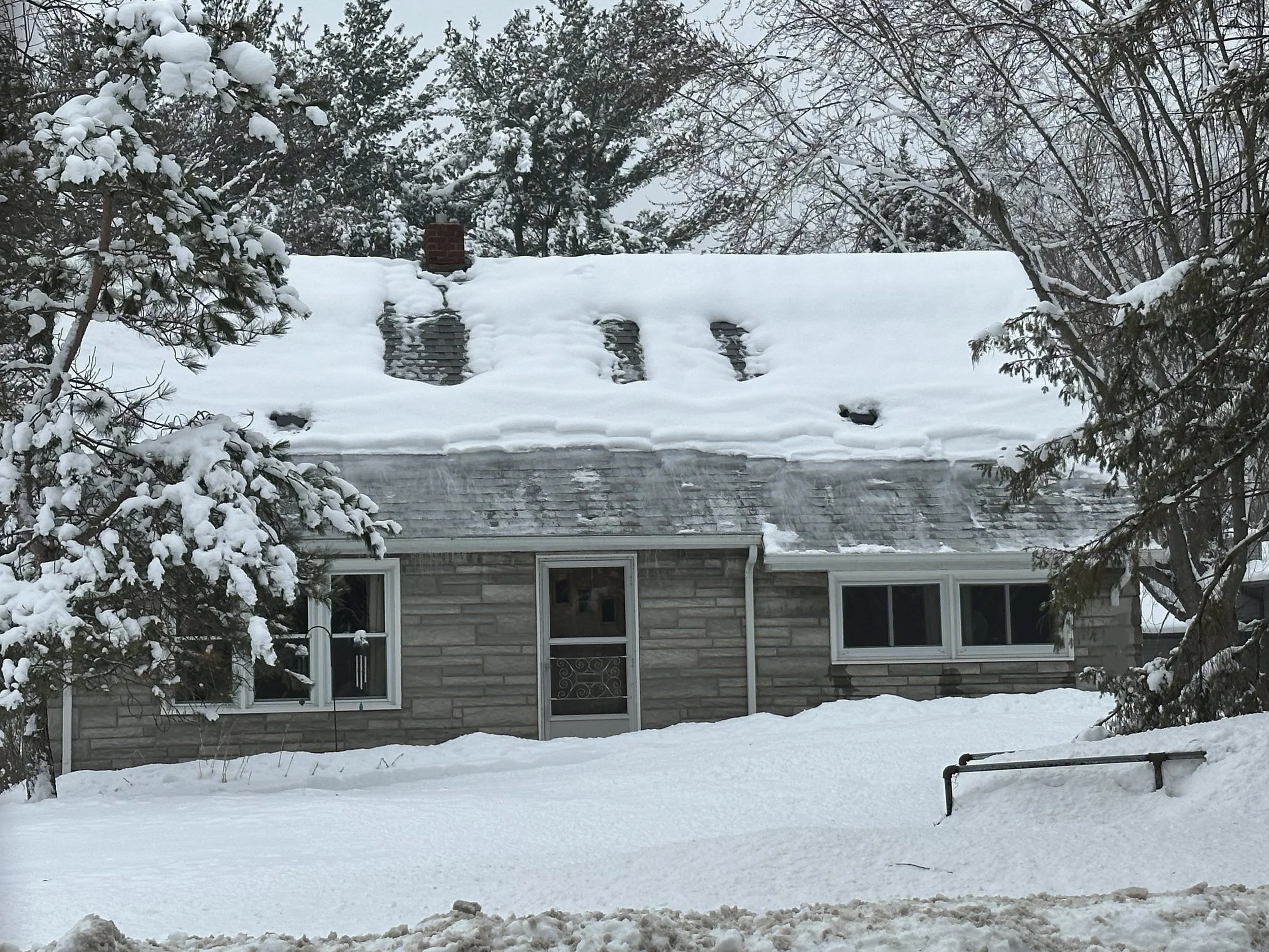
Here's the part most homeowners (and even some builders) don't expect. Snow has an insulating value of its own. Researchers at the Army Corps of Engineers' Cold Regions Research and Engineering Laboratory (CRREL) have measured snow at roughly R-1 to R-2 per inch, depending on how dense it is.
← Swipe to view full table →
| Snow on the Roof | Approximate Added Insulation |
|---|---|
| 4 inches | R-4 to R-8 |
| 10 inches | R-10 to R-20 |
| 24 inches (2 feet) | R-20 to R-40 |
That snow blanket insulates the roof deck from the cold outside air, the same way a blanket keeps you warm by trapping your own body heat. So even if your SIP roof is airtight, super-insulated, and free of the thermal weak spots that plague stick-built framing, a deep-enough snowpack can still push the roof deck above freezing. Lstiburek documented this himself in Vermont: an airtight, R-50 unvented roof (about as good as roofs get) still developed a 3-inch layer of ice under the snow, simply because the snow's own R-value warmed the deck enough to start the melt cycle.
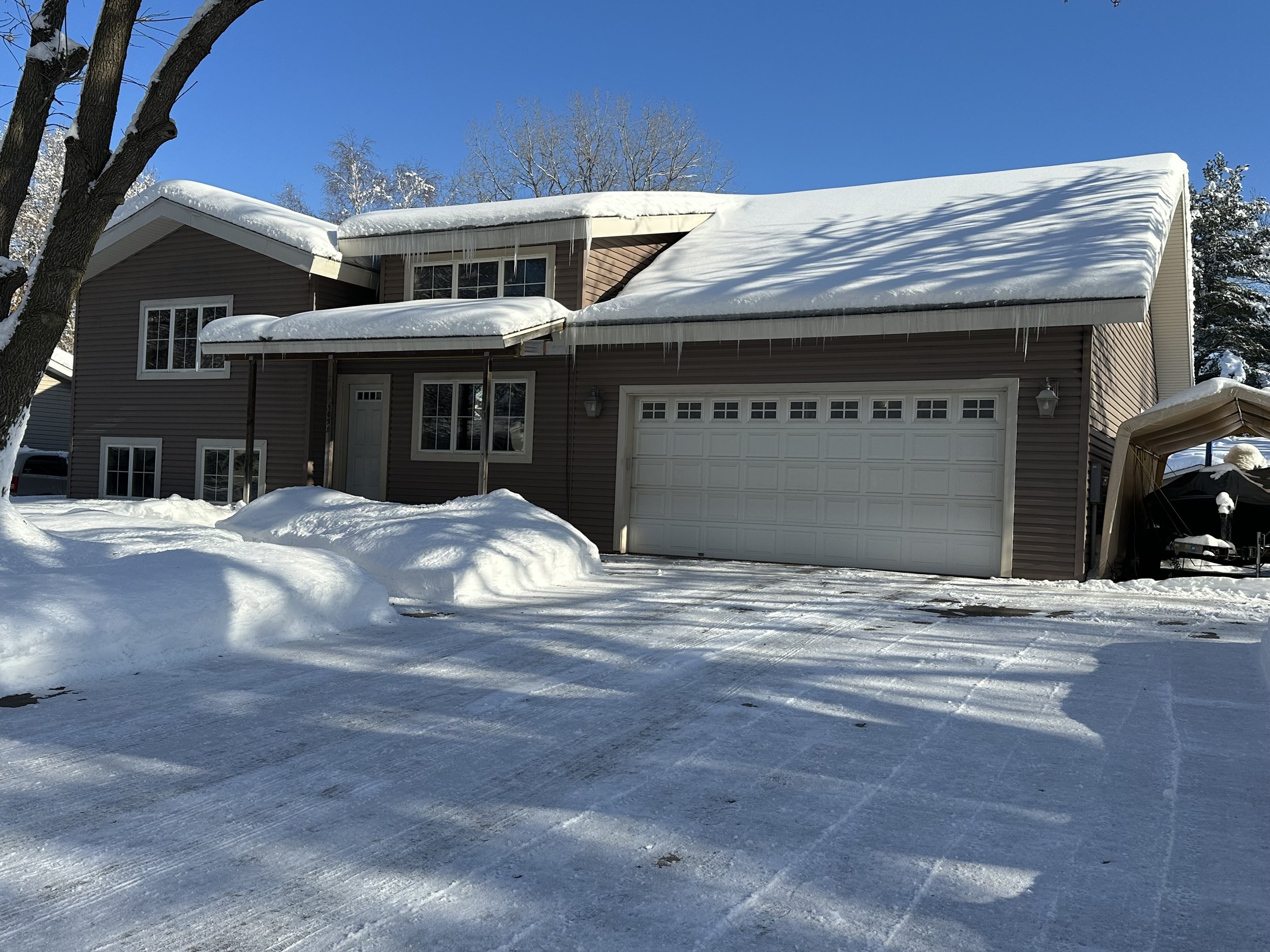
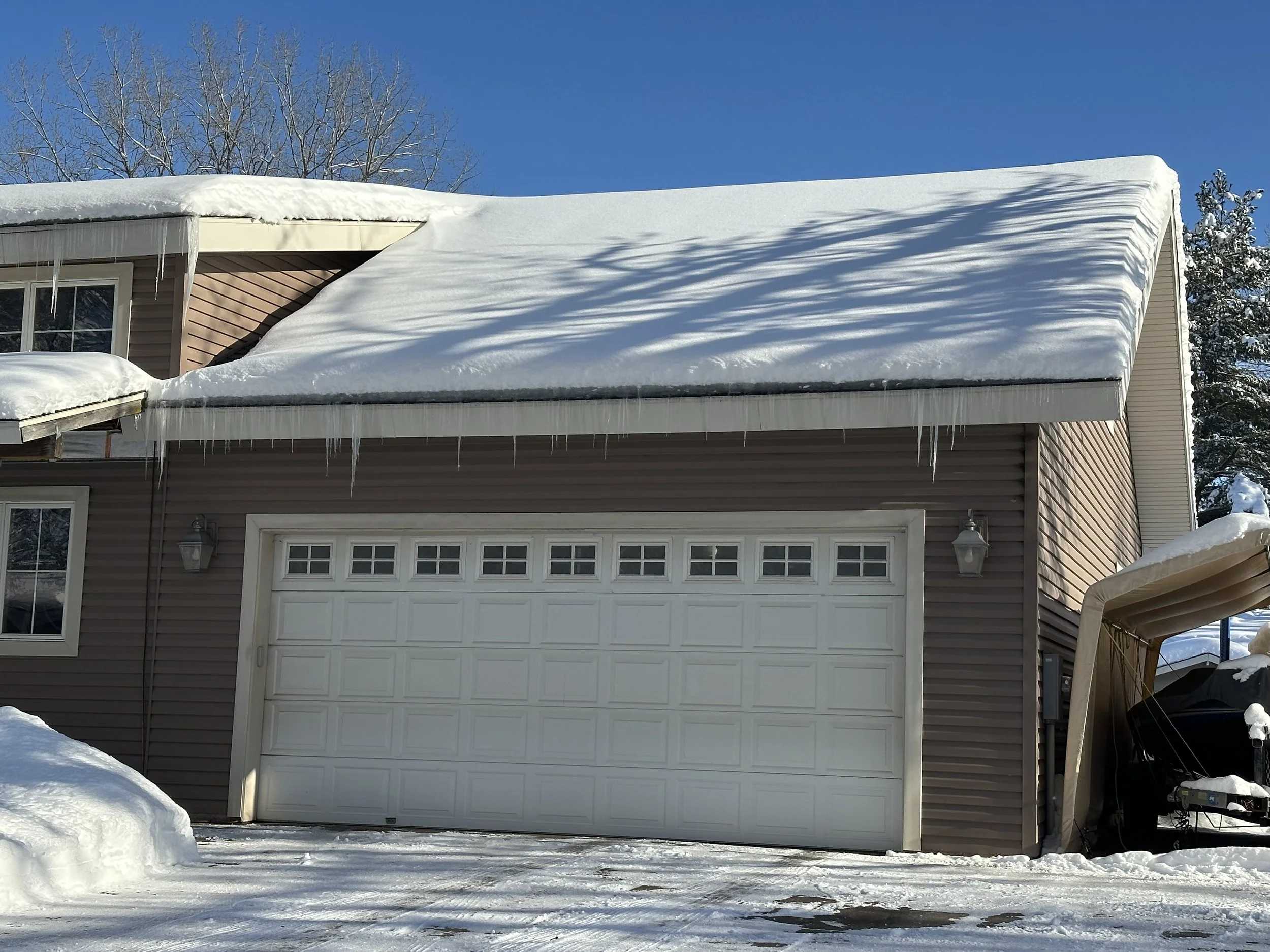
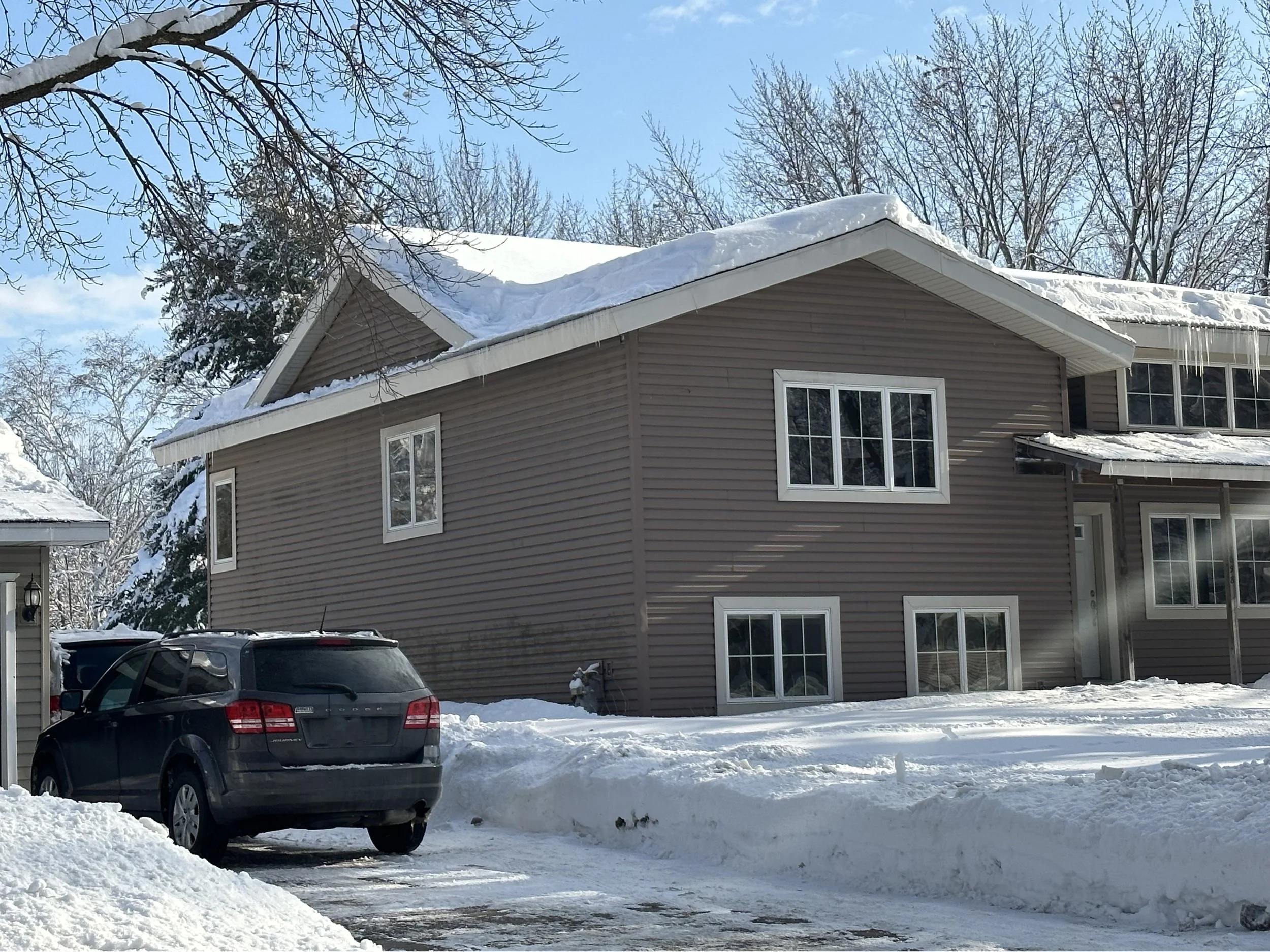
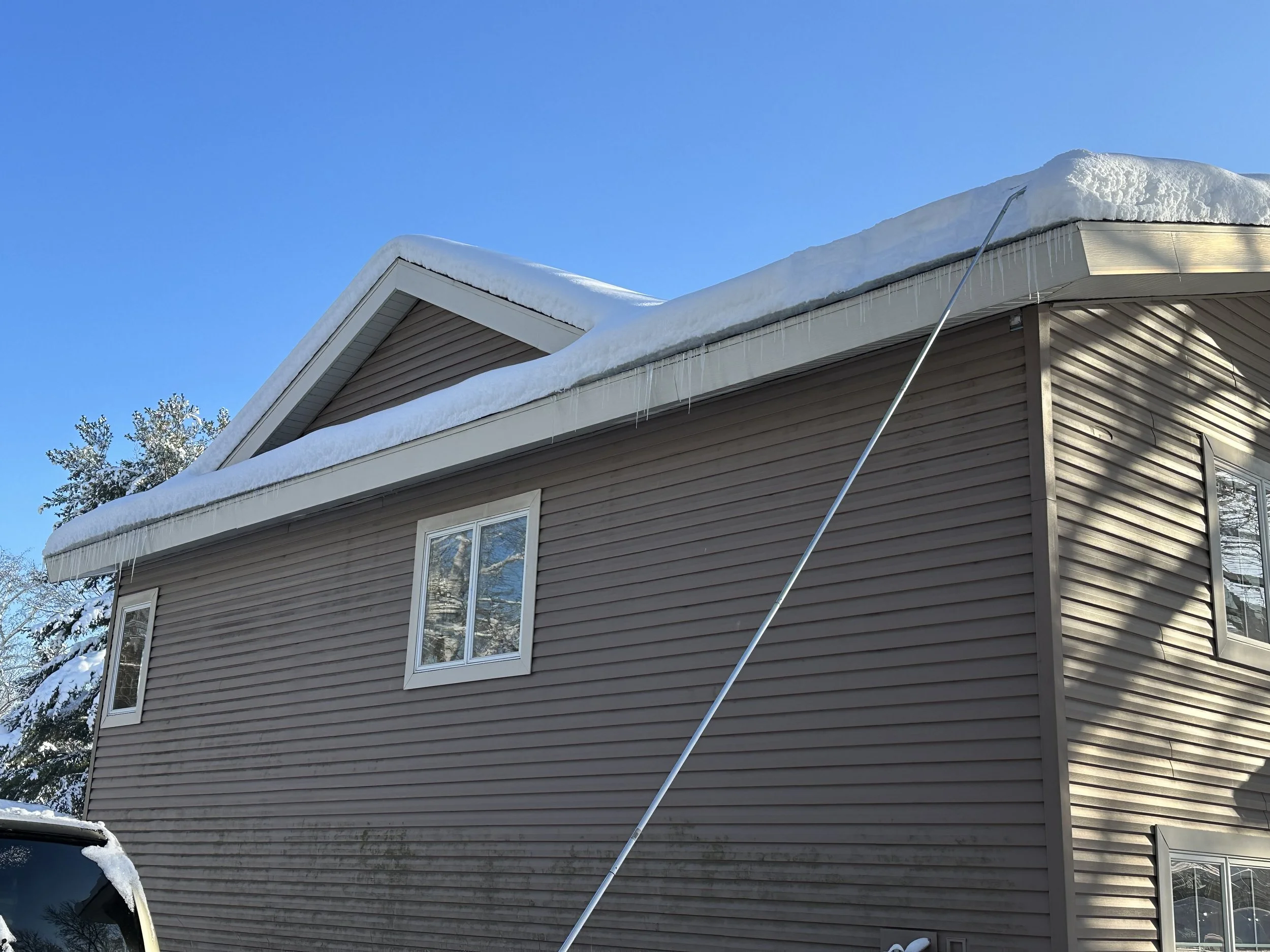
There's a third, smaller contributor worth knowing about. On a sunny winter day, a dark-colored exterior wall can reach 45–50°F even when the air temperature is sitting at 20°F. That warmed air rises along the wall, gets trapped under the overhang, and melts snow from underneath, right where you don't want it melting. This is a big part of why ski-town homes with dark siding and deep overhangs can develop serious ice dams even when the roof itself is well built.
My own house proves this out better than any lab study could. It tests at 1.25 ACH50 (essentially no air leakage through the roof panels) and it still gets ice dams some winters. Meanwhile, the uninsulated shed in my backyard never gets a single one. That's not a contradiction, it's exactly what the physics predicts: my shed's roof deck stays at outside air temperature because there's no insulation to trap anything under it. My house's roof deck gets warmed by the snow sitting on top of it. Airtight and insulated isn't the same thing as immune.
-- Joe Pasma, PE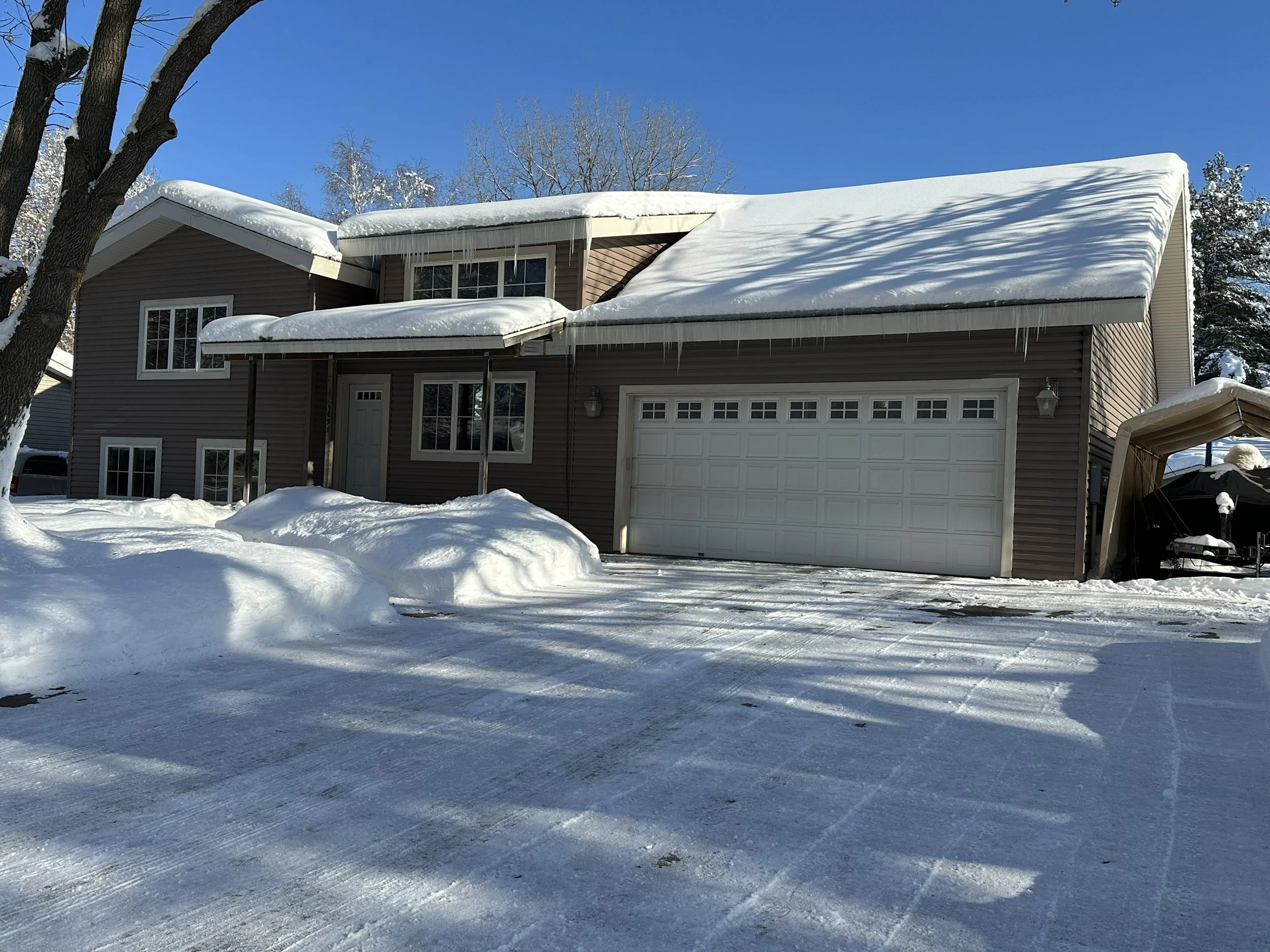
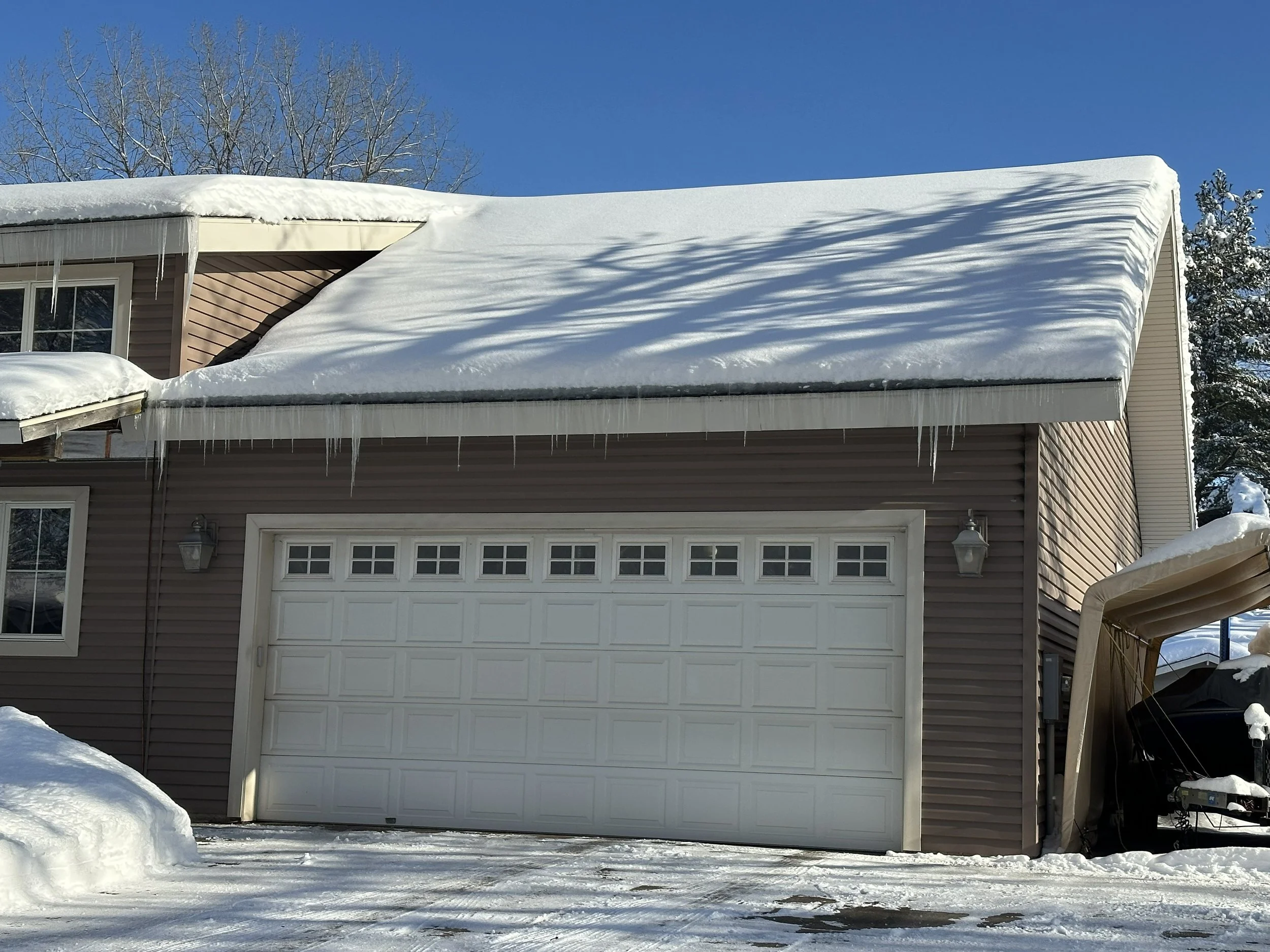
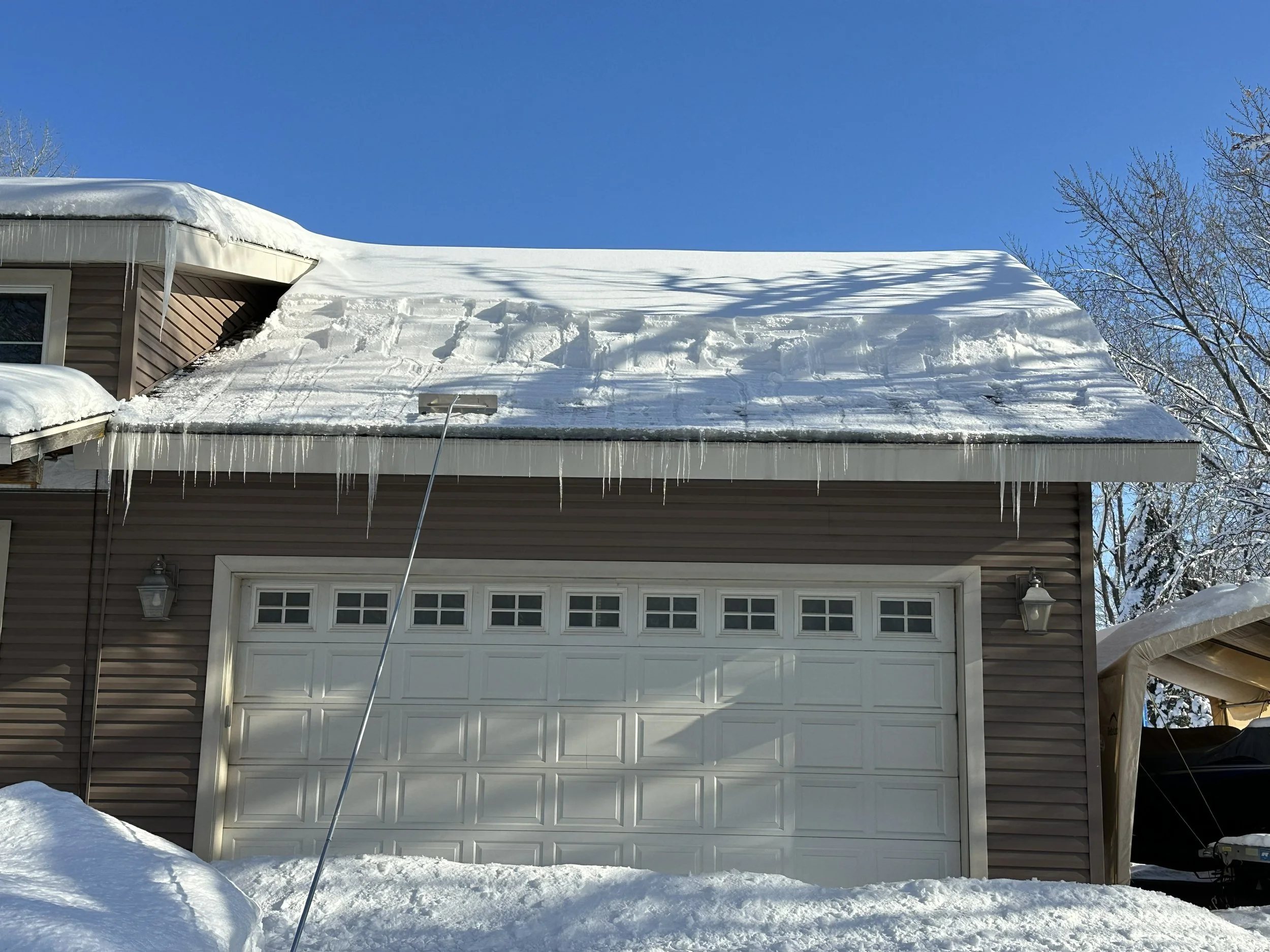
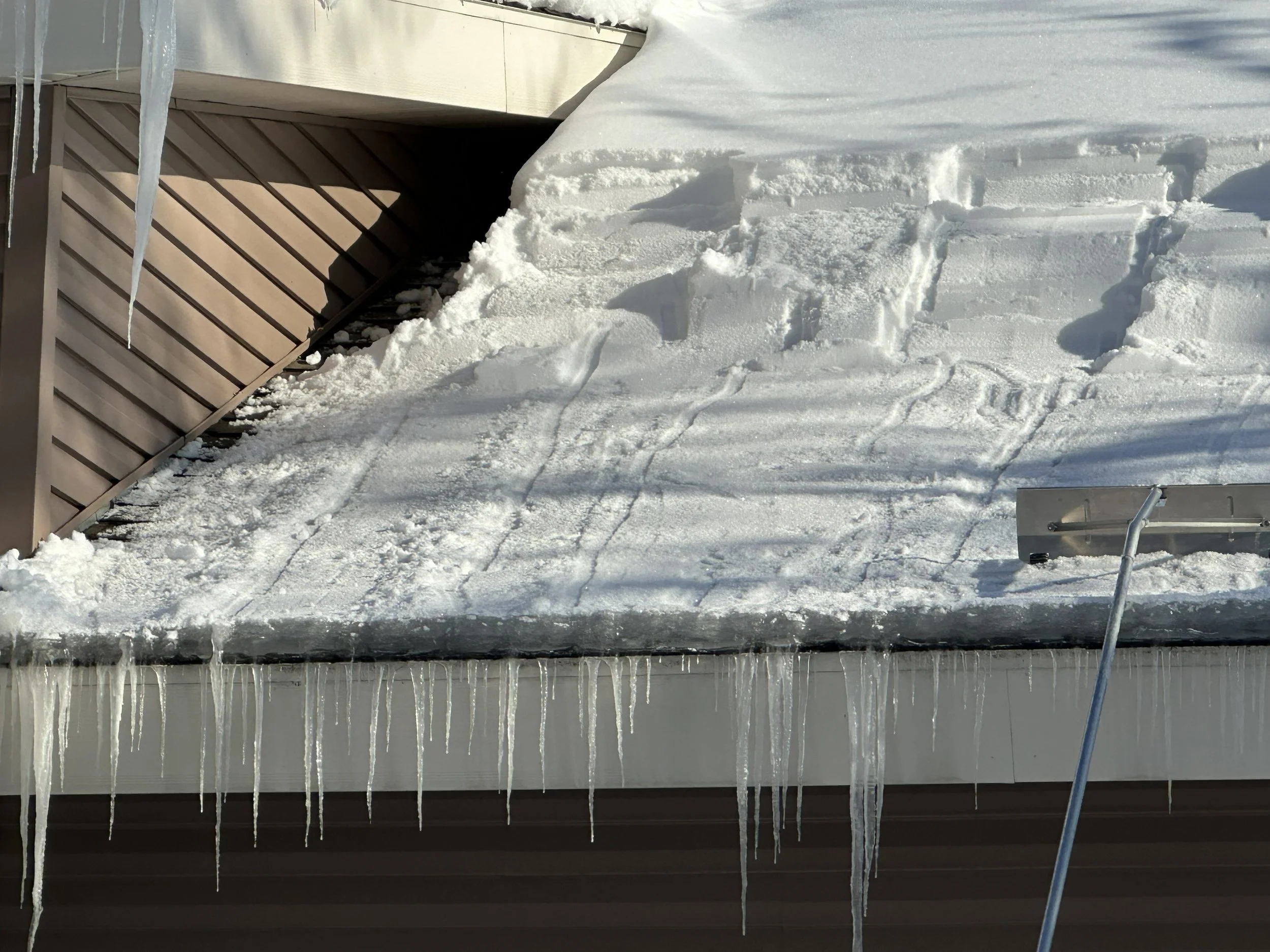
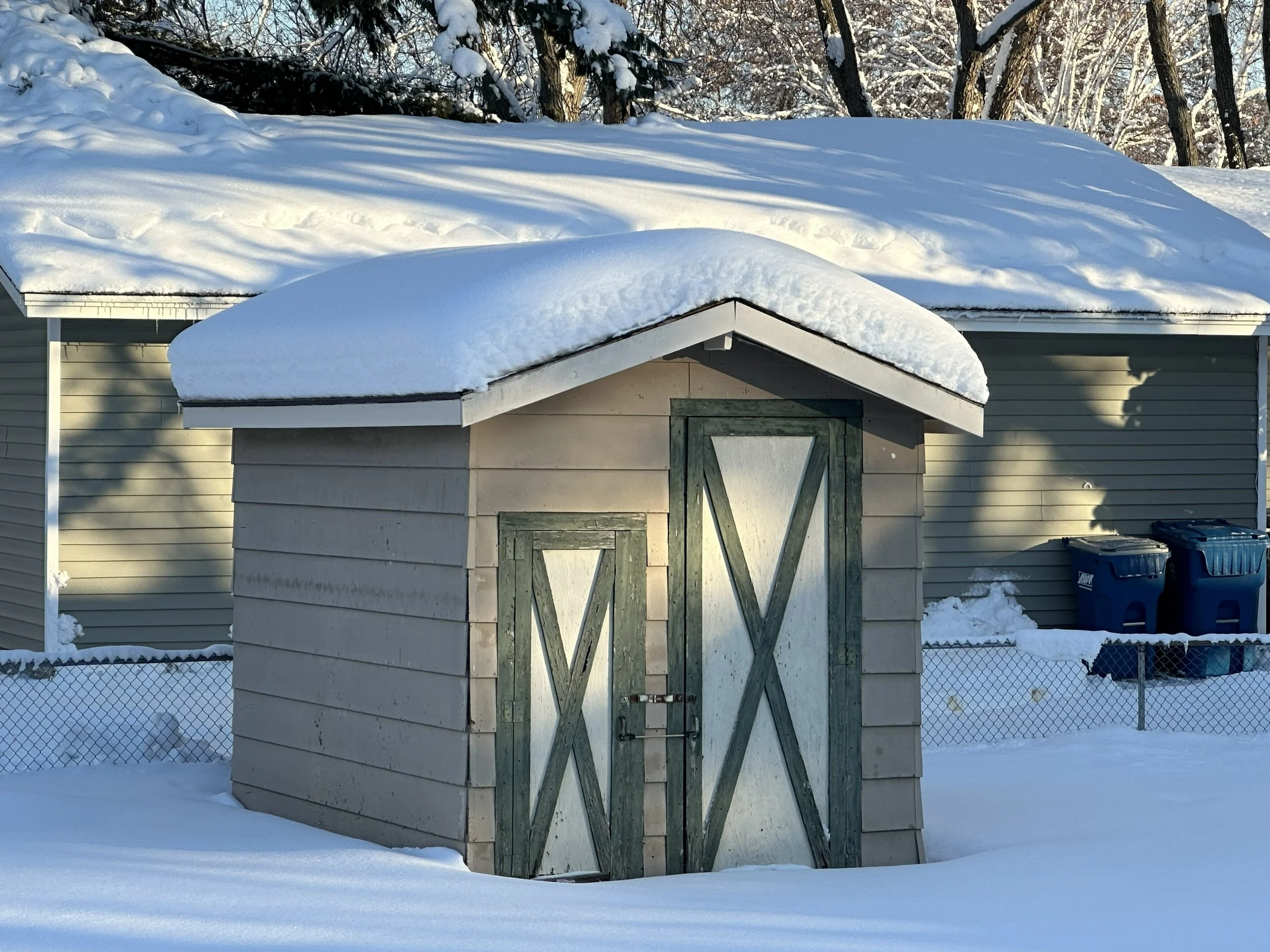
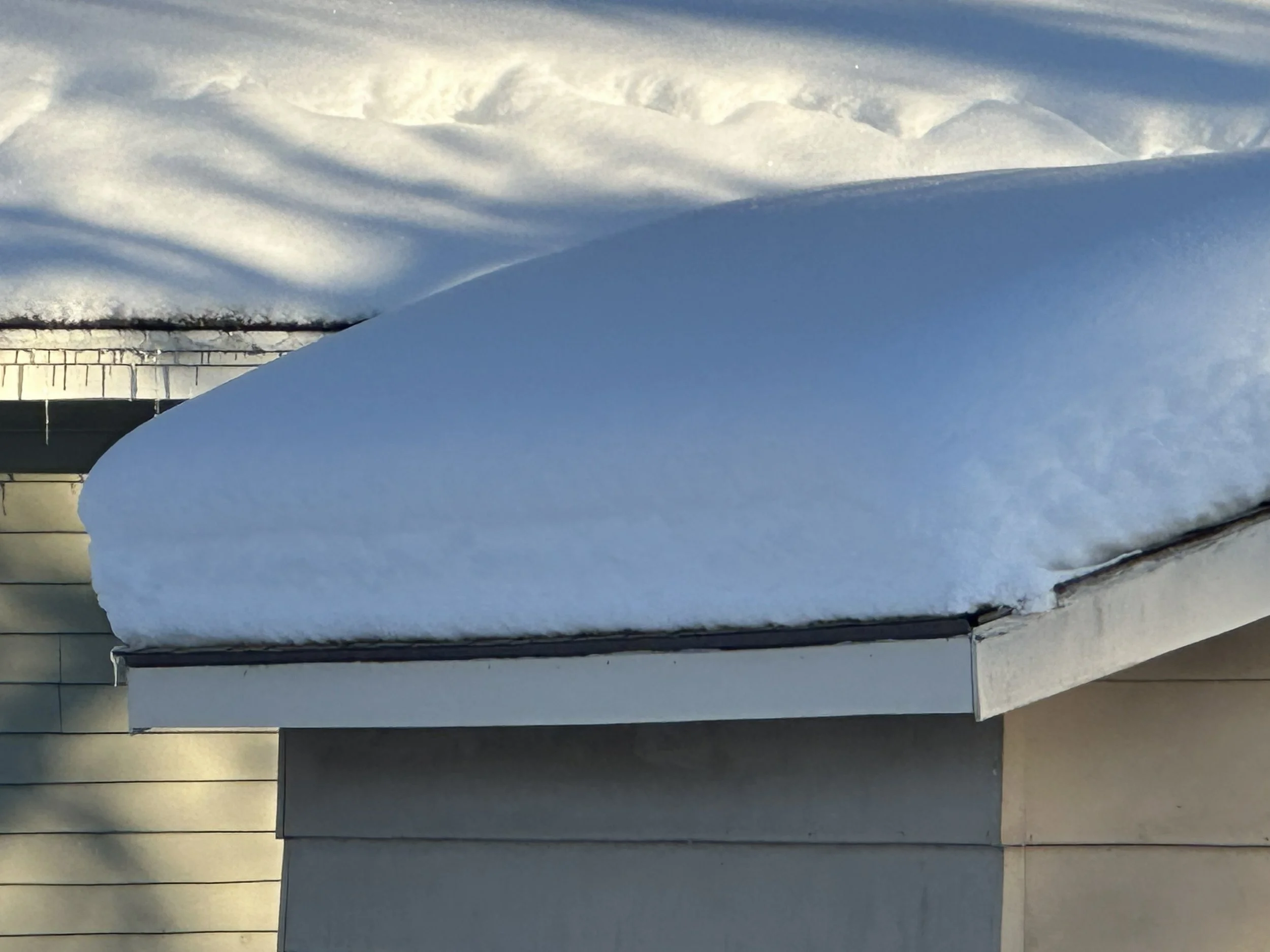
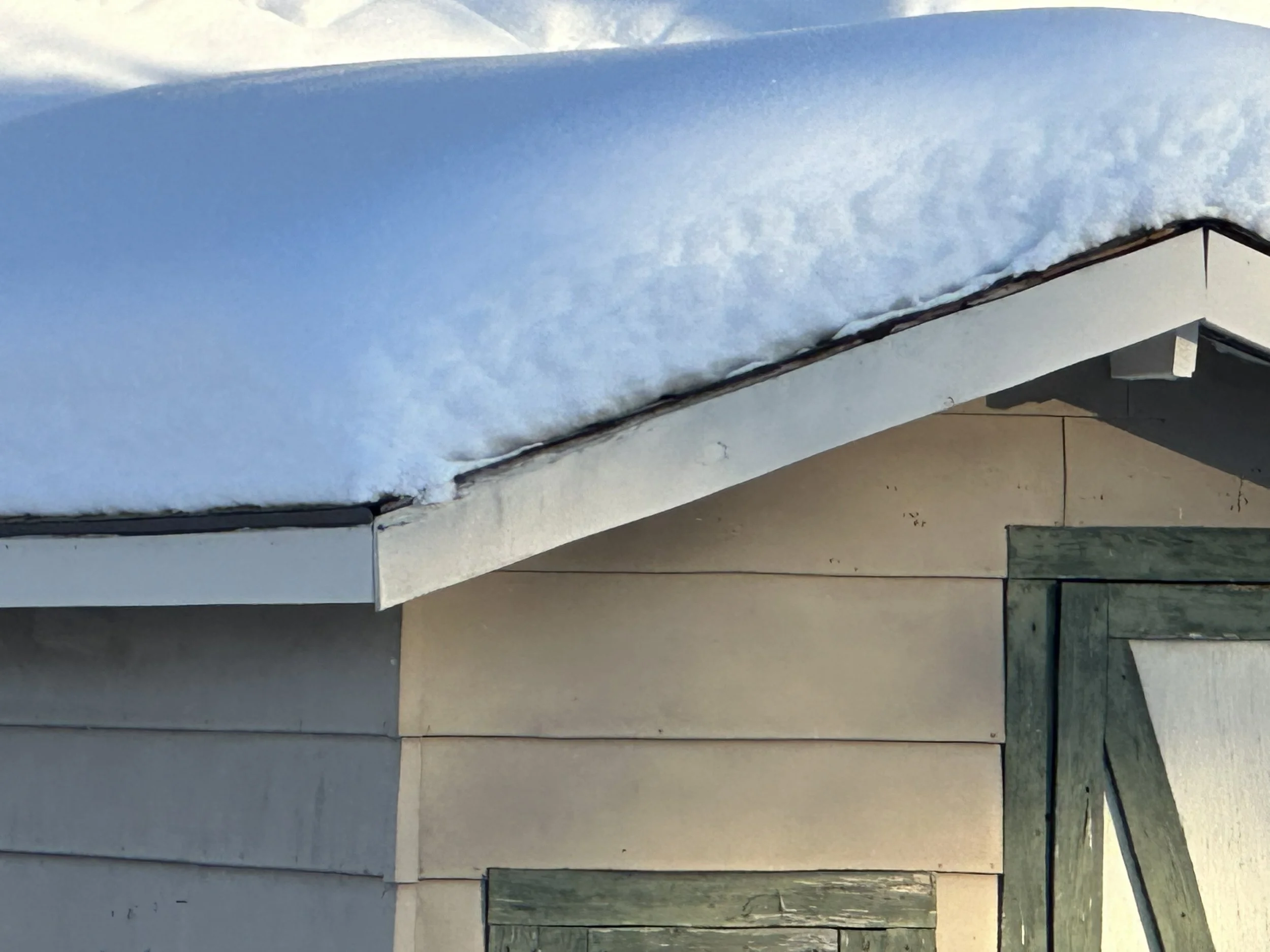
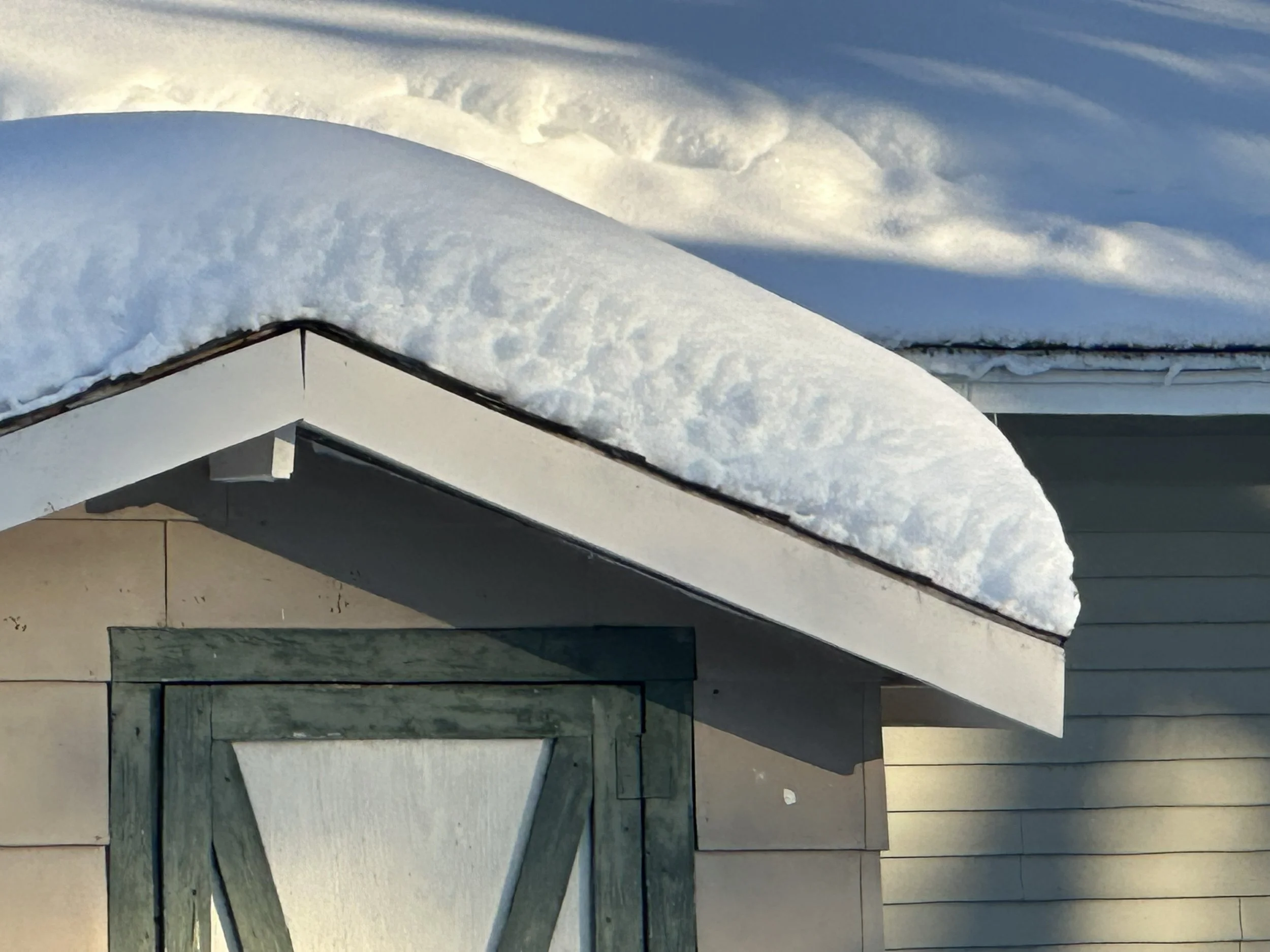
SIP roofs genuinely do eliminate most of the air-leakage-driven ice dams that plague conventional framing, and for good reason:
The roof assembly is inherently airtight
There's no vented attic full of leaky pathways for warm air to find
There are no ducts running above the insulated part of the roof
If you want the numbers behind that airtightness, we've broken down what SIP R-values actually mean in real-world performance in a separate article.
But SIPs can't eliminate the snow-insulation mechanism described above: physics doesn't care how airtight your roof is. If you're dealing with deep snow and ground snow loads above roughly 50 psf, you can still get ice dams unless you add a vented layer over the roof, often called a "cold roof."
If you're building or renovating in a vented attic (not a SIP roof), keep ductwork and heating equipment out of that attic space entirely. Building science research is blunt about this one: air leakage out of ducts, plus ordinary heat loss through the duct surfaces, is enough on its own to guarantee ice damming. It doesn't matter how good the rest of the roof is: ducts in a cold attic are one of the most reliable ways to cause the problem this article is about.
The right fix depends on how much snow your roof actually sees each winter.
A SIP roof without any extra layer on top can work fine, as long as:
Ground snow load is under about 50 psf
The roof is genuinely airtight
The roof is insulated to R-38 (SIPs, my experience) R-50 or better other types of insulation
The overhangs are insulated, not just the main roof field
No ductwork runs through the attic space
Builders call this an unvented "compact roof," and it's a well-established, code-recognized assembly.
Here, you need a cold roof (a vented layer built above the SIP roof). That assembly typically includes:
Furring that creates a continuous vent channel
A second layer of roof sheathing above that channel
Ventilation running from the soffit up to the ridge
Insulated overhangs
That vent channel flushes away the small amount of heat that still reaches the roof deck, including the heat trapped underneath a deep snowpack. It's the assembly recommended for high-snow regions in the Builder's Guide to SIPs and by Lstiburek's own ice dam research.
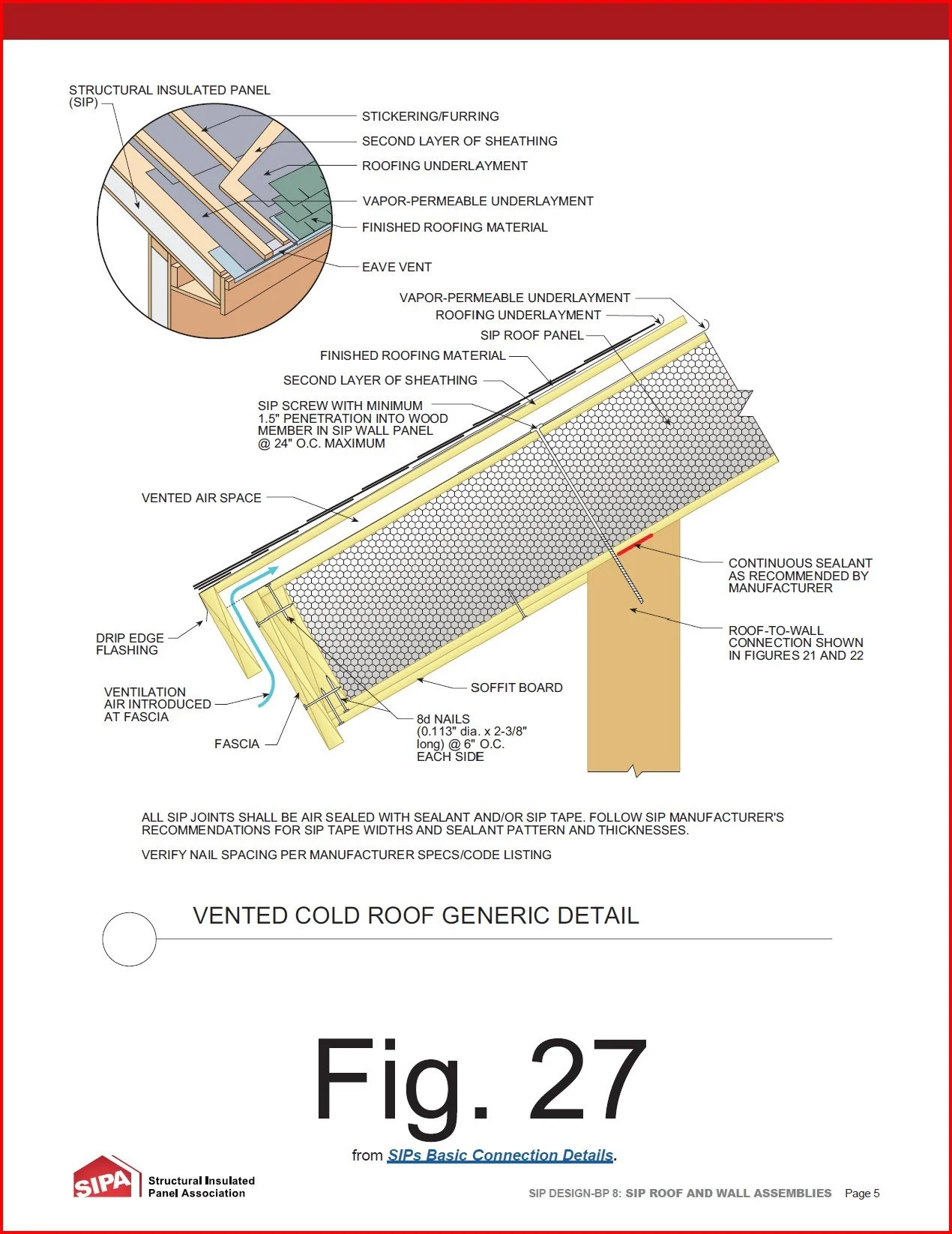
Vented Cold Roof Over SIP Roof Panels
Not sure which category your project falls into? Talk to Joe Pasma, PE: he can look at your snow load, roof design, and existing insulation and tell you plainly whether a cold roof is worth the added cost on your specific project.
If a cold roof retrofit isn't in the budget this year, here's what actually helps in the meantime, and what doesn't:
Use a roof rake to clear the first 3–4 feet of snow off the eaves after a storm
Keep gutters clear so meltwater has somewhere to go
Skip the heating cables: they treat the symptom, not the cause, and add an ongoing electric bill
Never chip at an ice dam yourself: it's an easy way to damage shingles that were otherwise fine
If you're already planning a reroof, that's the ideal time to add a vented over-roof
A few other articles worth reading if you're evaluating a SIP roof for a cold-climate build:
The roof deck needs to be above 32°F while the outside air stays below 32°F, with a fair amount of snow sitting on the roof. All three conditions have to happen at the same time; remove any one of them and an ice dam can't form.
Yes, in heavy-snow climates it can. A SIP roof eliminates most air-leakage-driven ice dams, but a deep snowpack has its own insulating value and can still warm the roof deck enough to start the melt-freeze cycle, regardless of how airtight the roof is.
It helps with air-leakage-driven ice dams, but it won't stop the snow-insulation mechanism on its own. In high-snow regions, a vented cold roof addresses both causes at once, which is why it's the recommended fix rather than insulation alone.
A cold roof is a vented layer built above your main roof deck: purlins or furring create an air channel, a second layer of sheathing goes on top, and soffit-to-ridge airflow carries away trapped heat before it can warm the roof deck. It's typically recommended in regions with ground snow loads above about 50 psf, including Minnesota, Wisconsin, Michigan, Vermont and the mountain areas of the US.
No. Chipping at ice dams is one of the most common ways homeowners accidentally damage otherwise healthy shingles. A roof rake used to clear snow before it can melt and refreeze is the safer approach.
Heating cables melt a channel through an existing ice dam, but they don't address why the roof deck is warm enough to cause one in the first place. They're a symptom-level fix, not a permanent solution, and they add an ongoing electricity cost every winter.
PGS Consulting LLC provides independent roof assembly review, snow-load evaluation, and cold-roof design guidance for SIP buildings, backed by 40+ years of engineering, manufacturing, and forensic experience.
Talk to Joe Pasma, PE
Insurance premiums are climbing fast, and FORTIFIED certification can knock a real percentage off a homeowner's premium. Here's why SIP construction already does much of the structural work the toughest FORTIFIED tier requires — and what's still needed to actually get certified.
By Joe Pasma, P.E. | PGS Consulting LLC | SIP Engineering & Consulting | Published August 22, 2026, Updated September 9, 2026

Home insurance is having a rough few years. The national average premium is set to hit roughly $3,057 in 2026 — the fifth straight year it's gone up. Florida is closing in on $8,500 a year for a typical policy. And several Midwest and Plains states — Minnesota, Colorado, Iowa, Nebraska, Oklahoma — saw premiums jump 20% or more in a single year. A recent Insurify survey found that 57% of homeowners have cut other spending to keep their coverage in place.
So when people search for ways to build a safer, sturdier home right now, they're not just thinking about energy bills anymore. They're thinking about their insurance bill. And the insurance industry has already built a program for exactly that — It’s called FORTIFIED and it can knock a real chunk off a homeowner's premium.
Here's what almost nobody realizes: a well-built Structural Insulated Panel (SIP) home already handles most of the hard structural work required for the toughest FORTIFIED tier before you add a single upgrade. Below explains what FORTIFIED actually is, why SIPs have a head start, and what's honestly still required to get certified.
FORTIFIED is a voluntary insurance-industry standard, not a green-building or energy program. It's a checklist that measures how well a home is built to survive wind and storm damage.
There are three levels — Roof, Silver, and Gold — and each one builds on the last, with Gold providing ultimate protection.
SIP homes start closer to Gold than stick-framed homes do, because SIP walls and roofs already act like one solid, connected structure instead of hundreds of separate nailed-together pieces.
SIPs do not automatically qualify. Gold certification still requires engineered documentation, verified connections, and inspection by a certified FORTIFIED Evaluator.
The discounts are real money. In Louisiana, state regulators are now requiring insurers to give FORTIFIED homes discounts of 16% to 49% on the hurricane portion of their premium, depending on the level and the region.
Availability varies by state and carrier. Louisiana's mandate is the strongest example right now, not yet the national norm.
FORTIFIED is a voluntary construction and inspection standard created by IBHS — the Insurance Institute for Business & Home Safety, which is the research arm of the insurance industry. Insurers fund it because they'd rather pay engineers to help prevent damage than pay out claims after a storm.
It's worth being clear about what FORTIFIED is not. It's not a green-building certification. It's not an energy-efficiency program. It's not a building code requirement. It's purely a risk-reduction checklist that insurers use to identify homes statistically less likely to suffer wind and storm damage — and price the policy accordingly.
There are three levels, and each one stacks on top of the last:
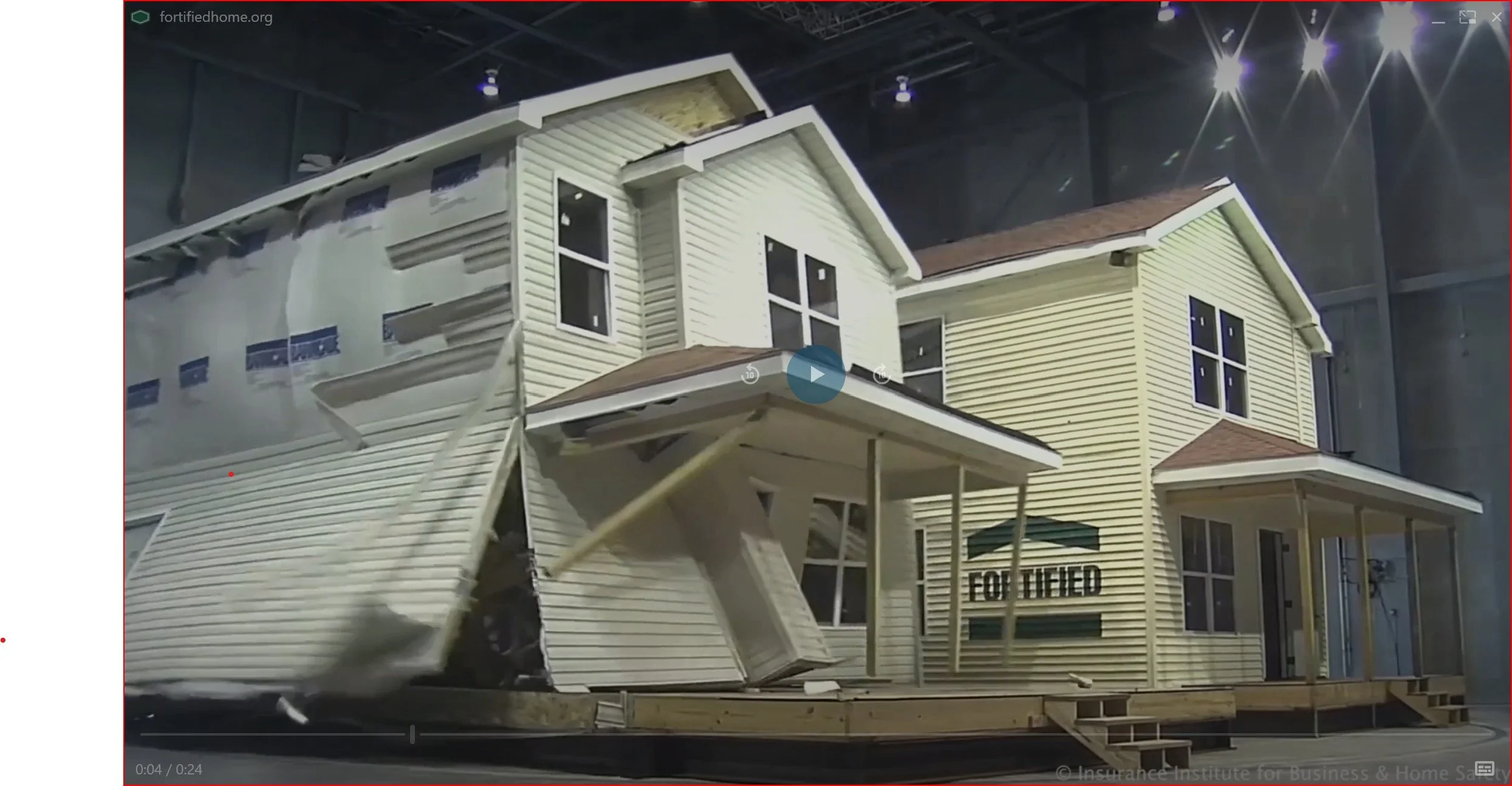
← Swipe to view full table →
| Level | What It Requires | Typical Added Cost |
|---|---|---|
| FORTIFIED Roof | Sealed roof deck, enhanced nailing pattern, reinforced roof edges | ~$1,000–$3,000 on a re-roof |
| FORTIFIED Silver | Everything in Roof, plus gable-end bracing, chimney anchoring, impact-rated garage doors, and anchored carports/porches | ~$5,000–$15,000+ |
| FORTIFIED Gold | Everything in Silver, plus a fully engineered, continuous load path connecting roof, walls, and foundation | ~$10,000–$30,000+ on new construction |
A certified FORTIFIED Evaluator inspects the home against this checklist and issues the certificate. That certificate is what a homeowner hands to their insurance company to unlock the discount.
FORTIFIED Gold's hardest requirement is something engineers call a "continuous load path." In plain terms: when wind hits a roof and tries to peel it off, that force has to travel somewhere safe — down through the walls and into the foundation — instead of ripping the house apart piece by piece.
In a typical stick-framed house, that path is built out of hundreds of individual connections: toenails, hurricane clips, straps, studs, plates, and sheathing joints, all nailed together on-site. Every one of those connections is a place a storm can find a weak spot. Miss one nail, skip one clip, and you've created a failure point the wind can exploit.
SIP construction works differently by nature, not by upgrade. A SIP panel is a single factory-built piece: two layers of structural board glued and pressed around a solid foam core under pressure, not nailed together on a job site. Once the panels go up, SIP wall and roof panels behaves less like a pile of separate parts and more like one continuous, connected surface. There's no "weak nail" hiding somewhere in the middle of it, because there isn't a middle full of separate nailed pieces to begin with.
That's the whole point of FORTIFIED Gold — forcing a house to behave like one solid, connected unit instead of a collection of parts. SIPs are already built close to that standard by design.
People hear "continuous load path" and think it's some exotic engineering trick. It isn't. It's just asking: if I pull on the roof, does that force travel all the way to the ground in a controlled way, or does it stop at the first weak connection? SIP wall and roof panels are already one continuous structural skin before an engineer ever touches it. That doesn't mean the job is done — the connections at the top plate, the foundation, and every window and door still have to be engineered and verified. But I'm starting from a much better position than I am on a stick-framed job.
-- Joe Pasma, PEImportant nuance here, because it matters: SIPs do not automatically qualify for FORTIFIED Gold. Gold still requires engineered documentation, verified connections, and a third-party inspection. What changes with SIPs is how much work it takes to get there — the load path is simpler to engineer, cleaner to verify, and requires fewer additional connections, because the panels are already acting as unified structural elements rather than a pile of parts.
Wondering whether your specific SIP project could realistically reach FORTIFIED Gold? Talk to Joe Pasma, PE — he can look at your plans and tell you straight what it would actually take to get there.
A typical SIP build is already a good part of the way to Gold before any FORTIFIED-specific work begins. What's usually still missing is the same list every Gold-level home needs, SIPs or not:
Engineered documentation of the continuous load path, roof to foundation
Impact-resistant windows and doors, or storm shutters
A reinforced, impact-rated garage door
Verified roof-to-wall and wall-to-foundation connections
A third-party inspection by a certified FORTIFIED Evaluator
None of these are penalties specific to SIP construction. They're the same requirements every home — stick-framed or panelized — has to meet to earn Gold. SIPs just make several of them easier to satisfy.
The numbers below are current industry ranges, not SIP-specific pricing, since FORTIFIED cost depends heavily on the size and design of the home.
← Swipe to view full table →
| Item | What We Found |
|---|---|
| FORTIFIED Roof re-roof | Roughly $1,000–$3,000 above a standard re-roof |
| Louisiana existing-home grant | Up to $10,000 toward a FORTIFIED Roof upgrade, plus a state tax deduction up to $5,000 or 50% of cost |
| Oklahoma insurer discounts (Roof level) | Range from 3% to 42% depending on carrier; State Farm offers 30% |
| Louisiana mandated discounts (2027) | 16%–24% (North zone), 27%–42% (Central zone), 29%–49% (South zone), scaling with FORTIFIED level |
That last row is the one worth sitting with. As of March 2026, Louisiana's insurance regulator finalized Regulation 136, which requires every insurer in the state to apply these discounts to the hurricane portion of a homeowner's premium, no later than January 1, 2027. That turns FORTIFIED from "a nice perk if your insurer feels like it" into a legal requirement, at least in one state so far.
Our SIP Cost Guide breaks down real construction and long-term cost numbers for SIP builds, so you can see where a FORTIFIED upgrade fits into the bigger picture before you commit to it.
Read the SIP Cost GuideWe're not going to oversell this. Discount availability depends heavily on:
Which state you're in
Which insurance carrier you're with
Whether that carrier already offers wind-mitigation credits
Whether the home is new construction or an existing retrofit
Louisiana's mandate is currently the strongest, clearest example of FORTIFIED discounts being guaranteed rather than optional — but it is not yet the national norm. In most other states, whether you get a discount, and how big it is, still comes down to your specific carrier's policy. FORTIFIED is growing fast, but it isn't universal yet, and a homeowner in a low-wind-risk area may find the certification math doesn't pencil out the way it would in a coastal or high-wind zone.
FORTIFIED Roof on its own is realistic for almost any SIP home, new or existing, since it's mainly about the roof assembly. Silver is very achievable with modest upgrades to openings and bracing. Gold is the one that takes real planning — it's built for new construction or a full renovation, since retrofitting a continuous load path into an already-finished home usually means opening up walls that are otherwise done. If Gold is the goal, it's worth bringing it up before the SIP shell goes up, not after.
No. SIPs give you a real structural head start, especially toward FORTIFIED Gold, but certification still requires engineered documentation, verified connections, and inspection by a certified FORTIFIED Evaluator. SIPs make the engineering easier — not automatic.
Most SIP homes can reach FORTIFIED Silver with minimal upgrades, and Gold is fully achievable with proper engineering and impact-rated openings. Because SIP wall and roof panels already behave like one connected structural surface, the continuous load path required for Gold is simpler to design and verify than it would be on a stick-framed home.
Industry ranges put Gold at roughly $10,000–$30,000 or more added to a new-construction budget, depending mainly on impact-rated openings and the garage door requirement. Because SIPs reduce some of the structural labor and hardware Gold normally demands, SIP projects often land toward the lower end of that range.
No. As of 2026, Louisiana is the clearest example of a state mandating it — Regulation 136 requires insurers to apply hurricane-premium discounts of 16% to 49%, scaling with FORTIFIED level and region, by January 1, 2027. Other states rely on individual carriers choosing to offer a discount, so availability and size vary.
No. Gold specifically requires engineered documentation of the continuous load path. SIPs simplify that engineering, but they don't eliminate it. If you're not sure whether your project needs an engineer at all, our guide to prescriptive vs. engineered SIP design walks through when it's required.
In high-wind or hurricane-prone regions, almost always — the discounts and risk reduction tend to justify the cost. In moderate-risk regions, it depends on whether your carrier participates and how large your premium already is. Even in lower-risk areas, certification can still add value at resale and appraisal time, on top of the risk reduction itself.
A few places to keep researching, whether you're leaning toward FORTIFIED or just want to see the source material yourself:
FORTIFIED Evaluator Directory — find a certified evaluator near you
Louisiana's Mandatory FORTIFIED Discount Regulation (Insurance Journal)
How SIPs Perform in Wildfire Zones — another look at how SIP construction handles a different kind of risk
How SIPs Behave in Real Residential Fire Events - how EPS and OSB actually respond to heat
PGS Consulting LLC provides independent structural evaluation and engineering guidance for SIP buildings, backed by 40+ years of engineering, manufacturing, and forensic experience.
Talk to Joe Pasma, PE
Wildfires don't spare buildings because of what they're made of, they spare buildings because of how well the details were done. Here's what actually determines how SIPs hold up against embers, radiant heat, and direct flame, and the roofing and siding choices that make or break wildfire resilience.
By Joe Pasma, P.E. | PGS Consulting LLC | SIP Engineering & Consulting | Published August 18, 2026 | Updated October 14, 2026

Wildfires ignite most homes and buildings through windblown embers landing in gaps, not through direct flame contact with walls.
SIPs have no open stud cavities, so there are fewer hidden spaces for embers to collect and smolder.
The roof, not the walls, is where most wildfire losses start, in SIP homes and every other type of construction.
A SIP home with Class A roofing, ember-resistant vents, and noncombustible siding performs very well in wildfire conditions.
SIPs are not fireproof. They don't replace defensible space, code-required venting, or good detailing at joints and penetrations.
If you're building with Structural Insulated Panels (SIPs) in a wildfire-prone area, you've probably asked some version of this question: do they actually hold up when a wildfire comes through?
It's a reasonable thing to worry about. SIPs are made from wood-based panels with a foam core, and wildfires bring embers, intense heat, and sometimes direct flame. But the short answer is more reassuring than most people expect: SIPs perform well in wildfire zones and, in some ways, have real advantages over standard stud framing. The catch is that performance depends almost entirely on how the home is detailed, not just what it's built from.
Map of the wildland-urban interface in the United States. Source: US Fish and Wildlife Service and University of Wisconsin-Madison.
Below is a walkthrough of how SIPs actually respond to wildfire exposure, where the real weak points are, and what to do about them.
Most people picture a wall of flame rolling through a neighborhood. That's rarely what destroys homes. Research from the Insurance Institute for Business & Home Safety and Cal Fire both point to the same conclusion: as much as 90% of homes lost in wildfires are ignited by embers, not by direct contact with the fire front.
Three things actually threaten a home during a wildfire:
Embers -- small burning pieces of debris that can travel more than a mile ahead of the fire and land in vents, gaps, or roof valleys
Radiant heat -- the heat a nearby fire throws off, even without touching the structure
Direct flame contact -- usually brief, and usually only happens if something next to the house is already burning
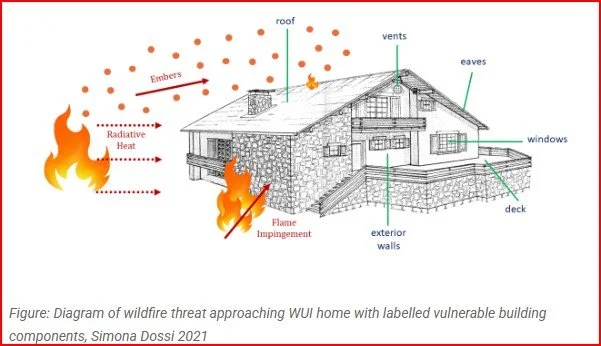
Once you understand these three, SIP performance makes a lot more sense.
Embers. This is where SIPs have a genuine structural advantage. Standard stud-framed walls have open cavities behind the siding, and embers that get behind the cladding can collect and slowly ignite something out of sight. SIPs don't have that problem; there's no cavity, just a solid foam core sandwiched between two skins, so there's nowhere for an ember to hide. The places SIPs remain vulnerable are the same places every building is vulnerable: roof-to-wall joints, vents, and any gap that wasn't sealed properly.
Radiant heat. SIP skins are typically OSB (oriented strand board), and OSB doesn't burst into flame under radiant heat; it chars, the same way solid lumber does. The foam core only starts to soften under sustained, high heat, not brief exposure. Because there's no open cavity, there's also less path for heat to move through the wall.
Direct flame contact. This is usually short-lived unless something next to the house is already fully on fire. SIPs behave similarly to other wood-based wall systems here. The OSB chars, the foam retreats from the heat, and the wall generally holds up unless the flame exposure goes on for a long time.
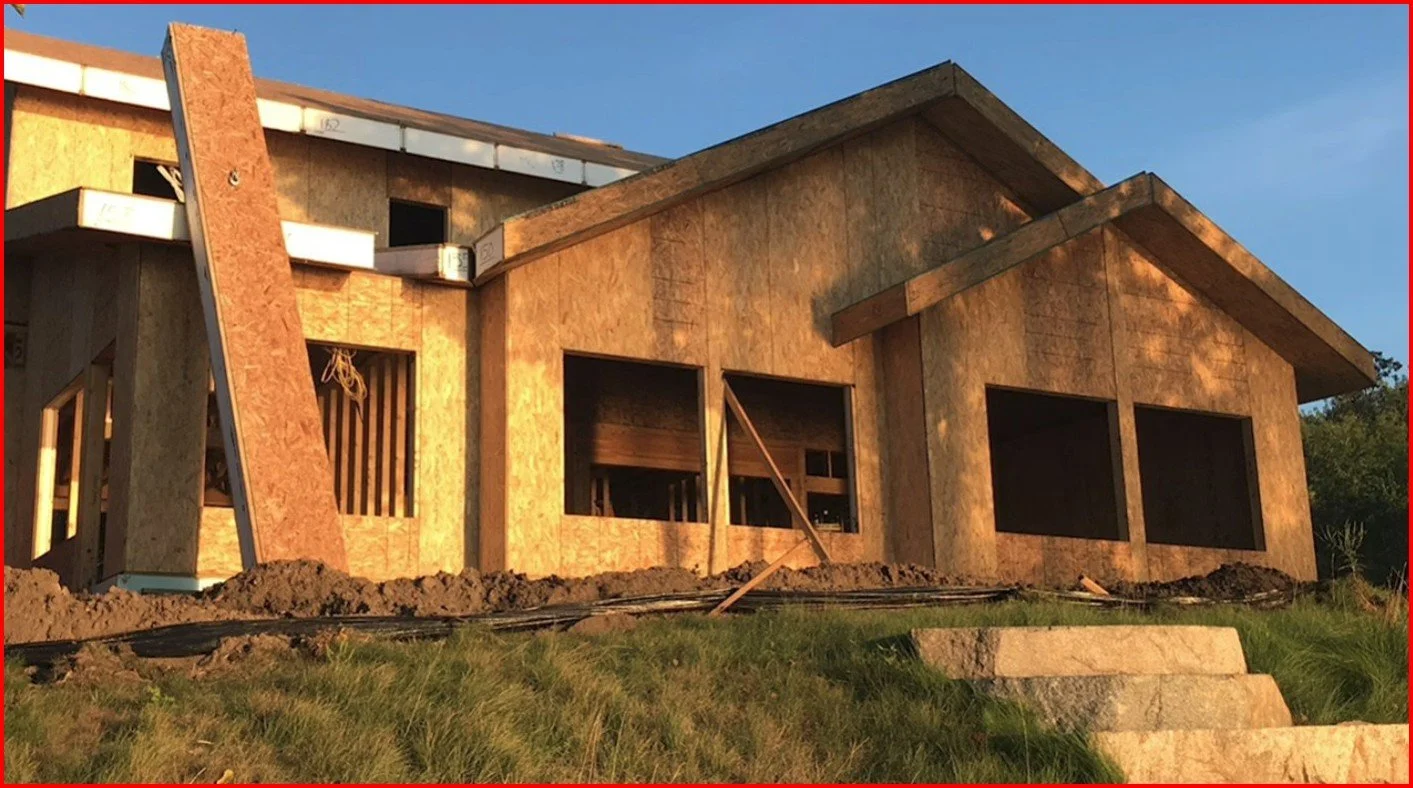
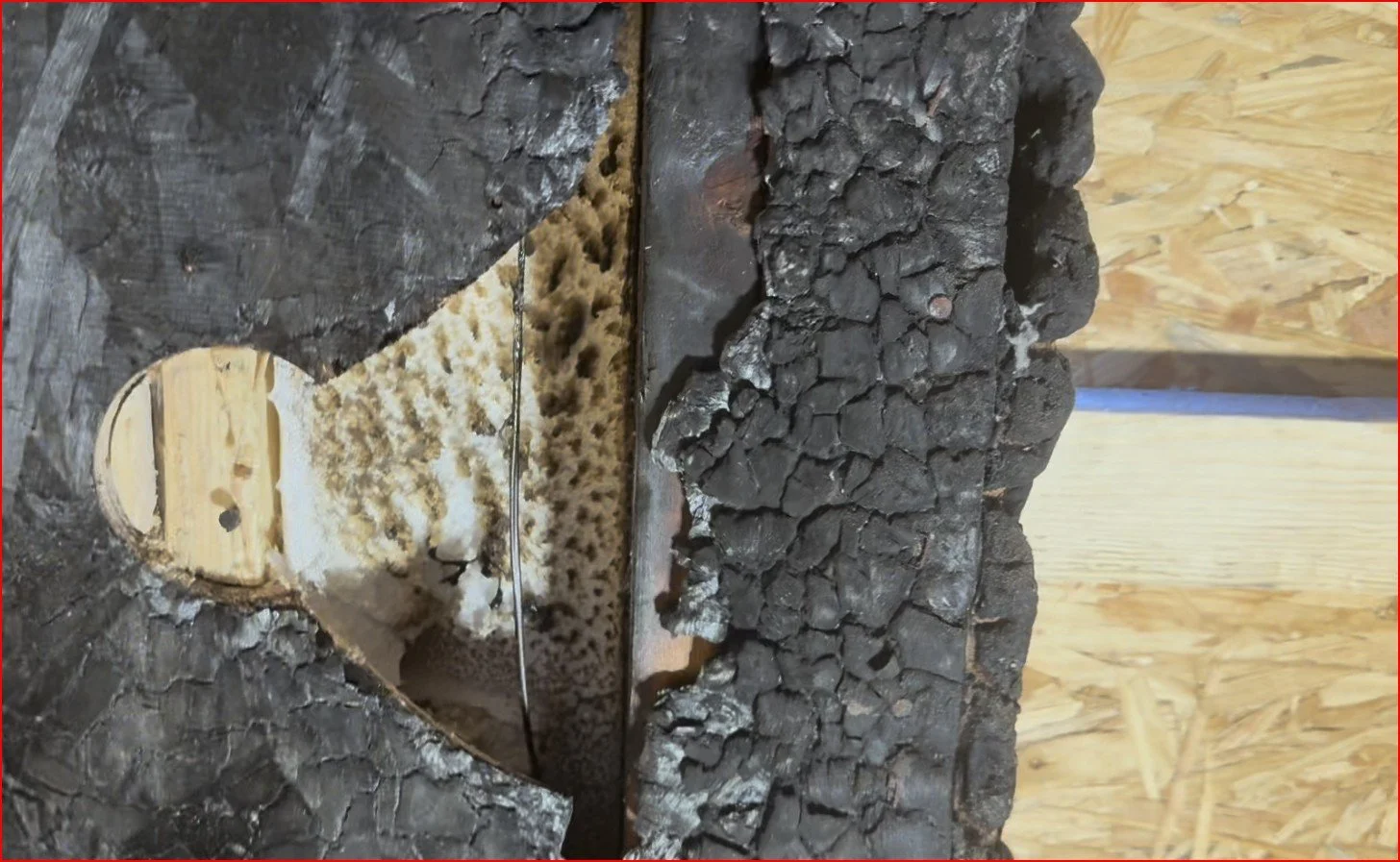
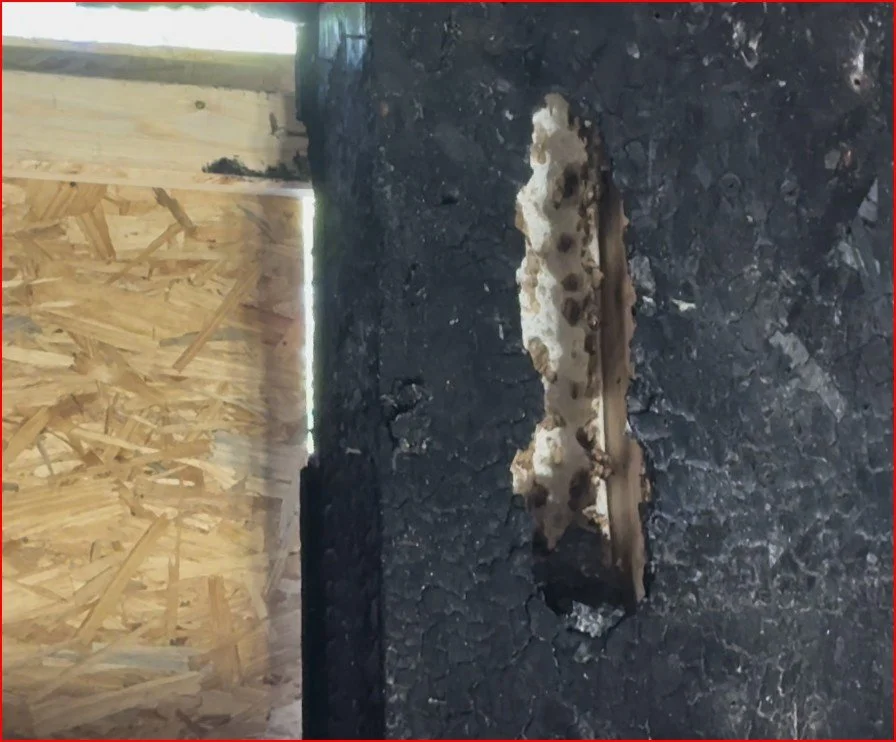
For a detailed description of how SIPs behave in real world fire scenarios refer to “SIP Fire Performance Case Study: How SIPs Behave in Real Residential Fire Events”.
If a SIP home is going to have a wildfire problem, it almost always starts at the roof, not the walls. Ridge vents, fascia boards, eave overhangs, and clogged gutters are the classic entry points for embers.
The roof covering itself matters a lot:
← Swipe to view full table →
| Roof Covering | Wildfire Performance | Best Paired With |
|---|---|---|
| Metal roofing | Best resistance to embers and radiant heat | Sealed ridge and eave details |
| Class A asphalt shingles | Meets code minimums in most wildfire zones | Sealed roof edges, ember-resistant vents |
| Concrete or clay tile | Strong resistance to radiant heat | Closed bird-stops at eaves to block ember entry |
| Untreated wood shake | Not recommended in wildfire zones | N/A |
Embers don't need a big opening to start a fire. A gap the size of a coin in a soffit vent or fascia joint is enough for a wind-driven ember to work its way in and ignite dry debris or exposed wood. This is why sealed roof edges and ember-resistant vents matter more than almost anything else on a wildfire-zone home.
The SIP wall itself is rarely the weak point in a wildfire. The siding on top of it is what determines how the wall performs.
← Swipe to view full table →
| Siding | Wildfire Performance |
|---|---|
| Fiber cement | Excellent, doesn't ignite from embers or radiant heat |
| Stucco | Excellent, strong under sustained radiant heat |
| Metal siding | Excellent, highly ignition resistant |
| Brick veneer | Good, depends on proper weep and vent detailing |
| Vinyl | Poor, softens and fails early under radiant heat |
| Untreated wood | Poor to fair, performance varies widely |
A well-built SIP home can outperform a stud-framed home in a wildfire. A poorly detailed SIP home can perform just as badly. The difference comes down to these details:
Class A roof covering
Metal fascia
Ember-resistant vents
Non-vented soffits, or soffits with protected venting
Fiber-cement, stucco, or metal siding
Fully sealed roof edges
Sealed and protected penetrations (pipes, wires, etc.)
No exposed foam anywhere on the exterior
Proper flashing at every roof-wall intersection
Every item on that list closes off an ember pathway. That's the entire game in wildfire-zone construction.
SIPs offer a few built-in advantages in wildfire conditions:
No stud cavities, so fewer places for embers to collect
Fewer seams and joints than a framed wall, so fewer weak points
Continuous insulation, which slows heat movement through the wall
Predictable, gradual charring instead of sudden failure
No open air path inside the wall to help a fire spread
Every SIP wildfire loss I have looked at traces back to a detail, not the panel. An unsealed vent, an exposed eave, a gap where two roof planes meet. The panel itself almost always survives fine. It is the transitions and penetrations that decide whether a home makes it through a wildfire event.
-- Joe Pasma, PEIf you're planning a SIP build in a wildfire zone and want a second set of eyes on the details before they're locked into your drawings, that's exactly the kind of review Joe does. Contact Joe Pasma, P.E., about your project before you break ground, not after a wildfire tests it for you.
This part matters, and it's worth being straightforward about: SIPs are not a substitute for good code compliance and site management. SIPs will not prevent:
A poorly detailed roof from igniting
Embers getting in through an unsealed joint or gap
A vent that wasn't ember-rated
Gutters full of dry debris catching fire
Full structural involvement once fire actually gets inside the home
The need for defensible space around the property
SIPs are a resilient building system. They aren't a substitute for good detailing, and they aren't a substitute for defensible space requirements under codes like the International Wildland-Urban Interface Code. Many jurisdictions, including California's Zone 0 rules, now require a noncombustible zone within five feet of the structure. That requirement applies regardless of what the walls are made of.
Class A roof covering
Metal fascia
Ember-resistant vents
Fiber-cement, stucco, or metal siding
Five-foot noncombustible zone around the home
Annual roof edge inspection
Regular gutter cleaning
Sealed penetrations at every pipe, wire, and vent
No exposed foam anywhere on the exterior
Defensible space maintained per local wildfire code
If you're planning a SIP build in a wildfire-prone area, this list is a good starting point for a conversation with your builder or engineer, not a substitute for one. For more on how SIPs compare to standard framing in general, see SIPs vs. Stick Framing.
SIPs have been used in multiple U.S. Forest Service facilities, including fire‑crew housing, equipment garages, and remote ranger station buildings. Manufacturers such as Premier and Enercept have supplied SIP assemblies for these projects, where rapid construction, predictable fire‑rated assemblies, and high energy efficiency are critical.
While these projects are not formal wildfire‑performance studies, they demonstrate that SIPs are trusted in wildfire‑response environments and can meet the demands of WUI‑zone construction when detailed correctly.
SIPs perform well in wildfire zones, but the material is only half the story. Their continuous skins and lack of open cavities give them a real advantage over standard framing when it comes to blocking ember entry, which is the way most homes actually catch fire. Paired with Class A roofing, ember-resistant vents, noncombustible siding, and properly sealed edges, a SIP home is a genuinely strong choice for wildfire-prone areas.
Wildfire resilience was never about picking one magic material. It's about the whole system, from the roof edge down to the defensible space around the house. SIPs fit into that system well, as long as the details are done right.
SIPs aren't fireproof, but they perform well in wildfire zones when detailed correctly. Their continuous skins and lack of open cavities mean fewer places for embers to enter and collect compared to standard framing.
No. SIP skins char predictably under radiant heat the same way solid lumber does, and the foam core only softens under sustained, high heat. SIPs don't flash-ignite under typical wildfire radiant heat exposure.
The roof, especially fascia edges, vents, and gutters. This is true for every type of construction, not just SIPs.
Fiber cement, stucco, metal siding, and brick veneer perform best. Vinyl and untreated wood are more vulnerable to radiant heat and ember exposure.
Yes, the Forest Products Laboratory has conducted structural research on SIPs, including long-term structural performance testing. This reflects credibility in SIP structural behavior generally, not a specific wildfire-facility case study.
Class A roofing, metal fascia, ember-resistant vents, sealed roof edges, protected penetrations, noncombustible siding, and a maintained five-foot noncombustible zone around the home.
PGS Consulting LLC provides independent engineering review, code-compliance guidance, and detailing recommendations for SIP buildings in wildfire-prone areas, backed by 40+ years of engineering, manufacturing, and forensic experience.
Talk to Joe Pasma, PE
If you're building rental housing to hold, not flip, your material choices carry decades of consequences. See why small and emerging developers are turning to SIPs to cut maintenance, lower utility costs, and keep tenants renewing, backed by a real 54-unit case study in Luverne, MN.
By Joe Pasma, P.E. | PGS Consulting LLC | SIP Engineering & Consulting | Published August 12, 2026, Updated October 20
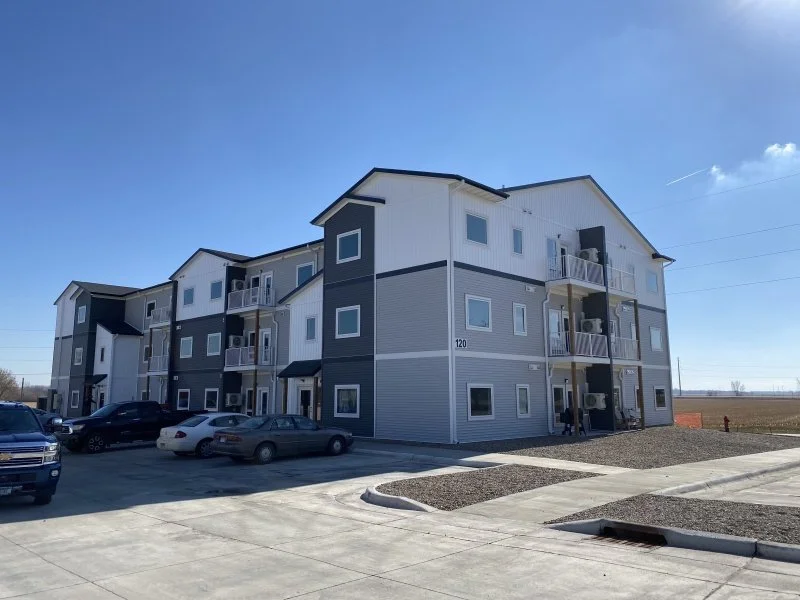
Housing Development in Luverne, MN | PrairiE Lofts| SIPs manufactured by Extreme Panel Technologies
If you are building rental housing to sell it off in two years, your building material decisions probably look different than if you are building to hold. But if you are building to hold, meaning you plan to own and operate the property for the long haul, the calculus changes completely. Every choice you make now either saves you money for decades or costs you money for decades. There is not much middle ground.
Structural Insulated Panels, or SIPs, are one of those decisions. They are not the cheapest option on day one, and they are not the most familiar option to every contractor. But for developers building duplexes, small multifamily, workforce housing or ADUs, they intend to keep, SIPs solve three problems at once: they reduce maintenance, lower utility costs, and keep renters around longer. Here is why, in plain terms.
Developers who build to hold care about decade-long performance, not just move-in day, and the building envelope drives most of what happens to a rental property after year one.
SIPs create a tighter envelope with no open wall cavities, which cuts down on the drafts, moisture and mold problems, and pest entry points that generate most rental maintenance calls.
Independent research cited by SIP manufacturers points to 40 to 60 percent lower heating and cooling costs compared to code-built construction, which supports both net operating income (NOI) and tenant satisfaction.
A real 54-unit SIP apartment project in Luverne, Minnesota tested at 1.35 ACH50 and qualified for the federal 45L energy tax credit, showing this is not just theoretical.
Faster dry-in times can shorten construction schedules, which lowers interest carry and gets a property to lease-up sooner.
A merchant builder who plans to sell within a year or two is mostly optimizing for construction cost and speed to close. A build-to-hold developer is optimizing for something different: total cost of ownership. That includes maintenance calls, utility bills you might be covering, vacancy from unhappy tenants, and capital repairs 10 or 20 years down the road.
Most of those long-term costs trace back to one thing: the building envelope. The walls, roof, and how airtight the whole assembly is. Get that part right, and everything downstream gets easier. Get it wrong, and you will be chasing problems for the life of the building.
Walk through the maintenance requests at almost any rental property, and you will see a pattern: drafts, moisture stains, musty smells, pests finding their way into wall cavities. Nearly all of it comes back to gaps, cracks and cavities in a conventional stick-built wall.
SIPs are built differently. Each panel is a solid sandwich of insulation between two structural skins, manufactured off-site under controlled conditions. There is no open wall cavity for moisture to collect in, no loose-fill insulation that settles over time, and far fewer seams for air (and pests) to find their way through.
That does not mean a SIP building needs zero maintenance. Mechanical systems still need service, and ERV filters still need changing. But the number of maintenance calls that trace back to the envelope itself tends to drop sharply, which is exactly the kind of predictability a build-to-hold owner wants.
The developers who call me with the fewest problems are usually the ones who treated the envelope as structure, not just insulation. A tight, well-detailed SIP shell does most of the work before a tenant ever moves in. The ones who call me with the most problems almost always cut a corner somewhere in the details: a seam, a penetration, a transition that wasn't sealed the way it should have been. The panels themselves are rarely the issue.
-- Joe Pasma, PEAn airtight envelope with continuous insulation means the building loses less conditioned air. That shows up directly on utility bills. Research cited by SIP manufacturer Premier SIPS, referencing analysis tied to Oak Ridge National Laboratory's Building America program, puts the difference at roughly 40 to 60 percent lower heating and cooling energy use compared to code-built construction. Actual savings will depend on climate, design, and how the mechanical systems are set up, but the direction of that number is well established in the industry.
For a build-to-hold owner, that matters in two ways. If you cover utilities, your operating costs go down and your net operating income improves. If tenants pay their own utilities, they end up with lower bills, which means fewer complaints and a real reason to renew their lease instead of shopping around.
← Swipe to view full table →
| Category | Typical Stick-Built Rental | SIP-Built Rental |
|---|---|---|
| Air leakage | Drafts and infiltration common, especially at rim joists and penetrations | Continuous panel skins with taped seams create a much tighter envelope |
| Heating and cooling costs | Baseline code performance | Roughly 40 to 60 percent lower energy use in independent research citing DOE Building America data |
| Mold and moisture risk in walls | Open cavities can trap moisture if the assembly isn't detailed carefully and installed properly | No open cavity for moisture to collect in, though flashing and sealing details still matter |
| Framing and dry-in time | Built piece by piece on site, weather-dependent | Up to 55 percent faster install per Premier SIPS, since panels arrive pre-insulated |
| Sound transmission between units | Varies widely by framing and insulation quality | Airtight assembly generally reduces sound transfer |
Comfort is easy to overlook and hard to overstate. Tenants rarely list "airtightness" as a reason they renewed their lease, but they absolutely notice when a unit is not drafty, not noisy, and does not have a cold room in the winter or a hot room in the summer. An airtight envelope, paired with a properly designed ventilation system, delivers all three without the tenant needing to know why.
A tight envelope only works if it is paired with real mechanical ventilation. Without it, a tightly sealed building can trap stale air and humidity instead of just conserving energy. Well-built SIP rental projects typically pair the envelope with a balanced Energy Recovery Ventilator (ERV), which brings in fresh air and exhausts stale air while recovering most of the energy that would otherwise be lost in the exchange.
It is one thing to talk about SIP performance in theory. It helps to see it in an actual building. PrairiE Lofts, a 54-unit workforce housing development in Luverne, Minnesota, was built with SIPs manufactured by Extreme Panel. PGS Consulting LLC was not involved in this project; it is referenced here as independent third-party proof of SIP performance, not PGS Consulting LLC's own work. We do collaborate with the consultant that put this project together.
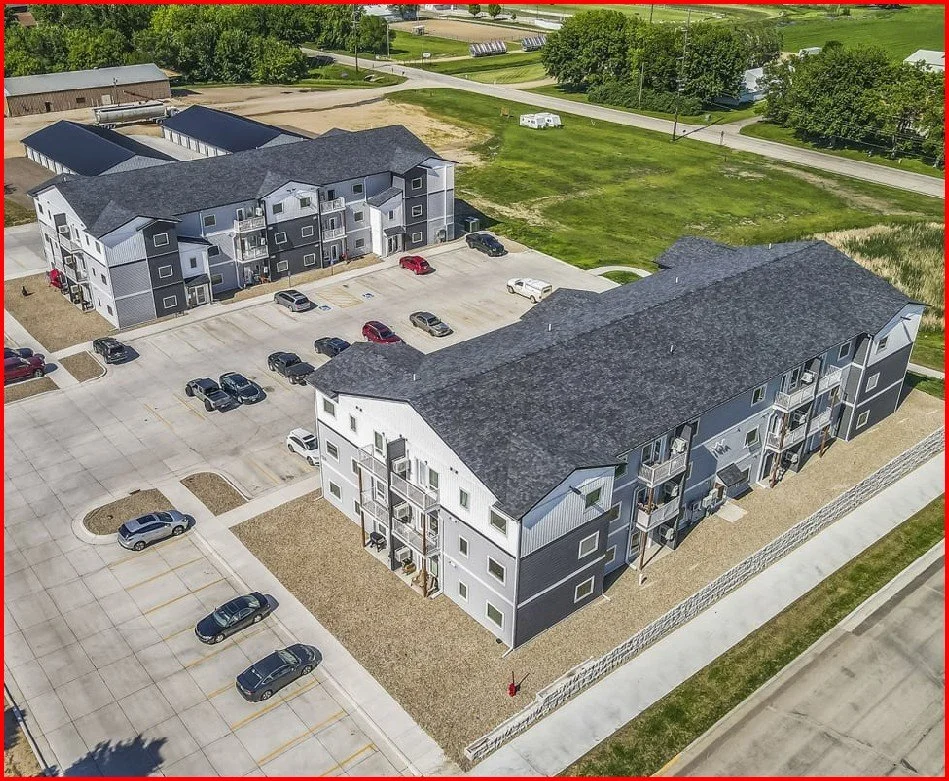
According to the project's published performance data, PrairiE Lofts tested at an average of 1.35 ACH50 on blower door testing, a strong airtightness result, and achieved a HERS Index that qualified the project for the federal 45L energy efficiency tax credit. The project targeted EnergyStar, Indoor AirPlus, and Zero Energy Ready Home certification, and each unit uses a balanced ERV to manage fresh air without sacrificing efficiency. The project went on to win the Structural Insulated Panel Association's (SIPA) 2023 Building Excellence Award for Best Overall Non-Residential project.
This is the kind of result build-to-hold developers should be looking for: a documented, third-party verified example of low air leakage, energy performance strong enough to qualify for a federal tax credit, and a project built specifically as affordable rental housing, not a custom home.
Thinking about SIPs for your next rental project? Every build-to-hold project is different. Unit mix, climate, financing structure, and how long you plan to hold the asset all change the math. Talk to Joe Pasma, PE for an independent SIP project review with no manufacturer affiliation, so you get a straight answer before you commit to a building method.
Time is money on any construction project, but it hits small developers harder because there is less margin to absorb delays. Panelized SIP construction is fabricated off site and arrives ready to set, which can shorten framing and dry-in time significantly. Premier SIPS reports installation up to 55 percent faster than comparable stick framing.
A shorter schedule means less interest paid on construction financing, fewer weather-related delays, and an earlier move to lease-up. For a developer self-funding or carrying debt on a project, that schedule compression is real money, not just a nice-to-have.
Before you run the numbers on a build-to-hold project, see how SIP construction costs compare to stick framing, where the upfront premium shows up, and where it pays you back over time.
Read the SIP Cost GuideBuild-to-hold ownership means you are still on the hook for this building well past the warranty period. That is where envelope quality really pays off. A well-built SIP structure avoids the failure modes that tend to show up down the road: hidden moisture intrusion, mold behind drywall, thermal bridging that stresses HVAC systems, and pest pathways that go unnoticed for years. None of that is unique to SIPs specifically, poor detailing can create problems in any assembly, but a well-detailed SIP envelope gives you fewer places for those problems to start. That means fewer surprise capital expenditures and a building that holds its value better.
SIPs are not a marketing gimmick, they are a genuine operational strategy for anyone planning to own rental housing long term. Lower maintenance, lower utility costs, quieter and more comfortable units, faster construction, and a building that ages well: those are not separate benefits, they are all downstream of the same decision to build a tighter, better-detailed envelope from the start.
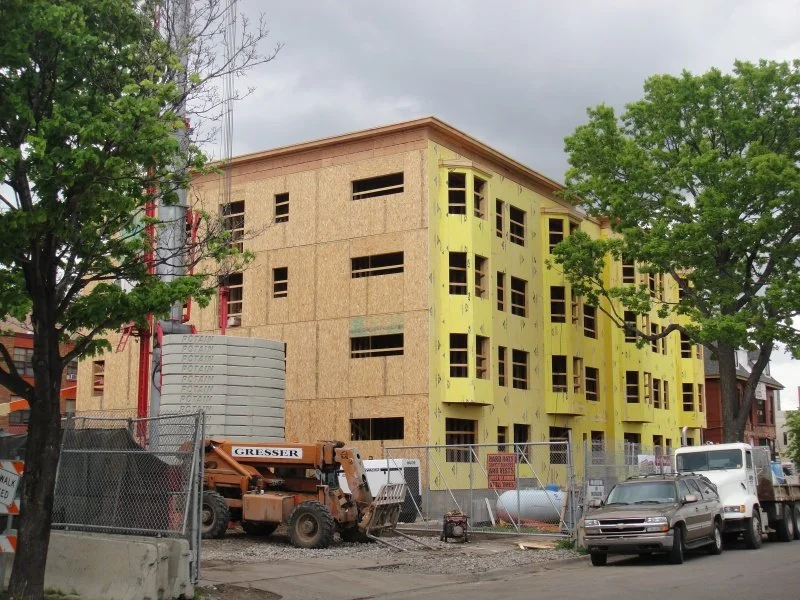
If your goal is a rental property that costs less to run, keeps tenants renewing, and does not surprise you with capital repairs 15 years in, SIPs deserve a serious look before you finalize your building method.
SIPs create a tighter, more consistent building envelope than typical stick framing. That means less air leakage, fewer places for moisture and pests to get in, and lower heating and cooling costs. For a developer who plans to own and operate a property for decades rather than sell it, that translates into more predictable maintenance budgets and stronger net operating income (NOI) over time.
Most rental maintenance problems trace back to the building envelope: drafts, moisture intrusion, and thermal weak spots. SIPs are built as solid, pre-insulated panels with no open wall cavities, which removes a lot of the hidden pathways where moisture, mold, and pests typically get a foothold. Owners still need to budget for normal upkeep like filters and mechanical systems, but envelope-related callbacks tend to be far less frequent.
Independent research cited by SIP manufacturers, including analysis referencing Oak Ridge National Laboratory's Building America program, has found SIP-built homes use roughly 40 to 60 percent less energy than comparable code-built homes. Actual results depend on climate, building design, mechanical systems, and how the envelope is detailed, so any specific project should be evaluated on its own performance data rather than assumed.
Yes, generally. A tighter envelope reduces outside noise and sound transfer, and it removes many of the drafts and hot or cold spots that come from air leakage. Paired with balanced mechanical ventilation, this also tends to improve indoor air quality. Renters usually cannot explain why a unit feels more comfortable, they just notice that it does and they don’t want to leave.
SIP manufacturer Premier SIPS reports that panelized construction can install up to 55 percent faster than traditional stick framing, since panels arrive pre-cut and pre-insulated for assembly rather than being built piece by piece on site. Faster dry-in reduces exposure to weather delays and shortens the time a developer is paying interest on construction financing before a property starts generating rent.
Yes. PrairiE Lofts, a 54-unit workforce housing development in Luverne, Minnesota, was built using SIPs and achieved a blower door test result of 1.35 ACH50, along with a HERS Index that qualified the project for the federal 45L energy efficiency tax credit. The project targeted EnergyStar, Indoor AirPlus, and Zero Energy Ready Home certification and won SIPA's 2023 Building Excellence Award for Best Overall Non-Residential project.
PGS Consulting LLC collaborates with consultants that provide High-Performance Multi-family Development Consulting. PGS Consulting LLC also provides independent SIP structural engineering, project review, and forensic assessment, backed by 40+ years of engineering, manufacturing, and installation oversight experience.
Talk to Joe Pasma, PE
Structural Insulated Panels are code-recognized, but that doesn't mean every SIP project can skip an engineer. Joe Pasma, PE breaks down exactly where the IRC's prescriptive tables stop working, what actually triggers engineered design, and what an ICC-ES ESR does and doesn't prove about your building.
By Joe Pasma, P.E. | PGS Consulting LLC | SIP Engineering & Consulting | Published August 6, 2026
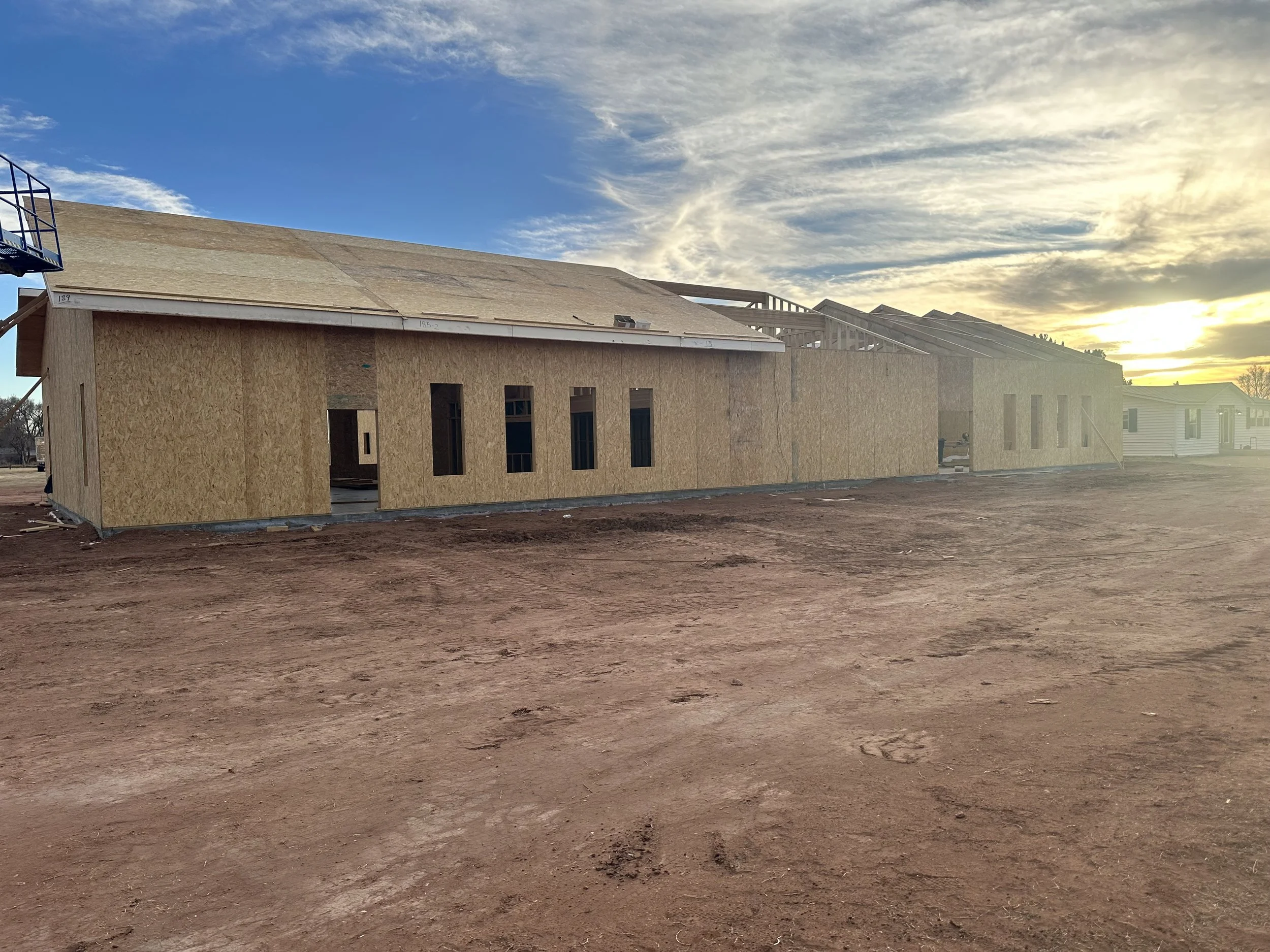
Every SIP project falls into one of two paths: prescriptive (built off pre-approved parameters) or engineered (designed by a licensed engineer).
IRC Section R610 sets the prescriptive path for SIP walls, but it only covers simple, low-risk homes within specific limits on size, height, wind, snow, and seismic zone. It does not include SIP roofs.
Exceed even one of those limits and the project needs an engineer. Taller walls, longer spans, higher wind, more snow, tougher seismic zones, unusual shapes, and SIP roofs are the most common triggers.
An ICC-ES ESR or third-party evaluation report proves the SIP panels themselves were tested, meet code and provide material capacity tables. It does not prove your specific home meets code, and it does not replace engineering.
Some cities, including parts of Florida, Los Angeles, and Chicago, require extra approvals on top of the base ESR.
Mixing SIPs with wood or steel framing is allowed, but the connections between materials almost always require engineering.
Structural Insulated Panels (SIPs) are fully recognized in the International Residential Code (IRC) for wall applications, but the way a SIP project gets approved is different from a stick-framed house, and that difference is where most of the confusion starts. Builders, designers, and even building officials ask some version of the same question: is this project simple enough to use the prescriptive tables, or does it need an engineered design?
The answer affects cost, schedule, and whether your building official accepts the plans on the first review. This explanation comes from an independent engineer, not a manufacturer, so we can talk plainly about where the limits actually are.
Every SIP project follows one of two approval paths.
Prescriptive design (IRC Section R610). Think of this as a recipe. If the project stays inside the limits set by IRC R610, a builder can follow the tables without hiring an engineer. It’s important to remember that the IRC only applies to one and two family dwelling wall applications. Most other SIP framed buildings fall under the requirements of the IBC.
Engineered design (IBC or IRC R301.1.3). Think of this as hiring the chef. Any time a project goes beyond the prescriptive limits, a licensed engineer may be required to design the structural system.
Most builders do not know these two paths exist, and even fewer know exactly where the prescriptive path stops. That is the part that causes permitting delays.
IRC R610 only applies to simple, low-risk residential SIP home walls. Once a project goes past any one of the limits below, the prescriptive tables no longer apply and engineered design takes over.
← Swipe to view full table →
| Requirement | Prescriptive Limit (2021/2024 IRC) |
|---|---|
| Max building length | 60 ft, measured perpendicular to the joist or truss span |
| Max building width | 40 ft, measured parallel to the joist or truss span |
| Max stories | 2 |
| Max bearing wall height | 10 ft |
| Max story height | 11 ft 7 in |
| Wind speed | 155 mph (Exposure B) or 140 mph (Exposure C) |
| Ground snow load | 70 psf or less |
| Seismic Design Category | A, B, or C only |
| Roof dead load | Typically 10 psf or less |
| Roof live load | 70 psf or less |
| Ceiling dead load | 5 psf or less |
| Ceiling live load | 20 psf or less |
If a project goes over even one of these numbers, the prescriptive tables stop applying and the project moves to engineered design.
Even a small house can end up needing engineering, depending on where it sits and how it is laid out. The most common triggers we see in the field:
High wind zones. Required design wind parameters exceed what the prescriptive recipe covers.
High snow loads. Design snow loads exceed the live load limits.
Seismic Design Category D, E, or F. Prescriptive design limits the use to Seismic Design Categories A, B, and C.
Irregular layouts. Offsets, jogs, cantilevers, or a non-rectangular footprint.
Large openings. Window and door layouts that break the prescriptive header span and load rules.
Mixed materials. SIPs combined with steel or wood mean engineered connections.
Tall walls. Anything above the 10 ft bearing height limit.
SIP Roof. SIP roofs are not included in the prescriptive recipe.
This is where the recipe-versus-chef comparison becomes real. Prescriptive tables work for standard houses. Engineering is required for anything outside that box, and two SIP homes that look nearly identical can land on opposite sides of that line because of wind exposure, snow load, a slightly taller wall or the inclusion of a SIP roof.
A code-listed panel does not make the whole project exempt from engineering. Manufacturers rarely say that out loud. In 40+ years of SIP work, the most expensive surprises I've seen came from builders who assumed a manufacturer's evaluation report covered the whole building. It only covers the panels.
-- Joe Pasma, PEMost SIP manufacturers advertise that their panels are "code-listed." What they mean is that they hold an ICC-ES Evaluation Service Report (ESR) confirming their panels meet the AC04 testing requirements. AC04 is simply the testing standard that ICC-ES has developed to check a SIP panel's strength, fire performance, and manufacturing quality against code requirements.
In plain language, here is what that ESR does and does not do:
An ESR is third-party verification that a manufacturer's SIPs comply with the IRC and IBC.
It does not approve your project.
It does not replace engineering.
It does not guarantee prescriptive compliance.
It does give your building official confidence that the buildings panel configuration themselves meet code.
This is the single most misunderstood concept in SIP permitting. A “code-listed” panel does not make the whole project exempt from engineering, and knowing that up front saves builders from a stalled permit later.
ICC-ES is not the only recognized evaluation body for SIPs. PFS TECO, IAPMO UES, DrJ Engineering, and CCMC (for Canadian projects) all issue comparable reports. For the full rundown on evaluation reports, what they cover, and when sealed engineering is required, see our SIP Building Codes and Compliance guide.
Some jurisdictions require supplemental evaluation reports beyond the base evaluation report. If a manufacturer does not have the required supplement, the building official can reject the submittal even when the base evaluation report is perfectly valid.
← Swipe to view full table →
| Location | Extra Requirement |
|---|---|
| Florida (FBC) | High-Velocity Hurricane Zone (HVHZ) testing and additional product approvals |
| Los Angeles (LARR) | City-specific structural review |
| Chicago | Supplemental documentation for foam plastics |
For more on how wind, snow, and seismic zones change what an AHJ expects to see, our Regional Code Requirements section of the SIP Building Codes & Compliance page covers it region by region.
Hybrid projects are allowed, but each material has to follow its own section of the code.
← Swipe to view full table →
| Material | Governing IRC Section |
|---|---|
| SIPs - walls | R610 |
| Wood framing | R602 |
| Cold-formed steel framing | R603 |
| General masonry | R606 |
| ICF | R608 |
The connections between materials, not the materials themselves, are almost always what pull a "simple" SIP project into engineered design. If your project mixes SIPs with another framing type, including SIP roofs, plan on having the connections designed by an engineer from the start. Our SIP Installation Guide covers connection sequencing in more detail.
A SIP project needs engineering when any of the following are true:
It exceeds any of the prescriptive limits above
It's in a high-risk region for wind, snow, or seismic activity
It has a complex or irregular shape
It mixes SIPs with another structural material
The building official asks for engineering
The manufacturer's tables simply don't cover your configuration
SIP roofs are included
Engineering is not a burden here. It's what lets SIPs perform safely once a project is outside the narrow prescriptive envelope IRC R610 was written for.
If your project matches any of these, it's worth a conversation before you're locked into plans. Schedule a consultation with Joe Pasma, P.E., and find out whether your SIP project needs engineering before your building official tells you the hard way.
The prescriptive path exists for a reason: it keeps simple SIP homes simple. But the moment a project gets taller, wider, heavier, windier, snowier, or more complex than the IRC limitations outline, or include a SIP roof, engineered design becomes mandatory. And an ICC-ES ESR or third-party evaluation report doesn't change that. It proves the panels are legitimate. It doesn't prove the building is.
Yes. SIP walls are fully recognized in the IRC (Section R610) and SIP walls and roofs in the IBC as a structural system. Compliance happens at the project level, not just the product level: the panels can be “code-listed” while the building still has to meet structural, fire, and energy requirements. See our SIP Building Codes and Compliance guide for the full picture.
You can use the IRC R610 tables only if your project stays inside the limits for walls only, size, wind, snow, seismic zone, and layout. Go past any one of those limits and the home moves into engineered design. See the full list of prescriptive limits above.
An ICC-ES Evaluation Service Report (ESR) is a third-party document confirming that a manufacturer's SIPs meet the code requirements and are recognized under the IRC and IBC. Building officials ask for it because it verifies the product, not the project. It does not replace engineering. See how evaluation reports work for more detail.
Two SIP homes can look almost identical and still land on opposite sides of the prescriptive limits because of differences in wind exposure, snow load, seismic zone, wall height, span layout, mixed materials, large openings, or the use of SIP roofs. Small changes in site or geometry can push one project into engineered design while a nearly identical one stays prescriptive. See the common engineering triggers above for examples.
Key IRC R610 limits include a 10 ft max bearing wall height, an 11 ft 7 in max story height, a 40 ft max building width, a 60 ft max building length, wind speeds up to 155 mph (Exposure B), snow loads up to 70 psf, and Seismic Design Categories A through C only. Exceeding any of these requires engineered design. See the full prescriptive limits table above.
It is important to note that the prescriptive requirements only apply to IRC applications. The IRC is applicable to one and two family dwellings. All other structures fall under the requirements of the IBC.
Yes. High-wind and seismic regions often push even small homes past the prescriptive limits. SIP roof diaphragms, shear walls, and uplift connections typically need engineered detailing in coastal wind zones, mountain snow regions, and Seismic Design Categories D, E, and F. Our regional code requirements guide breaks this down by region.
Yes. Hybrid construction is allowed, but each material has to follow its own code section (R610 for SIPs, R602 for wood, R603 for cold formed steel), and the connections between materials usually require engineering. See the mixed construction section above for the code sections involved.
Yes. ESRs are manufacturer-specific, not industry-wide. Each SIP producer has to test its own panels and get its own report. Some jurisdictions, including Florida, Los Angeles, and Chicago, also require regional supplements on top of that. See our SIP Manufacturers guide for how to check a specific manufacturer's report.
SIP Building Codes and Compliance -- The full guide to evaluation reports, fire ratings, regional requirements, and permitting packages
SIP Manufacturers-- A verified list of active SIP manufacturers and how to check their code reports
SIP Installation Guide -- Connection sequencing and detailing for SIP and mixed-material projects
SIP FAQ -- Quick answers to the most common SIP construction questions
PGS Consulting LLC provides independent SIP engineering review, from a quick prescriptive-versus-engineered gut check to full project-specific design, backed by 40+ years of engineering, manufacturing, and forensic experience.
Talk to Joe Pasma, PE
A residential SIP fire produced three very different outcomes depending on exposure: total loss, partial damage, and no structural loss at all. Here's what determined the difference — and what builders, insurers, and adjusters should take from it.
Written and Analyzed By Joe Pasma, PE | PGS Consulting LLC, Licensed Professional Engineer | 40+ Years in SIP Engineering, Manufacturing, and Forensic Analysis | Published July 30, 2026 | Updated October 9, 2026
If you have ever wondered what actually happens to a Structural Insulated Panel in a house fire, the honest answer is: it depends entirely on how close the panel was to the flames. This case study walks through an actual residential fire in Cottonwood MN, and breaks the outcome into three zones so you can see exactly how distance and heat exposure change the result.
A garage fire spread and became fully involved before it could be safely fought from the inside. That fire compromised the SIP wall panels and the truss framed roof in the garage itself, affected some SIP panels where the garage met the home, and sent smoke into a vaulted SIP roof space in the home that never got hot at all. Three zones, three very different outcomes, all from the same event.
That spread of results is the whole point of this case study. It gives builders, designers, insurers, and anyone doing forensic work a clear, real-world picture of how SIPs actually behave in fire, instead of a vague yes-or-no answer to "are SIPs safe."
Note: This scenario is a specific example of a SIP home occupied by homeowners for many years after the SIP installations were completed. The material behavior, damage thresholds, and construction details described are representative of what we documented in the field and are recurring patterns across multiple SIP fire investigations.
| Detail | Summary |
|---|---|
| Project Type | Residential SIP home with an attached SIP garage |
| Construction | SIP home built in the mid-1990s, plus a SIP garage addition from a different manufacturer, joined by a stick-framed common wall |
| Fire Origin | Garage fire, fully involved before firefighters could safely enter |
| Exposure Zones Studied | Full flame involvement, localized high heat, and smoke-only |
| Outcome | Garage SIPs: total loss. Interface SIPs: partial loss, replaced. Attic SIPs: no structural loss, cleaned only |
SIPs did not fail uniformly in this fire. The outcome depended entirely on exposure: full flame contact caused total loss, localized high heat caused partial loss, and smoke alone caused no structural loss at all.
No building system, not SIPs, not stick framing, not ICF, not mass timber, is designed to survive a fully involved structure fire. The garage's total loss reflects normal fire behavior, not a defect in SIP construction.
Smoke and soot do not damage the structural integrity of a SIP. Panels that were only exposed to smoke needed cleaning, not replacement.
Small construction details made a real difference. Missing fascia that left foam edges exposed, and a roof design that trapped heat against the panels, both made the damage worse than it needed to be.
An open attic ladder gave smoke a direct path into the home's vaulted space, which is why smoke reached an area far from the actual fire.
Telling heat damage apart from smoke damage is critical for an accurate insurance claim. Confusing the two leads to either unnecessary panel replacement or missed structural damage.
Builders and designers can reduce fire risk to SIPs with a few specific choices: protect exposed foam edges, avoid roof details that trap heat against panels, and control how smoke can travel through open spaces like attic ladders.
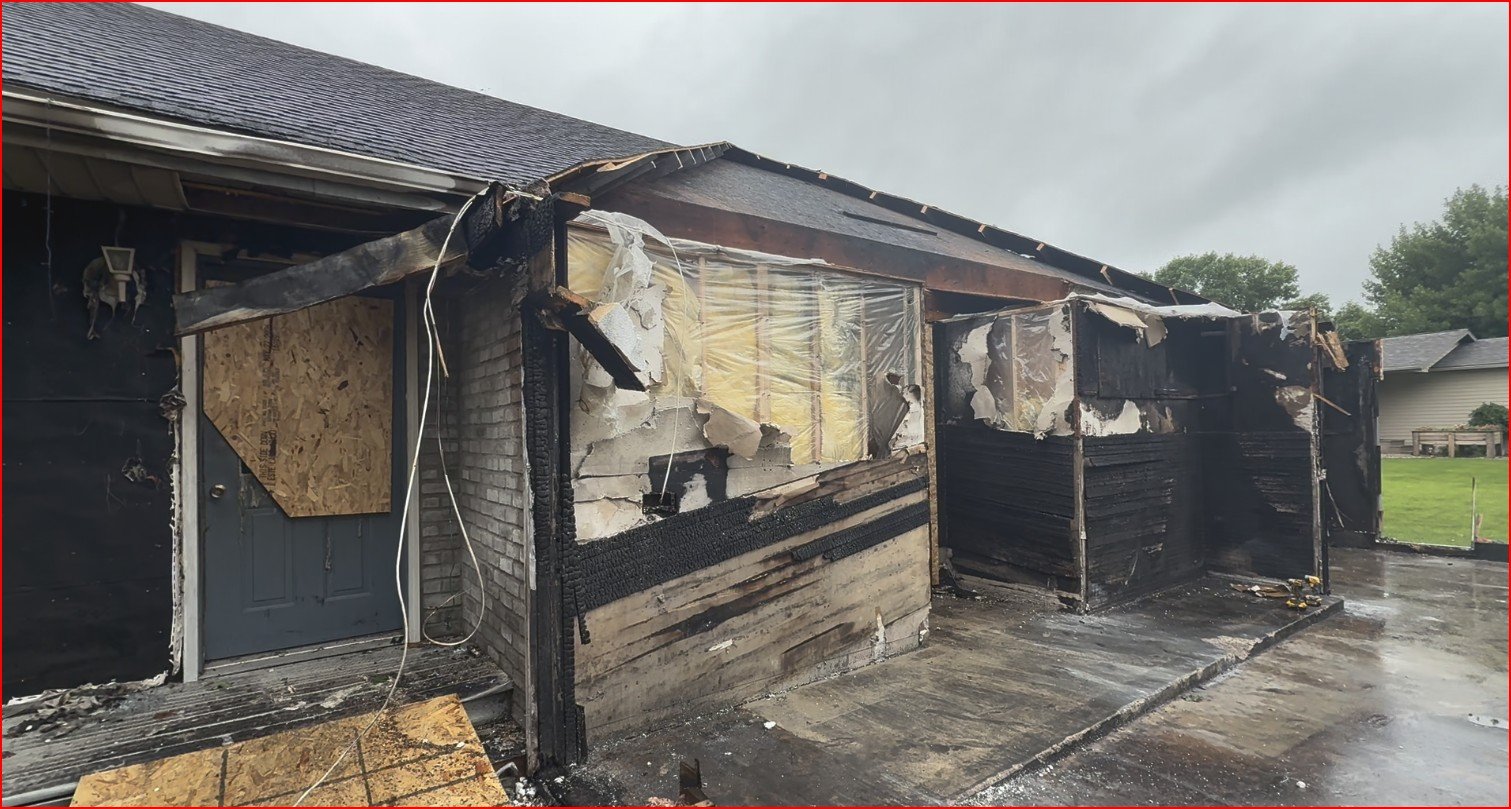
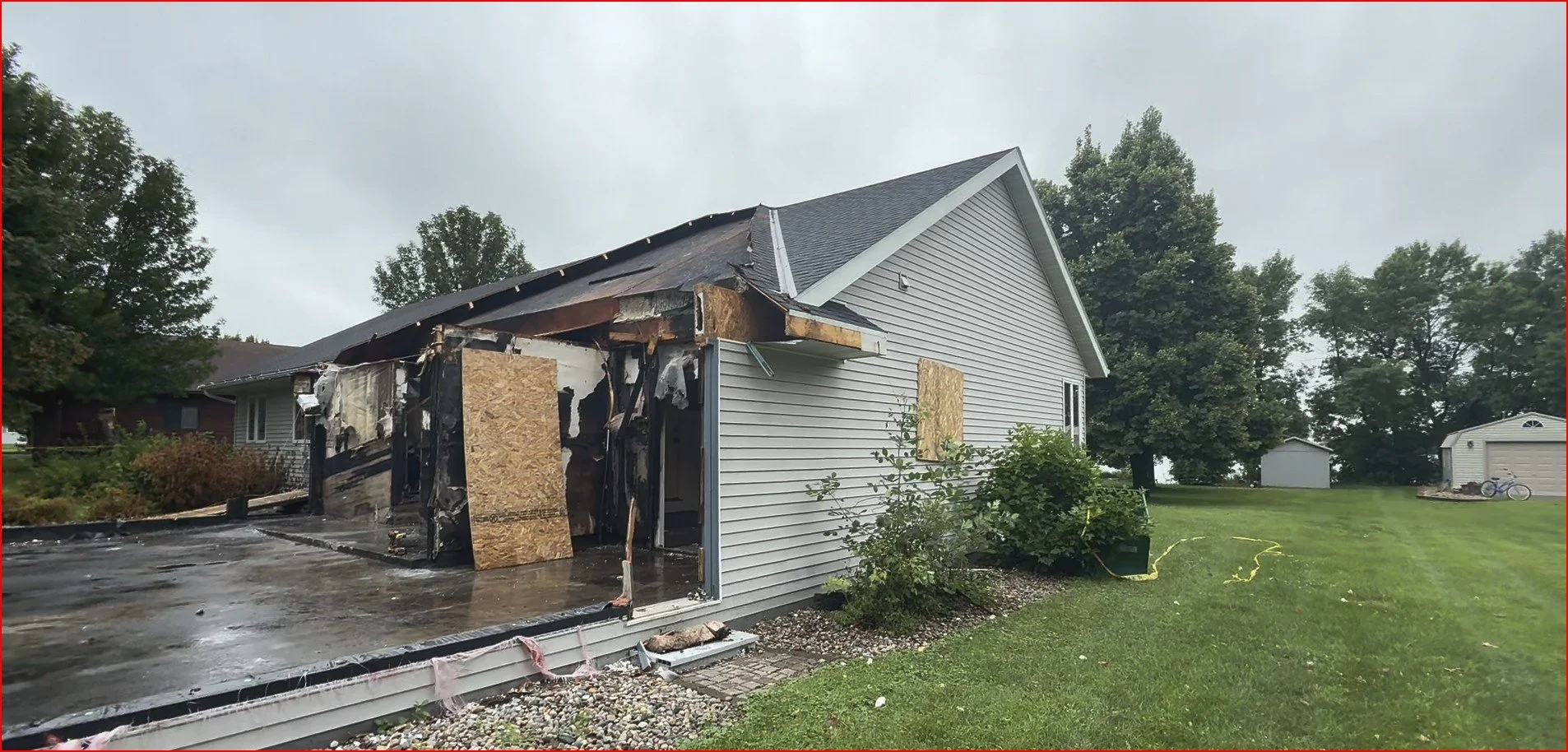
A Structural Insulated Panel is a sandwich: two rigid facers, almost always OSB (oriented strand board) in the US, glued to a foam core, almost always EPS (expanded polystyrene) in the US. The strength of the panel comes from all three layers working together. That matters here because it explains why SIP fire performance is not one simple story. It is a story about what happens to each layer at different temperatures.
Under sustained direct flame, the EPS core melts. The OSB facers char on the surface first, similar to how heavy timber chars while staying solid underneath, but under prolonged heat that char layer is eventually consumed. Once the foam has melted and the OSB is compromised, the panel loses what is called composite action, meaning the layers no longer work together structurally. For a broader explanation of how SIPs handle fire and what the building code requires, see our full breakdown: Are SIPs Combustible? Performance, Codes, and What Actually Keeps You Safe.
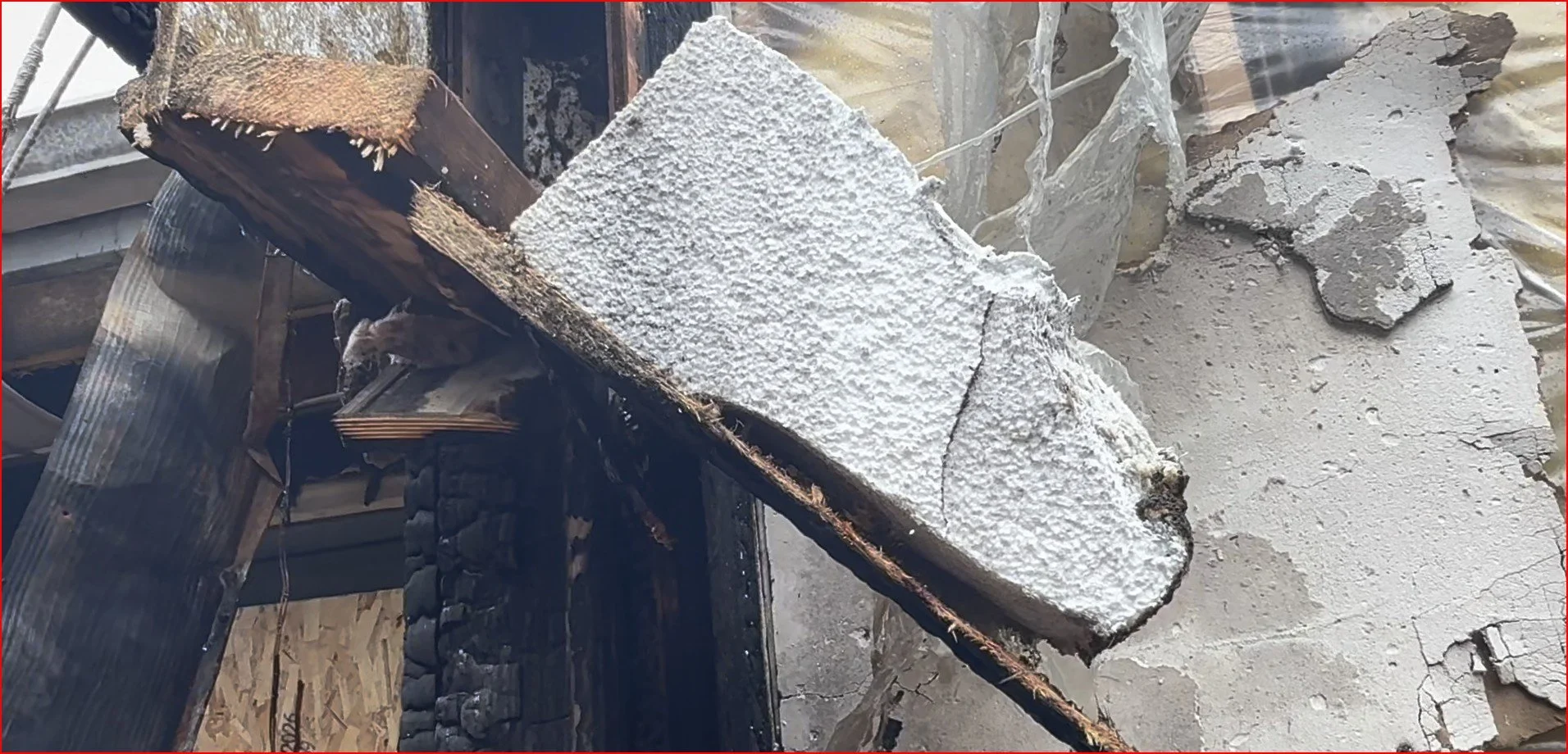
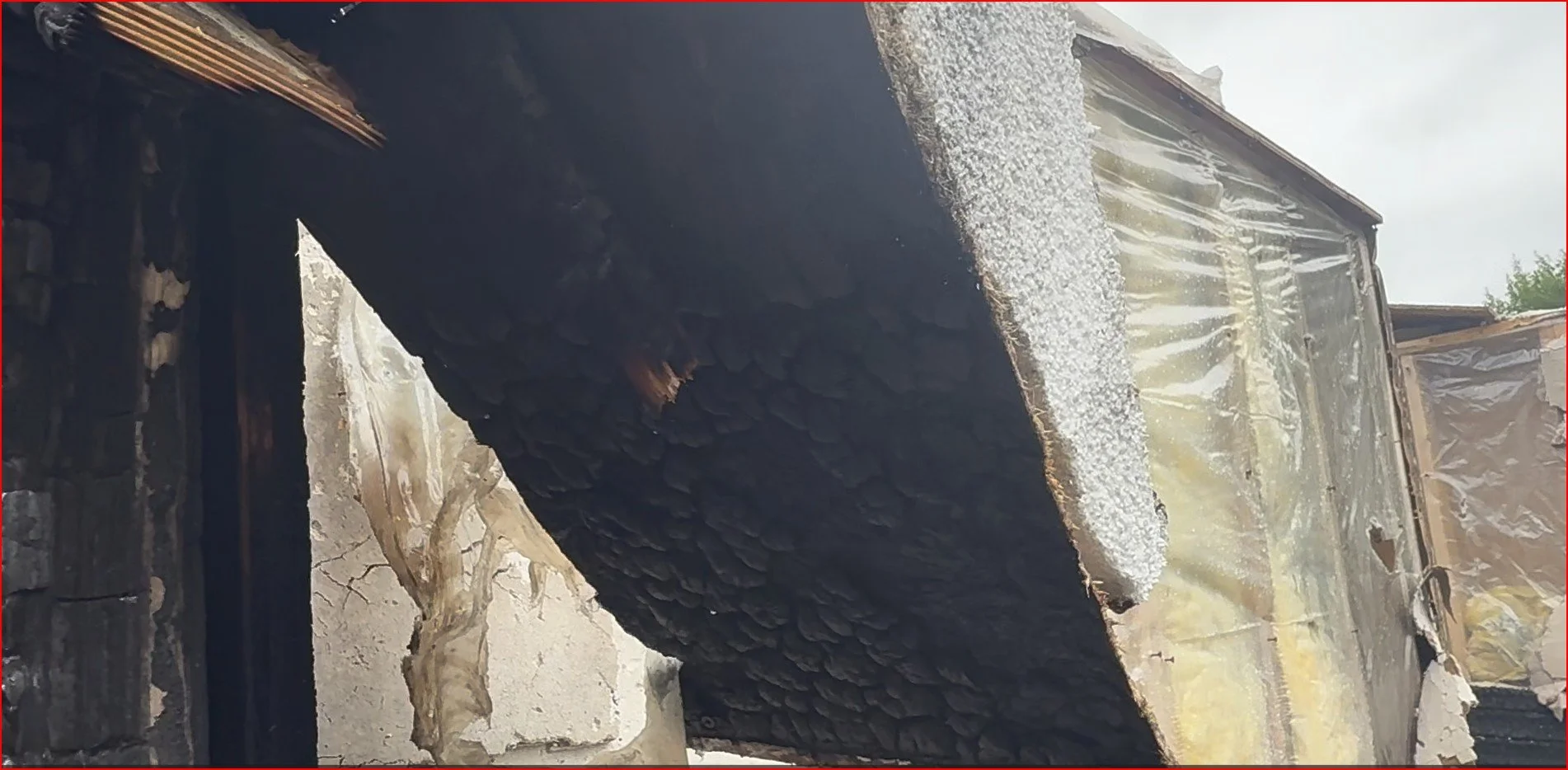
EPS foam begins to lose structural integrity above roughly 180°F and fully melts under sustained flame. OSB behaves differently: under moderate, contained heat it forms a protective char layer, but that protection is eventually consumed once flame exposure continues long enough. Those two thresholds, not one single "ignition point," are what actually determine how much of a panel survives a given fire.
The home in this case had a fairly common layout for SIP construction: a SIP-built house (walls and roof) from the mid-1990s, and a garage, added later, with SIP wall panels by a different manufacturer and a truss framed roof. The two structures were connected by a stick-framed common wall, and the roof where the garage met the home was "over-framed," meaning a small framed cavity was built over the SIP roof connection. The home also had a vaulted SIP roof space above the living area, reachable through an attic ladder.
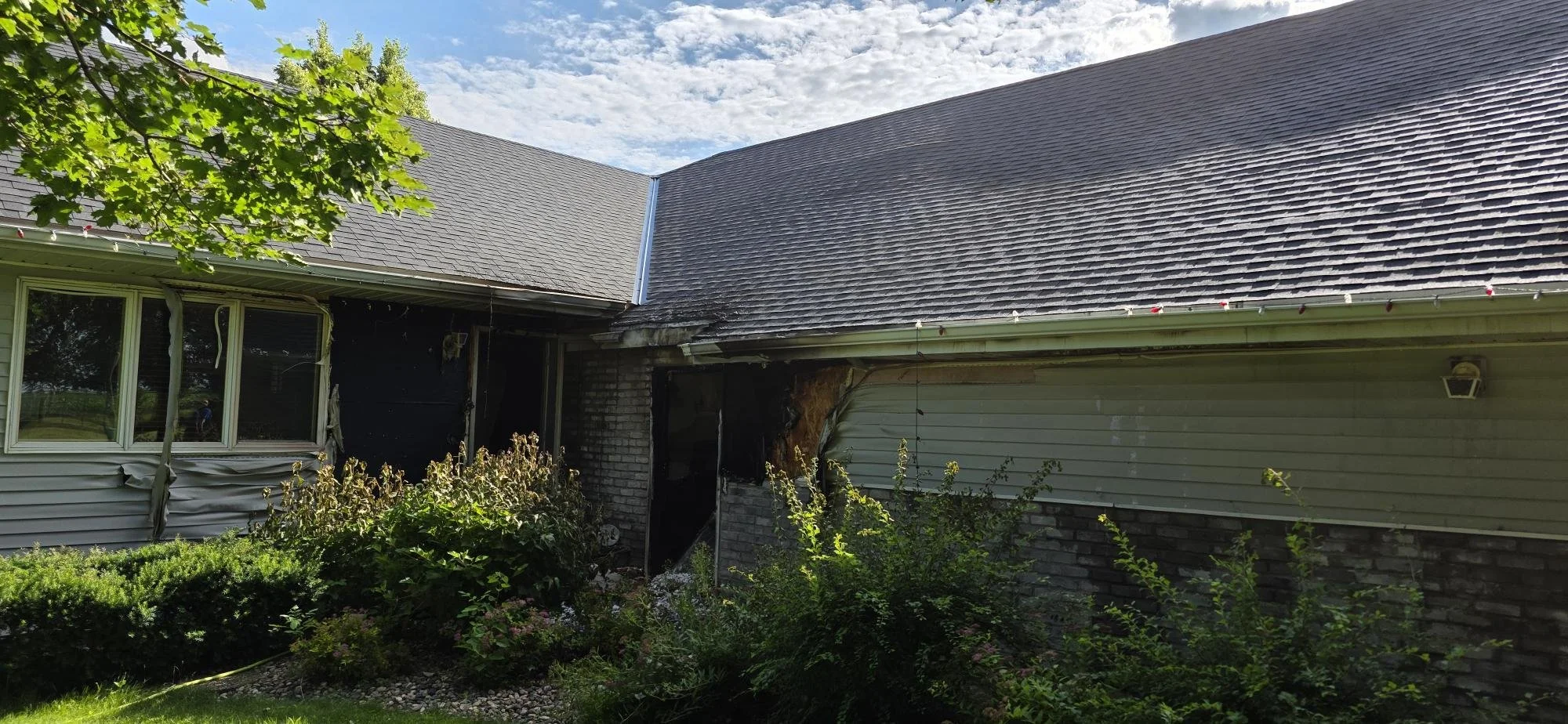
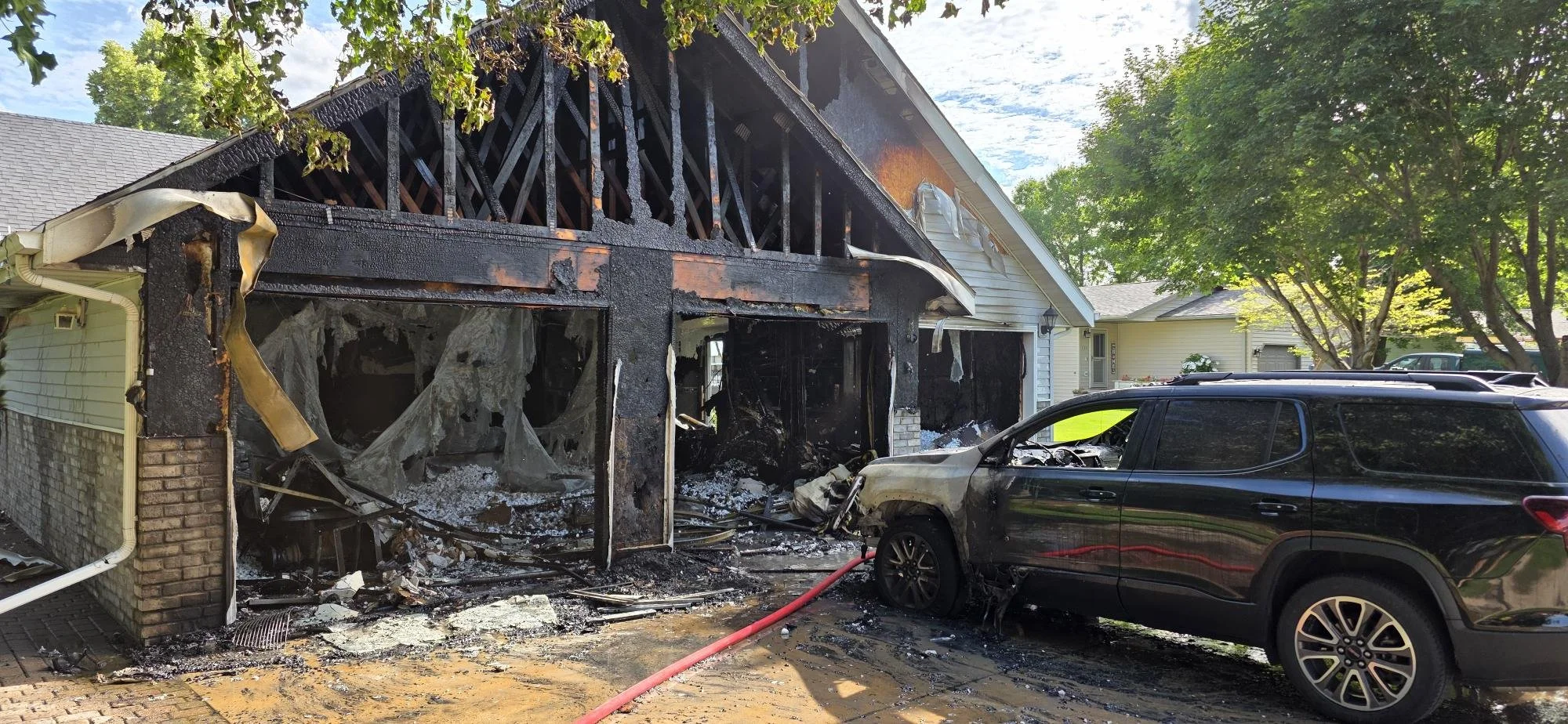
When the garage fire started, it grew quickly and became fully involved, meaning the entire structure was burning and firefighters could not safely enter to fight it from the inside. That fire directly hit the garage's SIP wall panels along with the truss framed roof, and also reached the SIP roof panels of the home right where the two structures connected. At the same time, heavy smoke worked its way into the home's vaulted roof space, helped along by that open attic ladder acting as a direct pathway.
A few construction details shaped how the damage played out. Fascia trim was missing at the roof edge in one area, which left the EPS foam exposed instead of protected. The over-framed roof connection created a small cavity that trapped heat right where the two SIP systems met.
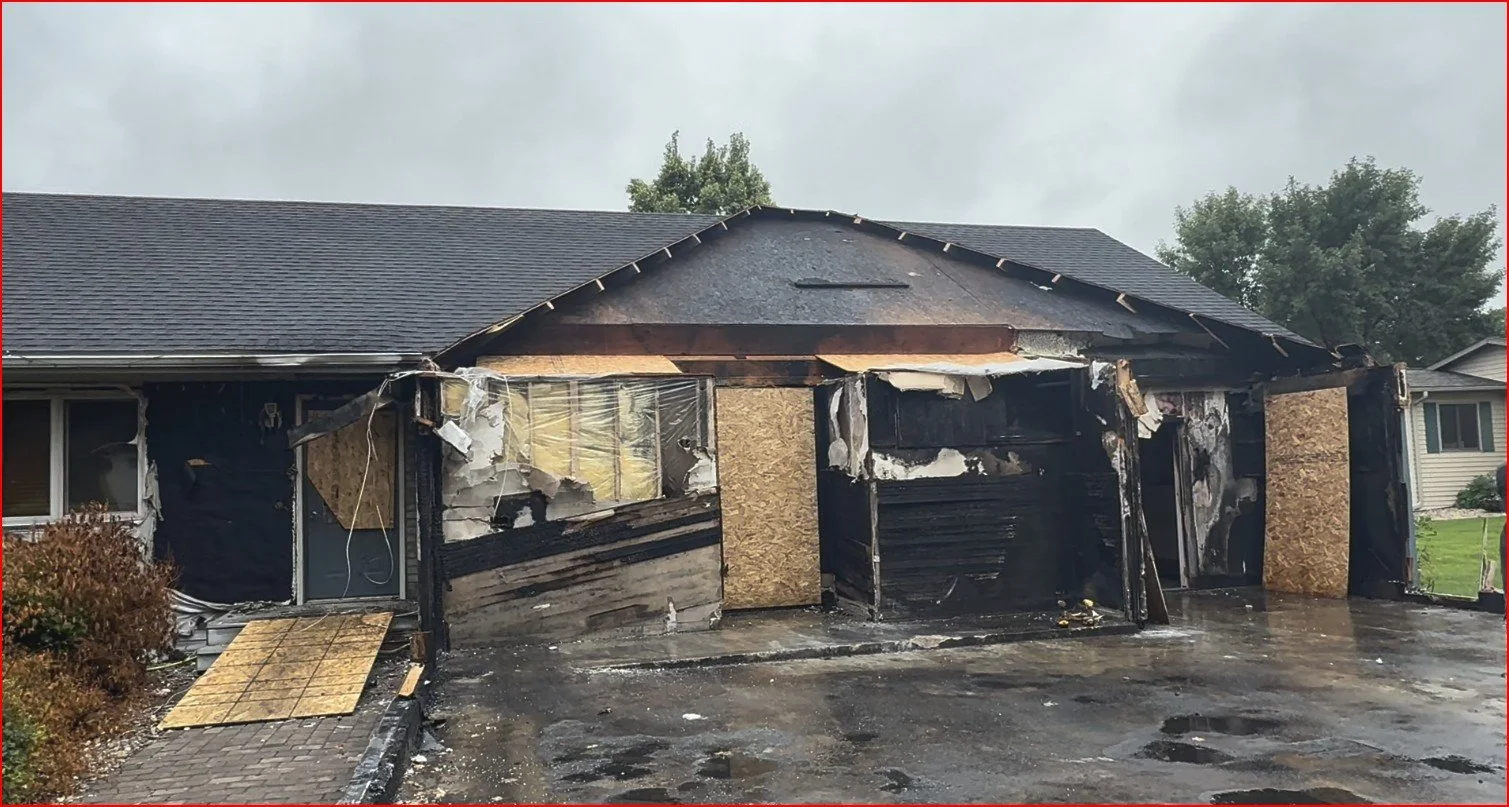
| Zone | Exposure | EPS Response | OSB Response | Outcome |
|---|---|---|---|---|
| Zone 1 | Full flame involvement | Complete melt-out | Char consumed, material lost | Total loss, panel failure |
| Zone 2 | Localized high heat | Melt-back at the facer | Surface char formed | Partial loss, panels replaced |
| Zone 3 | Smoke only | No degradation | No discoloration | No structural loss, cleaned only |
The garage roof and wall panels took the worst of it. Once the structure was fully involved, those panels were exposed to sustained flame and temperatures well beyond what EPS or OSB can handle.
What happens to a SIP under that kind of exposure:
The EPS core fully melts. Above its structural limit, the foam loses shape and melts out under sustained flame.
The OSB burns past its char layer. Moderate heat produces a protective char, but prolonged flame consumes the wood material underneath it.
Composite action is lost. Once the foam is gone and the OSB is compromised, the panel no longer behaves as a structural sandwich.
The panel fails. SIPs, like every other building material, are not engineered to remain structurally intact under full involvement.
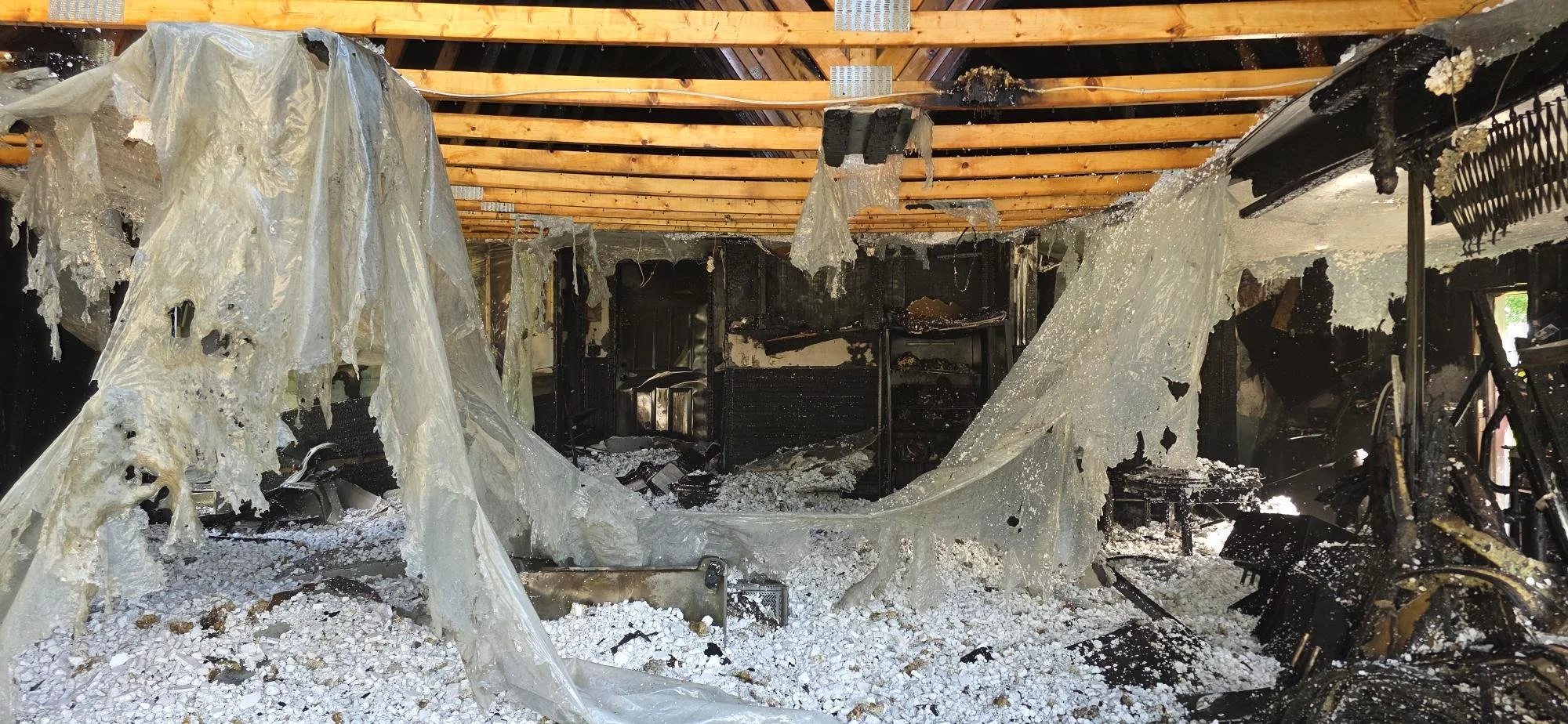
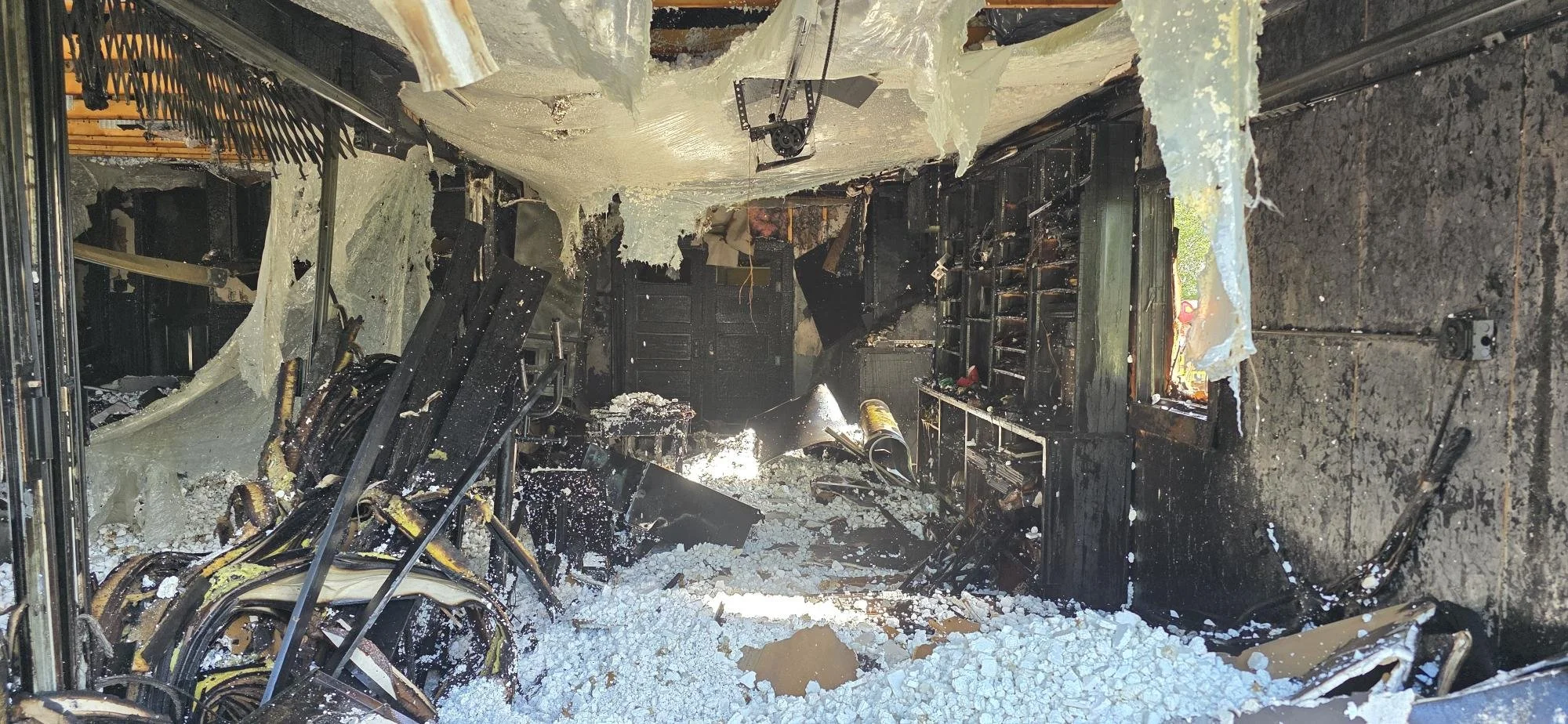
In 40+ years of SIP forensic work, full involvement fires are the one scenario I never expect a panel to survive intact, and I would say the same thing about stick framing, ICF, or mass timber. That is not a knock on any of these systems. It is just what fire does once suppression is not possible.
-- Joe Pasma, PEThe panels right at the home-garage connection tell a different story. These panels were close enough to feel serious heat, but they were not sitting inside a fully involved structure. The result was damage, but not total failure.
What was found in this zone:
EPS melt-back. The foam retreated from the facer in the areas closest to the heat source, rather than melting out completely.
OSB char formation. The wood facers charred on the surface, the expected first response to heat.
Surface charring on an adjacent LVL header. The engineered wood beam supporting that section also showed heat exposure.
Loss of composite action where the foam retreated. Wherever the EPS pulled away from the OSB, the panel's structural sandwich behavior broke down in that specific area.
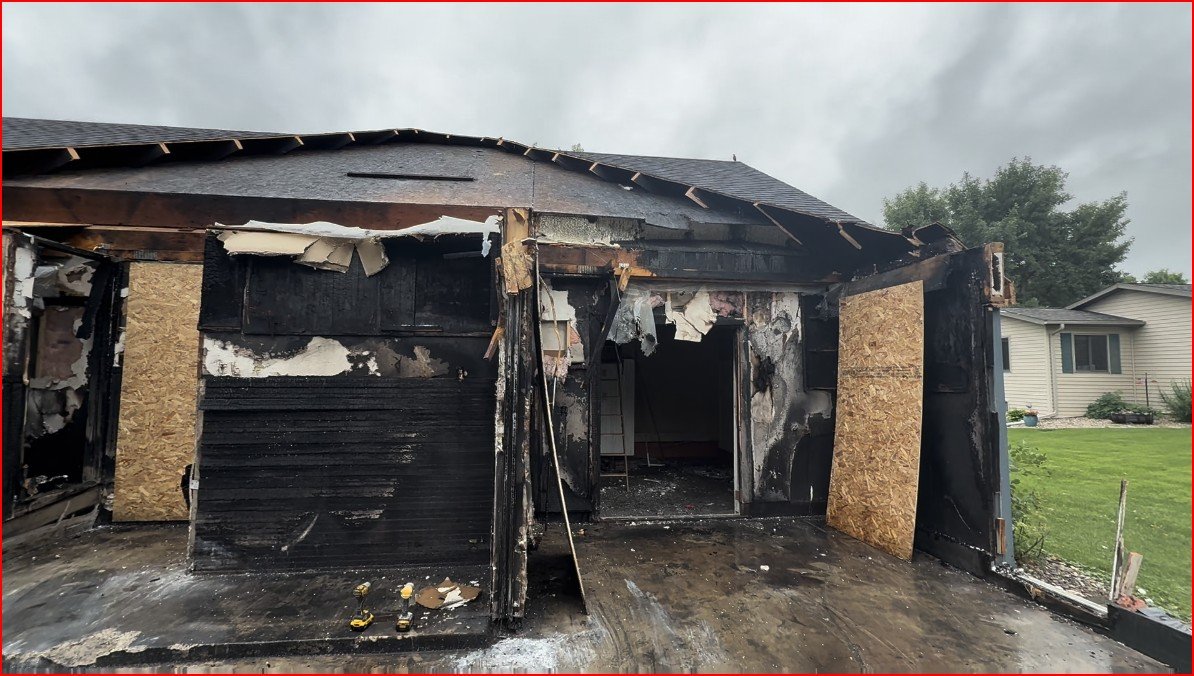
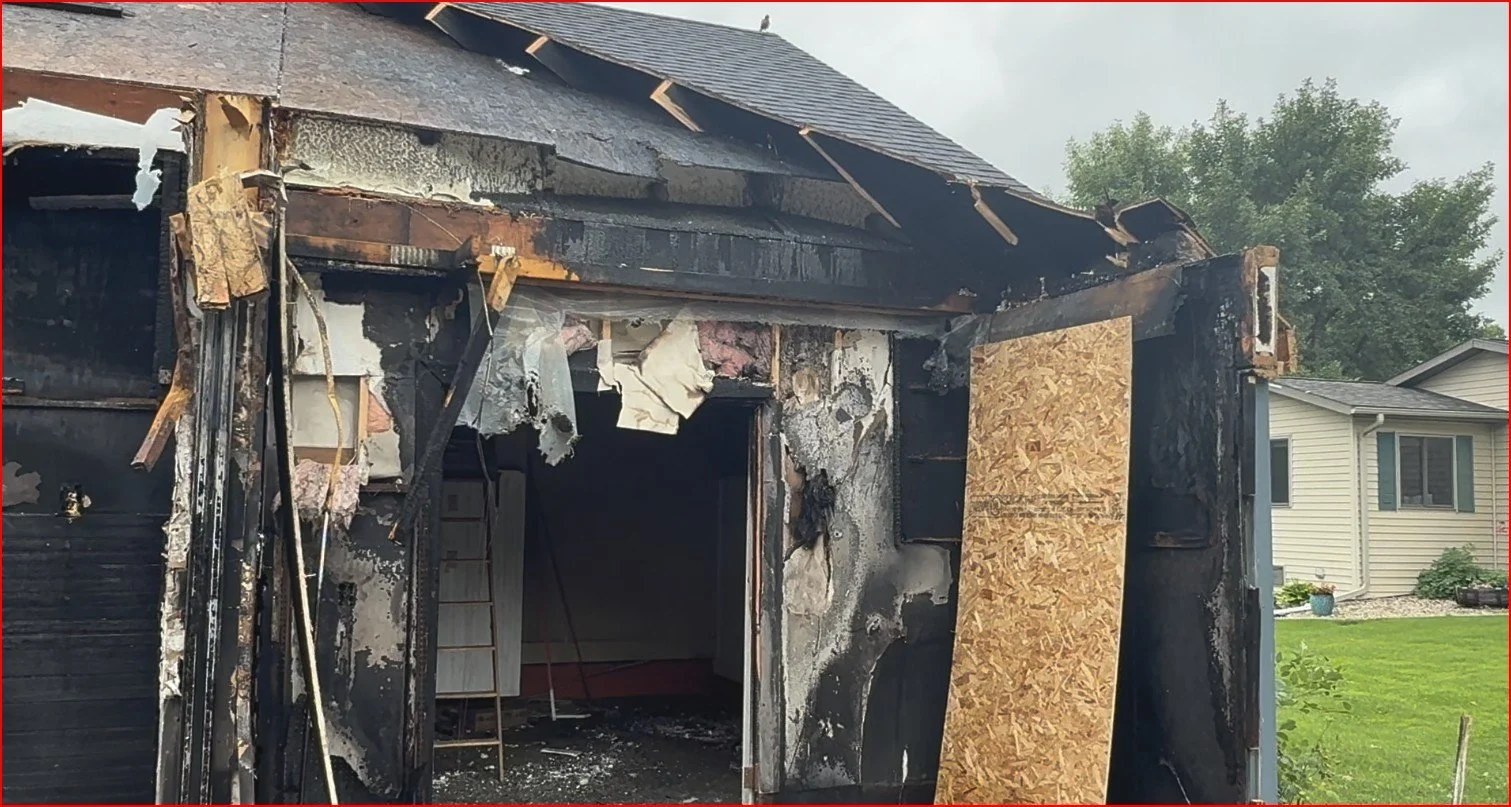
These panels, along with the LVL header, needed to be fully replaced. Two construction details made this zone worse than it should have been: missing fascia left foam edges exposed to direct heat, and the over-framed roof connection trapped heat right against the SIP facers instead of letting it dissipate. Both are addressable at the design and installation stage, and both are covered in more detail in our SIP Installation Guide.
This is the zone that often surprises people. The vaulted SIP roof space behind the garage was never touched by flame or direct heat. It only saw smoke, carried in through the open attic ladder.
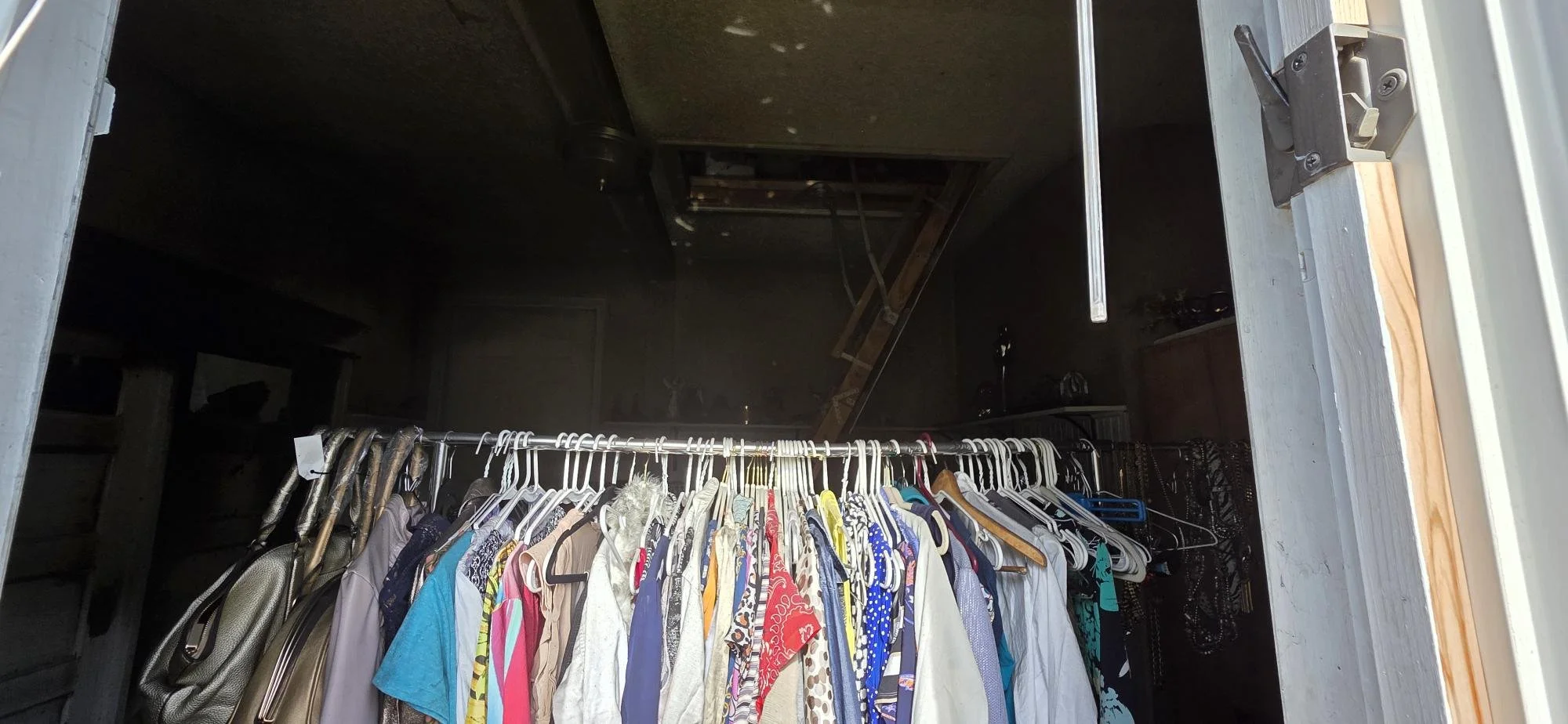
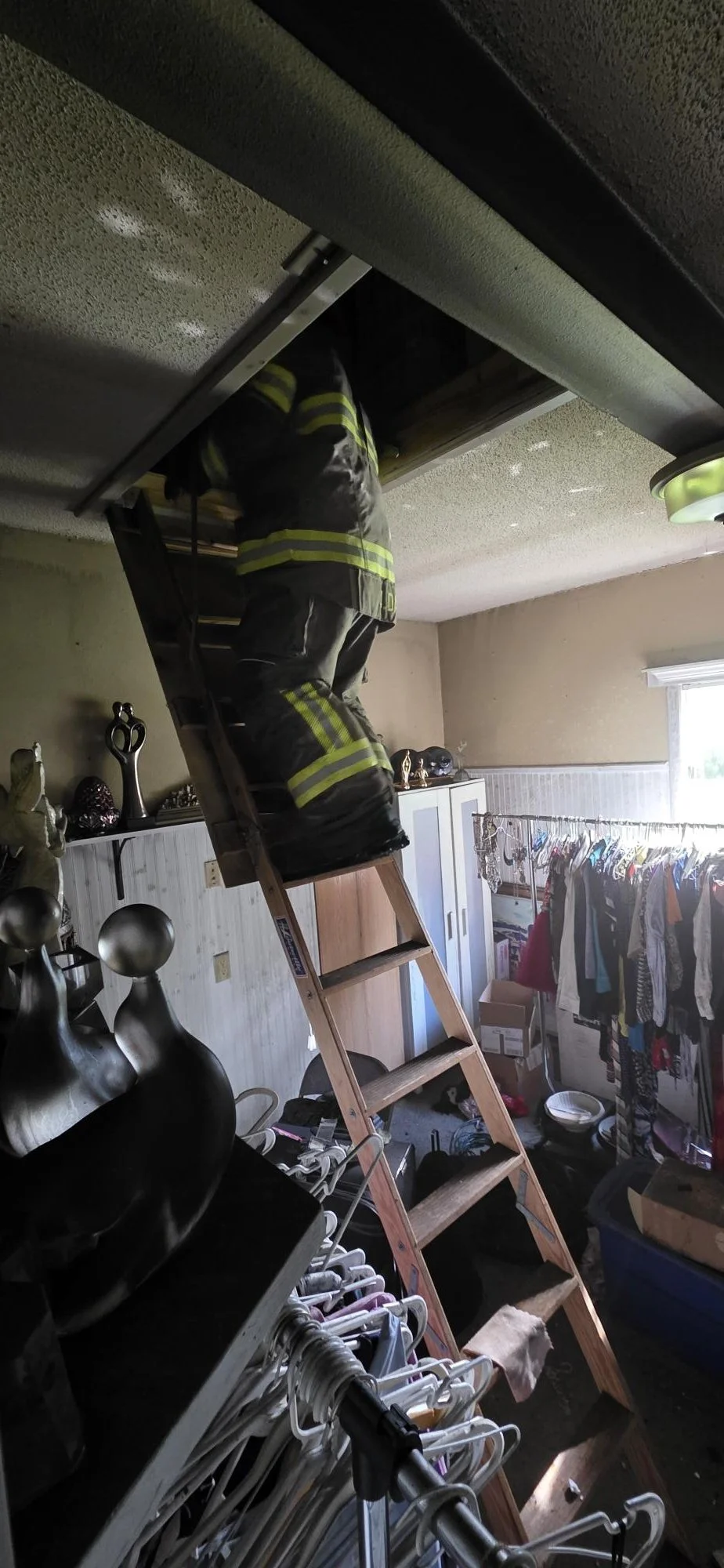
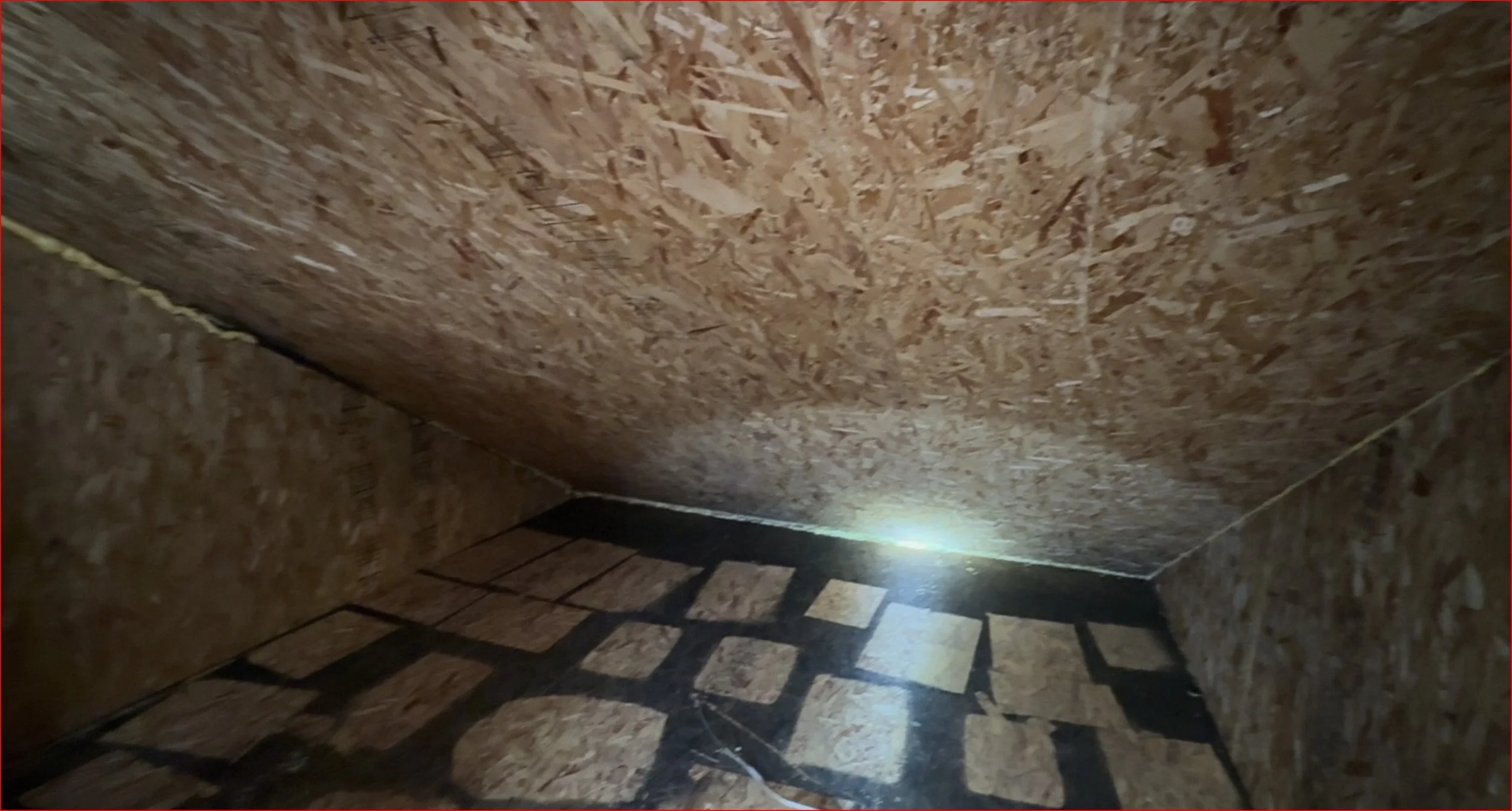
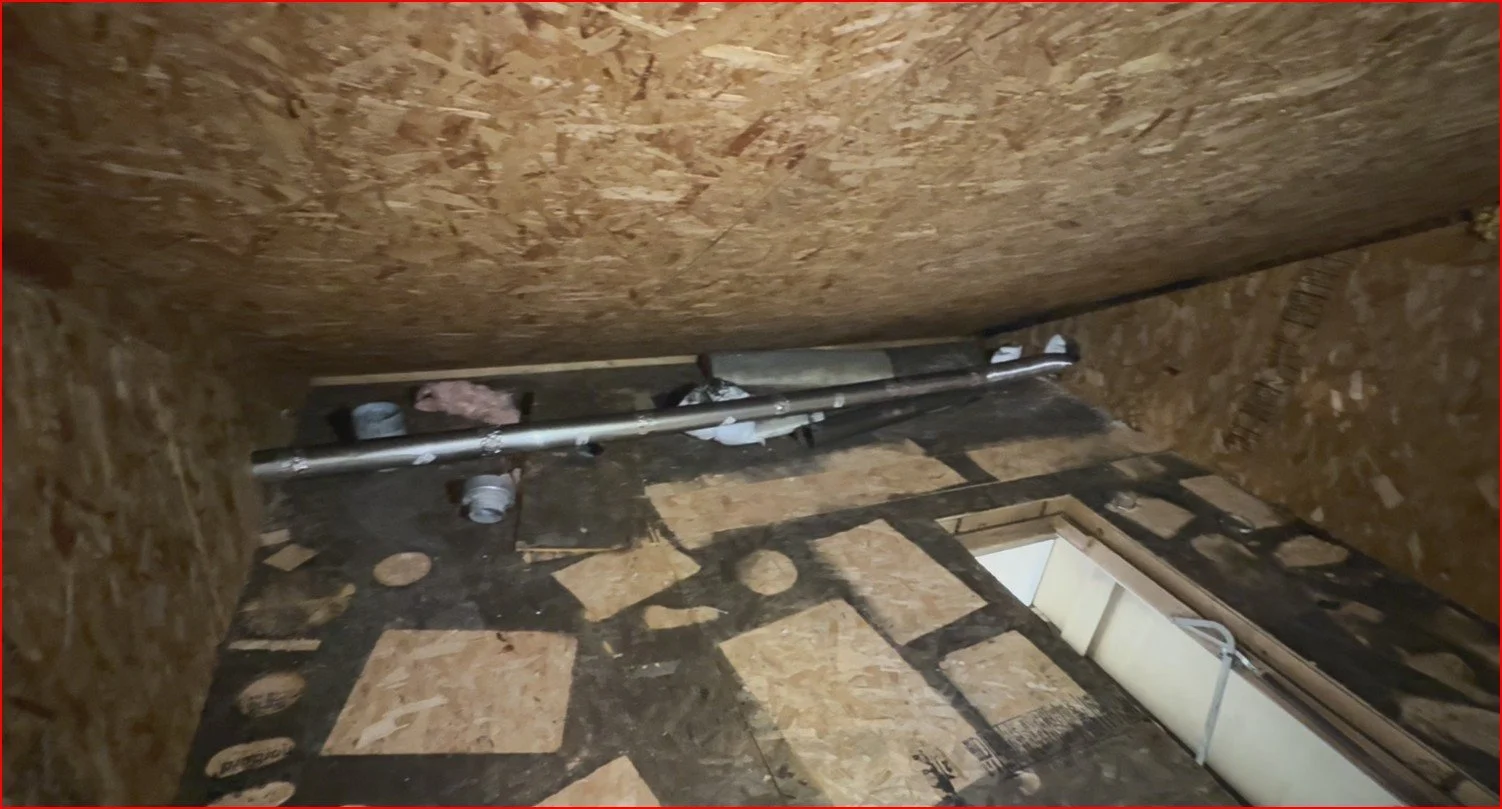
What was found in this zone:
Heavy soot deposits on the floor framing and blackened flooring from smoke migration
Soot buildup where the wall panels met the roof panels
No discoloration of the OSB facers
No degradation of the EPS core
No delamination and no loss of adhesion between the foam and the facers
Despite how much smoke moved through this space, the SIPs here stayed fully structurally sound. The fix was cleaning, not replacement.
| Factor | Why It Mattered |
|---|---|
| Missing fascia | Left EPS foam edges directly exposed instead of shielded, accelerating heat damage in Zone 2 |
| Over-framed roof connection | Created a cavity that trapped heat against the SIP facers at the home-garage interface |
| Open attic ladder | Provided a direct, unobstructed pathway for smoke to migrate into the home's roof space |
| Mixed construction types | SIPs, stick framing, and LVL headers all responded differently to the same fire event, complicating the damage pattern |
None of these factors are unique to SIP construction. They are the kind of detailing issues that affect fire outcomes in any building system. The difference is that SIPs respond to them in specific, predictable ways once you understand how the material behaves.
This distinction is the single most important thing an insurer, adjuster, or forensic investigator needs to get right after a SIP fire event. Getting it wrong means either replacing panels that only need cleaning, or missing panels that actually lost structural integrity.
Heat-damaged SIPs show physical material change. Look for EPS melt-back or melt-out, OSB char or consumption, and any separation between the foam core and the facer. These indicate real structural compromise.
Smoke-damaged SIPs show surface residue only. Soot deposits, blackened surfaces, and smoke odor with no change to the EPS or OSB material itself mean the panel is still structurally sound.
Location relative to the fire source is a strong early indicator. Panels with direct or near-direct flame exposure are candidates for heat damage. Panels several rooms or floors away, reached only through smoke pathways like an open attic access, are far more likely to be smoke-only.
When in doubt, a SIP-specific forensic evaluation settles it. General fire damage assessments are not built to evaluate composite panel behavior. For more on how that process works, see SIP Forensic Analysis: What It Is, When You Need It, and How It Works.
Not sure if that damage is structural or just cosmetic? Guessing wrong costs money either way — replacing panels that only needed cleaning, or missing a structural compromise that shows up later as a bigger repair. Schedule a consultation with Joe Pasma, PE, and get a straight answer before you write the repair scope.
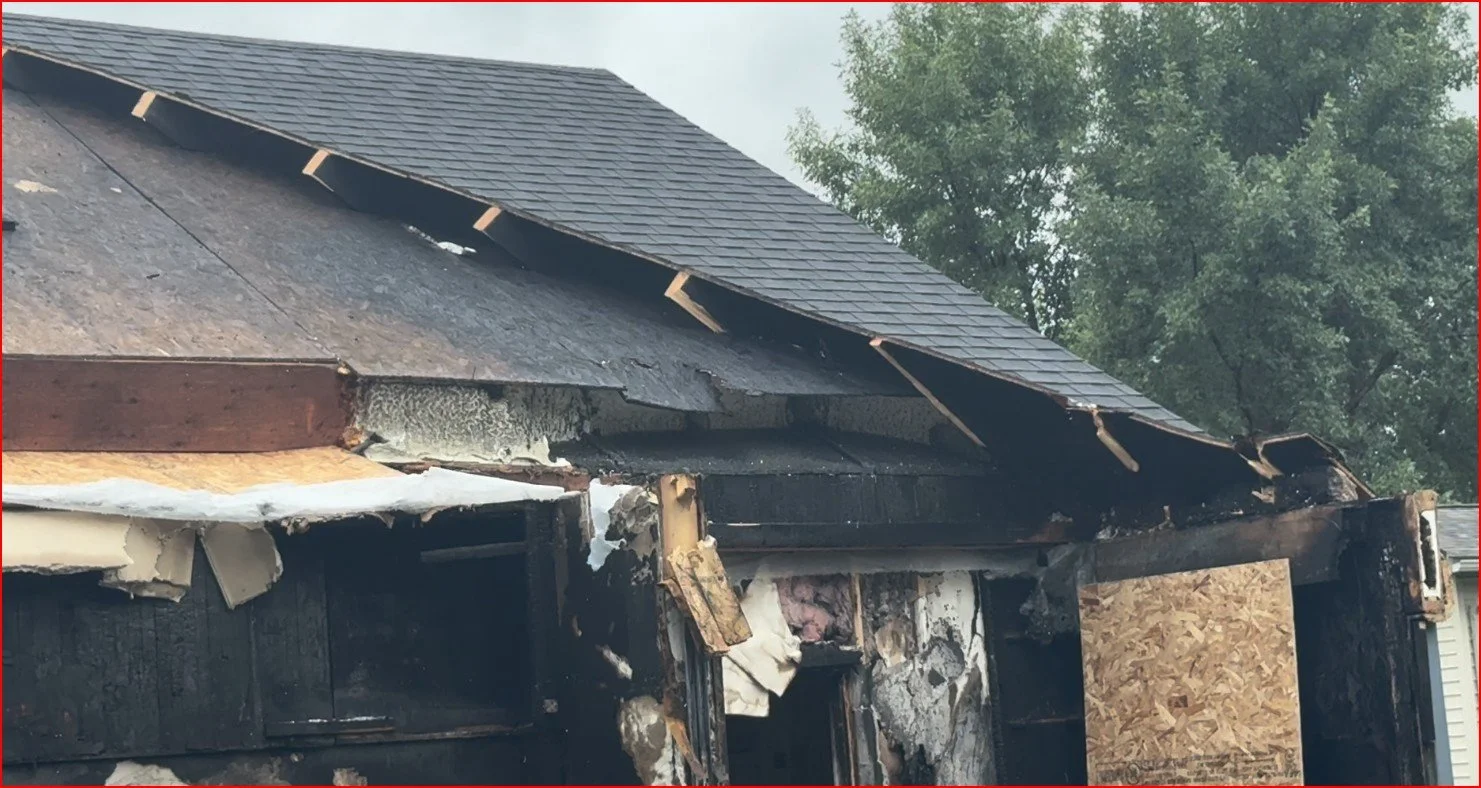
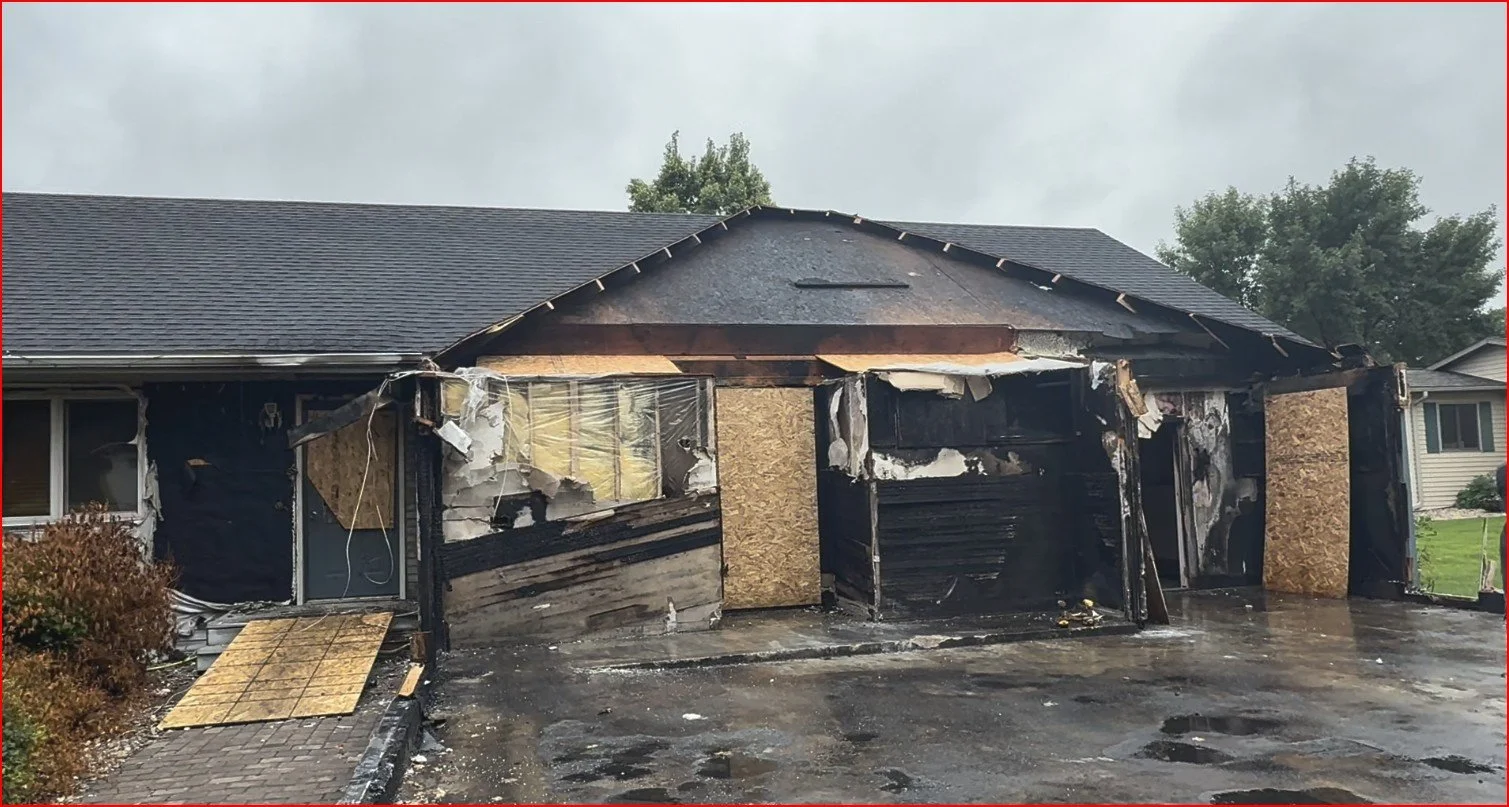
Not sure if you're looking at a total loss or a cleaning job? That's exactly the call a SIP-specific forensic evaluation is built to make — I've seen adjusters miss it in both directions. Talk to Joe Pasma, PE before you sign off on a repair scope.
Fascia, trim, and other coverings exist for more than looks. They keep EPS foam edges shielded from direct heat exposure. Skipping them, or letting them go missing, creates a weak point in an otherwise well-performing wall or roof assembly.
Over-framed roof connections, like the one at this garage-to-home interface, can create small cavities that trap heat directly against SIP facers. Where two different SIP systems or two different construction types meet at a roofline, that connection deserves extra attention during design.
Open attic access points, unsealed chases, and similar gaps do not just affect air leakage and energy performance. They also give smoke a direct route into spaces far from the actual fire. Sealing and detailing these pathways properly limits how far smoke damage spreads.
A general contractor or a standard fire damage assessment is not equipped to tell EPS melt-back from cosmetic soot staining. That distinction requires someone who understands how the composite panel behaves under heat.
Once heat damage and smoke damage are correctly separated, the repair scope becomes much clearer. Heat-compromised panels need replacement. Smoke-only panels need cleaning. Treating every affected panel the same way leads to either wasted cost or overlooked risk.
SIPs fail predictably under extreme heat, not randomly. EPS melts, OSB chars and eventually burns, and composite action breaks down once the foam separates from the facer. Understanding this sequence makes fire damage far easier to evaluate accurately.
Full structural involvement is not a fair test of any building material. The garage's total loss says nothing negative about SIP technology. It reflects what happens to virtually any building system under sustained, uncontrolled flame.
Smoke exposure alone is not a structural threat to SIPs. This is worth repeating because it is so often assumed otherwise. Soot on a panel does not mean the panel is compromised.
Small detailing choices carry real fire-performance consequences. Fascia coverage and roof cavity design are not just aesthetic or energy-efficiency decisions. They directly affect how a SIP assembly responds to heat.
Forensic evaluation needs to be SIP-specific. Insurers and adjusters who understand how to read EPS and OSB behavior after a fire will make more accurate, more defensible damage assessments.
For a broader look at how SIP assemblies fail and how to recognize the warning signs, see SIP Problems and Failure Modes in the Resource Hub.
Yes. SIPs behave as a composite panel, meaning the OSB facers and the EPS foam core work together structurally. Under high heat, the EPS melts and the OSB chars, and the panel loses that composite behavior once the two layers separate. Stick framing fails differently because the studs, sheathing, and insulation are separate systems that respond independently to heat.
The garage became fully involved, which exposed those panels to sustained flame and extreme temperatures beyond what EPS or OSB can withstand. No building system, SIPs, stick framing, ICF, or mass timber, is designed to survive full structural involvement. The home's SIPs experienced either localized heat or smoke-only exposure, both of which are survivable conditions for the material.
No. Smoke and soot deposits alone do not degrade EPS foam or OSB facers. SIPs exposed only to smoke typically need cleaning, not replacement. Structural damage only occurs when temperatures actually exceed the thermal limits of the panel materials.
Detailing matters more than people expect. Exposed foam edges from missing fascia, poorly sealed joints, and roof configurations that trap heat against the panel can all accelerate damage. Proper detailing protects the EPS core and limits how much heat actually reaches the panel. See the SIP Installation Guide for more.
Insurers should distinguish between heat-compromised SIPs, showing EPS melt-back, OSB char, or loss of composite action, and smoke-only SIPs, showing soot deposits with no material degradation. SIP-specific forensic evaluation is essential here to avoid replacing panels that only need cleaning, or missing panels that are actually structurally compromised. Learn more in SIP Forensic Analysis: What It Is, When You Need It, and How It Works.
Yes. SIPs are not fireproof, and nothing is, but they behave predictably and consistently under fire conditions once you understand how EPS and OSB respond to heat. When properly detailed, protected, and finished per code (typically with a fire-rated interior membrane such as gypsum board), SIP assemblies are built to meet the same fire-resistance requirements as conventional framing under the applicable building code. For a full breakdown of SIP fire performance and code requirements, see Are SIPs Combustible? Fire Performance, Codes, and What Actually Keeps You Safe.
Are SIPs Combustible? Fire Performance, Codes, and What Actually Keeps You Safe -- A full breakdown of how EPS and OSB respond to heat and what the building code requires
SIP Forensic Analysis: What It Is, When You Need It, and How It Works -- What a real SIP forensic investigation looks like, from a licensed PE
SIP Problems and Failure Modes -- An overview of the most common ways SIP assemblies fail and how to recognize them
SIP Installation Guide -- How SIP assemblies should be detailed, sealed, and protected during construction
SIP Building Codes and Compliance -- Code requirements relevant to SIP fire performance
Forensic Case Study: Exterior OSB Deterioration at the SIP Ridge Joint -- Another real-world SIP forensic case study, this one on moisture rather than fire
PGS Consulting LLC provides independent, SIP-specific forensic evaluation, distinguishing heat-compromised panels from smoke-only exposure, backed by 40+ years of engineering, manufacturing, and forensic experience.
Talk to Joe Pasma, PE
SIPs aren't new — they're the product of 90 years of engineering, from a 1935 Depression-era lab experiment to a code-recognized building system. Here's the plain-English history, and why it matters for your next build.
By Joe Pasma, PE | PGS Consulting LLC | SIP Engineering & Consulting | Published July 22, 2026 | Updated August 6, 2026
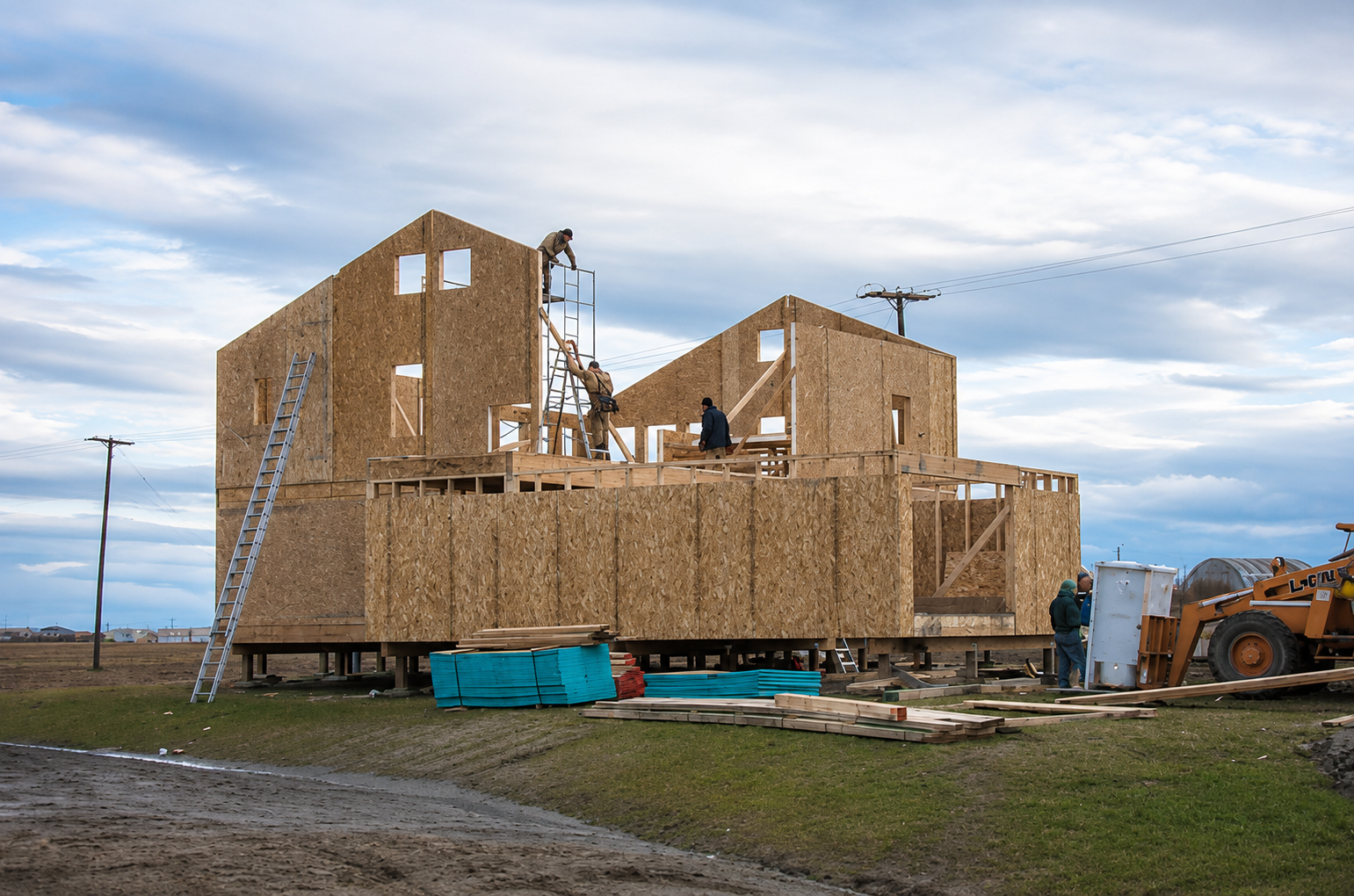
Every builder who frames with Structural Insulated Panels, SIPs, today is standing on ninety years of trial, error, and engineering. The panel showing up on a jobsite in 2026 is not a new idea — it is the end product of a process that started at a government lumber lab in the middle of the Great Depression.
This is not a spec sheet. It's the story of how a handful of engineers, one famous architect, a chemical company heir, and a small group of manufacturers turned a wartime lumber-saving experiment into a code-recognized building system used across the country. Understanding that story matters, because it explains why SIPs perform the way they do, why code officials trust them, and why the system isn't a trend.
Want the material specs, adhesive chemistry, and every primary source behind this article? The companion whitepaper has complete source citations, material specs, and all 90 primary references, compiled by Joe Pasma, PE.
Download the Whitepaper (PDF)SIPs go back to 1935, not the 1990s. The first stressed-skin panel was built at the USDA Forest Products Laboratory in Wisconsin, decades before "green building" was a phrase anyone used.
Early panels weren't insulated. Frank Lloyd Wright used sandwich-style panels in his Usonian homes in the 1930s, but without foam inside them, they never solved the comfort problem.
The modern SIP — foam sandwiched between two structural skins — was developed in 1951 by Alden B. Dow, an architect and the son of Dow Chemical's founder.
The 1970s oil embargo, not a marketing campaign, is what turned SIPs from a niche product into real demand. Builders needed airtight, insulated walls, and SIPs delivered both.
Oriented strand board (OSB) replaced plywood as the standard SIP skin in the 1980s. That single material shift is what made today's large-format panels and factory production possible.
The industry didn't even have a name until 1990, when ten manufacturers agreed on "Structural Insulated Panels" and formed SIPA, Structural Insulated Panel Association, the trade association that still sets best practices today.
SIPs weren't written into the International Residential Code until 2007. The national performance standard that governs SIP manufacturing today, ANSI/APA PRS 610.1, wasn't published until 2013.
None of this is trivia. It's the reason SIPs are code-compliant, bank-financeable, and backed by decades of tested performance instead of marketing claims.
Joe Pasma, PE has spent more than 40 years in SIP engineering, manufacturing, and forensic investigation, and has been a part of a good stretch of this evolution firsthand. What follows is a plain-language walk through nine decades of SIP history — what changed, why it changed, and how each shift still shows up in the panel you're building with today.
This table covers the milestones that actually matter. The sections below go deeper on each one.
← Swipe to view full table →
| Decade | What Happened | Why It Mattered |
|---|---|---|
| 1930s | FPL builds the first stressed-skin panel; Wright experiments with uninsulated sandwich panels | Proved panelized construction could outperform stick framing — but still missing insulation |
| 1950s | Alden B. Dow adds a foam core between plywood skins | The first true SIP: insulation and structure combined in one panel |
| 1960s | APA formally defines "sandwich panels" vs. "stressed-skin panels"; Bill Porter founds PorterSIPs | Gave the industry engineering standards and its first dedicated manufacturers |
| 1970s | Oil embargo drives demand for airtight, insulated construction | SIPs go from experimental to genuinely attractive to builders |
| 1980s | OSB replaces plywood as the standard SIP skin | Enabled large-format "jumbo" panels and scalable manufacturing |
| 1990s | SIPA founded (1990); ICC formed (1994) | Industry gets a name, quality standards, and a path toward code recognition |
| 2000s | SIPs enter the IRC (2007 supplement) | First formal, nationwide code recognition for SIP wall construction |
| 2010s | ANSI/APA PRS 610.1 published (2013) | SIPs get a dedicated national performance standard, not a borrowed one |
| 2020s | Market hits ~$5.6B (2024); resilience and offsite construction drive growth | SIPs mature into mainstream, code-recognized, high-performance construction |
The story starts at the Forest Products Laboratory (FPL) in Madison, Wisconsin, in 1935. FPL engineers were tasked with building with less wood without sacrificing strength, and landed on "stressed-skin" construction: plywood facings bonded to a minimal wood frame, sharing the structural load together.
In 1937, that research became a real building: a small experimental house on the University of Wisconsin–Madison campus, dedicated by First Lady Eleanor Roosevelt. That house stood for decades, serving as a daycare center until 1998.
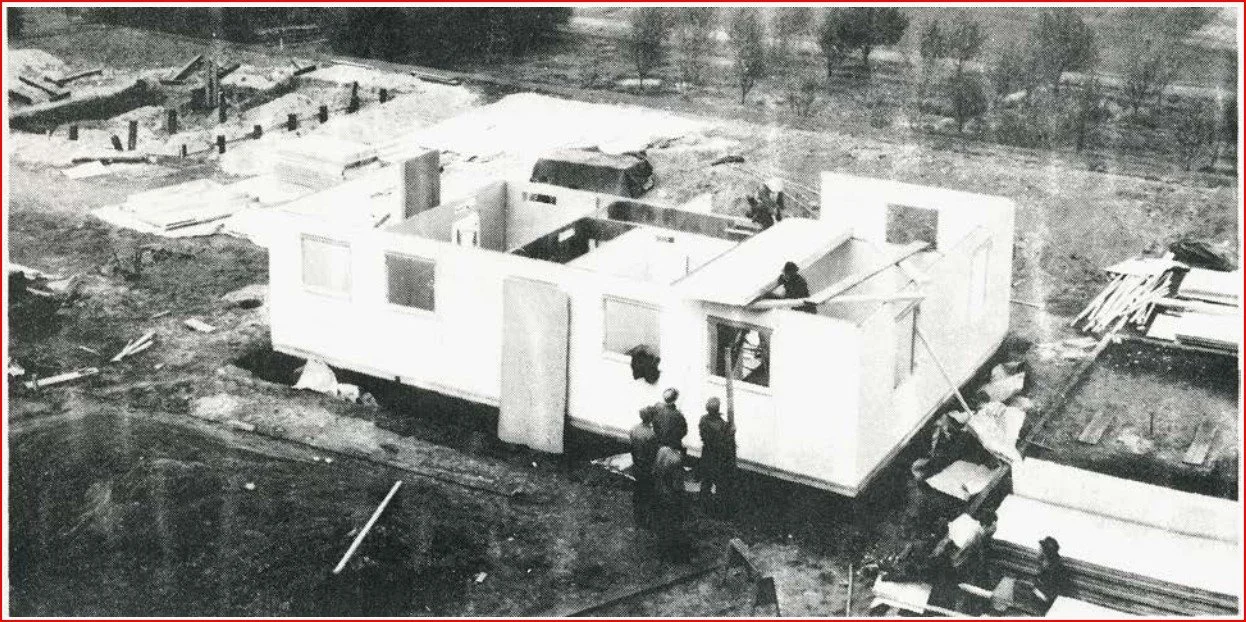
The first stressed-skin house being erected in 1937 on the Forest Products Laboratory grounds in Madison, WI.
Wall studs in the panels were 3/4”x2-1/2” rather than the usual 2”x4”.
The finished house was still used as a day care center at the University of Wisconsin, Madison, WI in 1994.
That 1937 house stood for over 60 years under everyday use, including as a daycare. Long-term, real-world performance isn't a new argument for SIPs — it's the oldest one we have.
-- Joe Pasma, PEAround the same time, architect Frank Lloyd Wright was experimenting with his own version of panelized construction in his Usonian home designs — multiple layers of plywood and tar paper, built for cost-effective, modern living. The idea was elegant. The execution had a hole in it: there was no insulation inside those panels. Without a way to control heat loss, Wright's panels never solved for comfort, and the concept didn't catch on beyond his own projects. Something was still missing, and it wasn't architecture. It was foam.
While Wright was experimenting with uninsulated panels, FPL kept testing. In 1947, engineers built a dedicated exposure unit on the lab grounds specifically to see how these panels held up over the long haul — tracking bowing, stiffness, and durability on panels built with different facings (plywood, aluminum, hardboard, even cement-asbestos) and different cores, with some of that testing running all the way through 1978.
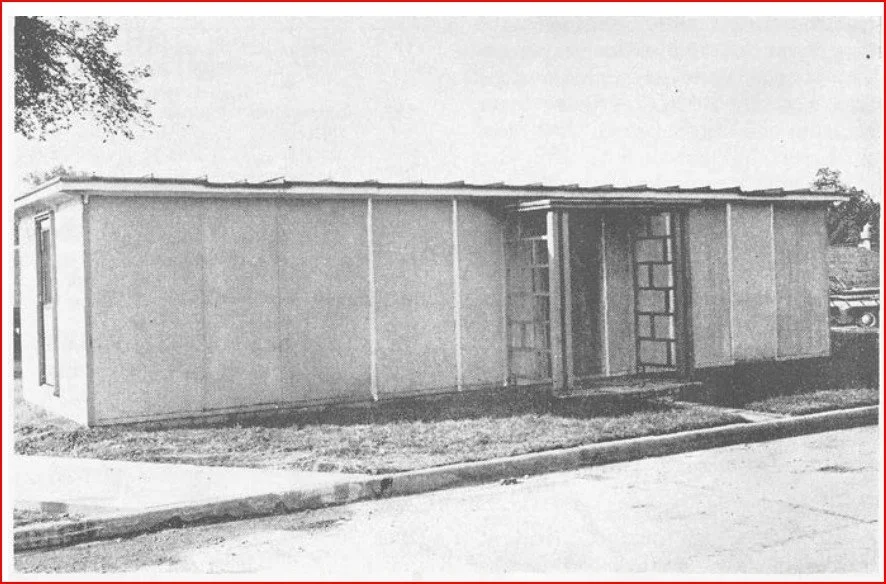
Forest Products Laboratory sandwich panel experimental unit.
Wall panels were fastened only at the top and bottom to proved unrestricted bowing.
That research produced two documents that mattered more than their dry titles suggest: Structural Sandwich Design Criteria (1959) and Sandwich Panel Design (1970). Together they gave engineers the actual math for predicting how a panel would bend, buckle, or carry a load — the foundation that panel design calculations still build on today.
The missing piece arrived courtesy of Alden B. Dow, an architect, a former Wright apprentice, and the son of Dow Chemical founder Herbert H. Dow. In 1951, Dow built experimental houses in Midland, Michigan, using panels with a 1-5/8 inch Styrofoam (XPS foam) core glued between two sheets of quarter-inch plywood, held together with wood splines. That combination — a structural skin on each side, foam insulation in the middle — is, structurally speaking, the same basic idea as the SIP going up on a job today.
Sandwich Panel House panel assembly 1950’s.
Dow built three of these homes between 1952 and 1953. The third one took just six weeks to build. All three showed something builders had never quite gotten from a wall before: consistent comfort, fewer drafts, and real thermal performance. Dow had solved the problem Wright couldn't.
One of Dow’s sandwich panel homes in Midland MI
Through the 1950s and 1960s, the American Plywood Association (APA) put real engineering behind these panels — testing, mathematical modeling, and formal definitions. APA split the category into two types: panels that relied on a foam core for their strength were called "sandwich panels," while panels that still used lumber in the core were called "stressed-skin panels." That distinction still matters — a modern SIP is a sandwich panel, not a stressed-skin panel, and it's the foam core doing the structural work alongside the skins.
APA published these definitions and design formulas in two documents — Plywood Design Specification Supplement Three and Supplement Four — and got them adopted by the model building code agencies of the era. This decade also produced one of the industry's oldest manufacturers: Bill Porter founded what became PorterSIPs in Holland, Michigan, starting with laminated foam-core panels in 1964. PorterSIPs is still one of the oldest SIP manufacturers operating in the U.S. today.
Porter Corp Headquarters
Porter Corp, founded in 1964 is a design, engineering and manufacturing company focusing on exterior structures and insulated building envelopes. Porter Corp was one of the first producers of SIPs (Structural Insulated Panels). Bill Porter’s venture in SIPs was an outgrowth of his experience in the marine industry where he learned that one of the best ways to build an economical, structural boat bottom was with a plastic foam core in sandwich construction with fiberglass. He was also one of the founding members of SIPA (Structural Insulated Panels Association).
SIPs existed through the 1960s, but they stayed niche. What changed that was the 1970s oil embargo and the energy crisis that followed. Energy costs spiked, and for the first time, airtight construction and continuous insulation weren't nice-to-haves — they were financially urgent. SIPs offered both, along with faster construction. Builders and timber framers who had never looked twice at panelized construction started paying attention, because SIPs could measurably cut heating and cooling costs in a way stick framing couldn't match.
For nearly fifty years, SIP skins were made of plywood. That changed with the commercial arrival of oriented strand board (OSB) in the 1980s. OSB was more consistent, cheaper to produce, and — critically — could be manufactured in much larger sheets. That unlocked "jumbo" panels up to 8 feet by 24 feet, which meant fewer seams, less waste, and faster on-site assembly. OSB is still the standard SIP facing material today.
This is also the decade several manufacturers, some still active today got their start, including AFM Corporation (R-Control), Enercept, Winter Panel, and Murus. Industry growth was still modest — most builders and code officials had never heard of a SIP — but the foundation for a real industry was now in place.
In 1990, ten small panel manufacturers met to solve a problem: the industry didn't have a name. "Sandwich panel" didn't capture what the product actually was. One manufacturer suggested "Structural Insulated Panels." It stuck, and that meeting turned into the founding of the Structural Insulated Panel Association, SIPA, with Bill Porter playing a central role in organizing it.
SIPA gave the industry something it never had before: a unified voice. Manufacturers began standardizing quality control, pursuing third-party testing, and — most importantly for builders today — advocating for SIPs in model building codes. In 1994, the country's three regional code bodies, the International Conference of Building Officials (ICBO), the Building Officials and Code Administrators International (BOCA), and the Southern Building Code Congress International (SBCCI), merged to form the International Code Council (ICC), which set the stage for a single national code instead of three competing ones — a development that mattered enormously for SIPs a decade later.
By the late 1990s, SIPs had outgrown single-family homes. Early code evaluation reports gave building departments a real reason to trust the product, and CNC-cut jumbo panels made it practical to build at scale — schools, commercial buildings, and multifamily housing all started showing up as SIP projects. What began as a niche residential product was proving it could handle institutional-size work too.
This is the decade SIPs stopped being an "alternative material" and became a recognized building system. SIPs were first written into the International Residential Code in the 2007 supplement to the 2006 IRC, giving builders and code officials a prescriptive path to use SIP walls without site-specific engineering. That same year, work began on a dedicated national performance standard for SIPs, developed jointly by APA and SIPA. ICC-ES and NTA also began issuing formal code evaluation reports for individual manufacturers — the paperwork that lets a building department sign off on a SIP wall with confidence.
This was also the decade green building went mainstream, and SIPs rode that wave. As LEED and ENERGY STAR certifications gained traction with builders and buyers, SIPs' airtightness and continuous insulation made them a natural fit. SIPA also published a national listing report in 2009 — shared documentation any member manufacturer could point to as proof of code compliance, instead of every company having to build that case on its own.
SIPA’s third party evaluation report authored by NTA
If you want the current code language, our SIP Building Codes and Compliance resource page breaks down what's required today.
The standard that started development in 2007 was finally published in 2013: ANSI/APA PRS 610.1, the national performance standard specifically for SIP wall panels. This mattered because SIPs no longer had to lean on plywood standards written for a different product — they had their own rulebook, covering everything from core material requirements to quality assurance testing.
Through this decade, SIPA expanded training, published best-practice guides, and North America became the single largest SIP market in the world. SIPs moved firmly into zero-energy homes, high-performance commercial buildings, affordable housing, and offsite/prefab construction. The system stopped being "alternative construction" and became mainstream high-performance construction.
Today's SIP market is valued at roughly $5.6 billion (as of 2024), with continued growth projected. The current focus is resilience: wildfire resistance, wind and seismic performance, tightening energy codes, and offsite manufacturing. Code evaluation reports like ICC-ES ESR-4689 now cover SIP performance in some of the country's toughest jurisdictions for wind, seismic, and fire. SIPs have also expanded into markets that didn't exist for this product a decade ago — data centers, cold storage, and modular construction.
Builders sometimes treat SIPs like a newer, less-proven alternative to stick framing. The history says the opposite. This is a system with 90 years of engineering behind it, formal code recognition since 2007, a dedicated national performance standard since 2013, and independent lab data — including whole-wall R-value testing at Oak Ridge National Laboratory — backing up its real-world performance. That's not a new product finding its footing. That's a mature building system with a long paper trail.
In 40+ years of SIP work, the question I get most from skeptical builders is some version of "how do we know this actually works long-term?" The honest answer is: we've had ninety years to find out, and the system keeps getting better documented, not less.
-- Joe Pasma, PEIf you're weighing SIPs against traditional framing for an upcoming project, our What Are SIPs overview and SIPs vs. Stick Framing comparison are the logical next stops, and our SIP Cost Guide breaks down where the real numbers land.
SIPs trace back to 1935 at the Forest Products Laboratory (FPL) in Madison, Wisconsin, where engineers developed the first "stressed-skin" panels using plywood facings and a minimal wood frame. The first true SIP — a foam core sandwiched between structural facings — was invented by Alden B. Dow in 1951.
The 1970s oil embargo and the energy crisis that followed pushed builders toward more efficient construction. SIPs offered continuous insulation, strong airtightness, and less thermal bridging than stick framing, which made them genuinely attractive for the first time — not just an engineering curiosity.
Oriented strand board (OSB), introduced commercially in the 1980s, replaced plywood as the standard SIP skin. OSB could be manufactured in much larger, more consistent sheets — including "jumbo" 8-foot by 24-foot panels — which lowered cost, cut waste, and made large-scale SIP production possible for the first time.
SIPs were first written into the International Residential Code (IRC) in the 2007 supplement to the 2006 IRC. That gave builders and code officials a prescriptive path to use SIP walls without project-specific engineering in most cases. Coverage has been refined in every code cycle since.
Structural Insulated Panel Association (SIPA) — was founded in 1990 when ten manufacturers agreed on a common name for the product and organized to unify the industry. SIPA sets quality standards, publishes best-practice guides, runs installer training, and advocates for SIPs in the code development process. It's still the industry's central resource today.
ANSI/APA PRS 610.1 is the national performance standard specifically for SIPs used in wall applications. Developed jointly by APA and SIPA, it was first published in 2013 and updated in 2018 and 2023. It sets the manufacturing, testing, and quality-assurance requirements SIPs must meet, and it's referenced directly in the IRC — so yes, panels used within the prescriptive scope of the code have to carry a grade mark showing compliance.
You've just read the plain-English version of this story. If you need to verify a claim, cite a source, or pull the underlying material specs for a project, the full whitepaper has you covered — all 90 references, fully footnoted. Download the full SIP history whitepaper (PDF).
PGS Consulting LLC brings 40+ years of SIP engineering, manufacturing, and forensic experience to every project — from design-phase coordination to on-site troubleshooting. If you're specifying, building with, or investigating SIPs, we can help you get it right the first time.
See How PGS Can Help
If you've ever seen a stained or swollen OSB panel and wondered whether your SIP is failing, here's the short answer: it's not the panel, it's the moisture. I walk through what actually causes OSB rot, how to tell mold from rot before you panic, and the four controls that keep it from happening in the first place.
By Joe Pasma, PE | PGS Consulting LLC | SIP Engineering & Consulting | Published July 14, 2026
If you work with Structural Insulated Panels (SIPs) long enough, you'll eventually hear the same worried question: "Do SIPs rot?"
It's a fair question. When the OSB (oriented strand board) skin on a SIP shows a dark stain, some swelling, or a patch of mold, it's easy to assume the panel itself has failed.
Here's the short answer, based on every forensic investigation I've led across manufacturers, climates, and building types: OSB rot is not a SIP problem. It's a moisture problem. And moisture problems are solvable, with the right systems, training, and follow-through.
This guide walks through what actually causes OSB to break down, what mold does and doesn't mean, and the practical steps builders, designers, and homeowners can take to keep SIP walls and roofs performing the way they're designed to for decades. My goal isn't to point fingers. It's to give you the same clarity I'd want if it were my own project.
OSB rot happens when water or damp air reaches the wood and can't dry out over time. It is not something unique to SIPs.
SIPs are high-performing, tightly built assemblies. That means moisture problems show up sooner than they would in a traditional wall, which is a feature, not a flaw.
Mold and rot are not the same thing. Mold is a surface issue that can be cleaned. Rot is permanent structural decay that requires replacement.
Nearly every OSB moisture issue traces back to one of four things: liquid water, air leaks, humid indoor air, or a cold condensing surface.
A simple checklist covering design, construction, and homeownership prevents the vast majority of moisture problems in SIP buildings.
OSB doesn't fail on its own. It breaks down when liquid water, or air carrying moisture condenses, reaches the wood and stays there long enough that it can't dry out.
There are really only three ways that happens:
Bulk water intrusion. A roof leak, a window leak, a gap in the weather-resistive barrier (WRB), or missing flashing lets rainwater in directly.
Air leakage carrying moisture. Warm, humid air escapes through a gap, hits a cold surface, and condenses into liquid water wetting the OSB, the same way a cold glass of water "sweats" on a summer day.
Vapor drive. In cold climates, high humidity inside the home pushes moisture toward the colder roof or wall skin, where it can condense.
None of these three causes are unique to SIPs. What makes SIPs different is that they're a high-performance, tightly sealed assembly with fewer places for moisture to hide or escape. That's a strength, but it means the details matter. SIPs reward precision. They don't require perfection, just intentional, careful work.
Understanding how OSB responds to moisture helps everyone, from builders to homeowners, make sense of what they're looking at.
OSB absorbs water unevenly. The cut edges soak up moisture faster than the flat faces.
Mold can start once moisture content climbs above roughly 19-20%. Below that level, there isn't enough available water for mold to grow.
Staying wet for a long time weakens the wood's internal bond, reducing the panel's strength over time.
Repeated wetting and drying cycles cause permanent swelling. A panel that "dried out" isn't automatically back to normal. It's worth checking, not just assuming.
Knowing the distinction between mold and rot prevents a lot of unnecessary panic on a job site or during a home inspection.
← Swipe to view full table →
| Category | Mold | Rot |
|---|---|---|
| What it is | Surface-level biological growth | Structural decay of the wood itself |
| Can it be fixed? | Yes, it's cleanable | No, the material must be replaced |
| Does it mean the panel failed? | Not on its own | Yes |
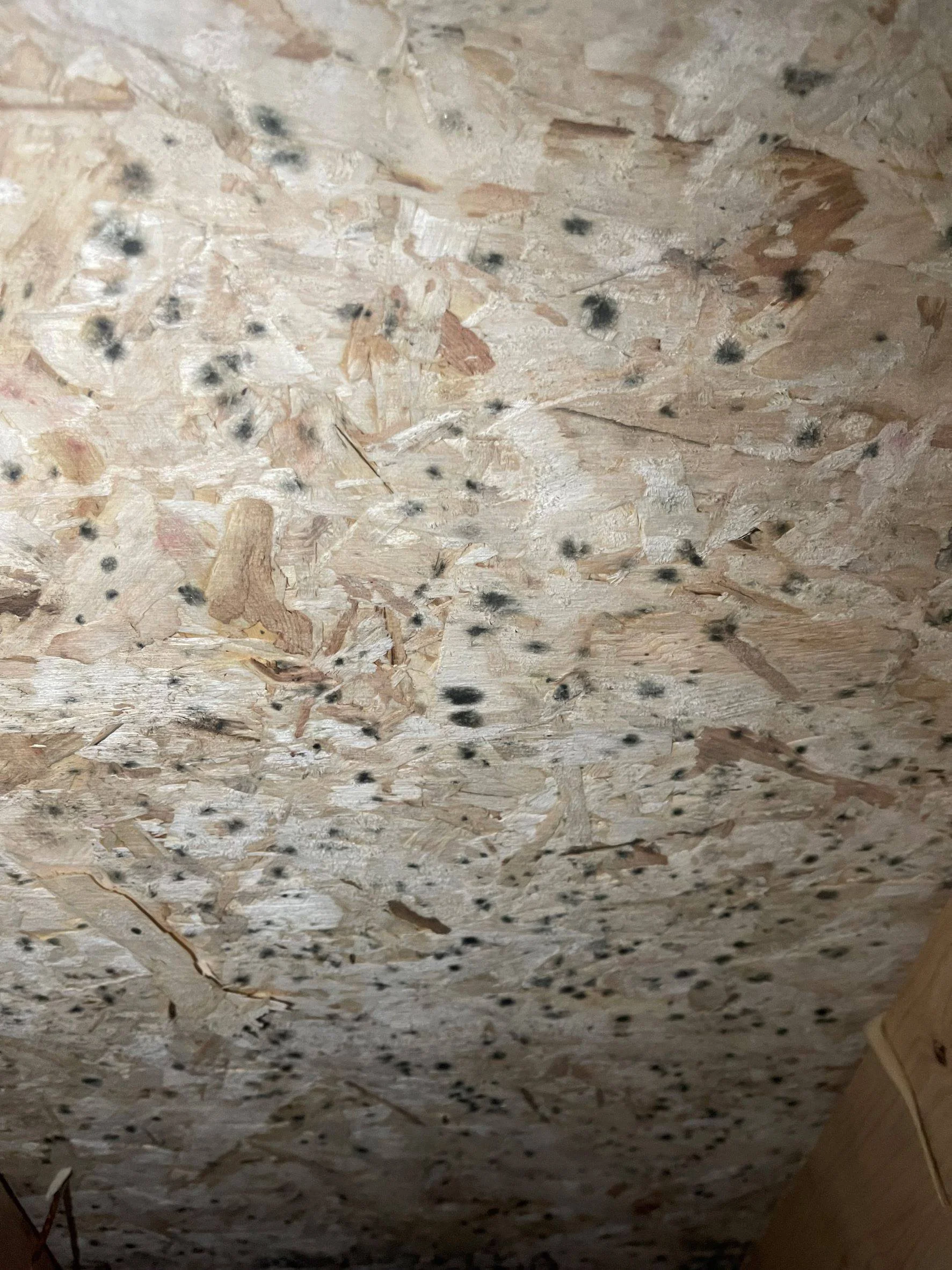
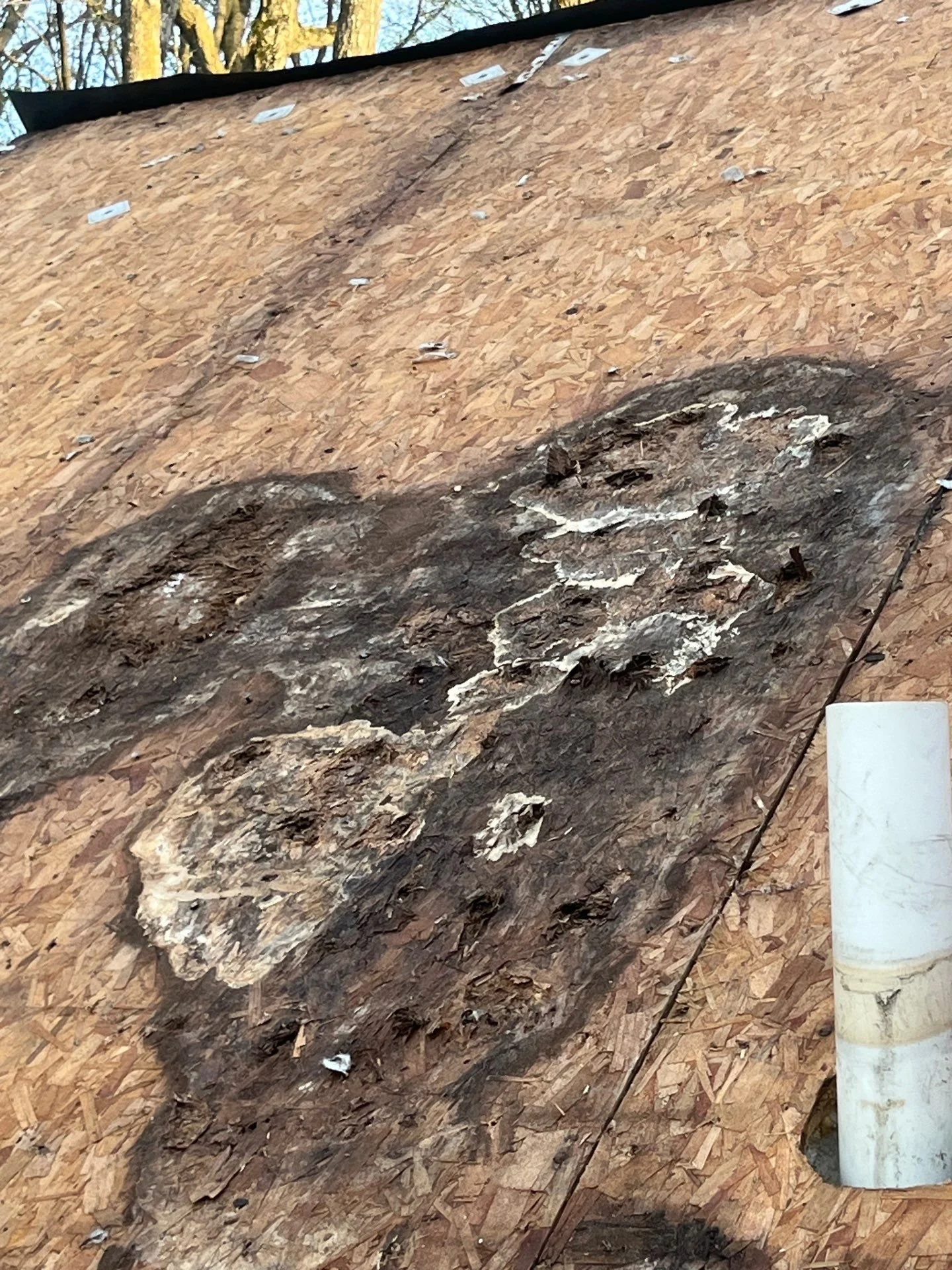
SIPs aren't fragile. They're direct. Because a SIP wall or roof doesn't have a vented cavity hiding behind the insulation, there's nowhere for a moisture problem to quietly sit for years unnoticed. When something's off, it tends to show up sooner rather than later.
That's not a defect. It's useful feedback, and it's part of why SIPs outperform stick framing on energy efficiency and long-term durability when they're built correctly.
SIPs depend on three things working together: continuous bonding between the OSB skin and the foam core, airtight joints between panels, and proper sealing at splines, ridges, and penetrations through the panel. When those three things are done well, SIPs are one of the most durable enclosure systems available. When a step gets skipped or rushed, moisture will find the gap. It always does.
In 40+ years investigating SIP performance, I have never found a case of OSB rot that couldn't be traced back to one of four things: water, air, vapor, or temperature. When those four are controlled, the material simply does what it was engineered to do.
-- Joe Pasma, PEThese patterns show up again and again, across manufacturers and climates. That's actually good news: predictable problems are preventable problems.
Ridge beams and roof peaks. Warm moist air rises, so the ridge is the first place condensation can form if sealant is missing or a spline wasn't installed correctly.
Eaves and fascia edges. Ice dams, a reversed weather barrier lap, or a missing kick-out flashing can let water travel behind the fascia and into the OSB.
Windows and doors. Gaps in the weather barrier, a missing sill pan, or an unsealed rough opening are common entry points.
Mechanical penetrations. Vents, plumbing stacks, and electrical lines all need to be sealed properly.
Indoor humidity. Tight, energy-efficient homes need balanced ventilation, or humidity can build up in winter and push moisture toward cold surfaces.
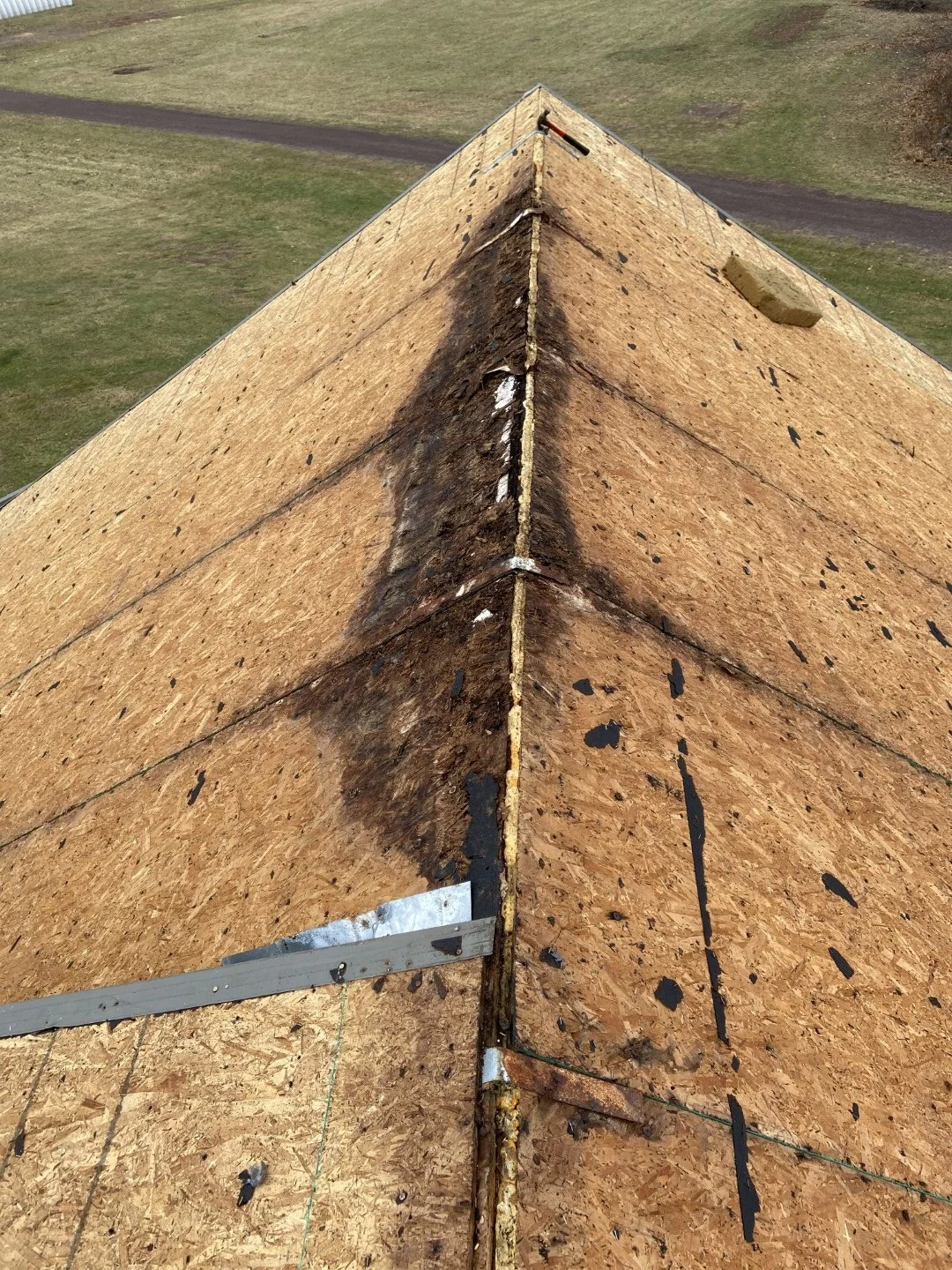
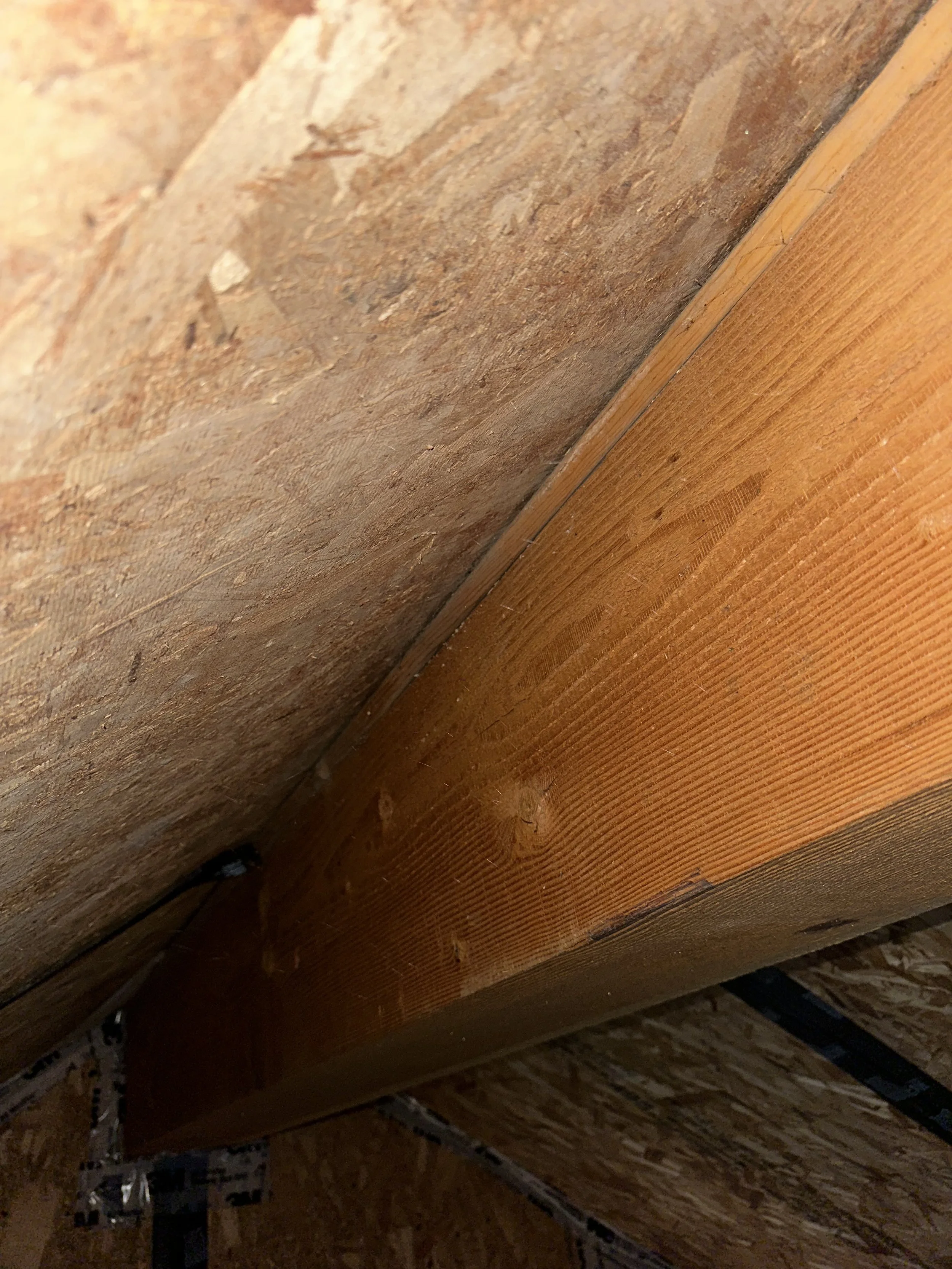
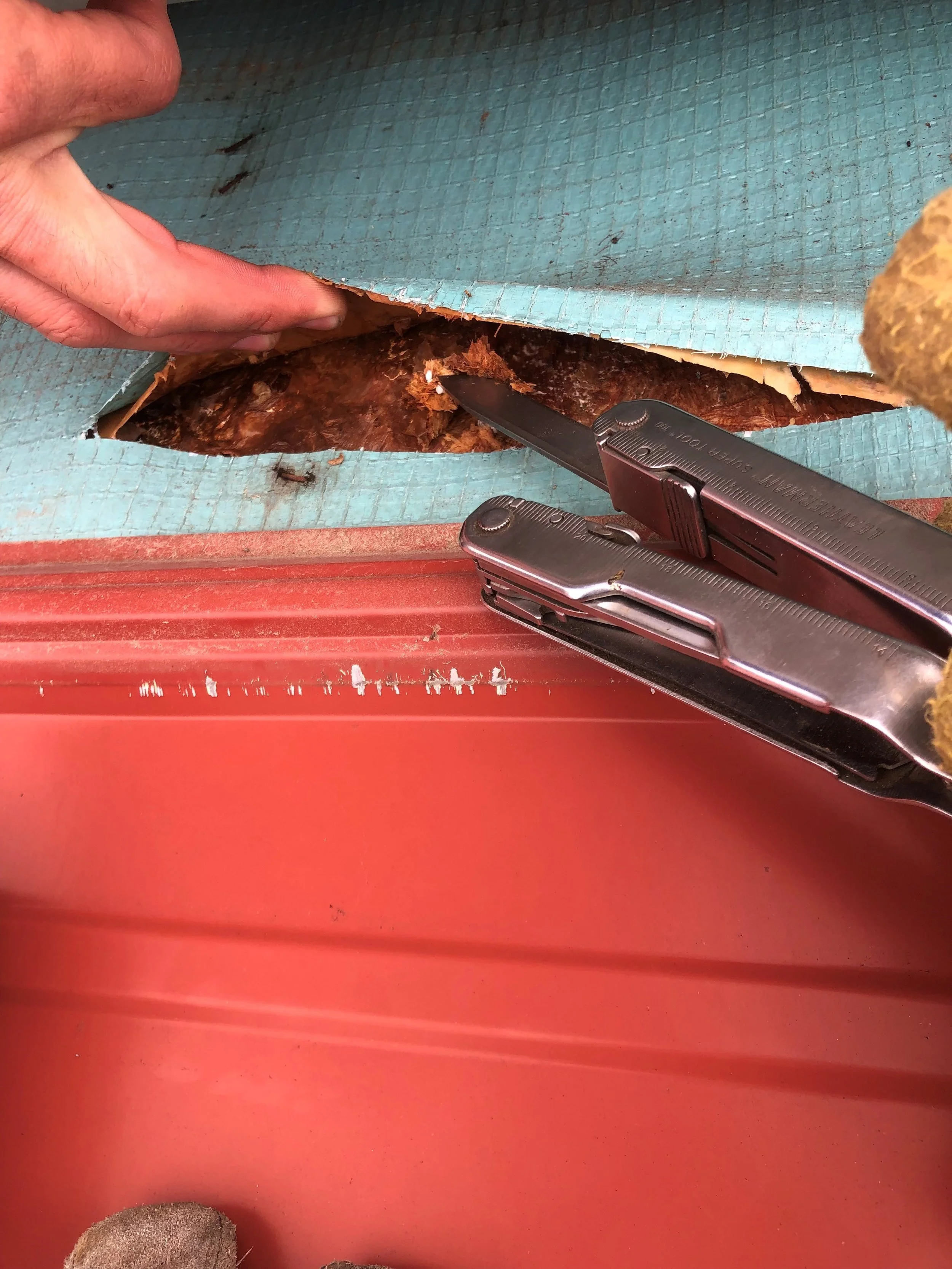
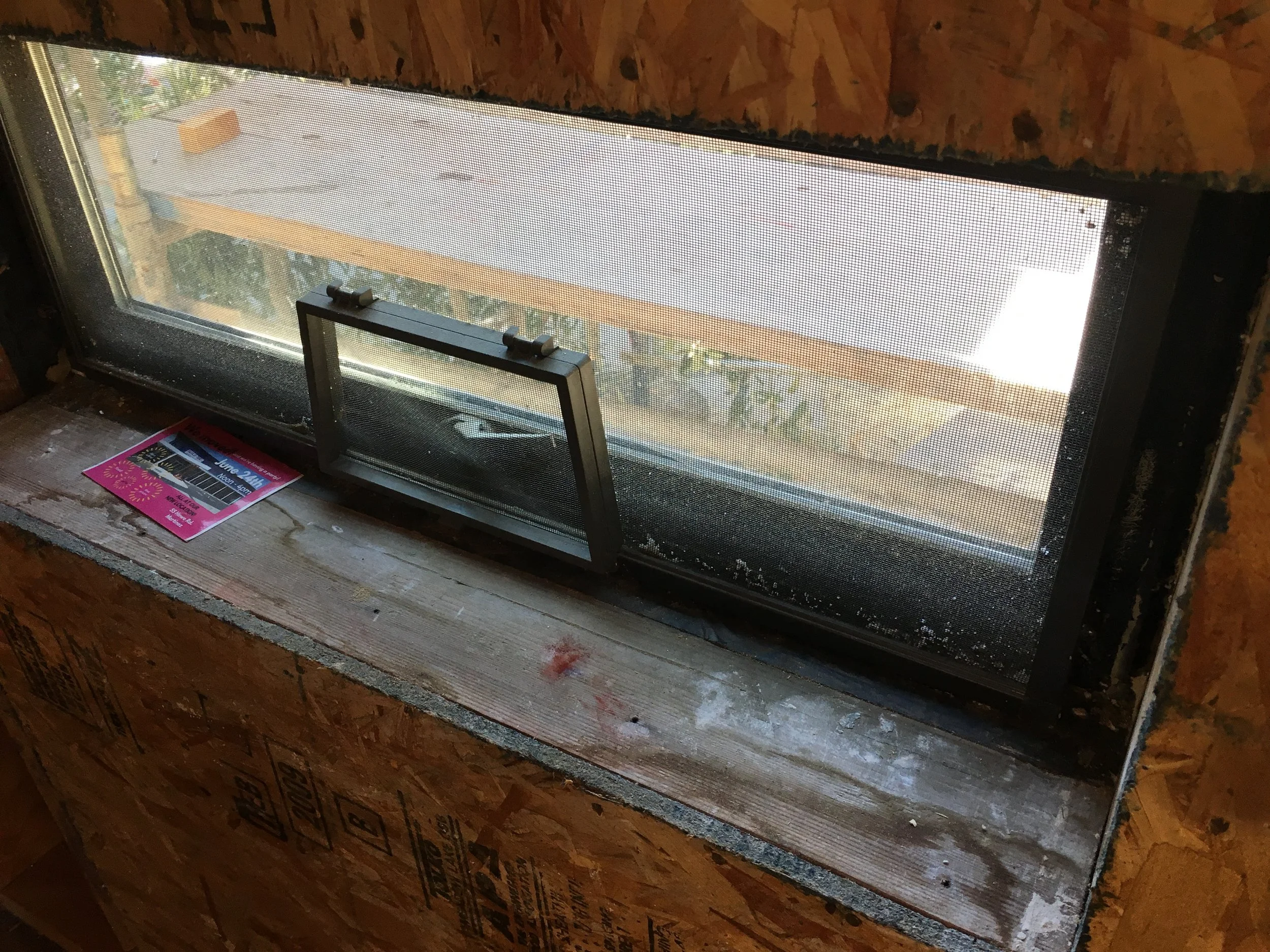
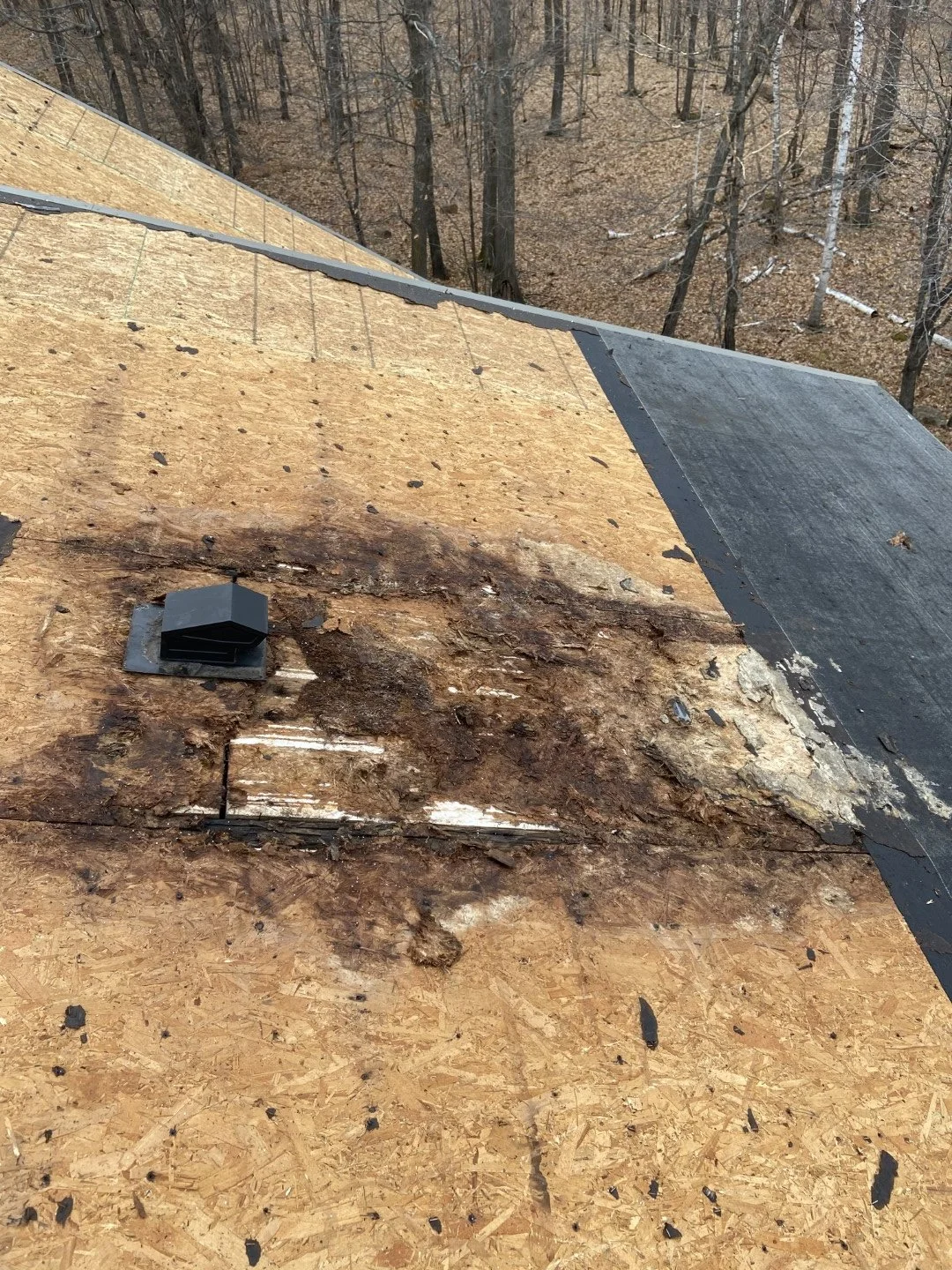
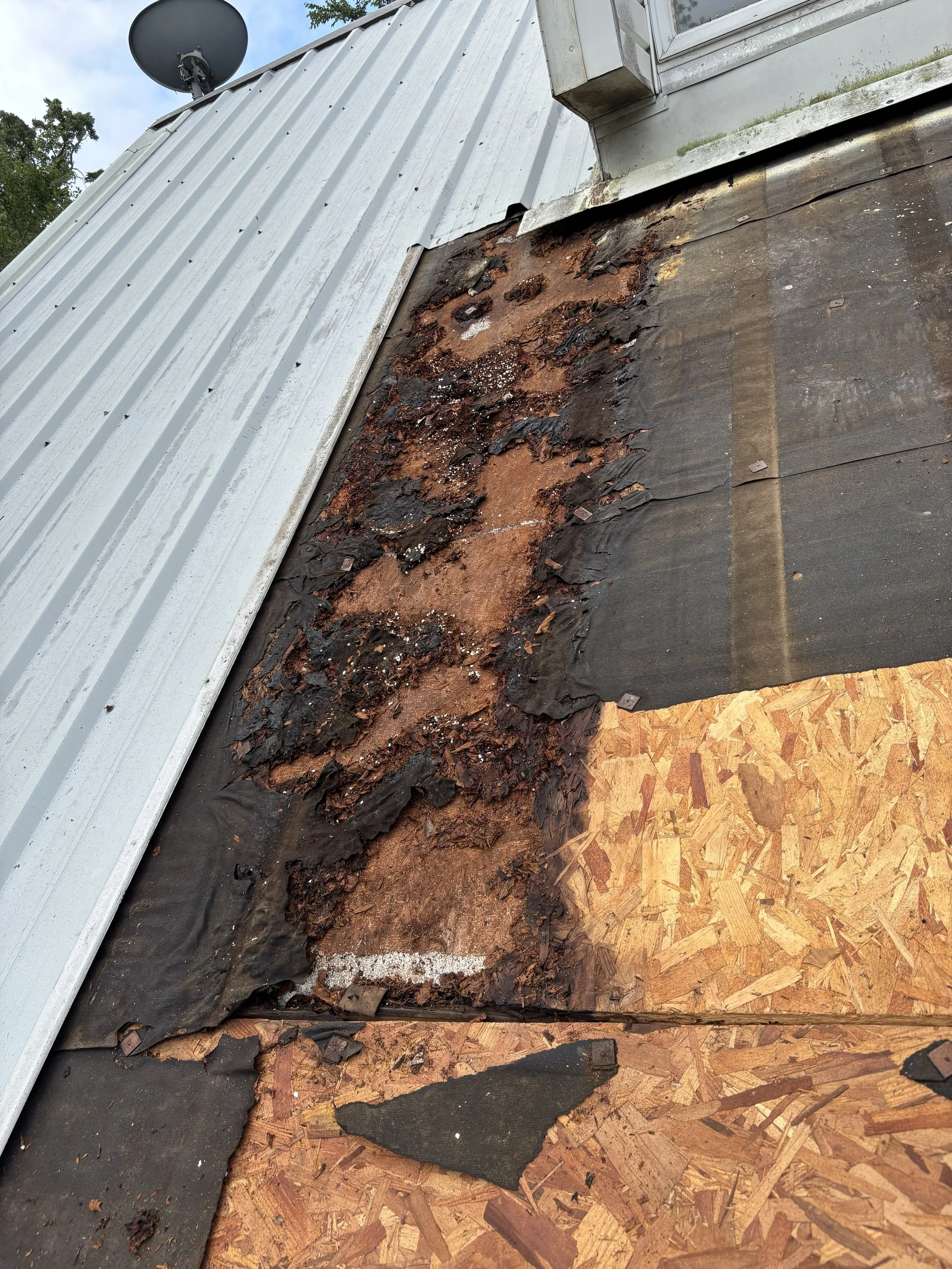
None of these require heroics to fix. They require attention to a known checklist, which is exactly what Section 7 below provides. And because OSB rot is just one of several documented SIP failure modes, our SIP Problems & Failure Modes guide covers the full picture if you want to see how this one fits alongside the others.
Every SIP project that holds up well over time, residential or commercial, gets these four things right.
Control liquid water. Correctly layered weather-resistive barrier details, flashing that sheds water downward, kick-out flashing at every roof-to-wall transition, and underlayment that actually sheds water.
Control air. Sealant and SIP tape at every joint, spline, and penetration, plus a verified blower-door test rather than guesswork.
Control vapor. Keep indoor humidity in check, use balanced ventilation (an ERV or HRV).
Control temperature. Keep the building's thermal layer continuous, design the roof correctly for the climate, and use vented cold roofs where appropriate.
Get these four right, and OSB rot stops being something to worry about.
It helps to know what's actually fixable and what isn't, so a stained panel doesn't turn into unnecessary panic, or an unnecessary teardown.
Surface mold is cleanable and cosmetic. It's a sign moisture was elevated at some point, not that the structure was compromised.
Localized wetting can often be dried if caught early, though it should be monitored, not just assumed fine.
Structural rot is permanent. The affected OSB or panel section needs to be removed and replaced.
This is also where it's worth being clear about roles: PGS Consulting LLC provides diagnosis, documentation, and repair planning. The actual field labor and repair work belongs with your contractor.
Most mold species need wood moisture content above roughly 19-20%, sustained over time, before they can grow. Below that threshold, water is held tightly inside the wood's cell walls and there isn't enough "free" moisture for mold to use. OSB behaves a little differently than solid lumber: because it's resin-bound, it absorbs moisture more slowly at first, but once wet, it can hold that moisture longer at cut edges. Mold also needs warmth (roughly 40-100°F) and several days of exposure. Remove any one of the three, moisture, warmth, or time, and mold growth slows or stops. Mold is a signal that an assembly saw elevated moisture. On its own, it doesn't mean the OSB lost structural strength.
During design: confirm the SIP assembly design fits the local climate, specify balanced ventilation, require continuous weather-resistive barrier sequencing, and require specific sealing details at the ridge, eaves, and penetrations.
During construction: seal every joint with the manufacturer-approved sealant and tape, verify spline installation before panels are closed in, protect panels from weather while staged on site, flash every penetration, and run a blower-door test.
As a homeowner: keep indoor humidity between 30-50%, use your ventilation system as designed, check for leaks after major storms, and keep gutters and roof drainage clear.
If you're earlier in the process, here are some resources to help guide you:
And for the connection details, sequencing, and common field errors behind the construction checklist above, our SIP Installation Guide covers it in full.
When OSB shows signs of distress, it's not a material failure. It's a system failure, and system failures are preventable with clear standards, good training, and attention to detail.
SIPs remain one of the highest-performing building enclosure systems available today. They deliver strong energy performance, real structural capacity, and faster construction timelines. Like any high-performance system, they reward precision. That's not a burden, it's simply the standard that comes with building something better than average.
Get the details right, and a SIP structure will deliver decades of quiet, comfortable, durable performance, without the fear or confusion that too often surrounds moisture and mold conversations.
SIPs themselves don't rot. The OSB skin can deteriorate if liquid water or moisture-laden air reaches it and stays long enough that it can't dry out. With good moisture management, this is preventable.
Three things, alone or combined: bulk water intrusion, air leakage, or vapor drive from high indoor humidity. These are system issues, not material defects. Proper sealing, flashing, ventilation, and humidity control remove the conditions that lead to rot.
Not on its own. Mold is a surface-level response to elevated moisture, and it's cleanable. It doesn't mean the panel has lost structural strength. Rot is different: it's structural decay and requires replacement.
Mold looks like surface discoloration or spotting. Rot shows up as softened OSB, flaking fibers, loss of adhesion between the OSB and foam, or thickness swelling that doesn't go away after drying. A moisture assessment can confirm which one you're dealing with.
SIP roofs are tightly built, high-performance assemblies without a hidden, vented cavity behind the insulation. Problems show up sooner rather than staying hidden for years. That's useful early feedback, not a sign of a weaker system.
Yes, if the wetting was brief and the assembly has a way to dry. Repeated wetting or long periods of saturation can cause permanent swelling or damage the bond between the OSB and foam, so early detection matters.
The same places any roof or wall is vulnerable: ridge beams and peaks, eaves and fascia transitions, windows and doors, mechanical penetrations, and areas with poorly managed indoor humidity. All are predictable, and all are preventable with correct detailing.
Focus on four controls: liquid water, air, vapor, and temperature. Get these four right and OSB rot becomes a non-issue.
Surface mold can be cleaned, and localized wetting can often be dried out if caught early. Bondline failure or structural rot can be repaired in place depending on the severity of damage. PGS provides diagnosis and repair planning; field labor is handled by your contractor.
Not special, just consistent. Keep indoor humidity between 30-50%, use your ventilation system as designed, and check for leaks after major storms. Built and maintained correctly, SIPs perform exceptionally well over the long term.
PGS Consulting LLC provides independent diagnosis, moisture assessments, and repair planning for SIP buildings, backed by 40+ years of engineering, manufacturing, and forensic experience.
Talk to Joe Pasma, PE
Electricians and plumbers hear "SIPs" and assume complicated. The reality is simpler than most expect. This guide breaks down exactly how wiring and plumbing work in SIP construction -- including how electrical chases eliminate foam drilling, why plumbing belongs on interior walls, and what a prepared GC does before the first crew shows up.
By Joe Pasma, PE | PGS Consulting LLC | SIP Engineering & Consulting | Published June 24, 2026
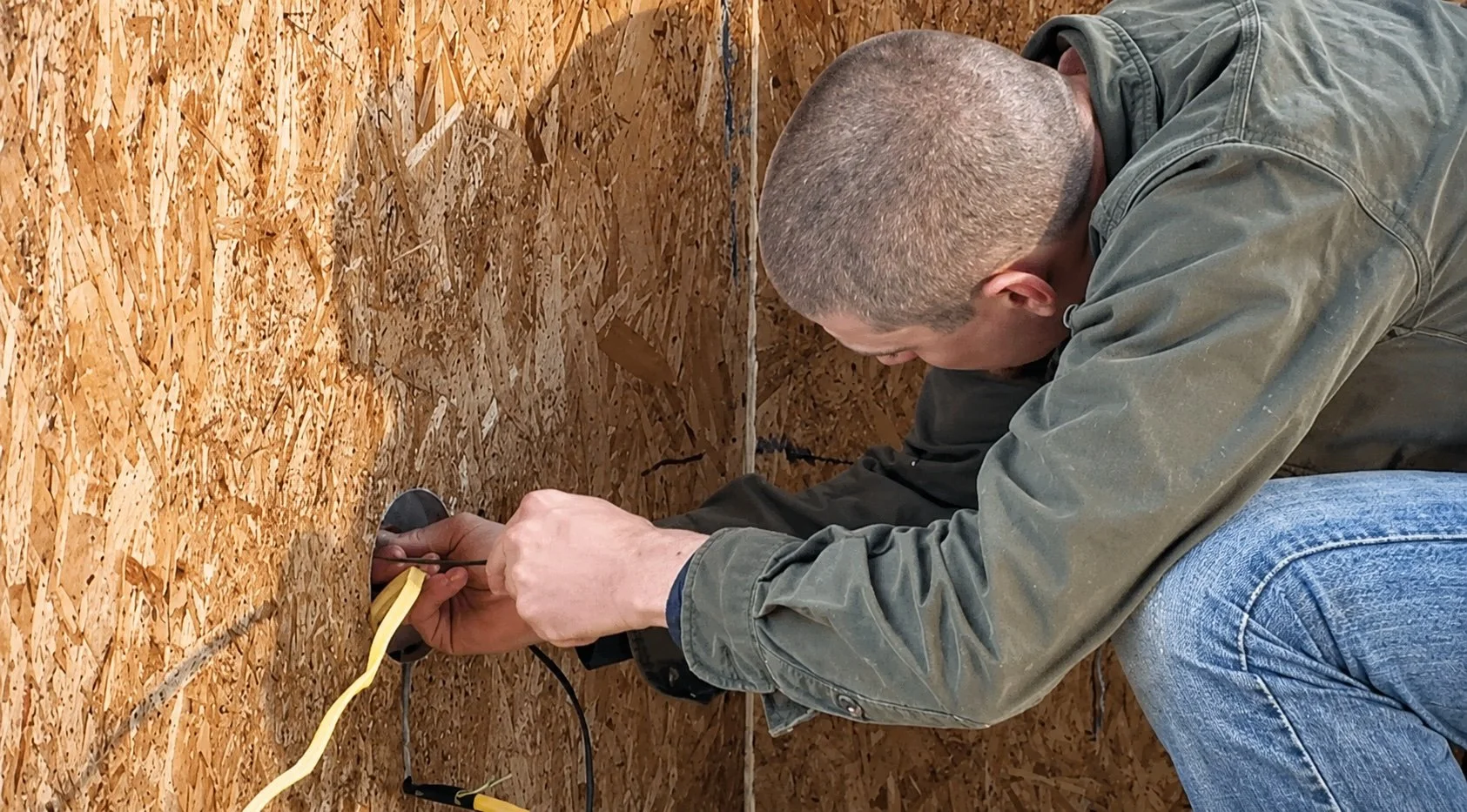
SIPs are not hard to wire or plumb. They require a different workflow, not a harder one.
Electricians push Romex through pre-cut chases -- no foam drilling, no special tools, no new certifications required.
Plumbing belongs on interior walls in SIP construction. This is best practice in any high-performance building, not a SIP-specific limitation.
Upfront planning replaces on-the-fly improvisation. That shift makes the job faster and more predictable, not harder.
After one SIP project, most electricians and plumbers say the same thing: "That was easier than I expected."
One of the most common objections we hear from builders, electricians, and plumbers considering Structural Insulated Panel (SIP) construction comes down to a single question… "Aren't SIPs hard to wire or plumb?"
It is a fair question. Electricians and plumbers have spent years working in open stud bays -- drilling wherever they need to, improvising on the fly, and working from decades of muscle memory. SIPs look different. And different feels hard until you understand how the system works.
Here is the short answer: SIPs are not hard to wire or plumb. They are just different. Once you see how the workflow actually runs, the concern usually disappears fast.
This article breaks down exactly how wiring and plumbing work in SIP construction, what trades actually need to do their job well, and why most electricians and plumbers prefer SIPs after their first project.
SIP panels come from the factory with electrical chases already built in. These are pre-cut channels running horizontally and vertically, typically 4’ on center, through the foam core, positioned at standard heights, typically switch and outlet heights (approximately 14” and 44” above the floor), and mapped on the shop drawings. Electricians do not fish wires through foam. They push Romex through the chases that are already there.
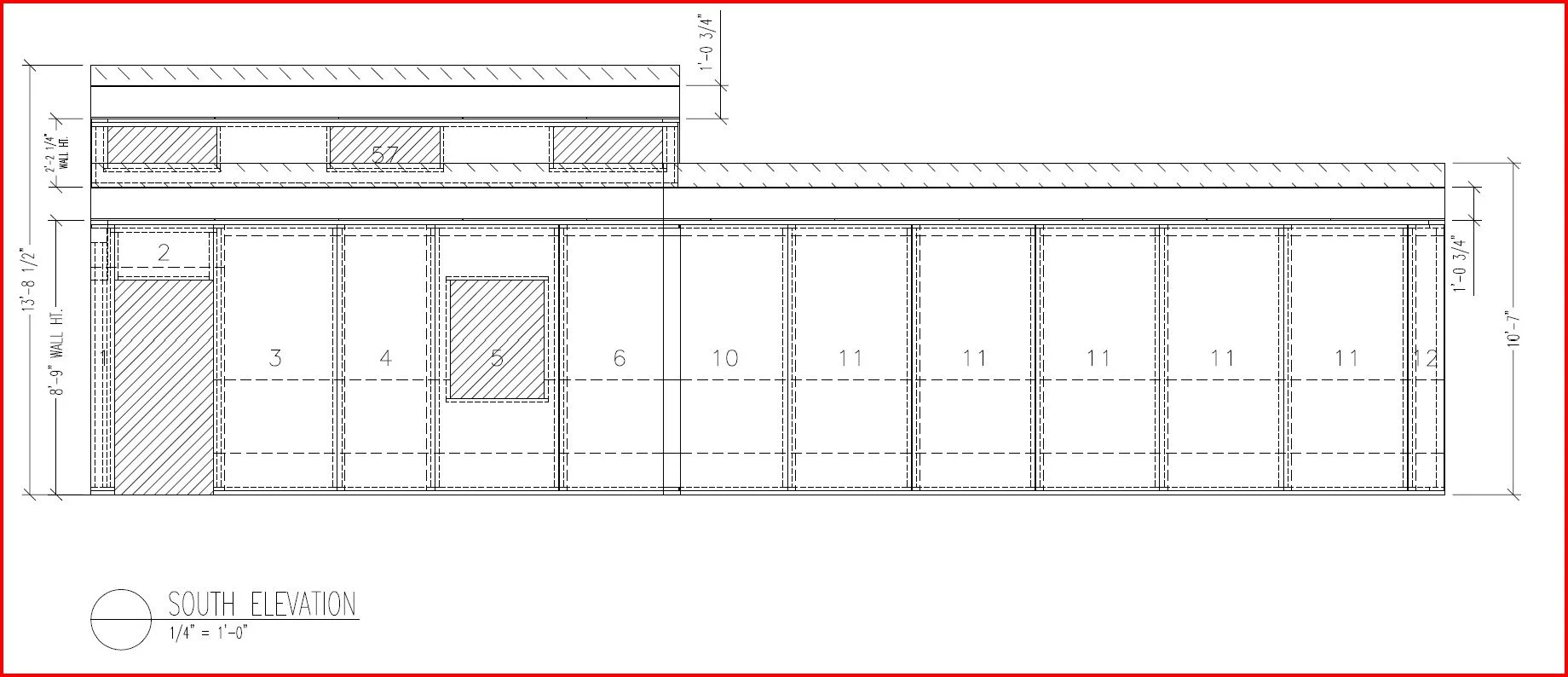
Longer dashed lines represent horizontal and vertical electrical chases. Short dashed lines are recessed edges for lumber and splines.
Here is what the actual electrical workflow looks like on a SIP project:
Review the chase map on the shop drawings -- chase locations are already marked
Drill the sill plate at vertical chase locations - (SIP installation contractor does this)
Drill the top plate at vertical chase locations - (SIP installation contractor does this)
Cut in switch and outlet boxes
Push Romex through the pre-cut chases
Install electrical boxes at required locations - remodeler boxes work well
Pull circuits as usual
Seal the boxes and any unused chases -- this is required to maintain the air barrier and meet fire safety requirements
That is the whole workflow. No special tools. No foam drilling. No exotic techniques. No guessing about where wires can go.
The main shift for electricians is that routing decisions are made upfront, on the drawings, rather than on the fly in the field. For most trades, that shift feels like less work -- not more.
Electricians who have done one SIP project almost always say the same thing: "This is easier than drilling studs all day." The work moves from improvisation to execution. Once you have a clean chase map, the job runs predictably.
Electricians working in stick-framed walls deal with a long list of tasks beyond just pulling wire: drilling through 50 or more studs, fire-stopping, fighting back blown insulation, air-sealing after the fact, and managing thermal bypasses at penetrations.
SIPs eliminate most of that list.
On a SIP project, there are no studs to drill through, no fire-stopping after wiring, no insulation blocking access, and no air-sealing required after the fact. The envelope is already airtight by design. The only requirements are sealing the electrical boxes and any unused chases -- steps that take minutes, not hours.
The result is a cleaner, faster electrical scope once the workflow is understood. After one project, most electricians are faster on SIPs than on comparable stick-frame builds. For a broader look at how SIPs differ structurally from stick framing and why trade coordination matters, the SIPs vs. stick framing guide covers the full comparison.
This is the part that creates the most confusion -- and the most unnecessary concern.
You should not run plumbing in exterior SIP walls.
But here is the thing: you should not run plumbing in exterior stick-framed walls either. Not if you care about freeze protection, condensation control, air sealing, or long-term durability. Running supply lines or drain stacks through an exterior wall is a problem in any high-performance building system. SIPs just make the rule more obvious.
Plumbing in SIP construction is straightforward:
Run all supply and drain lines on interior walls
Use soffits, chases, or dropped ceilings for vertical stacks
Coordinate penetration locations before the job starts -- not during rough-in
If plumbing must be located on exterior walls, furring out a stick framed wall works well
Furred out stick framed plumbing wall next to exterior SIP wall.
When the coordination happens upfront, plumbers work exactly as they would on any other project. The scope does not change. The tools do not change. The only difference is that the planning happens on paper before the first pipe goes in, rather than on the fly in the field.
This approach also produces a better building. Interior plumbing means less risk of freezing, less condensation risk in the wall assembly, and a cleaner, more durable envelope long-term.
The table below shows where the actual workflow differences land for each trade.
← Swipe to view full table →
| Category | Stick Framing | SIP Construction |
|---|---|---|
| Wiring Pathways | Drill anywhere through studs | Use pre-cut chases -- locations mapped on drawings |
| Wire Routing | Drill studs, fire-stop, insulate | Push Romex through chases |
| Electrical Boxes | Standard install | Standard install, then seal the box |
| Air Sealing | Done after wiring, as a separate step | Built into the panel -- seal boxes and unused chases only |
| Plumbing Location | Often runs in exterior walls | Interior walls only or furred out exterior walls |
| Planning Required | Minimal -- improvise in the field | Required upfront -- saves time and rework later |
| Labor Time | Higher -- more drilling, more sealing steps | Lower after the first project |
| Risk Profile | More penetrations, more potential for leakage | Fewer penetrations, more predictable performance |
| Trade Training Needed | None -- familiar system | One project, or 1-2 hours of SIP basics |
SIPs compress the work. They do not add to it.
When wiring and plumbing are done correctly in SIPs, the building performs with fewer long-term problems than most comparable stick-frame structures. That is not a marketing claim -- it is the result of fewer penetrations, less air leakage, and a more controlled building envelope.
Correctly executed SIP construction reduces:
Envelope penetrations (fewer holes in the thermal boundary)
Air leakage at wiring and plumbing locations
Condensation risk in wall and roof assemblies
Mold potential from moisture accumulation
Thermal bridging at framing locations
Long-term maintenance from callbacks and repairs
None of that is "no risk." Construction always involves risk. But the risk profile on a well-coordinated SIP project is more predictable and more manageable than most builders expect going in. For a detailed breakdown of where SIP problems actually come from -- and why execution, not the material, is almost always the root cause -- the SIP problems and failures guide is worth reading before the job starts.
The Structural Insulated Panel Association (SIPA) and various SIP manufacturers have produced practical training videos specifically for electricians and other trades working on SIP projects. These are short, field-focused, and cover the core workflow clearly. The videos can be found on the manufacturers websites and YouTube channels.
DIY’ers have found SIPs easy to wire and have published videos on YouTube showing some of their work.
Rough-In Electrical Wiring on a SIP Home
SIP Electrical Chase Demo
SIPA Builder Best Practices documents BP-9 (Electrical) and BP-10 (Mechanical) cover chase use, box installation, penetration sealing, sill and top plate drilling, and manufacturer coordination in detail.
These resources eliminate the majority of trade uncertainty before anyone arrives on site. A prepared GC shares them during the pre-construction coordination meeting -- not the morning of rough-in.
Electricians and plumbers are not resistant to SIPs. They are resistant to risk -- and unfamiliar systems feel risky until the workflow is clear.
Stick framing offers open cavities, unlimited drilling access, and decades of familiar muscle memory. SIPs offer pre-cut chases, sealing requirements, and a workflow that is front-loaded with coordination instead of back-loaded with improvisation.
Different feels hard. Until you do it once.
The friction that shows up on SIP jobs -- hesitation from trades, questions mid-project, occasional missteps -- almost always comes from one source: missing information before the job started. When the chase map is clear, the sequencing is defined, the "do not cut" zones are marked, and there is someone to call if something looks off, the job runs.
The SIP installation guide covers coordination and sequencing in detail. The SIP FAQ addresses the most common jobsite questions across all trades.
In 40+ years of SIP work, I have never seen a trade fail because SIPs were too hard. What I have seen -- more times than I can count -- is a trade get put in an impossible position because the coordination was not done ahead of time. When the prep work is there, the job moves. When it is not, everyone on the site pays for it.
-- Joe Pasma, PESIPs are not hard to wire or plumb. They require a different workflow -- one that is front-loaded with planning instead of improvisation. That shift is an adjustment. It is not a barrier.
Electricians who understand the chase system work faster on SIPs than on stick frame. Plumbers who coordinate penetrations upfront work exactly as they do on any interior-wall scope. Both trades walk off their first SIP project more confident than when they walked on.
The concern about wiring and plumbing in SIPs is understandable. But after 40 years of SIP engineering, manufacturing, and field oversight, the pattern is clear: when the coordination happens before the job starts, the trades do not struggle. They execute.
If you are planning a SIP project and want support setting up the coordination and documentation that makes every trade's job straightforward from day one, PGS Consulting LLC can help.
No. Standard tools work. The only difference from stick framing is drilling the sill plate and top plate at the chase locations marked on the shop drawings. This is typically taken care of by the SIP installers. No new equipment, no certifications, no manufacturer training required.
No. SIPs come from the factory with pre-cut electrical chases. Electricians push Romex through the existing chases -- no foam drilling required. The routing is already mapped on the shop drawings before the crew arrives.
Yes. Electrical boxes and any unused chases must be sealed to maintain the air barrier and meet fire safety code requirements. This is a short step, not a complicated one -- but it is not optional.
No -- and it should not go in exterior stick-framed walls either. Plumbing belongs on interior walls in any high-performance building system. SIPs make that best practice a firm requirement. Coordinate penetration locations early and the plumbing scope runs exactly as it would on any other project.
Usually yes. No stud drilling, no fire-stopping, no insulation blocking access. Once the workflow is understood, most electricians work faster on SIPs than on comparable stick-frame projects. The learning curve is short -- one project is typically enough.
Only basic orientation to the workflow -- not certifications, not manufacturer training. The SIP manufacturer’s and SIPA's training videos and best practice documents cover everything most electricians and plumbers need before their first SIP project. A short pre-construction meeting with a prepared GC handles the rest.
SIPs can be repaired, but prevention is far better than repair. Clear "do not cut" zones, a labeled chase map, and a defined escalation path -- someone to call before cutting anything that looks wrong -- prevent the vast majority of field errors. See the SIP problems and failures guide for what the most common missteps look like and how they are avoided.
The GC sets expectations and manages trade sequencing. The SIP manufacturer provides the chase map and shop drawings. PGS Consulting LLC provides project-specific coordination documentation, trade-ready workflows, and field-ready checklists when additional support is needed. Learn more on the PGS Consulting services.
PGS Consulting LLC helps builders and GCs set up SIP jobs for clean execution -- with project-specific documentation and trade coordination support before the first crew arrives.
Talk to Joe Pasma, PE
A forensic case study of SIP ridge rot caused by incomplete air sealing at the ridge joint -- not exterior water intrusion. Investigated and documented by Joe Pasma, PE.
Investigated and Authored By Joe Pasma, PE | PGS Consulting LLC, Licensed Professional Engineer | 40+ Years in SIP Engineering, Manufacturing, and Forensic Analysis | Published June 23, 2026

Structural Insulated Panels, SIPs, are an excellent building system. When they are designed and installed correctly, they perform exactly as intended -- delivering superior energy efficiency, structural strength, and a tight building envelope that outperforms conventional framing. This case study is not an indictment of SIPs. It is a documentation of what happens when specific installation details are not executed correctly.
This case involves exterior OSB deterioration on a residential SIP roof. The homeowner reported staining on the structural ridge beam, a musty odor, and missing ridge-cap shingles. Early suspicion focused on the roofing system -- specifically those missing shingles. The forensic investigation told a different story entirely.
The roofing was intact. The underlayment had not failed. There was no exterior water pathway of any kind. The source of the damage was a single installation failure: the ridge joint was not completely air sealed. Warm, moist interior air was leaking through gaps in the ridge joint, condensing on the underside of the roofing underlayment, and being absorbed -- season after season -- by the exterior OSB of the SIP roof panel. This is a preventable, correctable installation issue. It is not a flaw in the SIP system itself.
This failure was caused by incomplete installation, not by a defect in the SIP system. When ridge joints are properly sealed and verified, this failure mode does not occur.
SIP ridge rot, in cold climates, is typically caused by air leakage at the ridge joint, not exterior rain or defective shingles.
Warm, moist interior air rises to the ridge, works its way through unsealed areas, condenses on the underside of the roofing underlayment, and is absorbed by the exterior OSB of the SIP roof panel.
Unsealed electrical chases near the ridge acted as direct air pathways and significantly accelerated the damage.
Missing ridge-cap shingles were a symptom of deteriorated OSB, not the cause of the failure.
A blower-door test at SIP installation completion would have identified the air leakage before any OSB damage occurred.
Repairs required removing the roofing at the ridge, drying the OSB, reconstructing the air seal completely, and verifying airtightness with a blower-door test before re-roofing.
Continuous ERV/HRV operation and indoor humidity monitoring are essential in cold climates to reduce moisture load on the building envelope.
SIP ridge rot is the deterioration of the exterior OSB (oriented strand board) facing on a SIP roof panel, concentrated at the ridge line and the upper portions of the spline joints where panels meet the ridge. It shows up as darkening, softening, and eventually fiber separation in the OSB. Left alone long enough, the OSB loses structural integrity, and sections the panels loose structural integrity.
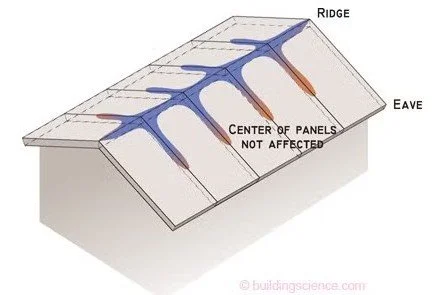
SIP Ridge Rot - Distinctive pattern of moisture damage at roof ridge and at upper panel joint locations.
The term "rot" implies biological decay driven by exterior moisture -- like a wood beam sitting in standing water. That is not what this is. SIP ridge rot is driven by condensation on the interior side of the roofing underlayment. The source of that moisture is not rain. It is the air inside the building. Understanding that distinction is the foundation of every forensic investigation into this failure mode.
The exterior OSB on a SIP roof panel is part of the structural sandwich. It is not decorative. When it deteriorates, the panel loses load-carrying capacity. In roof systems this is a structural concern, not just a cosmetic one.
Before documenting the field findings, it is worth establishing the failure mechanism -- because it is the mechanism that explains every observation made during the investigation.
Warm, moist air rises inside the building. In winter, interior air carries significant moisture. Because warm air rises, that moisture-laden air moves upward toward the ridge -- which is the highest point of the roof assembly.
Air finds gaps in the ridge joint. The ridge joint in a SIP roof is typically a plumb cut where the panels meet at the peak. If the sealant is incomplete, the SIP tape over the ridge beam was not installed properly or at all, or electrical chases near the ridge were left open, warm, moist air may escape into that joint.
The air hits the cold underside of the roofing underlayment. The underlayment sits between the OSB and the shingles. In winter, that surface is cold. When warm, moist interior air makes contact with it, the moisture condenses -- the same way a cold glass sweats on a humid day.
The exterior OSB absorbs the condensation. That condensed moisture has nowhere to go except into the OSB directly beneath it. This creates a repeated wetting cycle every winter. Over time, if the OSB is not allowed to dry, the OSB swells, the fibers separate, and the OSB begins to deteriorate.
The damage radiates outward. OSB deterioration is worst at the ridge peak, then tapers downward along the spline joints on both sides of the ridge. In severe cases, it can extend 18 to 24 inches down from the ridge before the moisture levels drop off enough to stop the damage.
Stack effect -- the natural pressure difference that pushes warm air toward the top of a building in cold weather -- amplifies every step of this process. A well-sealed ridge in a well-ventilated home may never develop ridge rot. An incompletely sealed ridge in a home with high indoor humidity and an intermittent ERV operation is at significant risk.
The project was a steep-slope, 8/12 roof pitch, SIP roof built on a structural ridge beam. The panels were 10 1/4 inches thick. The roofing system included asphalt shingles over underlayment, with a ridge cap at the peak. The specifications called for continuous sealant and SIP tape at the ridge -- but those details were not confirmed as installed.
The homeowner first noticed staining on the structural ridge beam and a musty smell. A few ridge-cap shingles were also missing. Those missing shingles became the focus of early concern, but they turned out to be a distraction.
A full forensic investigation included moisture mapping, blower-door testing, thermal imaging, borescope inspection at the ridge, core sampling of the roof panel, and inspection of electrical chase terminations. Here is what it found:
Swipe to scroll →
The roofing was intact. The underlayment had not failed. There was no exterior water pathway. Every indicator pointed to the same conclusion: this was a purely air-driven moisture failure that originated inside the building.
The missing ridge-cap shingles were caused by the deteriorated OSB not being able to hold the roofing nails. Once that is understood, it becomes clear why replacing the shingles alone accomplishes nothing. You have not addressed the source of the deterioration.
This investigation identified a cluster of contributing factors that amplified the damage. Each factor alone may not have produced visible failure, but together they created conditions where the ridge joint had almost no defense against the failure mechanism.
Swipe to scroll →
In this case, visible damage at the ridge was already significant by the time a forensic investigation was initiated. The indicators below were all present -- and several of them appeared well before the OSB deterioration became visible. They are documented here as a reference for others evaluating similar conditions on SIP roofs:
Musty smell near the ridge. This is often the first sign. It appears at various times and is strongest when the wind blows hard, making it easy to dismiss.
Staining on the structural ridge beam. If the ridge beam is visible from inside, dark staining along it can indicate moisture migration from the ridge joint.
Missing or lifting ridge-cap shingles with no obvious wind explanation. If multiple shingles are displaced and the roofing below them appears intact, deteriorating OSB may not be able to hold roofing nails.
Elevated moisture readings at the ridge during moisture mapping. A moisture meter applied to the OSB at the ridge shows significantly higher readings than panels lower on the roof slope. Moisture levels greater than 16% are considered elevated. Moisture levels greater than 19% can support fungal growth.
Thermal imaging showing warm air pathways at the ridge. In cold weather, thermal imaging along with blower-door testing can reveal air moving from interior to exterior at the ridge joint -- before any OSB damage is visible.
If you are seeing any of these in a SIP roof, the next step is a structured investigation, not a roofing repair.
For a broader overview of how and why SIP roofs fail, see our resource page on SIP Problems and Failure Modes.
Ridge rot repairs are not complicated, but they are not simple either. The key is doing them in the right order. Replacing shingles without addressing the air leakage just resets the clock on the same failure.
Before any structural repairs, the indoor humidity situation has to be addressed. If the ERV is not running continuously, start there. Get a humidity monitor and understand what indoor RH levels look like in winter. The target in cold climates is generally below 35 to 40 percent relative humidity during heating season.
Roofing and ridge cap at the deteriorated area need to come off so the OSB can be assessed and dried. Temporary dehumidification may be needed to bring the OSB to below 15 percent moisture content before repairs proceed.
This is the most critical step. Replace deteriorated OSB as needed, then rebuild the ridge joint and air seal properly:
Backer rod and pliable SIP sealant at the lower depth of the plumb cut
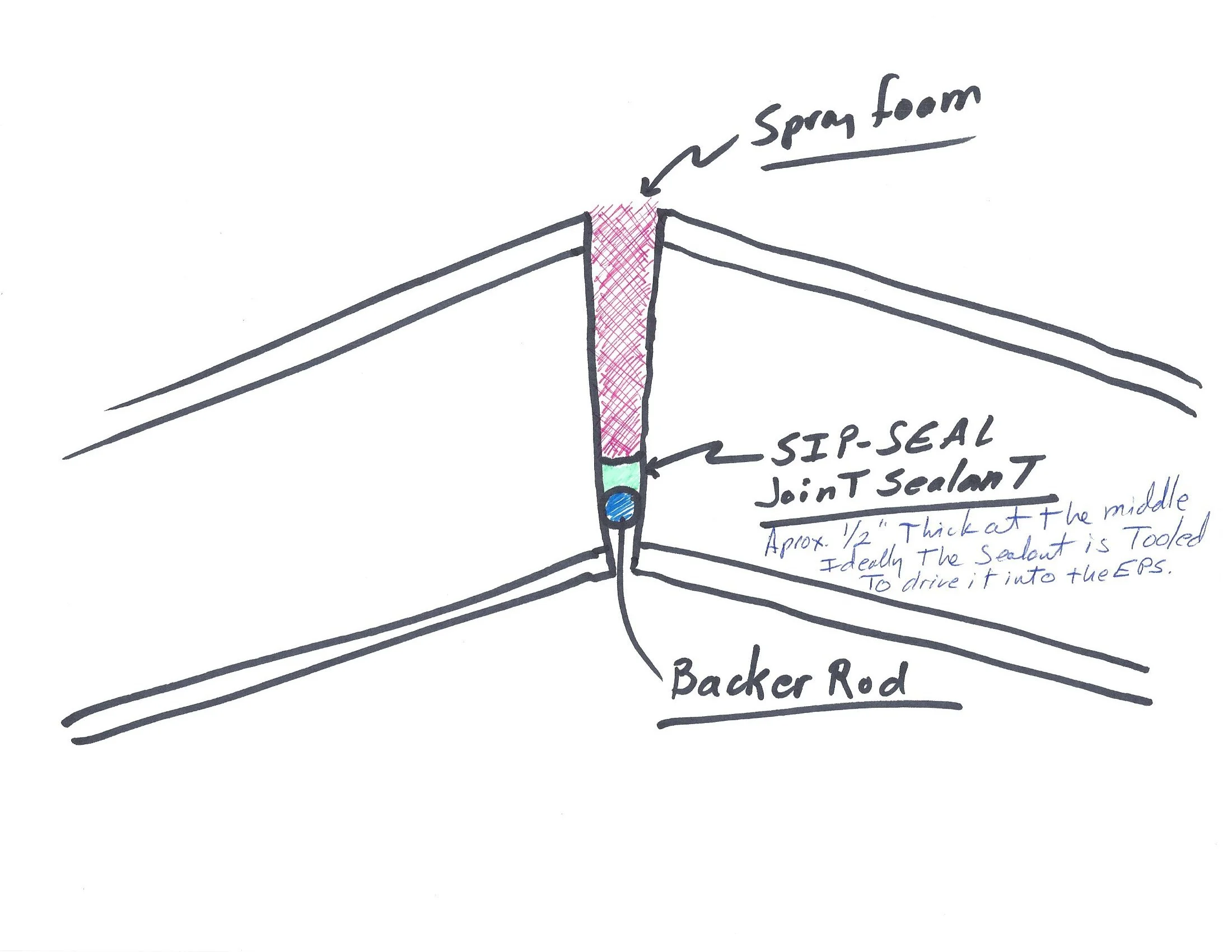
Plumb Cut Ridge Panels
SIP - Seal Joint sealant is a flexible sealant that will not harden with time.
The backer rod is critical to the detail so is tooling the sealant.
Expanding foam applied for the remaining depth of the ridge joint
SIP tape applied continuously over the ridge beam (this may not be possible)
All electrical chase terminations sealed completely
Before any roofing goes back on, a blower-door test should confirm that the ridge joint is now airtight. If air leakage is still detectable, find it and seal it before proceeding.
Reinstall roofing over a high-permeability underlayment to allow any residual moisture in the OSB to dry outward over time. A vented ridge cap is also beneficial here -- not because it fixes the air leakage problem, but because roofing ventilation helps manage any residual moisture in the roofing system.
For more on how SIP roof assemblies should be sealed and detailed at installation, see the SIP Installation Guide in the Resource Hub.
A vented ridge cap ventilates the roofing system. It does not ventilate the SIP core. Do not confuse the two. Adding a vented ridge cap without sealing the ridge joint will not prevent ridge rot. The air pathway has to be closed first.
This failure was preventable. Every element that contributed to it was addressable at the time of installation, or shortly after, with standard SIP best practices. The following are the specific failures this investigation identified -- documented here as a resource for builders, designers, and SIP owners evaluating similar assemblies:
The ridge joint must be continuously sealed -- and that sealing must be verified by the installer. That means sealant at the full depth of the plumb cut, SIP tape over the ridge beam, and documented confirmation it was completed. Specifications on paper are not the same as verified installation. This is the installer's responsibility and the single most critical detail in a SIP roof assembly.
Electrical chases must be sealed by the installer after wiring is complete. Open chases near the ridge are warm-air delivery channels directly into the most vulnerable part of the roof. This step is straightforward and inexpensive. Skipping it is a significant installation error.
A blower-door test should be required at SIP installation completion. There is no substitute for measured verification. A properly executed blower-door test would have identified the air leakage in this case before a single heating season passed -- and before any OSB damage occurred.
ERV/HRV systems must run continuously in cold climates during the winter. An intermittently operated ventilation system may not be controlling indoor humidity. In a tight SIP home in a cold climate, continuous mechanical ventilation is not optional -- it is part of how the building is designed to function.
Indoor humidity should be monitored by the homeowner. A basic humidity monitor costs almost nothing compared to a ridge rot remediation. Maintaining indoor RH below 35 to 40 percent during heating season is the simplest ongoing step a homeowner can take to protect a SIP roof assembly.
For a deeper look at how moisture behaves in SIP assemblies and what it does to OSB over time, learn more on SIP Energy Performance and Moisture Management.
SIP ridge rot is caused by warm, moist interior air leaking through an incompletely sealed ridge joint, condensing on the underside of the roofing underlayment, and being absorbed by the exterior OSB of the SIP roof panel. The result is a repeated wetting cycle every heating season that progressively deteriorates the OSB at the ridge line and along adjacent spline joints. It is an air-driven, installation-driven failure -- not a flaw in the SIP system and not caused by exterior water intrusion.
No. SIP ridge rot is caused by incomplete installation -- specifically, failure to fully air seal the ridge joint during construction. When the ridge joint is properly sealed with continuous sealant, SIP tape over the ridge beam, and verified with a blower-door test, this failure mode does not occur. The SIP panels in this case were not defective. The installation detail was not completed correctly.
No. Missing ridge-cap shingles are a symptom of OSB deterioration, not its cause. When the OSB beneath the ridge cap swells and loses integrity from repeated moisture cycling, it cannot hold roofing nails. The shingles should be replaced, but replacing them alone does nothing to address the underlying installation deficiency driving the rot.
No. A vented ridge cap ventilates the roofing system between the underlayment and the shingles. It does not ventilate the SIP core and does not prevent air-driven condensation at the ridge joint. Preventing ridge rot requires the installer to seal the ridge joint completely -- a vented ridge cap above an unsealed joint accomplishes nothing in terms of preventing this failure.
Higher indoor humidity means the air leaking through an unsealed ridge joint carries more moisture. More moisture reaching the cold underside of the underlayment means more condensation and more water absorbed by the OSB each winter. In cold climates, indoor relative humidity during heating season should be kept below 35 to 40 percent. Continuous ERV/HRV operation and a humidity monitor are the most practical ways to manage this.
Repairs require removing roofing at the affected ridge area, drying the OSB to below 15 percent moisture content, replacing deteriorated OSB as needed, and completely reconstructing the ridge joint air seal with continuous sealant, expanding foam, and SIP tape. All electrical chase terminations near the ridge must be sealed. A blower-door test confirms airtightness before roofing goes back on. High-permeability underlayment is recommended to allow residual drying.
Yes, and in most cases it does. SIP ridge rot is driven by air leakage from inside the building, not by rain or exterior water entry. The roof in this case was completely watertight -- intact shingles, sound underlayment, tight flashing -- and significant OSB deterioration still developed. The unsealed ridge joint was the only entry point that mattered.
Early warning signs include a musty smell near the ridge during cold weather, staining on the structural ridge beam, and unexplained displacement of ridge-cap shingles. A blower-door test, thermal imaging in cold weather, and moisture mapping of the ridge OSB can identify air leakage and elevated moisture before visible structural damage develops. If you are seeing any of these signs, the appropriate next step is a forensic inspection -- not a roofing patch.
If you are seeing signs of ridge damage, moisture staining, or unexplained shingle displacement on a SIP roof, a forensic inspection can identify whether air leakage is involved -- before the OSB is compromised beyond repair.
Talk to a SIP Forensic EngineerSIP Problems and Failure Modes -- An overview of the most common ways SIP assemblies fail and how to recognize them
SIP Installation Guide -- How SIP roofs should be sealed, taped, and detailed to prevent air leakage
SIP Energy Performance and Moisture Management -- How moisture behaves in SIP assemblies and what it does to OSB over time
SIP Building Codes and Compliance -- Code requirements relevant to SIP roof assemblies and ventilation
How SIP Forensic Analysis Works -- A full explanation of the forensic investigation process for SIP failures

When builders say their subs don't know how to work with SIPs, they're not describing a SIP problem. They're describing a preparation problem. Here's what trades actually need -- and why the learning curve is shorter than most builders expect.
By Joe Pasma, PE | PGS Consulting LLC | SIP Engineering & Consulting | Published June 23, 2026
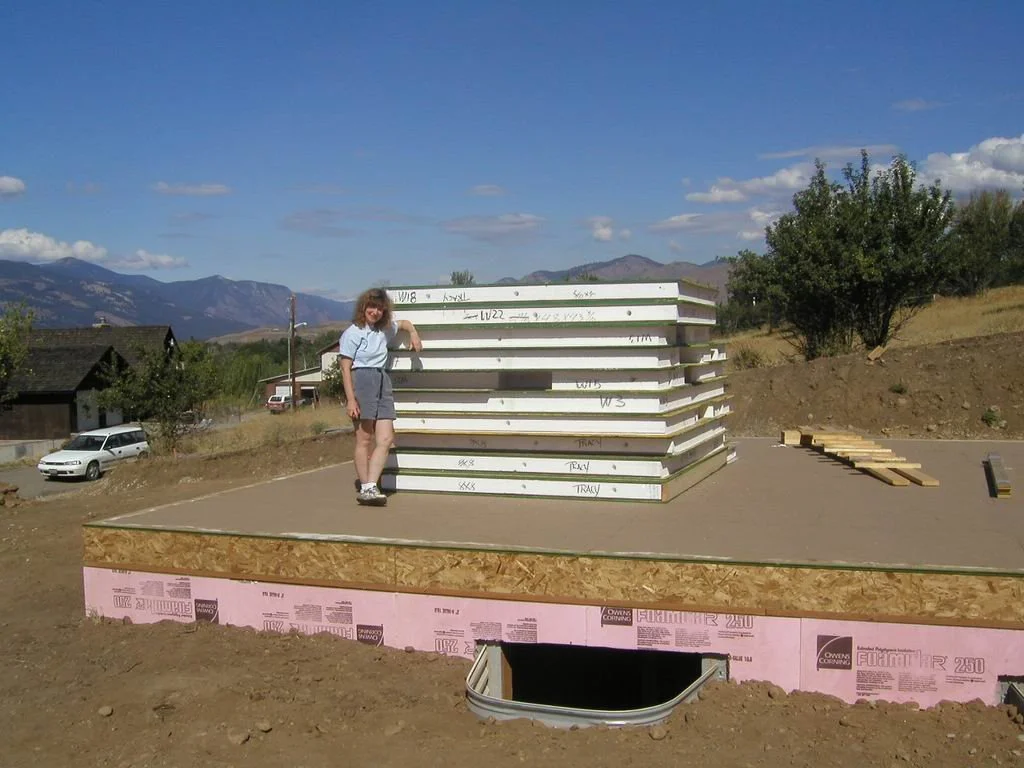
Structural Insulated Panels (SIPs) are not harder for subs -- they are just different. The learning curve is mostly a missing-information problem, not a skill problem.
Electricians, plumbers, HVAC installers, and framers do not need special tools or certifications to work with SIPs.
What subs actually need is a clear chase map, simple trade-specific guidance, defined "do not cut" zones, and a GC who is confident and prepared.
A 10-minute pre-construction huddle from a prepared GC eliminates the majority of friction on a SIP job.
After one SIP project, most subs say the same thing: "That was easier than I expected."
The learning curve is not a barrier to building with SIPs. It is a signal to plan ahead.
When builders raise the concern that their subs don't know how to work with SIPs, they are not really talking about SIPs.
They are naming a deeper, more practical worry: I don't want my jobsite to become the place where everyone figures it out on the fly.
That is a fair concern. And it has a clear, straightforward solution -- not by turning subs into SIP specialists, but by giving them a predictable, field-ready workflow before the job starts.
After 40+ years in SIP engineering, manufacturing, and field oversight, Joe Pasma, PE has watched this play out on projects across the country. The friction is rarely about SIPs. It is almost always about preparation. This article breaks down exactly what subs need, what they don't, and how a GC can set a SIP job up for smooth execution from day one.
Subs are not resistant to new materials. They are cautious -- and for good reason. Their hesitation on a SIP job almost always comes from the same place: missing information.
Here is what typically creates anxiety on a SIP project:
No chase map or electrical routing plan
No clearly defined "do not cut" zones
No sequencing guidance for who goes when
No explanation of how penetrations need to be sealed
No description of what "done right" looks like
A GC who is still figuring things out alongside them
If a sub walks onto a SIP job and the first time they hear the word "SIP" is during the morning huddle, of course they're going to hesitate. That's not a training problem. That's a systems problem.
The good news is that systems problems are fixable -- usually before the first crew shows up.
To understand how SIPs differ structurally from stick framing and why trade coordination matters, the What Are SIPs guide is a useful starting point.
Here is the short list of what trades need to work confidently on a SIP job. None of it requires special certifications. None of it requires manufacturer training. It just requires a GC who has done the prep work.
What each trade needs to work confidently on a SIP project:
← Swipe to view full table →
| Trade | What They Need | What They Don't Need |
|---|---|---|
| Electricians | Chase map showing pre-routed locations, surface-mount plan, "do not cut" zones | Special tools, new certifications, panel manufacturer training |
| Plumbers | Coordinated penetration locations before work begins, clear allowed vs. avoid zones | Modifications to standard plumbing practice |
| HVAC | Duct routing plan, penetration details, sealing spec for airtight envelope | Special equipment or licensed SIP training |
| Framers | Panel layout, connection details, sequencing guidance to avoid overcutting | Experience with previous SIP projects |
| All Trades | A confident, prepared GC and a clear escalation path if something looks off | Improvisation or on-the-fly decisions about panel structure |
That's the whole list. Once those five elements are in place, the job runs. The learning curve is not steep -- it is just specific.
Break it down trade by trade and it gets even simpler. Every sub on a SIP project needs the same five things, just applied to their specific scope:
Where are the chases? Where are the structural zones? Where does nothing get cut? Subs should not have to guess at any of this. A clear layout eliminates most questions before the first tool comes out. See the SIP installation guide for how sequencing and layout coordination work in practice.
Not a manual. Not a manufacturer's installation guide. Just a short, clear answer to: what do I do first, what do I do second, and what do I definitely not do? That's it. One page per trade is usually enough.
Subs work well with boundaries. Boundaries reduce risk and reduce the mental load of working with something unfamiliar. A short list of specific no-go actions is more useful than a 60-page technical document.
Subs read the room. If the GC walks onto a SIP job uncertain and reactive, the subs will be uncertain and reactive. If the GC is calm, organized, and has answers ready, the crew adjusts quickly. The GC does not need to be a SIP expert -- they just need to have done the prep work.
Not to make decisions for them. Just a clear escalation path. "If you see something that doesn't match the layout, stop and call before you cut." That one instruction has saved more SIP projects than any amount of upfront training.
In 40+ years of SIP work, I have never seen a sub fail because SIPs were too hard. What I have seen -- more times than I can count -- is a sub get put in an impossible position because the coordination wasn't done ahead of time. When the prep work is there, the job moves. When it isn't, everyone on the site pays for it. -- Joe Pasma, PE
A GC does not need to be a SIP expert. Their job is to set expectations -- clearly, early, and in plain language.
A 10-minute pre-construction huddle handles the majority of the learning curve on a SIP job. Here is what that conversation looks like:
"Here is the chase map. Here is where all electrical routing goes."
"Here is where we do not cut -- these zones are structural."
"Here is how all penetrations get sealed when you're done."
"Here is who you call if something looks wrong before you cut."
"Here is the sequence -- who goes first, who follows, and what needs to be done before your trade arrives."
Subs don't need perfection. They need predictability. When the GC brings that predictability to the first conversation, the job starts from a position of confidence rather than uncertainty.
Problems on SIP jobs -- the kind that turn into costly repairs and schedule delays -- almost always trace back to one root cause: a lack of coordination before work began. The SIP problems and failures guide covers the most common failure patterns and what drives them.
Manufacturers provide real value: installation videos, technical documents, best practices, and general guidance. That content is useful and worth reviewing.
But manufacturers cannot provide what a specific project needs:
Project-specific sequencing based on your actual drawings
Trade-specific workflows tailored to your crew's scope
Coordination between architectural, structural, and MEP drawings
Field-ready checklists your subs can actually use on site
A clear answer to "what do I do first, second, and third?"
That gap is exactly what PGS Consulting LLC fills. Not by managing the job or training the crew, but by giving the team the documentation and coordination structure that makes SIPs feel familiar before anyone picks up a tool. Learn more about what that engagement looks like on the PGS consulting services page.
Every sub -- electricians, plumbers, HVAC installers, framers -- says some version of the same thing after their first SIP project: "That wasn't bad at all. I just needed to know what to expect."
The learning curve is real. It is just short.
After one project, most subs are more confident working with SIPs than the GC who hired them. The initial unfamiliarity drops fast when the workflow is clear. What looked like a training problem at the start of the job looks like a planning win by the end.
It is also worth noting: the concern that the learning curve adds labor cost is generally not supported by what happens on well-run SIP jobs. When coordination is done ahead of time, SIPs tend to reduce rework, reduce callbacks, and keep the schedule tighter than comparable stick-frame builds. The SIP cost guide breaks down where the real numbers land.
When a builder says "my subs don't know how to work with SIPs," they are not really raising a complaint about the material. They are naming something much more practical:
They want the job to run smoothly.
They want their trades to feel confident.
They want predictable sequencing and fewer surprises on site.
They want to avoid being the first one to "figure it out" on a live project.
Those are healthy instincts. And they are exactly the instincts that make SIPs a strong fit for a builder who thinks that way -- because SIPs reward exactly the things good builders already do. Clarity. Coordination. Clean workflows. Planning before the first crew shows up.
The learning curve isn't a barrier. It is a signal that you value doing things right the first time. That's the right instinct to build on.
No. Electricians do not need new tools or certifications. What they need is a clear chase map, a plan for where surface-mounted wiring makes more sense, and simple boundaries around where not to cut. When those pieces are in place, the electrical scope becomes predictable, and the job moves efficiently.
Yes -- as long as the locations are coordinated ahead of time. SIPs can accommodate plumbing penetrations, but they should be planned before the job starts, not improvised in the field. With a clean layout and clear allowed vs. avoid zones, plumbers can work confidently without slowing the schedule.
SIPs can be repaired, but the goal is to prevent unnecessary cuts in the first place. Clear boundaries, a simple escalation path, and unified drawings prevent most of these situations. When subs know exactly where structure matters, they do not have to guess -- and that is where the majority of accidental cuts originate.
No. Most of the friction on a SIP job comes from missing information, not from the panels themselves. Once subs understand the workflow -- usually within the first hour on site -- the job moves quickly. After one project, most trades say it was easier than they expected.
The GC sets expectations on the jobsite. The manufacturer provides general technical guidance. PGS Consulting LLC provides the project-specific documentation, coordination structure, and trade-ready workflows that make the job predictable for every sub. PGS Consulting LLC does not train subs or manage the jobsite -- we give the team a clean, unified system so each trade knows what to expect, what to avoid, and how their work fits into the overall sequence.
They require clear sequencing, not special sequencing. SIPs reward planning. When the GC has a simple, job-specific flow -- who goes first, what must be done before each trade arrives, and what "done right" looks like -- the entire project runs more efficiently than a comparable stick-frame build.
Most subs are not resistant -- they are cautious. The hesitation almost always comes from not knowing what to expect. Once they see the workflow and understand the boundaries, that caution disappears quickly. The learning curve is short, and confidence builds fast when the project is set up well from the start.
PGS Consulting LLC helps builders and GCs set up SIP jobs for smooth execution -- with project-specific documentation, trade coordination, and field-ready workflows your subs can actually use.
See How PGS Can Help
SIP panel failures rarely have a single cause. Learn what SIP forensic analysis is, when to use it, and what a real investigation looks like -- from a licensed PE with 40+ years of SIP experience.
By Joe Pasma, PE | PGS Consulting LLC, Licensed Professional Engineer | 40+ Years in SIP Engineering, Manufacturing, and Forensic Analysis | Published June 12, 2026
Something went wrong with your SIP building or you think something maybe wrong. Maybe it's a smell. Maybe it's a stain. Maybe it's a dispute between the builder and the manufacturer, and nobody agrees on what actually happened.
You don't need someone to guess. You need answers.
SIP forensic analysis is the structured process of figuring out exactly why a SIP system failed, what contributed to it, and what to do next. It replaces assumptions -- and the expensive decisions that come with them -- with documented, defensible findings.
Here's what it involves, when it makes sense to use it, and what you can expect from the process.
SIP forensic analysis is an evidence-based investigation of why a SIP assembly failed -- not an attempt to assign blame.
Most SIP failures involve more than one contributing factor -- detailing, installation, moisture management, or design mismatches working against each other.
A forensic investigation follows a clear, predictable process: document review, field investigation, failure analysis, root cause determination, and corrective action recommendations.
The end product is a defensible written report that can be used by builders, designers, insurers, attorneys, and owners.
If there is uncertainty, disagreement, or legal exposure involved, forensic analysis is the most efficient path to resolution.
SIP forensic analysis is a structured, evidence-based engineering investigation that identifies why a structural insulated panel assembly failed, determines the root cause and contributing factors, and produces a defensible written report for use in repairs, disputes, insurance claims, or legal proceedings.
It might be triggered by leaks, odors, rot, panel movement, delamination, or performance issues that don't have an obvious explanation. The investigation looks at what happened, why it happened, and what conditions allowed it to happen.
It is not about assigning blame. It is about understanding the chain of events that led to the issue or failure -- so the right corrective action can be taken, and the same problem doesn't repeat.
A complete forensic analysis covers:
Document review -- plans, shop drawings, engineering calculations, installation photos, and warranties
Field investigation -- moisture readings, blower door testing, thermal imaging, borescope inspection, core sampling, and physical cut-outs
Failure mode identification -- the specific mechanism that failed, whether that's moisture intrusion, air leakage, thermal bypass, or an installation error
Root cause analysis -- the underlying reason the failure occurred, not just the visible symptom
Contributing factor analysis -- sequencing errors, maintenance gaps, design details that didn't translate to the field
Corrective action recommendations -- what to fix, how to fix it, and how to prevent it from happening again
The goal is clarity.
Most people call when they notice symptoms. But symptoms are rarely the whole story.
Common triggers include:
Moisture staining or active leaks
Musty odors or indoor air quality problems
OSB that has softened or started to rot
Roof panel sagging or unexpected deflection
Shingles missing from the roof without high wind activity
Delamination concerns in the panel assembly
Electrical chases or plumbing cutouts that were never properly sealed
Disputes between a builder, designer, or manufacturer about what went wrong
Insurance claims or legal proceedings that require an independent technical opinion
If a situation involves uncertainty, disagreement, or financial or legal risk, forensic analysis is the cleanest path to resolution. It gives every party a common set of facts to work from.
For a grounding in common SIP failure patterns before deciding on next steps, see SIP Problems and Failures.
The process follows a clear, transparent workflow. There are no surprises about what happens or why.
The investigation starts with gathering everything that describes the building as it was supposed to be built.
This includes plans, engineering documents, shop drawings, installation photos, weather history during construction, and any maintenance records. This establishes the intended system -- the baseline against which field conditions are compared.
This is where the actual story starts to emerge.
Depending on what the document review reveals (Step 1), a field investigation might include moisture mapping across the assembly, blower door testing, thermal imaging to identify air leakage or thermal bridging, borescope inspection to look inside panel cavities without destructive removal, core sampling to assess OSB condition and bonding of SIP components, strategic cut-outs at locations most likely to show failure, and air leakage diagnostics.
The field investigation is matched to the specific problem. Not every investigation requires every technique.
Most SIP failures fall into a predictable set of categories:
Moisture Intrusion and OSB Deterioration
Air leakage at splines, connections, or unsealed gaps
Roof Ridge and Beam Interface Failures
Incorrect Structural Design or Load Path
HVAC and Mechanical Integration Failures
Poor Installation Practices
Manufacturer Quality Control and Fabrication Errors
Identifying the failure mode answers the question: what failed?
This is the core of the work.
Root cause analysis answers the harder questions: why did it fail, what conditions allowed it to fail, and could it have been prevented? It looks past the symptom to the underlying mechanism.
This is the part of the investigation that makes the findings defensible -- and that tells you whether a repair will actually solve the problem, or just cover it up.
Recommendations are technically grounded, risk-based, and cost-aware. They take into account manufacturer requirements and the realistic scope of repair options available to the building owner.
Depending on findings, recommendations might include localized repairs, panel section replacement, joint reconstruction, improved moisture management details, or a monitoring plan to track conditions going forward.
The goal is to match the corrective action to the actual cause -- not to over-repair or under-repair based on assumptions.
A forensic report is a complete, defensible document -- one that can hold up in a construction dispute, an insurance claim, or a legal proceeding.
It is written to be understood by builders, designers, manufacturers, insurers, attorneys, and building owners -- not just engineers.
A complete report includes:
Executive summary with key findings and recommendations
Chronology of construction events
Document review findings
Field investigation results with photos, measurements, and diagrams
Failure mode analysis
Root cause determination
Contributing factors
Corrective action recommendations
Appendices with supporting documentation
This is the document that turns uncertainty into clarity -- and that gives every party involved a shared, factual foundation for moving forward.
SIP failures are almost never caused by a single factor.
They are typically the result of multiple system factors working against each other -- detailing decisions, installation sequencing, moisture management choices, field modifications, environmental exposure combining in ways that no single party anticipated.
That's exactly why forensic analysis matters. It identifies not just what failed, but the full chain of events that led to the failure. Without that understanding, repairs address symptoms without fixing causes, and disputes drag on without resolution.
Understanding how a SIP assembly is supposed to be designed and detailed in the first place is foundational context for any forensic investigation. The SIP Installation Guide and SIP Building Codes and Compliance pages in the resource hub cover the standards and practices that provide the basis of SIP forensic evaluation.
A thorough forensic analysis:
Reduces uncertainty for everyone involved
Clarifies where responsibility lies
Prevents the same failure from recurring
Protects the building owner's investment
Protects the builder from unfounded claims
Protects the manufacturer's position
Gives insurers and attorneys the documentation they need
It is the most efficient way to move from confusion to resolution.
If you are dealing with a SIP problem and need an independent, experienced opinion, Joe Pasma, PE is available for forensic consulting engagements. Contact Joe to discuss your situation.
SIP forensic analysis is a structured investigation into why a structural insulated panel assembly failed. It reviews documents, conducts field testing, identifies the failure mode, determines the root cause, and produces corrective action recommendations. The result is a defensible written report that can be used in repairs, disputes, insurance claims, or legal proceedings.
Common triggers include moisture staining, musty odors, OSB deterioration or softening, panel deflection or sagging, delamination, disputes between builders, designers, or manufacturers. Legal and insurance reviews are also common reasons to commission a SIP forensic analysis.
An inspection is a visual or instrument-based assessment of current conditions. A forensic analysis goes further -- it identifies issues, possible failure modes, traces the root cause, assesses contributing factors, and produces a documented, defensible report. A forensic analysis is appropriate when the stakes involve disputes, legal exposure, or significant corrective action decisions.
SIP forensic reports are used by building owners, builders, designers, manufacturers, insurance adjusters, and attorneys. The report provides a common factual foundation that all parties can reference, which typically shortens disputes and clarifies repair decisions.
The timeline depends on the complexity of the building, the extent of the suspected issues or failure, and document availability. Simple investigations can be completed in a few days or weeks. Complex multi-system failures or situations involving significant documentation may take longer. A clear scope and timeline can be established at intake.
Yes. A well-documented forensic report that identifies the failure mode, root cause, and contributing factors gives insurance adjusters the technical basis they need to evaluate a claim. It also protects building owners from having claims denied due to unclear or undocumented causes.
Look for a licensed professional engineer with direct SIP experience that spans design, manufacturing, installation, and failure investigation. General construction knowledge is not sufficient -- SIP systems have specific characteristics that require hands-on familiarity with how they are engineered, manufactured, and built.
Joe Pasma, PE is a licensed professional engineer and the founder of PGS Consulting LLC in White Bear Lake, Minnesota. He has spent more than 40 years working directly in SIP engineering, manufacturing operations, installation oversight, and forensic analysis. Joe has worked with SIP manufacturers, builders, designers, and legal teams across the country -- including cases involving fire performance, building failures, and code compliance disputes.
He is one of a small number of engineers in the United States with deep, hands-on experience across the full SIP lifecycle. Learn more about Joe Pasma, PE.

Are SIPs combustible? Yes -- but that doesn't mean unsafe. Learn how OSB and EPS behave in fire, what the building code requires, and why properly installed SIP assemblies perform predictably and safely.
By Joe Pasma, PE | PGS Consulting LLC, Licensed Professional Engineer | 40+ Years in SIP Engineering, Manufacturing, and Forensic Analysis | Published June 11, 2026, Updated September 13, 2026
It's one of the first questions I hear from people seriously considering SIP construction: "Wait -- isn't that foam? Doesn’t it burn?"
Yes. SIPs contain combustible materials. Both the OSB skins and the foam core will burn. I'm not going to sugarcoat that.
But here's the part that most articles skip over: combustible does not mean unpredictable. It does not mean unsafe. And it does not mean SIPs perform worse in a fire than traditional stick framing.
Fire safety in construction is never about a single material. It's about the whole assembly -- how the pieces work together, what barriers are in place, and whether everything was installed correctly. SIP assemblies are among the most thoroughly tested, tightly regulated, and predictable systems in residential construction today.
This article walks through what "combustible" actually means, how the materials in SIPs behave when exposed to fire, what the building code requires, and what real-world fire performance looks like.
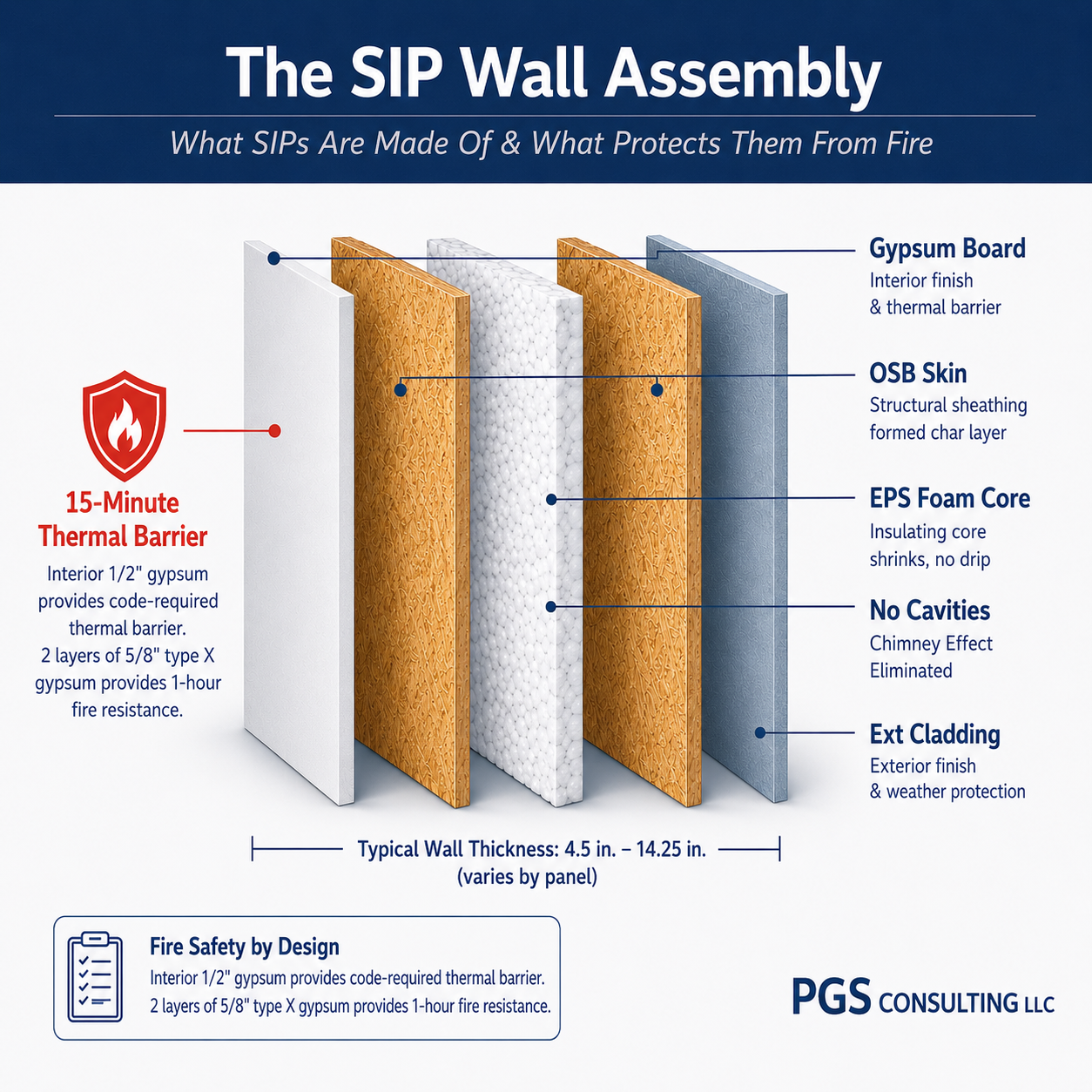
SIPs are combustible -- both the OSB skins and the foam core will burn when exposed to sufficient heat.
Combustible does not mean unsafe. Fire safety is determined at the assembly level, not the material level.
Building codes require a thermal barrier -- typically 1/2-inch gypsum board -- to protect the foam core and delay heat transfer for a minimum of 15 minutes.
SIPs eliminate the stud-cavity chimney effect found in stick framing, which is a meaningful advantage in a fire.
SIP assemblies are tested to ASTM standards and manufacturers must provide third-party compliance reports like an ICC-ES evaluation report documenting code compliance.
Proper installation is non-negotiable. A correctly installed SIP system with continuous gypsum performs predictably. Shortcuts during installation eliminate that protection.
The building code sorts materials into two buckets: combustible and non-combustible.
Foam plastics -- like EPS, GPS, and polyurethane (PUR/PIR) -- are considered combustible. OSB is combustible. So is dimensional lumber. So is virtually every structural material used in standard residential construction.
Here's the thing most people don't realize: the code allows combustible materials in residential buildings all the time. What the code cares about is whether the assembly -- the combination of materials, barriers, and installation details -- meets fire performance requirements.
A combustible material inside a properly protected assembly is not a fire hazard. It's just construction.
OSB is a wood-based panel, and like all wood, it will ignite and burn. But it doesn't just disappear.
When OSB is exposed to fire, it forms a protective char layer on the surface. That char slows heat transfer into the material behind it. This is the same behavior that makes mass timber construction code-approved, and it's the same reason wood-framed homes have been built safely for over a century.
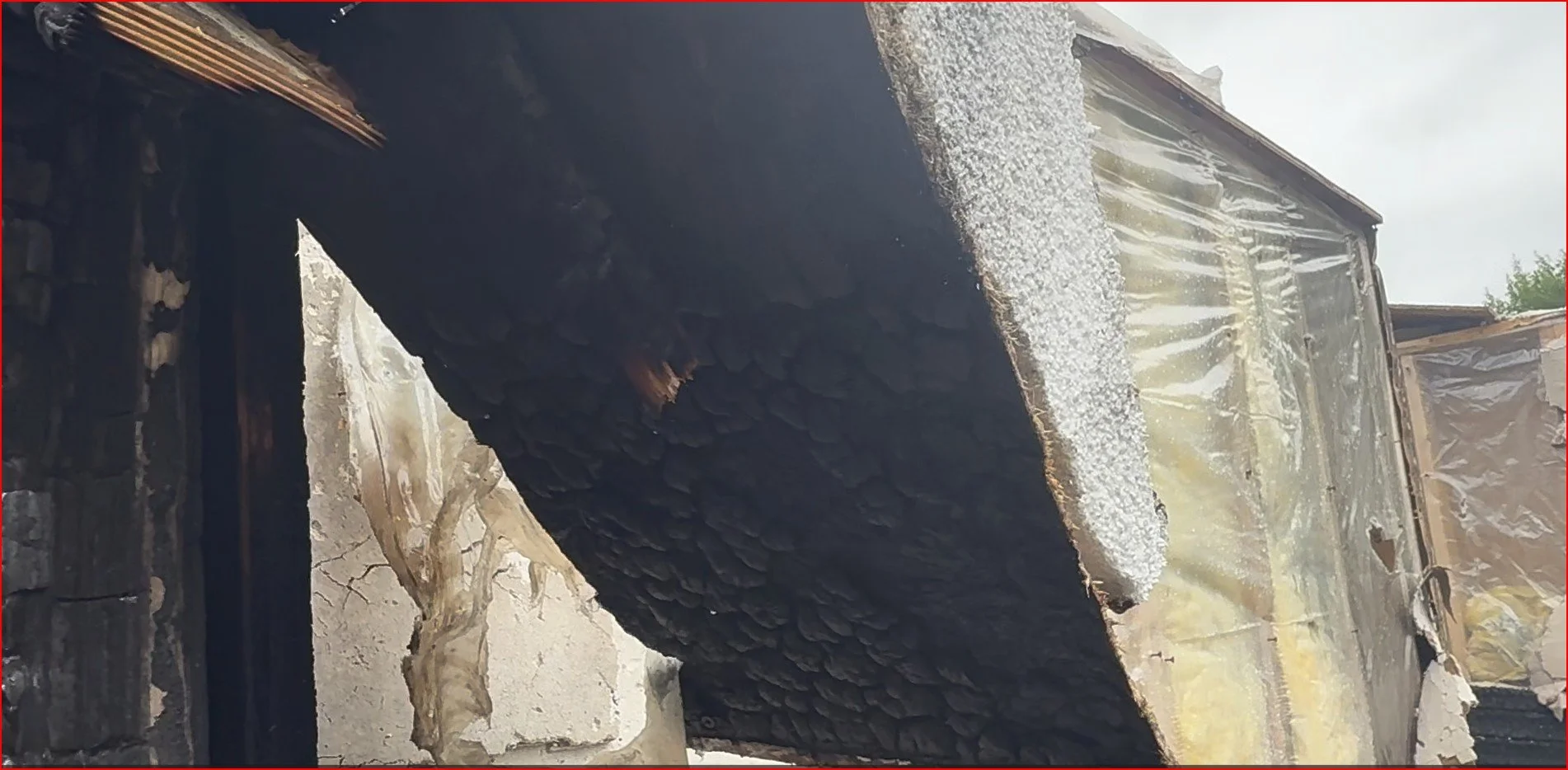
Charred OSB Facer
What OSB does not do:
It does not melt
It does not drip burning material
It does not collapse instantly
OSB's fire behavior is well understood by fire engineers. It's a known, modeled, engineered-for property -- not a wild card.
The takeaway: OSB is combustible, but it burns in a predictable, controlled way that engineers account for in assembly design.
EPS foam behaves differently than OSB, and it's worth being precise about this.
EPS will ignite when exposed to sufficient heat. Unlike OSB, it does not form a char layer -- it shrinks away from the heat source instead. Construction-grade EPS is treated with a flame retardant, which means it will not sustain an open flame without a continuous external ignition source.
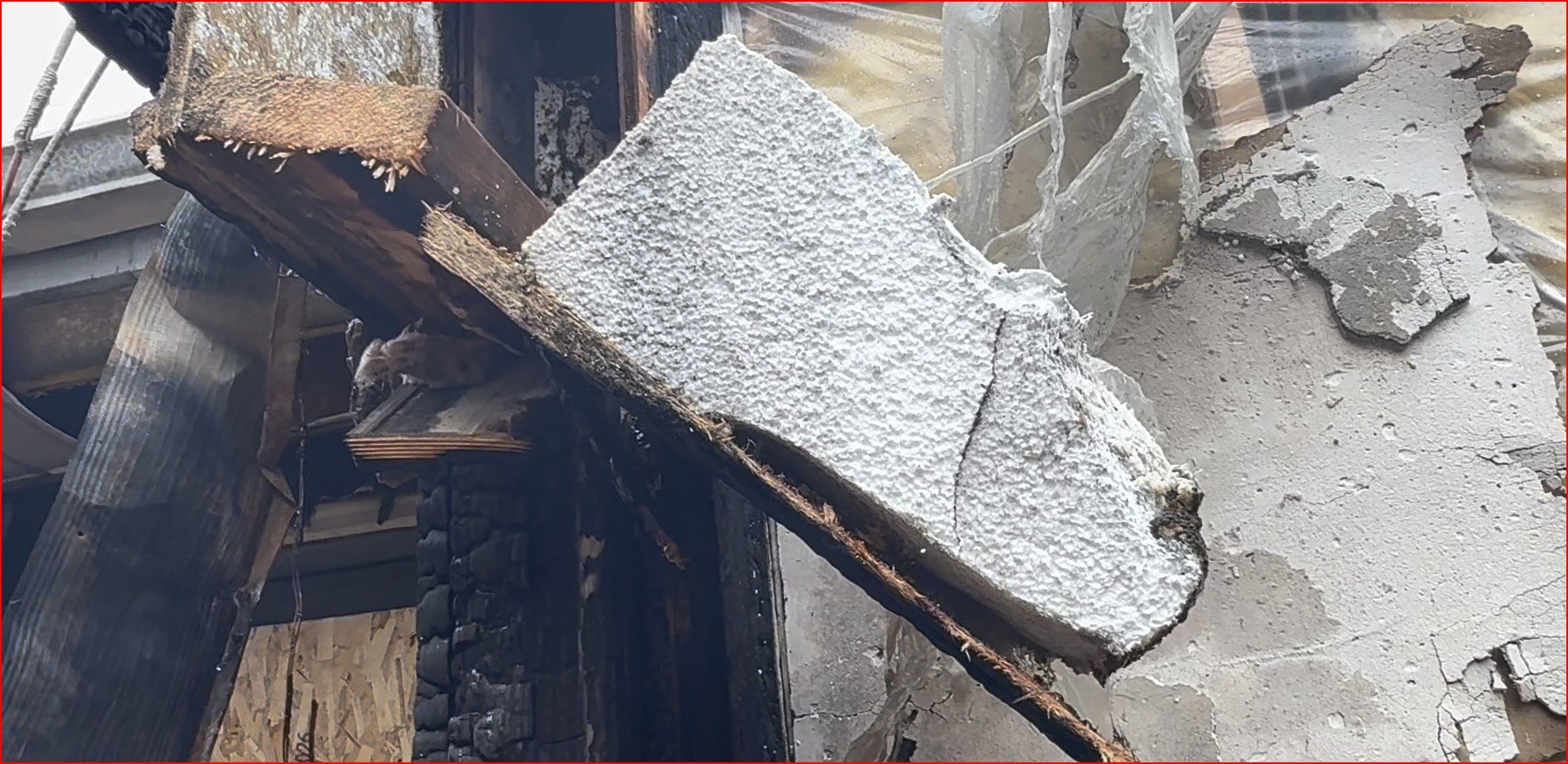
EPS Melt Back
What this means practically: if the gypsum thermal barrier on the interior of a SIP wall is intact and properly installed, the foam core is effectively shielded from heat long enough for occupants to exit and for fire suppression to respond. The foam never has a chance to become the problem.
This is exactly why the building code requires a thermal barrier. It's not a workaround or a patch -- it's the engineered solution.
The takeaway: EPS combustibility is managed through assembly design. The gypsum or an approved thermal barrier is not optional.
Foam plastics are only permitted in residential construction when protected by a thermal barrier. For SIP walls, that almost always means:
1/2-inch gypsum board on the interior face
Installed continuously, with no gaps
Providing a minimum 15-minute fire-resistance rating
SIP manufacturers test their assemblies to two primary ASTM standards:
ASTM E119 -- tests the fire resistance of building assemblies as a whole
ASTM E84 -- tests surface burning characteristics of individual materials
Both tests produce the data that goes into a third-party authored compliance report like an ICC-ES evaluation report. Those reports are publicly available and document exactly what a manufacturer's panels are approved for, under what conditions, and with what installation requirements.
Enercept, for example, publishes their ICC-ES evaluation report (ESR-4693) on their website. Any SIP manufacturer worth working with has an equivalent document. The SIPA SIP Manufacturing members all have a third-party listing report.
The takeaway: Code compliance for SIPs is not a gray area. The requirements are specific, the testing is standardized, and the documentation is publicly accessible.
Most people know the rule -- SIP walls require gypsum on the interior face. Fewer people know why gypsum specifically, and why that matters.
It's not just about thickness. Gypsum does something most building materials can't: it fights fire with chemistry.
Gypsum board contains water that is chemically bound inside its molecular structure -- not liquid water you can see or feel, but water locked into the material itself at a molecular level. When gypsum is exposed to heat, it releases that bound water as steam. That process absorbs an enormous amount of heat energy acting like a built-in air conditioner that delays heat transfer and keeps the surface behind the gypsum significantly cooler for an extended period of time.
That's what creates the 15-minute thermal barrier rating. It's not just a physical shield sitting between the fire and the foam. It's an active chemical process that consumes heat before that heat can reach the EPS core.
Even after complete calcination, when all the water has been released, the gypsum board continues to act as a heat-insulating barrier. Essentially, the board sacrifices itself to prevent the passage of heat and flame and does so in a sequential manner working back from the heat source. At that point, the material has done its job -- it has bought time. This is exactly why installation quality is non-negotiable. Gaps in the gypsum, missing sections at corners, or improperly taped joints all reduce the total water available to absorb heat. A compromised gypsum installation doesn't just look wrong -- it physically shortens the time the assembly can hold.
This is also why the code specifies continuous installation. Every inch of gypsum on that wall is contributing to the thermal delay. Treat it like the structural component it is.
This is one of the most important fire performance differences between SIPs and stick framing, and it's often overlooked.
In conventional wood-frame construction, walls and floor assemblies contain open cavities between studs and joists. When a fire starts, those cavities act like chimneys -- they channel air and allow flames to travel vertically through a wall much faster than the surface materials alone would burn.
SIPs eliminate this pathway entirely.
There are no open cavities. The foam core is continuous from one face to the other. The assembly is airtight. There is nowhere for fire to race through.
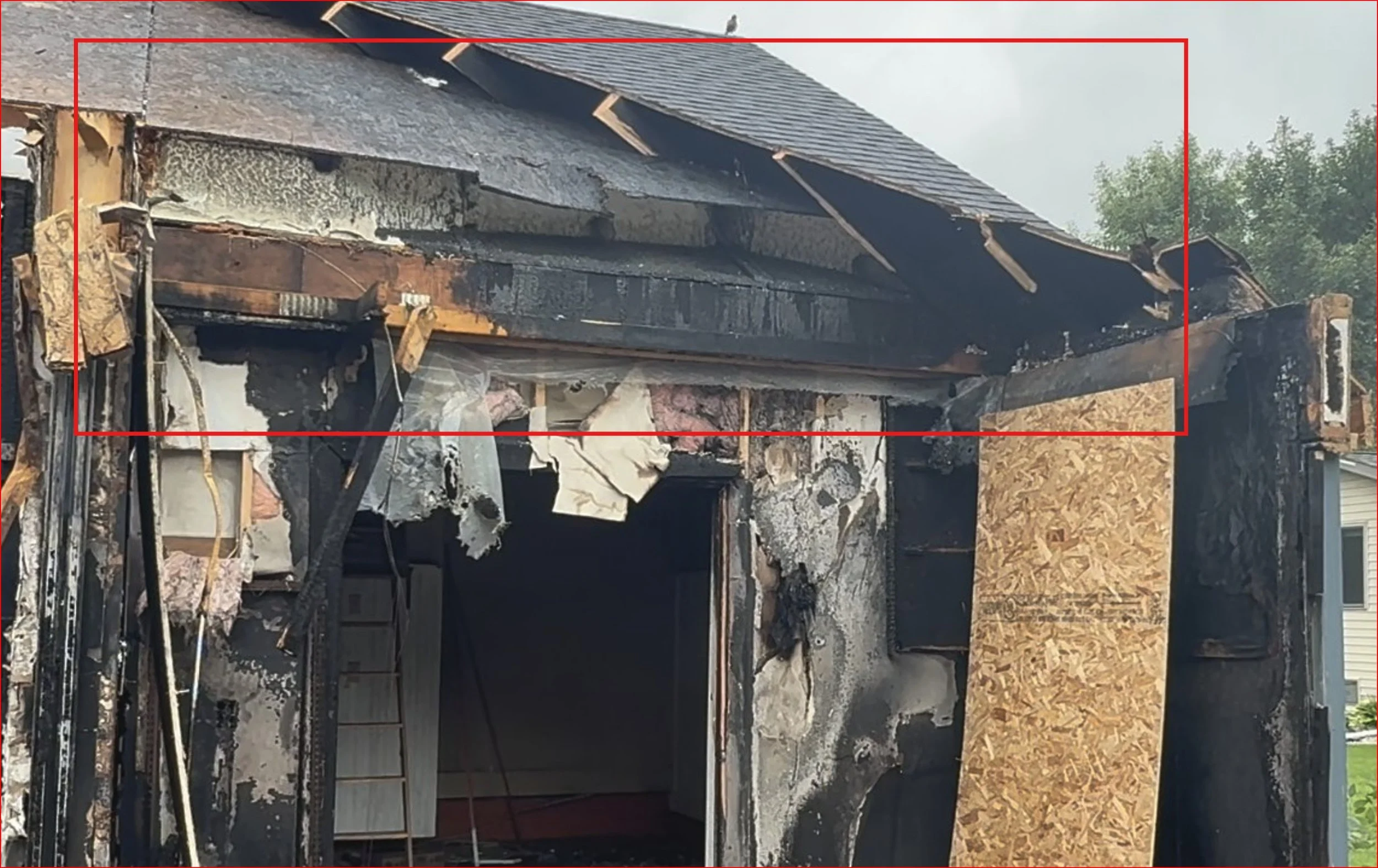
SIP roof panels with melted EPS core and no chase for the fire to travel in (chimney effect).
Real-world evidence backs this up. Enercept documented a residential fire in which the stick-framed roof section collapsed while the SIP walls remained standing. Their explanation aligns with the physics: without stud-bay air channels, vertical fire spread slows dramatically.
The takeaway: The same feature that makes SIPs energy-efficient -- the continuous, airtight core -- also reduces one of the most dangerous fire behaviors in traditional framing.
Fire performance: SIPs vs. stick framing
← Swipe to view full table
| Fire performance factor | SIPs | Stick framing |
|---|---|---|
| Open stud cavities | None Continuous foam core, no air channels |
Present Cavities between every stud bay |
| Chimney effect risk | Eliminated No pathway for vertical fire spread |
Present Stud bays channel heat and flame upward |
| Thermal barrier required | Yes -- gypsum ½ in. gypsum board, interior face |
Yes -- gypsum Same requirement, same material |
| Structural facing behavior | OSB forms a protective char layer; slows heat transfer | Dimensional lumber also chars; similar behavior |
| Core / insulation behavior | EPS shrinks from heat; treated with flame retardant; does not drip | Batt insulation (fiberglass or mineral wool) is typically non-combustible |
| Airtightness advantage | Yes Continuous assembly limits oxygen supply to fire |
No Drafty framing cavities feed combustion |
| Assembly fire-resistance testing | ASTM E119 and ASTM E84; ICC-ES evaluation report required | ASTM E119; code prescriptive compliance path |
| Real-world documented performance | SIP walls have remained standing after adjacent stick-framed sections collapsed (Enercept case study) | Standard residential fire performance; well-documented over decades |
Let's put it together in plain terms.
In a fire scenario where a properly installed SIP home is involved:
The fire encounters the interior gypsum surface first
The gypsum delays heat transfer for at least 15 minutes -- enough time for evacuation
The foam core, protected by the gypsum, does not ignite immediately
Even as heat increases, the EPS shrinks rather than spreading flame
The continuous, airtight wall and roof assembly slows vertical fire spread
The OSB skins eventually char, but that char layer slows further heat penetration
This is predictable, engineered behavior. It's not luck. It's the result of code-tested, ASTM-verified assembly design.
Where things go wrong is when installation is cut short. Gypsum that isn't continuous, panels that aren't properly sealed, or electrical penetrations that aren't correctly detailed can compromise the entire thermal barrier. That's why correct installation isn't just about structural performance -- it directly affects fire safety.
SIPs are combustible. So is almost every other material in a wood-framed home.
What makes a building safe in a fire is not whether its materials are combustible -- it's whether the assembly is properly designed, properly tested, and properly installed. On all three of those measures, SIPs hold up well.
The code requirements are clear. The testing standards are established. The performance data exists. When a SIP system is installed correctly, with the required thermal barriers and proper detailing, it behaves predictably in fire -- and in some important ways, better than stick framing.
Fire performance questions, code compliance concerns, or structural details that don't quite add up -- these are exactly the situations where an independent engineering review pays for itself. Joe Pasma, PE has 40+ years working directly in SIP engineering, manufacturing, and forensic analysis, including cases where fire performance was the central issue.
Contact Joe Pasma, PE to talk through what your project needs →
Yes. Both the OSB skins and the foam core are combustible materials. Fire safety is achieved at the assembly level, primarily through continuous gypsum thermal barriers and airtight construction.
Yes -- when installed correctly. SIP assemblies are tested to ASTM standards and must meet specific building code requirements for fire resistance. Proper installation of the required thermal barrier is essential.
Yes, OSB is a wood product and will burn. But it forms a protective char layer when exposed to fire, which slows heat transfer and contributes to predictable, engineered fire performance.
EPS is combustible, but construction-grade EPS is treated with a flame retardant and will not sustain an open flame without a continuous external ignition source. A continuous gypsum thermal barrier is required to protect the foam core in any SIP assembly.
A continuously installed 1/2-inch gypsum board on the interior face of the wall. This thermal barrier delays heat transfer for at least 15 minutes, which meets the code-required standard. The foam behind it is also treated with a flame retardant.
No -- and in some ways they burn more slowly. SIPs eliminate the open stud cavities found in stick framing, which removes the chimney effect that allows fire to spread rapidly through a conventional wall. Documented fire incidents show SIP walls remaining intact after adjacent stick-framed sections have failed.
Yes. SIP manufacturers are required to have their assemblies tested to ASTM standards and must publish third-party compliance reports like an ICC-ES evaluation report documenting compliance with thermal barrier, ignition barrier, and fire-resistance requirements. These reports are publicly available. The SIPA SIP Manufacturing members all have a third-party listing report.
The thermal barrier is the primary fire safety mechanism for foam-core SIP panels. Gaps, missing sections, or improper installation of the gypsum can compromise the entire fire-resistance rating of the wall assembly. Correct installation is not optional -- it is a code requirement.
Joe Pasma, PE is a licensed professional engineer and the founder of PGS Consulting LLC in White Bear Lake, Minnesota. He has spent more than 40 years working directly in SIP engineering, manufacturing operations, installation oversight, and forensic analysis. Joe has worked with SIP manufacturers, builders, designers, and legal teams across the country -- including cases involving fire performance, building failures, and code compliance disputes.
He is one of a small number of engineers in the United States with deep, hands-on experience across the full SIP lifecycle. Learn more about Joe Pasma, PE.

SIPs vs. stick framing: which costs less over 30 years? Learn how SIPs reduce total cost of ownership through faster construction, FORTIFIED insurance savings, lower energy bills, and long-term durability. Data-driven analysis from PGS Consulting LLC.
By Joe Pasma, PE | PGS Consulting LLC, Licensed Professional Engineer | 40+ Years in SIP Engineering, Manufacturing, and Forensic Analysis | Published April 21, 2026 | Updated October 20, 2026
The "SIPs cost too much" objection is common. It is almost always built on the wrong number.
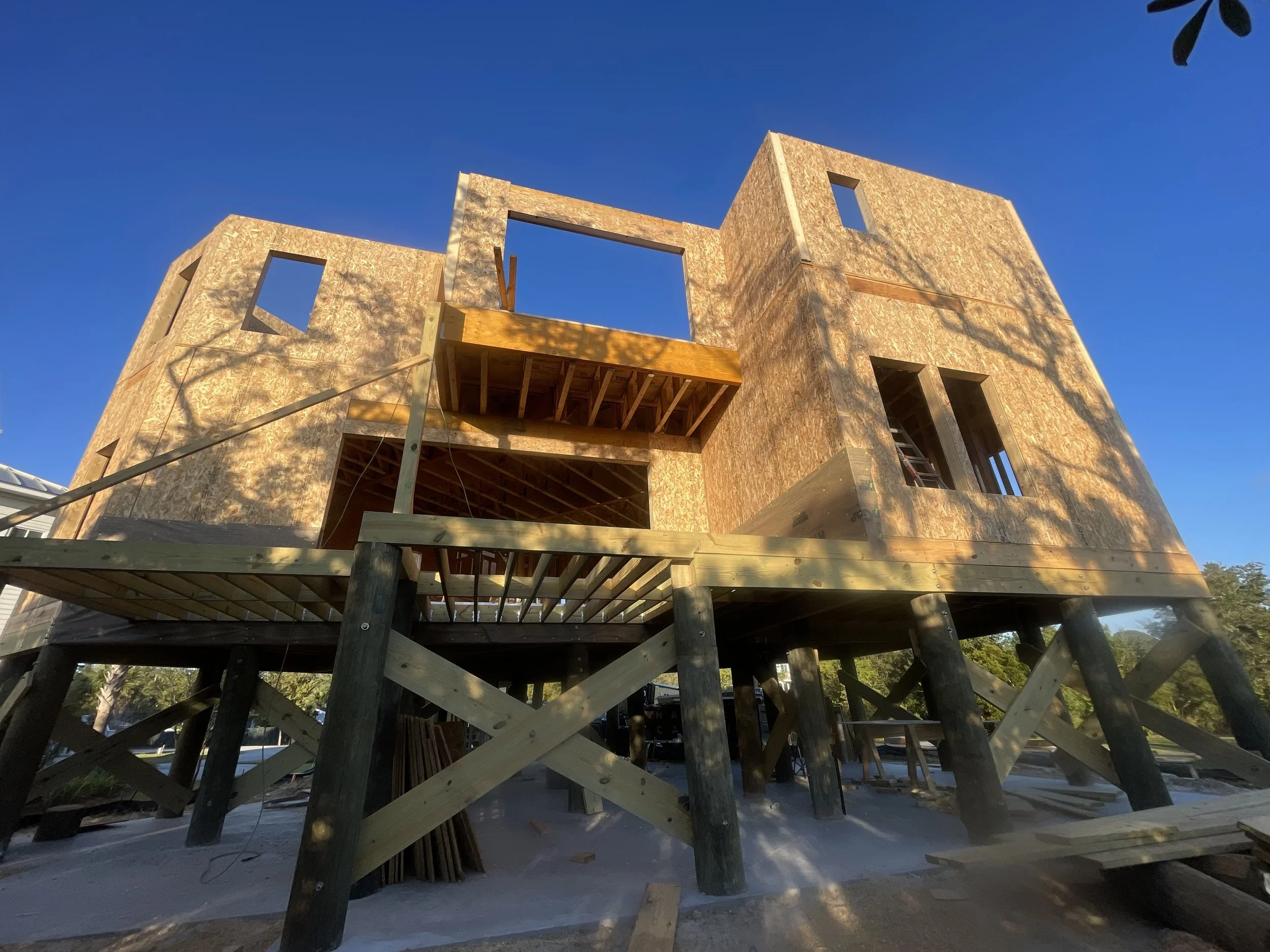
SIPs have a higher material cost upfront, but a lower total cost of ownership over 30 years
SIP wall framing is 30 to 50% faster than stick framing; roof framing is 50 to 70% faster, reducing construction loan interest and labor cost
SIP buildings reduce heating costs by 30 to 60% and cooling costs by 20 to 50% compared to stick-framed construction
Buildings designed to FORTIFIED standards using SIPs often qualify for lower insurance premiums due to reduced loss severity
SIP construction generates 1 to 3% material waste compared to 10 to 20% for stick framing
The first-cost premium on SIPs is typically recovered within the first few years of occupancy through energy, maintenance, and possibly insurance savings
Most builders, homeowners, and lenders look at SIP panel prices, compare them to lumber, and stop there. That is not a cost analysis. That is a materials receipt.
The actual question is this: What does it cost to own, operate, insure, and maintain the building for 30 years?
When you ask that question honestly, SIPs do not look expensive. They look like the disciplined financial choice.
A panel-to-lumber comparison is a common shortcut that produces a misleading answer. It captures material costs and ignores everything else that determines what a building actually costs to build and run.
A complete comparison includes:
Framing and insulation labor
Air sealing, sheathing, and weather-resistant barrier
Jobsite waste, hauling, and disposal
Equipment and weather delay exposure
Construction loan carrying costs
Callbacks and warranty costs
Energy performance over the life of the building
Insurance, maintenance, and operating costs
When you compare full finished assemblies, not just materials, SIPs are often cost-competitive at the outset. Over time, they are typically less expensive. The builder who walks away from SIPs based on panel price alone is making the building owner pay for that decision every month for the life of the building.
Understanding what goes into a SIP panel matters when evaluating true assembly cost. [See our guide to SIP core types and materials →]
Speed is not a soft benefit. In construction, speed is a direct cost driver.
SIP panels arrive pre-cut and ready to install. That changes the math on a jobsite immediately.
Wall framing: 30 to 50% faster than stick framing
Roof framing: 50 to 70% faster than stick framing
Every day shaved off a construction schedule reduces:
Construction loan interest accruing daily
General conditions: supervision, equipment rentals, portable facilities, site costs
Exposure to weather delays that trigger cascading schedule problems
Billable labor hours on tasks that SIPs eliminate
For rental, commercial, and multifamily projects, faster time to occupancy means faster time to revenue. That is a measurable financial return that has nothing to do with panel prices.
The modular construction industry built its entire business model on this logic. SIPs bring the same economic advantage to site-built construction.
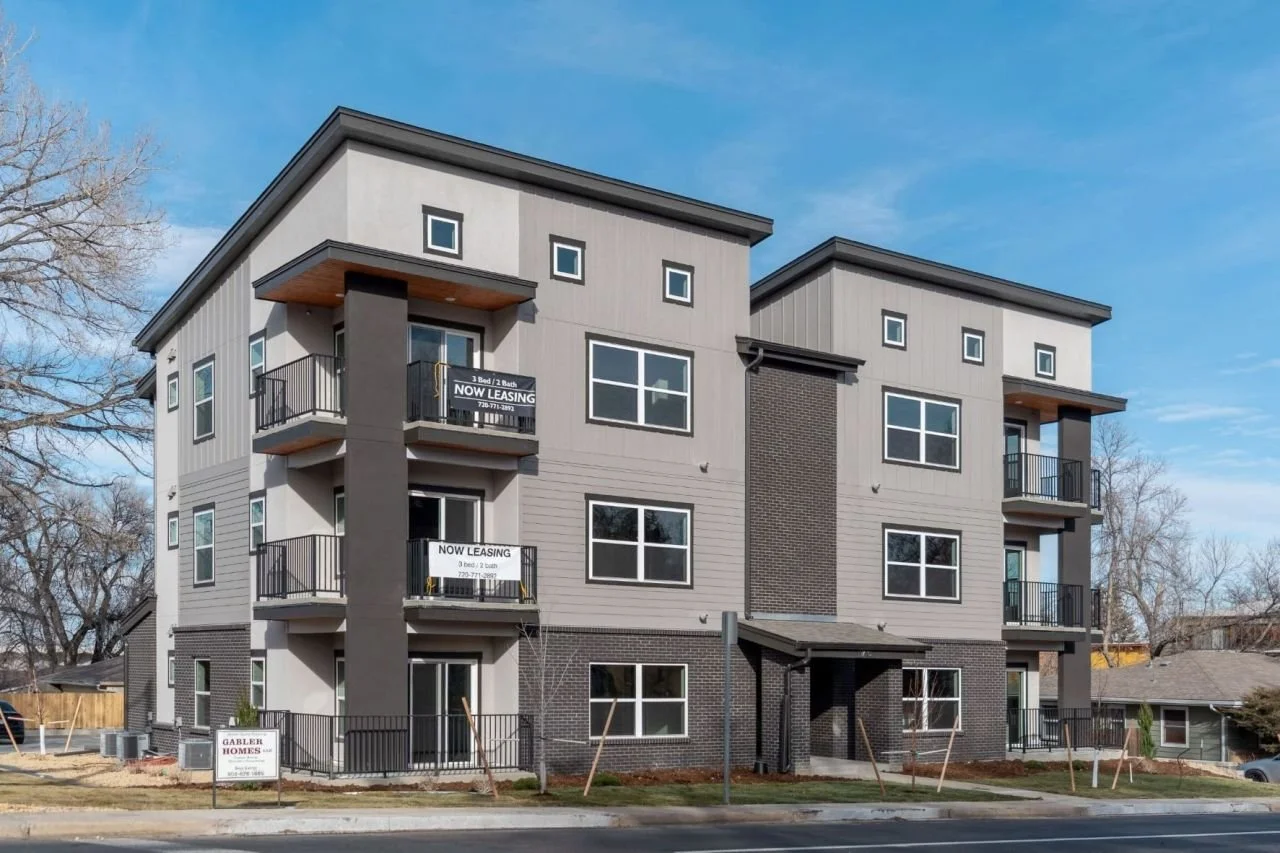
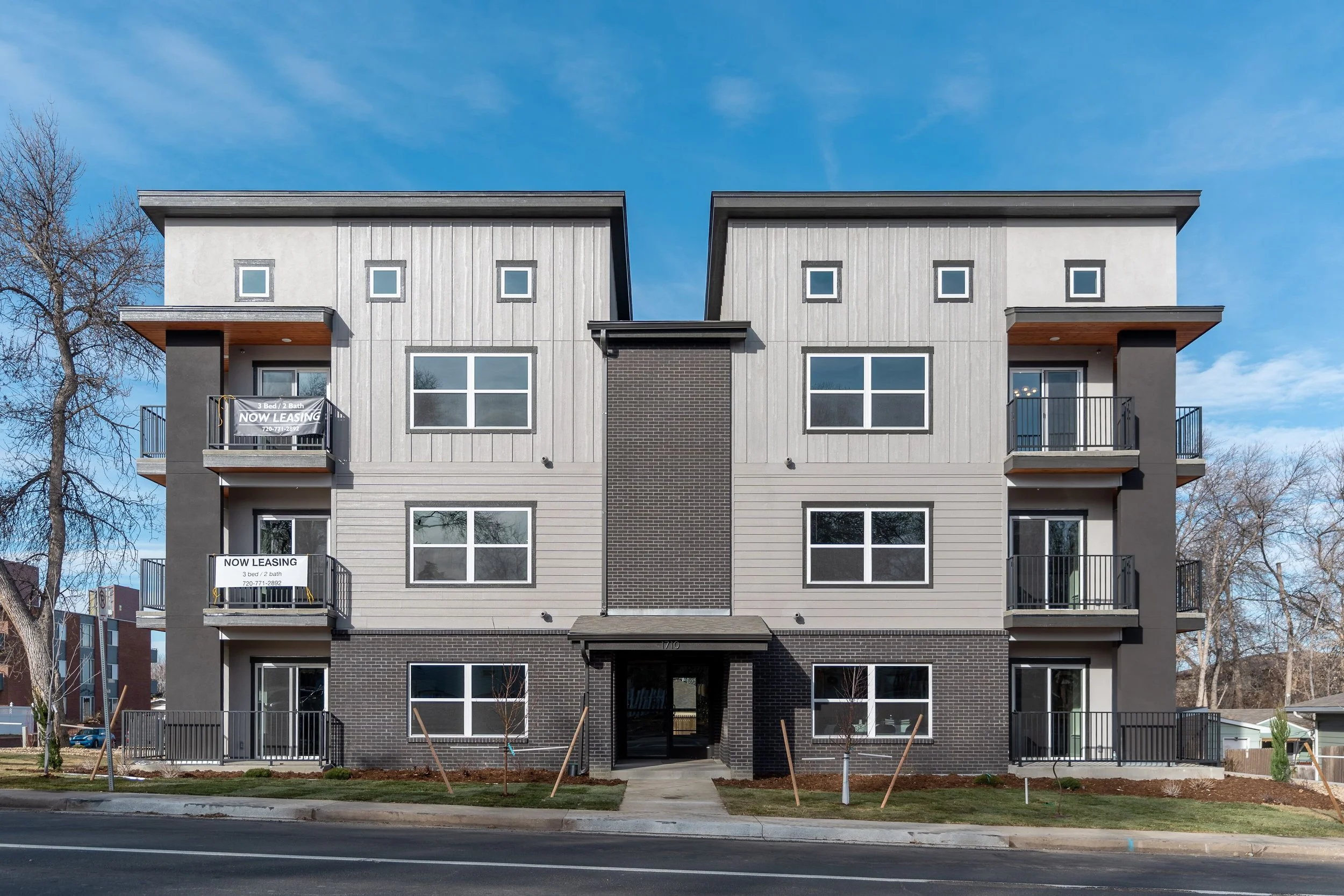
This financial advantage rarely gets the attention it deserves.
The FORTIFIED Home and FORTIFIED Commercial programs, developed by the Insurance Institute for Business and Home Safety (IBHS), certify buildings that resist wind uplift, limit water intrusion, and maintain structural continuity under severe load conditions. The result for the owner: lower loss severity when events occur, and lower premiums because of it.
SIP construction aligns naturally with FORTIFIED criteria:
Continuous load paths that reduce structural failure risk
Fewer joints and seams that reduce water intrusion pathways
Superior airtightness that limits moisture accumulation inside the assembly
High wind resistance when properly engineered and detailed
Builders and owners who design SIP buildings to FORTIFIED standards often qualify for lower premiums, better coverage terms, reduced deductibles, and market-specific incentives in hurricane-prone and high-wind regions.
Insurance underwriters do not care about your building material. They care about expected loss severity. SIPs reduce expected loss severity. That reduction has a dollar value, and it shows up on every insurance renewal for the life of the building.

Stick-framed walls leak energy in ways that are almost invisible until you see the utility bill. Thermal bridging through studs and plates. Air infiltration through gaps, penetrations, and settling joints. Insulation that sags, shifts, and leaves voids over time.
SIPs eliminate all three failure modes. The building envelope is continuous, airtight, and stable from day one.
The financial result, compared to stick-framed construction:
Heating costs: 30 to 60% reduction
Cooling costs: 20 to 50% reduction
HVAC equipment: Right-sized to a tighter load, which means lower equipment cost, lower operating cost, and longer system lifespan
Peak demand charges: Reduced thermal load lowers peak draw, which matters in time-of-use utility rate structures
Over 30 years, those monthly savings compound into tens of thousands of dollars per building. The energy savings alone often recover the first-cost premium within a few years of occupancy. After that, every month is margin.
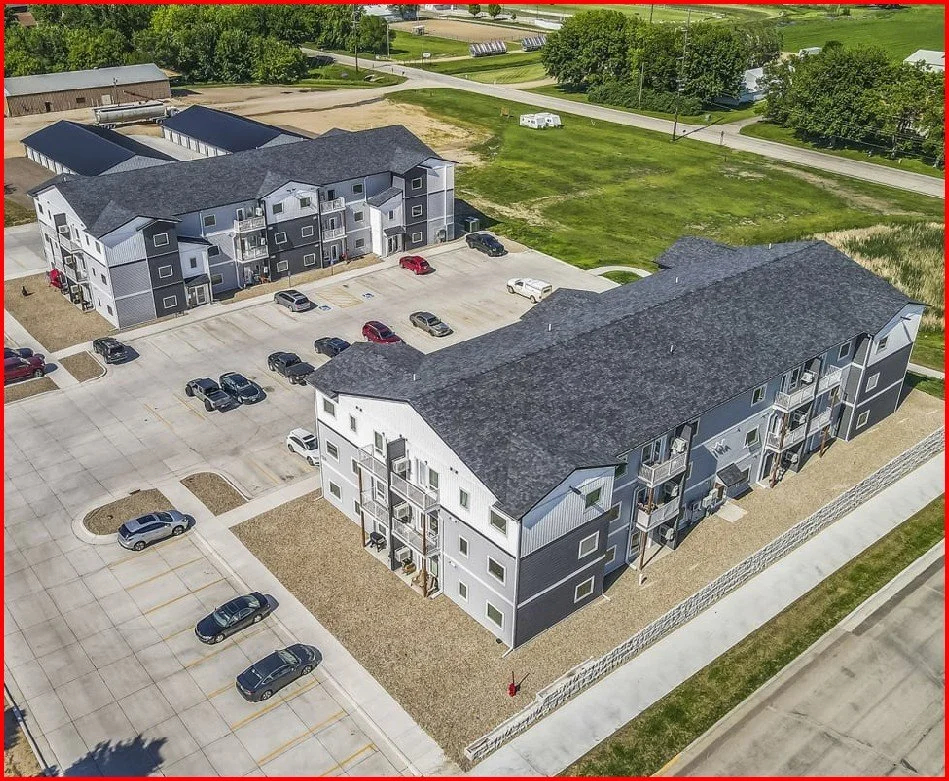
Every building system has failure modes. Stick framing has several that are expensive and predictable:
Thermal bridging through framing members causes differential expansion, movement, and finish damage
Seasonal wood movement and settling crack drywall and stress connections
Air leakage carries moisture into wall cavities, creating mold and rot conditions over time
Insulation degrades, shifts, and leaves performance gaps
SIPs eliminate or substantially reduce all of these. What that means in practice:
Fewer warranty callbacks during the first years of occupancy
Less drywall cracking and finish damage
Reduced HVAC strain and lower repair frequency
Lower risk and cost of mold and moisture remediation
A building that performs closer to its original specification 20 years out
Maintenance is not a preference issue. It is a recurring cost. Choosing a building system that minimizes long-term failure modes is a financial decision with a compounding return.
Stick framing generates material waste by design. Pieces are cut to fit in the field, off-cuts accumulate, and cleanup is built into the schedule.
Typical waste profile for stick framing:
10 to 20% material waste per project
Two to three dumpsters of debris
Significant labor hours for cutting, hauling, and disposal
SIP waste looks completely different:
1 to 3% of materials, controlled in the factory
Minimal jobsite cleanup required
Predictable and plannable, not variable
That difference is not cosmetic. On a mid-size residential or commercial project, waste reduction translates directly to lower material cost, lower disposal cost, and faster site throughput.
"SIPs do not just change how you build. They change the economics of building."
Choosing SIPs is choosing a different financial structure for your project:
Compressed construction schedule and lower financing cost
Reduced insurance exposure through FORTIFIED alignment
Lower utility bills compounding over the life of the building
Fewer maintenance failures and lower callback cost
A more durable building that holds its performance longer
Lower risk exposure across every phase of the project
This is not a materials argument. It is an economics argument. And the numbers support it.
First cost gets a building out of the ground. Total cost of ownership is what you actually pay. The table below compares SIPs and stick framing across eight cost categories — from materials and labor to insurance, energy, and maintenance — to show true 30-year cost of ownership rather than first cost alone. On mobile, swipe left to view the full table.
On mobile, swipe left to view the full table.
| Category | SIPs | Stick Framing |
|---|---|---|
| Material cost | Higher | Lower |
| Labor and construction time | Lower | Higher |
| Construction financing cost | Lower | Higher |
| Annual energy cost | Significantly lower | Higher |
| Insurance premiums | Often lower | Standard |
| Maintenance and callbacks | Lower | Higher |
| Durability and useful life | Longer | Standard |
| Total 30-year cost | Lower | Higher |
SIPs win on every category except first cost. First cost is the number that gets buildings started. Total cost of ownership is the number that matters.
SIPs sit between stick framing and modular in first cost. In economic outcomes, they perform much closer to modular. The table below compares stick framing, SIPs, and modular construction across six factors including first cost, construction speed, energy performance, waste generation, insurance alignment, and 30-year total cost. On mobile, swipe left to view the full table.
On mobile, swipe left to view the full table.
| Factor | Stick Framing | SIPs | Modular |
|---|---|---|---|
| First cost | Lowest | Moderate | Highest |
| Construction speed | Slowest | Fast | Fastest |
| Energy performance | Standard | High | High |
| Waste generation | High | Low | Lowest |
| Insurance alignment | Standard | Strong | Strong |
| 30-year total cost | Highest | Competitive | Competitive |
If you are evaluating Structural Insulated Panels for a residential, commercial, or multifamily project, Joe Pasma, PE is glad to help you work through the engineering, cost, and performance considerations specific to your situation.
SIPs carry a higher first cost for materials. The total cost of ownership is typically lower. When you account for faster construction, reduced financing cost, lower insurance, lower utility bills, and reduced maintenance over the life of the building, SIPs usually cost less than stick framing. The mistake most buyers make is comparing panel prices to lumber prices and treating that as a complete analysis. It is not.
Yes, significantly. SIP panels arrive pre-cut and ready to install. Wall framing runs 30 to 50% faster than stick framing. Roof framing runs 50 to 70% faster. That speed reduces construction loan interest, labor hours, general conditions costs, and weather exposure. On every project, faster completion is a real financial return.
Often yes, particularly when the building is designed to FORTIFIED Home or FORTIFIED Commercial standards. FORTIFIED certification recognizes buildings with continuous load paths, fewer seams, and reduced water intrusion risk. Well-designed SIP construction meets those criteria naturally. Lower expected loss severity translates to lower premiums in many markets, particularly in coastal and high-wind regions.
Yes. SIP buildings consistently reduce heating costs by 30 to 60% and cooling costs by 20 to 50% compared to stick-framed construction. Continuous insulation and superior airtightness mean less conditioned air escapes. HVAC systems can be right-sized to a lower load, reducing both equipment cost and monthly operating cost.
Yes. SIPs eliminate the failure modes that drive long-term maintenance in stick-framed buildings: thermal bridging, seasonal wood movement, insulation voids, and moisture infiltration pathways. Fewer failure modes means fewer callbacks, less drywall damage, less HVAC wear, and lower remediation risk over the life of the building.
For most projects, yes. When total cost of ownership is evaluated across construction time, insurance, utilities, maintenance, and durability, SIPs frequently cost less over the life of the building than conventional framing. The first-cost premium is typically recovered within the first few years of occupancy through energy and maintenance savings. After that point, the building continues to outperform on every cost line.
Joe Pasma, PE is a licensed professional engineer with more than 40 years of experience in Structural Insulated Panels and advanced building systems. His background includes engineering, manufacturing systems, installation oversight, and forensic engineering.
Through PGS Consulting LLC, Joe helps manufacturers, builders, architects, building owners, and project teams improve system performance, reduce risk, and bring clarity to complex building challenges.

Understanding Structural Insulated Panels (SIPs) requires more than just knowing the materials. SIP performance depends on how core types, facing materials, adhesives, and system design work together. This guide breaks down EPS, GPS, and PUR/PIR cores alongside OSB, MgO, and cementitious facings to help builders, architects, and manufacturers make informed, system-based decisions.
By Joe Pasma, PE | PGS Consulting LLC, Licensed Professional Engineer | 40+ Years in SIP Engineering, Manufacturing, and Forensic Analysis | Published April 7, 2026 | Updated October 19, 2026
Structural Insulated Panels (SIPs) are often described as simple. Foam and skins.
But in real projects, they are anything but simple.
Performance depends on how the core, facings, adhesive, and code pathway work together. When those pieces align, SIPs deliver strong structural performance and energy efficiency. When they don’t, problems tend to show up quickly.
This guide breaks down SIP core types, SIP panel materials, adhesives, and system considerations so builders, architects, and manufacturers can make informed decisions.
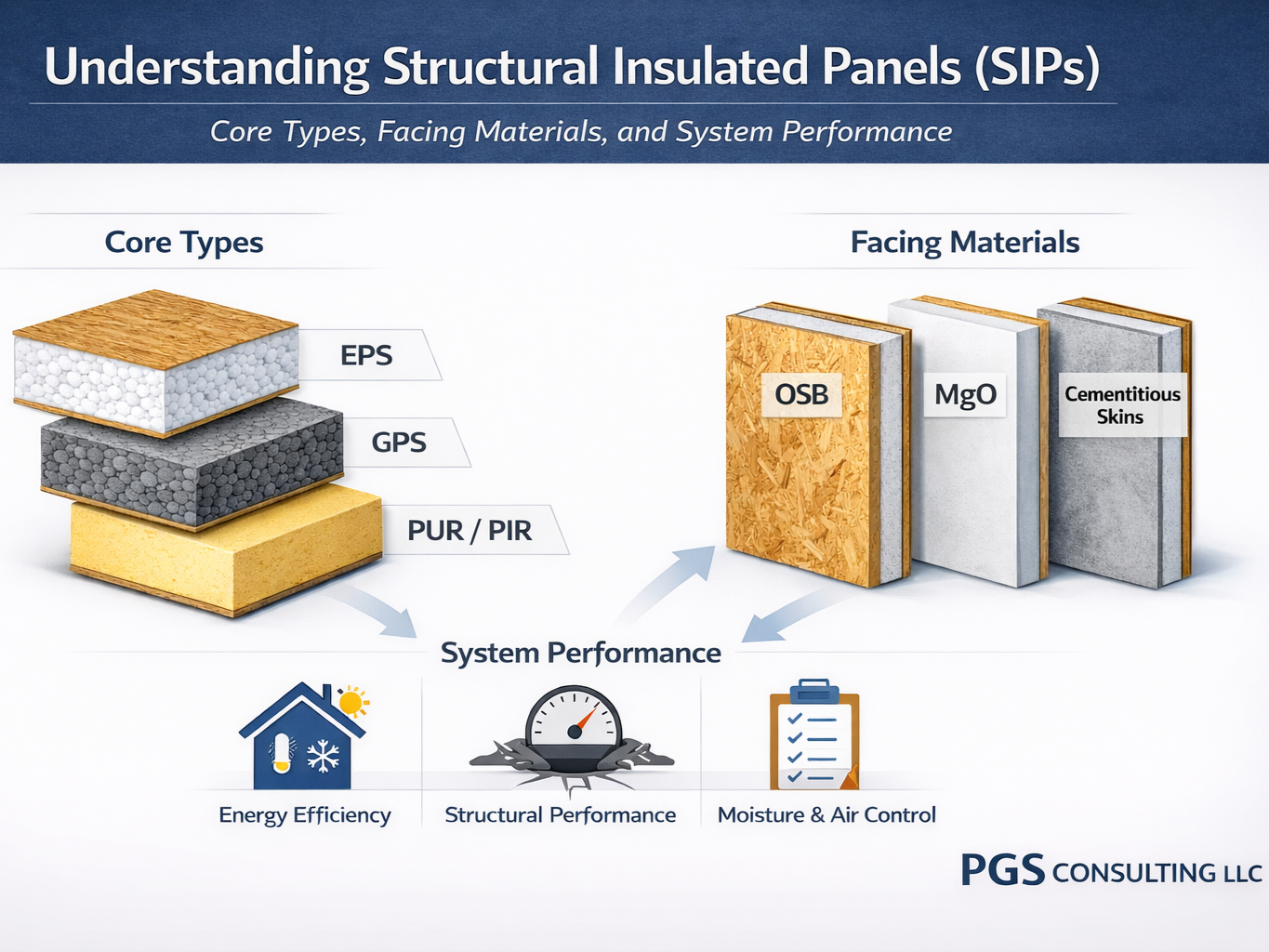
Builders evaluating SIP systems
Architects and designers designing high-performance envelopes
Manufacturers refining production and QA
Owners comparing building systems
SIPs are a composite building material, not just foam and skins
EPS is the most common and stable SIP core
GPS improves thermal performance by reducing radiant heat transfer
PUR/PIR offer higher R-values but include thermal drift and higher cost
OSB is the most widely used structural facing
Facing materials impact structure, fire resistance, and durability
Adhesive type matters tremendously
SIP performance depends on system alignment, not individual materials
In simple terms:
SIP performance is not about one material. It is about how the core, facings, and adhesive work together as a composite.
Structural Insulated Panels (SIPs) are high-performance building panels made of an insulation core bonded between two structural facings, typically OSB. SIPs function as both structure and insulation, creating a strong, energy-efficient building envelope.
As the name states, SIPs are structural. This means the panels don’t just enclose a building — they actually support loads. The reason they can do this is the stiff, thick facings (typically OSB, MgO, or other engineered skins) bonded to the insulation core. These skins do not buckle locally when axial loads are applied, which allows the panel to carry gravity loads such as snow, people, and the everyday weight of the building. Working together with the foam core as a composite member, SIPs also resist wind and other transverse forces, and provide in‑plane strength that helps the building stand up to racking and lateral movement. In wall assemblies, SIPs can function as shear walls, and in floors and roofs they act as diaphragms that transfer loads across the structure.
This structural behavior is very different from thin‑skin metal “cooler panels,” which may look similar but are not structural. Cooler panels use very thin metal facings that buckle easily under axial load, meaning they can only handle transverse pressure inside refrigerated spaces. Because these skins cannot resist compression or shear, cooler panels cannot carry axial loads, cannot resist racking, and cannot function as shear walls or diaphragms in a building. They are enclosure products only — not load‑bearing components.
The three primary SIP core materials are EPS (expanded polystyrene), GPS (graphite polystyrene), and PUR/PIR (polyurethane-based foam). Each core type differs in thermal performance, cost, long-term stability, and manufacturing complexity.
EPS (Expanded Polystyrene): The most widely used SIP core, known for stability, predictability, and cost efficiency
GPS (Graphite Polystyrene): An enhanced version of EPS with higher R-value and improved thermal performance
PUR/PIR (Polyurethane-based cores): Higher R-value per inch with more complex manufacturing and long-term performance considerations
PUR/PIR SIP cores have the highest initial R-value, typically between R-6.5 and R-7.2 per inch. However, EPS and GPS provide more stable long-term R-values because they do not experience thermal drift.
There is no single best SIP core type. EPS is the most widely used and stable, GPS offers improved thermal performance, and PUR/PIR provides higher R-value per inch with additional cost and complexity. The right choice depends on project goals and system requirements.
The table below compares the main SIP core types based on thermal performance, stability, moisture behavior, manufacturing implications, and typical applications. On mobile, swipe left to view the full table.
| Core Type | R-Value | Stability | Moisture Behavior | Manufacturing / Adhesion | Cost | Best Use | Key Tradeoffs |
|---|---|---|---|---|---|---|---|
| EPS |
* R-3.6 to R-4.2/in * Stable over time |
* Predictable long-term behavior * Well-supported by engineering tables |
* Slow vapor diffusion * Does not move liquid water laterally * Requires proper sealing at joints |
* Bonds very well to OSB * Forgiving during lamination * Strong manufacturing consistency |
$ |
* Both Residential & commercial envelopes * Large-format panels * Cold climates |
* Lower R-value per inch * Most proven and code-supported option |
| GPS |
* R-4.7 to R-5.1/in * Higher thermal performance than EPS |
* Stable like EPS * No thermal drift |
* Similar to EPS * Slow, predictable diffusion * Good dimensional stability |
* Bonds very well to OSB * Uses same adhesives and equipment * Easy upgrade from EPS production |
$$ |
* Higher-performance envelopes * Energy-focused projects * Cold climates |
* More limited availability * Slightly higher cost than EPS |
| PUR / PIR |
* Initial: R-6.5 to R-7.2/in * Aged: R-5.0 to R-6.5/in |
* Higher initial performance * Long-term thermal drift must be considered |
* Less vapor permeable * Moisture behavior depends on assembly design |
* More complex chemistry * Tighter manufacturing control required * Different processing behavior than EPS/GPS |
$$$$ |
* Thin wall assemblies * Commercial applications * High-performance projects |
* Higher cost * Thermal drift over time * More complex production |
Each SIP core type should be evaluated as part of the full building system, not as a standalone material decision.
Looking for specific manufacturers that produce these SIP systems?
Explore the list of SIP manufacturers in both North America and Internationally→
EPS (expanded polystyrene) is the most widely used SIP core in North America. It is reliable, predictable, and well-supported by building codes.
Stable R-value over time
Strong adhesion to OSB
Predictable structural behavior
Performs well in cold climates
Residential construction
Commercial construction
Large-format panels
Cost-sensitive projects
GPS is a modified version of EPS that includes graphite to improve thermal performance.
10 to 20 percent higher R-value than EPS
Same structural and installation behavior
Improved energy performance without changing system design
Higher performance buildings
Projects targeting higher insulation performance
PUR and PIR SIP cores provide higher R-values but introduce additional considerations.
Higher initial R-value
Thermal drift over time
Higher cost
More complex manufacturing requirements
Roof spans maybe limited due to panel thickness limitations
Thin wall assemblies
Commercial or high-performance applications
SIP facing materials provide the structural strength of the panel and play a major role in durability, fire performance, and long-term behavior.
OSB (Oriented Strand Board): The most common facing, offering strong structural performance and large panel sizes
MgO (Magnesium Oxide Board): A non-combustible option used in fire-resistant and specialty applications
Cementitious Skins: Durable, non-combustible facings used in high-demand or specialty environments
The table below compares common SIP facing materials based on structural performance, fire characteristics, moisture behavior, and typical applications. On mobile, swipe left to view the full table.
| Facing Material | Structural Performance | Fire / Heat Behavior | Moisture Behavior | Panel Size | Best Use | Key Tradeoffs |
|---|---|---|---|---|---|---|
| OSB |
* Excellent shear strength * Strong diaphragm performance * Enables large structural panels |
* Combustible * Requires code-compliant thermal barriers * Well understood in building codes |
* Performs well when properly detailed * Sensitive to prolonged exposure during construction * Requires weather protection |
* Large format panels * Often up to 8 × 24 ft |
* Most residential and commercial SIPs * Roof, wall, and floor systems * Large-scale panelized construction |
* Requires proper moisture management * Not fire-resistant without protection |
| MgO |
* Good structural performance * Varies significantly by manufacturer * Requires verification of testing |
* Non-combustible surface * Transfers heat to the core * Fire performance depends on full assembly |
* Moisture resistant * Can contain chlorides * Potential corrosion risk if poorly manufactured |
* Typically smaller panels than OSB * More limited large-format availability |
* Fire-resistant assemblies * Specialty commercial applications * Projects with specific durability needs |
* Quality varies widely * Requires careful sourcing and evaluation |
| Cementitious |
* Strong in compression * More brittle in flexure * Less forgiving than OSB systems |
* Non-combustible * Heat still transfers to the core * Assembly design is critical |
* Highly durable * Resistant to moisture and impact * Performs well in harsh environments |
* Smaller panels * Typically 4 × 8 or 4 × 10 |
* High-durability applications * Fire-critical environments * Specialty construction |
* Heavier panels * More labor-intensive installation * More seams and connections |
Facing materials should always be evaluated as part of the full SIP system, not as a standalone material choice. Structural performance, fire behavior, and durability are influenced by how the facing, core, adhesive, and assembly details work together.
Although insulated metal panels (IMPs) may look similar to SIPs, they are not structural panels. As the Metal Construction Association notes, IMPs perform very well under transverse loading such as wind or snow, but their thin metal facings buckle easily under axial compression and provide low resistance to racking loads. Because of this, cooler‑type IMPs cannot function as load‑bearing walls, shear walls, or diaphragms. They are excellent enclosure products, but they are not designed to carry building structural loads. (See MCA Technical Bulletin: Insulated Metal Panels – Structural Loading.)
Adhesives are what allow Structural Insulated Panels to function as a single composite structural unit.
Without a reliable bond between the insulation core and the facings, the panel cannot transfer loads effectively. In that case, it is no longer acting as a composite structural unit.
Picture a SIP panel as a ream of copy paper with a plastic wrapper on top and bottom of the ream. The two OSB skins on the outside of the SIP act like the plastic wrapper of the ream of paper when the ream is bent. They stretch and compress as the panel (ream) bends under load. The bottom stretches and the top compresses. The foam core in the middle (the sheets of paper) does a different job: it resists shear, which is the sliding force between the top and bottom skins. The two only work well together because they're glued into one solid unit. That teamwork is called composite action, and it's the reason a panel just a few inches thick can be so stiff for how little it weighs. It's also why the foam core's own flexibility matters more in a SIP than it would in a solid wood beam or an engineered I-joist.


Polyurethane (PU) adhesives are the backbone of modern SIP manufacturing in the U.S. They provide robust, flexible bonds between facers and foam cores, are available in one- and two-part formulations, and are favored for their chemical and moisture resistance. To date, only Bostik and DuPont are listed as component material sources for the SIPA ESR-4689 Evaluation Report.
Application Methods
PU adhesives can be applied manually, by spray, or with automated bead or roller systems. In PUR-core SIPs, liquid foam is often injected and expands to adhere to both facers. With EPS and XPS cores, bead or roller applied adhesives with pressure lamination is standard.
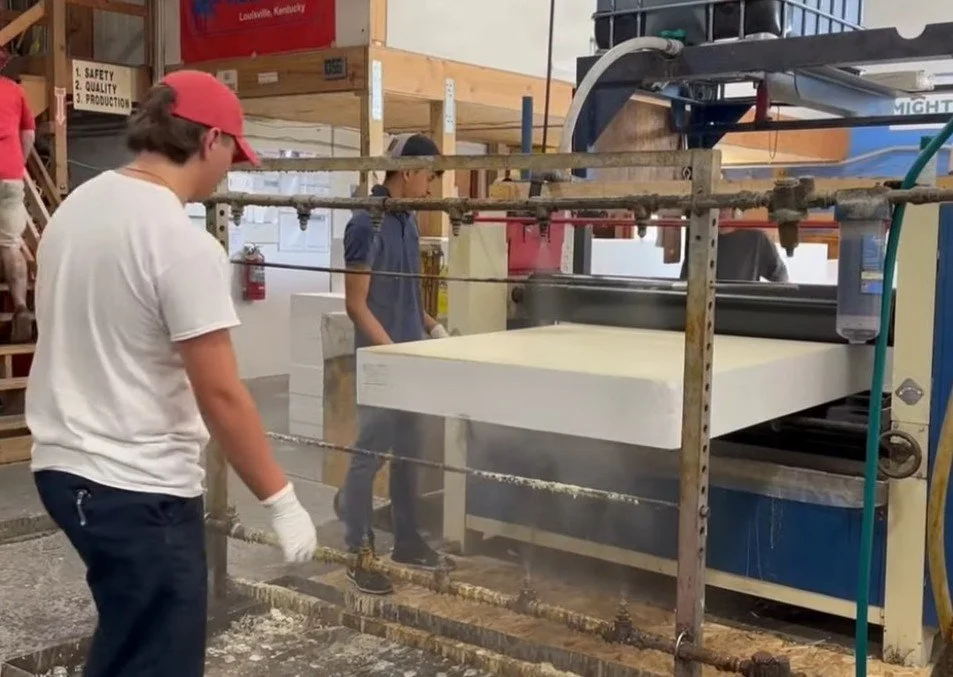
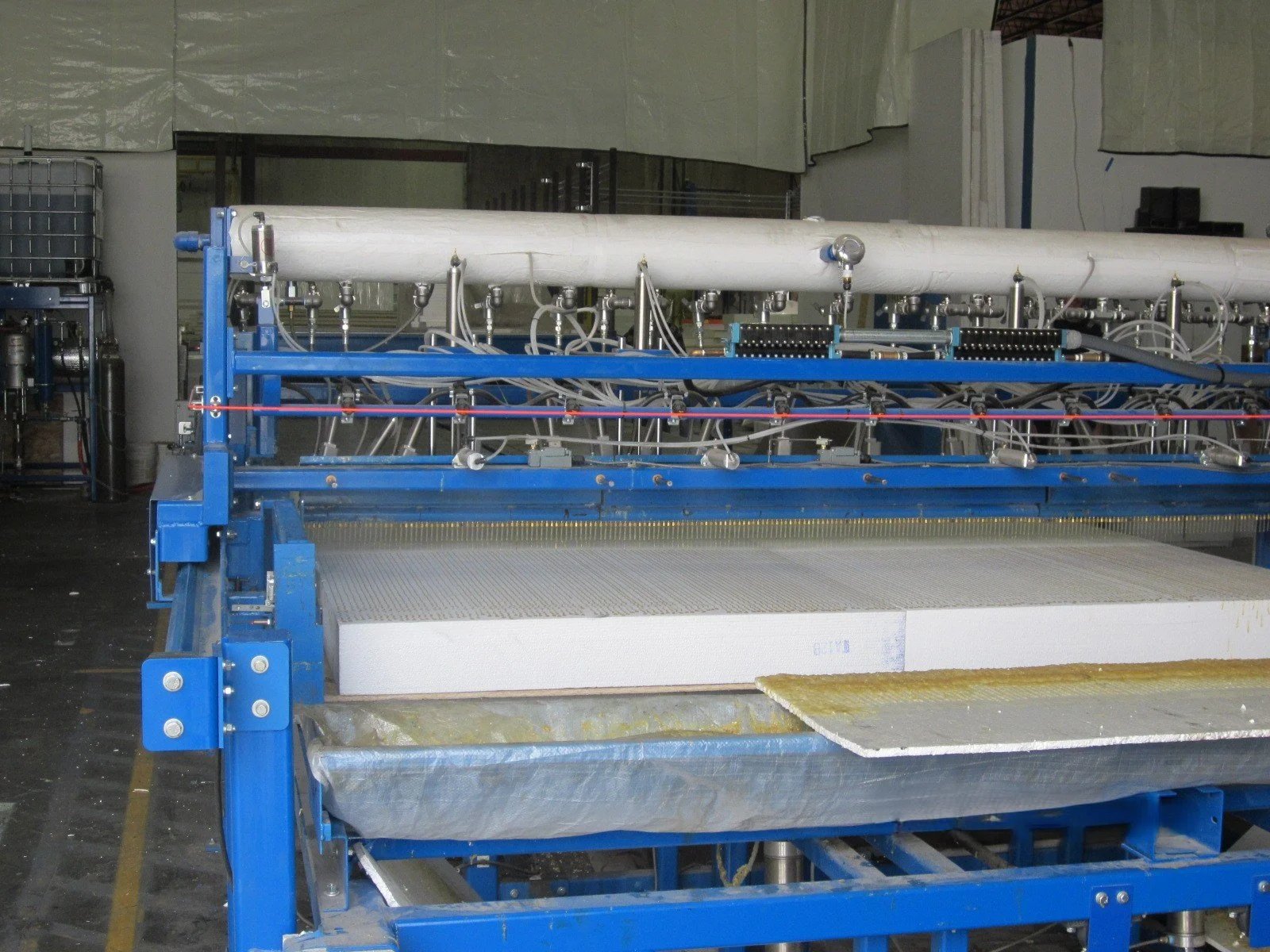
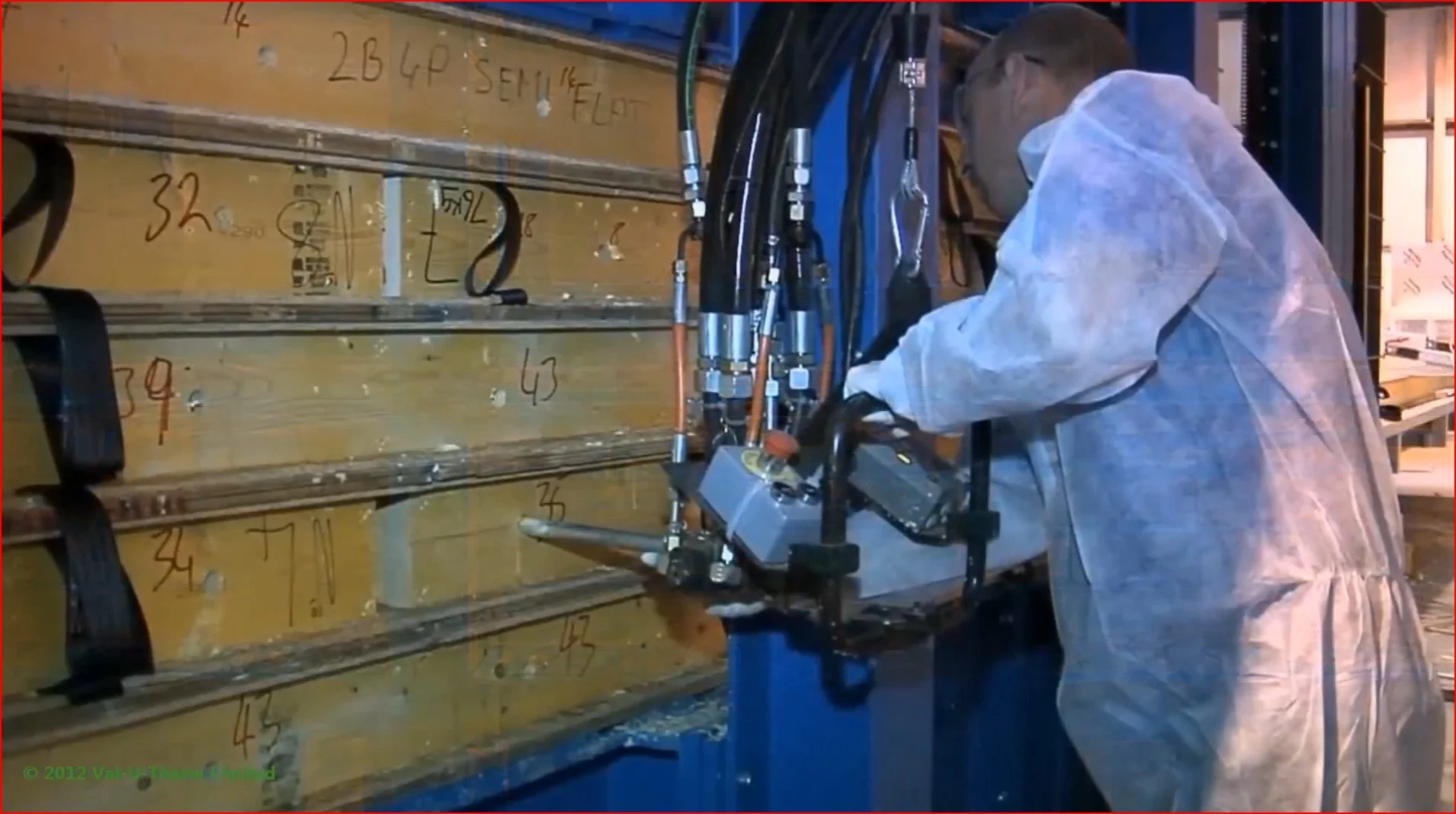
Epoxy resin adhesives, while less common than PU in mass SIP production due to cost and slower cure times, offer superior bond strength, chemical resistance, and thermal stability. They are prevalent in specialty, high-performance, or retrofit assemblies and for anchoring or reinforcement applications.
PVA adhesives persisted through the 1980s–1990s for foam-to-wood bonding in lower-performance or non-critical applications, especially in site-assembled panels. Modern iterations (Type II water-resistant PVA) offer improved environmental and handling characteristics, but are typically reserved for interior applications and non-structural SIPs .
PVA adhesives are not generally used as the primary adhesive for high-performance SIPs due to lower resistance to sustained moisture, cold, and heat cycles. However, certain manufacturers still specify PVA in interior and non-loadbearing applications, or for field joint sealing.
In SIP construction, the adhesive bond line is responsible for transferring shear forces between the facings and the core.
This is what allows the panel to behave as a composite structural element rather than separate materials.
If the bond line fails, the panel loses structural integrity.
Adhesive performance is highly dependent on manufacturing control.
Common issues include:
Inconsistent adhesive application
Poor surface preparation
Incorrect curing conditions (temperature, pressure, time)
Incompatible materials
These issues can lead to:
weak bond strength
localized failures
long-term delamination
Adhesives do not perform the same way in every environment. Performance depends on:
core material (EPS, GPS, PUR/PIR)
facing material (OSB, MgO, cementitious)
plant conditions and quality control
This is why SIP performance starts in the factory, not on the jobsite.
Adhesives are often treated as a secondary component. In reality, they are one of the most critical parts of the system.
Most SIP manufacturers use moisture-cure polyurethane adhesives because they provide strong, durable bonds across a range of materials. But even the right adhesive will fail if the process is not controlled.
In many cases, bond line failures are not isolated issues, but indicators of deeper manufacturing or system-level problems.
Adhesive performance cannot be evaluated in isolation. It must be considered as part of the full system:
core behavior
facing material
environmental exposure
manufacturing consistency
When these align, SIPs perform extremely well.
When they do not, problems are often traced back to the bond line.
In forensic investigations, bond line failures are one of the most common indicators of deeper system or manufacturing issues.
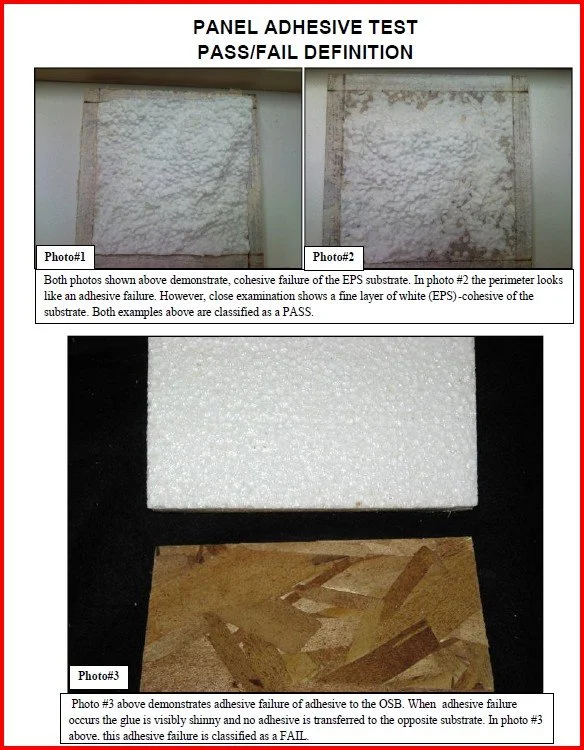
Choosing a SIP system is not just about materials. It is about system alignment.
Evaluate:
Core type
Facing material
Adhesive type
Code compliance
Climate and performance goals
Manufacturer capabilities
Installation requirements
The best SIP system is the one where all components work together for your specific project.
PGS Consulting works with SIP manufacturers, builders, and design teams to evaluate building system performance, manufacturing processes, and installation practices. Learn more about PGS Consulting →
A SIP code pathway is the method used to demonstrate that a Structural Insulated Panel system complies with building codes such as the International Building Code (IBC) or International Residential Code (IRC).
Unlike traditional framing, SIPs often require additional documentation or engineering to show compliance.
Code approval is not just a formality. It directly impacts:
how quickly a project gets approved
how much engineering is required
who carries responsibility for performance
how risk is managed across the project team
Misunderstanding the code pathway is one of the most common sources of delays and confusion in SIP projects.
Some SIP applications are addressed directly in building codes.
Limited to specific conditions
Typically applies to residential construction
Less flexibility in design
This is the simplest pathway, but also the most restrictive.
SIPs can also be approved through engineering analysis.
Based on 2024 IBC Section 104.2.3 or similar provisions
Allows design flexibility
Requires a licensed engineer
This pathway is often used for:
commercial buildings
complex geometries
projects outside prescriptive limits
Evaluation Reports by themselves are not a pathway to code compliance. An evaluation report demonstrates that the described material properties meet the building code requirements. However each project must demonstrate that it, itself, meets the requirements of the building code as a system. An evaluation report is used with the engineered design pathway.
Most SIP manufacturers rely on third-party evaluation reports.
Documents compliance with building codes
Includes structural, thermal, and material performance data
Widely accepted by building officials
These reports provide a standardized way to demonstrate compliance, but they are specific to each manufacturer’s system.
Problems typically occur when the code pathway is not clearly defined early in the project.
Common issues include:
assuming SIPs are fully prescriptive in all cases
mismatching manufacturer reports with project design
incomplete or incorrect submittals
lack of coordination between design, engineering, and installation
These issues can lead to:
delayed approvals
redesign work
increased project risk
SIP systems rely heavily on:
engineering assumptions
manufacturer data
installation details
project-specific conditions
Clear documentation is essential to align all of these pieces. This includes:
load paths and structural design
connection details
thermal and moisture considerations
compliance documentation
Code compliance should not be treated as a standalone step. It is part of the overall system that includes:
design
manufacturing
installation
performance expectations
When the code pathway is clear, projects move more efficiently. When it is not, problems tend to surface later in the process.
Many SIP-related project issues are not caused by the panels themselves, but by gaps between design intent, code compliance, and system execution.
PGS Consulting works with manufacturers, builders, and design teams to evaluate SIP systems, manufacturing processes, and installation practices.
If you are planning a project, refining a process, or working through a performance issue, clear guidance early can prevent costly problems later.
Joe Pasma, PE brings more than 40 years of experience in SIP engineering, manufacturing, installation, and forensic analysis.
EPS (expanded polystyrene) is the most common SIP core in North America. It is stable, cost-effective, and has the longest track record in SIP manufacturing, testing, and code evaluation. Most SIP manufacturers build their standard panel lines around EPS, which also makes it the easiest core to source and specify.
Often yes, but the two switches are not the same. GPS (graphite polystyrene) generally improves thermal performance without changing how the panel is manufactured, detailed, or installed. PUR/PIR delivers the highest initial R-value, typically R-6.5 to R-7.2 per inch, but it is a different manufacturing process with its own tradeoffs. Confirm the change with your manufacturer and engineer before you commit.
The adhesive is what makes a SIP structural. The bond between the core and the facings lets the panel act as one composite unit instead of three separate layers, which is where its strength and stiffness come from. Adhesive type, application method, and manufacturing quality control all affect how well that bond holds up over the life of the building.
SIPs are approved through one of two code pathways: prescriptive code or engineered design. The prescriptive pathway applies when a project falls within the limits the residential code sets for SIP construction. Projects outside those limits need an engineered design. Evaluation reports, such as ICC-ES, document how a specific panel performs and support approval, but they are not a pathway on their own.
SIPs offer clear advantages over traditional framing: continuous insulation, lower air leakage, and faster installation with fewer job-site steps. Those benefits depend on the system being designed, detailed, and installed correctly, so the panels and the details around them need to be treated as one system from the start.
Joe Pasma, PE is a licensed professional engineer with more than 40 years of experience in Structural Insulated Panels and advanced building systems. His background includes engineering, manufacturing systems, installation oversight, and forensic engineering.
Through PGS Consulting LLC, Joe helps manufacturers, builders, architects, building owners, and project teams improve system performance, reduce risk, and bring clarity to complex building challenges.