

SIPs and Modular Construction: Why SIPs Make Sense for Startup Modular Factories
Startup modular factories rarely fail for lack of demand. They fail when the build is too complicated to repeat. Here’s why SIPs make the factory simpler.
Written by Joe Pasma, P.E. | PGS Consulting LLC | SIP Engineering & Consulting | Published October 20, 2026
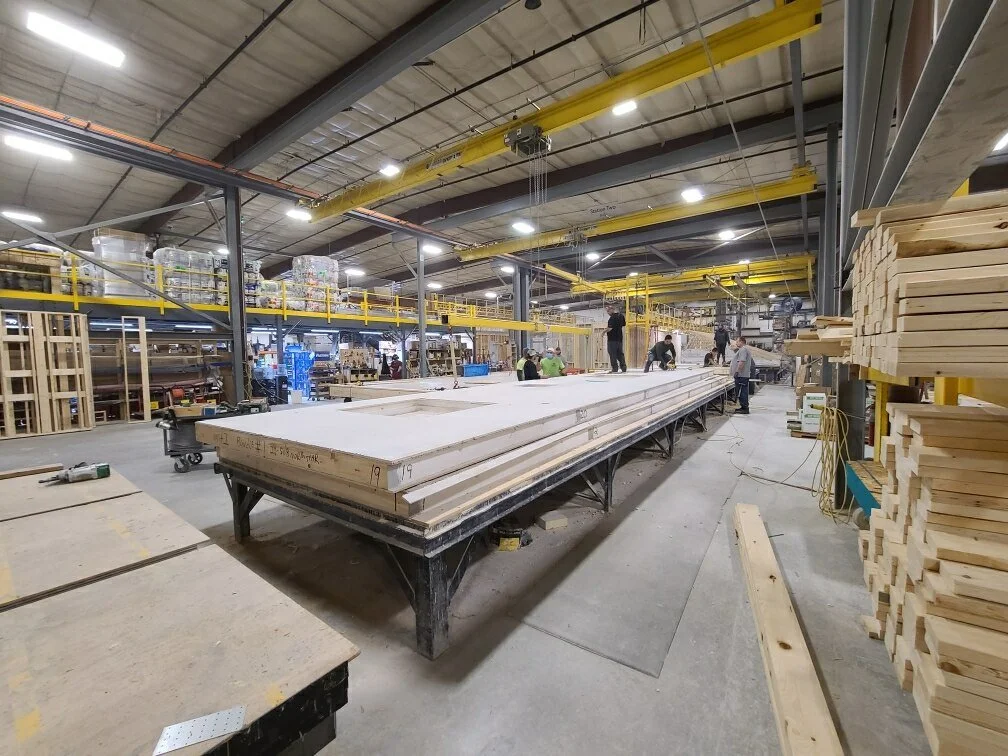
Starting a modular home factory is hard. Plenty of modular companies have closed their doors, and it usually isn’t because nobody wanted the homes. It’s because the factory couldn’t build them quickly, consistently, and without costly mistakes during its first couple of years.
The wall and roof system you choose has a lot to do with that. Builders call it the building envelope. Structural Insulated Panels (SIPs) give a new factory a simpler way to build a high-performance home: fewer steps, fewer trades, and fewer chances for something to go wrong. Here is what that means, and where the biggest opportunity is.
Key Takeaways
Most startup modular factories struggle because the build process is too complicated to repeat consistently, not because of a lack of demand.
SIPs combine framing, sheathing, and insulation into one factory-made panel, so a modular plant manages one envelope system instead of several components and multiple separate steps.
Fewer steps mean faster module production, easier training for new workers, and fewer places for quality problems to hide.
SIP-built homes are tight, quiet, and energy-efficient, which helps a new modular brand stand out with buyers, renters, and build-to-hold developers.
The biggest opportunity for SIP-based modular plants is in smaller towns outside major metro areas, where housing demand is greater than local builders can keep up with.
SIPs lower startup risk, but they don’t replace good engineering, ventilation planning, or careful detailing.
What Is Modular Construction, and Where Do SIPs Fit In?
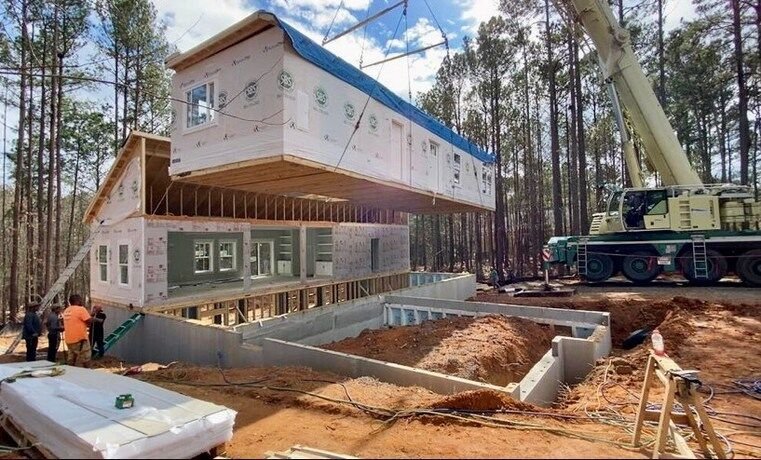
Modular construction means building most of a home inside a factory, in large finished sections called modules. The modules are trucked to the site and set on a foundation with a crane. Modular homes are built to the same state and local building codes as homes built on site. That’s different from manufactured homes, which are built to a federal HUD standard.
SIPs are a simple idea: a rigid foam core sandwiched between two structural skins, usually OSB (oriented strand board). One panel does the job of the framing, the sheathing, and the insulation all at once. If you’re new to them, start with What Are SIPs? A Plain-Language Guide.
SIPs show up in factory-built housing in two ways:
Panelized: flat wall and roof panels are shipped to the site and assembled there.
Modular (volumetric): panels are assembled into finished, three-dimensional boxes inside the factory, then shipped.
This article focuses on the second one: using SIPs as the envelope system inside a modular factory.
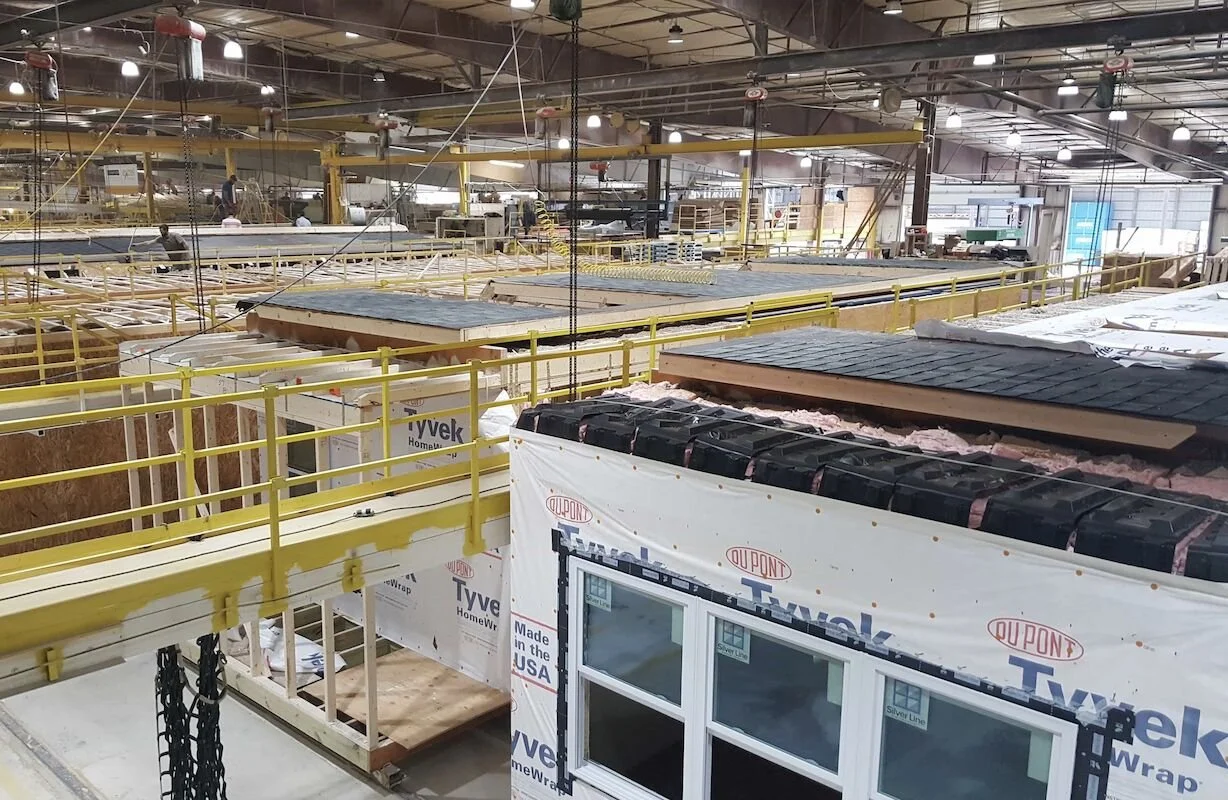
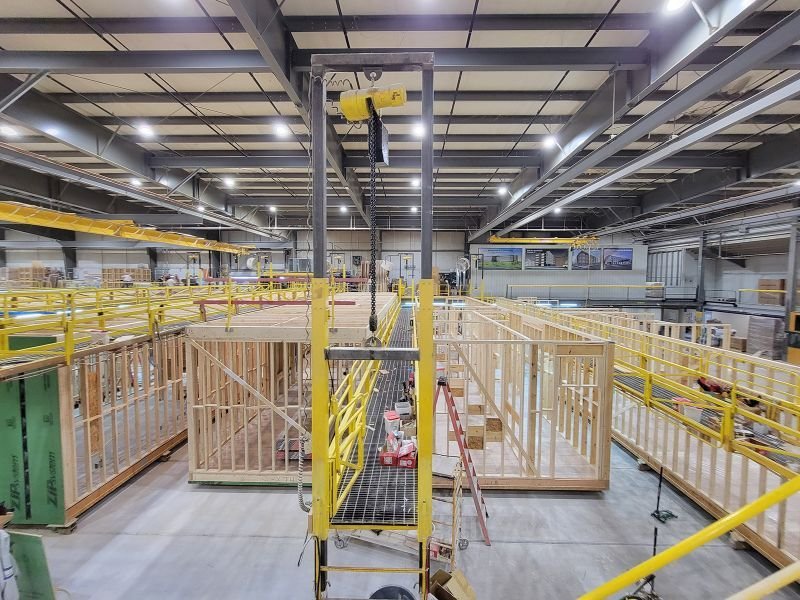
Why Startup Modular Factories Need Simplicity, Not Complexity
A factory makes money by doing the same thing well, over and over. Trouble starts when a new plant tries to copy site-built stick framing indoors.
A typical stick-framed wall isn’t one job. It’s several jobs stacked on top of each other: framing, sheathing, insulation, air sealing, and fixing thermal bridges (the spots where heat escapes through the studs). Each step needs its own skills and its own inspection, and each is a new chance for a mistake. An established factory with experienced crews can manage that. A startup with new hires and tight cash feels every extra step as lost time and money.
SIPs combine most of those steps into one panel that arrives cut to the plan. Here is how the two approaches compare on the factory floor.
← Swipe to view full table →
| Factory Factor | Stick Framing in the Factory | SIPs in the Factory |
|---|---|---|
| Wall build steps | Framing, sheathing, insulation, and air sealing done separately | One panel covers framing, sheathing, and insulation |
| Precision | Depends on each crew member's skill on each wall | Panels arrive pre-cut to the plan |
| Training new workers | Several different skills to learn | One repeatable assembly process |
| Quality checks | Many hidden layers to inspect | Fewer layers, fewer places for mistakes to hide |
| Insulation | Fit between studs, gaps are common | Continuous foam core, no gaps between studs |
| Airtightness | Depends on careful sealing at every layer | Fewer seams, though panel joints still need sealing |
How SIPs Help a Modular Factory Move Faster
A modular factory lives or dies by throughput: how many finished modules it can ship each week. SIPs help in three ways.
Faster Enclosure
SIPs can enclose a module in hours, not days. Once the walls and roof are up, the next crews can start sooner: electrical, plumbing, and mechanical first, then finishes. Modules ship sooner, and the factory gets paid sooner. (Wondering how wiring and plumbing work inside a solid panel? See Are SIPs Hard to Wire or Plumb?)
Fewer Bottlenecks
In a stick-framed factory, work tends to pile up at framing, sheathing, insulation, air sealing, and thermal-bridge fixes. SIPs fold most of those steps into one, so there are fewer stations where a module can sit waiting.
Repeatable Assembly
Factories run best on repetition, and SIPs repeat by nature. A SIP line uses the same splines (the connector strips that join panels together), the same fastening patterns, the same panel thicknesses, and the same joint details, module after module. That repetition is what makes a factory efficient.
A startup factory only becomes efficient when the building system is simple, predictable, and repeatable. Startup modular factories need a high-performance envelope that is easy to manufacture, easy to train, and easy to scale. SIPs are not just a building system. They are a factory strategy.
-- Joe Pasma, PEA Better Home Without a Complicated Build
A new modular company needs a reason for buyers to pick it over everyone else. SIPs give it a product people can feel, even if they never learn why.
Comfort: Continuous insulation keeps indoor temperatures steady, without the cold rooms and drafts common in leaky houses.
Quiet: A tight, solid wall cuts down on outside noise, which matters a lot in apartments and townhomes.
Lower utility bills: SIP envelopes can reduce heating and cooling loads by roughly 20 to 50 percent, depending on climate and design. More on that in SIP R-Value and Energy Performance.
Fewer hiding spots for moisture and pests: No hollow wall cavities means no loose insulation to settle and fewer places for moisture or critters to collect. Seams and penetrations still need proper sealing. See Why OSB Rots in SIPs and How to Prevent It.
Durability: A well-detailed SIP envelope holds its shape and performance for decades.
This matters most to the people who buy and own modular buildings long term. Build-to-hold developers care about maintenance calls, utility costs, and tenants who renew their leases. SIP apartment projects like PrairiE Lofts in Luverne, Minnesota have shown what this looks like in real buildings. Read more in SIPs for Rental Housing: A Build-to-Hold Developer’s Guide.
A tight SIP module needs a plan for fresh air. Because so little air leaks through the walls and roof, the home depends on mechanical ventilation, usually a balanced Energy Recovery Ventilator (ERV), to bring in fresh air and remove stale, humid air. Build the ventilation design into the standard module from day one rather than treating it as an add-on.
Why Small Towns Are the Biggest Opportunity for SIP Modular Plants
The next wave of modular growth isn’t likely to happen in big cities. It’s more likely in second- and third-ring communities: smaller towns and regional hubs outside major metro areas.
These communities often have:
Land that’s available and affordable for a factory
Less competition for workers
Strong demand for workforce housing
Local banks willing to back a local business
City leaders looking for economic development wins
They also need exactly what a SIP modular plant can build: small apartment buildings, townhomes, workforce housing, ADUs (accessory dwelling units), and small commercial buildings. A SIP modular plant can deliver those with lower operating costs for owners, less maintenance, faster move-in dates, and happier tenants. It also creates local jobs, which helps earn trust with city councils and lenders.
Real-World Example: FORT+HOME in Grand Junction, Colorado
FORT+HOME (Fort Homes LLC) is a modular manufacturer in Grand Junction, Colorado, building homes with SIP construction in a year-round factory. Its product line runs from small detached cottages to multifamily workforce housing, serving communities across the Rocky Mountain region.
The model is a good blueprint for a SIP-based modular startup: a SIP shell, standardized layouts, repeatable window and door openings, predictable assembly, and a simpler factory workflow. It’s also located in exactly the kind of regional market described above.
Planning a modular factory or adding SIPs to your production line? Every plant is different. Product mix, shipping distance, panel supplier, and your state’s modular approval process all change what will work. Talk to Joe Pasma, PE, for an independent SIP review with no manufacturer affiliation, so you get a straight answer before you invest in tooling.
How SIPs Lower Risk for a New Modular Factory
New modular factories tend to get hurt by the same few problems: framing errors, insulation gaps, air leaks, moisture issues, inconsistent quality control, and slow production. SIPs reduce that risk in three key areas.
Training risk: New workers can learn basic SIP assembly in days, not months. Speed and consistency keep improving over the first several modules. (See Are SIPs Hard for Subs to Learn?)
Quality control risk: Panels arrive engineered and cut to the plan, so there are fewer measurements and cuts to get wrong on the line.
Moisture risk: A SIP module is enclosed quickly, and its solid walls have no hollow cavities to trap water. Modules still need to be wrapped and protected for shipping and setting.
Choosing a SIP Supplier for Your Factory?
A modular plant is only as consistent as the panels coming in the door. Browse North American and international SIP manufacturers in one place, then compare your options before you commit to a supplier.
View the SIP Manufacturers DirectoryWhat SIPs Don’t Solve for a Modular Startup
SIPs make a factory simpler. They don’t make it automatic. A few things still need real attention:
Engineering still matters. A module has to handle normal building loads plus the stress of being trucked down the highway and lifted by a crane. Headers, point loads, and panel connections all need to be designed correctly. See Do SIPs Need an Engineer?
Details still matter. Unsealed panel joints and poorly flashed openings can still cause moisture problems. See Common SIP Problems and Failures.
Design decisions happen earlier. Panels are cut before they arrive, so late changes cost more. Lock in layouts and openings up front.
Code approvals still apply. Modular homes still go through state modular programs and inspections. See SIP Building Codes and Compliance.
SIPs aren’t a business plan. Financing, a sales pipeline, and a realistic shipping radius still decide whether a plant survives.
Energy Codes, Sustainability, and Resilience
Many modular startups pitch energy efficiency, sustainability, and resilience. SIPs back that pitch up. Minimal thermal bridging and a tight envelope help homes meet modern energy codes without complicated wall assemblies. Lower energy use cuts operating carbon year after year. SIPs also perform well in cold climates and, when detailed correctly, in wildfire-prone areas. Learn more in Can SIPs Be Used in Moist or Cold Climates? and How SIPs Perform in Wildfire Zones.
The Bottom Line
A startup modular factory needs a simple, predictable, high-performance envelope. SIPs give it one. They simplify the factory floor, speed up production, reduce early risk, and produce a home buyers and renters can feel the difference in. They also open the door to the market with the most room to grow: smaller communities that need quality housing and don’t have enough builders to supply it.
As modular construction scales across the country, SIPs are well positioned to help make it happen.
Related SIP Resources
Frequently Asked Questions
Can SIPs be used in modular construction?
Yes. SIPs work well in modular construction because they combine framing, sheathing, and insulation into one pre-cut panel. In a modular factory, SIP wall and roof panels are assembled into finished modules indoors, then shipped and set on site.
Why are SIPs a good fit for startup modular factories?
A startup factory needs a build process that’s simple and repeatable. SIPs replace several separate steps (framing, sheathing, insulation, and much of the air sealing) with one panel. That means faster production, easier training, and fewer quality problems during the factory’s critical first years.
What’s the difference between modular and manufactured homes?
Modular homes are built in a factory to the same state and local building codes as site-built homes, then set on a permanent foundation. Manufactured homes are built to a federal HUD standard instead. SIPs are most commonly used in modular and panelized construction.
What’s the difference between panelized SIP construction and SIP modular construction?
With panelized construction, flat SIP wall and roof panels are shipped to the job site and assembled there. With modular construction, the panels are assembled into finished three-dimensional modules inside the factory, then shipped and set by crane.
Are SIP modular homes more energy efficient?
Generally, yes. SIPs provide minimal thermal bridging and a tight envelope, which can reduce heating and cooling loads by roughly 20 to 50 percent compared to typical framing, depending on climate, design, and mechanical systems.
How long does it take to train factory workers to assemble SIPs?
Basic SIP assembly can typically be learned in days rather than months, because the process repeats the same panel connections and fastening patterns. Speed and consistency keep improving over the first several modules.
Do SIP modular homes have moisture or mold problems?
SIPs have no hollow wall cavities, which removes many of the places moisture typically collects. Moisture problems can still happen if panel joints, roof edges, or penetrations aren’t properly sealed and flashed, or if the home lacks proper mechanical ventilation.
Do SIP modules need an engineer?
Yes. Modules must handle normal building loads plus the stress of highway transport and crane lifting. An engineer experienced with SIPs should review panel layouts, headers, point loads, and connections before production begins.
Why are smaller communities a good market for SIP modular plants?
Smaller towns outside major metros often have affordable land, less competition for workers, strong demand for workforce housing, and local lenders and city leaders who want to support local jobs. SIP modular plants can deliver the small multifamily buildings, townhomes, and ADUs these communities need.
Are SIP modular buildings a good fit for build-to-hold rental developers?
Yes. Developers who plan to own a property long term benefit from the lower utility costs, reduced maintenance, and quieter, more comfortable units that a tight SIP envelope provides, along with the faster delivery of modular construction.
Starting a Modular Factory or Adding SIPs to Your Line?
PGS Consulting LLC provides independent SIP structural engineering, module design review, and production guidance for modular manufacturers and developers, backed by 40+ years of engineering, manufacturing, and installation oversight experience.
Talk to Joe Pasma, PE
How to Choose the Right SIP Manufacturer
There are more than 40 active SIP manufacturers in North America. Picking the wrong one affects your project for decades. Joe Pasma, PE breaks down the five things that actually predict manufacturer performance -- and the red flags he has seen in 40 years of being inside the plants.
By Joe Pasma, PE | PGS Consulting LLC, Licensed Professional Engineer | 40+ Years in SIP Engineering, Manufacturing, and Forensic Analysis | Published April 2, 2026, Updated June 6, 2026
Key Takeaways
There are roughly 40 to 45 active Structural Insulated Panel (SIP) manufacturers in North America -- and they are not all the same.
The right manufacturer for your project depends on five things: core type and facer, code compliance, manufacturing quality, engineering support, and project fit.
A current third-party compliance report like an ICC-ES evaluation report or CCMC report is the clearest indicator that a manufacturer's panels have been independently tested and verified to comply with the intent of the building codes.
SIPA membership is voluntary. It is a useful indicator of industry engagement, but it does not tell you whether a manufacturer's panels will perform on your specific project.
The most common mistake is choosing a SIP manufacturer based on price or proximity alone -- without asking the questions that actually predict performance.
An independent SIP engineer who has been inside the plants and reviewed the code reports can compress your evaluation process significantly.
There are more than 40 active Structural Insulated Panel (SIP) manufacturers in North America. A complete, verified list of those manufacturers is available on the PGS Consulting SIP Manufacturers resource page.
But knowing who makes SIPs and knowing which one is right for your project are two very different things.
Choosing a SIP manufacturer is not like ordering lumber. You are not picking a commodity off a price sheet. You are choosing a building system -- one that affects structural performance, energy efficiency, code compliance, and long-term durability. That decision follows the building for its entire life.
After 40 years working in SIP engineering, manufacturing, and forensic analysis, Joe Pasma, PE has seen what separates good manufacturer decisions from expensive ones. This article breaks it down into a clear, practical framework -- five steps, plain language, no engineering degree required.
Not All SIP Manufacturers Are the Same -- Here Is What to Look For
On the surface, most SIP manufacturers look similar. Websites show clean panels, finished homes, and lists of specs. It is hard to tell from a homepage whether a manufacturer runs a tight production line or a loose one.
The differences that actually matter are not necessarily visible on a spec sheet:
How consistent is the bond between the core and the facing?
What does their quality control process actually look like?
Do they have the engineering resources to support your specific project?
What happens when something does not go as planned in the field?
What type of panels are supplied? Blanks, Prefabricated, Ready To Assemble (RTA)?
What types of facer is supplied?
These are not questions a website answers. They are questions you either know how to ask -- or you don't find out until there is a problem.
Step 1: Start With Core Type & Facers
The first filter is the insulation core. Most SIP manufacturers specialize in one or two core types, and the core type you need is partly determined before you even call a manufacturer.
EPS (Expanded Polystyrene)
The most widely used SIP core. Cost-effective, dimensionally stable, and broadly recognized in building codes. R-value holds steady over the life of the building. Most first-time SIP builders work with EPS.
Best for: Residential and light commercial, budget-conscious projects, broad code compliance.
GPS (Graphite Polystyrene)
EPS with graphite added. Higher R-value per inch than standard EPS. Installs exactly like EPS -- no new tools or processes. Used on projects targeting higher performance or net-zero certification.
Best for: High-performance residential, energy-intensive climate zones, green certification projects.
PUR / PIR (Polyurethane-Based)
Highest initial R-value per inch. Thermal performance drifts over time -- long-term aged R-values are lower than the initial rating. EPS and GPS do not drift.
Best for: Commercial, cold storage, projects with tight space constraints and high performance requirements.
OSB (Oriented Strand Board)
The most common facing, offering strong structural performance and large panel sizes.
Best for: Most residential and commercial SIP roof, wall, and floor applications. Large-scale panelized construction.
MgO (Magnesium Oxide Faced)
MgO board used in place of traditional OSB facing. Different fire resistance and moisture characteristics. Growing category for non-combustibility requirements or enhanced durability.
Best for: Fire-sensitive projects, specific moisture environments, applications where OSB facing is not acceptable.
Once you know which core type fits your project, the list of manufacturers worth evaluating gets much shorter. Most manufacturers produce EPS panels. Fewer produce GPS. PUR/PIR cores and MgO-faced systems come from a smaller subset of producers.
For a deeper look at how R-values and thermal performance work across core types, the SIP R-Value and Energy Performance guide covers the details without the engineering jargon.
Step 2: Check the Code Report
Once you have a short list based on core type and facers, the next filter is code compliance.
An ICC-ES evaluation report (used in the U.S.) or CCMC report (used in Canada) is a third-party document confirming that a manufacturer's panels have been independently tested and evaluated against specific code requirements. Other third-party compliance reports are used by some manufacturers It is the most reliable external signal you have.
A current code report tells you three things:
The panels have been tested by someone other than the manufacturer.
The system meets code defined structural and thermal performance criteria.
You have documentation to bring to your building department without a fight.
If a manufacturer does not have a current code report, that does not automatically disqualify them -- but the burden of demonstrating compliance shifts to the builder, the engineer, or the project team. That burden has a cost. For a full breakdown of how SIP code compliance works, the SIP Building Codes and Compliance guide is worth reading before you start any project.
Step 3: Ask About Manufacturing Quality
A code report tells you the system was tested. It does not tell you whether the plant you are ordering from is running well this month.
SIP performance starts on the factory floor. Bond quality between the core and the facing, adhesive consistency, dimensional accuracy, and how panels are handled and stored before shipping -- these are not things you can assess from a website or a brochure.
The manufacturers that perform consistently over the long term tend to share a few characteristics: defined quality control checkpoints during production (not just at final inspection), consistent adhesive application that does not vary by shift or operator, dimensional tolerances that are tracked and enforced, and clear documentation that travels with the panels to the jobsite.
You cannot fully evaluate this from the outside. But you can ask about it directly -- and the quality of the answer tells you a lot.
Questions Worth Asking Before You Commit
- Do you have a current ICC-ES evaluation report or CCMC report? If yes, ask for the report number and check it yourself at icc-es.org.
- What is your quality control process during production? A manufacturer with a real QC system can describe it in plain terms. One that can't is telling you something.
- What dimensional tolerances do you hold? Tight tolerances matter on projects with complex geometries or engineered connections.
- What engineering support do you provide for my project? This means project-specific support, not just a generic installation manual.
- What happens if panels arrive with damage or don't match the drawings? How a manufacturer handles problems tells you more than how they describe their normal process.
- Have you produced panels for projects similar to mine? Climate zone, building type, and structural loads all affect whether a given manufacturer is a good fit.
Step 4: Evaluate Engineering Support
A SIP manufacturer is not just a panel supplier. The best ones function as a technical partner on your project -- providing layout drawings, connection details, sequencing guidance, and support when field questions come up.
What good engineering support actually looks like: panel layout drawings specific to your project (not generic templates), connection details that align with your structural loads and spans, a clear point of contact for field questions during installation, and documentation your installer can actually use on site -- not a 60-page technical manual.
What it does not look like: a general installation guide and a phone number, recommendations to "consult a local engineer" for every question, or slow response times when the crew is waiting on an answer.
The level of engineering support varies widely across manufacturers. Some have in-house engineering teams with decades of SIP-specific experience. Others have limited technical resources and rely on the builder to fill the gaps. Knowing which you are working with before the job starts matters. For a clear picture of what proper SIP installation documentation looks like, the SIP Installation Guide is a useful reference.
Step 5: Match the Manufacturer to Your Project
There is no universally best SIP manufacturer. The right choice is the one that fits your specific project -- not the one with the most polished website or the biggest name in the industry.
Climate zone. A manufacturer that is ideal for a cold-climate residential project in Minnesota may not be the right fit for a commercial build in coastal Florida. Core type, facer type, panel thickness, and sealing systems all interact with climate.
Building type. Residential single-family, multi-family, light commercial, and agricultural builds all have different structural and code requirements. Not every manufacturer's system is evaluated for every application.
Installation team experience. If your crew has never installed SIPs, a manufacturer with strong field support and detailed installation documentation is worth more than one that assumes you already know what you are doing.
Project size and timeline. A small regional manufacturer may be a perfect fit for a custom home and completely wrong for a 50-unit development on a tight schedule. Production capacity and lead times are real constraints.
Your code jurisdiction. Some evaluation reports cover specific building types or climate zones. Verify that a manufacturer's code report actually covers your jurisdiction and project type before assuming it does.
Red Flags Joe Has Actually Seen
After 40 years inside SIP plants and on SIP jobsites, a few patterns show up consistently when manufacturer selection goes wrong.
Choosing on price alone. Panel cost is one line item in a full project package. The cost of a bad manufacturer decision -- in field repairs, schedule delays, code compliance battles, and long-term performance problems -- is a much bigger number. The SIP Cost Guide breaks down how to think about SIP costs across the full project, not just the panel line.
Taking spec sheets at face value. Manufacturers publish the performance numbers their systems achieve under test conditions. Whether those numbers translate to consistent field performance depends on manufacturing quality and installation precision -- neither of which appears on a spec sheet.
Assuming SIPA membership means quality. SIPA membership is voluntary. Several long-standing, well-regarded manufacturers are not SIPA members. Several SIPA members have had well-documented performance issues. Membership is a useful data point, not a quality guarantee.
Skipping the code report check. The most common oversight. A manufacturer tells you their panels are code-compliant. You believe them. Later, the building department asks for documentation and the project stalls. A simple check at icc-es.org or the third-party agency takes five minutes and prevents a serious problem.
Not asking about manufacturing consistency. Two panels from the same manufacturer can perform very differently if production quality is not tightly controlled. Bond failures, dimensional variation, and adhesive inconsistency are not visible when the panels arrive -- they show up later in the building's performance and longevity. The SIP Problems and Failures guide covers what these failures actually look like and what drives them.
Have Questions About a SIP Manufacturer?
Joe Pasma, PE has worked with manufacturers, builders, and design teams across North America for more than 40 years. He has been inside the plants, reviewed the code reports, and seen what separates consistent performers from inconsistent ones.
Contact Joe →Frequently Asked Questions About SIP Manufacturers
How many SIP manufacturers are there in North America?
There are roughly 40 to 45 active Structural Insulated Panel manufacturers in North America, spanning the United States, Canada, and Mexico. This includes companies producing EPS, GPS, PUR/PIR, and MgO-based SIP systems. A full verified list is available on the PGS SIP Manufacturers page.
Is SIPA membership a reliable indicator of manufacturer quality?
Not on its own. SIPA membership is voluntary, and several long-standing, well-regarded manufacturers are not members. A current ICC-ES evaluation report or CCMC report is a more reliable indicator of independent third-party verification than membership status alone.
What is an ICC-ES evaluation report and why does it matter?
An ICC-ES evaluation report is a third-party document confirming that a manufacturer's panels have been independently tested and evaluated against specific code requirements. If a manufacturer does not have a current report, the burden of demonstrating compliance falls on the builder, engineer, or project team -- and that burden has a real cost.
Can I choose a SIP manufacturer based on price alone?
Panel cost is one line item in a full project package. The cost of a poor manufacturer decision -- field repairs, schedule delays, code compliance problems, long-term performance issues -- is typically far larger than the initial savings. Price is worth comparing after you have narrowed the field using code compliance, core type, and engineering support.
What is the difference between EPS, GPS, and PUR/PIR SIPs?
EPS is the most common and cost-effective core -- stable R-value, widely code-recognized. GPS adds graphite to boost R-value per inch without changing the installation process. PUR/PIR offers the highest initial R-value but experiences thermal drift over time, meaning long-term performance is lower than the initial rating. EPS and GPS do not drift. For a full breakdown, see the SIP R-Value and Energy Performance guide.
Does the right SIP manufacturer depend on my climate zone?
Yes, indirectly. Core type, facer type, panel thickness, and sealing system requirements all interact with climate. A manufacturer ideal for a cold-climate project in Minnesota may not be the right fit for a coastal build in Florida. Matching the manufacturer to your climate zone -- and verifying that their code report covers your jurisdiction -- is part of the evaluation process.
How do I evaluate a SIP manufacturer I have never worked with before?
Start with three questions: 1.) Do they have a current code report? 2.) What does their quality control process look like in production? 3.) What engineering support do they provide for your specific project type? Working with an independent SIP consultant who has direct manufacturing experience can compress the evaluation considerably and surface things a website or sales call will not reveal.
What are the most common SIP manufacturer problems Joe Pasma has seen?
The most consistent ones: choosing on price without checking the code report, taking spec sheet performance numbers at face value without understanding manufacturing consistency, assuming SIPA membership indicates quality, and not asking the right questions about what happens when something goes wrong in the field. The SIP Problems and Failures guide covers what these issues look like when they surface in a building.
About the Author
Joe Pasma, PE is a licensed professional engineer with more than 40 years of experience working with Structural Insulated Panels and advanced building systems. His background includes structural engineering, manufacturing operations, installation oversight, and forensic investigation.
Through PGS Consulting LLC, Joe works with manufacturers, builders, architects, building owners, and project teams to improve technical systems, reduce risk, and strengthen building performance.