SIP Failures and Forensic Analysis
When a Structural Insulated Panel (SIP) assembly fails, whether from moisture intrusion, OSB rot, or a manufacturing defect, understanding the actual cause matters for builders resolving the problem and for attorneys and insurance adjusters investigating a claim. This section covers how and why SIP failures happen, drawn from real forensic case work. Independent forensic analysis from Joe Pasma, PE, who has conducted SIP failure investigations for over 40 years and is not affiliated with any manufacturer.
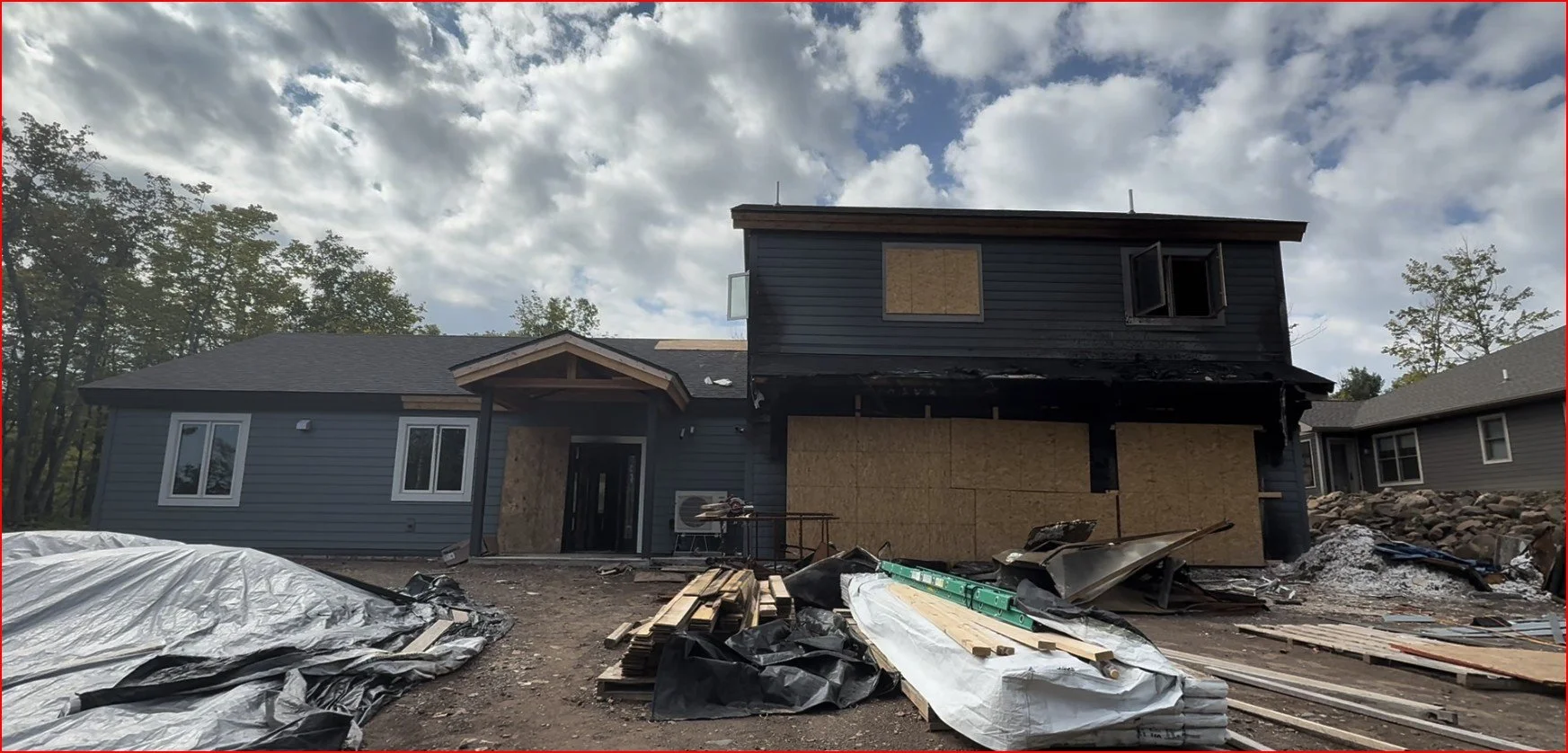
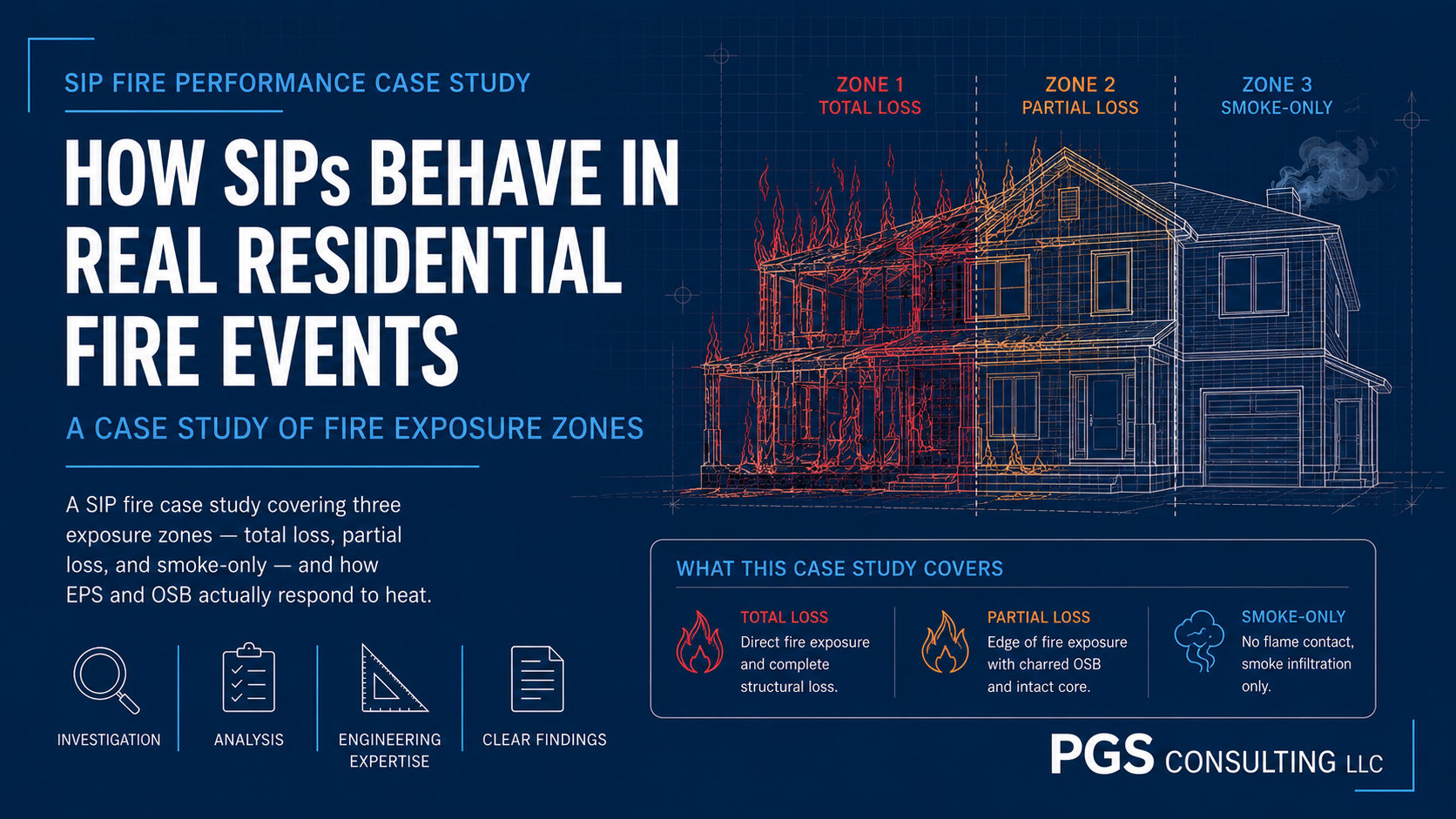
A residential SIP fire produced three very different outcomes depending on exposure: total loss, partial damage, and no structural loss at all. Here's what determined the difference — and what builders, insurers, and adjusters should take from it.
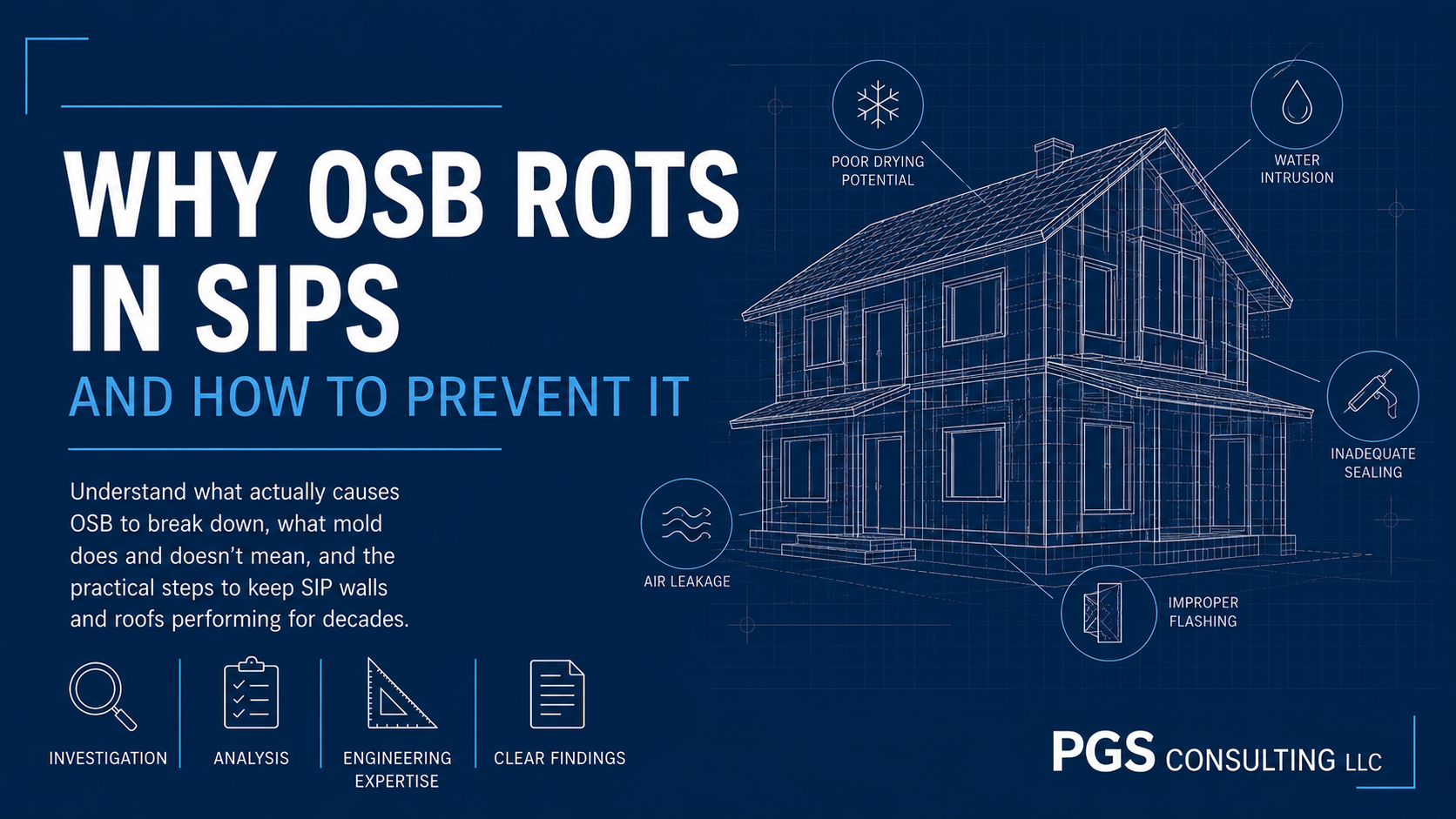
If you've ever seen a stained or swollen OSB panel and wondered whether your SIP is failing, here's the short answer: it's not the panel, it's the moisture. I walk through what actually causes OSB rot, how to tell mold from rot before you panic, and the four controls that keep it from happening in the first place.
A forensic case study of SIP ridge rot caused by incomplete air sealing at the ridge joint -- not exterior water intrusion. Investigated and documented by Joe Pasma, PE.
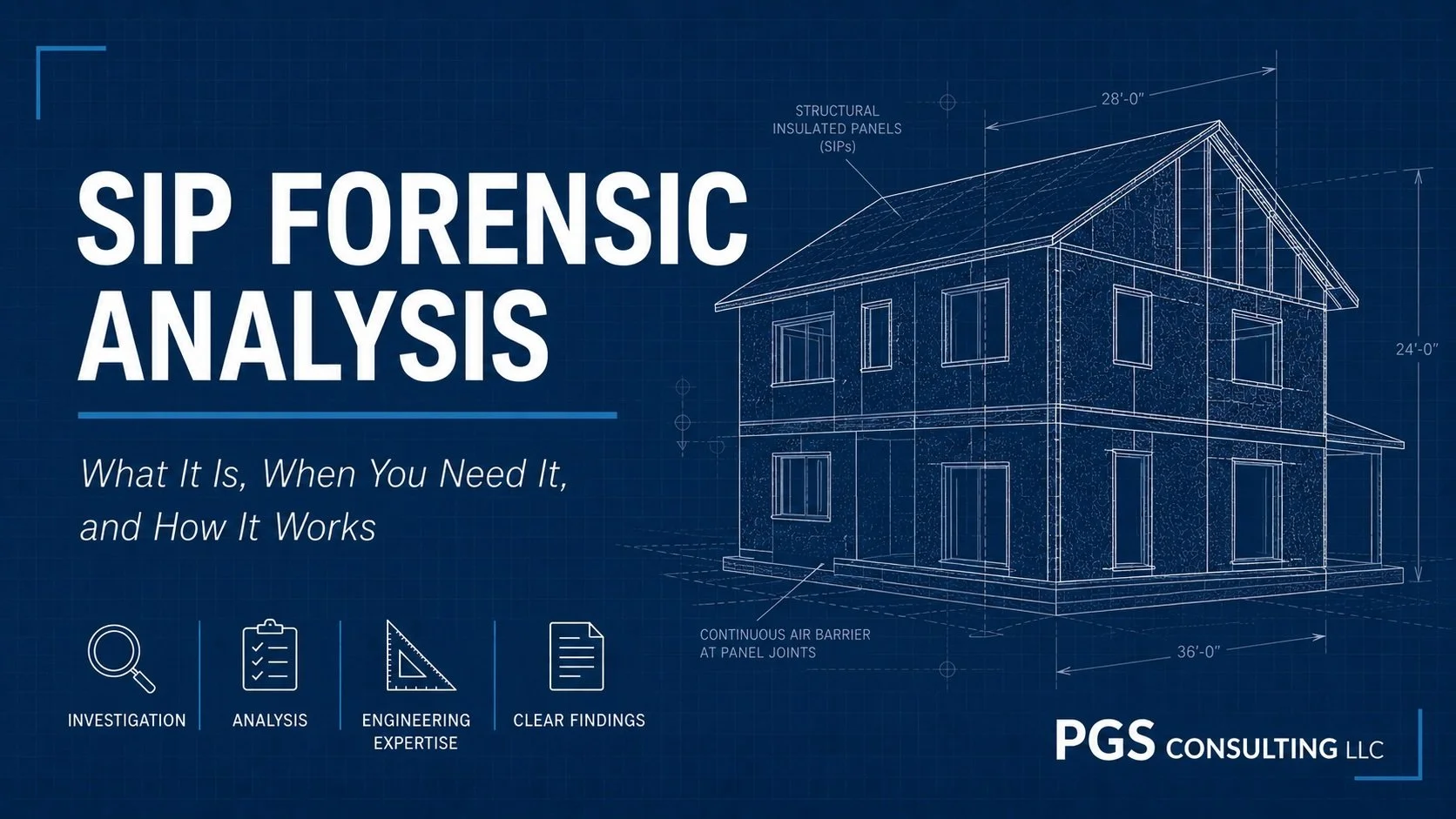
SIP panel failures rarely have a single cause. Learn what SIP forensic analysis is, when to use it, and what a real investigation looks like -- from a licensed PE with 40+ years of SIP experience.
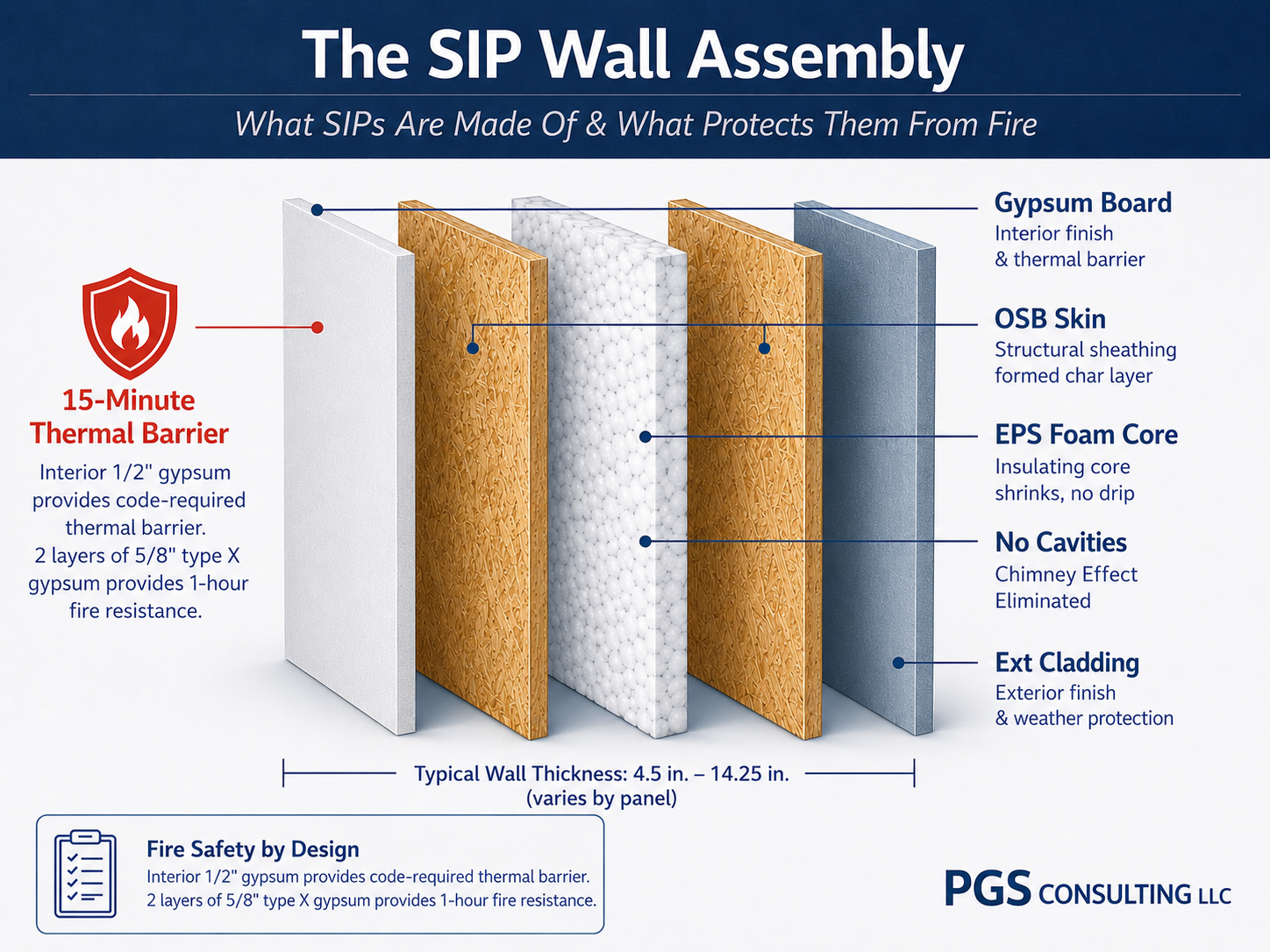
Are SIPs combustible? Yes -- but that doesn't mean unsafe. Learn how OSB and EPS behave in fire, what the building code requires, and why properly installed SIP assemblies perform predictably and safely.