
By Joe Pasma, P.E. | PGS Consulting LLC | SIP Engineering & Consulting | Published November 16, 2026, Updated November 17, 2026
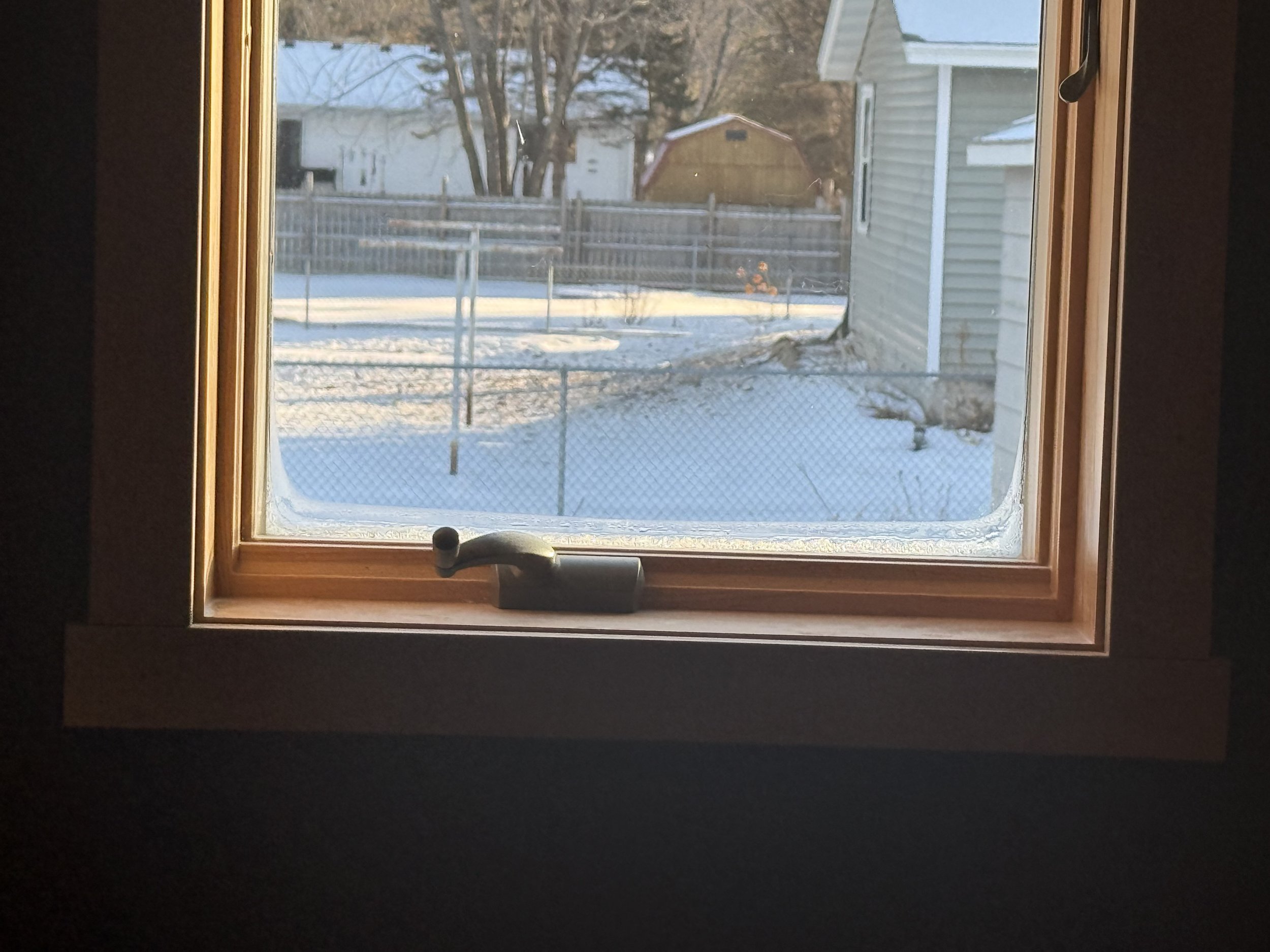
Frost along the bottom of one of our windows on a -7°F morning. Indoor humidity was only about 40%.
If you wake up on a cold morning and find frost or water on the inside of your windows, here's what's actually going on, and why it doesn't always mean your house is too humid.
Key Takeaways
Frost or condensation on a window happens when the glass gets colder than the "dew point" of the air touching it. It's about how cold the glass is, not just how humid the house is.
There's no single indoor humidity number that keeps windows clear all winter. The colder it gets outside, the lower your indoor humidity needs to be to keep the water or frost off the inside of the window.
A little frost during a below-zero cold snap is normal, even at around 40% humidity. Heavy or long-lasting condensation is worth looking into.
An HRV (Heat Recovery Ventilator) dries a house out in winter. An ERV (Energy Recovery Ventilator) holds on to some of that moisture. That one difference can change how your windows behave.
An ERV is not a dehumidifier. In cool, rainy fall and spring weather, a tight house may need a dehumidifier to keep humidity in check.
Before you change anything, measure. A few cheap temperature and humidity monitors tell you far more than guessing.
Here's a question I get a lot from people living in tight, energy-efficient homes: "There's frost on the inside of my windows. Is my house too humid?"
Sometimes, yes. But not always. And the answer usually isn't one number on a humidity gauge.
We've lived in a Structural Insulated Panel (SIP) home in Minnesota for decades. For about 24 years we ran a heat recovery ventilator (HRV). Recently we switched to an energy recovery ventilator (ERV). Living with both in the same airtight house has taught us a lot about moisture, and more often than not, the windows were the first thing to tell us something had changed.
A Real Example From Our House: -7°F and Frost at 40% Humidity
On the morning of January 19, 2026, here's what our temperature and humidity monitors showed:
← Swipe to view full table →
| Location | Temperature | Relative Humidity |
|---|---|---|
| Kitchen | 64.4°F | 38% |
| Bedroom 2 | 61.5°F | 43% |
| Primary bedroom | 63.0°F | 40% |
| Living room | 61.7°F | 42% |
| Outdoors | -7.4°F | 65% |
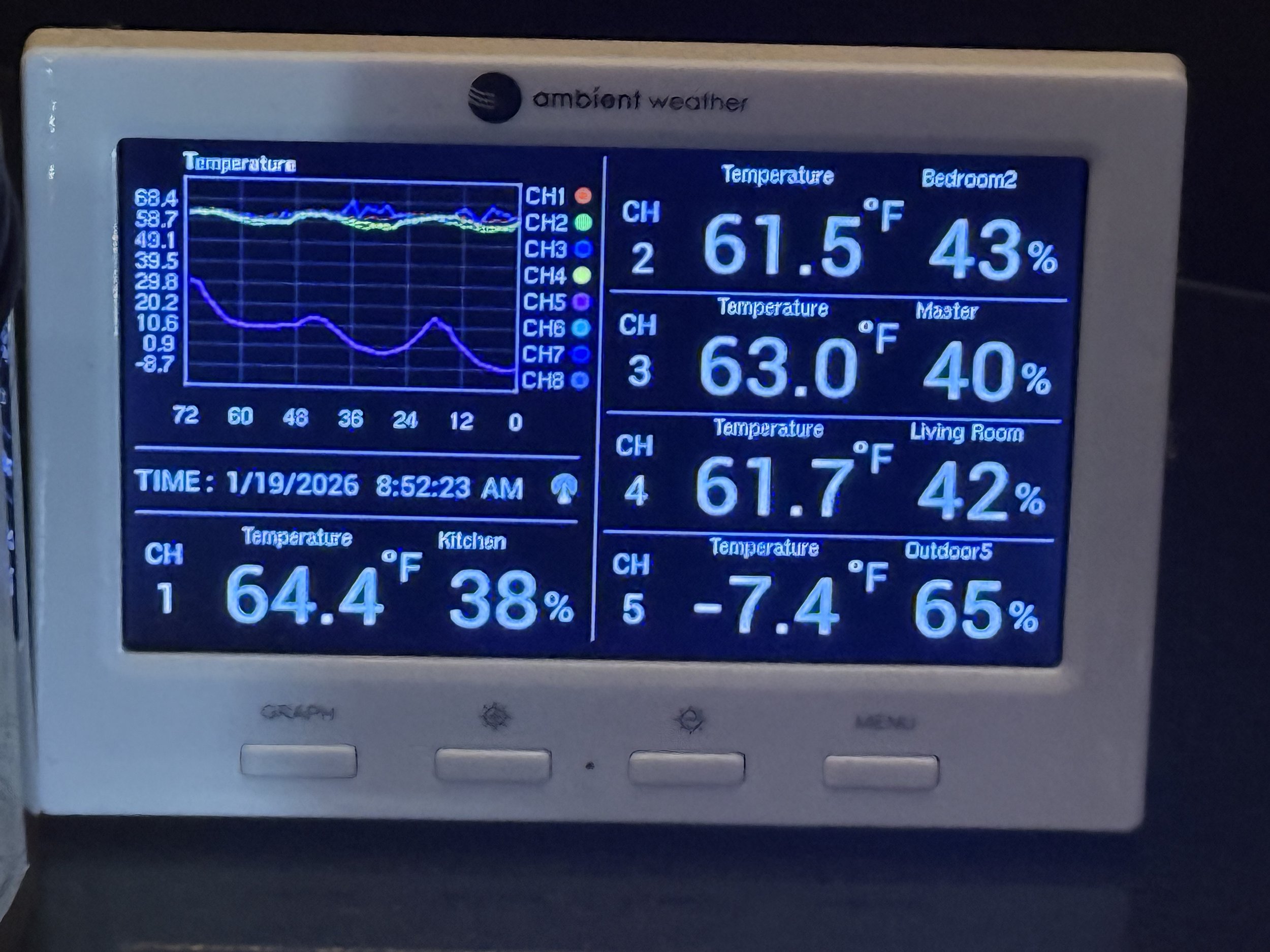
Indoor humidity was about 38% to 43% while it was -7.4°F outside.
Nothing about those indoor numbers looks high. Most people would call 40% humidity perfectly normal for winter. And yet there was frost along the bottom of the window.
That's the most important lesson in this whole article: there's no single indoor humidity level that guarantees your windows will stay clear. The colder the glass gets, the less moisture it takes for frost or water to form on it.
Why Does Frost Form on the Inside of Windows?
To understand it, you only need to understand two ideas: relative humidity and dew point.
Relative humidity describes the air
Relative humidity (RH) is exactly what it sounds like: relative. It tells you how much water vapor is in the air compared to how much that air could hold at its current temperature.
Warm air can hold a lot more moisture than cold air. So when you heat air up without adding water, its RH drops. When you cool it down, its RH goes up.
Dew point is where the window comes in
Condensation doesn't happen "in the air." It happens on a surface.
When warm room air touches cold glass, the thin layer of air right against the glass cools off. If the glass is cold enough to cool that air below its dew point, the water vapor turns into water on the glass. If the glass is below freezing, it shows up as frost.
Think of a glass of ice water or beer on a summer day. The room isn't unusually humid. The glass is just cold.
That's also why condensation usually shows up first along the bottom edge, corners and frames of a window. Those spots tend to run colder than the middle of the glass.
What makes one window colder than another
Two houses at the same humidity can have completely different looking windows. That's because a window is reacting to a whole combination of things:
How cold it is outside
How warm it is inside
The type of glass (double pane, triple pane, coatings)
The frame and the edge of the glass
How well room air moves across the window
Blinds, shades and curtains
Blinds, shades and curtains can make condensation worse. They block warm room air from washing across the glass, so the window behind them gets colder even though the room feels fine. That's one reason two windows in the same room can look completely different on the same morning. Also note where the water is: condensation on the room side of the glass is a humidity-and-temperature issue, condensation between the panes usually means a failed glass seal, and water around the frame or sill can point to a leak. Those are three different conditions that may mean problems ahead.
Does Frost on My Windows Mean My House Is Too Humid?
Not automatically. Our January example proves it. Below zero outside, about 40% inside, and frost still formed on the coldest part of the glass.
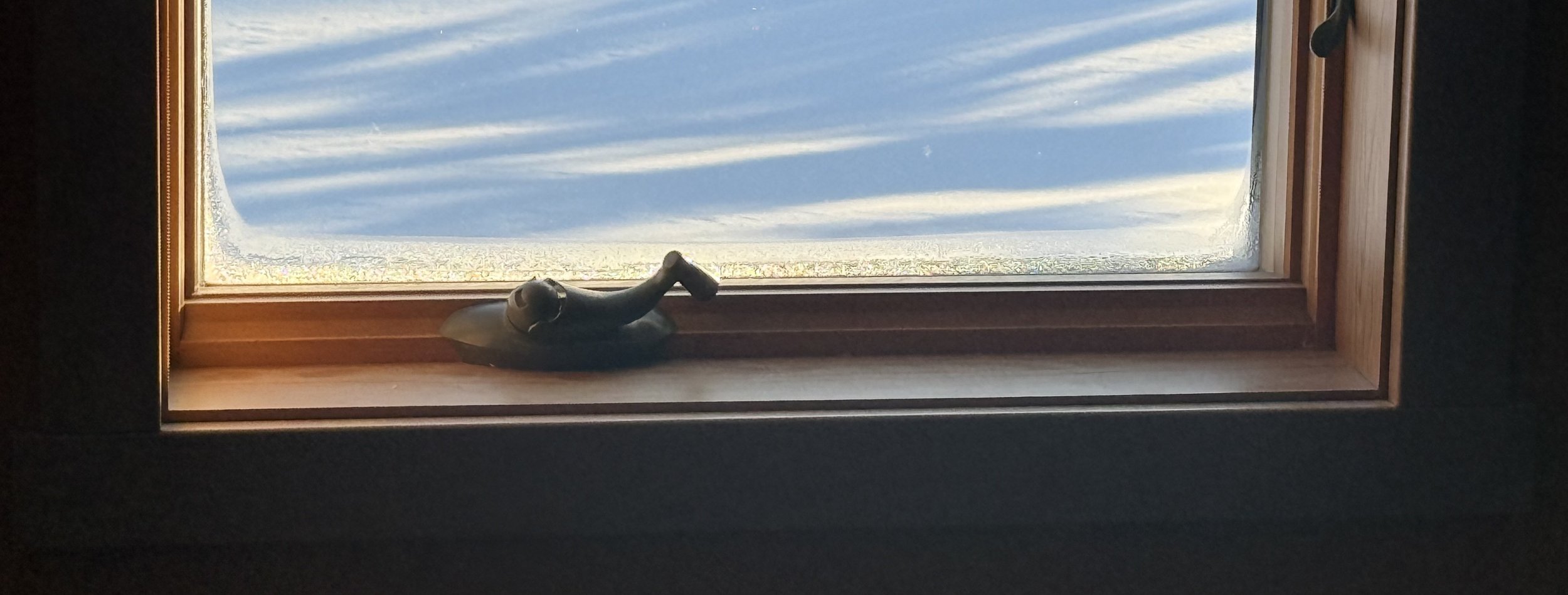
Frost formed mostly along the lower edge of the window. The photo shows where the glass got cold enough for frost. It doesn't, by itself, explain why.
A photo of frost can't tell you on its own whether you have:
Too much humidity in the whole house
A failed window
An air leak
A glass problem
An installation problem
It's a clue, not a diagnosis.
After all these years in the same house, I can often look at the windows and tell that something inside has changed. But that doesn't make a window a humidity meter. It's just the coldest surface in the room reacting to conditions inside and outside. A clear window doesn't prove your humidity is perfect, and a little frost during an extreme cold snap doesn't prove you have a moisture problem. My rule is the same one I use on every forensic job: observe first, measure next, and only diagnose when the information actually supports it.
-- Joe Pasma, PEWhy Airtight SIP Homes Need a Ventilation Plan
SIPs can create a very airtight house when the panels, joints and openings are designed and built right. Our house blower-door tested at 1.26 ACH50, which is very tight. (If you want the numbers behind that, here's why SIPs create better building envelopes.)
In a leaky house, fresh air sneaks in through cracks and gaps whether you want it to or not. Nobody really decides how much outside air comes in. The house decides.
In a tight house, you decide. That's why mechanical ventilation matters so much more.
To be clear: SIPs don't "cause" humidity. An airtight house simply gives you more control over fresh air and moisture, and that's a good thing. It just means the ventilation system has to be treated as part of the building, not an afterthought.
HRV vs. ERV: How Each One Handles Moisture
Both an HRV and an ERV bring in fresh outdoor air and send stale indoor air out, while recovering heat so you're not throwing your heating dollars out the wall. The big difference is what they do with moisture.
Our 24 years with an HRV
An HRV recovers heat but doesn't intentionally pass moisture back into the house. In a Minnesota winter, that makes it a drying machine: moist indoor air goes out, cold dry outdoor air comes in and gets warmed up.
With our HRV, we usually kept indoor humidity around 30% to 40% in winter. In humid summer weather, we generally shut the HRV off because we didn't want it pulling in warm, sticky outdoor air all day. That's how we ran our house. It's not a recommendation that everyone shut off their HRV in summer, since fresh air is also an indoor air quality issue.
Why we switched to an ERV
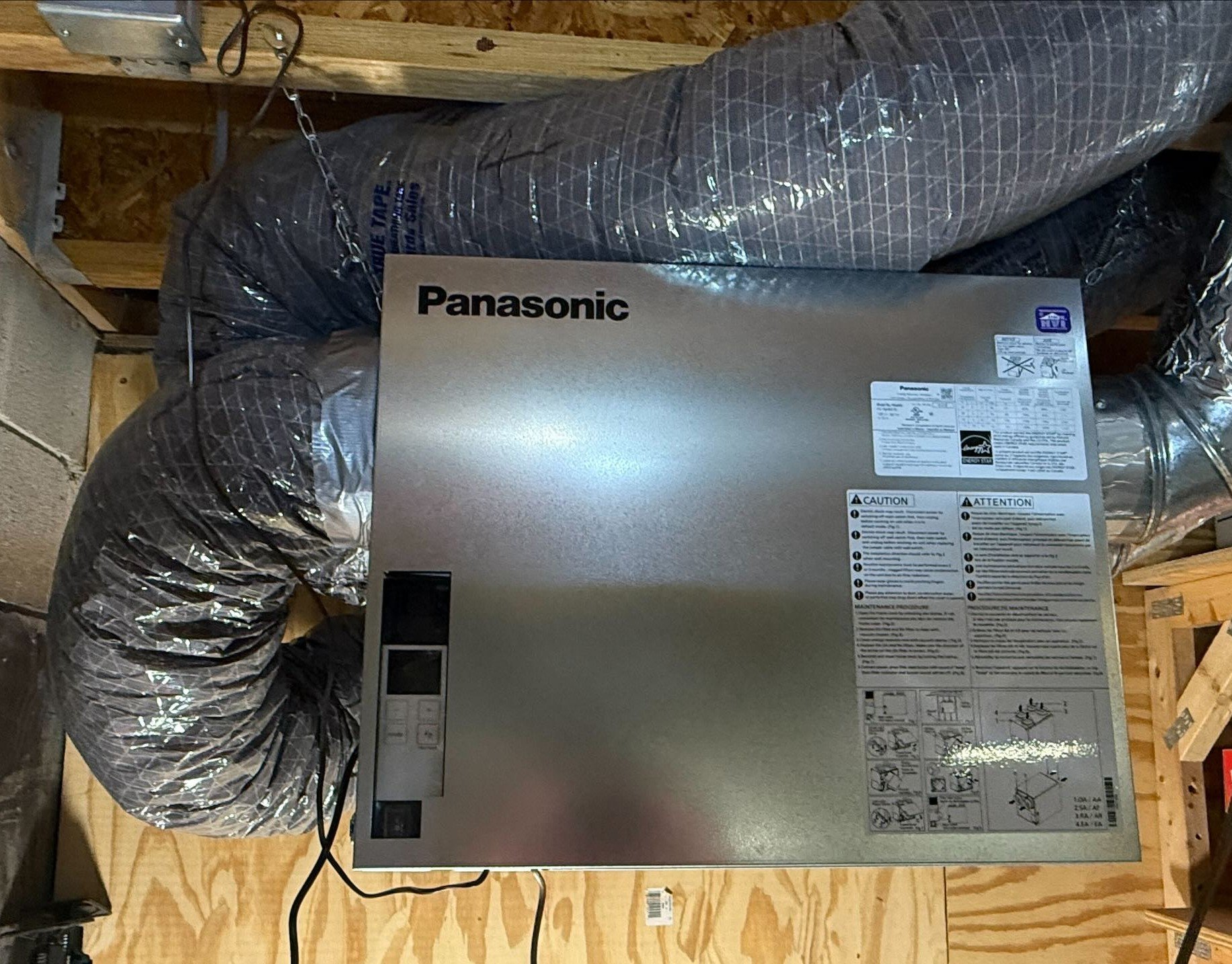
Today we run a Panasonic FV-16VEC1S ERV. Panasonic describes the core in this unit as a hygroscopic membrane designed to transfer both heat and moisture between the two airstreams.
In plain terms:
In winter, an ERV hangs on to some of the indoor moisture an HRV would have thrown outside.
In humid summer weather, it keeps some of the outdoor moisture from coming in with the fresh air.
← Swipe to view full table →
| Equipment | Brings in fresh air? | What it does with moisture | Actually removes water? |
|---|---|---|---|
| HRV | Yes | Recovers heat only; in cold weather it tends to dry the house out | No (it swaps air, it doesn't wring it out) |
| ERV | Yes | Recovers heat and some moisture; holds humidity in during winter, limits it in summer | No |
| Air conditioner | No | Pulls some water out as a side effect of cooling | Yes, but only while it's cooling |
| Dehumidifier | No | Its only job is pulling water out of indoor air | Yes |
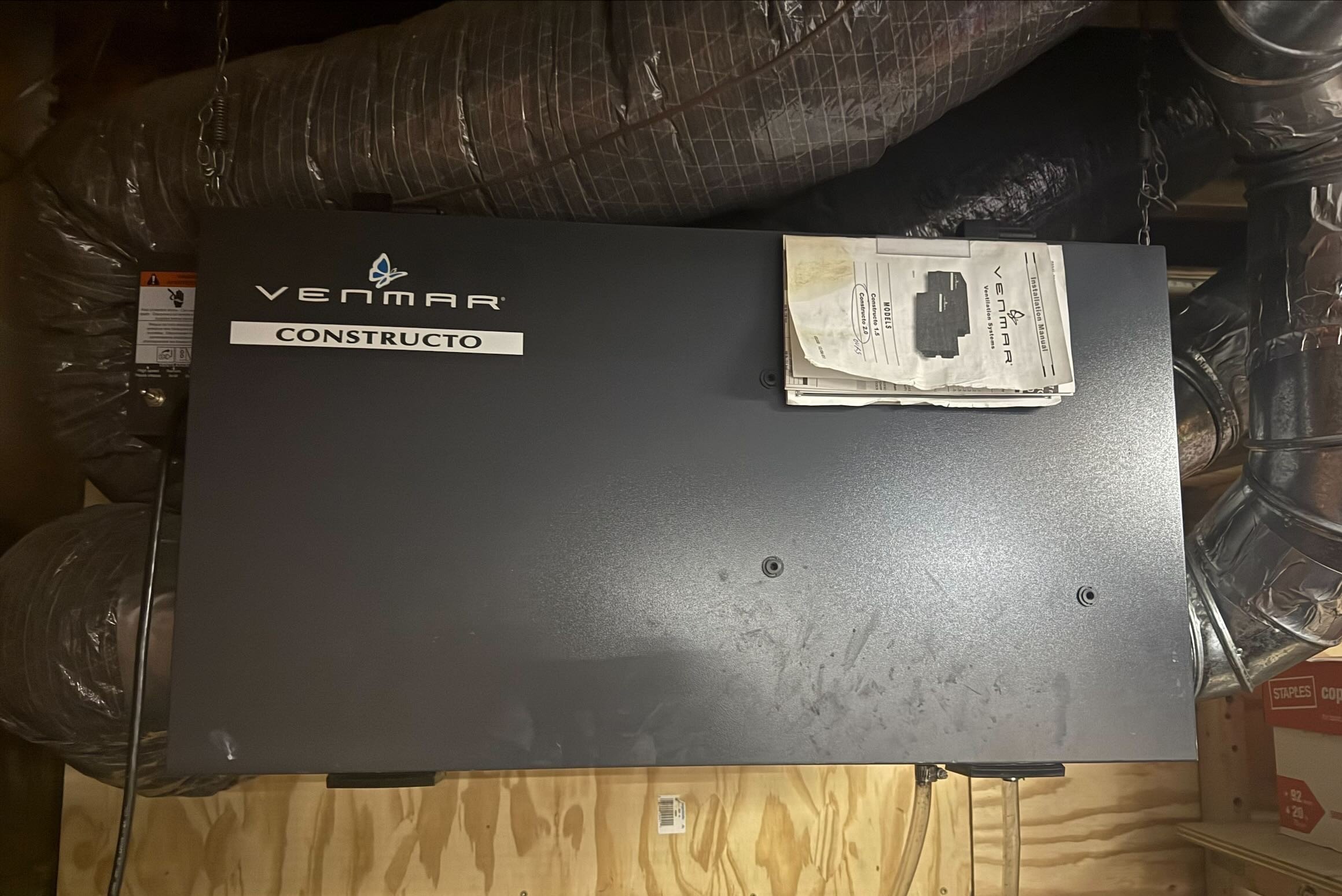
An ERV is not a dehumidifier
This is where a lot of people get tripped up. "Energy recovery" and "dehumidification" are not the same thing.
An ERV can soften the moisture that comes in with fresh air. But it doesn't condense water out of the air and send it down a drain the way an air conditioner or dehumidifier does. That difference shows up most in mild, damp weather, which is exactly what happened to us this fall.
What Happened in November: Condensation From Higher Humidity
In November 2026, after several days of rain, we saw a very different kind of window condition. Indoor humidity had climbed well above where we normally keep it, and the windows showed it.
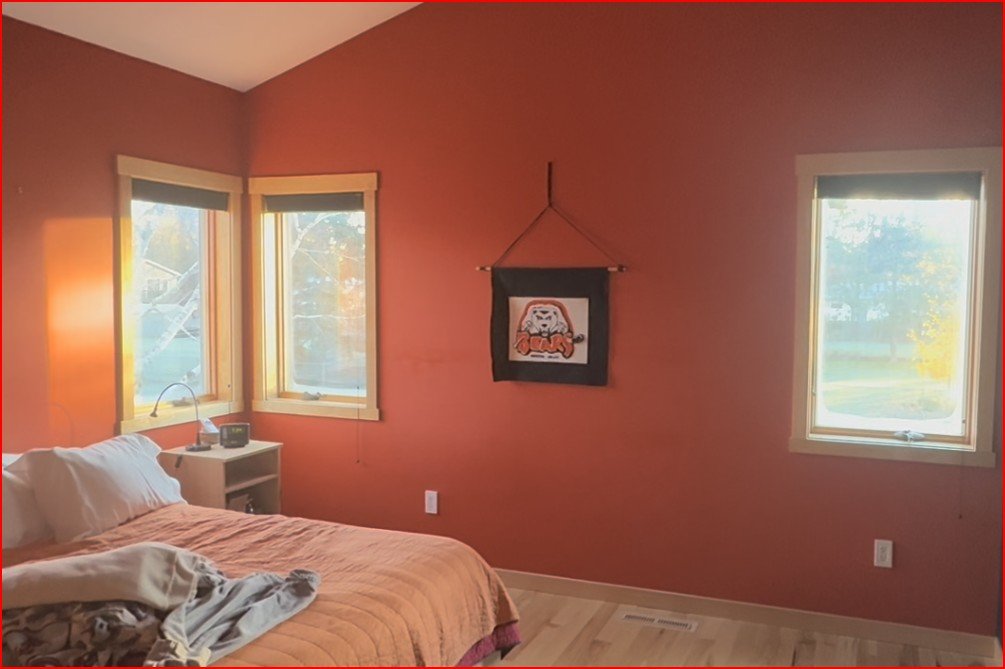
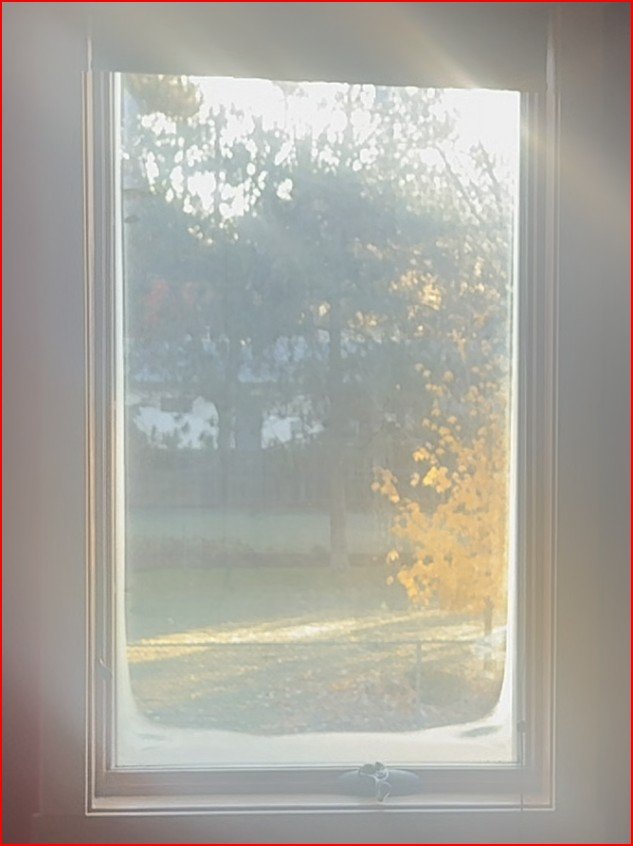
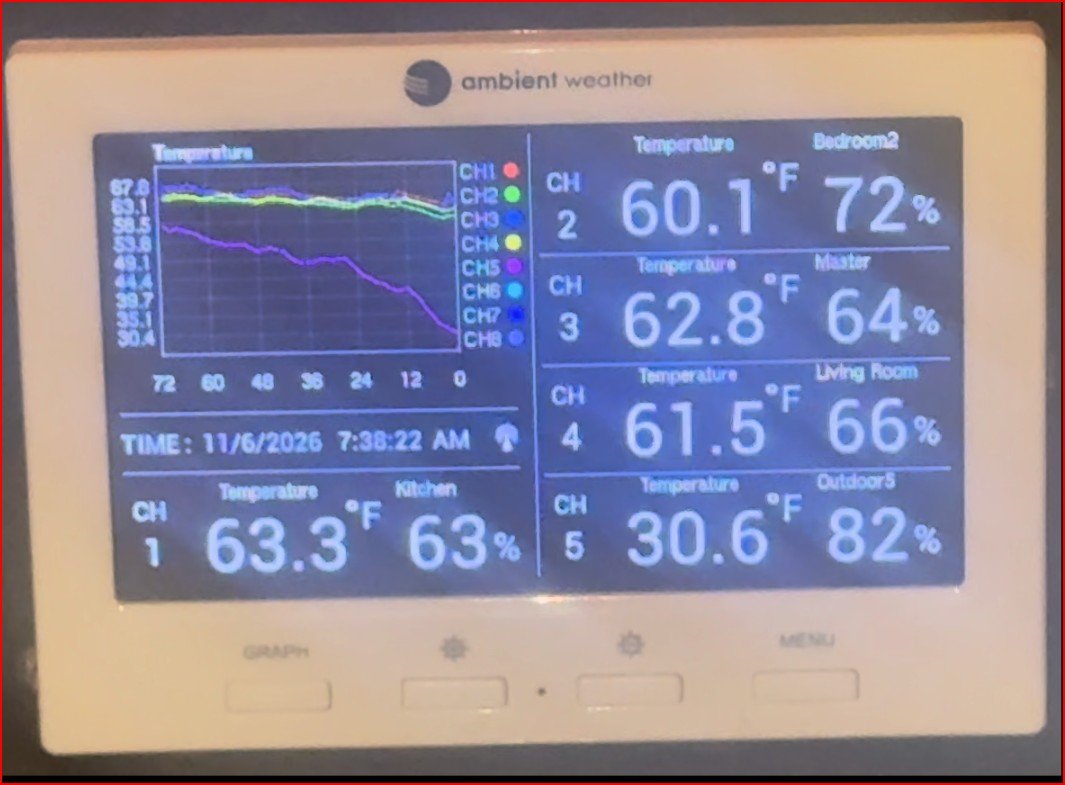
Same physics as January, completely different cause:
January: normal indoor humidity, but the glass got extremely cold.
November: the glass wasn't nearly as cold, but there was a lot more moisture (humidity) in the house.
Why cool, rainy fall and spring weather is the tricky part
Some of the hardest humidity conditions don't happen in the dead of winter or the middle of summer. They happen in between, sometimes referred to as shoulder seasons.
In cool, damp weather, the outdoor air is wet but not cold enough to dry the house out the way January air does. At the same time:
The furnace isn't running much
The air conditioner isn't running at all
People are still showering, cooking and breathing
The ventilation system keeps running
Furniture, drywall and wood soak up and give off moisture too
Put those together and humidity can creep up slowly over several days. That's why spring and fall deserve more attention in high-performance homes than they usually get.
Seeing frost or condensation on your windows and not sure if it's your humidity, your windows or your ventilation system? Joe Pasma, PE can review your conditions and tell you plainly what's causing it and what to change.
Outdoor Humidity Can Fool You
Look back at our January reading: -7.4°F and 65% humidity outside. Most people would see "65%" and think the outdoor air is humid.
Relative to how cold it is, it is. But air that cold holds almost no actual water. Bring it inside, warm it to 65°F, and its humidity drops to just a few percent. That's why winter ventilation dries a house out so well.
So 80% humidity in January and 80% humidity on a warm July afternoon are two completely different things. You don't need a psychrometric chart on the kitchen wall. Just remember: a humidity percentage means nothing without the temperature next to it.
What Indoor Humidity Should You Keep in Winter?
In our house, we generally aim for about 35% to 45% in winter. DOE's Building America program points to roughly 35% to 50% as a good general indoor range, while warning that high humidity causes problems in cold weather.
But treat that as a starting point, not a rule. Our January photos show frost forming at about 40% when it got cold enough outside.
The window industry publishes a rule of thumb that lowers the recommended indoor humidity as the outdoor temperature drops:
← Swipe to view full table →
| Outdoor Temperature | Recommended Max Indoor RH |
|---|---|
| 20°F to 40°F | 40% or less |
| 10°F to 20°F | 35% or less |
| 0°F to 10°F | 30% or less |
| -10°F to 0°F | 25% or less |
Source: Fenestration and Glazing Industry Alliance (FGIA), based on 70°F indoors. Every house and window is different; use this as a guide, not a guarantee.
Notice where our January morning lands: -7°F outside, about 40% inside. That's well above the chart's 25%, which is exactly why we saw frost. The simple takeaway: the colder it gets outside, the more you should pay attention to indoor humidity.
How to Manage Moisture in an Airtight Home
No single piece of equipment handles moisture in every season. It's several things working together:
Mechanical ventilation (ERV or HRV): planned, steady fresh air.
Bath and kitchen exhaust fans: get moisture out right where it's made. Use them.
Heating and cooling: heating lowers RH by warming the air; air conditioning pulls some water out while it runs.
A dehumidifier: for times when ventilation and normal cooling aren't enough. DOE's Building America program lists supplemental dehumidification as one of the tools for managing indoor humidity.
The building envelope itself: air leaks, water leaks and vapor movement all play a part. Don't blame the ventilation system by default. (If you're curious how SIPs handle this, see can SIPs be used in moist or cold climates?)
When a dehumidifier makes sense
If humidity creeps up during mild, rainy weather, cranking up the ventilation isn't automatically the fix. Whether fresh air dries the house or adds moisture depends on how wet the outdoor air is compared to the indoor air.
A dehumidifier has one job: take water out of the air. That makes it a different tool than an ERV. For many tight homes, especially in places with humid summers and damp shoulder seasons, it can be a useful part of the plan. The right size and setup should be picked for your house, not pulled from a generic recommendation.
Don't Diagnose Your House From One Symptom
Water on or around a window doesn't automatically tell you where it came from. It could be condensation on the glass, a leak, or a failed seal between the panes. Each one has a different fix.
So instead of jumping straight to "what's wrong with my window?", walk through it in order:
What exactly am I seeing?
When does it happen (what weather, what time of day)?
Where exactly is the water or frost?
What do my temperature and humidity monitors say?
Then dig in from there.
8 Lessons From Living With Both an HRV and an ERV
Airtight doesn't mean moisture-free. It means moisture control is something you plan on purpose.
Humidity needs a temperature next to it. A percentage alone doesn't tell the story.
Window frost doesn't automatically mean your house is too humid. Very cold glass can frost at a "normal" humidity.
HRVs and ERVs handle moisture differently. It matters most in cold climates and humid weather.
An ERV is not a dehumidifier. Recovering moisture and removing moisture are two different jobs.
Watch the shoulder seasons (Spring & Fall). Cool, wet weather can push humidity up in ways winter and summer don't.
Measure before you adjust. A few temperature and humidity monitors around the house beat guessing by feel.
Watch the house. Windows and other cold surfaces often give you the first clue that something changed.
Related Resources
A few other articles worth reading if you're living in, or planning, a tight, high-performance home:
Frequently Asked Questions
Why do my windows frost even though my indoor humidity is only around 40%?
Because frost depends on how cold the glass is, not just how humid the air in the room is. If part of the glass gets colder than the dew point of the air touching it, moisture condenses there. If that spot is below freezing, it turns to frost. In very cold weather, that can happen even at 40% relative humidity.
Does frost on a window mean the window has failed?
Not necessarily. Frost shows that part of the glass or frame got cold enough for moisture to condense and freeze. Figuring out why takes more information, like indoor and outdoor temperature, humidity readings and exactly where the frost forms.
Do SIP homes have high indoor humidity?
No. SIPs can create a very airtight house, which means fresh air and moisture are controlled on purpose by the ventilation system instead of leaking in and out through random gaps. A properly ventilated SIP home doesn't have to be humid.
Is an HRV or an ERV better?
Neither is better in every case. An HRV recovers heat and tends to dry a house out in cold weather. An ERV recovers heat and some moisture, so it holds more humidity in winter and lets less in during humid summers. Climate, how tight the house is, how many people live there and how you plan to control moisture all matter.
Will an ERV dehumidify my house?
No. An ERV can reduce the moisture that comes in with fresh air, but it doesn't remove water from the house the way an air conditioner or dehumidifier does.
Should I turn off my ERV or HRV when it's humid outside?
There isn't one answer based on outdoor humidity alone. Ventilation also keeps your indoor air healthy. Outdoor temperature, how much moisture is actually in the air, indoor conditions, occupancy and your equipment all need to be considered together.
What indoor humidity should I keep in winter?
There's no single number for every home. DOE's Building America program points to about 35% to 50% as a general range, but in very cold weather you'll often need to go lower to keep windows clear. Window industry guidance suggests 25% or less when it's between -10°F and 0°F outside.
Can my windows tell me if my house is too humid?
They're a useful clue, but they aren't humidity meters. Condensation tells you a surface dropped below the dew point of the air next to it. To know why, you need to look at both the indoor humidity and how cold that surface is.
The Bigger Lesson
The lesson here isn't "keep your humidity lower." And it definitely isn't "SIP homes are too tight."
It's that a high-performance home works as a system. The walls and roof, the windows, the ventilation, the heating and cooling, the weather and the people living there all affect each other. An airtight house gives you far more control over that system than a leaky one ever could. Instead of hoping random cracks bring in the right amount of fresh air, you decide.
More control just means paying a little more attention. After 24 years with an HRV and now an ERV, we're still learning from our house. Sometimes the lesson comes from a humidity monitor. Sometimes from a ventilation setting. And sometimes it's written in frost along the bottom of a window.
Dealing With Window Condensation or Humidity Problems in a Tight Home?
PGS Consulting LLC provides independent moisture assessments, ventilation strategy review and building envelope diagnosis for SIP and high-performance homes, backed by 40+ years of engineering, manufacturing and forensic experience.
Talk to Joe Pasma, PE