
By Joe Pasma, P.E. | PGS Consulting LLC | SIP Engineering & Consulting | Published August 22, 2026, Updated September 9, 2026

Home insurance is having a rough few years. The national average premium is set to hit roughly $3,057 in 2026 — the fifth straight year it's gone up. Florida is closing in on $8,500 a year for a typical policy. And several Midwest and Plains states — Minnesota, Colorado, Iowa, Nebraska, Oklahoma — saw premiums jump 20% or more in a single year. A recent Insurify survey found that 57% of homeowners have cut other spending to keep their coverage in place.
So when people search for ways to build a safer, sturdier home right now, they're not just thinking about energy bills anymore. They're thinking about their insurance bill. And the insurance industry has already built a program for exactly that — It’s called FORTIFIED and it can knock a real chunk off a homeowner's premium.
Here's what almost nobody realizes: a well-built Structural Insulated Panel (SIP) home already handles most of the hard structural work required for the toughest FORTIFIED tier before you add a single upgrade. Below explains what FORTIFIED actually is, why SIPs have a head start, and what's honestly still required to get certified.
Key Takeaways
FORTIFIED is a voluntary insurance-industry standard, not a green-building or energy program. It's a checklist that measures how well a home is built to survive wind and storm damage.
There are three levels — Roof, Silver, and Gold — and each one builds on the last, with Gold providing ultimate protection.
SIP homes start closer to Gold than stick-framed homes do, because SIP walls and roofs already act like one solid, connected structure instead of hundreds of separate nailed-together pieces.
SIPs do not automatically qualify. Gold certification still requires engineered documentation, verified connections, and inspection by a certified FORTIFIED Evaluator.
The discounts are real money. In Louisiana, state regulators are now requiring insurers to give FORTIFIED homes discounts of 16% to 49% on the hurricane portion of their premium, depending on the level and the region.
Availability varies by state and carrier. Louisiana's mandate is the strongest example right now, not yet the national norm.
What FORTIFIED Actually Is (and Why Insurers Care)
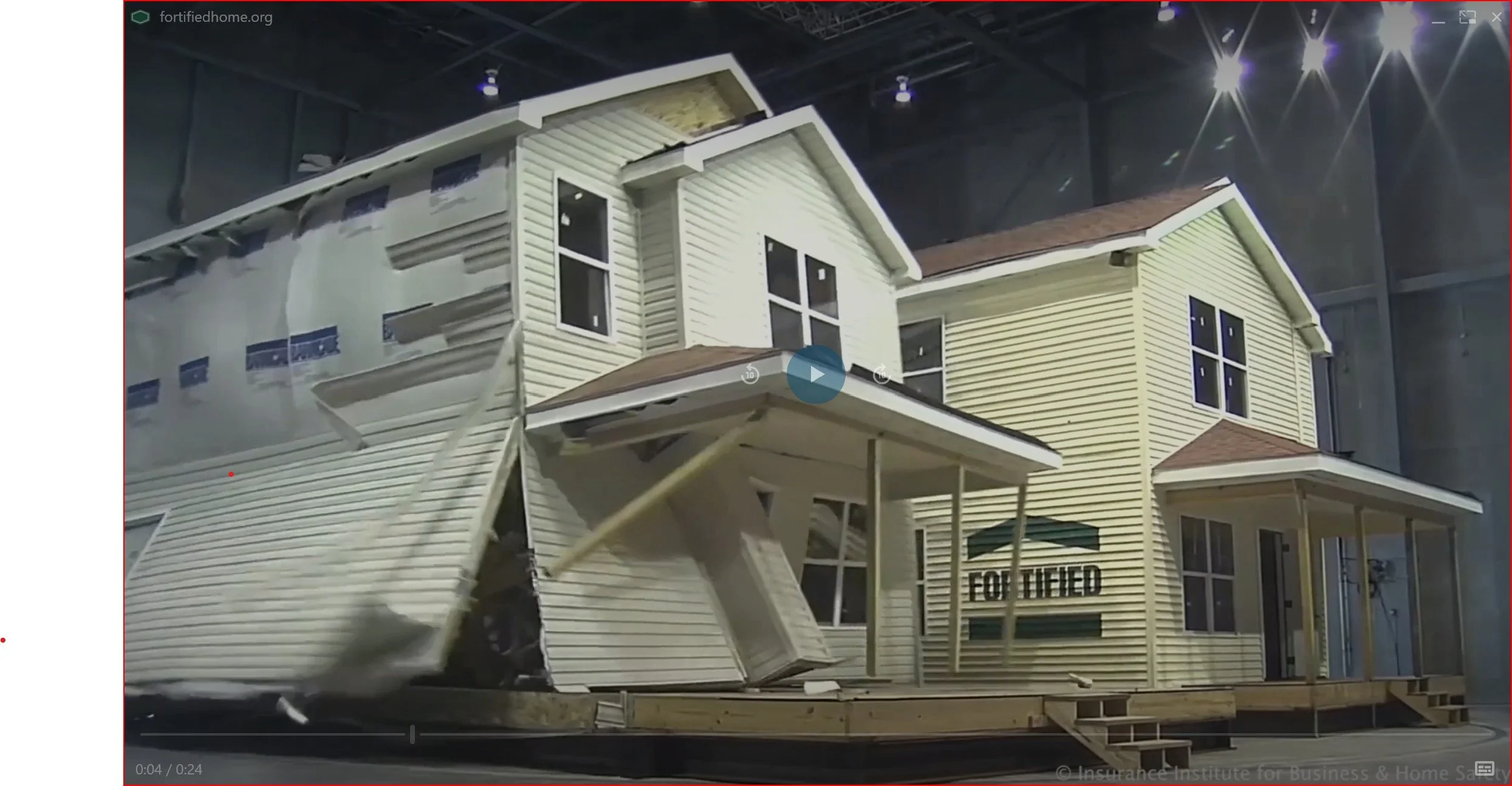
FORTIFIED is a voluntary construction and inspection standard created by IBHS — the Insurance Institute for Business & Home Safety, which is the research arm of the insurance industry. Insurers fund it because they'd rather pay engineers to help prevent damage than pay out claims after a storm.
It's worth being clear about what FORTIFIED is not. It's not a green-building certification. It's not an energy-efficiency program. It's not a building code requirement. It's purely a risk-reduction checklist that insurers use to identify homes statistically less likely to suffer wind and storm damage — and price the policy accordingly.
There are three levels, and each one stacks on top of the last:
← Swipe to view full table →
| Level | What It Requires | Typical Added Cost |
|---|---|---|
| FORTIFIED Roof | Sealed roof deck, enhanced nailing pattern, reinforced roof edges | ~$1,000–$3,000 on a re-roof |
| FORTIFIED Silver | Everything in Roof, plus gable-end bracing, chimney anchoring, impact-rated garage doors, and anchored carports/porches | ~$5,000–$15,000+ |
| FORTIFIED Gold | Everything in Silver, plus a fully engineered, continuous load path connecting roof, walls, and foundation | ~$10,000–$30,000+ on new construction |
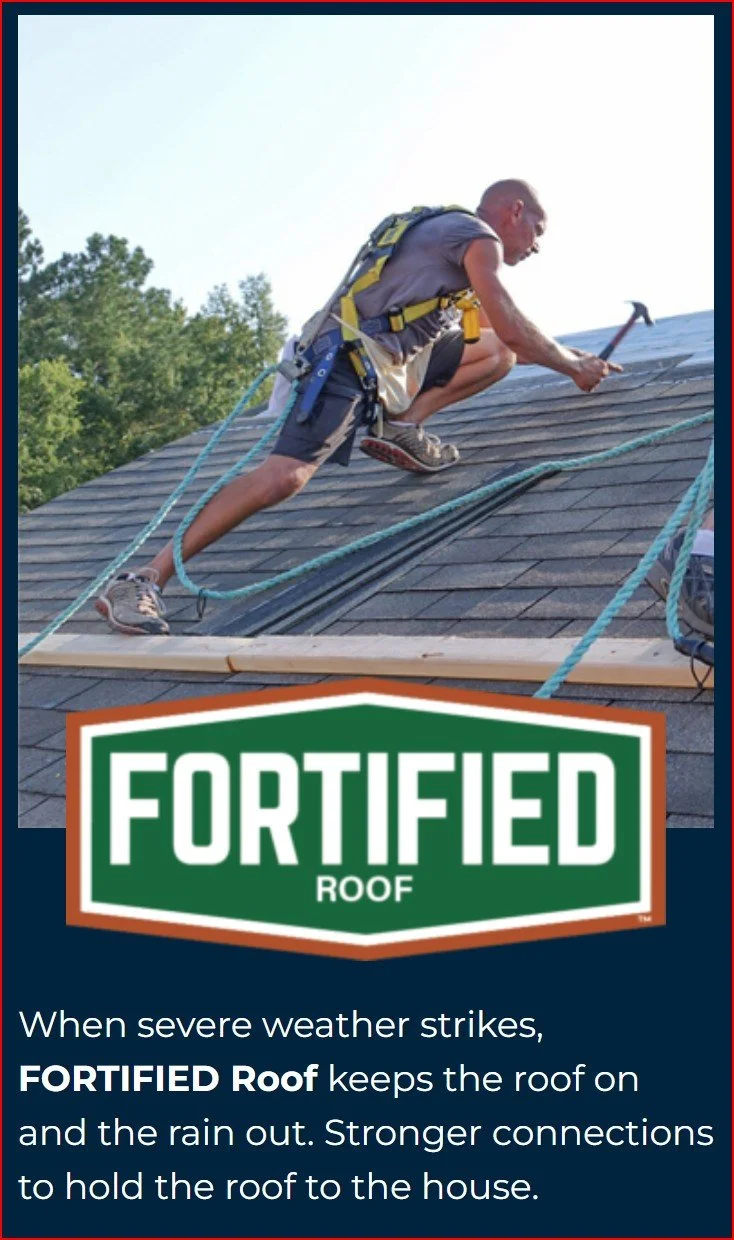
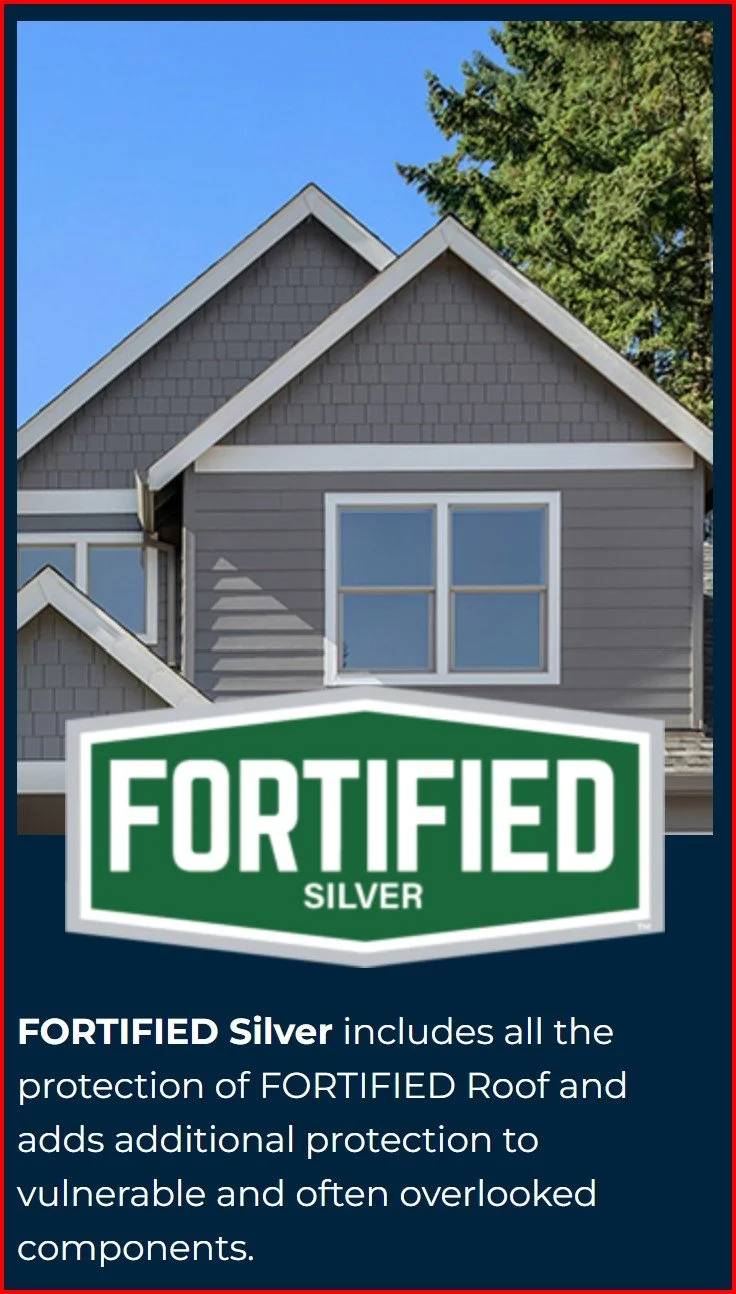
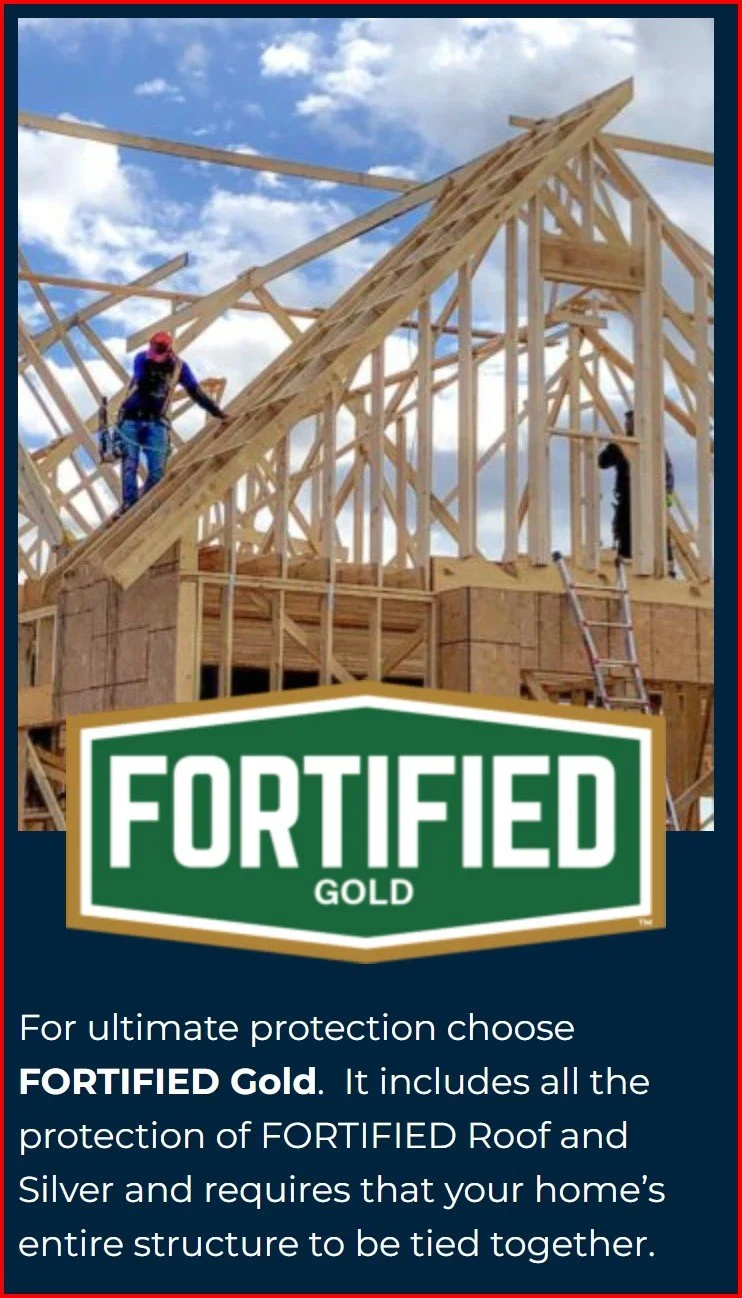
A certified FORTIFIED Evaluator inspects the home against this checklist and issues the certificate. That certificate is what a homeowner hands to their insurance company to unlock the discount.
Here's the Part Nobody Tells SIP Owners
FORTIFIED Gold's hardest requirement is something engineers call a "continuous load path." In plain terms: when wind hits a roof and tries to peel it off, that force has to travel somewhere safe — down through the walls and into the foundation — instead of ripping the house apart piece by piece.
In a typical stick-framed house, that path is built out of hundreds of individual connections: toenails, hurricane clips, straps, studs, plates, and sheathing joints, all nailed together on-site. Every one of those connections is a place a storm can find a weak spot. Miss one nail, skip one clip, and you've created a failure point the wind can exploit.
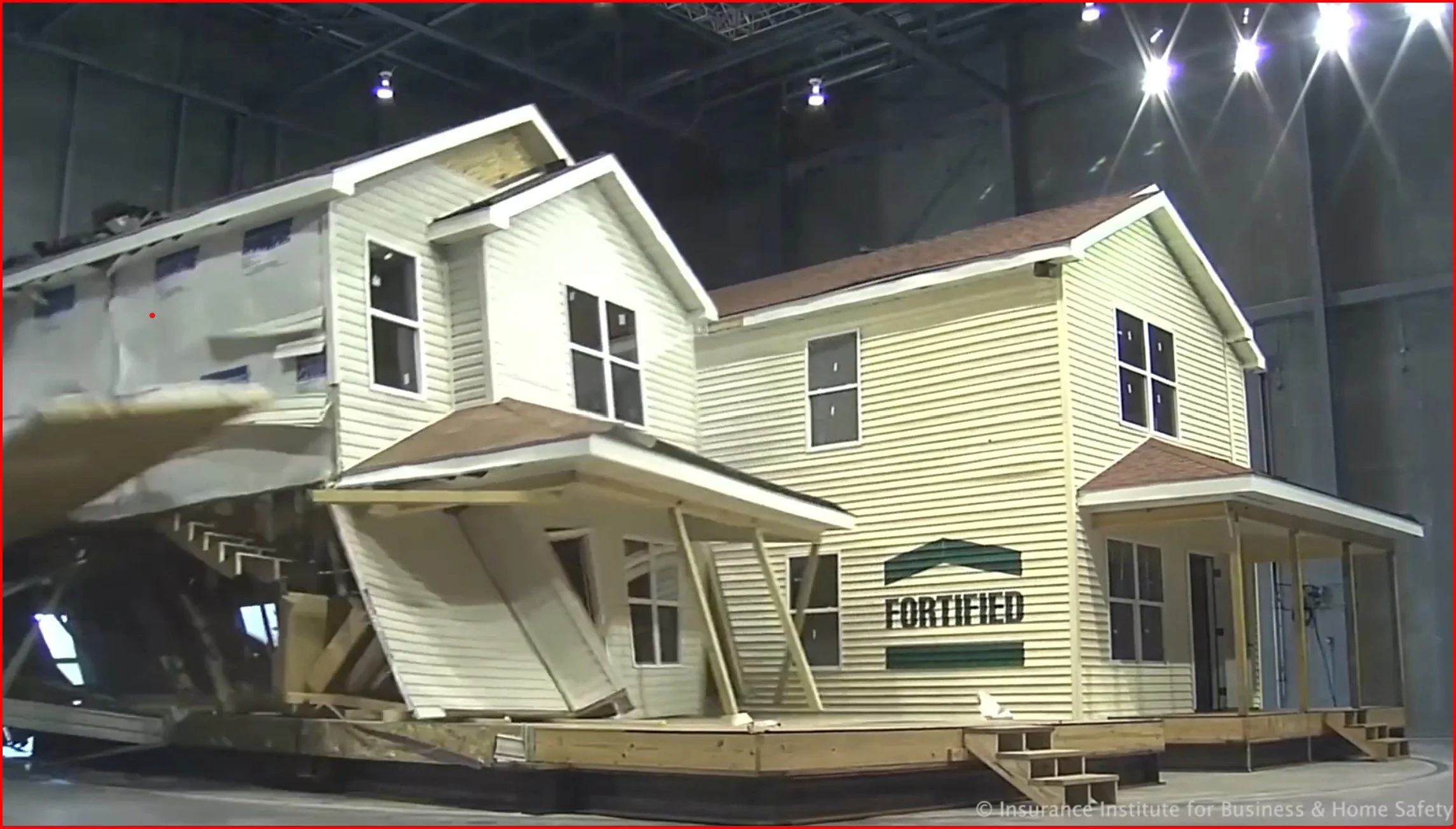
SIP construction works differently by nature, not by upgrade. A SIP panel is a single factory-built piece: two layers of structural board glued and pressed around a solid foam core under pressure, not nailed together on a job site. Once the panels go up, SIP wall and roof panels behaves less like a pile of separate parts and more like one continuous, connected surface. There's no "weak nail" hiding somewhere in the middle of it, because there isn't a middle full of separate nailed pieces to begin with.
That's the whole point of FORTIFIED Gold — forcing a house to behave like one solid, connected unit instead of a collection of parts. SIPs are already built close to that standard by design.
People hear "continuous load path" and think it's some exotic engineering trick. It isn't. It's just asking: if I pull on the roof, does that force travel all the way to the ground in a controlled way, or does it stop at the first weak connection? SIP wall and roof panels are already one continuous structural skin before an engineer ever touches it. That doesn't mean the job is done — the connections at the top plate, the foundation, and every window and door still have to be engineered and verified. But I'm starting from a much better position than I am on a stick-framed job.
-- Joe Pasma, PEImportant nuance here, because it matters: SIPs do not automatically qualify for FORTIFIED Gold. Gold still requires engineered documentation, verified connections, and a third-party inspection. What changes with SIPs is how much work it takes to get there — the load path is simpler to engineer, cleaner to verify, and requires fewer additional connections, because the panels are already acting as unified structural elements rather than a pile of parts.
Wondering whether your specific SIP project could realistically reach FORTIFIED Gold? Talk to Joe Pasma, PE — he can look at your plans and tell you straight what it would actually take to get there.
What a SIP Home Still Needs to Reach Gold
A typical SIP build is already a good part of the way to Gold before any FORTIFIED-specific work begins. What's usually still missing is the same list every Gold-level home needs, SIPs or not:
Engineered documentation of the continuous load path, roof to foundation
Impact-resistant windows and doors, or storm shutters
A reinforced, impact-rated garage door
Verified roof-to-wall and wall-to-foundation connections
A third-party inspection by a certified FORTIFIED Evaluator
None of these are penalties specific to SIP construction. They're the same requirements every home — stick-framed or panelized — has to meet to earn Gold. SIPs just make several of them easier to satisfy.
What This Actually Costs — and What It Can Save You
The numbers below are current industry ranges, not SIP-specific pricing, since FORTIFIED cost depends heavily on the size and design of the home.
← Swipe to view full table →
| Item | What We Found |
|---|---|
| FORTIFIED Roof re-roof | Roughly $1,000–$3,000 above a standard re-roof |
| Louisiana existing-home grant | Up to $10,000 toward a FORTIFIED Roof upgrade, plus a state tax deduction up to $5,000 or 50% of cost |
| Oklahoma insurer discounts (Roof level) | Range from 3% to 42% depending on carrier; State Farm offers 30% |
| Louisiana mandated discounts (2027) | 16%–24% (North zone), 27%–42% (Central zone), 29%–49% (South zone), scaling with FORTIFIED level |
That last row is the one worth sitting with. As of March 2026, Louisiana's insurance regulator finalized Regulation 136, which requires every insurer in the state to apply these discounts to the hurricane portion of a homeowner's premium, no later than January 1, 2027. That turns FORTIFIED from "a nice perk if your insurer feels like it" into a legal requirement, at least in one state so far.
Wondering How FORTIFIED Costs Stack Up Against Your Overall SIP Budget?
Our SIP Cost Guide breaks down real construction and long-term cost numbers for SIP builds, so you can see where a FORTIFIED upgrade fits into the bigger picture before you commit to it.
Read the SIP Cost GuideThe Honest Caveat
We're not going to oversell this. Discount availability depends heavily on:
Which state you're in
Which insurance carrier you're with
Whether that carrier already offers wind-mitigation credits
Whether the home is new construction or an existing retrofit
Louisiana's mandate is currently the strongest, clearest example of FORTIFIED discounts being guaranteed rather than optional — but it is not yet the national norm. In most other states, whether you get a discount, and how big it is, still comes down to your specific carrier's policy. FORTIFIED is growing fast, but it isn't universal yet, and a homeowner in a low-wind-risk area may find the certification math doesn't pencil out the way it would in a coastal or high-wind zone.
FORTIFIED Roof on its own is realistic for almost any SIP home, new or existing, since it's mainly about the roof assembly. Silver is very achievable with modest upgrades to openings and bracing. Gold is the one that takes real planning — it's built for new construction or a full renovation, since retrofitting a continuous load path into an already-finished home usually means opening up walls that are otherwise done. If Gold is the goal, it's worth bringing it up before the SIP shell goes up, not after.
FAQ: FORTIFIED Certification and SIP Homes
Do SIP homes automatically qualify for FORTIFIED certification?
No. SIPs give you a real structural head start, especially toward FORTIFIED Gold, but certification still requires engineered documentation, verified connections, and inspection by a certified FORTIFIED Evaluator. SIPs make the engineering easier — not automatic.
Which FORTIFIED level is most realistic for a typical SIP build?
Most SIP homes can reach FORTIFIED Silver with minimal upgrades, and Gold is fully achievable with proper engineering and impact-rated openings. Because SIP wall and roof panels already behave like one connected structural surface, the continuous load path required for Gold is simpler to design and verify than it would be on a stick-framed home.
How much does FORTIFIED Gold add to a SIP project's budget?
Industry ranges put Gold at roughly $10,000–$30,000 or more added to a new-construction budget, depending mainly on impact-rated openings and the garage door requirement. Because SIPs reduce some of the structural labor and hardware Gold normally demands, SIP projects often land toward the lower end of that range.
Do all states require insurers to honor FORTIFIED discounts?
No. As of 2026, Louisiana is the clearest example of a state mandating it — Regulation 136 requires insurers to apply hurricane-premium discounts of 16% to 49%, scaling with FORTIFIED level and region, by January 1, 2027. Other states rely on individual carriers choosing to offer a discount, so availability and size vary.
Does FORTIFIED certification replace the need for a structural engineer?
No. Gold specifically requires engineered documentation of the continuous load path. SIPs simplify that engineering, but they don't eliminate it. If you're not sure whether your project needs an engineer at all, our guide to prescriptive vs. engineered SIP design walks through when it's required.
Is FORTIFIED certification worth it for SIP homeowners?
In high-wind or hurricane-prone regions, almost always — the discounts and risk reduction tend to justify the cost. In moderate-risk regions, it depends on whether your carrier participates and how large your premium already is. Even in lower-risk areas, certification can still add value at resale and appraisal time, on top of the risk reduction itself.
Go Deeper
A few places to keep researching, whether you're leaning toward FORTIFIED or just want to see the source material yourself:
FORTIFIED Evaluator Directory — find a certified evaluator near you
Louisiana's Mandatory FORTIFIED Discount Regulation (Insurance Journal)
How SIPs Perform in Wildfire Zones — another look at how SIP construction handles a different kind of risk
How SIPs Behave in Real Residential Fire Events - how EPS and OSB actually respond to heat
Wondering If Your SIP Project Is Positioned for FORTIFIED Certification?
PGS Consulting LLC provides independent structural evaluation and engineering guidance for SIP buildings, backed by 40+ years of engineering, manufacturing, and forensic experience.
Talk to Joe Pasma, PE