

How SIPs Perform in Wildfire Zones
Wildfires don't spare buildings because of what they're made of, they spare buildings because of how well the details were done. Here's what actually determines how SIPs hold up against embers, radiant heat, and direct flame, and the roofing and siding choices that make or break wildfire resilience.
By Joe Pasma, P.E. | PGS Consulting LLC | SIP Engineering & Consulting | Published August 18, 2026 | Updated October 14, 2026
Key Takeaways
Wildfires ignite most homes and buildings through windblown embers landing in gaps, not through direct flame contact with walls.
SIPs have no open stud cavities, so there are fewer hidden spaces for embers to collect and smolder.
The roof, not the walls, is where most wildfire losses start, in SIP homes and every other type of construction.
A SIP home with Class A roofing, ember-resistant vents, and noncombustible siding performs very well in wildfire conditions.
SIPs are not fireproof. They don't replace defensible space, code-required venting, or good detailing at joints and penetrations.
If you're building with Structural Insulated Panels (SIPs) in a wildfire-prone area, you've probably asked some version of this question: do they actually hold up when a wildfire comes through?
It's a reasonable thing to worry about. SIPs are made from wood-based panels with a foam core, and wildfires bring embers, intense heat, and sometimes direct flame. But the short answer is more reassuring than most people expect: SIPs perform well in wildfire zones and, in some ways, have real advantages over standard stud framing. The catch is that performance depends almost entirely on how the home is detailed, not just what it's built from.
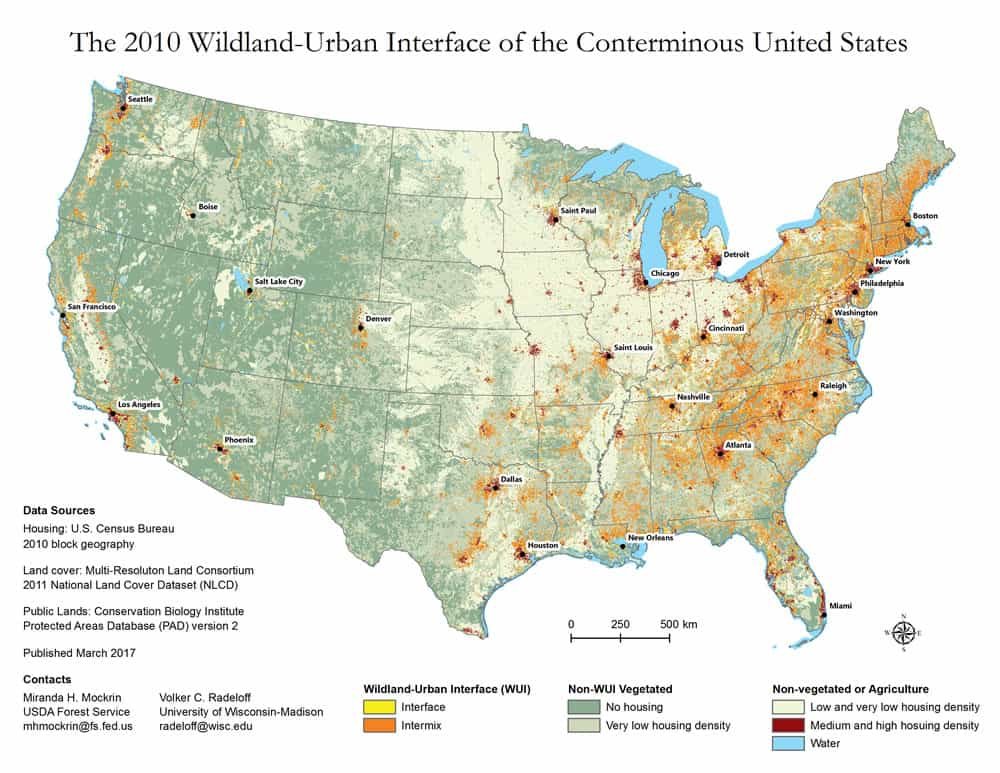
Map of the wildland-urban interface in the United States. Source: US Fish and Wildlife Service and University of Wisconsin-Madison.
Below is a walkthrough of how SIPs actually respond to wildfire exposure, where the real weak points are, and what to do about them.
What Actually Sets Homes on Fire During a Wildfire
Most people picture a wall of flame rolling through a neighborhood. That's rarely what destroys homes. Research from the Insurance Institute for Business & Home Safety and Cal Fire both point to the same conclusion: as much as 90% of homes lost in wildfires are ignited by embers, not by direct contact with the fire front.
Three things actually threaten a home during a wildfire:
Embers -- small burning pieces of debris that can travel more than a mile ahead of the fire and land in vents, gaps, or roof valleys
Radiant heat -- the heat a nearby fire throws off, even without touching the structure
Direct flame contact -- usually brief, and usually only happens if something next to the house is already burning
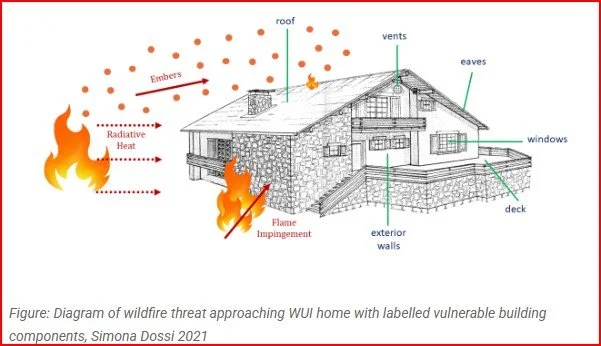
Once you understand these three, SIP performance makes a lot more sense.
How SIPs Handle Each One
Embers. This is where SIPs have a genuine structural advantage. Standard stud-framed walls have open cavities behind the siding, and embers that get behind the cladding can collect and slowly ignite something out of sight. SIPs don't have that problem; there's no cavity, just a solid foam core sandwiched between two skins, so there's nowhere for an ember to hide. The places SIPs remain vulnerable are the same places every building is vulnerable: roof-to-wall joints, vents, and any gap that wasn't sealed properly.
Radiant heat. SIP skins are typically OSB (oriented strand board), and OSB doesn't burst into flame under radiant heat; it chars, the same way solid lumber does. The foam core only starts to soften under sustained, high heat, not brief exposure. Because there's no open cavity, there's also less path for heat to move through the wall.
Direct flame contact. This is usually short-lived unless something next to the house is already fully on fire. SIPs behave similarly to other wood-based wall systems here. The OSB chars, the foam retreats from the heat, and the wall generally holds up unless the flame exposure goes on for a long time.
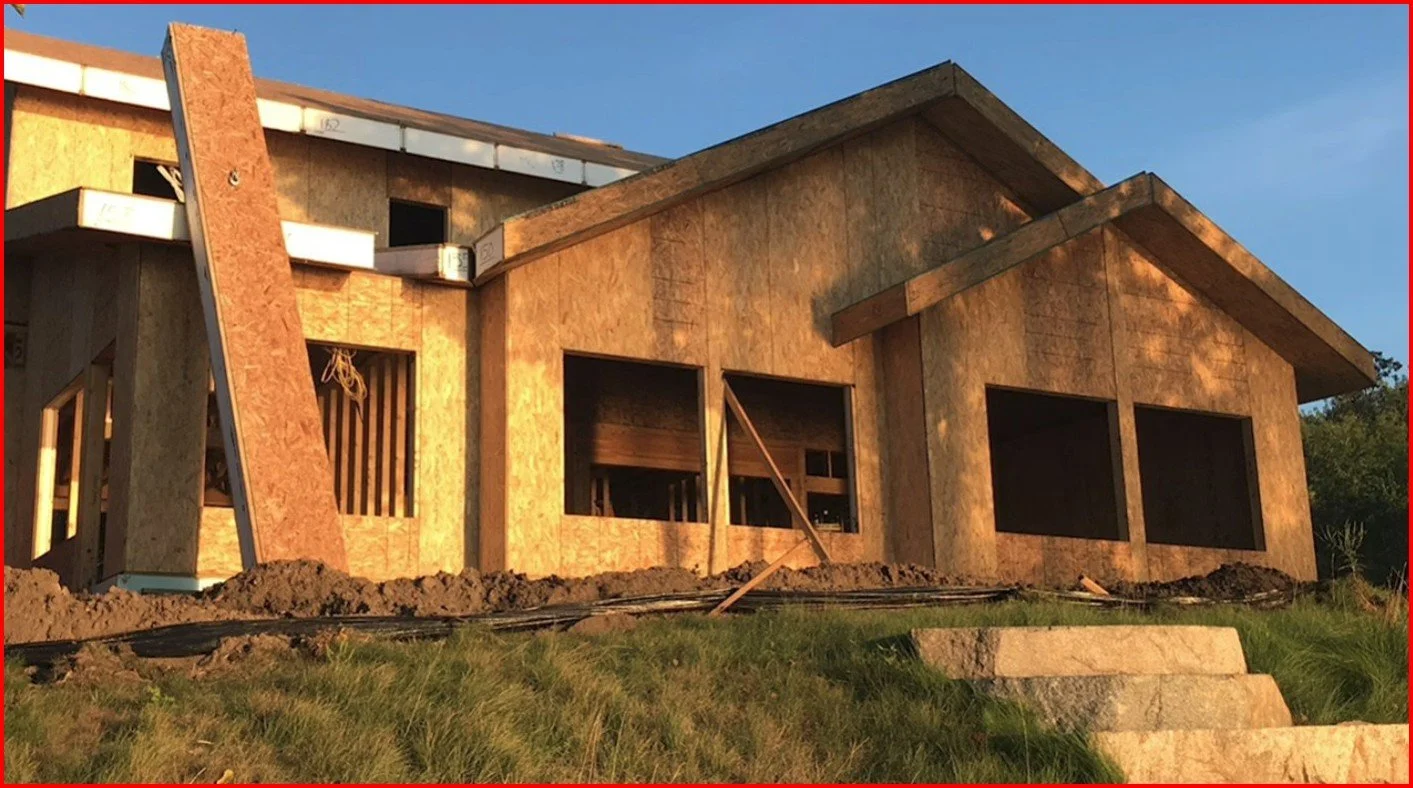
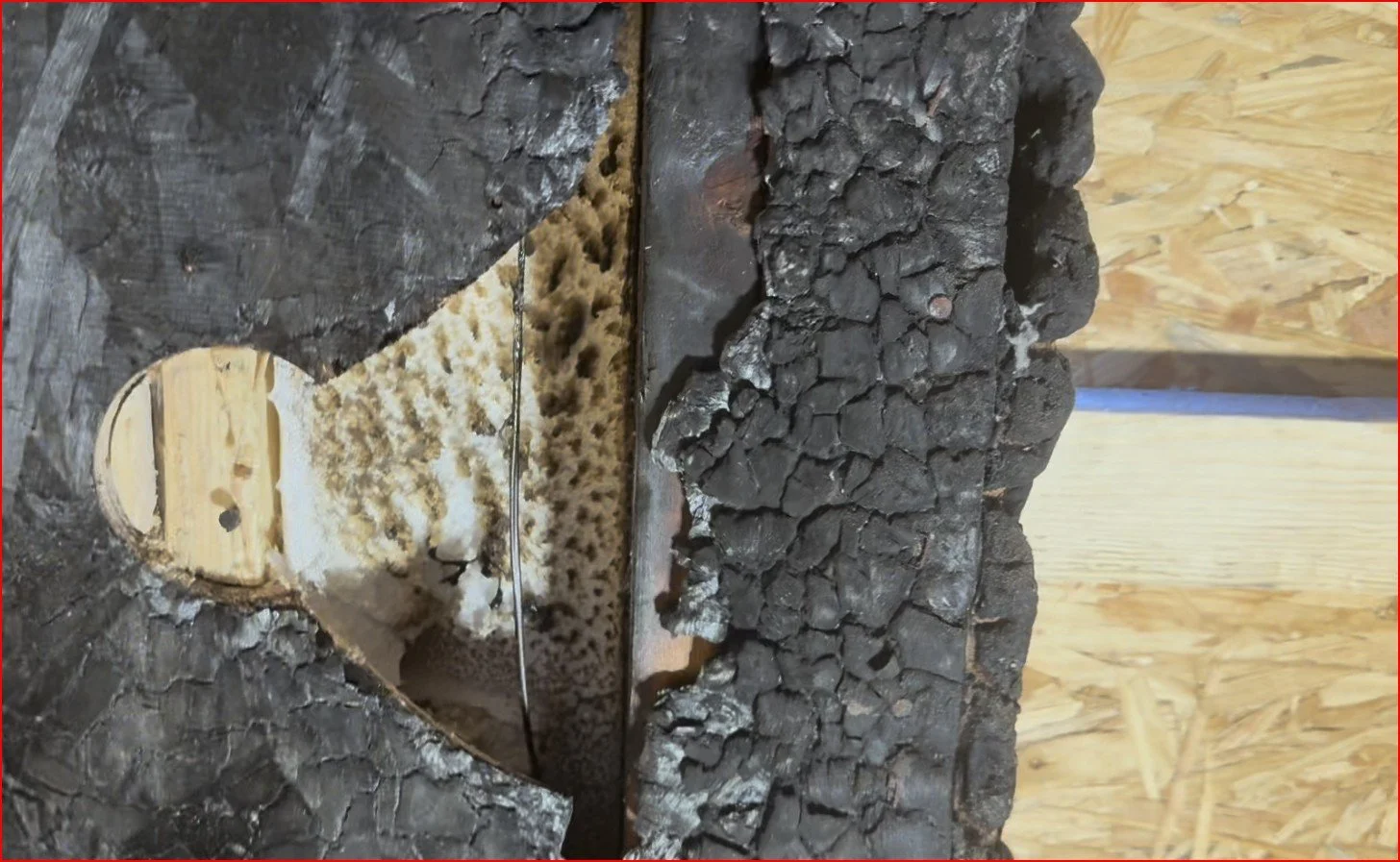
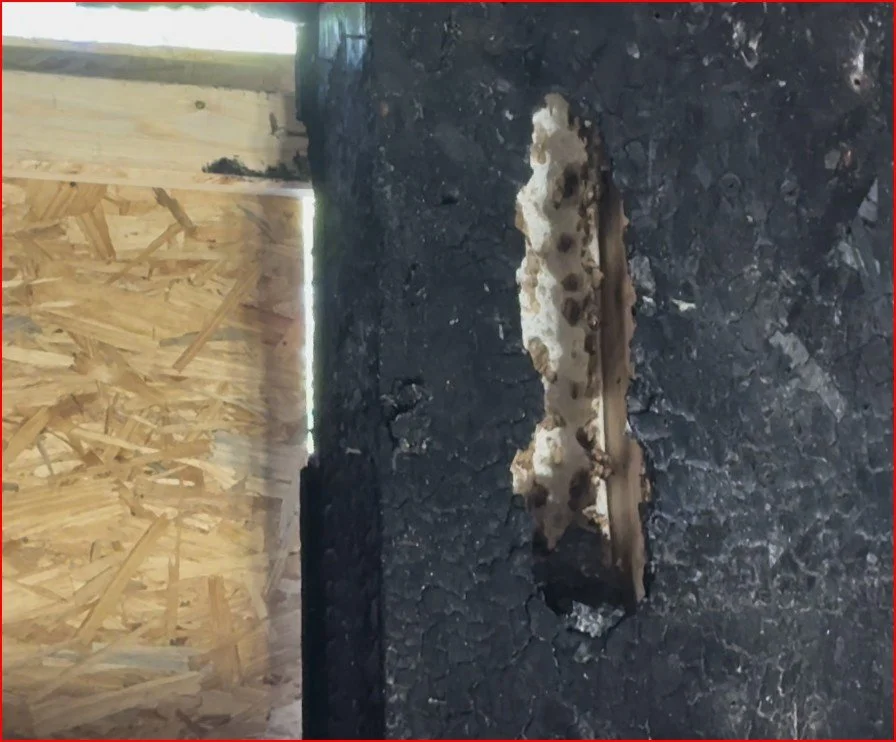
For a detailed description of how SIPs behave in real world fire scenarios refer to “SIP Fire Performance Case Study: How SIPs Behave in Real Residential Fire Events”.
The Roof Is Where Wildfires Actually Win
If a SIP home is going to have a wildfire problem, it almost always starts at the roof, not the walls. Ridge vents, fascia boards, eave overhangs, and clogged gutters are the classic entry points for embers.
The roof covering itself matters a lot:
← Swipe to view full table →
| Roof Covering | Wildfire Performance | Best Paired With |
|---|---|---|
| Metal roofing | Best resistance to embers and radiant heat | Sealed ridge and eave details |
| Class A asphalt shingles | Meets code minimums in most wildfire zones | Sealed roof edges, ember-resistant vents |
| Concrete or clay tile | Strong resistance to radiant heat | Closed bird-stops at eaves to block ember entry |
| Untreated wood shake | Not recommended in wildfire zones | N/A |
Embers don't need a big opening to start a fire. A gap the size of a coin in a soffit vent or fascia joint is enough for a wind-driven ember to work its way in and ignite dry debris or exposed wood. This is why sealed roof edges and ember-resistant vents matter more than almost anything else on a wildfire-zone home.
Walls Hold Up Fine. Siding Is the Real Variable
The SIP wall itself is rarely the weak point in a wildfire. The siding on top of it is what determines how the wall performs.
← Swipe to view full table →
| Siding | Wildfire Performance |
|---|---|
| Fiber cement | Excellent, doesn't ignite from embers or radiant heat |
| Stucco | Excellent, strong under sustained radiant heat |
| Metal siding | Excellent, highly ignition resistant |
| Brick veneer | Good, depends on proper weep and vent detailing |
| Vinyl | Poor, softens and fails early under radiant heat |
| Untreated wood | Poor to fair, performance varies widely |
The Details That Actually Determine Wildfire Resilience
A well-built SIP home can outperform a stud-framed home in a wildfire. A poorly detailed SIP home can perform just as badly. The difference comes down to these details:
Class A roof covering
Metal fascia
Ember-resistant vents
Non-vented soffits, or soffits with protected venting
Fiber-cement, stucco, or metal siding
Fully sealed roof edges
Sealed and protected penetrations (pipes, wires, etc.)
No exposed foam anywhere on the exterior
Proper flashing at every roof-wall intersection
Every item on that list closes off an ember pathway. That's the entire game in wildfire-zone construction.
Why SIPs Have an Edge Over Stud Framing
SIPs offer a few built-in advantages in wildfire conditions:
No stud cavities, so fewer places for embers to collect
Fewer seams and joints than a framed wall, so fewer weak points
Continuous insulation, which slows heat movement through the wall
Predictable, gradual charring instead of sudden failure
No open air path inside the wall to help a fire spread
Every SIP wildfire loss I have looked at traces back to a detail, not the panel. An unsealed vent, an exposed eave, a gap where two roof planes meet. The panel itself almost always survives fine. It is the transitions and penetrations that decide whether a home makes it through a wildfire event.
-- Joe Pasma, PEIf you're planning a SIP build in a wildfire zone and want a second set of eyes on the details before they're locked into your drawings, that's exactly the kind of review Joe does. Contact Joe Pasma, P.E., about your project before you break ground, not after a wildfire tests it for you.
What SIPs Don't Solve
This part matters, and it's worth being straightforward about: SIPs are not a substitute for good code compliance and site management. SIPs will not prevent:
A poorly detailed roof from igniting
Embers getting in through an unsealed joint or gap
A vent that wasn't ember-rated
Gutters full of dry debris catching fire
Full structural involvement once fire actually gets inside the home
The need for defensible space around the property
SIPs are a resilient building system. They aren't a substitute for good detailing, and they aren't a substitute for defensible space requirements under codes like the International Wildland-Urban Interface Code. Many jurisdictions, including California's Zone 0 rules, now require a noncombustible zone within five feet of the structure. That requirement applies regardless of what the walls are made of.
Wildfire-Zone Checklist for SIP Builders and Homeowners
Class A roof covering
Metal fascia
Ember-resistant vents
Fiber-cement, stucco, or metal siding
Five-foot noncombustible zone around the home
Annual roof edge inspection
Regular gutter cleaning
Sealed penetrations at every pipe, wire, and vent
No exposed foam anywhere on the exterior
Defensible space maintained per local wildfire code
If you're planning a SIP build in a wildfire-prone area, this list is a good starting point for a conversation with your builder or engineer, not a substitute for one. For more on how SIPs compare to standard framing in general, see SIPs vs. Stick Framing.
SIPs in U.S. Forest Service Wildfire‑Support Facilities
SIPs have been used in multiple U.S. Forest Service facilities, including fire‑crew housing, equipment garages, and remote ranger station buildings. Manufacturers such as Premier and Enercept have supplied SIP assemblies for these projects, where rapid construction, predictable fire‑rated assemblies, and high energy efficiency are critical.
While these projects are not formal wildfire‑performance studies, they demonstrate that SIPs are trusted in wildfire‑response environments and can meet the demands of WUI‑zone construction when detailed correctly.
Bottom Line
SIPs perform well in wildfire zones, but the material is only half the story. Their continuous skins and lack of open cavities give them a real advantage over standard framing when it comes to blocking ember entry, which is the way most homes actually catch fire. Paired with Class A roofing, ember-resistant vents, noncombustible siding, and properly sealed edges, a SIP home is a genuinely strong choice for wildfire-prone areas.
Wildfire resilience was never about picking one magic material. It's about the whole system, from the roof edge down to the defensible space around the house. SIPs fit into that system well, as long as the details are done right.
Frequently Asked Questions
Are SIPs considered wildfire-resistant?
SIPs aren't fireproof, but they perform well in wildfire zones when detailed correctly. Their continuous skins and lack of open cavities mean fewer places for embers to enter and collect compared to standard framing.
Do SIPs ignite easily from radiant heat?
No. SIP skins char predictably under radiant heat the same way solid lumber does, and the foam core only softens under sustained, high heat. SIPs don't flash-ignite under typical wildfire radiant heat exposure.
What part of a SIP home is most vulnerable in a wildfire?
The roof, especially fascia edges, vents, and gutters. This is true for every type of construction, not just SIPs.
What siding works best with SIPs in wildfire zones?
Fiber cement, stucco, metal siding, and brick veneer perform best. Vinyl and untreated wood are more vulnerable to radiant heat and ember exposure.
Has the U.S. Forest Service studied SIP performance?
Yes, the Forest Products Laboratory has conducted structural research on SIPs, including long-term structural performance testing. This reflects credibility in SIP structural behavior generally, not a specific wildfire-facility case study.
What detailing improves SIP wildfire resilience the most?
Class A roofing, metal fascia, ember-resistant vents, sealed roof edges, protected penetrations, noncombustible siding, and a maintained five-foot noncombustible zone around the home.
Related Resources
Planning a SIP Build in a Wildfire Zone?
PGS Consulting LLC provides independent engineering review, code-compliance guidance, and detailing recommendations for SIP buildings in wildfire-prone areas, backed by 40+ years of engineering, manufacturing, and forensic experience.
Talk to Joe Pasma, PE