

Why Ice Dams Still Form on SIP Roofs (Even Airtight Ones)
Why do ice dams still form on a tight, well-insulated SIP roof? A PGS Consulting engineer breaks down the real physics, in plain English, and explains the fix for heavy-snow climates.
By Joe Pasma, P.E. | PGS Consulting LLC | SIP Engineering & Consulting | Published September 6, 2026, Updated September 13, 2026
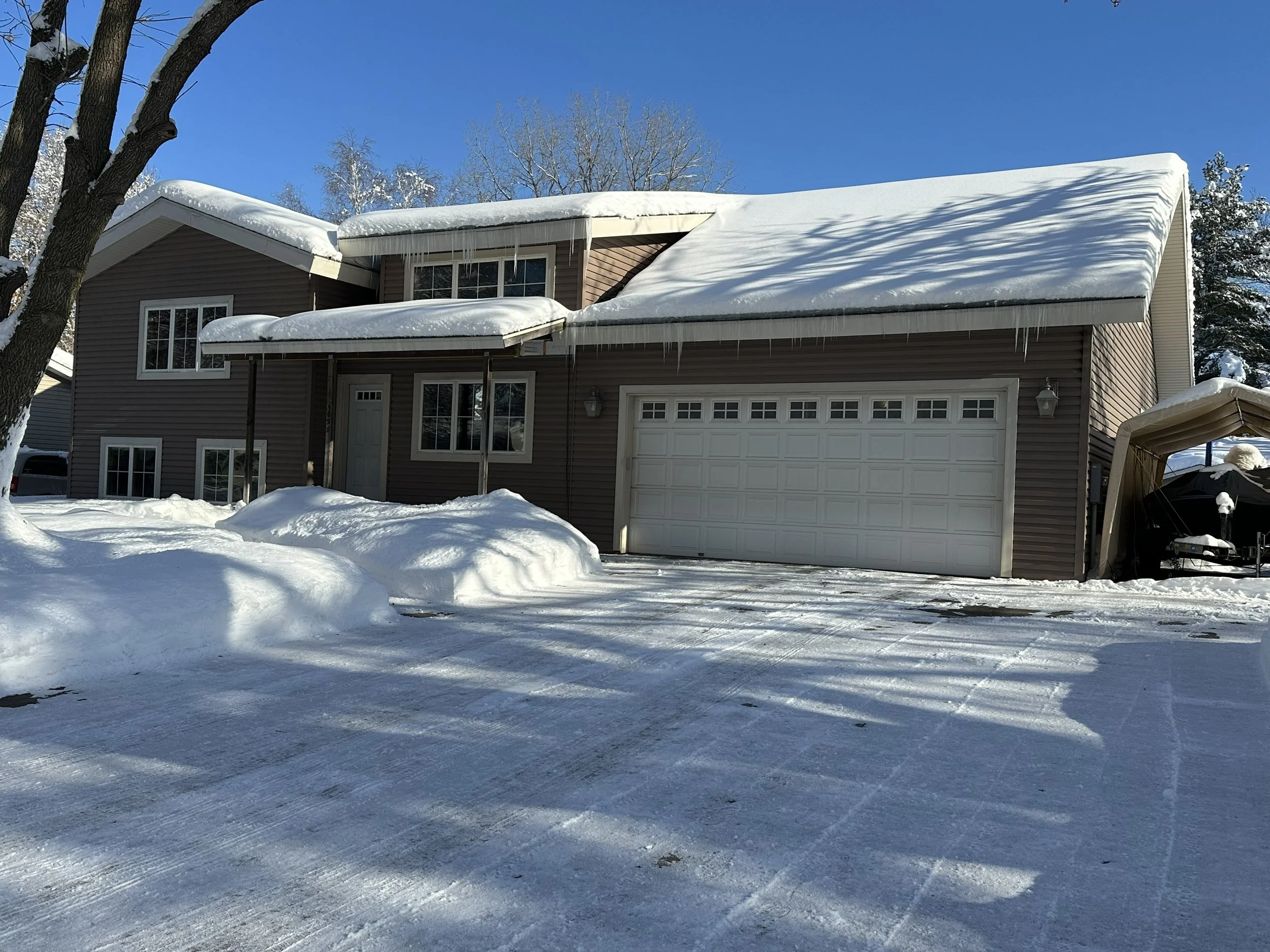
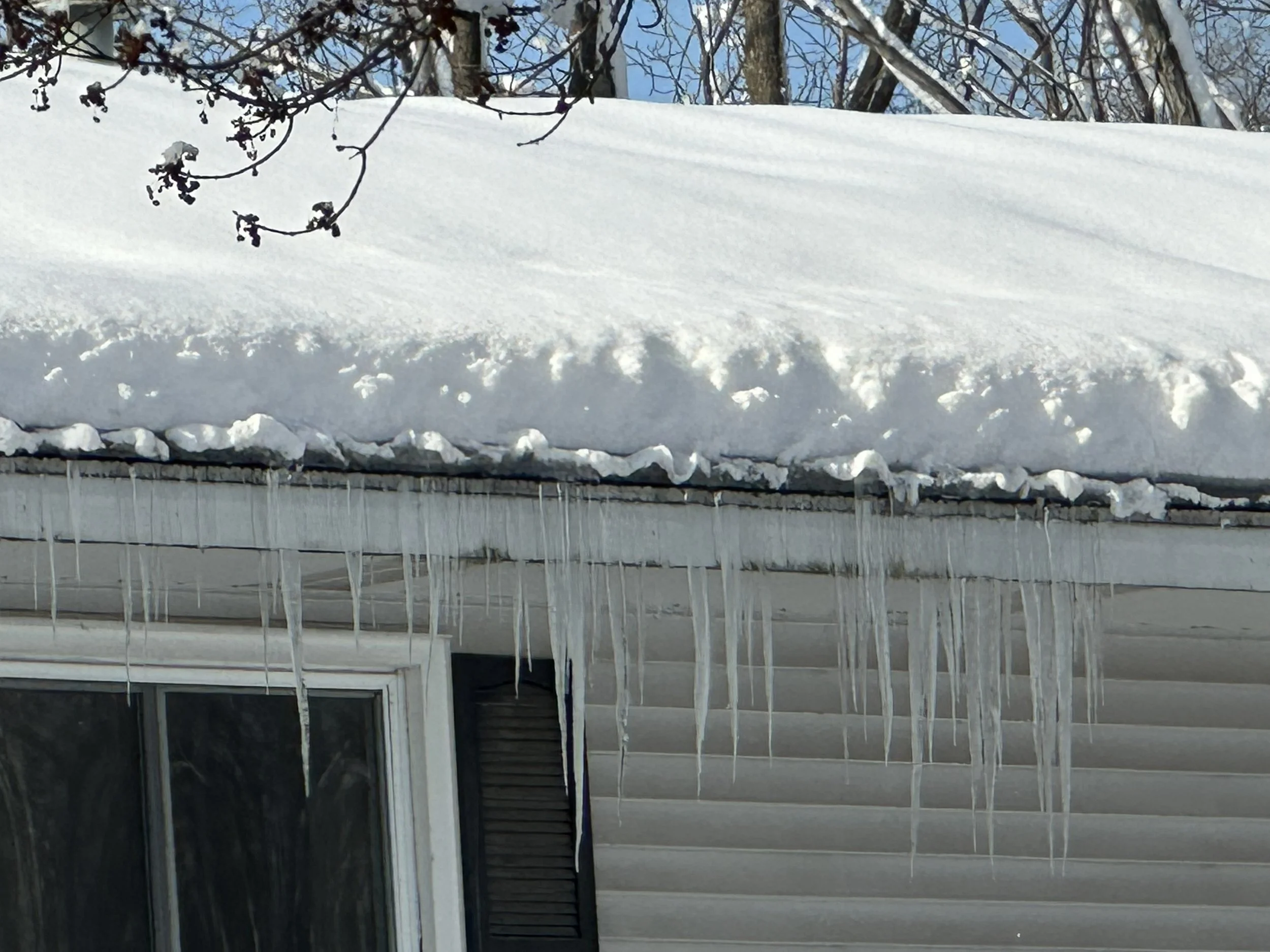
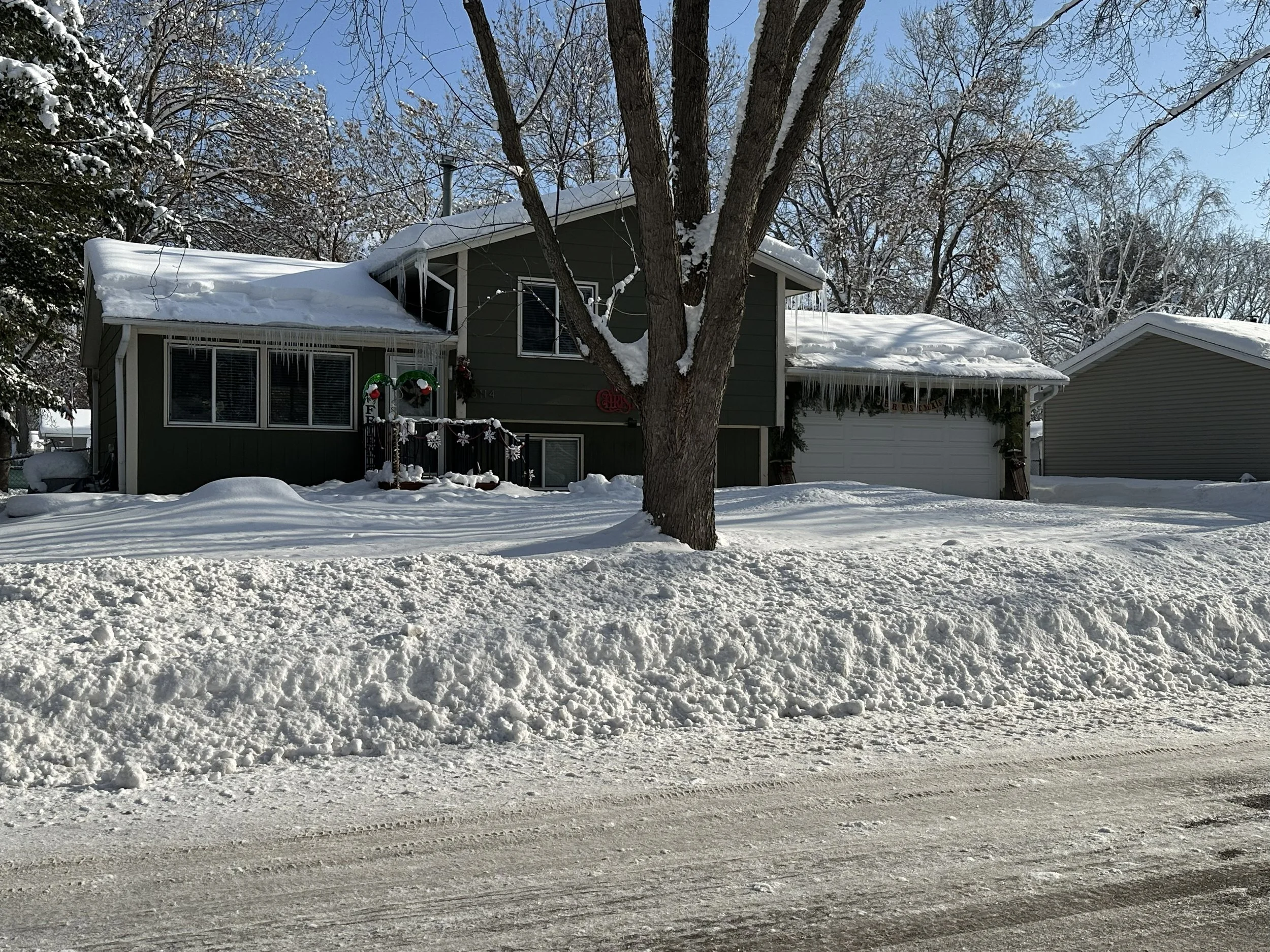
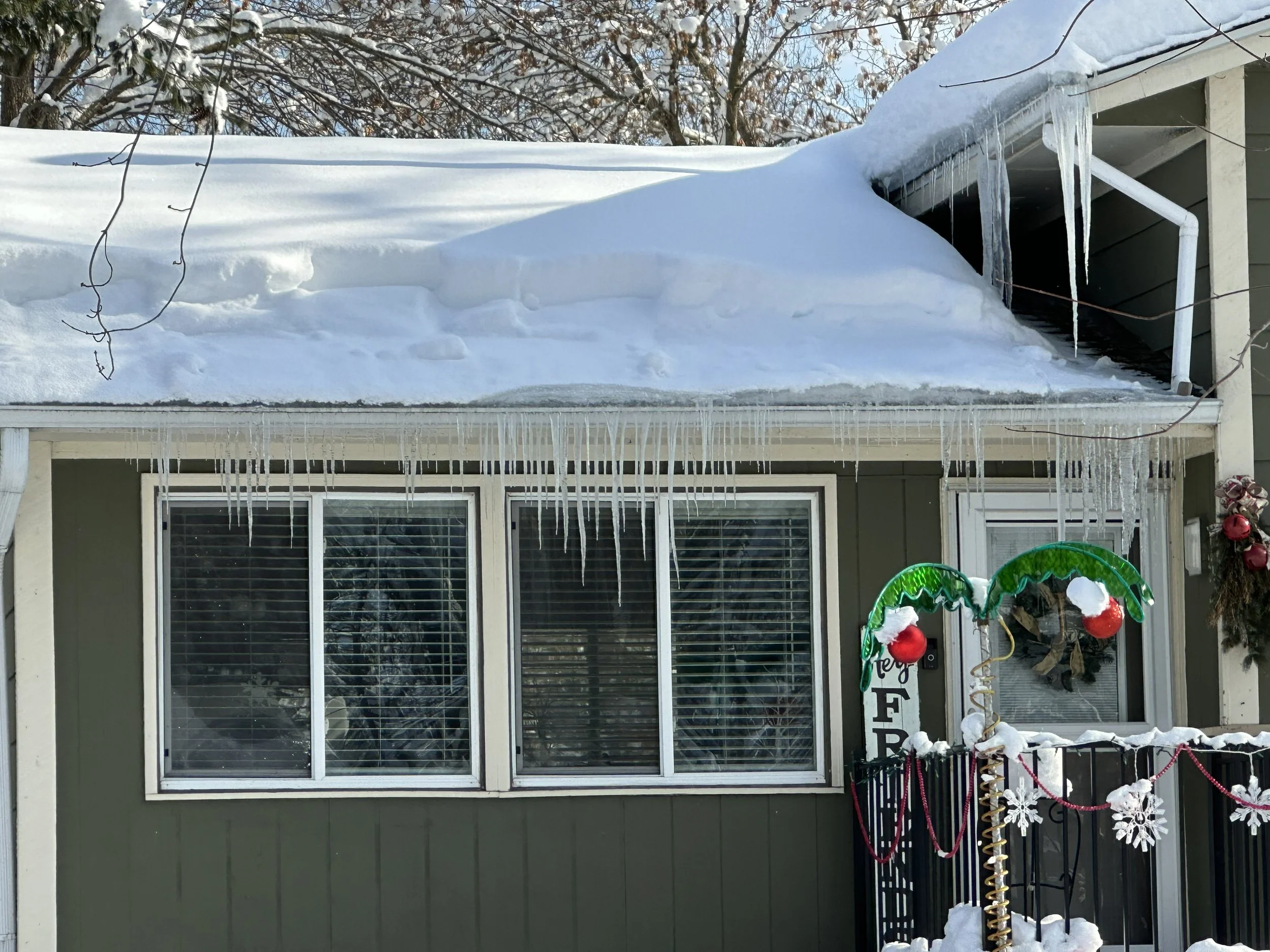
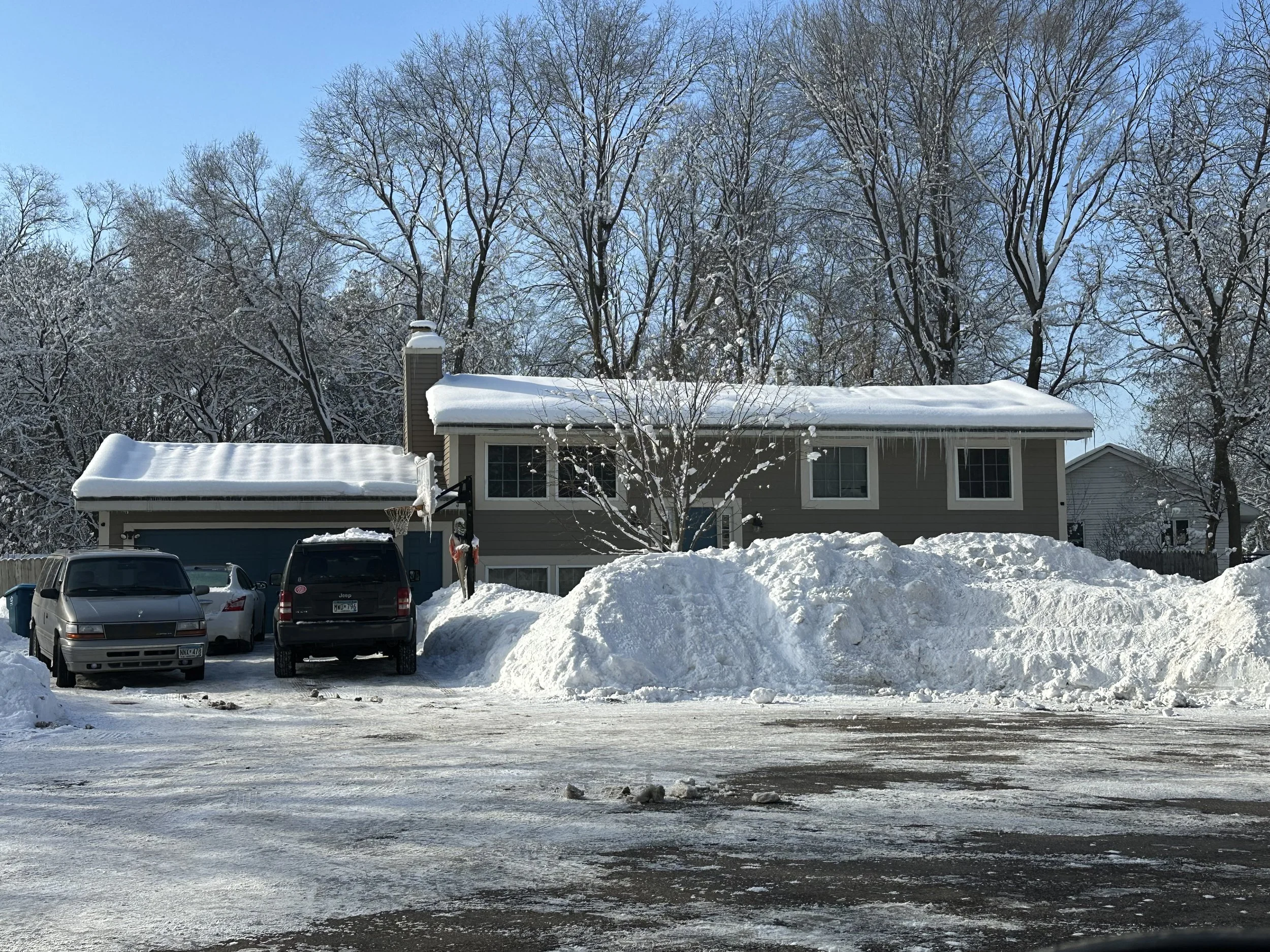
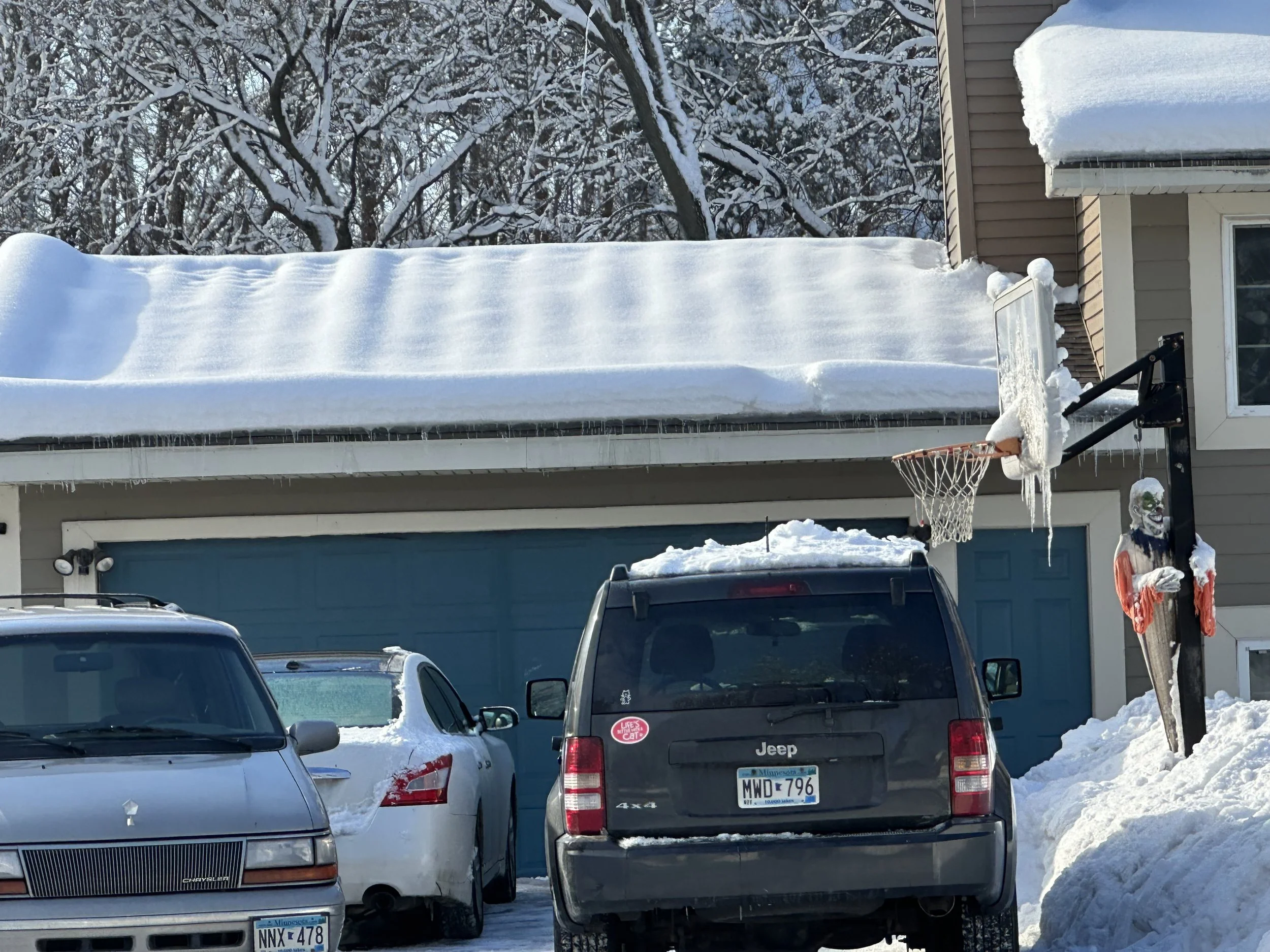
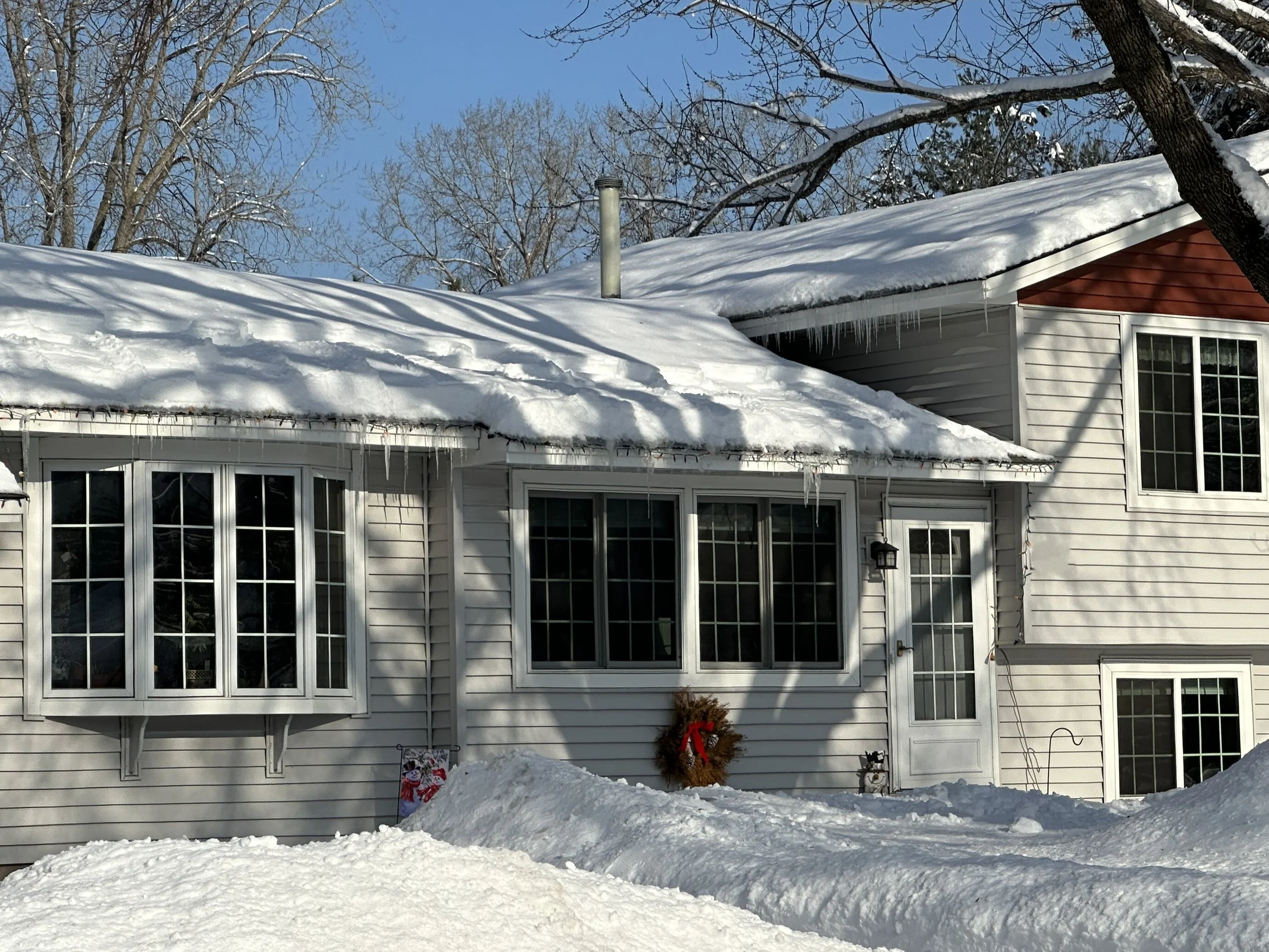
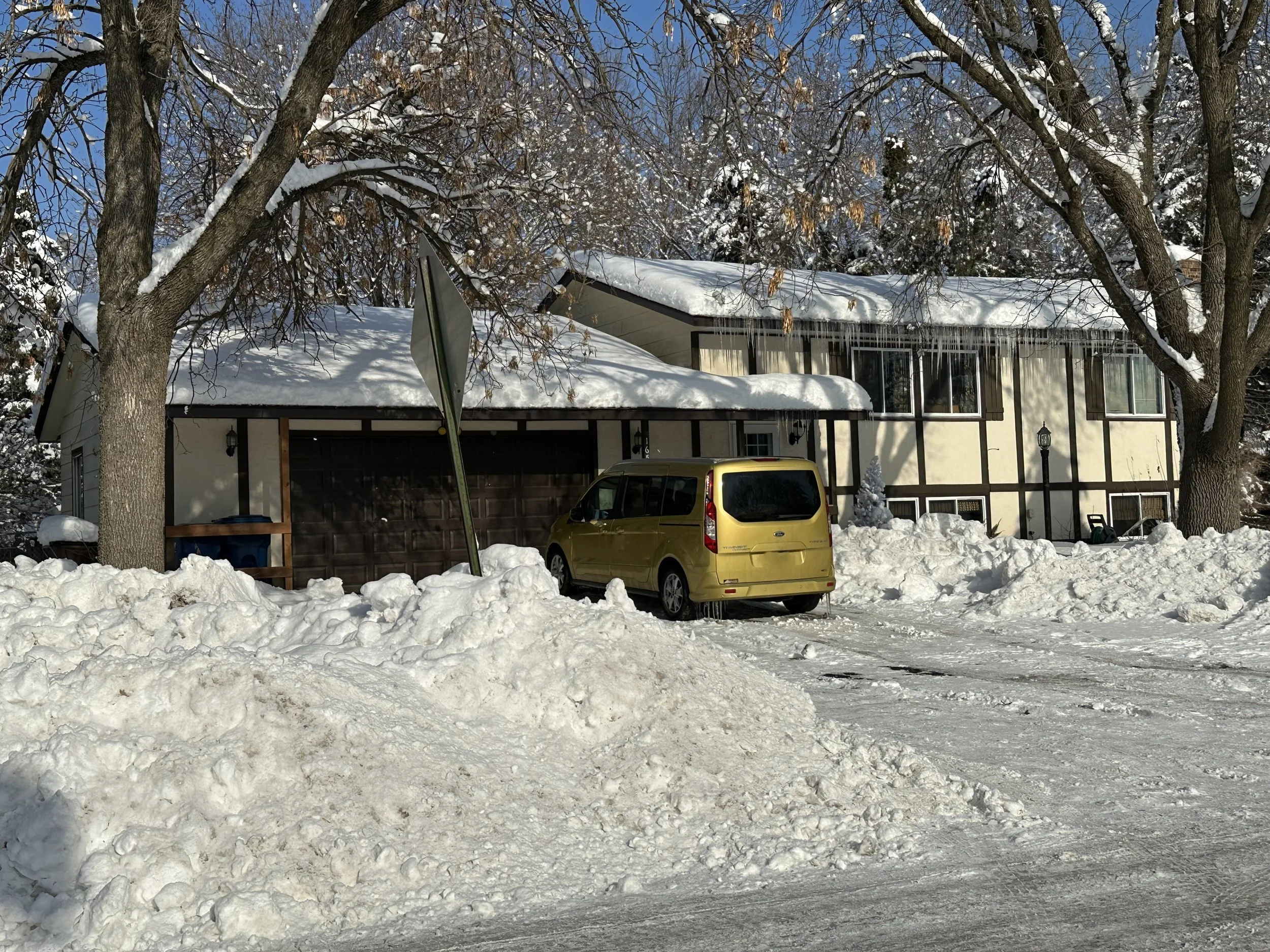
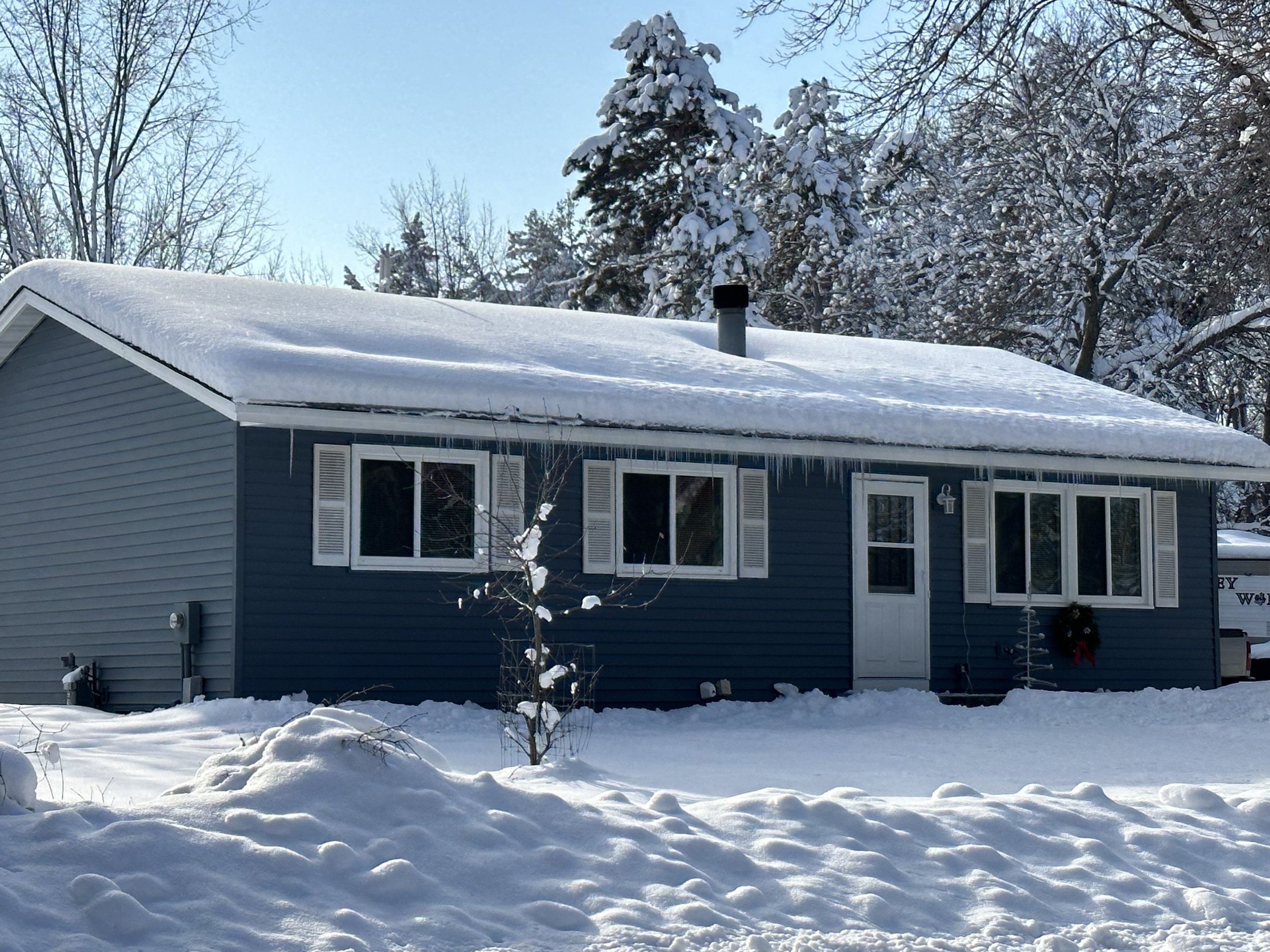
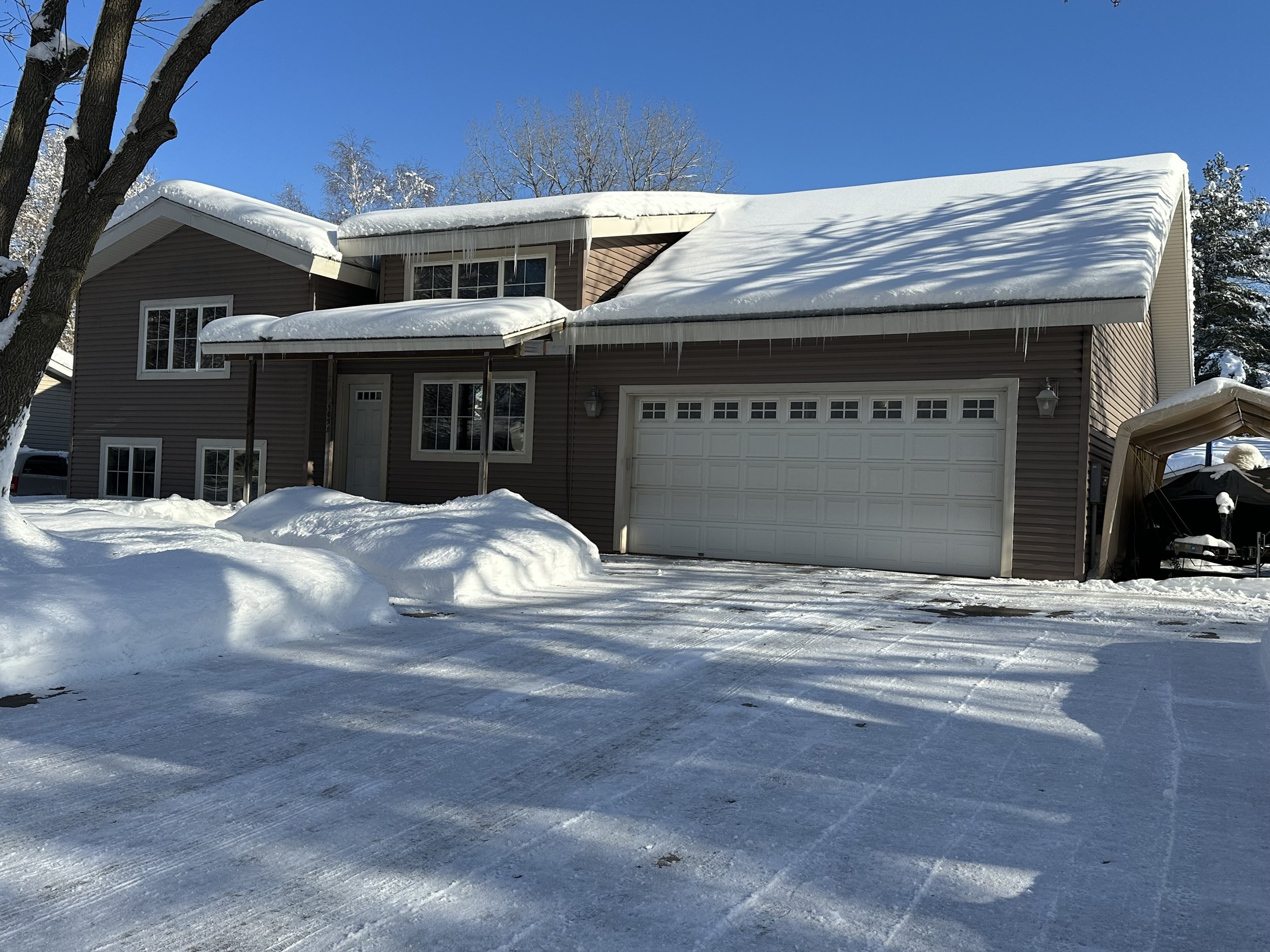
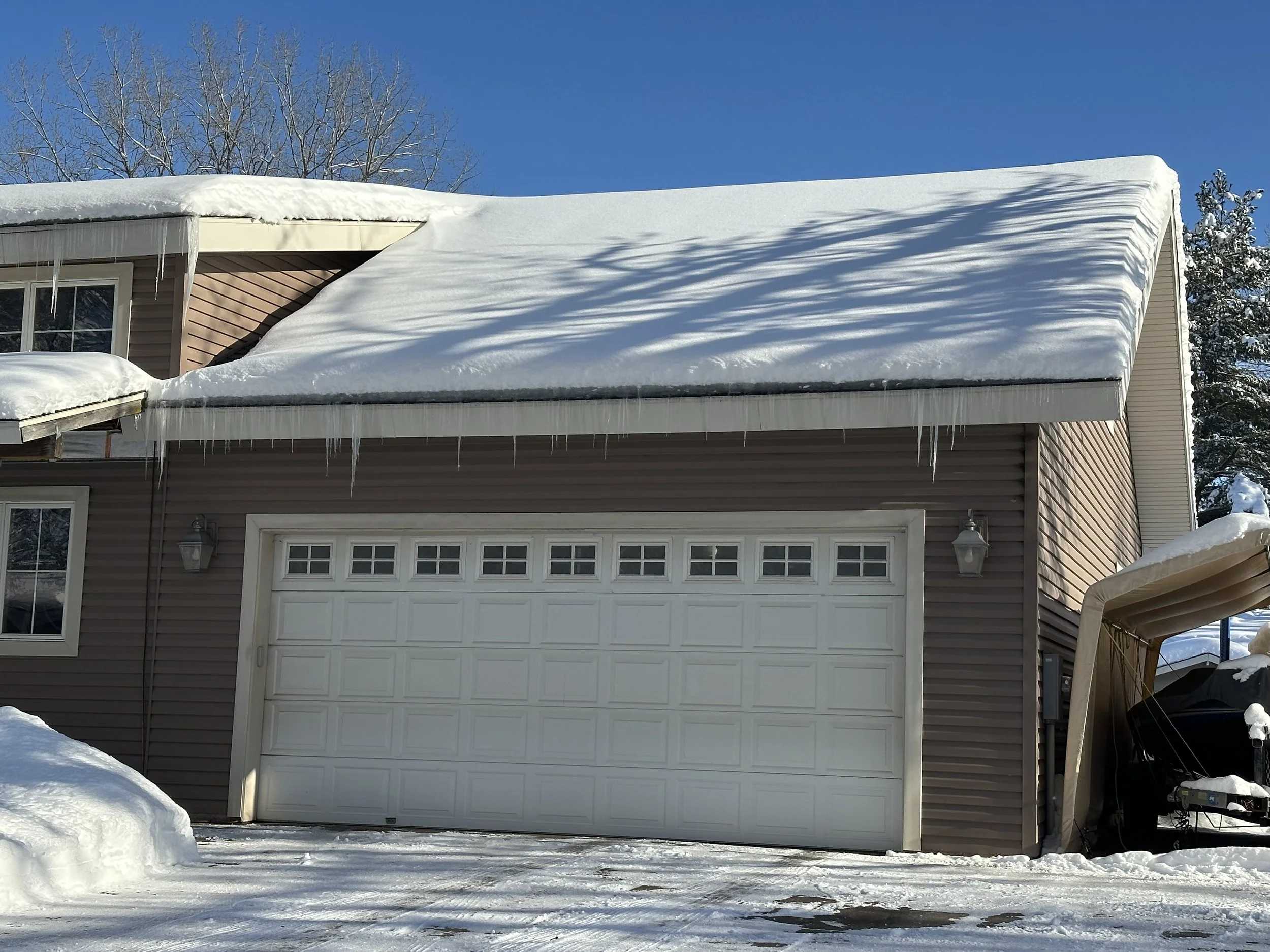
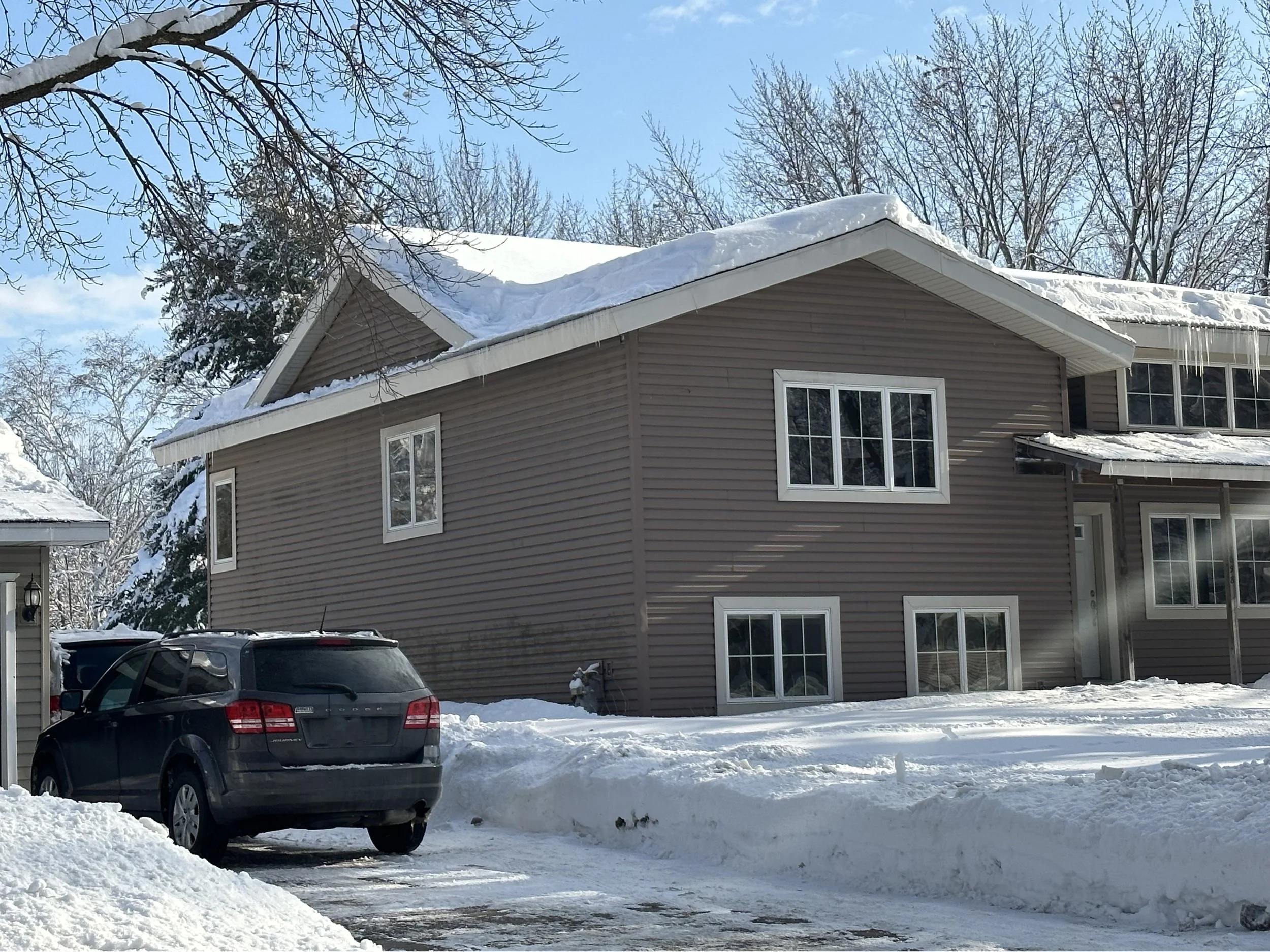
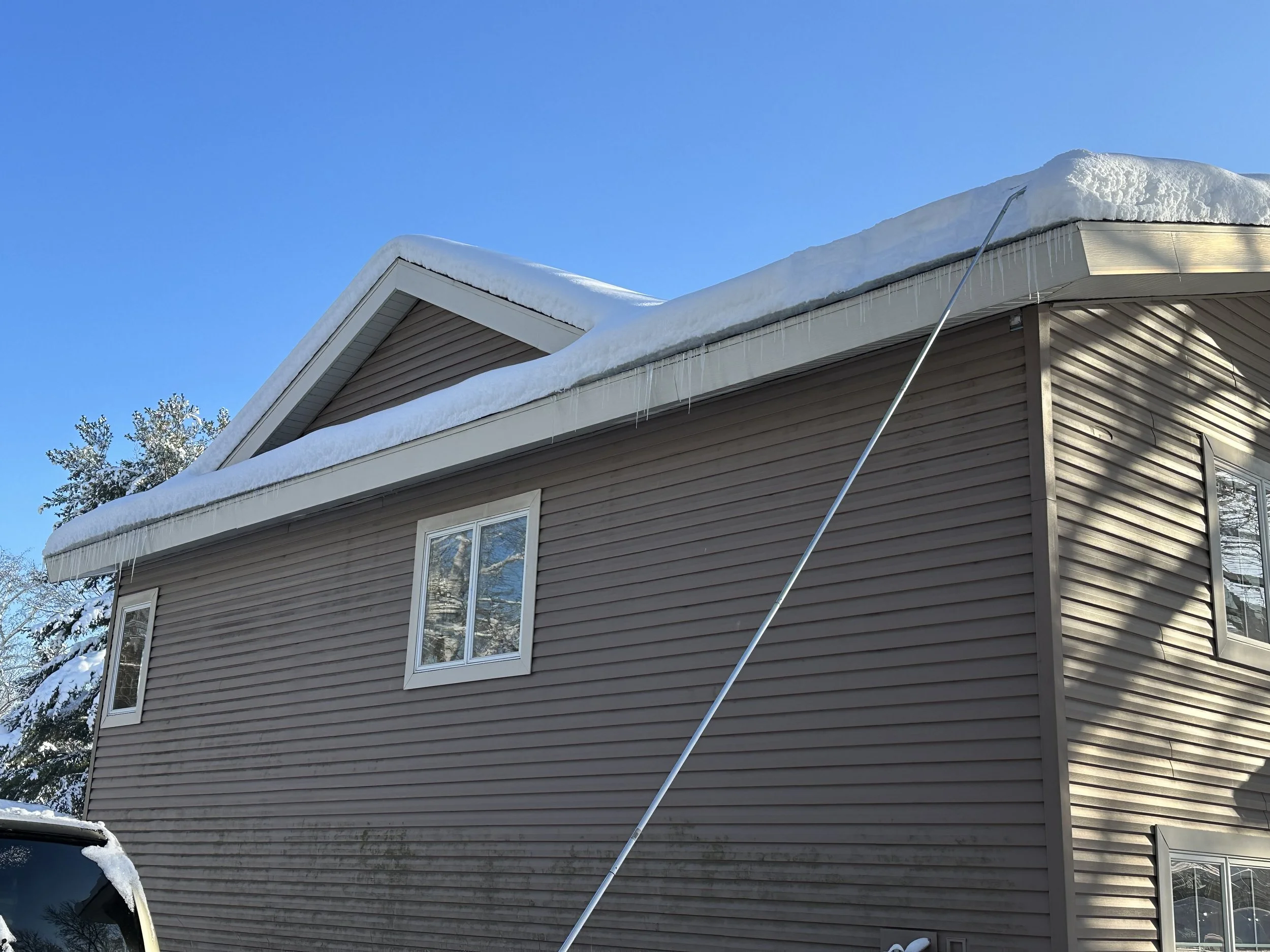
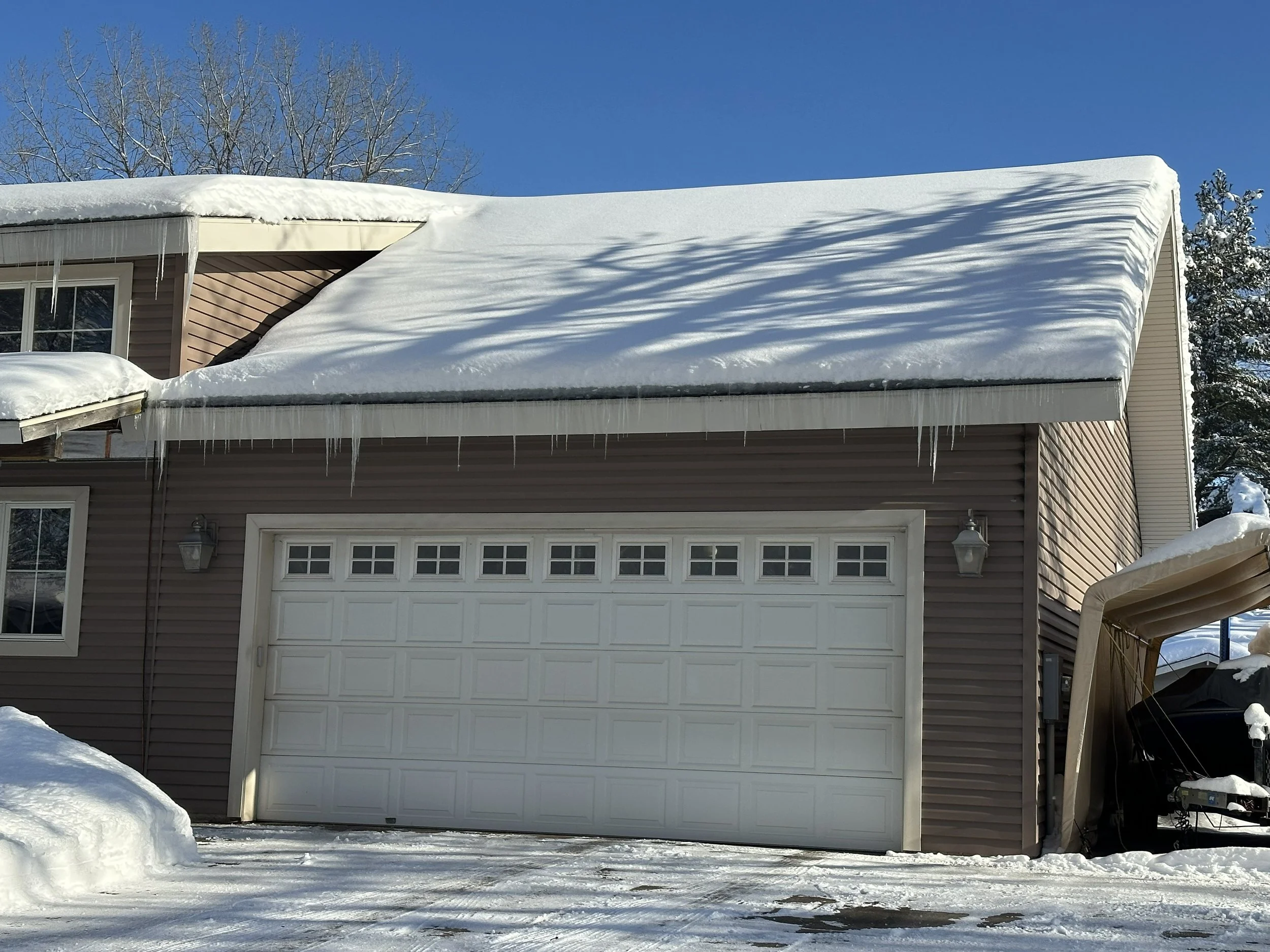
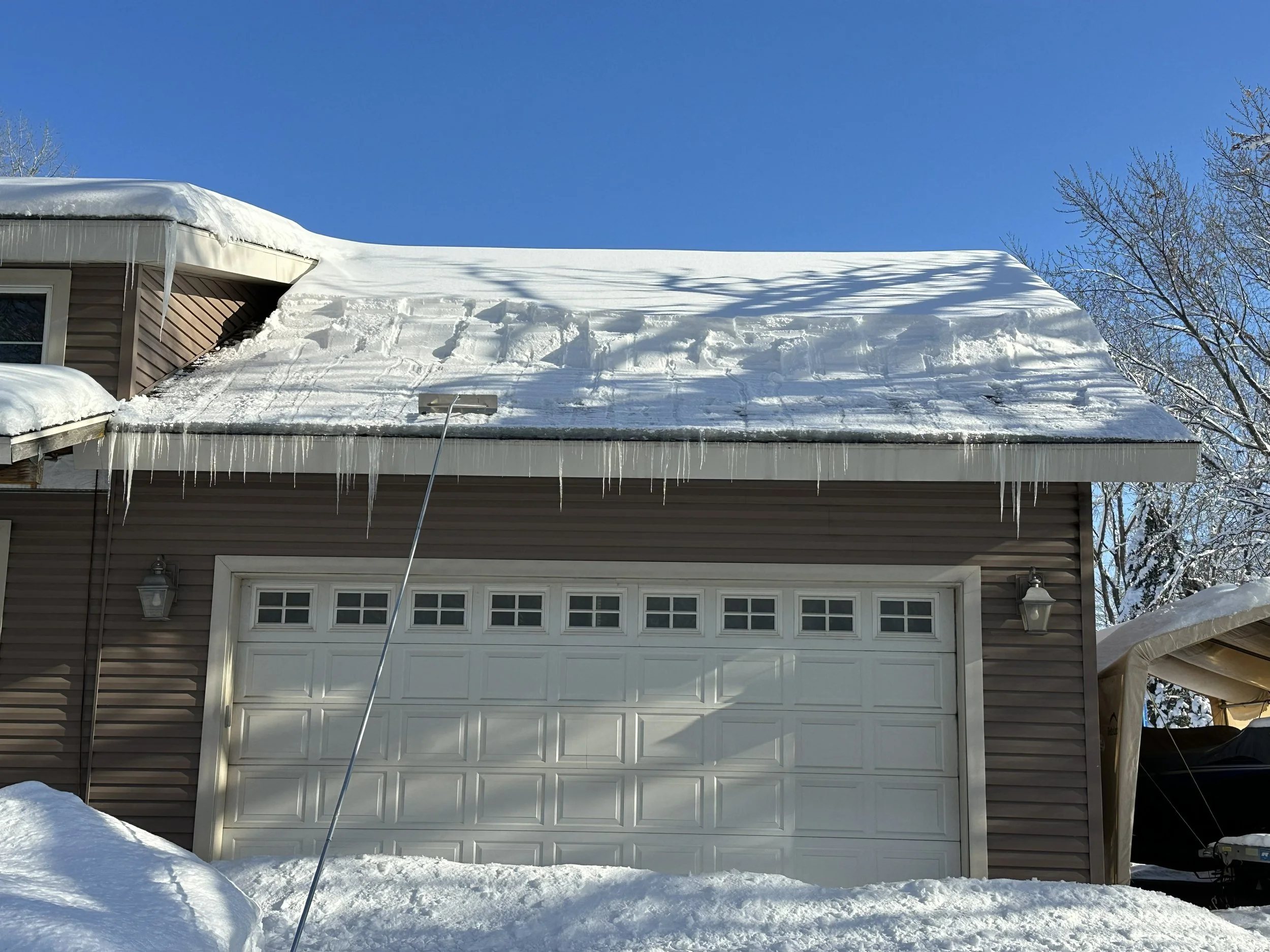
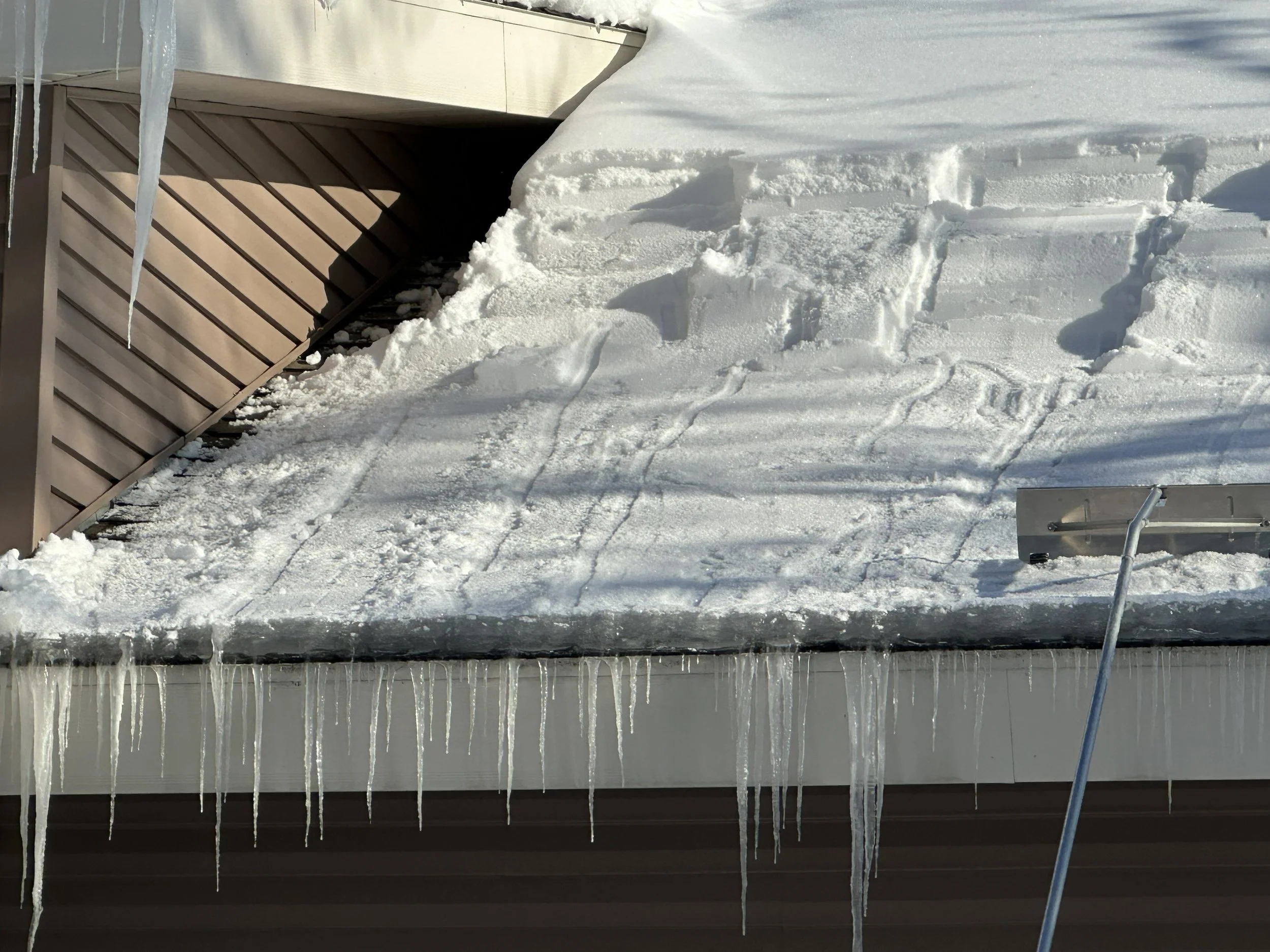
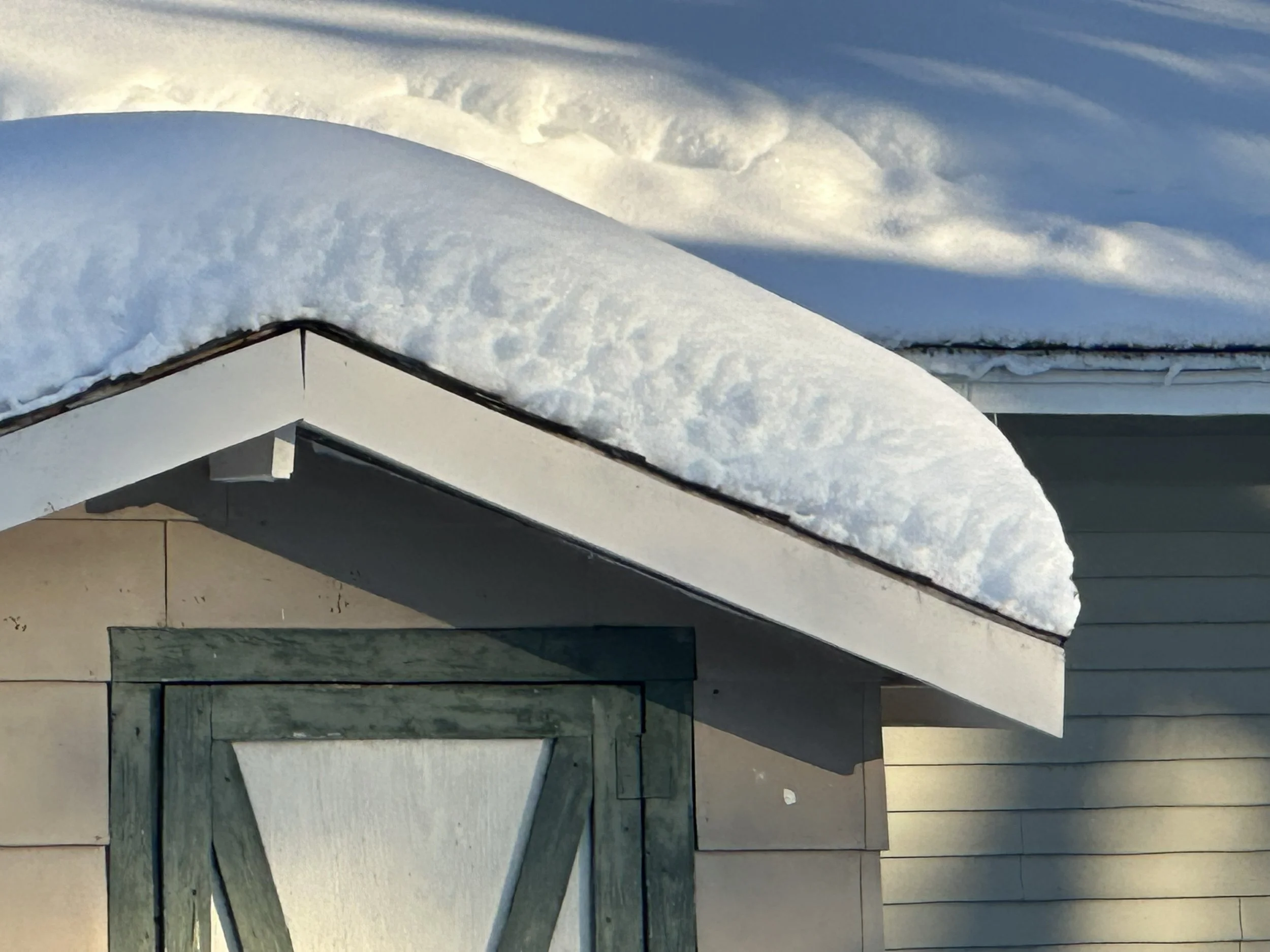
Ice Dams on my SIP roof - MN 2023
If you've ever watched ice creep up under your shingles during a Minnesota winter, here's what's actually going on, and why even a tight, well-built roof isn't automatically immune.
Key Takeaways
Ice dams need three things at once: a roof deck warmer than 32°F, outside air colder than 32°F, and snow sitting on the roof.
Warm air leaking up from your living space is the most common cause — and the one most builders already know to fix.
Snow itself acts like a blanket. A couple feet of it can warm your roof deck even on an airtight, well-insulated roof.
A tight SIP roof solves the air-leak problem, but it can't cancel out the snow-blanket problem on its own.
In heavy-snow regions (Minnesota, Wisconsin, Michigan's U.P., Vermont, the mountain West), the real fix is a vented "cold roof" built over the SIP roof.
Until that's in place, a roof rake and clear gutters are your best short-term defense — skip the heat cables and never chip at the ice.
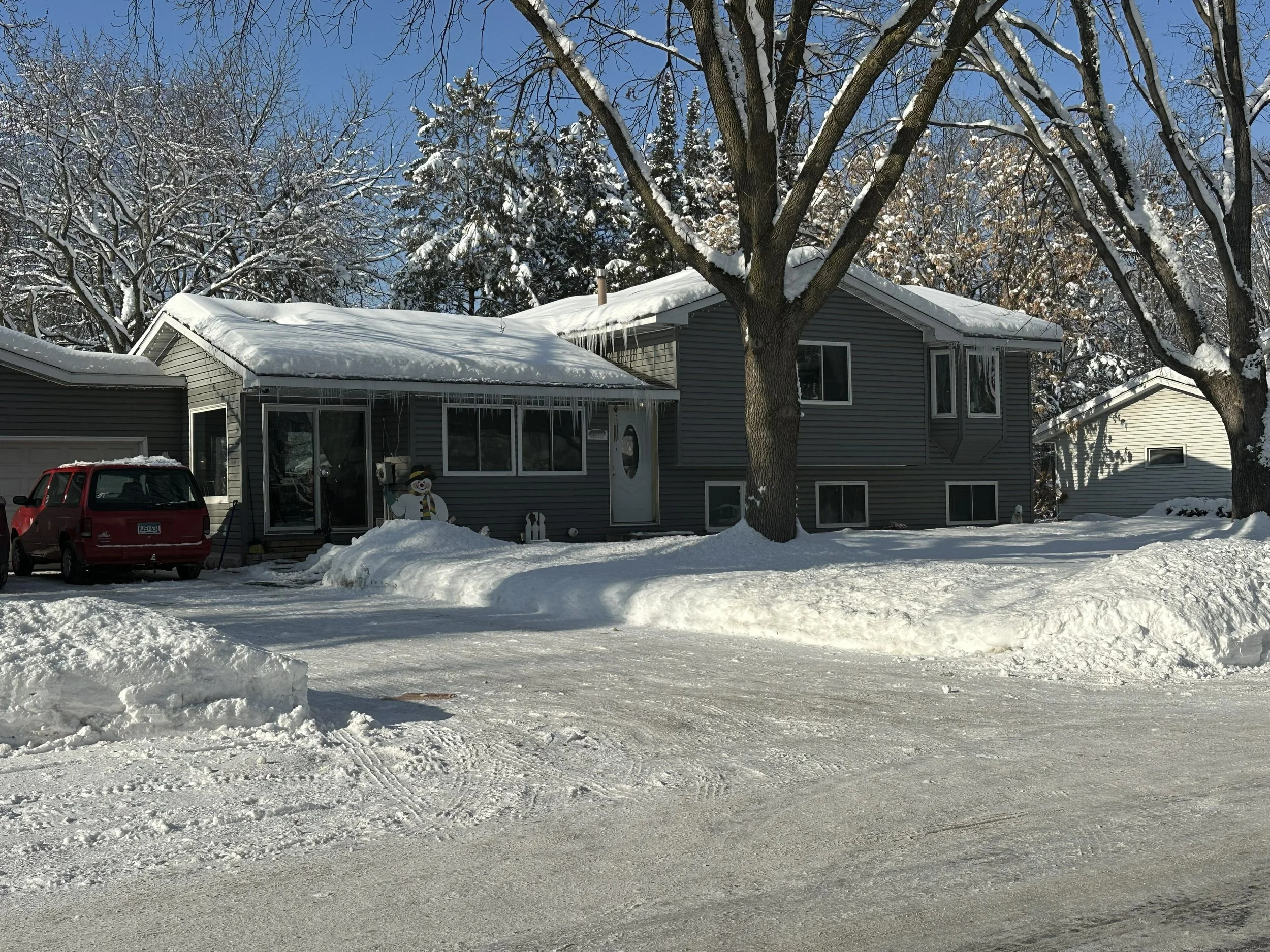
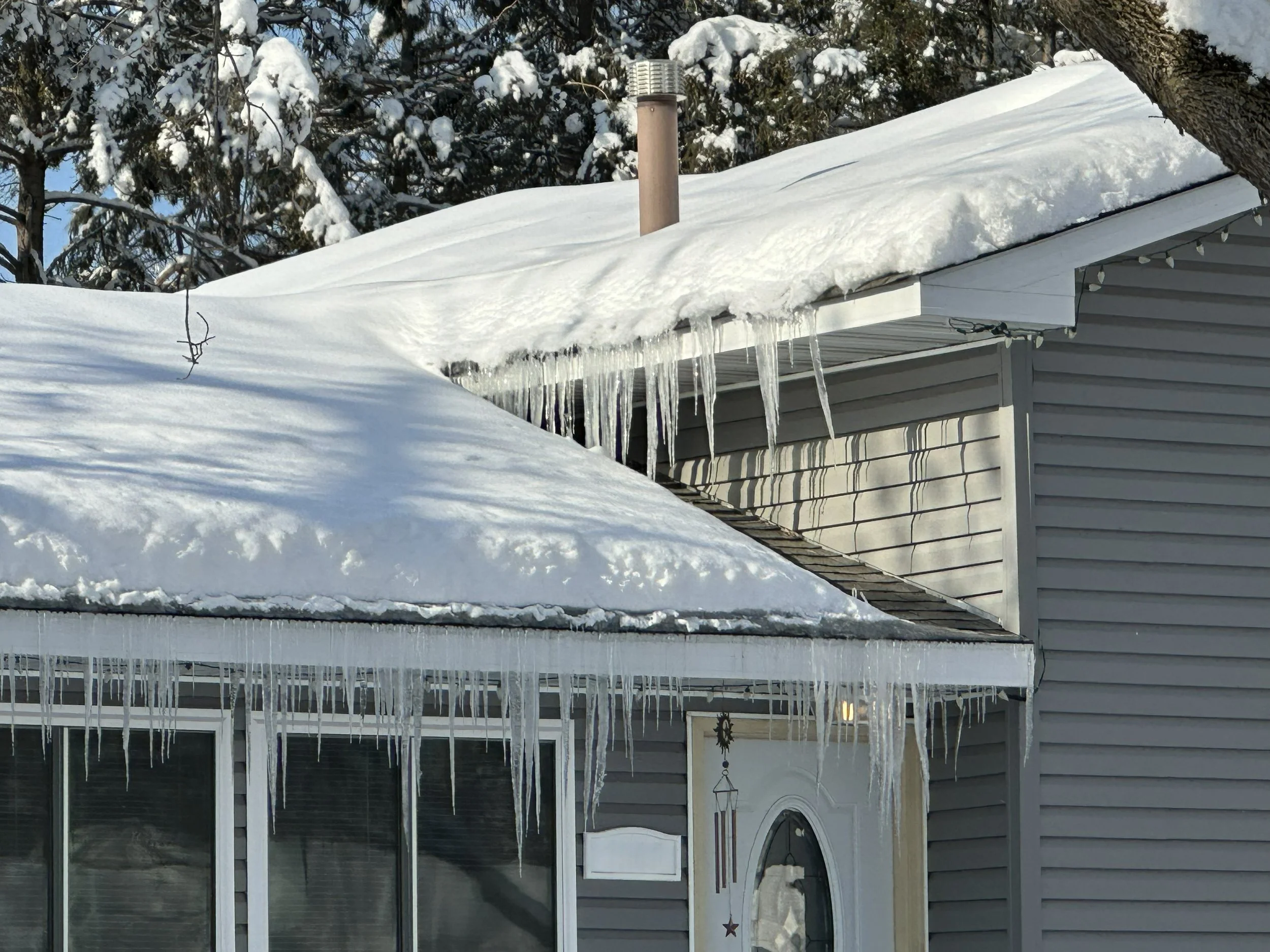
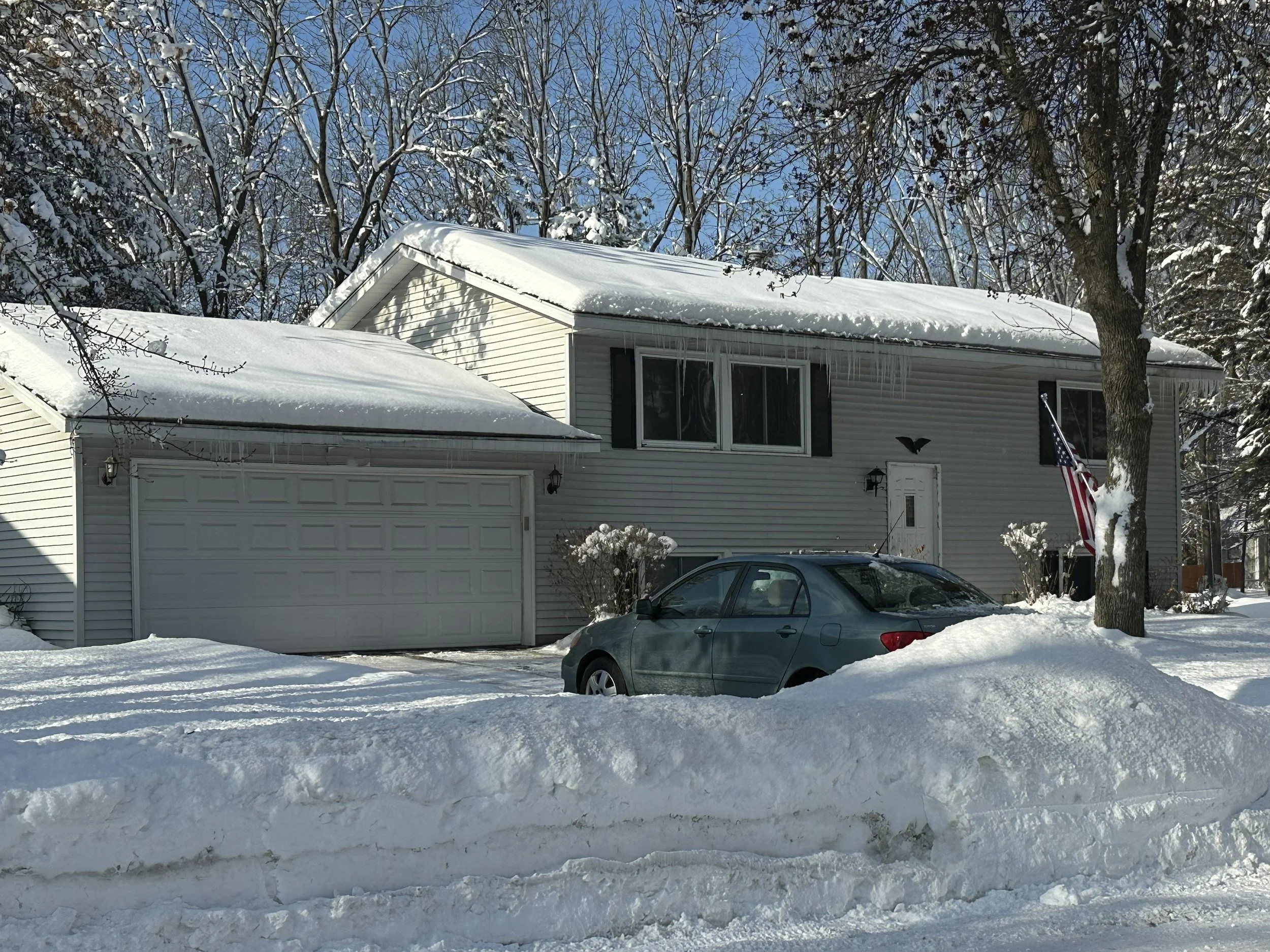
If you live somewhere warm (Phoenix, Austin, Charlotte), you've probably never given a dam about ice dams. But if you live in Minnesota, Wisconsin, Michigan's Upper Peninsula, Vermont, the mountain West, or anywhere else winter actually shows up, you already know exactly what one looks like: that thick ridge of ice along your roof edge, with water backing up underneath it and finding its way into your ceiling.
Ice dams aren't just an eyesore. They soak insulation, stain ceilings, pull gutters off the house, and drop dangerous chunks of ice on whoever's standing below. And here's the part that catches a lot of homeowners off guard: even a tight, well-insulated, well-built roof can still get them. Below walks through why, and what the building-science research says actually fixes it.
What Is an Ice Dam, Really?
An ice dam forms when three things are happening on your roof at the same time:
The roof deck (the wood surface under your shingles) is warmer than 32°F
The outside air is colder than 32°F
There's snow sitting on the roof, usually a lot of snow
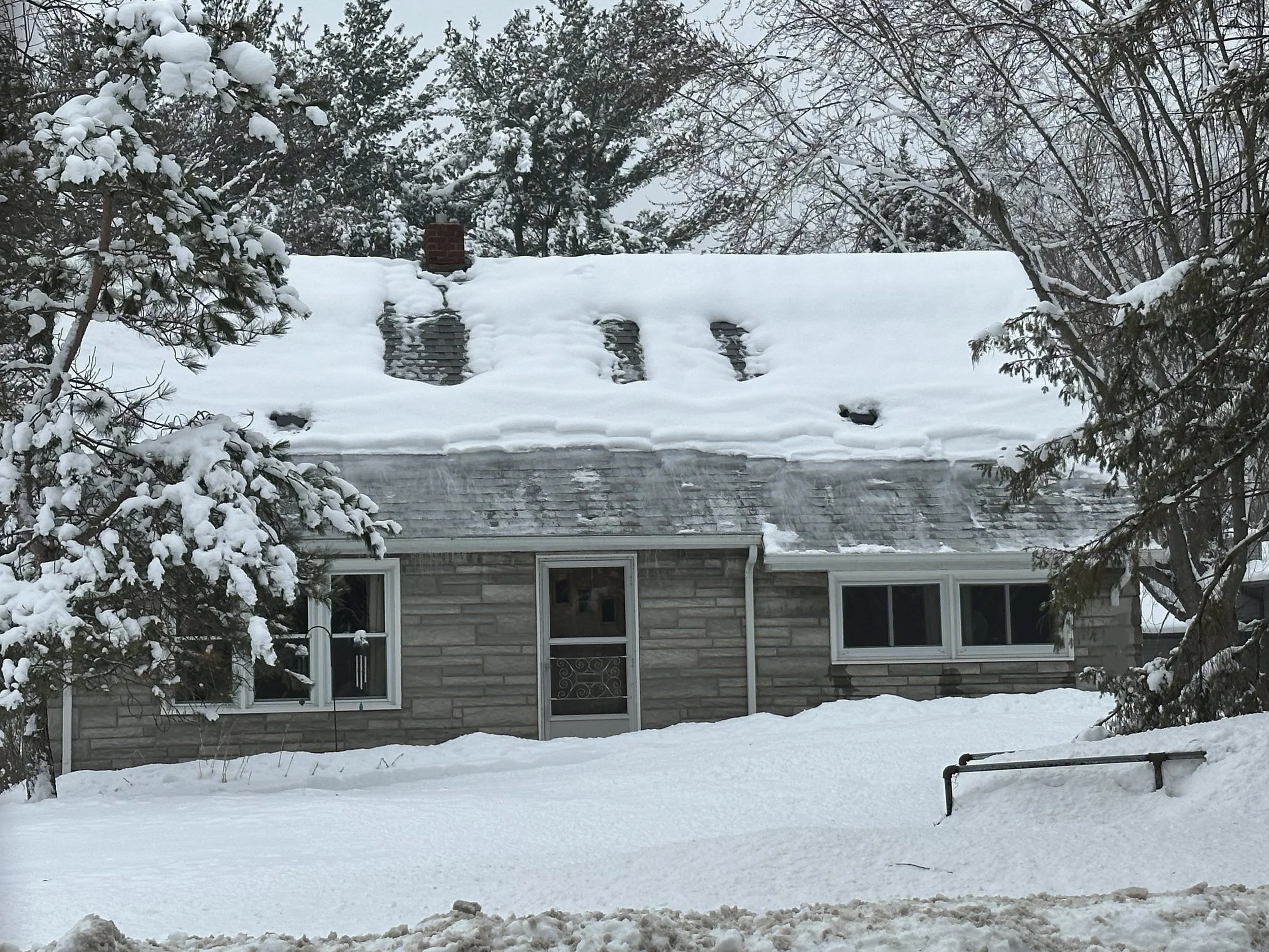
When those three line up, the warm roof deck melts the bottom of the snowpack. That meltwater trickles down the slope of the roof until it reaches the overhang, which stays cold because there's no heat coming from inside the house underneath it and it is usually exposed to the below 32°F outside temps. The water freezes there, builds up layer by layer, and eventually backs up under your shingles and into your house.
Building scientist Joseph Lstiburek put it simply:
"The warm roof deck causes the snow on top of the roof deck to melt, and the melt water runs down to the edge of the roof where the water freezes leading to a buildup of ice. At the roof edge and roof overhang, the deck is much colder, and the drainage gap freezes solid causing the water to back up."
-- Joseph Lstiburek, Building Science Corporation, BSI-046: Dam Ice DamTwo Reasons This Happens (and a Third, Sneakier One)
Reason 1: Warm Air Sneaking Out of Your House
This is the cause most people already know about. Warm air from inside your living space leaks up into the roof through gaps most homeowners never think about:
Unsealed openings around the ceiling
Poorly insulated spots where the roof meets the walls
Leaky ductwork running through a vented attic
Recessed "can" lights punched through the ceiling
That warm air raises the temperature of the roof deck above it, which kicks off the melt-and-freeze cycle right at your eaves. This is exactly why ice dams tend to show up over heated rooms and stop cold over an unheated garage or porches: the roof deck above the unheated space simply never warms up in the first place.
Reason 2: Snow Itself Acts Like a Blanket (the surprising one)
Here's the part most homeowners (and even some builders) don't expect. Snow has an insulating value of its own. Researchers at the Army Corps of Engineers' Cold Regions Research and Engineering Laboratory (CRREL) have measured snow at roughly R-1 to R-2 per inch, depending on how dense it is.
← Swipe to view full table →
| Snow on the Roof | Approximate Added Insulation |
|---|---|
| 4 inches | R-4 to R-8 |
| 10 inches | R-10 to R-20 |
| 24 inches (2 feet) | R-20 to R-40 |
That snow blanket insulates the roof deck from the cold outside air, the same way a blanket keeps you warm by trapping your own body heat. So even if your SIP roof is airtight, super-insulated, and free of the thermal weak spots that plague stick-built framing, a deep-enough snowpack can still push the roof deck above freezing. Lstiburek documented this himself in Vermont: an airtight, R-50 unvented roof (about as good as roofs get) still developed a 3-inch layer of ice under the snow, simply because the snow's own R-value warmed the deck enough to start the melt cycle.
Reason 3: Sun-Warmed Walls
There's a third, smaller contributor worth knowing about. On a sunny winter day, a dark-colored exterior wall can reach 45–50°F even when the air temperature is sitting at 20°F. That warmed air rises along the wall, gets trapped under the overhang, and melts snow from underneath, right where you don't want it melting. This is a big part of why ski-town homes with dark siding and deep overhangs can develop serious ice dams even when the roof itself is well built.
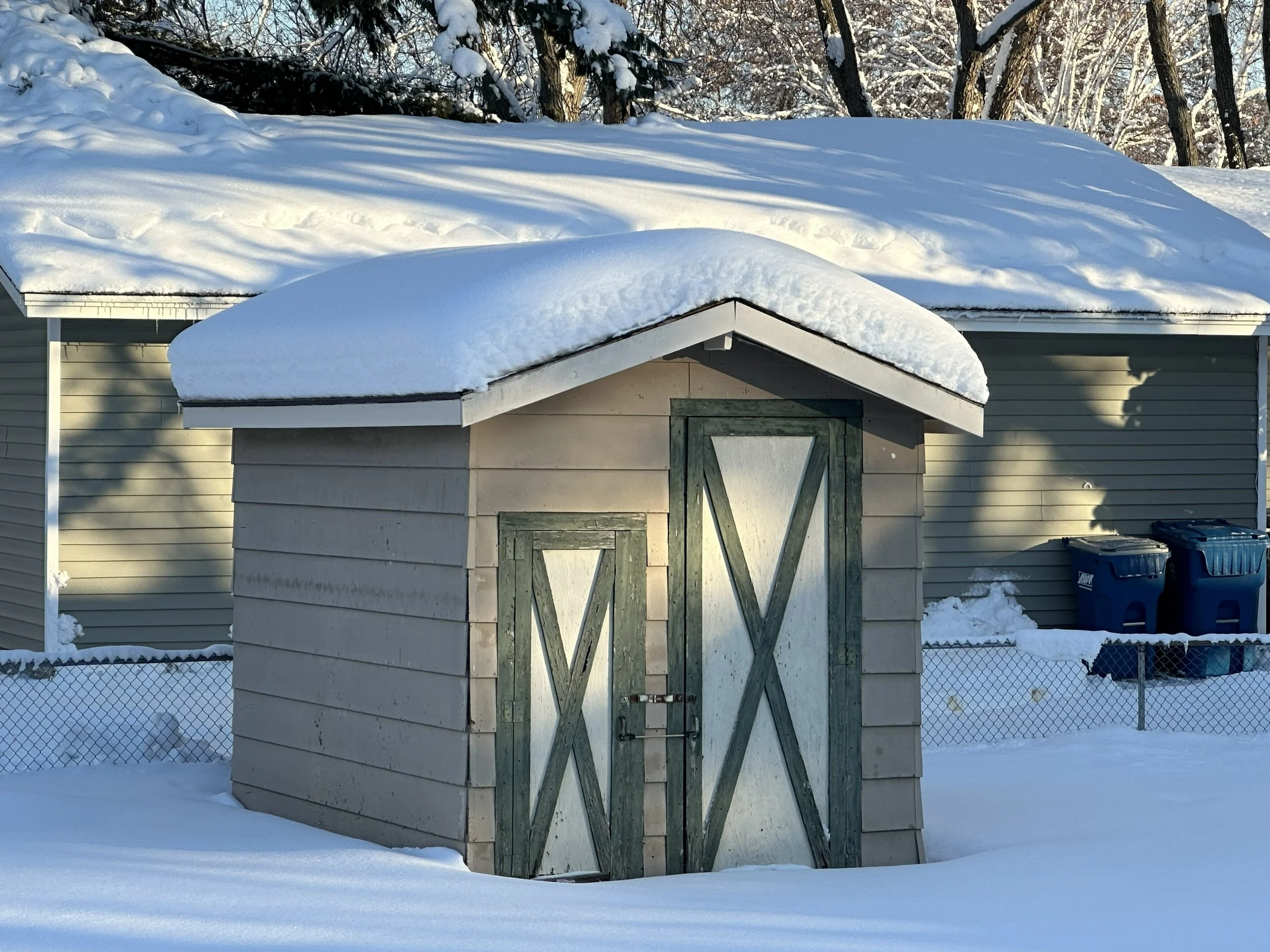
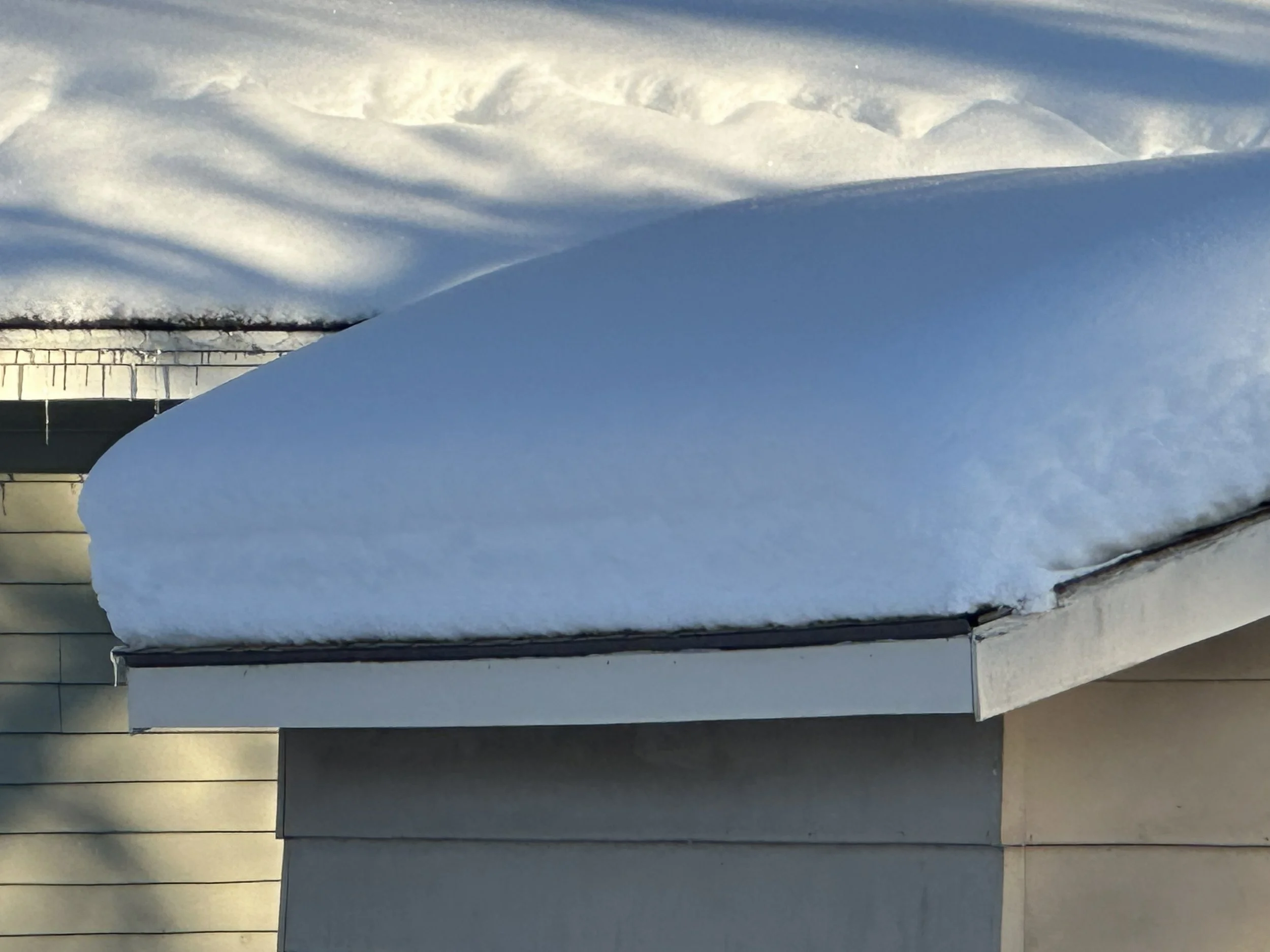
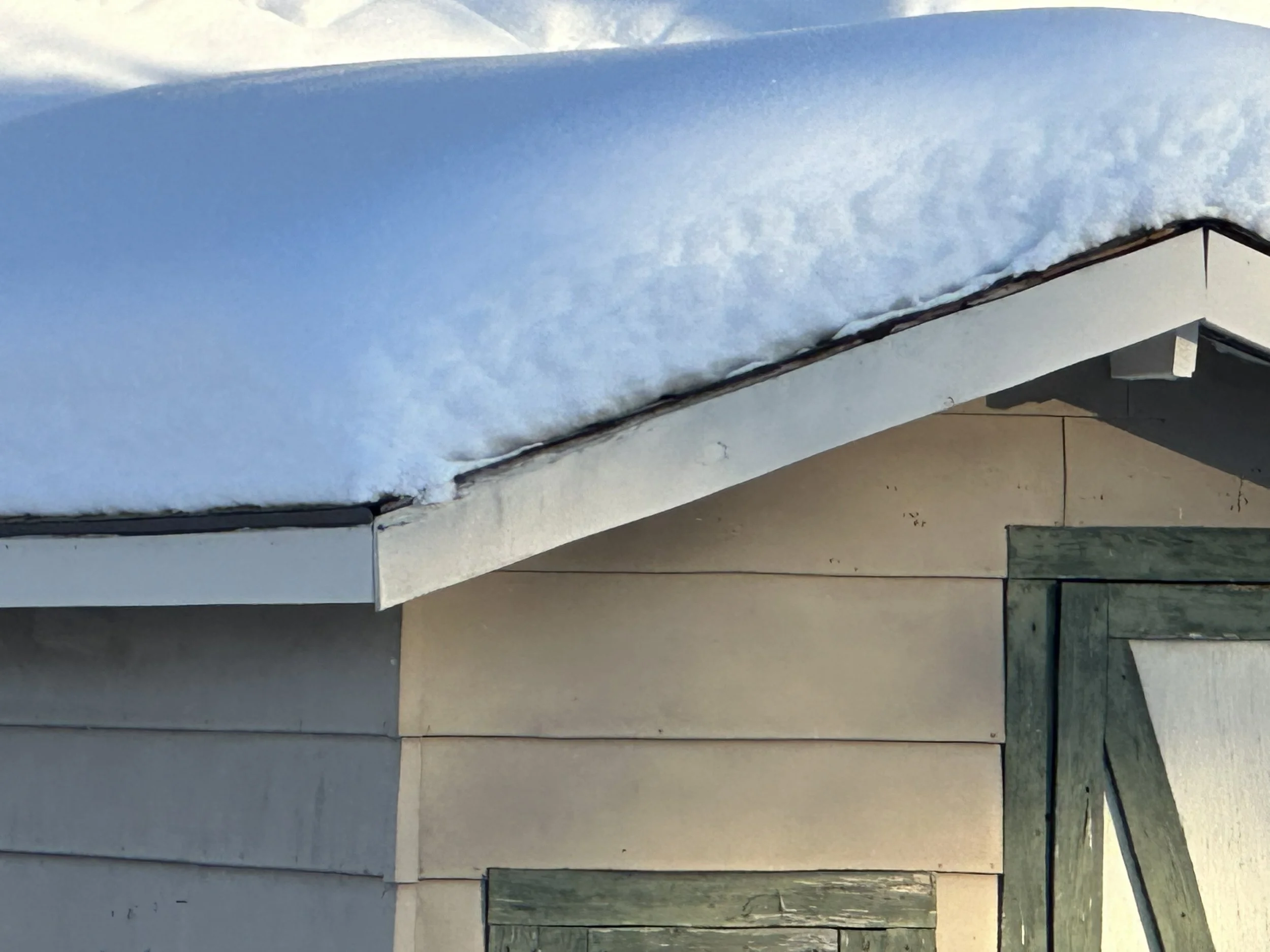
My own house proves this out better than any lab study could. It tests at 1.25 ACH50 (essentially no air leakage through the roof panels) and it still gets ice dams some winters. Meanwhile, the uninsulated shed in my backyard never gets a single one. That's not a contradiction, it's exactly what the physics predicts: my shed's roof deck stays at outside air temperature because there's no insulation to trap anything under it. My house's roof deck gets warmed by the snow sitting on top of it. Airtight and insulated isn't the same thing as immune.
-- Joe Pasma, PE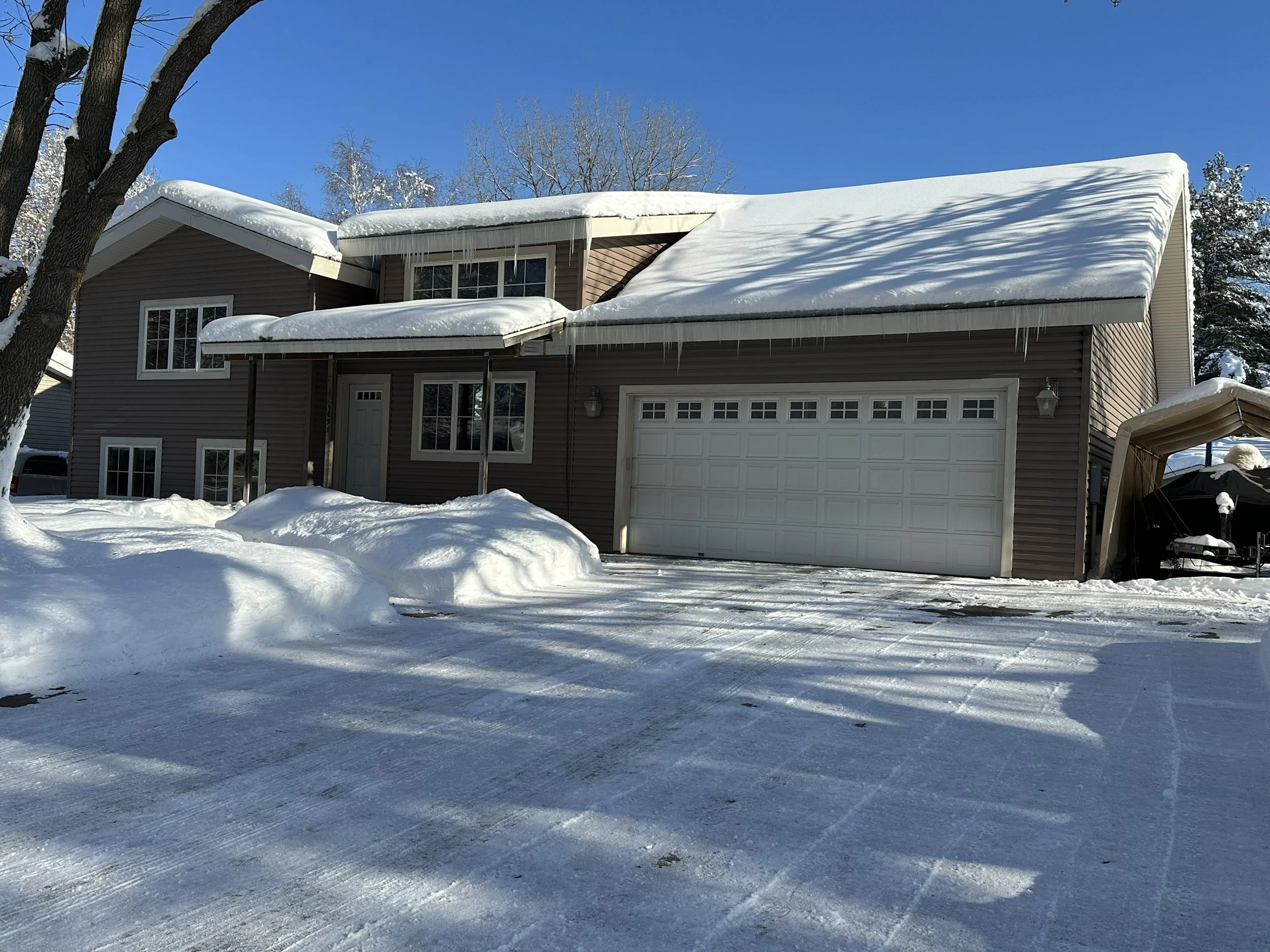
Why SIP Roofs Are Better (But Not Magic)
SIP roofs genuinely do eliminate most of the air-leakage-driven ice dams that plague conventional framing, and for good reason:
The roof assembly is inherently airtight
There's no vented attic full of leaky pathways for warm air to find
There are no ducts running above the insulated part of the roof
If you want the numbers behind that airtightness, we've broken down what SIP R-values actually mean in real-world performance in a separate article.
But SIPs can't eliminate the snow-insulation mechanism described above: physics doesn't care how airtight your roof is. If you're dealing with deep snow and ground snow loads above roughly 50 psf, you can still get ice dams unless you add a vented layer over the roof, often called a "cold roof."
If you're building or renovating in a vented attic (not a SIP roof), keep ductwork and heating equipment out of that attic space entirely. Building science research is blunt about this one: air leakage out of ducts, plus ordinary heat loss through the duct surfaces, is enough on its own to guarantee ice damming. It doesn't matter how good the rest of the roof is: ducts in a cold attic are one of the most reliable ways to cause the problem this article is about.
What Actually Works
The right fix depends on how much snow your roof actually sees each winter.
In Moderate Snow Regions
A SIP roof without any extra layer on top can work fine, as long as:
Ground snow load is under about 50 psf
The roof is genuinely airtight
The roof is insulated to R-38 (SIPs, my experience) R-50 or better other types of insulation
The overhangs are insulated, not just the main roof field
No ductwork runs through the attic space
Builders call this an unvented "compact roof," and it's a well-established, code-recognized assembly.
In Heavy Snow Regions (Minnesota, Wisconsin, Michigan, Vermont, US Mountains)
Here, you need a cold roof (a vented layer built above the SIP roof). That assembly typically includes:
Furring that creates a continuous vent channel
A second layer of roof sheathing above that channel
Ventilation running from the soffit up to the ridge
Insulated overhangs
That vent channel flushes away the small amount of heat that still reaches the roof deck, including the heat trapped underneath a deep snowpack. It's the assembly recommended for high-snow regions in the Builder's Guide to SIPs and by Lstiburek's own ice dam research.
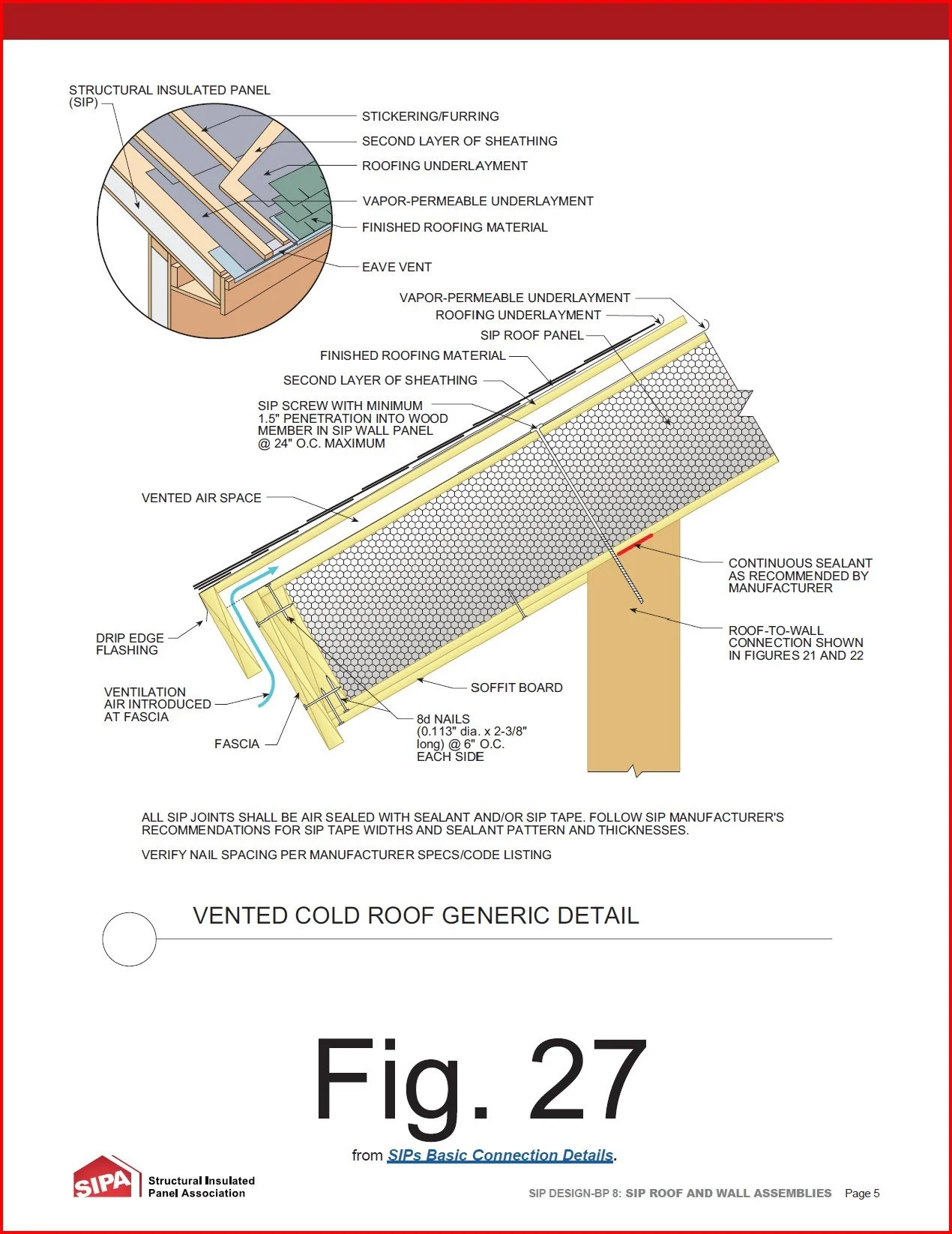
Vented Cold Roof Over SIP Roof Panels
Not sure which category your project falls into? Talk to Joe Pasma, PE: he can look at your snow load, roof design, and existing insulation and tell you plainly whether a cold roof is worth the added cost on your specific project.
Practical Advice Until You Add a Cold Roof
If a cold roof retrofit isn't in the budget this year, here's what actually helps in the meantime, and what doesn't:
Use a roof rake to clear the first 3–4 feet of snow off the eaves after a storm
Keep gutters clear so meltwater has somewhere to go
Skip the heating cables: they treat the symptom, not the cause, and add an ongoing electric bill
Never chip at an ice dam yourself: it's an easy way to damage shingles that were otherwise fine
If you're already planning a reroof, that's the ideal time to add a vented over-roof
Related Resources
A few other articles worth reading if you're evaluating a SIP roof for a cold-climate build:
Frequently Asked Questions
What temperature does a roof need to be for an ice dam to form?
The roof deck needs to be above 32°F while the outside air stays below 32°F, with a fair amount of snow sitting on the roof. All three conditions have to happen at the same time; remove any one of them and an ice dam can't form.
Can an airtight, well-insulated SIP roof still get ice dams?
Yes, in heavy-snow climates it can. A SIP roof eliminates most air-leakage-driven ice dams, but a deep snowpack has its own insulating value and can still warm the roof deck enough to start the melt-freeze cycle, regardless of how airtight the roof is.
Will adding more attic insulation fix my ice dam problem?
It helps with air-leakage-driven ice dams, but it won't stop the snow-insulation mechanism on its own. In high-snow regions, a vented cold roof addresses both causes at once, which is why it's the recommended fix rather than insulation alone.
What is a "cold roof" and do I need one?
A cold roof is a vented layer built above your main roof deck: purlins or furring create an air channel, a second layer of sheathing goes on top, and soffit-to-ridge airflow carries away trapped heat before it can warm the roof deck. It's typically recommended in regions with ground snow loads above about 50 psf, including Minnesota, Wisconsin, Michigan, Vermont and the mountain areas of the US.
Is it safe to chip away an ice dam myself?
No. Chipping at ice dams is one of the most common ways homeowners accidentally damage otherwise healthy shingles. A roof rake used to clear snow before it can melt and refreeze is the safer approach.
Do heating cables actually stop ice dams?
Heating cables melt a channel through an existing ice dam, but they don't address why the roof deck is warm enough to cause one in the first place. They're a symptom-level fix, not a permanent solution, and they add an ongoing electricity cost every winter.
Worried About Ice Dams on Your SIP Roof?
PGS Consulting LLC provides independent roof assembly review, snow-load evaluation, and cold-roof design guidance for SIP buildings, backed by 40+ years of engineering, manufacturing, and forensic experience.
Talk to Joe Pasma, PE