

Are SIPs Hard for Subs to Learn?The Truth About the Learning Curve
When builders say their subs don't know how to work with SIPs, they're not describing a SIP problem. They're describing a preparation problem. Here's what trades actually need -- and why the learning curve is shorter than most builders expect.
By Joe Pasma, PE | PGS Consulting LLC | SIP Engineering & Consulting | Published June 23, 2026
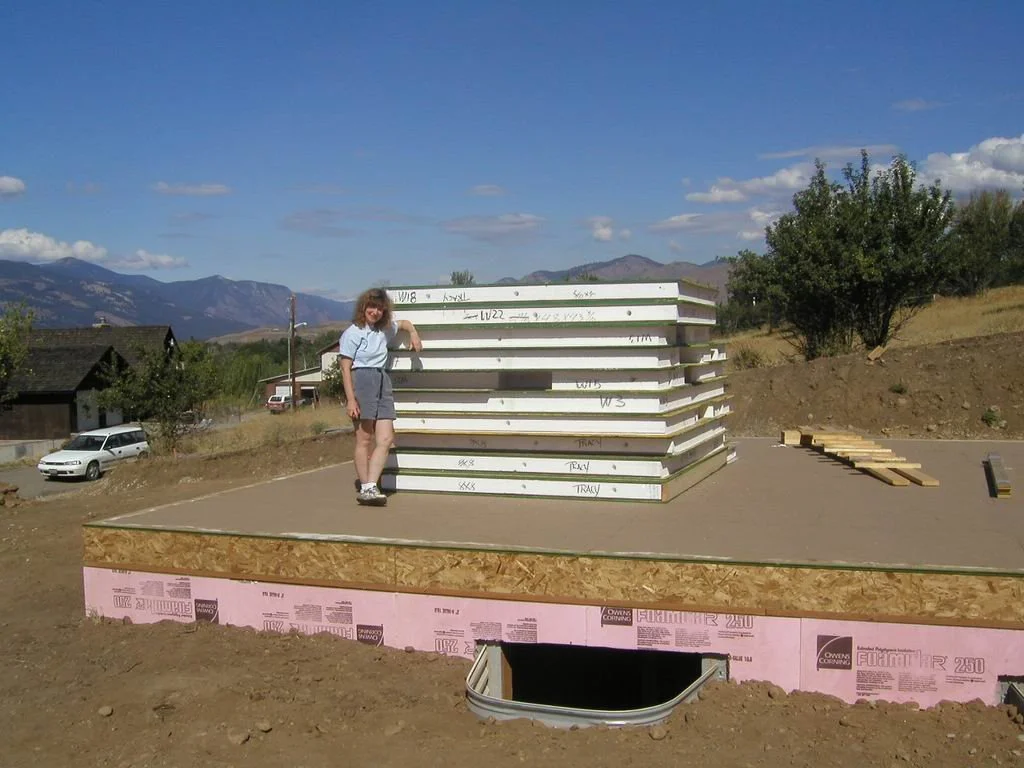
Key Takeaways
Structural Insulated Panels (SIPs) are not harder for subs -- they are just different. The learning curve is mostly a missing-information problem, not a skill problem.
Electricians, plumbers, HVAC installers, and framers do not need special tools or certifications to work with SIPs.
What subs actually need is a clear chase map, simple trade-specific guidance, defined "do not cut" zones, and a GC who is confident and prepared.
A 10-minute pre-construction huddle from a prepared GC eliminates the majority of friction on a SIP job.
After one SIP project, most subs say the same thing: "That was easier than I expected."
The learning curve is not a barrier to building with SIPs. It is a signal to plan ahead.
When builders raise the concern that their subs don't know how to work with SIPs, they are not really talking about SIPs.
They are naming a deeper, more practical worry: I don't want my jobsite to become the place where everyone figures it out on the fly.
That is a fair concern. And it has a clear, straightforward solution -- not by turning subs into SIP specialists, but by giving them a predictable, field-ready workflow before the job starts.
After 40+ years in SIP engineering, manufacturing, and field oversight, Joe Pasma, PE has watched this play out on projects across the country. The friction is rarely about SIPs. It is almost always about preparation. This article breaks down exactly what subs need, what they don't, and how a GC can set a SIP job up for smooth execution from day one.
Why Subs Feel Uncertain Around SIPs
Subs are not resistant to new materials. They are cautious -- and for good reason. Their hesitation on a SIP job almost always comes from the same place: missing information.
Here is what typically creates anxiety on a SIP project:
No chase map or electrical routing plan
No clearly defined "do not cut" zones
No sequencing guidance for who goes when
No explanation of how penetrations need to be sealed
No description of what "done right" looks like
A GC who is still figuring things out alongside them
If a sub walks onto a SIP job and the first time they hear the word "SIP" is during the morning huddle, of course they're going to hesitate. That's not a training problem. That's a systems problem.
The good news is that systems problems are fixable -- usually before the first crew shows up.
To understand how SIPs differ structurally from stick framing and why trade coordination matters, the What Are SIPs guide is a useful starting point.
What Subs Actually Need (It's Not That Much)
Here is the short list of what trades need to work confidently on a SIP job. None of it requires special certifications. None of it requires manufacturer training. It just requires a GC who has done the prep work.
What each trade needs to work confidently on a SIP project:
← Swipe to view full table →
| Trade | What They Need | What They Don't Need |
|---|---|---|
| Electricians | Chase map showing pre-routed locations, surface-mount plan, "do not cut" zones | Special tools, new certifications, panel manufacturer training |
| Plumbers | Coordinated penetration locations before work begins, clear allowed vs. avoid zones | Modifications to standard plumbing practice |
| HVAC | Duct routing plan, penetration details, sealing spec for airtight envelope | Special equipment or licensed SIP training |
| Framers | Panel layout, connection details, sequencing guidance to avoid overcutting | Experience with previous SIP projects |
| All Trades | A confident, prepared GC and a clear escalation path if something looks off | Improvisation or on-the-fly decisions about panel structure |
That's the whole list. Once those five elements are in place, the job runs. The learning curve is not steep -- it is just specific.
The Five Things Every Sub Needs on a SIP Job
Break it down trade by trade and it gets even simpler. Every sub on a SIP project needs the same five things, just applied to their specific scope:
1. A Clean Panel Layout
Where are the chases? Where are the structural zones? Where does nothing get cut? Subs should not have to guess at any of this. A clear layout eliminates most questions before the first tool comes out. See the SIP installation guide for how sequencing and layout coordination work in practice.
2. A Simple, Trade-Specific Workflow
Not a manual. Not a manufacturer's installation guide. Just a short, clear answer to: what do I do first, what do I do second, and what do I definitely not do? That's it. One page per trade is usually enough.
3. A Clear "Do Not Do This" List
Subs work well with boundaries. Boundaries reduce risk and reduce the mental load of working with something unfamiliar. A short list of specific no-go actions is more useful than a 60-page technical document.
4. A GC Who Is Confident and Prepared
Subs read the room. If the GC walks onto a SIP job uncertain and reactive, the subs will be uncertain and reactive. If the GC is calm, organized, and has answers ready, the crew adjusts quickly. The GC does not need to be a SIP expert -- they just need to have done the prep work.
5. Someone to Call If Something Looks Off
Not to make decisions for them. Just a clear escalation path. "If you see something that doesn't match the layout, stop and call before you cut." That one instruction has saved more SIP projects than any amount of upfront training.
In 40+ years of SIP work, I have never seen a sub fail because SIPs were too hard. What I have seen -- more times than I can count -- is a sub get put in an impossible position because the coordination wasn't done ahead of time. When the prep work is there, the job moves. When it isn't, everyone on the site pays for it. -- Joe Pasma, PE
The GC's Role: Setting the Table, Not Teaching the Class
A GC does not need to be a SIP expert. Their job is to set expectations -- clearly, early, and in plain language.
A 10-minute pre-construction huddle handles the majority of the learning curve on a SIP job. Here is what that conversation looks like:
"Here is the chase map. Here is where all electrical routing goes."
"Here is where we do not cut -- these zones are structural."
"Here is how all penetrations get sealed when you're done."
"Here is who you call if something looks wrong before you cut."
"Here is the sequence -- who goes first, who follows, and what needs to be done before your trade arrives."
Subs don't need perfection. They need predictability. When the GC brings that predictability to the first conversation, the job starts from a position of confidence rather than uncertainty.
Problems on SIP jobs -- the kind that turn into costly repairs and schedule delays -- almost always trace back to one root cause: a lack of coordination before work began. The SIP problems and failures guide covers the most common failure patterns and what drives them.
Why Manufacturer Training Is Not the Answer
Manufacturers provide real value: installation videos, technical documents, best practices, and general guidance. That content is useful and worth reviewing.
But manufacturers cannot provide what a specific project needs:
Project-specific sequencing based on your actual drawings
Trade-specific workflows tailored to your crew's scope
Coordination between architectural, structural, and MEP drawings
Field-ready checklists your subs can actually use on site
A clear answer to "what do I do first, second, and third?"
That gap is exactly what PGS Consulting LLC fills. Not by managing the job or training the crew, but by giving the team the documentation and coordination structure that makes SIPs feel familiar before anyone picks up a tool. Learn more about what that engagement looks like on the PGS consulting services page.
What Happens After the First SIP Job
Every sub -- electricians, plumbers, HVAC installers, framers -- says some version of the same thing after their first SIP project: "That wasn't bad at all. I just needed to know what to expect."
The learning curve is real. It is just short.
After one project, most subs are more confident working with SIPs than the GC who hired them. The initial unfamiliarity drops fast when the workflow is clear. What looked like a training problem at the start of the job looks like a planning win by the end.
It is also worth noting: the concern that the learning curve adds labor cost is generally not supported by what happens on well-run SIP jobs. When coordination is done ahead of time, SIPs tend to reduce rework, reduce callbacks, and keep the schedule tighter than comparable stick-frame builds. The SIP cost guide breaks down where the real numbers land.
What This Objection Is Really Telling You
When a builder says "my subs don't know how to work with SIPs," they are not really raising a complaint about the material. They are naming something much more practical:
They want the job to run smoothly.
They want their trades to feel confident.
They want predictable sequencing and fewer surprises on site.
They want to avoid being the first one to "figure it out" on a live project.
Those are healthy instincts. And they are exactly the instincts that make SIPs a strong fit for a builder who thinks that way -- because SIPs reward exactly the things good builders already do. Clarity. Coordination. Clean workflows. Planning before the first crew shows up.
The learning curve isn't a barrier. It is a signal that you value doing things right the first time. That's the right instinct to build on.
Frequently Asked Questions: SIPs and the Sub Learning Curve
Do electricians need special tools to work with SIPs?
No. Electricians do not need new tools or certifications. What they need is a clear chase map, a plan for where surface-mounted wiring makes more sense, and simple boundaries around where not to cut. When those pieces are in place, the electrical scope becomes predictable, and the job moves efficiently.
Can plumbers run vent stacks or drains through SIPs?
Yes -- as long as the locations are coordinated ahead of time. SIPs can accommodate plumbing penetrations, but they should be planned before the job starts, not improvised in the field. With a clean layout and clear allowed vs. avoid zones, plumbers can work confidently without slowing the schedule.
What if a sub accidentally cuts something they should not have?
SIPs can be repaired, but the goal is to prevent unnecessary cuts in the first place. Clear boundaries, a simple escalation path, and unified drawings prevent most of these situations. When subs know exactly where structure matters, they do not have to guess -- and that is where the majority of accidental cuts originate.
Do SIPs slow down the job because subs need extra training?
No. Most of the friction on a SIP job comes from missing information, not from the panels themselves. Once subs understand the workflow -- usually within the first hour on site -- the job moves quickly. After one project, most trades say it was easier than they expected.
Who is responsible for teaching subs how to work with SIPs?
The GC sets expectations on the jobsite. The manufacturer provides general technical guidance. PGS Consulting LLC provides the project-specific documentation, coordination structure, and trade-ready workflows that make the job predictable for every sub. PGS Consulting LLC does not train subs or manage the jobsite -- we give the team a clean, unified system so each trade knows what to expect, what to avoid, and how their work fits into the overall sequence.
Do SIPs require special sequencing for trades?
They require clear sequencing, not special sequencing. SIPs reward planning. When the GC has a simple, job-specific flow -- who goes first, what must be done before each trade arrives, and what "done right" looks like -- the entire project runs more efficiently than a comparable stick-frame build.
Will my subs resist working with SIPs?
Most subs are not resistant -- they are cautious. The hesitation almost always comes from not knowing what to expect. Once they see the workflow and understand the boundaries, that caution disappears quickly. The learning curve is short, and confidence builds fast when the project is set up well from the start.
Planning Your First SIP Project?
PGS Consulting LLC helps builders and GCs set up SIP jobs for smooth execution -- with project-specific documentation, trade coordination, and field-ready workflows your subs can actually use.
See How PGS Can Help
Are SIPs Combustible? Fire Performance, Codes, and What Actually Keeps You Safe
Are SIPs combustible? Yes -- but that doesn't mean unsafe. Learn how OSB and EPS behave in fire, what the building code requires, and why properly installed SIP assemblies perform predictably and safely.
By Joe Pasma, PE | PGS Consulting LLC, Licensed Professional Engineer | 40+ Years in SIP Engineering, Manufacturing, and Forensic Analysis | Published June 11, 2026, Updated September 13, 2026
It's one of the first questions I hear from people seriously considering SIP construction: "Wait -- isn't that foam? Doesn’t it burn?"
Yes. SIPs contain combustible materials. Both the OSB skins and the foam core will burn. I'm not going to sugarcoat that.
But here's the part that most articles skip over: combustible does not mean unpredictable. It does not mean unsafe. And it does not mean SIPs perform worse in a fire than traditional stick framing.
Fire safety in construction is never about a single material. It's about the whole assembly -- how the pieces work together, what barriers are in place, and whether everything was installed correctly. SIP assemblies are among the most thoroughly tested, tightly regulated, and predictable systems in residential construction today.
This article walks through what "combustible" actually means, how the materials in SIPs behave when exposed to fire, what the building code requires, and what real-world fire performance looks like.
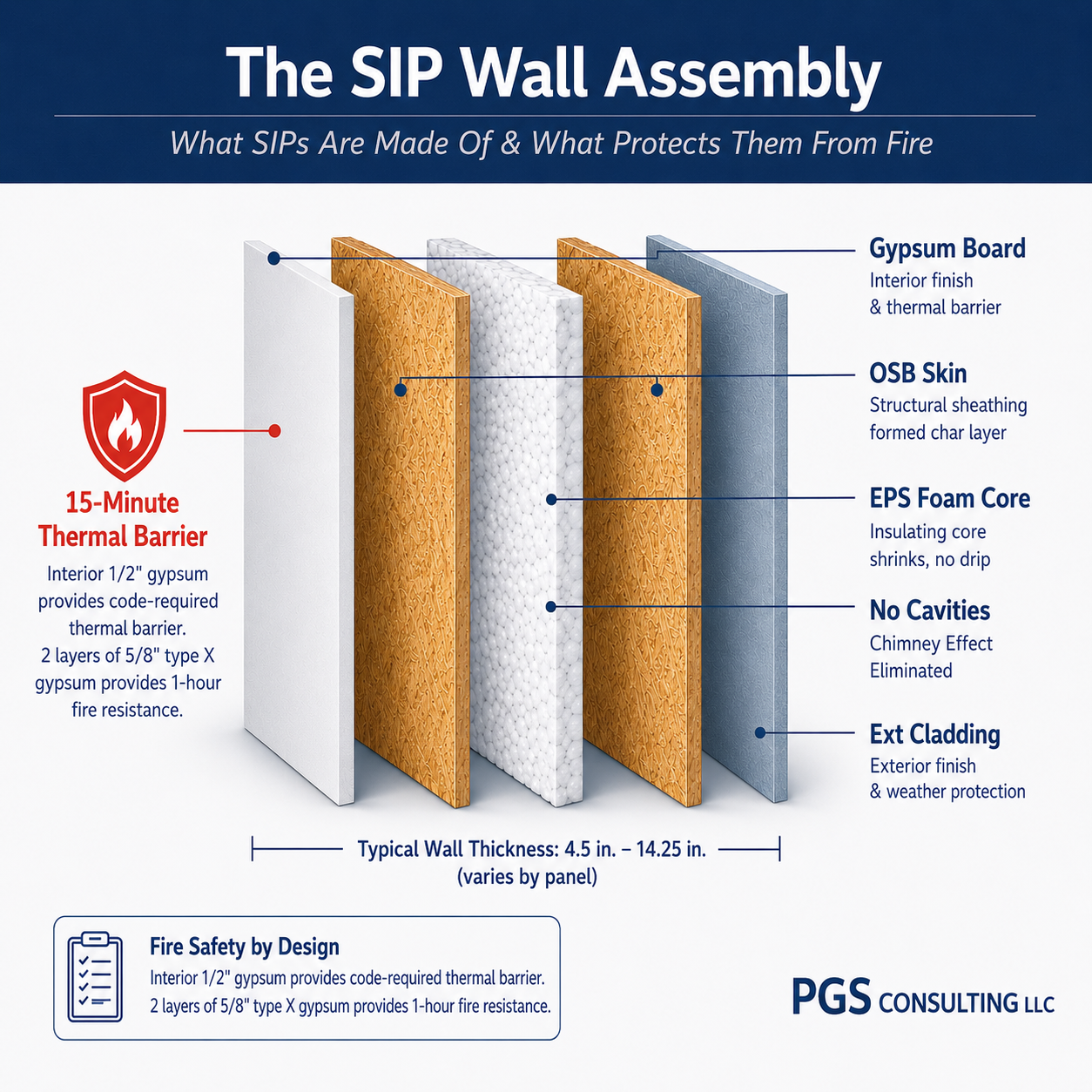
KEY TAKEAWAYS
SIPs are combustible -- both the OSB skins and the foam core will burn when exposed to sufficient heat.
Combustible does not mean unsafe. Fire safety is determined at the assembly level, not the material level.
Building codes require a thermal barrier -- typically 1/2-inch gypsum board -- to protect the foam core and delay heat transfer for a minimum of 15 minutes.
SIPs eliminate the stud-cavity chimney effect found in stick framing, which is a meaningful advantage in a fire.
SIP assemblies are tested to ASTM standards and manufacturers must provide third-party compliance reports like an ICC-ES evaluation report documenting code compliance.
Proper installation is non-negotiable. A correctly installed SIP system with continuous gypsum performs predictably. Shortcuts during installation eliminate that protection.
What "Combustible" Actually Means -- and What It Doesn't
The building code sorts materials into two buckets: combustible and non-combustible.
Foam plastics -- like EPS, GPS, and polyurethane (PUR/PIR) -- are considered combustible. OSB is combustible. So is dimensional lumber. So is virtually every structural material used in standard residential construction.
Here's the thing most people don't realize: the code allows combustible materials in residential buildings all the time. What the code cares about is whether the assembly -- the combination of materials, barriers, and installation details -- meets fire performance requirements.
A combustible material inside a properly protected assembly is not a fire hazard. It's just construction.
How the OSB Skins Behave in Fire
OSB is a wood-based panel, and like all wood, it will ignite and burn. But it doesn't just disappear.
When OSB is exposed to fire, it forms a protective char layer on the surface. That char slows heat transfer into the material behind it. This is the same behavior that makes mass timber construction code-approved, and it's the same reason wood-framed homes have been built safely for over a century.
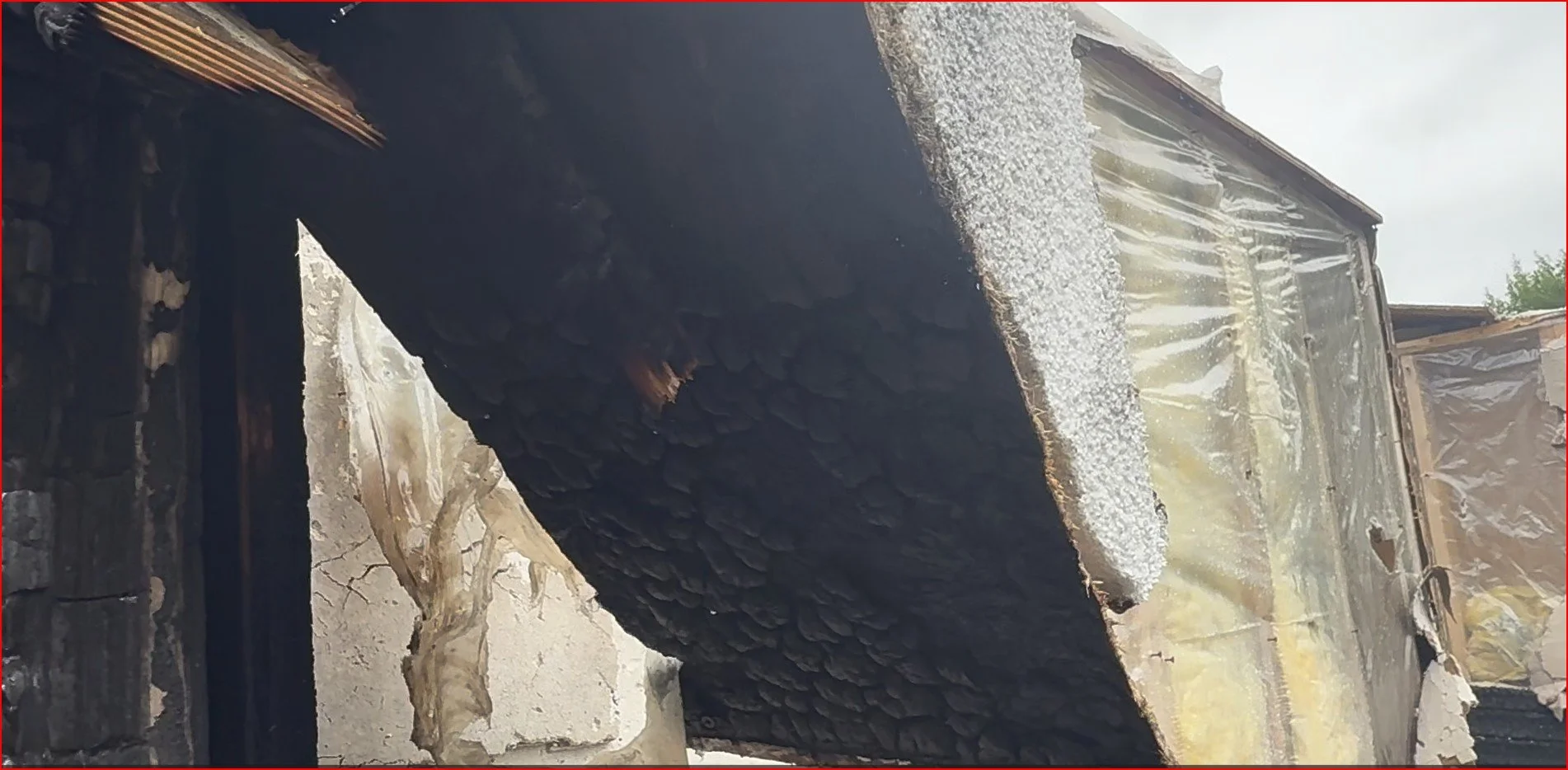
Charred OSB Facer
What OSB does not do:
It does not melt
It does not drip burning material
It does not collapse instantly
OSB's fire behavior is well understood by fire engineers. It's a known, modeled, engineered-for property -- not a wild card.
The takeaway: OSB is combustible, but it burns in a predictable, controlled way that engineers account for in assembly design.
How the Foam Core Behaves in Fire
EPS foam behaves differently than OSB, and it's worth being precise about this.
EPS will ignite when exposed to sufficient heat. Unlike OSB, it does not form a char layer -- it shrinks away from the heat source instead. Construction-grade EPS is treated with a flame retardant, which means it will not sustain an open flame without a continuous external ignition source.
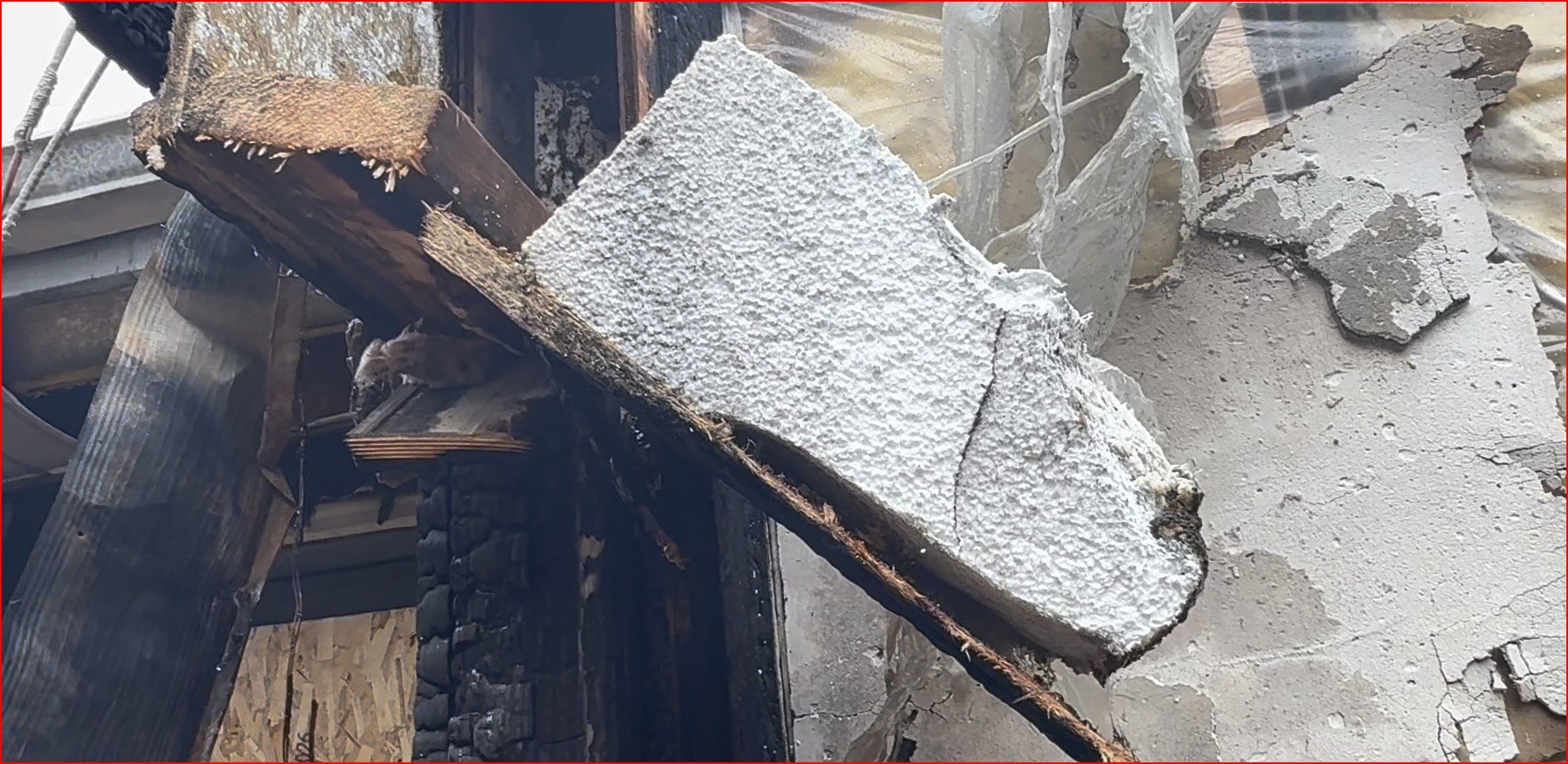
EPS Melt Back
What this means practically: if the gypsum thermal barrier on the interior of a SIP wall is intact and properly installed, the foam core is effectively shielded from heat long enough for occupants to exit and for fire suppression to respond. The foam never has a chance to become the problem.
This is exactly why the building code requires a thermal barrier. It's not a workaround or a patch -- it's the engineered solution.
The takeaway: EPS combustibility is managed through assembly design. The gypsum or an approved thermal barrier is not optional.
What the Building Code Actually Requires
Foam plastics are only permitted in residential construction when protected by a thermal barrier. For SIP walls, that almost always means:
1/2-inch gypsum board on the interior face
Installed continuously, with no gaps
Providing a minimum 15-minute fire-resistance rating
SIP manufacturers test their assemblies to two primary ASTM standards:
ASTM E119 -- tests the fire resistance of building assemblies as a whole
ASTM E84 -- tests surface burning characteristics of individual materials
Both tests produce the data that goes into a third-party authored compliance report like an ICC-ES evaluation report. Those reports are publicly available and document exactly what a manufacturer's panels are approved for, under what conditions, and with what installation requirements.
Enercept, for example, publishes their ICC-ES evaluation report (ESR-4693) on their website. Any SIP manufacturer worth working with has an equivalent document. The SIPA SIP Manufacturing members all have a third-party listing report.
The takeaway: Code compliance for SIPs is not a gray area. The requirements are specific, the testing is standardized, and the documentation is publicly accessible.
Why Gypsum? The Science Behind the Thermal Barrier
Most people know the rule -- SIP walls require gypsum on the interior face. Fewer people know why gypsum specifically, and why that matters.
It's not just about thickness. Gypsum does something most building materials can't: it fights fire with chemistry.
Gypsum board contains water that is chemically bound inside its molecular structure -- not liquid water you can see or feel, but water locked into the material itself at a molecular level. When gypsum is exposed to heat, it releases that bound water as steam. That process absorbs an enormous amount of heat energy acting like a built-in air conditioner that delays heat transfer and keeps the surface behind the gypsum significantly cooler for an extended period of time.
That's what creates the 15-minute thermal barrier rating. It's not just a physical shield sitting between the fire and the foam. It's an active chemical process that consumes heat before that heat can reach the EPS core.
Even after complete calcination, when all the water has been released, the gypsum board continues to act as a heat-insulating barrier. Essentially, the board sacrifices itself to prevent the passage of heat and flame and does so in a sequential manner working back from the heat source. At that point, the material has done its job -- it has bought time. This is exactly why installation quality is non-negotiable. Gaps in the gypsum, missing sections at corners, or improperly taped joints all reduce the total water available to absorb heat. A compromised gypsum installation doesn't just look wrong -- it physically shortens the time the assembly can hold.
This is also why the code specifies continuous installation. Every inch of gypsum on that wall is contributing to the thermal delay. Treat it like the structural component it is.
Why SIPs Don't Have the "Chimney Effect" Problem
This is one of the most important fire performance differences between SIPs and stick framing, and it's often overlooked.
In conventional wood-frame construction, walls and floor assemblies contain open cavities between studs and joists. When a fire starts, those cavities act like chimneys -- they channel air and allow flames to travel vertically through a wall much faster than the surface materials alone would burn.
SIPs eliminate this pathway entirely.
There are no open cavities. The foam core is continuous from one face to the other. The assembly is airtight. There is nowhere for fire to race through.
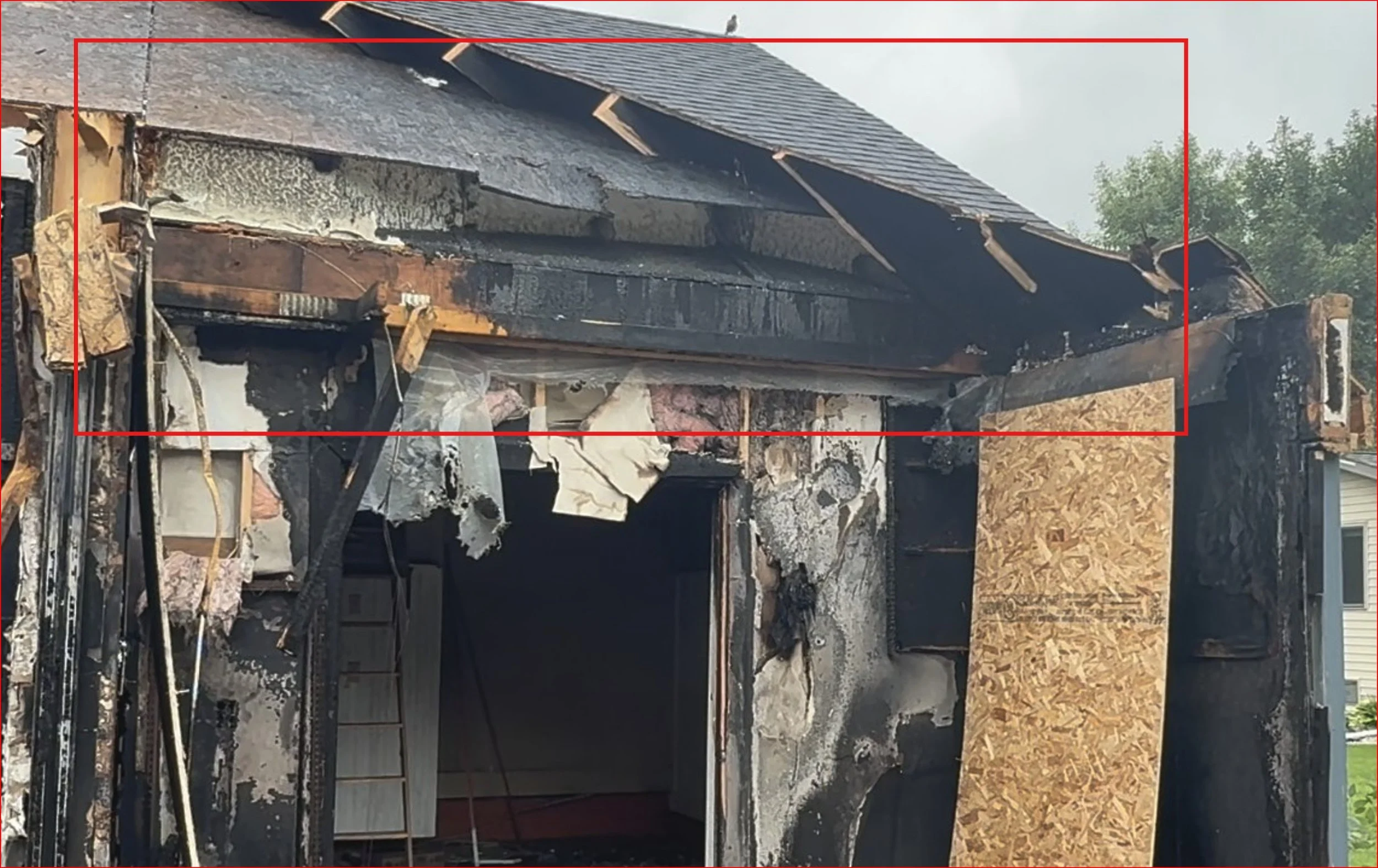
SIP roof panels with melted EPS core and no chase for the fire to travel in (chimney effect).
Real-world evidence backs this up. Enercept documented a residential fire in which the stick-framed roof section collapsed while the SIP walls remained standing. Their explanation aligns with the physics: without stud-bay air channels, vertical fire spread slows dramatically.
The takeaway: The same feature that makes SIPs energy-efficient -- the continuous, airtight core -- also reduces one of the most dangerous fire behaviors in traditional framing.
Fire performance: SIPs vs. stick framing
← Swipe to view full table
| Fire performance factor | SIPs | Stick framing |
|---|---|---|
| Open stud cavities | None Continuous foam core, no air channels |
Present Cavities between every stud bay |
| Chimney effect risk | Eliminated No pathway for vertical fire spread |
Present Stud bays channel heat and flame upward |
| Thermal barrier required | Yes -- gypsum ½ in. gypsum board, interior face |
Yes -- gypsum Same requirement, same material |
| Structural facing behavior | OSB forms a protective char layer; slows heat transfer | Dimensional lumber also chars; similar behavior |
| Core / insulation behavior | EPS shrinks from heat; treated with flame retardant; does not drip | Batt insulation (fiberglass or mineral wool) is typically non-combustible |
| Airtightness advantage | Yes Continuous assembly limits oxygen supply to fire |
No Drafty framing cavities feed combustion |
| Assembly fire-resistance testing | ASTM E119 and ASTM E84; ICC-ES evaluation report required | ASTM E119; code prescriptive compliance path |
| Real-world documented performance | SIP walls have remained standing after adjacent stick-framed sections collapsed (Enercept case study) | Standard residential fire performance; well-documented over decades |
What This Looks Like in a Real Fire
Let's put it together in plain terms.
In a fire scenario where a properly installed SIP home is involved:
The fire encounters the interior gypsum surface first
The gypsum delays heat transfer for at least 15 minutes -- enough time for evacuation
The foam core, protected by the gypsum, does not ignite immediately
Even as heat increases, the EPS shrinks rather than spreading flame
The continuous, airtight wall and roof assembly slows vertical fire spread
The OSB skins eventually char, but that char layer slows further heat penetration
This is predictable, engineered behavior. It's not luck. It's the result of code-tested, ASTM-verified assembly design.
Where things go wrong is when installation is cut short. Gypsum that isn't continuous, panels that aren't properly sealed, or electrical penetrations that aren't correctly detailed can compromise the entire thermal barrier. That's why correct installation isn't just about structural performance -- it directly affects fire safety.
The Bottom Line
SIPs are combustible. So is almost every other material in a wood-framed home.
What makes a building safe in a fire is not whether its materials are combustible -- it's whether the assembly is properly designed, properly tested, and properly installed. On all three of those measures, SIPs hold up well.
The code requirements are clear. The testing standards are established. The performance data exists. When a SIP system is installed correctly, with the required thermal barriers and proper detailing, it behaves predictably in fire -- and in some important ways, better than stick framing.
Have a SIP Project That Needs an Independent Review?
Fire performance questions, code compliance concerns, or structural details that don't quite add up -- these are exactly the situations where an independent engineering review pays for itself. Joe Pasma, PE has 40+ years working directly in SIP engineering, manufacturing, and forensic analysis, including cases where fire performance was the central issue.
Contact Joe Pasma, PE to talk through what your project needs →
Frequently Asked Questions
Are SIPs combustible?
Yes. Both the OSB skins and the foam core are combustible materials. Fire safety is achieved at the assembly level, primarily through continuous gypsum thermal barriers and airtight construction.
Are SIPs safe in a fire?
Yes -- when installed correctly. SIP assemblies are tested to ASTM standards and must meet specific building code requirements for fire resistance. Proper installation of the required thermal barrier is essential.
Does OSB burn?
Yes, OSB is a wood product and will burn. But it forms a protective char layer when exposed to fire, which slows heat transfer and contributes to predictable, engineered fire performance.
Does EPS foam in SIPs burn?
EPS is combustible, but construction-grade EPS is treated with a flame retardant and will not sustain an open flame without a continuous external ignition source. A continuous gypsum thermal barrier is required to protect the foam core in any SIP assembly.
What keeps the foam from igniting in a SIP wall?
A continuously installed 1/2-inch gypsum board on the interior face of the wall. This thermal barrier delays heat transfer for at least 15 minutes, which meets the code-required standard. The foam behind it is also treated with a flame retardant.
Do SIPs burn faster than stick framing?
No -- and in some ways they burn more slowly. SIPs eliminate the open stud cavities found in stick framing, which removes the chimney effect that allows fire to spread rapidly through a conventional wall. Documented fire incidents show SIP walls remaining intact after adjacent stick-framed sections have failed.
Do SIPs meet building code fire requirements?
Yes. SIP manufacturers are required to have their assemblies tested to ASTM standards and must publish third-party compliance reports like an ICC-ES evaluation report documenting compliance with thermal barrier, ignition barrier, and fire-resistance requirements. These reports are publicly available. The SIPA SIP Manufacturing members all have a third-party listing report.
What happens if the gypsum is not installed correctly?
The thermal barrier is the primary fire safety mechanism for foam-core SIP panels. Gaps, missing sections, or improper installation of the gypsum can compromise the entire fire-resistance rating of the wall assembly. Correct installation is not optional -- it is a code requirement.
About the Author
Joe Pasma, PE is a licensed professional engineer and the founder of PGS Consulting LLC in White Bear Lake, Minnesota. He has spent more than 40 years working directly in SIP engineering, manufacturing operations, installation oversight, and forensic analysis. Joe has worked with SIP manufacturers, builders, designers, and legal teams across the country -- including cases involving fire performance, building failures, and code compliance disputes.
He is one of a small number of engineers in the United States with deep, hands-on experience across the full SIP lifecycle. Learn more about Joe Pasma, PE.