

Are SIPs Hard to Wire or Plumb? What Electricians and Plumbers Need to Know
Electricians and plumbers hear "SIPs" and assume complicated. The reality is simpler than most expect. This guide breaks down exactly how wiring and plumbing work in SIP construction -- including how electrical chases eliminate foam drilling, why plumbing belongs on interior walls, and what a prepared GC does before the first crew shows up.
By Joe Pasma, PE | PGS Consulting LLC | SIP Engineering & Consulting | Published June 24, 2026
Key Takeaways
SIPs are not hard to wire or plumb. They require a different workflow, not a harder one.
Electricians push Romex through pre-cut chases -- no foam drilling, no special tools, no new certifications required.
Plumbing belongs on interior walls in SIP construction. This is best practice in any high-performance building, not a SIP-specific limitation.
Upfront planning replaces on-the-fly improvisation. That shift makes the job faster and more predictable, not harder.
After one SIP project, most electricians and plumbers say the same thing: "That was easier than I expected."
One of the most common objections we hear from builders, electricians, and plumbers considering Structural Insulated Panel (SIP) construction comes down to a single question… "Aren't SIPs hard to wire or plumb?"
It is a fair question. Electricians and plumbers have spent years working in open stud bays -- drilling wherever they need to, improvising on the fly, and working from decades of muscle memory. SIPs look different. And different feels hard until you understand how the system works.
Here is the short answer: SIPs are not hard to wire or plumb. They are just different. Once you see how the workflow actually runs, the concern usually disappears fast.
This article breaks down exactly how wiring and plumbing work in SIP construction, what trades actually need to do their job well, and why most electricians and plumbers prefer SIPs after their first project.
How Wiring Works in SIPs
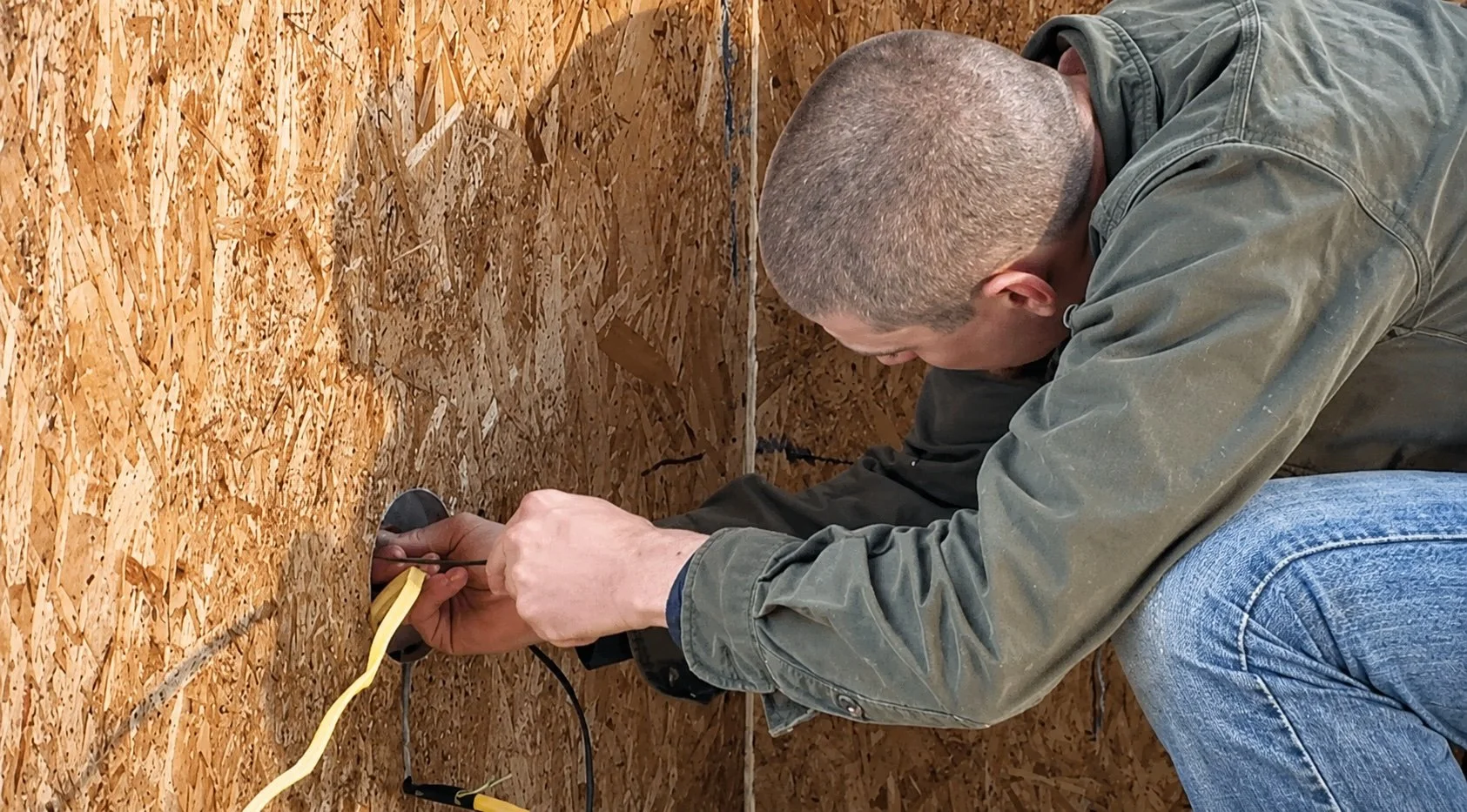
SIP panels come from the factory with electrical chases already built in. These are pre-cut channels running horizontally and vertically, typically 4’ on center, through the foam core, positioned at standard heights, typically switch and outlet heights (approximately 14” and 44” above the floor), and mapped on the shop drawings. Electricians do not fish wires through foam. They push Romex through the chases that are already there.
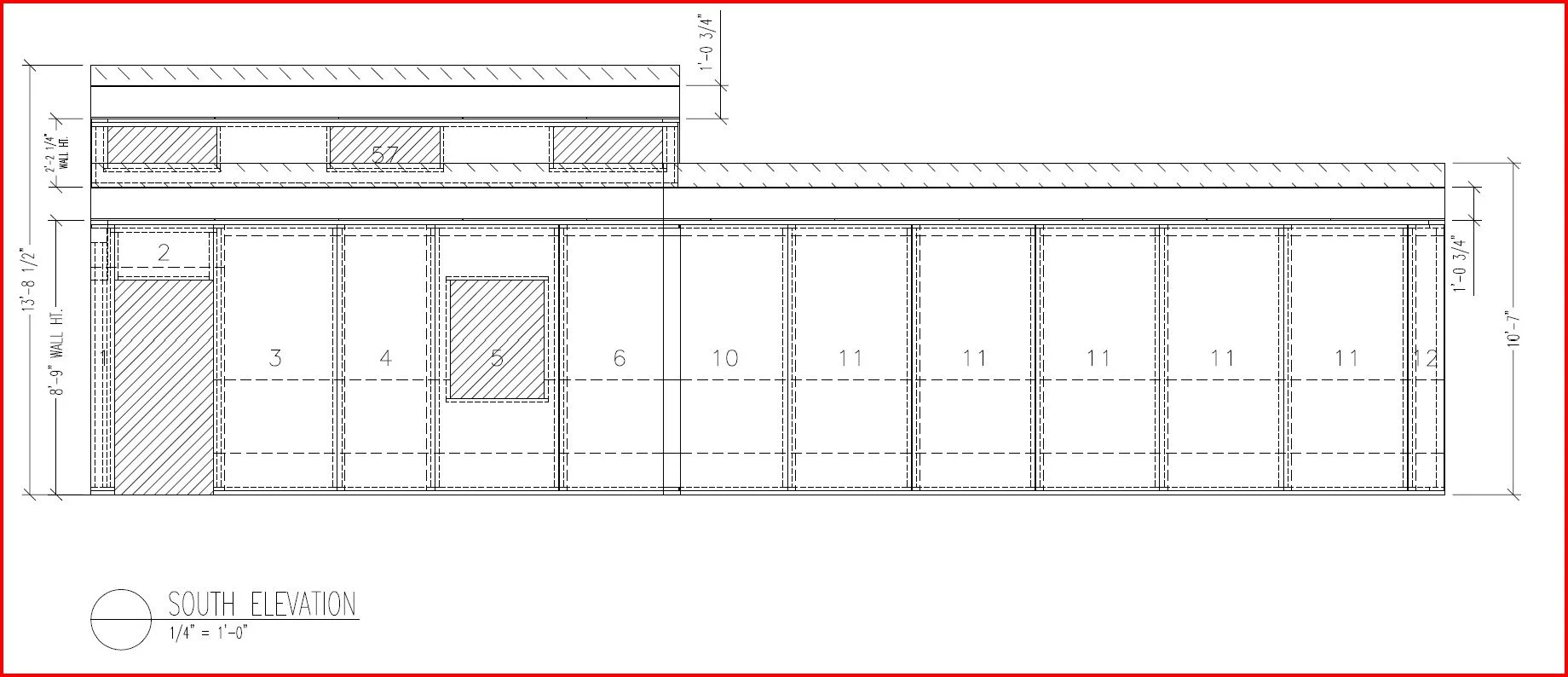
Longer dashed lines represent horizontal and vertical electrical chases. Short dashed lines are recessed edges for lumber and splines.
Here is what the actual electrical workflow looks like on a SIP project:
Review the chase map on the shop drawings -- chase locations are already marked
Drill the sill plate at vertical chase locations - (SIP installation contractor does this)
Drill the top plate at vertical chase locations - (SIP installation contractor does this)
Cut in switch and outlet boxes
Push Romex through the pre-cut chases
Install electrical boxes at required locations - remodeler boxes work well
Pull circuits as usual
Seal the boxes and any unused chases -- this is required to maintain the air barrier and meet fire safety requirements
That is the whole workflow. No special tools. No foam drilling. No exotic techniques. No guessing about where wires can go.
The main shift for electricians is that routing decisions are made upfront, on the drawings, rather than on the fly in the field. For most trades, that shift feels like less work -- not more.
Electricians who have done one SIP project almost always say the same thing: "This is easier than drilling studs all day." The work moves from improvisation to execution. Once you have a clean chase map, the job runs predictably.
Why SIP Wiring Is Faster Than Stick Framing
Electricians working in stick-framed walls deal with a long list of tasks beyond just pulling wire: drilling through 50 or more studs, fire-stopping, fighting back blown insulation, air-sealing after the fact, and managing thermal bypasses at penetrations.
SIPs eliminate most of that list.
On a SIP project, there are no studs to drill through, no fire-stopping after wiring, no insulation blocking access, and no air-sealing required after the fact. The envelope is already airtight by design. The only requirements are sealing the electrical boxes and any unused chases -- steps that take minutes, not hours.
The result is a cleaner, faster electrical scope once the workflow is understood. After one project, most electricians are faster on SIPs than on comparable stick-frame builds. For a broader look at how SIPs differ structurally from stick framing and why trade coordination matters, the SIPs vs. stick framing guide covers the full comparison.
How Plumbing Works in SIPs
This is the part that creates the most confusion -- and the most unnecessary concern.
You should not run plumbing in exterior SIP walls.
But here is the thing: you should not run plumbing in exterior stick-framed walls either. Not if you care about freeze protection, condensation control, air sealing, or long-term durability. Running supply lines or drain stacks through an exterior wall is a problem in any high-performance building system. SIPs just make the rule more obvious.
Plumbing in SIP construction is straightforward:
Run all supply and drain lines on interior walls
Use soffits, chases, or dropped ceilings for vertical stacks
Coordinate penetration locations before the job starts -- not during rough-in
If plumbing must be located on exterior walls, furring out a stick framed wall works well
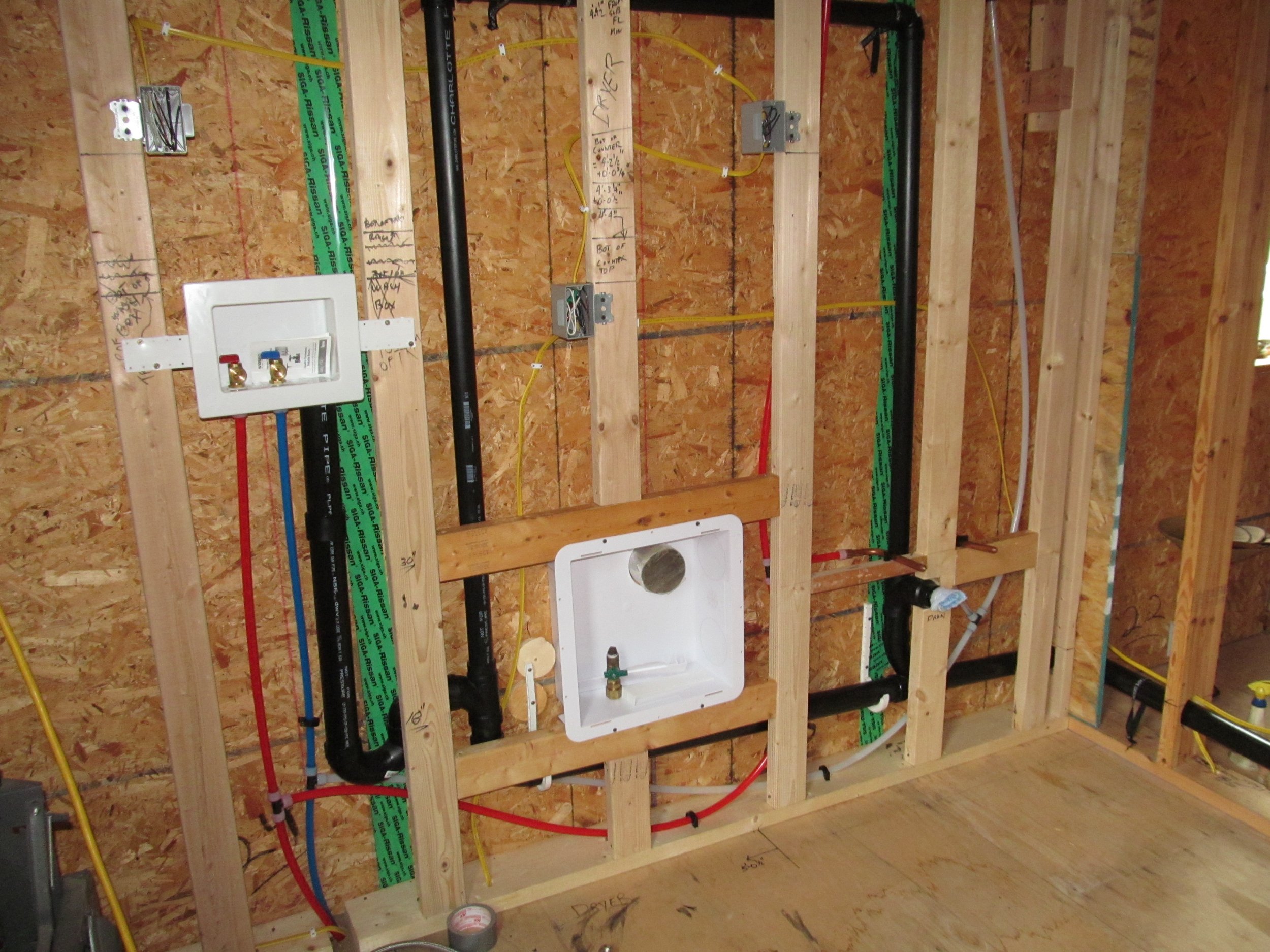
Furred out stick framed plumbing wall next to exterior SIP wall.
When the coordination happens upfront, plumbers work exactly as they would on any other project. The scope does not change. The tools do not change. The only difference is that the planning happens on paper before the first pipe goes in, rather than on the fly in the field.
This approach also produces a better building. Interior plumbing means less risk of freezing, less condensation risk in the wall assembly, and a cleaner, more durable envelope long-term.
Wiring and Plumbing Comparison: SIPs vs. Stick Framing
The table below shows where the actual workflow differences land for each trade.
← Swipe to view full table →
| Category | Stick Framing | SIP Construction |
|---|---|---|
| Wiring Pathways | Drill anywhere through studs | Use pre-cut chases -- locations mapped on drawings |
| Wire Routing | Drill studs, fire-stop, insulate | Push Romex through chases |
| Electrical Boxes | Standard install | Standard install, then seal the box |
| Air Sealing | Done after wiring, as a separate step | Built into the panel -- seal boxes and unused chases only |
| Plumbing Location | Often runs in exterior walls | Interior walls only or furred out exterior walls |
| Planning Required | Minimal -- improvise in the field | Required upfront -- saves time and rework later |
| Labor Time | Higher -- more drilling, more sealing steps | Lower after the first project |
| Risk Profile | More penetrations, more potential for leakage | Fewer penetrations, more predictable performance |
| Trade Training Needed | None -- familiar system | One project, or 1-2 hours of SIP basics |
SIPs compress the work. They do not add to it.
What Reduces Risk in SIP Construction
When wiring and plumbing are done correctly in SIPs, the building performs with fewer long-term problems than most comparable stick-frame structures. That is not a marketing claim -- it is the result of fewer penetrations, less air leakage, and a more controlled building envelope.
Correctly executed SIP construction reduces:
Envelope penetrations (fewer holes in the thermal boundary)
Air leakage at wiring and plumbing locations
Condensation risk in wall and roof assemblies
Mold potential from moisture accumulation
Thermal bridging at framing locations
Long-term maintenance from callbacks and repairs
None of that is "no risk." Construction always involves risk. But the risk profile on a well-coordinated SIP project is more predictable and more manageable than most builders expect going in. For a detailed breakdown of where SIP problems actually come from -- and why execution, not the material, is almost always the root cause -- the SIP problems and failures guide is worth reading before the job starts.
Training Resources for Electricians Working with SIPs
The Structural Insulated Panel Association (SIPA) and various SIP manufacturers have produced practical training videos specifically for electricians and other trades working on SIP projects. These are short, field-focused, and cover the core workflow clearly. The videos can be found on the manufacturers websites and YouTube channels.
DIY’ers have found SIPs easy to wire and have published videos on YouTube showing some of their work.
SIPA & DIY’er Electrician How To Videos
Rough-In Electrical Wiring on a SIP Home
SIP Electrical Chase Demo
Technical Reference Documents
SIPA Builder Best Practices documents BP-9 (Electrical) and BP-10 (Mechanical) cover chase use, box installation, penetration sealing, sill and top plate drilling, and manufacturer coordination in detail.
These resources eliminate the majority of trade uncertainty before anyone arrives on site. A prepared GC shares them during the pre-construction coordination meeting -- not the morning of rough-in.
Why Trades Think SIPs Are Hard (And Why They're Usually Wrong)
Electricians and plumbers are not resistant to SIPs. They are resistant to risk -- and unfamiliar systems feel risky until the workflow is clear.
Stick framing offers open cavities, unlimited drilling access, and decades of familiar muscle memory. SIPs offer pre-cut chases, sealing requirements, and a workflow that is front-loaded with coordination instead of back-loaded with improvisation.
Different feels hard. Until you do it once.
The friction that shows up on SIP jobs -- hesitation from trades, questions mid-project, occasional missteps -- almost always comes from one source: missing information before the job started. When the chase map is clear, the sequencing is defined, the "do not cut" zones are marked, and there is someone to call if something looks off, the job runs.
The SIP installation guide covers coordination and sequencing in detail. The SIP FAQ addresses the most common jobsite questions across all trades.
In 40+ years of SIP work, I have never seen a trade fail because SIPs were too hard. What I have seen -- more times than I can count -- is a trade get put in an impossible position because the coordination was not done ahead of time. When the prep work is there, the job moves. When it is not, everyone on the site pays for it.
-- Joe Pasma, PEThe Bottom Line
SIPs are not hard to wire or plumb. They require a different workflow -- one that is front-loaded with planning instead of improvisation. That shift is an adjustment. It is not a barrier.
Electricians who understand the chase system work faster on SIPs than on stick frame. Plumbers who coordinate penetrations upfront work exactly as they do on any interior-wall scope. Both trades walk off their first SIP project more confident than when they walked on.
The concern about wiring and plumbing in SIPs is understandable. But after 40 years of SIP engineering, manufacturing, and field oversight, the pattern is clear: when the coordination happens before the job starts, the trades do not struggle. They execute.
If you are planning a SIP project and want support setting up the coordination and documentation that makes every trade's job straightforward from day one, PGS Consulting LLC can help.
Related Resources
Frequently Asked Questions: Wiring and Plumbing SIPs
Do electricians need special tools to wire SIPs?
No. Standard tools work. The only difference from stick framing is drilling the sill plate and top plate at the chase locations marked on the shop drawings. This is typically taken care of by the SIP installers. No new equipment, no certifications, no manufacturer training required.
Do electricians need to fish wires through foam?
No. SIPs come from the factory with pre-cut electrical chases. Electricians push Romex through the existing chases -- no foam drilling required. The routing is already mapped on the shop drawings before the crew arrives.
Do electrical boxes need to be sealed in SIPs?
Yes. Electrical boxes and any unused chases must be sealed to maintain the air barrier and meet fire safety code requirements. This is a short step, not a complicated one -- but it is not optional.
Can plumbing go in exterior SIP walls?
No -- and it should not go in exterior stick-framed walls either. Plumbing belongs on interior walls in any high-performance building system. SIPs make that best practice a firm requirement. Coordinate penetration locations early and the plumbing scope runs exactly as it would on any other project.
Is SIP wiring faster than stick framing?
Usually yes. No stud drilling, no fire-stopping, no insulation blocking access. Once the workflow is understood, most electricians work faster on SIPs than on comparable stick-frame projects. The learning curve is short -- one project is typically enough.
Do SIPs require special trade training?
Only basic orientation to the workflow -- not certifications, not manufacturer training. The SIP manufacturer’s and SIPA's training videos and best practice documents cover everything most electricians and plumbers need before their first SIP project. A short pre-construction meeting with a prepared GC handles the rest.
What happens if a sub cuts in the wrong place?
SIPs can be repaired, but prevention is far better than repair. Clear "do not cut" zones, a labeled chase map, and a defined escalation path -- someone to call before cutting anything that looks wrong -- prevent the vast majority of field errors. See the SIP problems and failures guide for what the most common missteps look like and how they are avoided.
Who coordinates plumbing and electrical on a SIP project?
The GC sets expectations and manages trade sequencing. The SIP manufacturer provides the chase map and shop drawings. PGS Consulting LLC provides project-specific coordination documentation, trade-ready workflows, and field-ready checklists when additional support is needed. Learn more on the PGS Consulting services.
Have Questions About SIP Wiring, Plumbing, or Trade Coordination?
PGS Consulting LLC helps builders and GCs set up SIP jobs for clean execution -- with project-specific documentation and trade coordination support before the first crew arrives.
Talk to Joe Pasma, PE