

Can Structural Insulated Panels (SIPs) Be Used in Moist or Cold Climates?
Structural Insulated Panel (SIP) building under construction, showing panelized wall and roof assembly during installation.
Editor’s Note: This article is adapted from an “Ask the Expert” column originally written by Joe Pasma, PE, and published in Facility Magazine in 2013. The content has been updated to reflect current building practices and industry context.
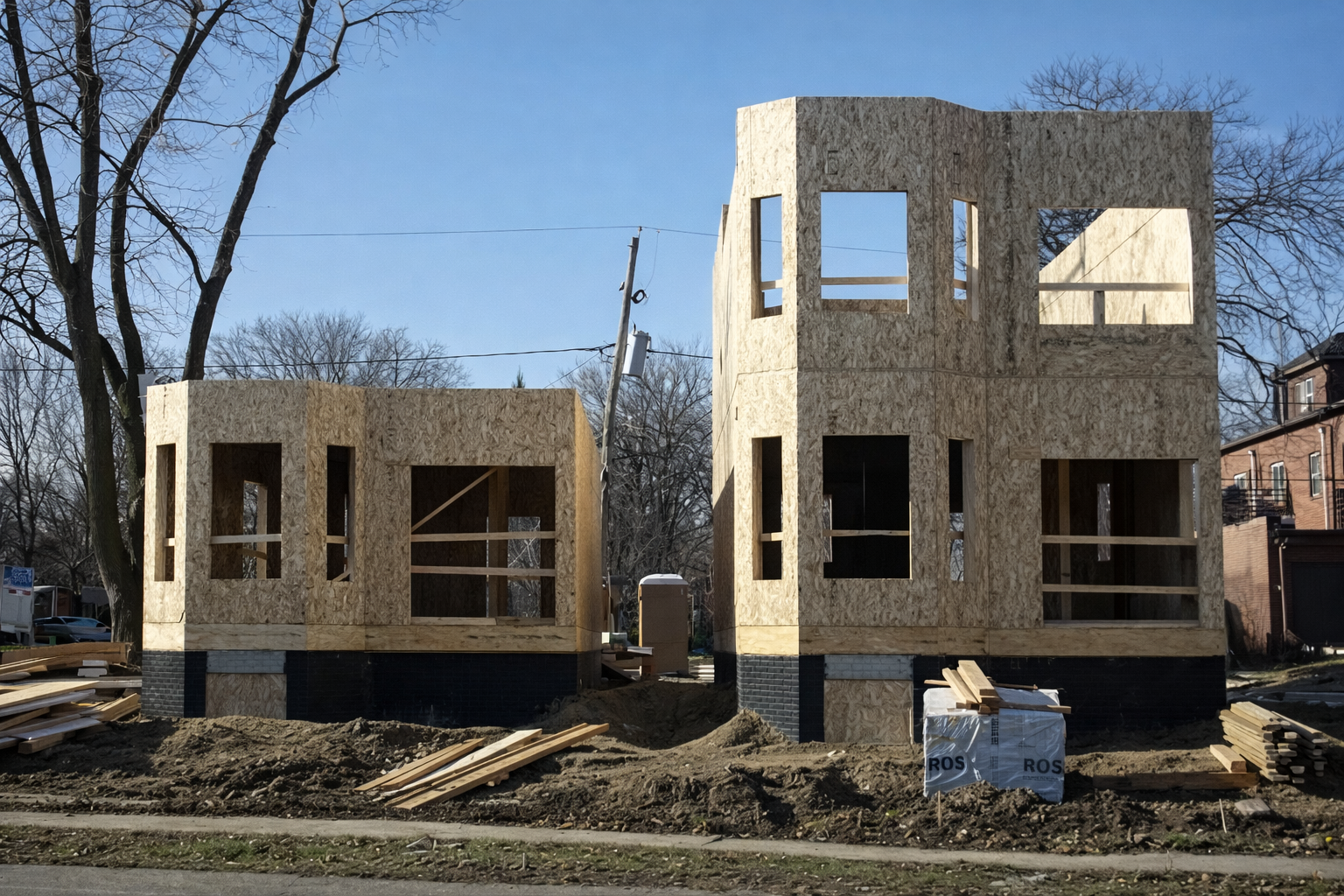
Structural Insulated Panel (SIP) building under construction, showing panelized wall assembly during installation.
One of the most common questions people ask about Structural Insulated Panels is whether they can be used in wet, humid, or cold climates.
The real question behind that concern is much simpler: Can you safely build with wood in these climates?
The answer has always been yes.
Wood-framed buildings exist everywhere from the Louisiana Gulf Coast to communities above the Arctic Circle in Alaska. Structural Insulated Panels use the same fundamental materials, but combine them into a high-performance panelized building system.
When properly designed and installed, SIPs perform extremely well in demanding climates.
SIP Construction in Challenging Climates
Across North America, there are many examples of successful SIP buildings located in cold, wet, and humid environments.
Examples include:
• George Morgan High School in Kalskag, Alaska, where the region receives heavy snowfall and regularly experiences sub-zero temperatures
• Cody Cattle Company restaurant in northern Wyoming near Yellowstone National Park
• Little Big Horn College Health and Wellness Center on the plains of Montana
• Finn Hill Junior High School in Kirkland, Washington, an area that receives nearly 40 inches of rain annually
• Portland Community College Newberg Center in Oregon, recognized as an AIA Committee on the Environment Top Ten Green Project
These projects demonstrate that SIP construction can perform reliably in climates where moisture control and durability are critical.
Why People Question SIPs in Moist Climates
The concern usually centers around the oriented strand board (OSB) skins used in SIP panels.
Because OSB is a wood-based material, some assume it may be vulnerable to moisture.
In reality, SIP panels are manufactured using OSB with an Exposure 1 rating under APA standards. This rating means the adhesive bonds are designed to withstand temporary exposure to moisture during construction before the building is fully enclosed.
This is the same type of rating used in many conventional wood framing materials.
Like any building system, the long-term durability of SIPs depends on proper building envelope design and installation practices.
Moisture Management Still Matters
Whether a building is framed with studs or panels, controlling water and air movement is essential.
The International Building Code requires several components that protect the building envelope from moisture intrusion:
• Proper flashing at windows, doors, and penetrations
• A weather-resistant barrier to protect the wall assembly
• Drainage pathways that allow water to exit the wall system
These practices apply equally to SIP construction.
For SIP walls, builders typically use synthetic weather barriers or building wraps as the weather-resistant barrier.
For roof assemblies, breathable roofing underlayments often replace traditional felt paper. These materials allow water vapor to escape while keeping bulk water out, similar to how a high-quality rain jacket works.
This can be particularly beneficial if SIP roof panels experience temporary exposure during construction.
Read more about the relationship between air control, moisture management, and building envelope performance in an article published in The Construction Specifier.
Air Sealing Is a Major Advantage of SIPs
One reason SIPs perform so well in demanding climates is their airtight construction.
The panels contain continuous insulation and fewer joints than conventional framing systems. When the panel joints are properly sealed with mastics and tapes, the building envelope becomes extremely tight.
This helps prevent warm, humid air from entering wall and roof cavities where condensation can occur.
In many climates, building codes may also require a vapor retarder depending on the wall assembly and local conditions. Builders should always confirm requirements with the local building official and SIP manufacturer.
A Quick Word for Builders Evaluating SIP Construction
SIPs are sometimes viewed as a futuristic or unfamiliar technology. In reality, the system has been studied extensively and used successfully for decades.
The primary reasons builders choose SIPs typically come down to two practical benefits:
Energy efficiency and construction speed.
Because SIPs provide continuous insulation and exceptional airtightness, they can significantly reduce heating and cooling energy use. Studies from the U.S. Department of Energy have shown SIP buildings can dramatically outperform conventional framing in air leakage and thermal performance.
SIPs also streamline construction. Panels arrive pre-cut and labeled, allowing crews to assemble walls and roofs much faster than traditional framing.
This can be especially valuable in an industry facing ongoing labor shortages.
Have questions about using SIPs on a project?
If you have questions about SIP construction or panelized building systems, feel free to reach out. Joe is always glad to help teams think through the technical considerations that affect project performance.
The Bottom Line
Structural Insulated Panels can perform very well in wet, cold, or humid climates when the building envelope is properly designed and installed.
The same principles that protect conventional wood framing also apply to SIP construction. Proper flashing, weather barriers, drainage, and air sealing ensure the building remains durable and efficient over the long term.
When these practices are followed, SIPs offer a strong combination of durability, energy efficiency, and construction speed that continues to attract builders, architects, and facility owners across North America.
Frequently Asked Questions About SIPs in Moist Climates
Can Structural Insulated Panels be used in humid climates?
Yes. SIP buildings perform well in humid climates when the building envelope is properly designed and installed. Proper flashing, weather barriers, and sealed panel joints prevent moisture intrusion and air leakage.
Do SIP panels absorb water?
SIP panels use oriented strand board (OSB) skins that are manufactured with an Exposure 1 rating under APA standards. This rating allows for temporary exposure to moisture during construction before the building is fully enclosed.
Like any wood-based building material, long-term durability depends on proper moisture management in the building envelope.
Are SIP roofs suitable for rainy climates?
Yes. SIP roof systems are commonly used in regions with heavy rainfall or snow. Breathable roofing underlayments help protect the roof assembly while allowing water vapor to escape.
Are SIP buildings more airtight than traditional framing?
Yes. SIP panels have continuous insulation and fewer joints than conventional framing systems. When the panel joints are properly sealed, SIP structures can achieve very high levels of airtightness, which improves energy efficiency and building durability.
Do SIP buildings work in cold climates?
SIPs are widely used in cold climates because they provide excellent insulation and airtightness. Many buildings in northern regions of North America use SIP construction to reduce heating energy consumption and improve indoor comfort.
Have Questions About SIP Construction?
If you are exploring Structural Insulated Panels or evaluating panelized construction for a project, Joe Pasma, PE is always glad to help. With more than 40 years of experience across engineering, manufacturing, installation, and forensic investigation, Joe provides practical guidance to help project teams avoid costly mistakes and build better-performing structures.
About the Author
Joe Pasma, PE, is a licensed professional engineer with more than 40 years of experience working with Structural Insulated Panels and advanced building systems. His background spans structural engineering, manufacturing systems, installation oversight, and forensic investigation.
Through PGS Consulting LLC, Joe advises manufacturers, builders, architects, building owners, and project teams on the technical and operational challenges associated with high-performance building systems.