
SIP Fire Myths: What's True and What's Not
Think SIPs burn like foam cups? Real forensic evidence from a house fire investigation shows why that's not how it actually works.
Written By Joe Pasma, PE | PGS Consulting LLC, Licensed Professional Engineer | 40+ Years in SIP Engineering, Manufacturing, and Forensic Analysis | Published September 11, 2026, Updated September 13, 2026
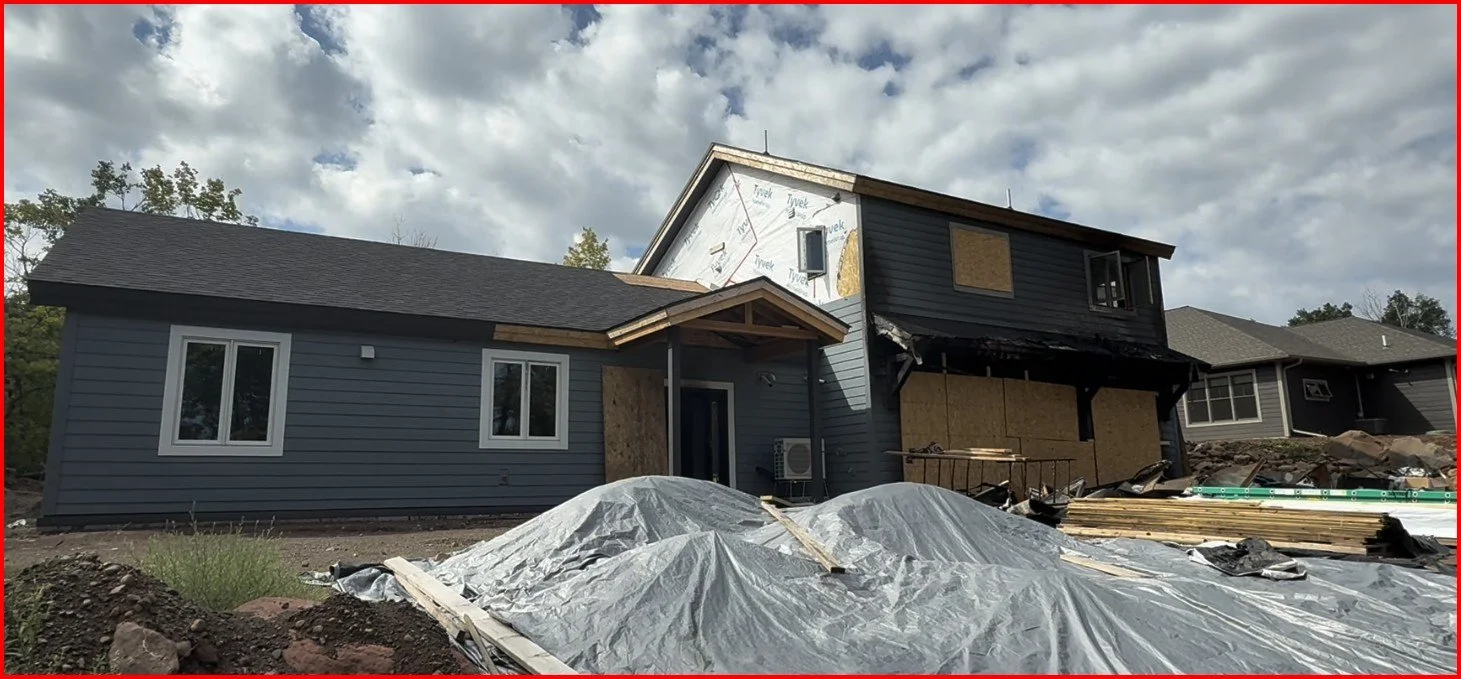
House Fire Involving SIP Roof and Wall Panels
If you've looked into building with structural insulated panels (SIPs), you've probably run into a scary-sounding claim: "they're basically foam and OSB, so they must burn like crazy." It's an understandable worry. It's also mostly based on speculation, not on what actually happens when a SIP building catches fire.
We recently investigated a real house fire involving SIP construction, took core samples from the walls and roof, and documented exactly what burned, what didn't, and why. That kind of hands-on forensic evidence is a lot more useful than speculation. Below we walk through the most common SIP fire myths and tell you what the evidence actually shows.
Key Takeaways
Yes, SIPs are combustible: the EPS foam core and the OSB skins can both burn. Nobody in the SIP industry claims otherwise.
But fire safety isn't decided by the material; it's decided by the whole system: the drywall, the finishes, and how carefully the seams were sealed matter more than what's inside the panel.
Real forensic evidence backs this up: in our fire investigation, SIP sections protected by drywall and finishes came through with no fire damage at all, even a few feet from areas that burned heavily.
The EPS foam doesn't drip or spread flame: it shrinks away from heat, similar to how ice retreats from a heat lamp, and it only ignites in the presence of a sustained, direct flame.
Solid panels don't hide fire the way stud walls can: there's no hollow cavity for smoke and flame to travel through unseen.
SIPs meet the same fire-code testing as standard framing: including ASTM E119 hourly fire-resistance testing and code required ignition barriers.
← Swipe to view full table →
| The Myth | The Reality |
|---|---|
| SIPs ignite instantly because they're made of EPS foam | The EPS foam is flame-retardant treated and code requires it to be covered by drywall; it doesn't ignite on contact |
| One flame touching a SIP means the whole panel fails | Only the area with sustained heat, direct flame is damaged; the rest of the panel stays intact |
| Smoke damage means the panel's strength is compromised | Smoke and soot are cosmetic; only sustained heat affects the panel's structural bond |
| Burning EPS foam drips and spreads fire | The EPS foam shrinks away from heat instead of melting into dripping, flaming liquid |
| Fire can hide and smolder inside SIP walls | SIPs are solid, so there's no hollow cavity for fire to travel through unseen |
| Any melted foam means the whole panel must be replaced | Replacement depends on whether the OSB-to-EPS foam bond failed, not on foam damage alone |
| SIPs can't be used where fire-rated walls are required | SIP assemblies are tested to ASTM E119 and documented in third party evaluation reports, same as standard framing |
Why This Confuses People: Material vs. Whole Assembly
Most of the fear around SIPs and fire comes from focusing on one ingredient: the EPS foam. But no SIP wall or roof panel is ever just EPS foam sitting exposed in a room. A SIP panel is a sandwich: an EPS foam core in the middle, wood panels (called OSB, or oriented strand board) glued to both sides, and then, once it's built into a house, a layer of drywall, siding, or another finish on top.
Fire cares less about what a panel is made of than what's protecting it and how well the whole assembly was put together. That's true whether you're talking about a SIP panel or a traditional stick-framed wall or roof. We cover the code and material side of this in more detail in our guide, Are SIPs Combustible? This article focuses on what actually happened when we put that question to the test in a real fire.
Myth 1: "SIPs Catch Fire Instantly Because They're Made of Foam"
Reality: The foam inside a SIP, called EPS (expanded polystyrene), has a flame-retardant additive built into it. That doesn't make it fireproof, but it does mean it won't keep burning on its own once the flame source is gone. When EPS gets hot, it melts and shrinks away rather than catching and spreading.
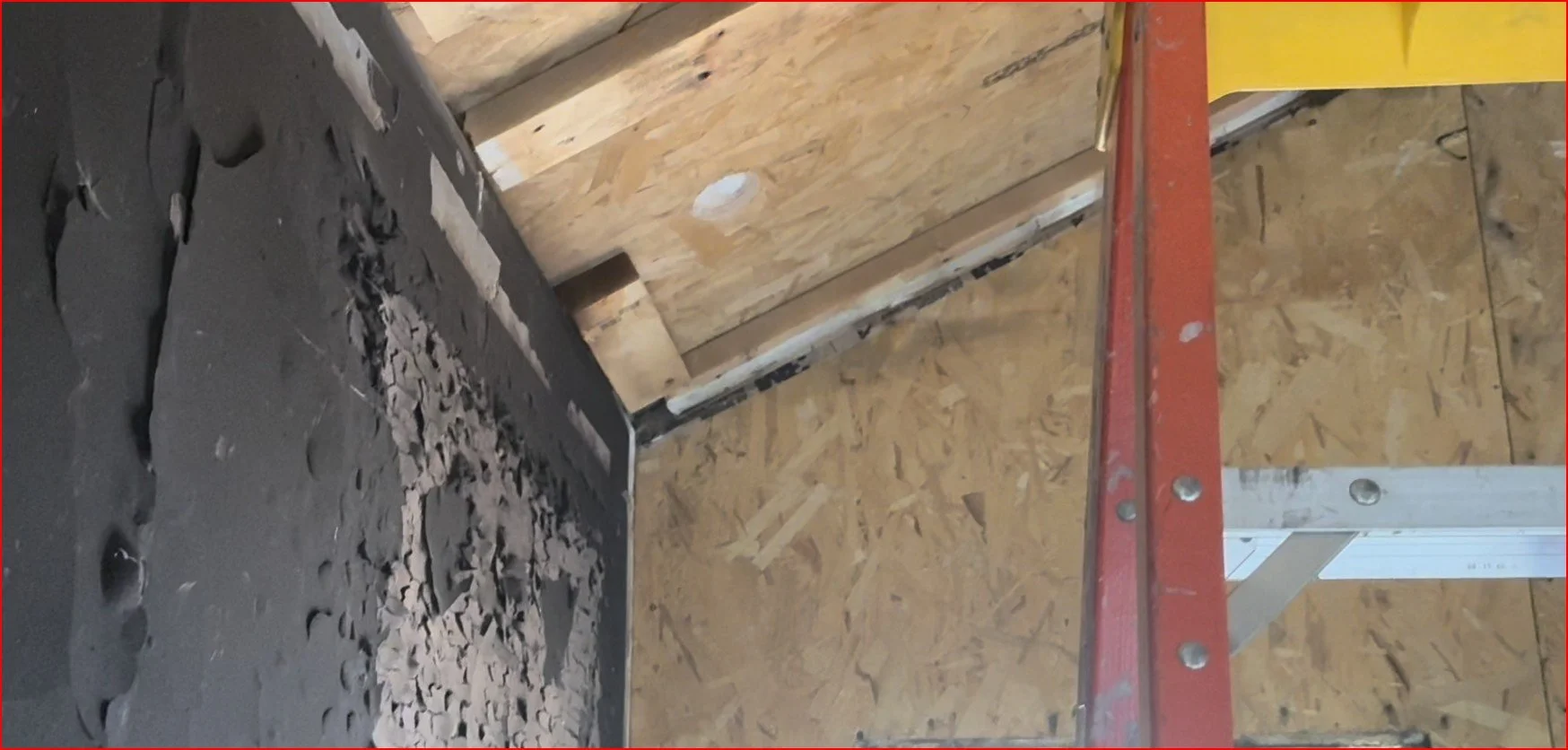
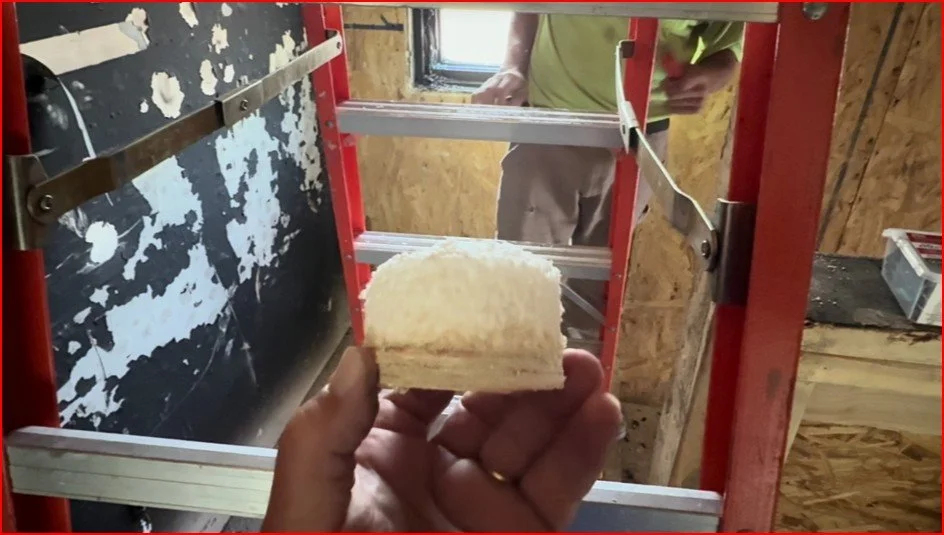
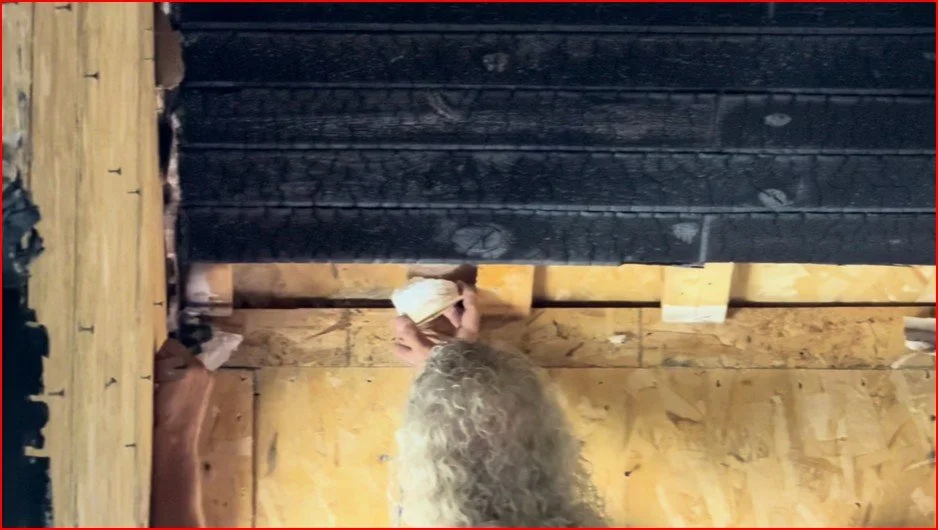
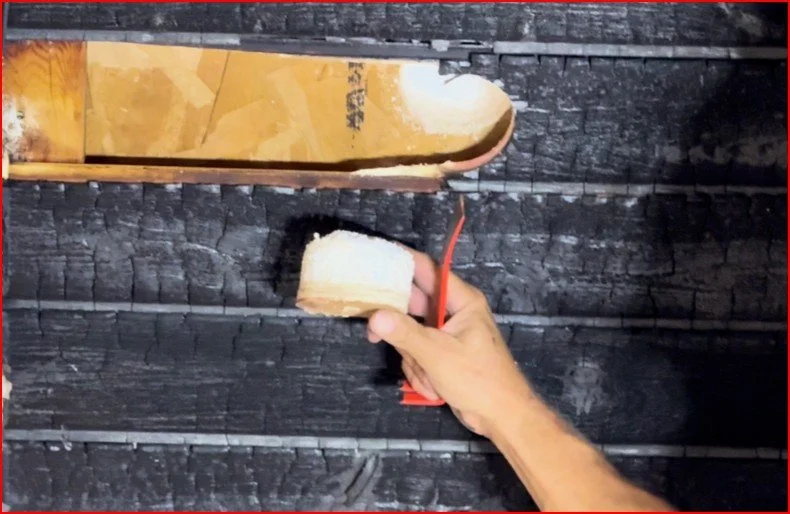
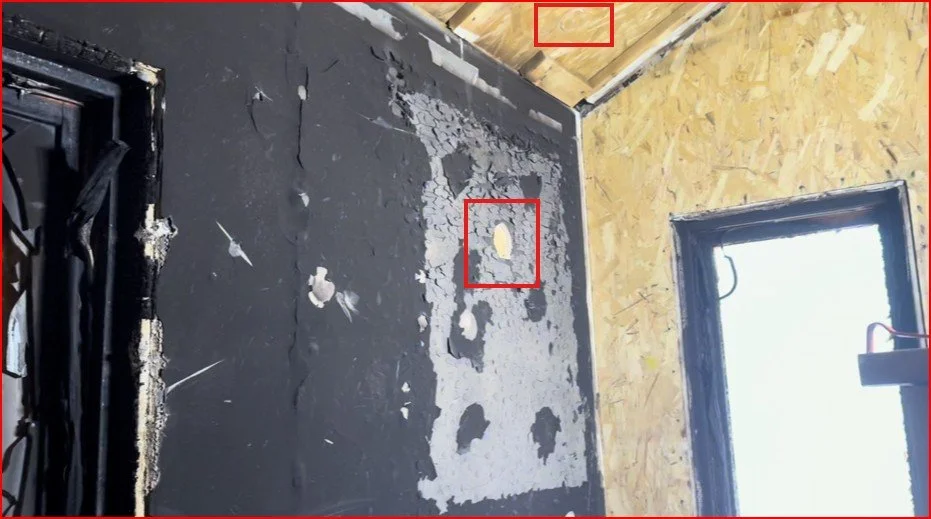
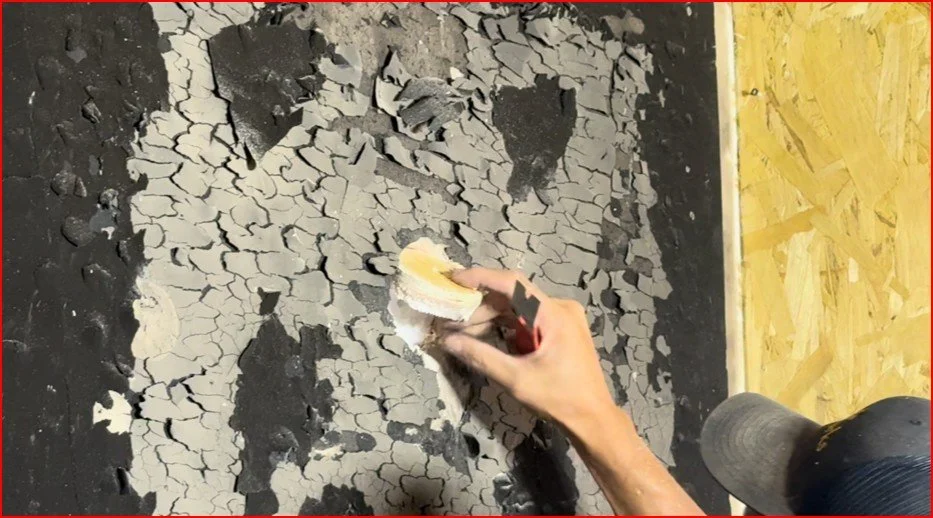
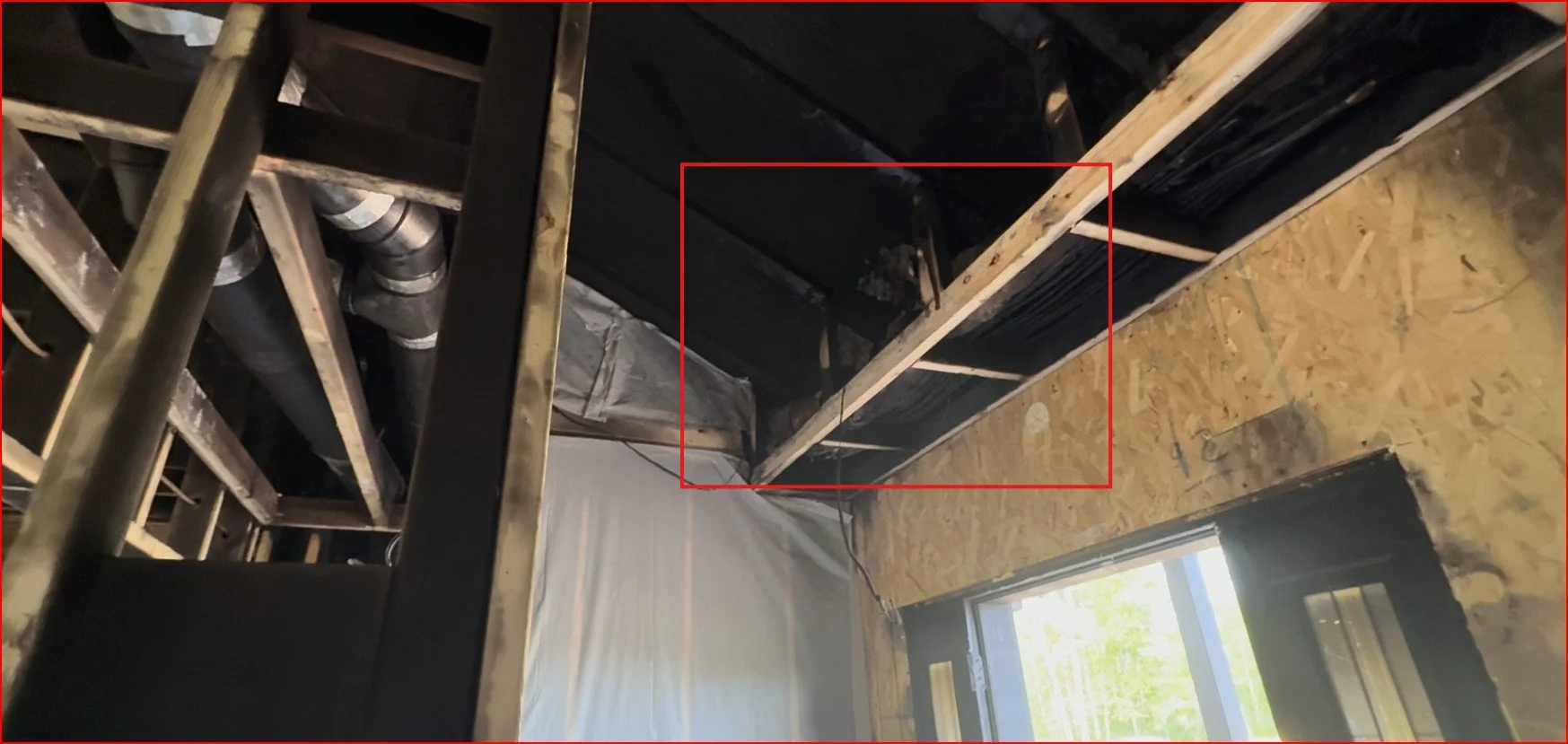
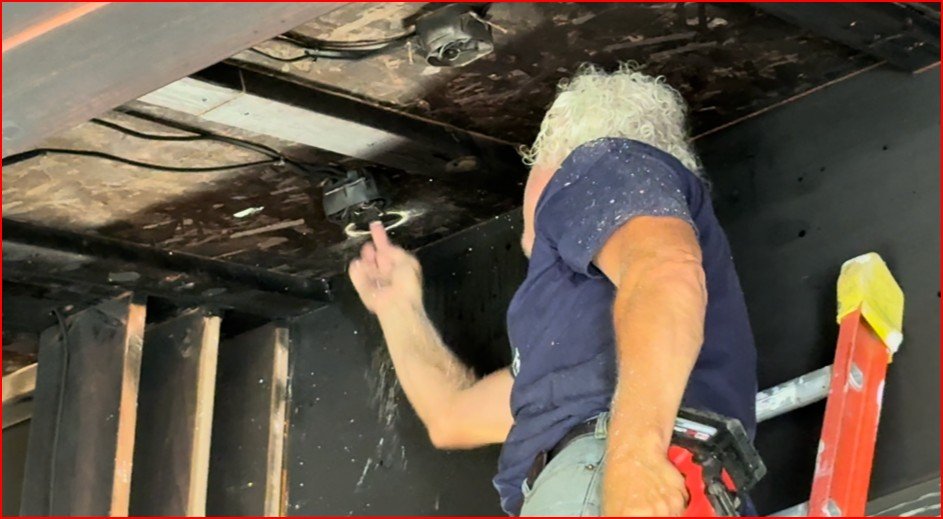
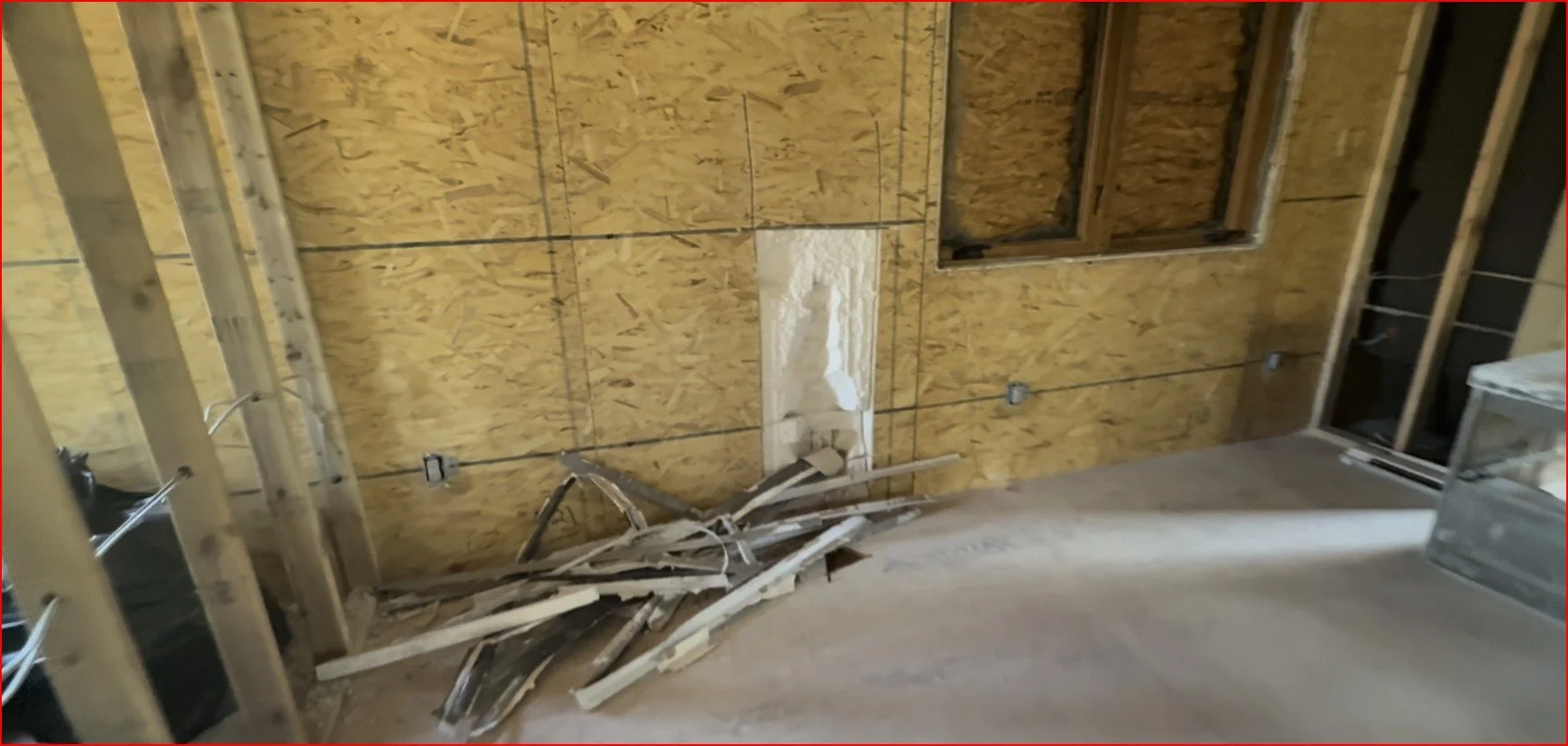
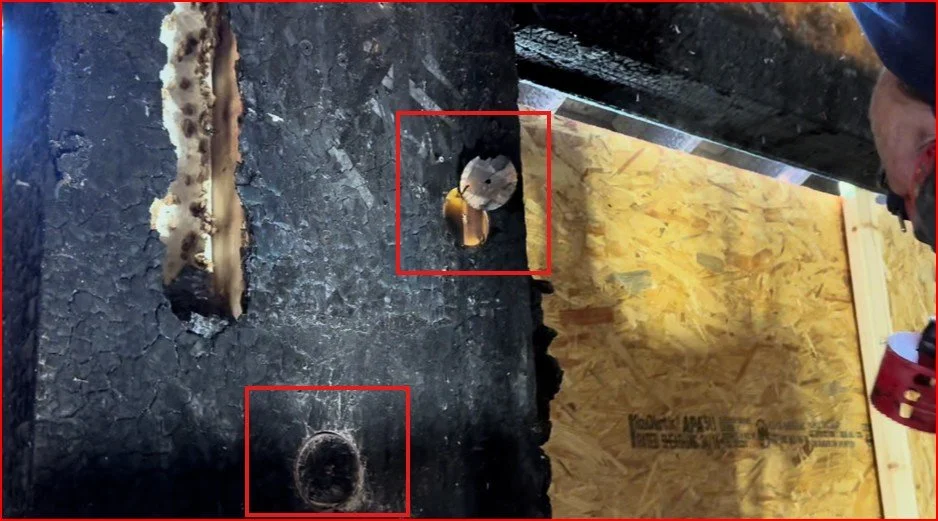
On top of that, building code requires every interior SIP surface to be covered with at least half an inch of drywall. Add exterior siding, ceiling finishes, and plywood overlays, and the foam is rarely actually exposed to open flame in a real building. In our fire investigation, we pulled core samples from behind badly charred interior wall and ceiling finish material and found the foam and OSB underneath completely undamaged. The finish took the hit. The panel didn't.
Myth 2: "If Fire Touches a SIP, the Whole Wall or Roof Fails"
Reality: SIP fire damage stays local to wherever the flame actually sat. A section of wall or roof that saw sustained, direct flame for a long time will char and lose strength in that spot. A few feet away, a section that was only exposed to smoke or heat (not direct flame) typically comes through fine.
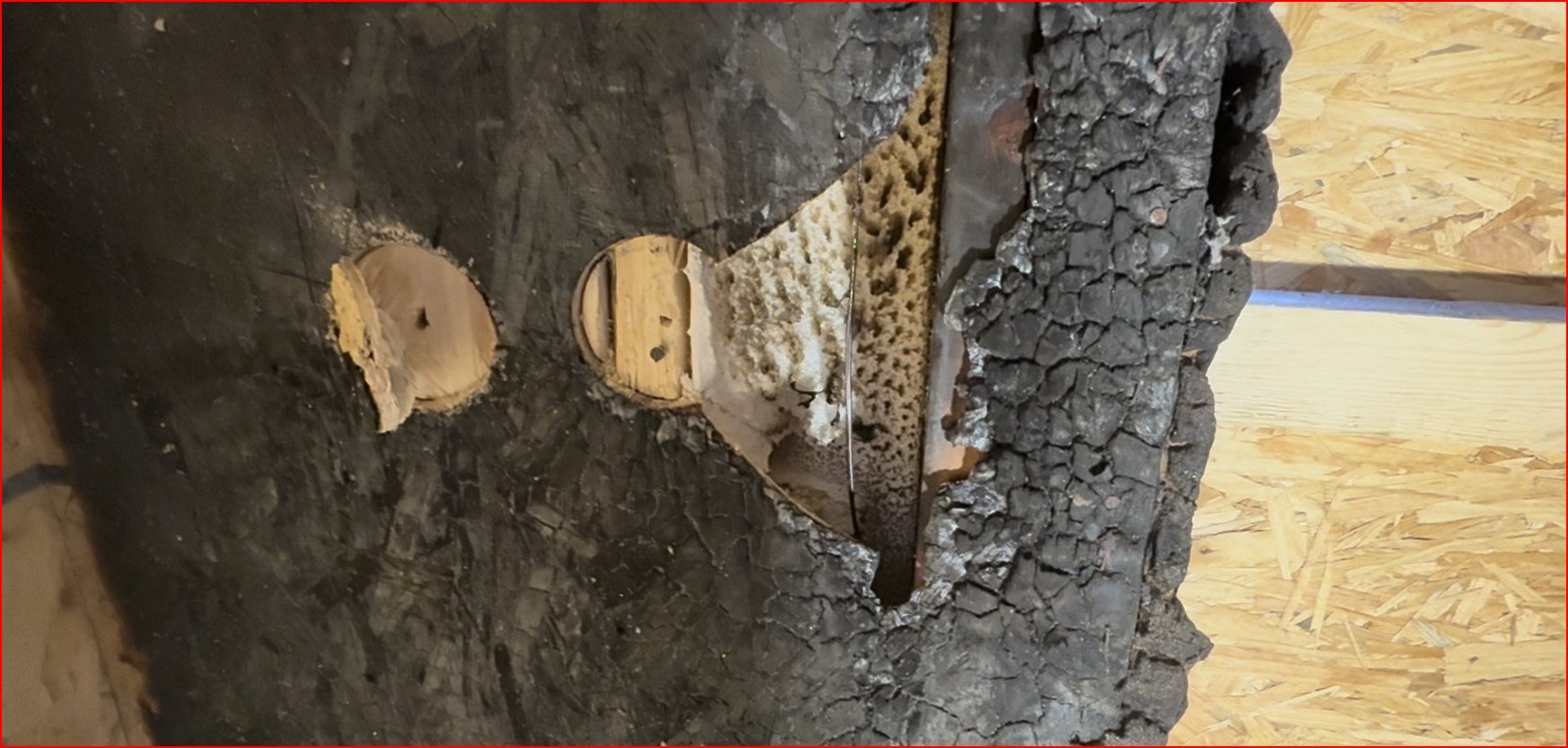
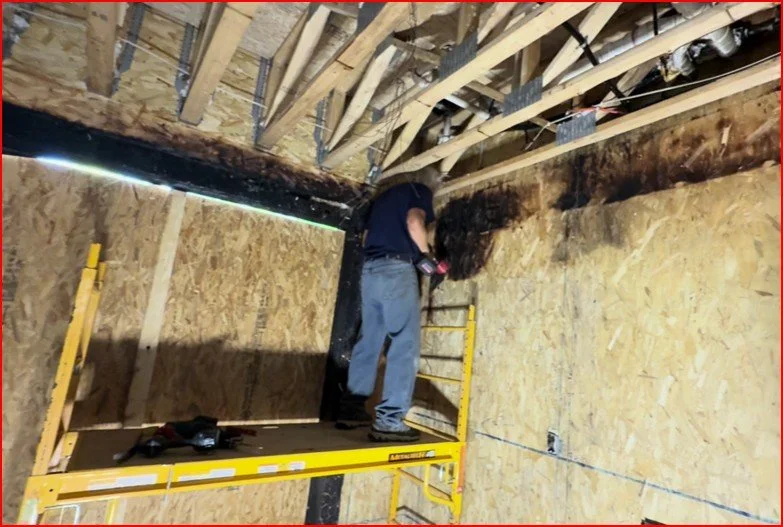
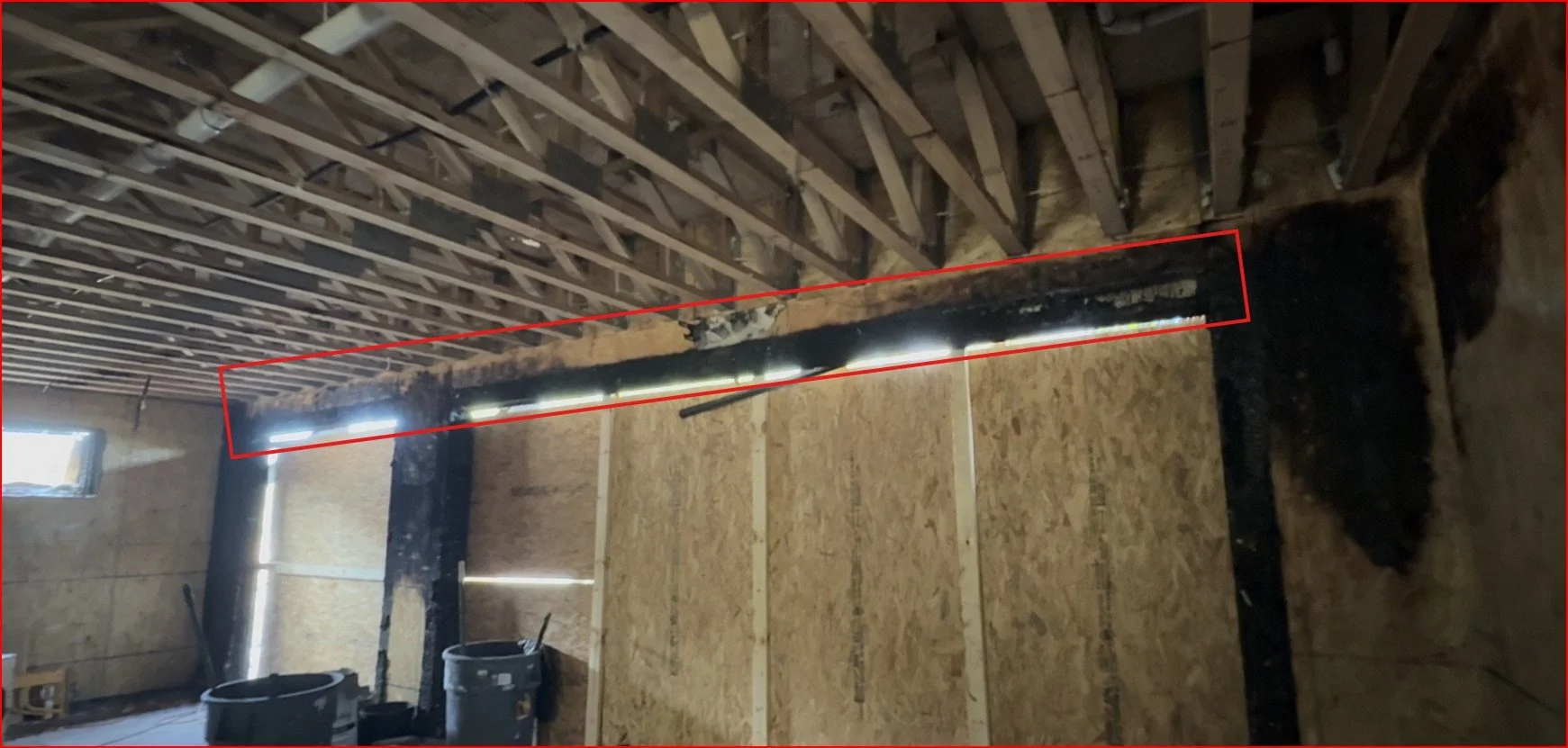
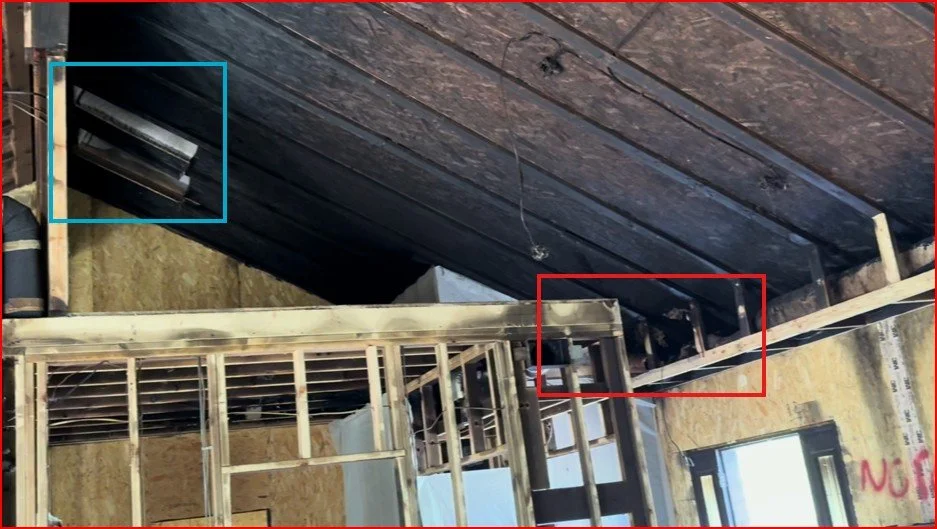
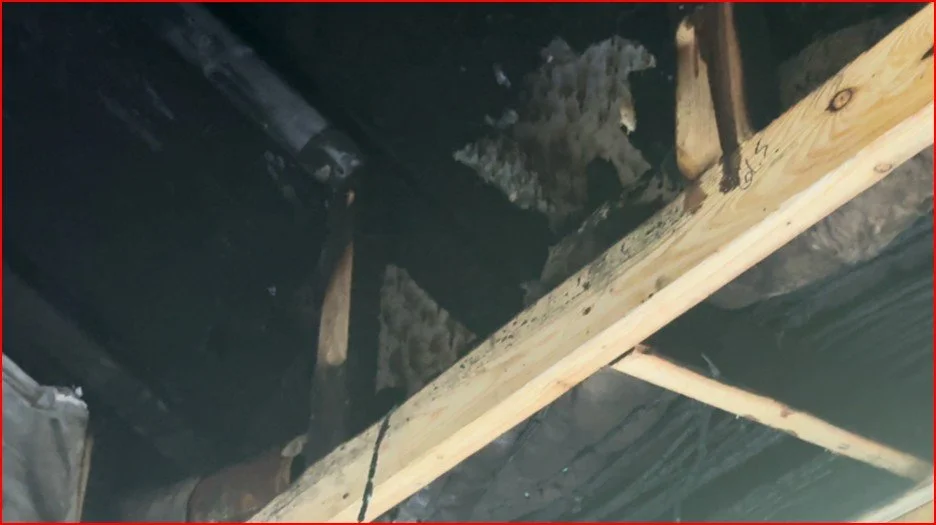
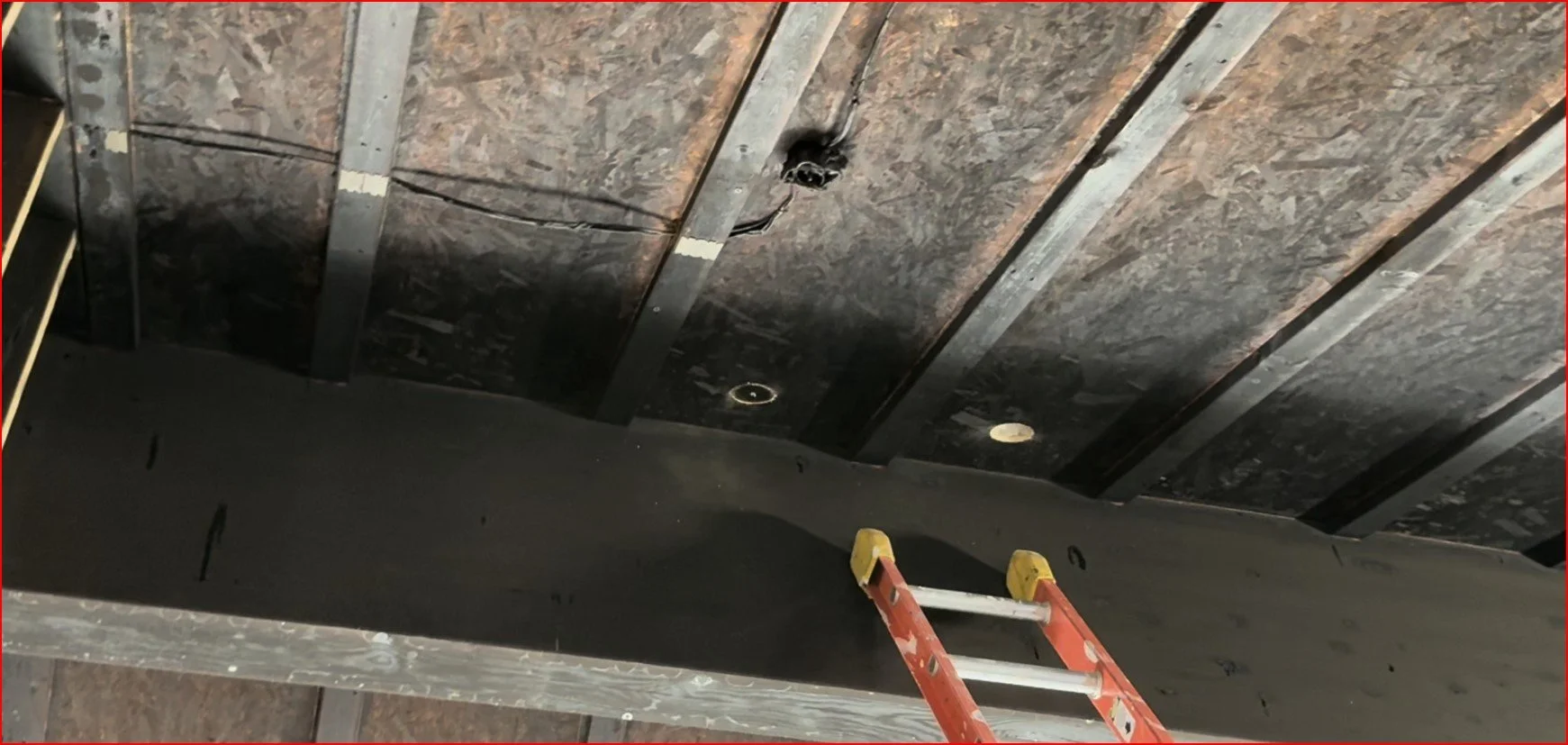
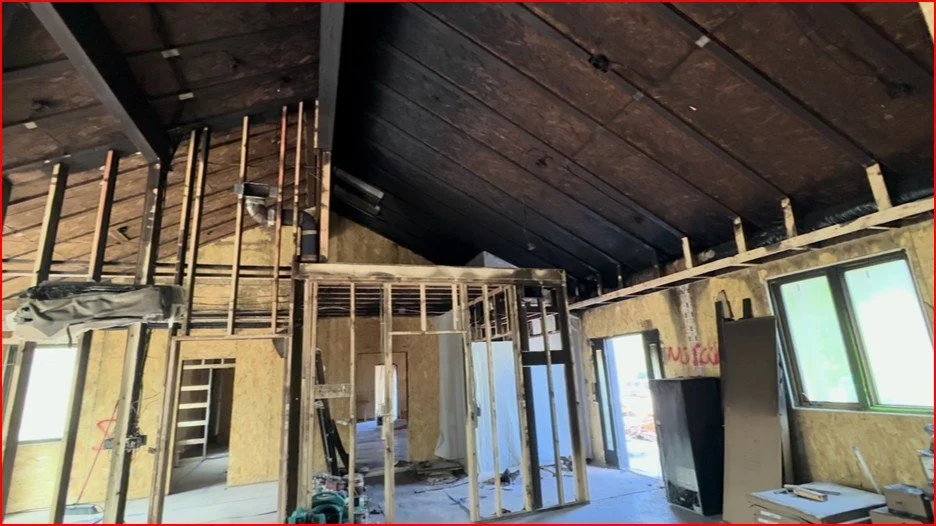
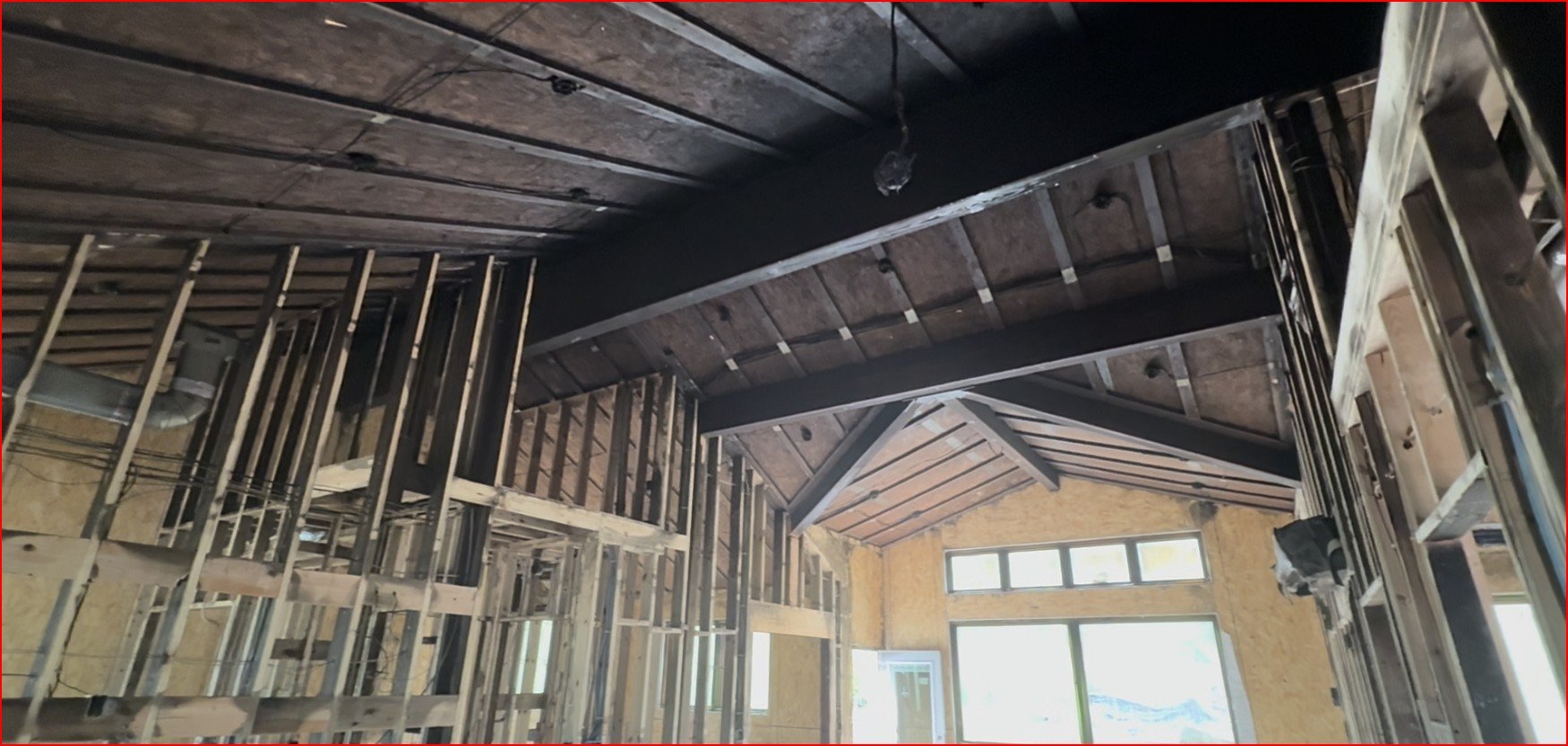
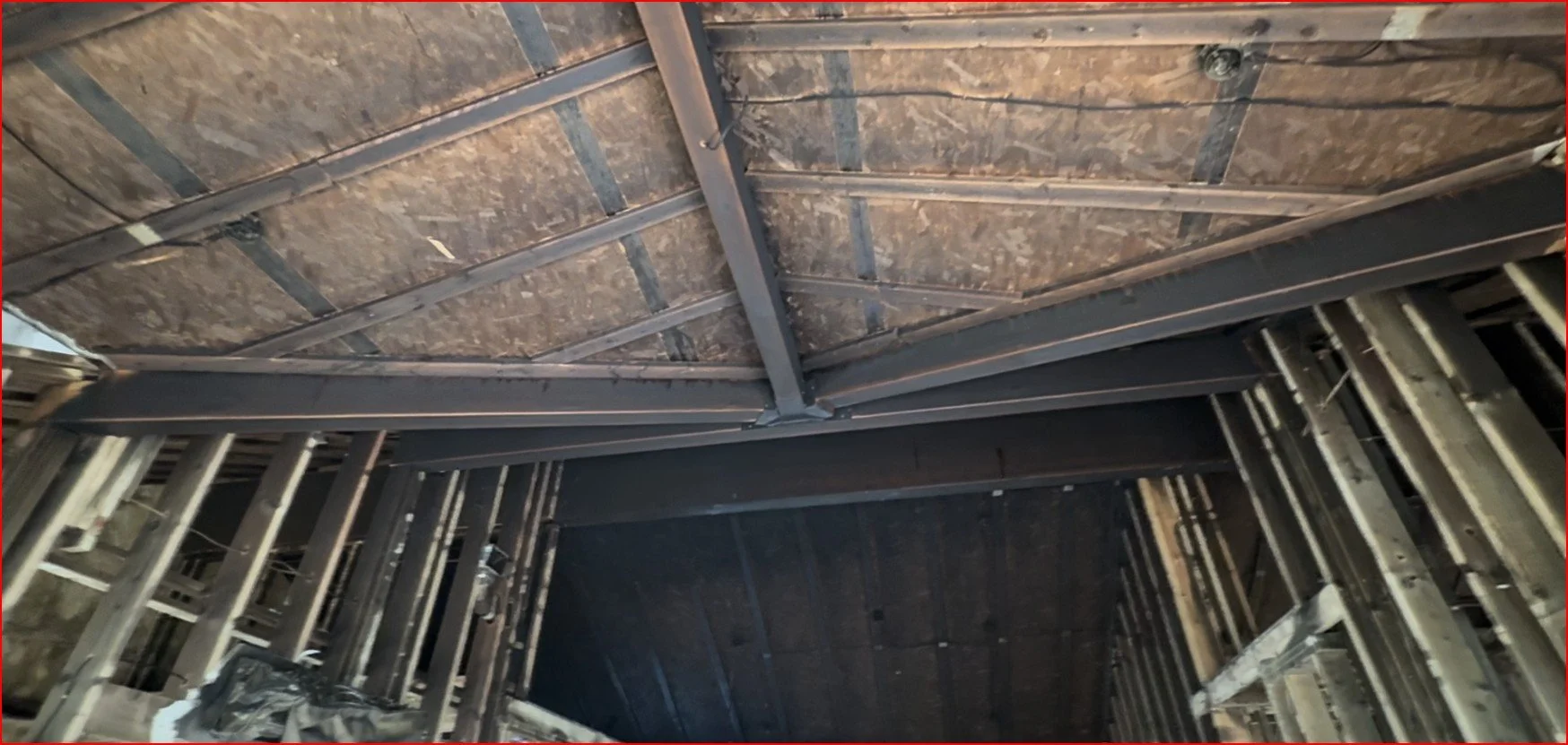
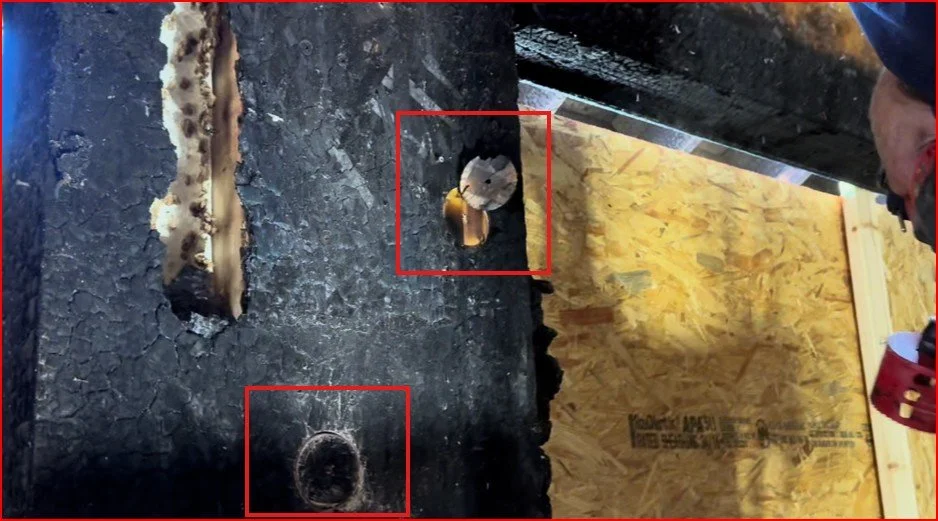
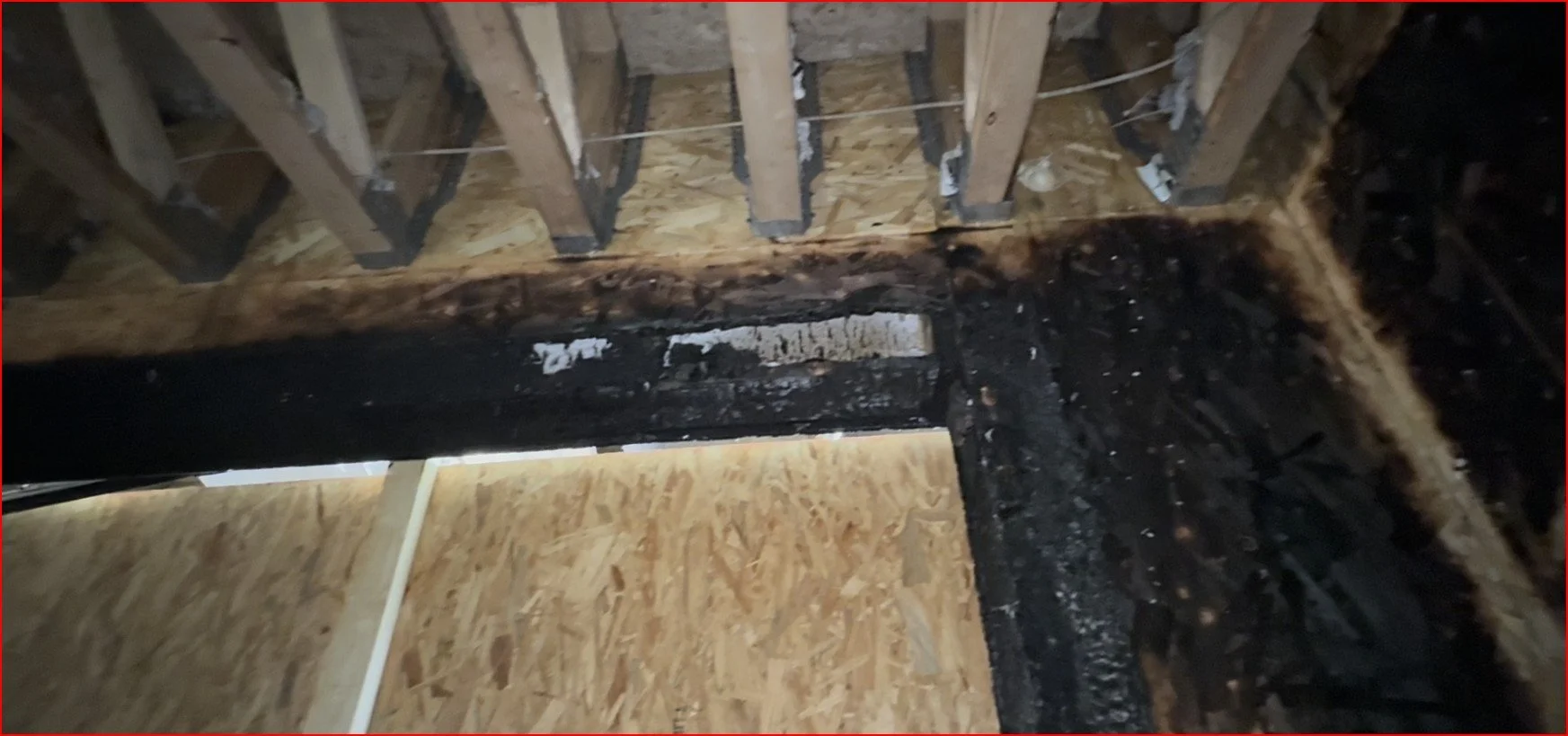
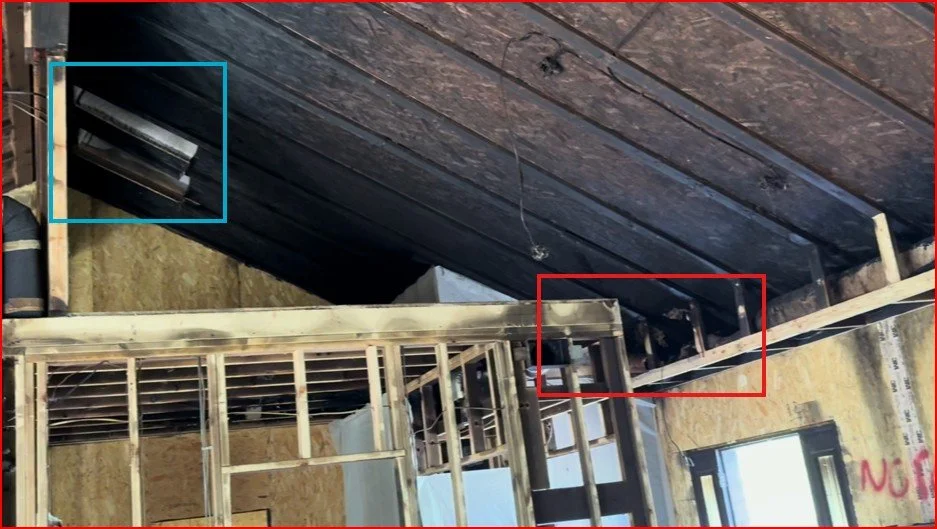
That's exactly the pattern we documented: some core samples taken from heavily burned areas showed serious charring and EPS foam melt-back, while samples taken from nearby areas, some in the same room, showed no fire damage at all. That's not a coincidence; it's how SIPs are supposed to behave. Damage is localized, not catastrophic, the same way a stick-framed wall doesn't collapse the moment a fire starts somewhere in the house.
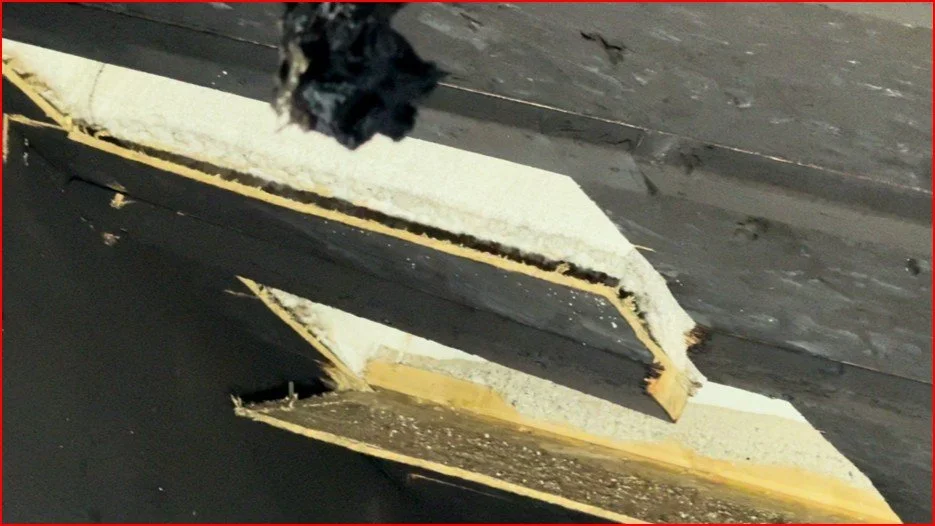
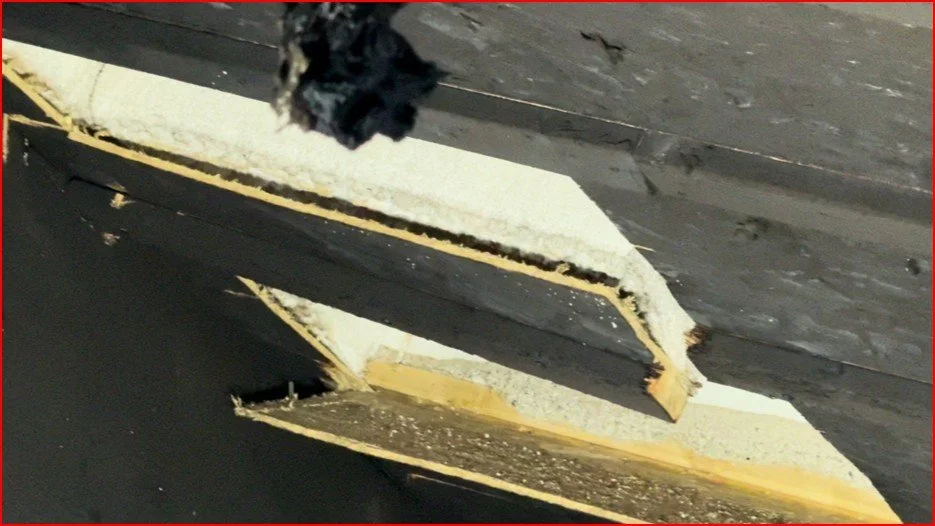
During our investigation of a residential SIP fire in Duluth, Minnesota, we cut core samples from multiple locations across the roof and walls. Samples taken from areas with direct, sustained flame exposure showed heavy charring on the OSB skin and EPS foam that had visibly melted back from the surface. Samples taken just a few feet away, in areas that saw smoke and heat but not direct flame, showed no damage at all to either the OSB or the EPS foam underneath. Side-by-side comparisons like this are how engineers confirm that flame exposure, not the presence of EPS foam, is what determines the outcome.
Myth 3: "Smoke Damage Means the SIP Is Structurally Ruined"
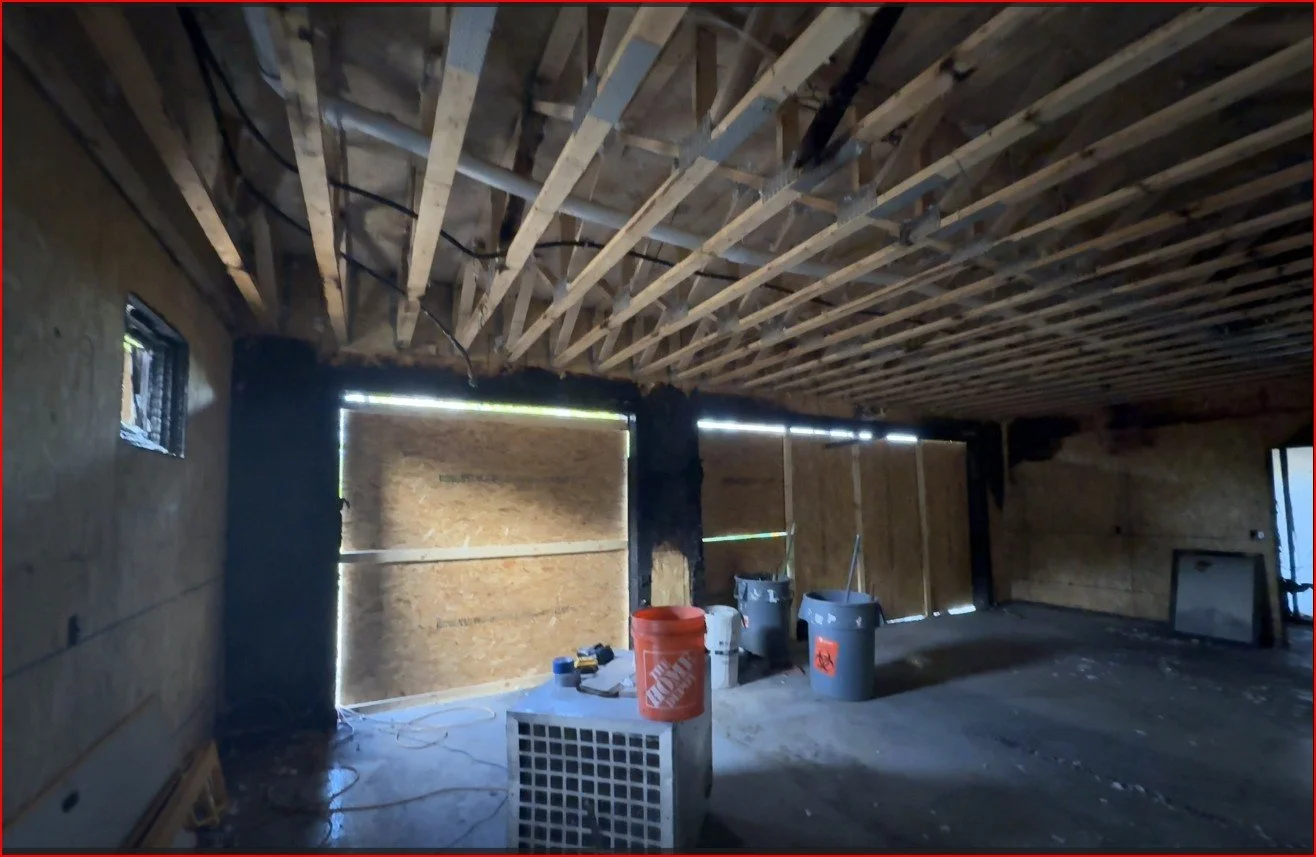
Reality: Smoke and soot are a cosmetic problem, not a structural one. What actually weakens a SIP is sustained heat breaking down the glue bond between the OSB skin and the EPS foam core. Smoke alone doesn't get hot enough or last long enough to do that.
In our investigation, areas where the OSB skin was covered in smoke residue, but hadn't been exposed to direct flame, showed no charring and no bond damage underneath. In other words, a smoky-smelling, soot-covered SIP panel isn't automatically a panel that needs to be torn out. It needs to be inspected, not assumed to be a total loss.
Myth 4: "Burning Foam Drips and Spreads the Fire"
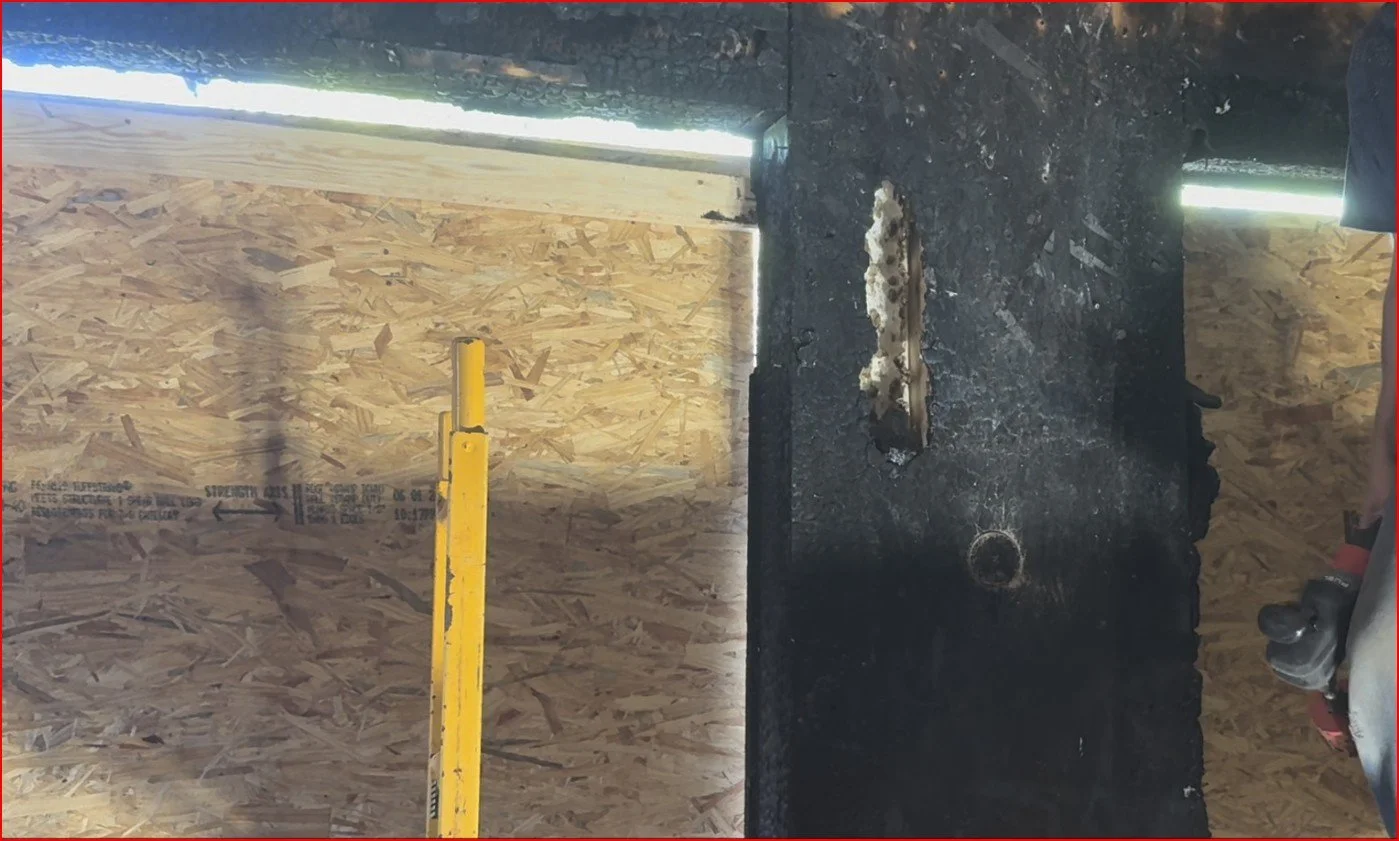
Reality: This is one of the most common fears about EPS foam-based construction, and it doesn't match how EPS in SIPs actually behaves. EPS melts by shrinking back and away from the heat source. It does not turn into a dripping, flaming liquid the way some people picture "melting plastic" behaving because construction grade EPS has a flame retardant additive in it.
In every sample we examined, the melted EPS foam pulled back from the heat in a clear, directional pattern, essentially showing us which way the heat traveled. It never occurred in areas that only saw smoke, and it never showed any sign of dripping or spreading flame to a new location.
Myth 5: "Fire Can Hide and Smolder Inside SIP Panels"
Reality: This is actually one of the places SIPs have a real advantage over standard stick framing. A traditional stud wall has an open, hollow cavity behind the drywall. Granted the cavity is typically filled with insulation, but along with the insulation is the ability for air to move in the cavity. That cavity can act like a chimney, letting fire and smoke travel upward or sideways, unseen, before it shows up somewhere else in the house.
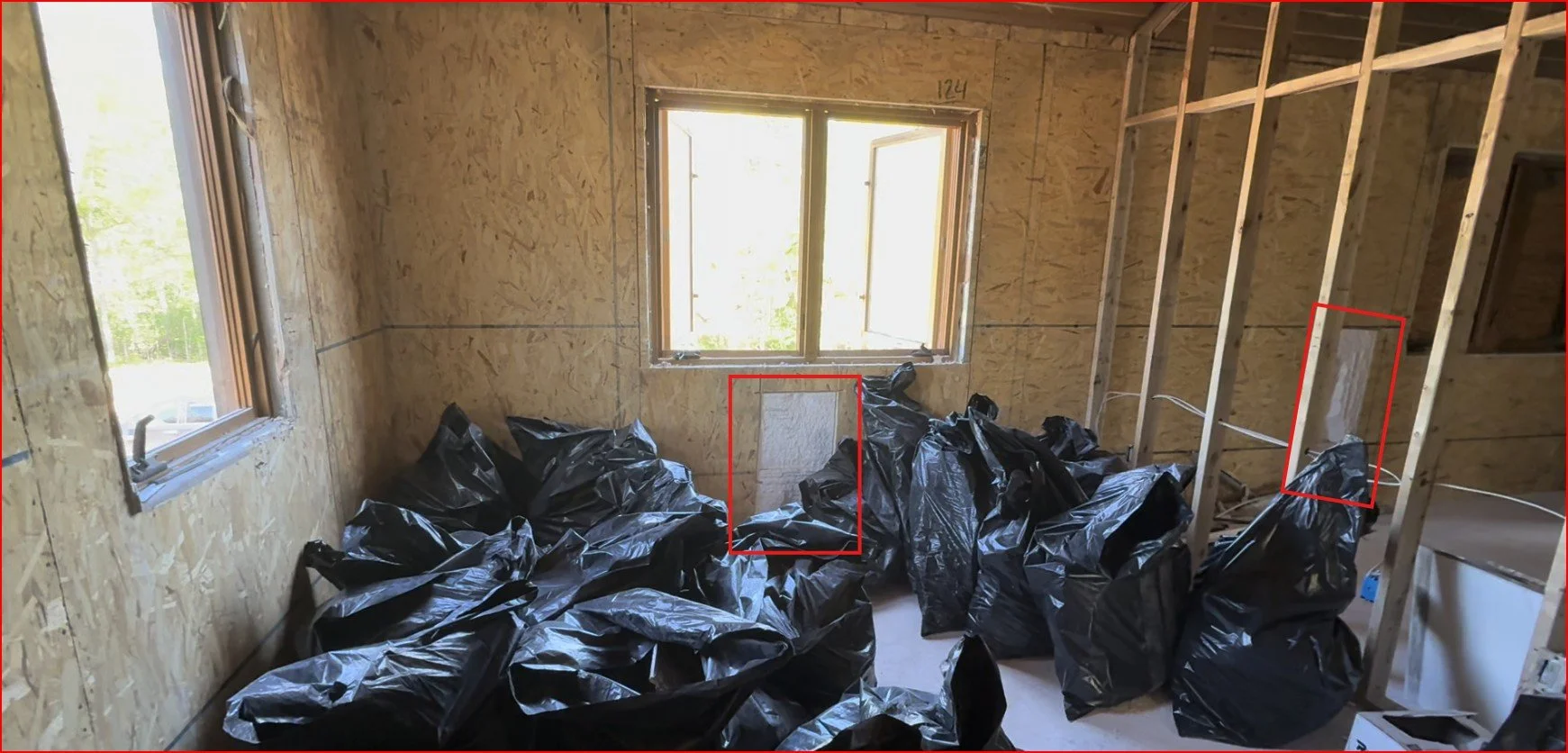
SIPs don't have that hollow cavity. The EPS foam core fills the entire space between the two OSB skins, so there's nowhere for fire to travel or hide. When firefighters cut open SIP sections during our investigation to check for hidden fire, they didn't find any smoldering or hidden charring behind intact OSB skins. That's a structural difference built into the panel itself, not something that depends on installation.
Myth 6: "If Any Foam Melts, the Whole Panel Has to Be Replaced"
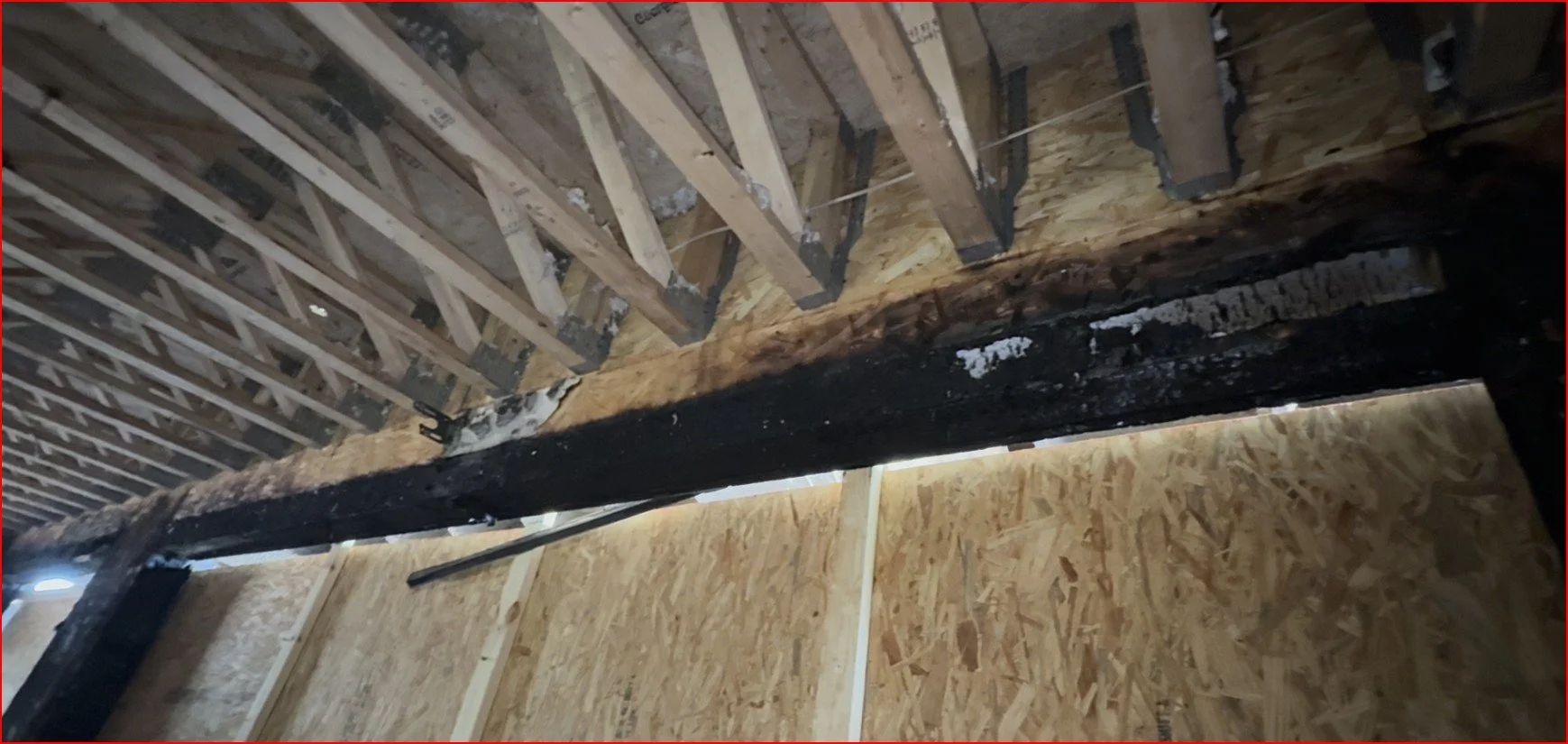
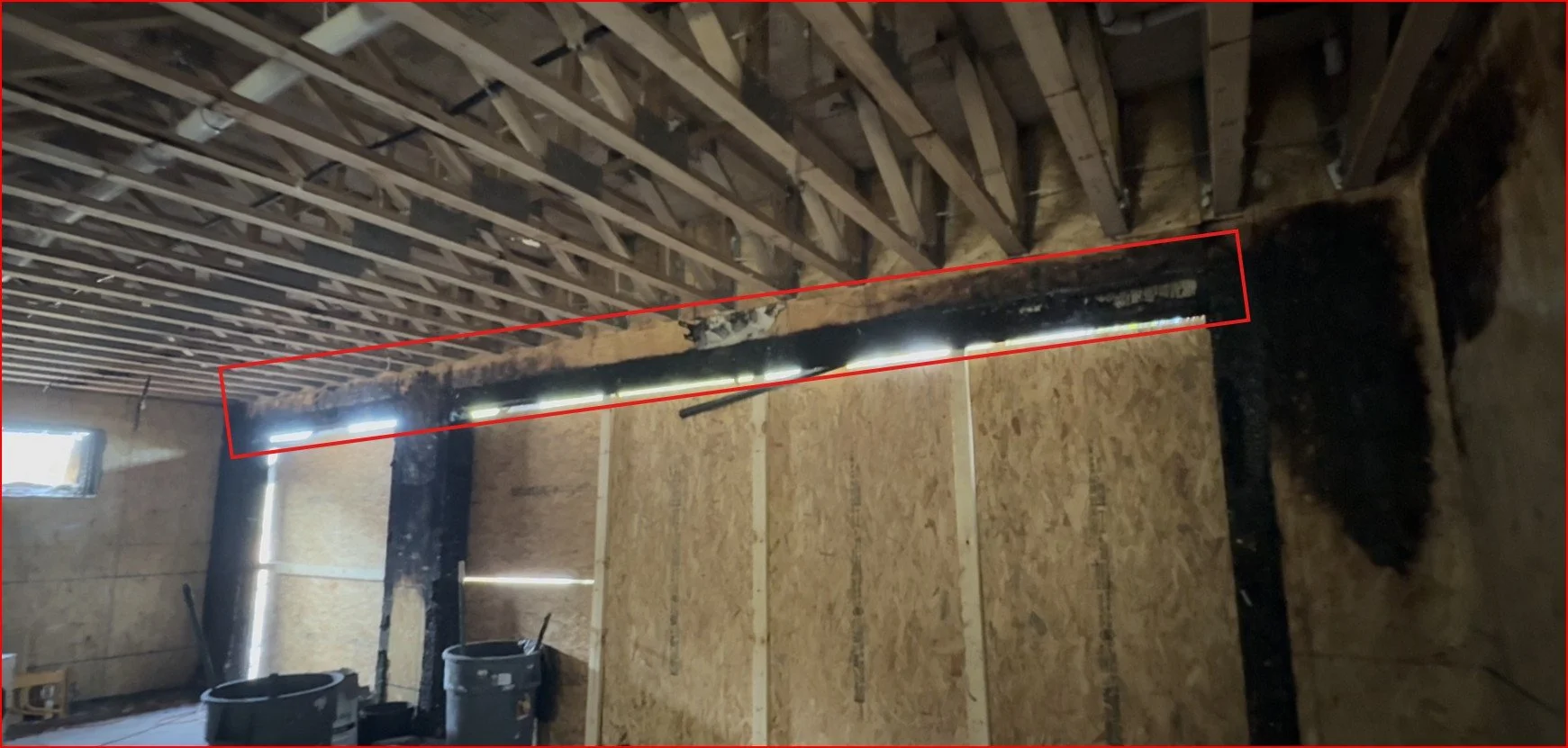
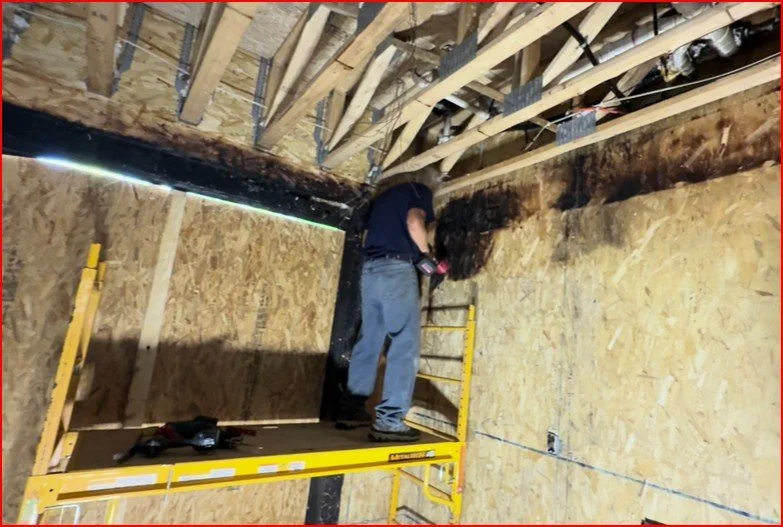
Reality: Whether a damaged SIP can be repaired or needs to be fully replaced comes down to a few questions: is the glue bond between the OSB skin and the EPS foam still solid; is the panel load bearing; does the panel have structural members in it carrying the load? If the bond is intact and the damage is limited to the surface or localized areas, repairs like patching the OSB skin or injecting expanding foam are often realistic. If the bond has failed in a load-bearing area, that section may need to be replaced if only the OSB skins were carrying the load.
This is a case-by-case engineering call, not a blanket rule. For example, a garage door header supported by separate wood framing can often stay structurally sound even if nearby EPS foam in a non-structural area was damaged. This is exactly the kind of judgment call that benefits from having an engineer look at the specific damage rather than assuming the worst (or the best) based on a general rule of thumb or speculation.
Myth 7: "SIPs Aren't Allowed in Fire-Rated Buildings"
Reality: SIP manufacturers publish tested, fire-rated wall and roof assemblies, the same way lumber and steel-framing manufacturers do. These assemblies are put through ASTM E119 fire-resistance testing and documented in third party evaluation reports, which is the same approval pathway used across the building industry. If your project requires a fire-rated wall or roof, there's almost always a tested SIP assembly that meets it, you just need to build to the manufacturer's documented detail.
How a SIP Actually Behaves When It's Exposed to Heat
Once you strip away the myths, SIP fire behavior comes down to three layers doing three different jobs:
The OSB skin chars on the surface. Like a marshmallow blackening over a campfire, that char layer actually protects what's underneath by slowing down how fast heat gets through.
The foam core shrinks away from heat. Instead of catching fire and spreading, it retreats from the heat source, similar to how ice pulls back from a heat lamp instead of catching fire itself.
The wall only structurally "fails" when the glue bond between the wood and foam breaks down. That takes sustained, direct heat, not a quick flare-up or smoke exposure.
Put simply: an intact bond means the section is likely repairable. A broken bond in a load-bearing area means it needs some type of repair or replacement. That's the whole story, and it's a story about heat and protection, not a mystery about foam.
Dealing with fire or smoke damage on a SIP building and not sure what's actually salvageable? Talk to Joe Pasma, PE: he can walk you through what a forensic assessment would actually look for before you or your insurer make a repair-or-replace decision.
The Honest Caveat: Where SIPs Are Strong, and Where They Could Be Vulnerable
None of this means SIPs are magically fireproof. Fire performance depends heavily on how the building was actually detailed and finished.
Where SIPs Perform Well
Damage stays localized instead of spreading unpredictably through the wall
No hollow stud cavities for fire or smoke to travel through unseen. No mini-chimneys.
Drywall and finishes do most of the protective work, and that's by design, not luck
Solid exterior panels and sealed penetrations give wildfire embers fewer gaps and cavities to catch in
Where SIPs Are Vulnerable
Direct, sustained flame exposure, the same as any building material
Missing or damaged drywall and interior finishes
Exposed or unprotected wood-skin edges
Poorly sealed panel joints
Unprotected roof edges and vents in wildfire-prone areas
What This Means If You're Building, Buying, or Insuring a SIP Home
A few practical habits go a long way toward getting the fire performance SIPs are designed to deliver:
Keep drywall and interior finishes continuous, with no gaps or missing sections
Use a Class A rated roof covering
Make sure panel joints are properly sealed during construction, not just taped and forgotten
Protect any exposed wood-skin edges, especially at openings and transitions
In wildfire-prone areas, use ember-resistant details
Follow the manufacturer's tested, fire-rated assembly details exactly; don't improvise on this part
People ask me if SIPs are "safe in a fire" like it's a yes-or-no question. It isn't. I've stood in a burned-out SIP building and pulled core samples ten feet from a section that never even charred. The panel itself doesn't decide whether a building survives a fire. The drywall, the sealing, and the details around every seam and penetration decide that. Get those right, and the panel does exactly what it's engineered to do.
-- Joe Pasma, PEWant to See a Full Fire Investigation?
This article covers the myths. Our full case study walks through exactly how the fire moved through the building, what the core samples showed room by room, and what it meant for the repair decision.
Read the Full Case StudyThe Bottom Line
SIPs are combustible. That's true, and PGS Consulting LLC has never claimed otherwise. But combustible doesn't mean unsafe, and it doesn't mean unpredictable. Real forensic evidence shows SIPs resist ignition when they're protected by gypsum wallboard and finishes, fail only where flame is direct and heat is sustained, don't hide fire the way stud walls can, are often repairable rather than a total loss, and meet the same fire-rating requirements as any other framing system.
Understanding SIP fire behavior means understanding heat, protective layers, and how well the building was put together, not repeating myths about foam.
FAQ: SIP Fire Safety
Are SIPs safe in a fire?
Yes, when they're built and finished the way code requires. SIPs are combustible, but code-required drywall and finishes protect the panel, and forensic evidence shows SIPs stay intact in areas shielded from direct flame.
Do SIPs catch fire instantly because they contain foam?
No. The EPS foam used in SIPs includes a flame-retardant additive that stops it from continuing to burn once the flame source is removed. It melts and shrinks away from heat rather than igniting easily or dripping flaming material.
Does smoke damage hurt a SIP's strength?
No. Smoke and soot are cosmetic. Only sustained heat affects the glue bond between the OSB skin and the EPS foam core, and our forensic samples confirmed that smoke-only areas showed no bond damage.
Can fire hide inside a SIP wall?
No. SIPs are solid panels with no hollow stud cavity, so there's no hidden space for fire or smoke to travel through unseen the way it sometimes can in traditional framing.
What actually happens to the EPS foam in a fire?
It shrinks away from the heat source instead of dripping or spreading flame. How far it melts back is actually a useful clue for investigators about how much heat a given area was exposed to.
When does a fire-damaged SIP need to be fully replaced?
When the glue bond between the OSB skin and the EPS foam has failed in a load-bearing section. If that bond breaks down, the panel can no longer do its structural job and needs to be replaced.
Can a fire-damaged SIP be repaired instead of replaced?
Often, yes, if the OSB-to-EPS foam bond is still intact and the damage is limited to the surface. Repairs can include patching the OSB skin or injecting expanding foam, especially in non-structural areas.
Do SIPs meet fire-rated building code requirements?
Yes. SIP assemblies are tested to ASTM E119 fire-resistance standards and documented in third party evaluation reports, the same approval pathway used for conventional wall and roof assemblies.
How do SIPs compare to standard stud-framed walls in a fire?
SIPs remove the open stud cavity that can let fire and smoke travel upward or sideways unseen inside a traditional wall or roof. That's a structural advantage built into the panel, not a matter of better installation.
What actually protects a SIP building during a fire?
Drywall, ceiling finishes, exterior siding, and finish material overlays all shield the panel's OSB skin from direct heat. In our investigation, most areas protected by these layers came through without fire damage underneath.
Go Deeper
Are SIPs Combustible? Fire Performance, Codes, and What Actually Keeps You Safe: the full breakdown of materials, gypsum thermal barriers, and code requirements behind SIP fire safety.
SIP Fire Performance Case Study: the complete room-by-room forensic findings from the fire investigation referenced throughout this article.
How SIPs Perform in Wildfire Zones: what solid panel construction means for ember resistance and wildfire-prone building sites.
What Are SIPs?: a plain-English primer if you're new to structural insulated panel construction.
SIP FAQ: answers to the most common questions we get about SIP construction, cost, and performance.
Have Questions About Fire Damage, Repair, or SIP Fire Ratings?
PGS Consulting LLC provides independent forensic investigation, fire damage assessment, and repair planning for SIP buildings, backed by 40+ years of engineering, manufacturing, and forensic experience.
Talk to Joe Pasma, PE