

Are SIPs Hard to Wire or Plumb? What Electricians and Plumbers Need to Know
Electricians and plumbers hear "SIPs" and assume complicated. The reality is simpler than most expect. This guide breaks down exactly how wiring and plumbing work in SIP construction -- including how electrical chases eliminate foam drilling, why plumbing belongs on interior walls, and what a prepared GC does before the first crew shows up.
By Joe Pasma, PE | PGS Consulting LLC | SIP Engineering & Consulting | Published June 24, 2026
Key Takeaways
SIPs are not hard to wire or plumb. They require a different workflow, not a harder one.
Electricians push Romex through pre-cut chases -- no foam drilling, no special tools, no new certifications required.
Plumbing belongs on interior walls in SIP construction. This is best practice in any high-performance building, not a SIP-specific limitation.
Upfront planning replaces on-the-fly improvisation. That shift makes the job faster and more predictable, not harder.
After one SIP project, most electricians and plumbers say the same thing: "That was easier than I expected."
One of the most common objections we hear from builders, electricians, and plumbers considering Structural Insulated Panel (SIP) construction comes down to a single question… "Aren't SIPs hard to wire or plumb?"
It is a fair question. Electricians and plumbers have spent years working in open stud bays -- drilling wherever they need to, improvising on the fly, and working from decades of muscle memory. SIPs look different. And different feels hard until you understand how the system works.
Here is the short answer: SIPs are not hard to wire or plumb. They are just different. Once you see how the workflow actually runs, the concern usually disappears fast.
This article breaks down exactly how wiring and plumbing work in SIP construction, what trades actually need to do their job well, and why most electricians and plumbers prefer SIPs after their first project.
How Wiring Works in SIPs
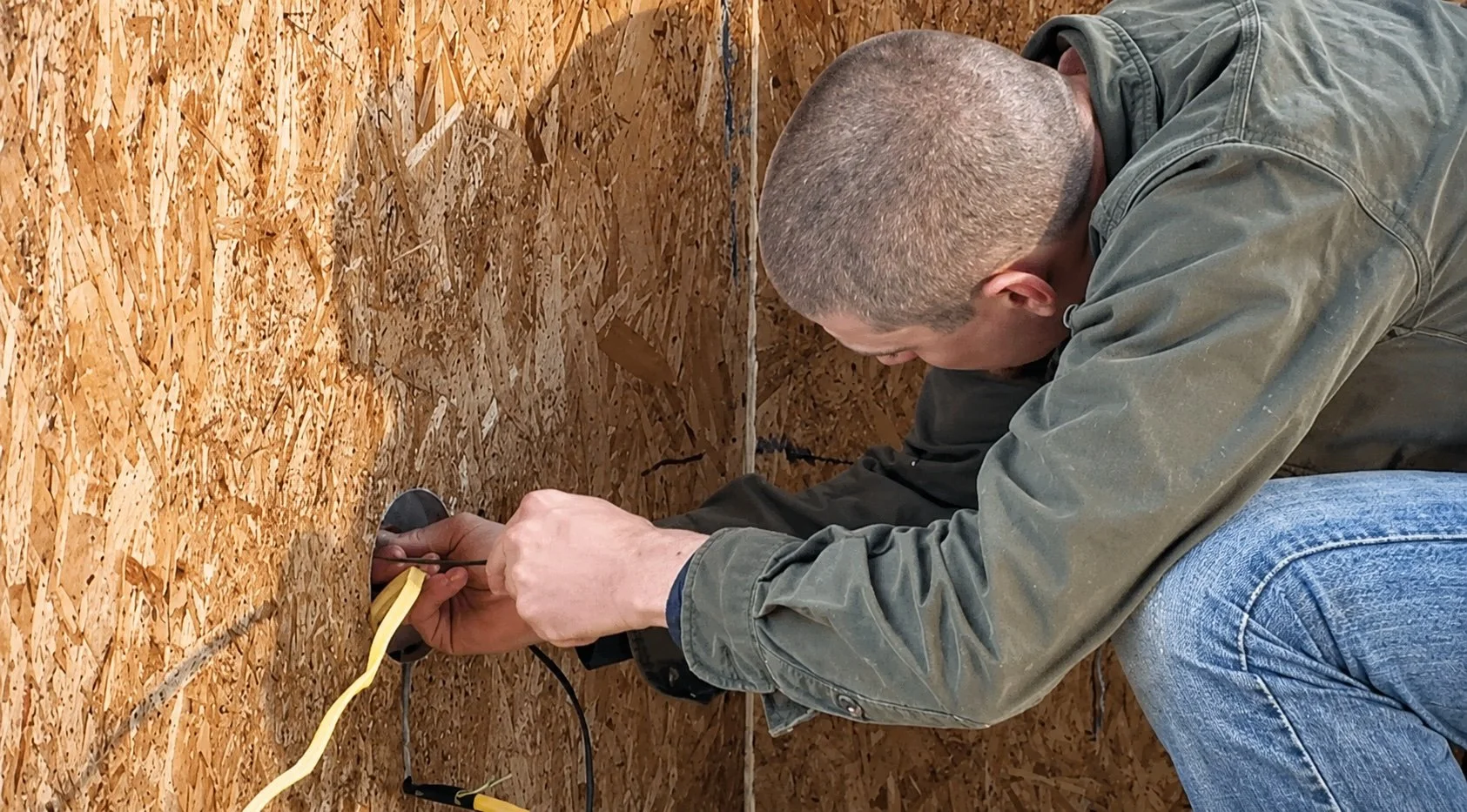
SIP panels come from the factory with electrical chases already built in. These are pre-cut channels running horizontally and vertically, typically 4’ on center, through the foam core, positioned at standard heights, typically switch and outlet heights (approximately 14” and 44” above the floor), and mapped on the shop drawings. Electricians do not fish wires through foam. They push Romex through the chases that are already there.
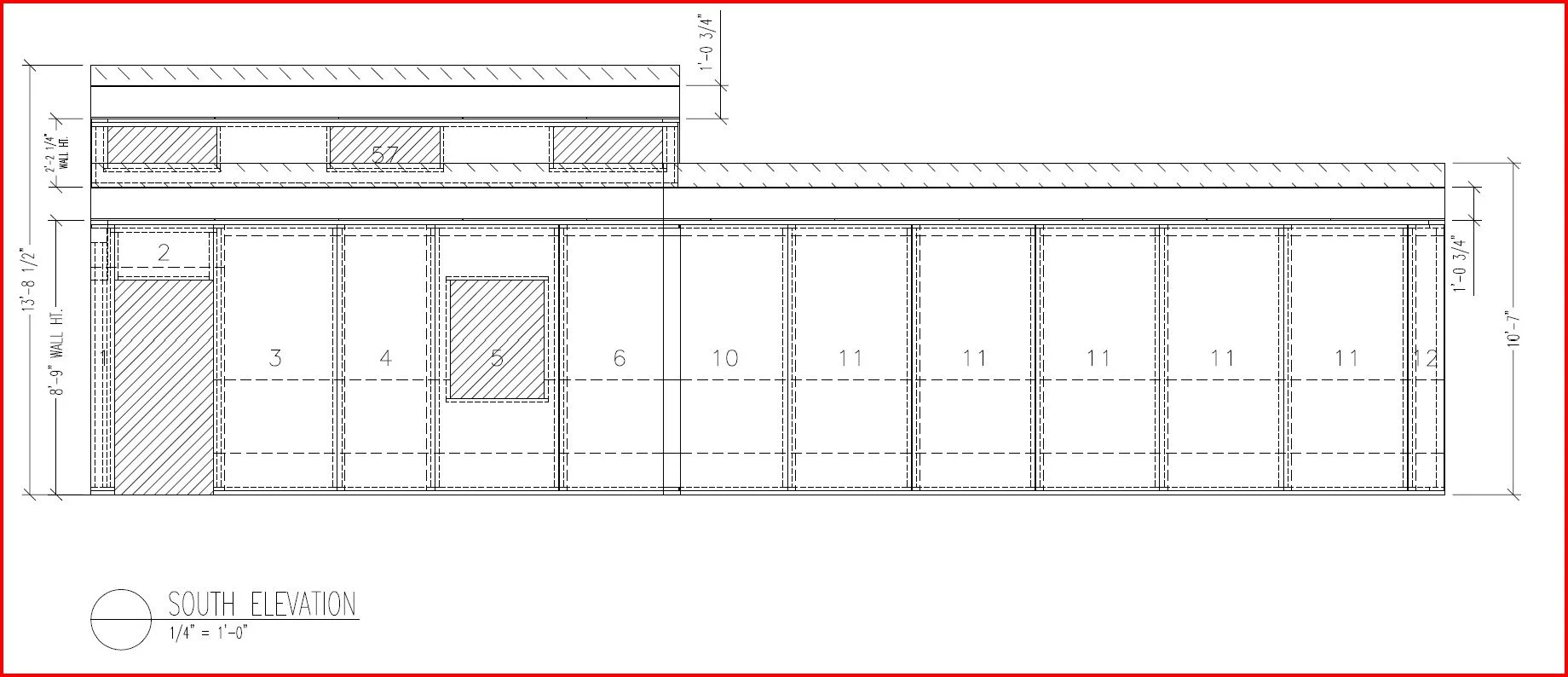
Longer dashed lines represent horizontal and vertical electrical chases. Short dashed lines are recessed edges for lumber and splines.
Here is what the actual electrical workflow looks like on a SIP project:
Review the chase map on the shop drawings -- chase locations are already marked
Drill the sill plate at vertical chase locations - (SIP installation contractor does this)
Drill the top plate at vertical chase locations - (SIP installation contractor does this)
Cut in switch and outlet boxes
Push Romex through the pre-cut chases
Install electrical boxes at required locations - remodeler boxes work well
Pull circuits as usual
Seal the boxes and any unused chases -- this is required to maintain the air barrier and meet fire safety requirements
That is the whole workflow. No special tools. No foam drilling. No exotic techniques. No guessing about where wires can go.
The main shift for electricians is that routing decisions are made upfront, on the drawings, rather than on the fly in the field. For most trades, that shift feels like less work -- not more.
Electricians who have done one SIP project almost always say the same thing: "This is easier than drilling studs all day." The work moves from improvisation to execution. Once you have a clean chase map, the job runs predictably.
Why SIP Wiring Is Faster Than Stick Framing
Electricians working in stick-framed walls deal with a long list of tasks beyond just pulling wire: drilling through 50 or more studs, fire-stopping, fighting back blown insulation, air-sealing after the fact, and managing thermal bypasses at penetrations.
SIPs eliminate most of that list.
On a SIP project, there are no studs to drill through, no fire-stopping after wiring, no insulation blocking access, and no air-sealing required after the fact. The envelope is already airtight by design. The only requirements are sealing the electrical boxes and any unused chases -- steps that take minutes, not hours.
The result is a cleaner, faster electrical scope once the workflow is understood. After one project, most electricians are faster on SIPs than on comparable stick-frame builds. For a broader look at how SIPs differ structurally from stick framing and why trade coordination matters, the SIPs vs. stick framing guide covers the full comparison.
How Plumbing Works in SIPs
This is the part that creates the most confusion -- and the most unnecessary concern.
You should not run plumbing in exterior SIP walls.
But here is the thing: you should not run plumbing in exterior stick-framed walls either. Not if you care about freeze protection, condensation control, air sealing, or long-term durability. Running supply lines or drain stacks through an exterior wall is a problem in any high-performance building system. SIPs just make the rule more obvious.
Plumbing in SIP construction is straightforward:
Run all supply and drain lines on interior walls
Use soffits, chases, or dropped ceilings for vertical stacks
Coordinate penetration locations before the job starts -- not during rough-in
If plumbing must be located on exterior walls, furring out a stick framed wall works well
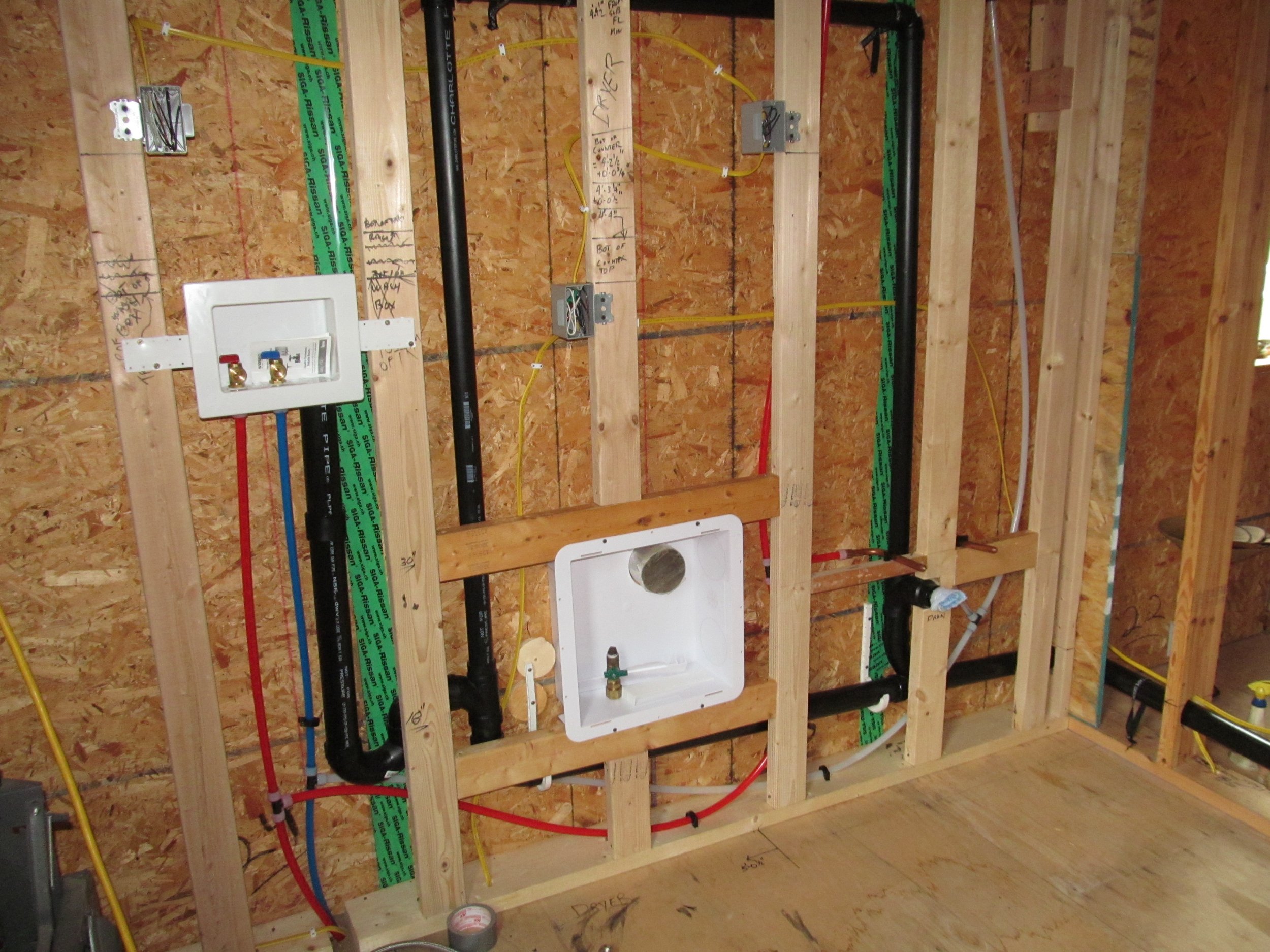
Furred out stick framed plumbing wall next to exterior SIP wall.
When the coordination happens upfront, plumbers work exactly as they would on any other project. The scope does not change. The tools do not change. The only difference is that the planning happens on paper before the first pipe goes in, rather than on the fly in the field.
This approach also produces a better building. Interior plumbing means less risk of freezing, less condensation risk in the wall assembly, and a cleaner, more durable envelope long-term.
Wiring and Plumbing Comparison: SIPs vs. Stick Framing
The table below shows where the actual workflow differences land for each trade.
← Swipe to view full table →
| Category | Stick Framing | SIP Construction |
|---|---|---|
| Wiring Pathways | Drill anywhere through studs | Use pre-cut chases -- locations mapped on drawings |
| Wire Routing | Drill studs, fire-stop, insulate | Push Romex through chases |
| Electrical Boxes | Standard install | Standard install, then seal the box |
| Air Sealing | Done after wiring, as a separate step | Built into the panel -- seal boxes and unused chases only |
| Plumbing Location | Often runs in exterior walls | Interior walls only or furred out exterior walls |
| Planning Required | Minimal -- improvise in the field | Required upfront -- saves time and rework later |
| Labor Time | Higher -- more drilling, more sealing steps | Lower after the first project |
| Risk Profile | More penetrations, more potential for leakage | Fewer penetrations, more predictable performance |
| Trade Training Needed | None -- familiar system | One project, or 1-2 hours of SIP basics |
SIPs compress the work. They do not add to it.
What Reduces Risk in SIP Construction
When wiring and plumbing are done correctly in SIPs, the building performs with fewer long-term problems than most comparable stick-frame structures. That is not a marketing claim -- it is the result of fewer penetrations, less air leakage, and a more controlled building envelope.
Correctly executed SIP construction reduces:
Envelope penetrations (fewer holes in the thermal boundary)
Air leakage at wiring and plumbing locations
Condensation risk in wall and roof assemblies
Mold potential from moisture accumulation
Thermal bridging at framing locations
Long-term maintenance from callbacks and repairs
None of that is "no risk." Construction always involves risk. But the risk profile on a well-coordinated SIP project is more predictable and more manageable than most builders expect going in. For a detailed breakdown of where SIP problems actually come from -- and why execution, not the material, is almost always the root cause -- the SIP problems and failures guide is worth reading before the job starts.
Training Resources for Electricians Working with SIPs
The Structural Insulated Panel Association (SIPA) and various SIP manufacturers have produced practical training videos specifically for electricians and other trades working on SIP projects. These are short, field-focused, and cover the core workflow clearly. The videos can be found on the manufacturers websites and YouTube channels.
DIY’ers have found SIPs easy to wire and have published videos on YouTube showing some of their work.
SIPA & DIY’er Electrician How To Videos
Rough-In Electrical Wiring on a SIP Home
SIP Electrical Chase Demo
Technical Reference Documents
SIPA Builder Best Practices documents BP-9 (Electrical) and BP-10 (Mechanical) cover chase use, box installation, penetration sealing, sill and top plate drilling, and manufacturer coordination in detail.
These resources eliminate the majority of trade uncertainty before anyone arrives on site. A prepared GC shares them during the pre-construction coordination meeting -- not the morning of rough-in.
Why Trades Think SIPs Are Hard (And Why They're Usually Wrong)
Electricians and plumbers are not resistant to SIPs. They are resistant to risk -- and unfamiliar systems feel risky until the workflow is clear.
Stick framing offers open cavities, unlimited drilling access, and decades of familiar muscle memory. SIPs offer pre-cut chases, sealing requirements, and a workflow that is front-loaded with coordination instead of back-loaded with improvisation.
Different feels hard. Until you do it once.
The friction that shows up on SIP jobs -- hesitation from trades, questions mid-project, occasional missteps -- almost always comes from one source: missing information before the job started. When the chase map is clear, the sequencing is defined, the "do not cut" zones are marked, and there is someone to call if something looks off, the job runs.
The SIP installation guide covers coordination and sequencing in detail. The SIP FAQ addresses the most common jobsite questions across all trades.
In 40+ years of SIP work, I have never seen a trade fail because SIPs were too hard. What I have seen -- more times than I can count -- is a trade get put in an impossible position because the coordination was not done ahead of time. When the prep work is there, the job moves. When it is not, everyone on the site pays for it.
-- Joe Pasma, PEThe Bottom Line
SIPs are not hard to wire or plumb. They require a different workflow -- one that is front-loaded with planning instead of improvisation. That shift is an adjustment. It is not a barrier.
Electricians who understand the chase system work faster on SIPs than on stick frame. Plumbers who coordinate penetrations upfront work exactly as they do on any interior-wall scope. Both trades walk off their first SIP project more confident than when they walked on.
The concern about wiring and plumbing in SIPs is understandable. But after 40 years of SIP engineering, manufacturing, and field oversight, the pattern is clear: when the coordination happens before the job starts, the trades do not struggle. They execute.
If you are planning a SIP project and want support setting up the coordination and documentation that makes every trade's job straightforward from day one, PGS Consulting LLC can help.
Related Resources
Frequently Asked Questions: Wiring and Plumbing SIPs
Do electricians need special tools to wire SIPs?
No. Standard tools work. The only difference from stick framing is drilling the sill plate and top plate at the chase locations marked on the shop drawings. This is typically taken care of by the SIP installers. No new equipment, no certifications, no manufacturer training required.
Do electricians need to fish wires through foam?
No. SIPs come from the factory with pre-cut electrical chases. Electricians push Romex through the existing chases -- no foam drilling required. The routing is already mapped on the shop drawings before the crew arrives.
Do electrical boxes need to be sealed in SIPs?
Yes. Electrical boxes and any unused chases must be sealed to maintain the air barrier and meet fire safety code requirements. This is a short step, not a complicated one -- but it is not optional.
Can plumbing go in exterior SIP walls?
No -- and it should not go in exterior stick-framed walls either. Plumbing belongs on interior walls in any high-performance building system. SIPs make that best practice a firm requirement. Coordinate penetration locations early and the plumbing scope runs exactly as it would on any other project.
Is SIP wiring faster than stick framing?
Usually yes. No stud drilling, no fire-stopping, no insulation blocking access. Once the workflow is understood, most electricians work faster on SIPs than on comparable stick-frame projects. The learning curve is short -- one project is typically enough.
Do SIPs require special trade training?
Only basic orientation to the workflow -- not certifications, not manufacturer training. The SIP manufacturer’s and SIPA's training videos and best practice documents cover everything most electricians and plumbers need before their first SIP project. A short pre-construction meeting with a prepared GC handles the rest.
What happens if a sub cuts in the wrong place?
SIPs can be repaired, but prevention is far better than repair. Clear "do not cut" zones, a labeled chase map, and a defined escalation path -- someone to call before cutting anything that looks wrong -- prevent the vast majority of field errors. See the SIP problems and failures guide for what the most common missteps look like and how they are avoided.
Who coordinates plumbing and electrical on a SIP project?
The GC sets expectations and manages trade sequencing. The SIP manufacturer provides the chase map and shop drawings. PGS Consulting LLC provides project-specific coordination documentation, trade-ready workflows, and field-ready checklists when additional support is needed. Learn more on the PGS Consulting services.
Have Questions About SIP Wiring, Plumbing, or Trade Coordination?
PGS Consulting LLC helps builders and GCs set up SIP jobs for clean execution -- with project-specific documentation and trade coordination support before the first crew arrives.
Talk to Joe Pasma, PE
Are SIPs Hard for Subs to Learn?The Truth About the Learning Curve
When builders say their subs don't know how to work with SIPs, they're not describing a SIP problem. They're describing a preparation problem. Here's what trades actually need -- and why the learning curve is shorter than most builders expect.
By Joe Pasma, PE | PGS Consulting LLC | SIP Engineering & Consulting | Published June 23, 2026
Key Takeaways
Structural Insulated Panels (SIPs) are not harder for subs -- they are just different. The learning curve is mostly a missing-information problem, not a skill problem.
Electricians, plumbers, HVAC installers, and framers do not need special tools or certifications to work with SIPs.
What subs actually need is a clear chase map, simple trade-specific guidance, defined "do not cut" zones, and a GC who is confident and prepared.
A 10-minute pre-construction huddle from a prepared GC eliminates the majority of friction on a SIP job.
After one SIP project, most subs say the same thing: "That was easier than I expected."
The learning curve is not a barrier to building with SIPs. It is a signal to plan ahead.
When builders raise the concern that their subs don't know how to work with SIPs, they are not really talking about SIPs.
They are naming a deeper, more practical worry: I don't want my jobsite to become the place where everyone figures it out on the fly.
That is a fair concern. And it has a clear, straightforward solution -- not by turning subs into SIP specialists, but by giving them a predictable, field-ready workflow before the job starts.
After 40+ years in SIP engineering, manufacturing, and field oversight, Joe Pasma, PE has watched this play out on projects across the country. The friction is rarely about SIPs. It is almost always about preparation. This article breaks down exactly what subs need, what they don't, and how a GC can set a SIP job up for smooth execution from day one.
Why Subs Feel Uncertain Around SIPs
Subs are not resistant to new materials. They are cautious -- and for good reason. Their hesitation on a SIP job almost always comes from the same place: missing information.
Here is what typically creates anxiety on a SIP project:
No chase map or electrical routing plan
No clearly defined "do not cut" zones
No sequencing guidance for who goes when
No explanation of how penetrations need to be sealed
No description of what "done right" looks like
A GC who is still figuring things out alongside them
If a sub walks onto a SIP job and the first time they hear the word "SIP" is during the morning huddle, of course they're going to hesitate. That's not a training problem. That's a systems problem.
The good news is that systems problems are fixable -- usually before the first crew shows up.
To understand how SIPs differ structurally from stick framing and why trade coordination matters, the What Are SIPs guide is a useful starting point.
What Subs Actually Need (It's Not That Much)
Here is the short list of what trades need to work confidently on a SIP job. None of it requires special certifications. None of it requires manufacturer training. It just requires a GC who has done the prep work.
What each trade needs to work confidently on a SIP project:
← Swipe to view full table →
| Trade | What They Need | What They Don't Need |
|---|---|---|
| Electricians | Chase map showing pre-routed locations, surface-mount plan, "do not cut" zones | Special tools, new certifications, panel manufacturer training |
| Plumbers | Coordinated penetration locations before work begins, clear allowed vs. avoid zones | Modifications to standard plumbing practice |
| HVAC | Duct routing plan, penetration details, sealing spec for airtight envelope | Special equipment or licensed SIP training |
| Framers | Panel layout, connection details, sequencing guidance to avoid overcutting | Experience with previous SIP projects |
| All Trades | A confident, prepared GC and a clear escalation path if something looks off | Improvisation or on-the-fly decisions about panel structure |
That's the whole list. Once those five elements are in place, the job runs. The learning curve is not steep -- it is just specific.
The Five Things Every Sub Needs on a SIP Job
Break it down trade by trade and it gets even simpler. Every sub on a SIP project needs the same five things, just applied to their specific scope:
1. A Clean Panel Layout
Where are the chases? Where are the structural zones? Where does nothing get cut? Subs should not have to guess at any of this. A clear layout eliminates most questions before the first tool comes out. See the SIP installation guide for how sequencing and layout coordination work in practice.
2. A Simple, Trade-Specific Workflow
Not a manual. Not a manufacturer's installation guide. Just a short, clear answer to: what do I do first, what do I do second, and what do I definitely not do? That's it. One page per trade is usually enough.
3. A Clear "Do Not Do This" List
Subs work well with boundaries. Boundaries reduce risk and reduce the mental load of working with something unfamiliar. A short list of specific no-go actions is more useful than a 60-page technical document.
4. A GC Who Is Confident and Prepared
Subs read the room. If the GC walks onto a SIP job uncertain and reactive, the subs will be uncertain and reactive. If the GC is calm, organized, and has answers ready, the crew adjusts quickly. The GC does not need to be a SIP expert -- they just need to have done the prep work.
5. Someone to Call If Something Looks Off
Not to make decisions for them. Just a clear escalation path. "If you see something that doesn't match the layout, stop and call before you cut." That one instruction has saved more SIP projects than any amount of upfront training.
In 40+ years of SIP work, I have never seen a sub fail because SIPs were too hard. What I have seen -- more times than I can count -- is a sub get put in an impossible position because the coordination wasn't done ahead of time. When the prep work is there, the job moves. When it isn't, everyone on the site pays for it. -- Joe Pasma, PE
The GC's Role: Setting the Table, Not Teaching the Class
A GC does not need to be a SIP expert. Their job is to set expectations -- clearly, early, and in plain language.
A 10-minute pre-construction huddle handles the majority of the learning curve on a SIP job. Here is what that conversation looks like:
"Here is the chase map. Here is where all electrical routing goes."
"Here is where we do not cut -- these zones are structural."
"Here is how all penetrations get sealed when you're done."
"Here is who you call if something looks wrong before you cut."
"Here is the sequence -- who goes first, who follows, and what needs to be done before your trade arrives."
Subs don't need perfection. They need predictability. When the GC brings that predictability to the first conversation, the job starts from a position of confidence rather than uncertainty.
Problems on SIP jobs -- the kind that turn into costly repairs and schedule delays -- almost always trace back to one root cause: a lack of coordination before work began. The SIP problems and failures guide covers the most common failure patterns and what drives them.
Why Manufacturer Training Is Not the Answer
Manufacturers provide real value: installation videos, technical documents, best practices, and general guidance. That content is useful and worth reviewing.
But manufacturers cannot provide what a specific project needs:
Project-specific sequencing based on your actual drawings
Trade-specific workflows tailored to your crew's scope
Coordination between architectural, structural, and MEP drawings
Field-ready checklists your subs can actually use on site
A clear answer to "what do I do first, second, and third?"
That gap is exactly what PGS Consulting LLC fills. Not by managing the job or training the crew, but by giving the team the documentation and coordination structure that makes SIPs feel familiar before anyone picks up a tool. Learn more about what that engagement looks like on the PGS consulting services page.
What Happens After the First SIP Job
Every sub -- electricians, plumbers, HVAC installers, framers -- says some version of the same thing after their first SIP project: "That wasn't bad at all. I just needed to know what to expect."
The learning curve is real. It is just short.
After one project, most subs are more confident working with SIPs than the GC who hired them. The initial unfamiliarity drops fast when the workflow is clear. What looked like a training problem at the start of the job looks like a planning win by the end.
It is also worth noting: the concern that the learning curve adds labor cost is generally not supported by what happens on well-run SIP jobs. When coordination is done ahead of time, SIPs tend to reduce rework, reduce callbacks, and keep the schedule tighter than comparable stick-frame builds. The SIP cost guide breaks down where the real numbers land.
What This Objection Is Really Telling You
When a builder says "my subs don't know how to work with SIPs," they are not really raising a complaint about the material. They are naming something much more practical:
They want the job to run smoothly.
They want their trades to feel confident.
They want predictable sequencing and fewer surprises on site.
They want to avoid being the first one to "figure it out" on a live project.
Those are healthy instincts. And they are exactly the instincts that make SIPs a strong fit for a builder who thinks that way -- because SIPs reward exactly the things good builders already do. Clarity. Coordination. Clean workflows. Planning before the first crew shows up.
The learning curve isn't a barrier. It is a signal that you value doing things right the first time. That's the right instinct to build on.
Frequently Asked Questions: SIPs and the Sub Learning Curve
Do electricians need special tools to work with SIPs?
No. Electricians do not need new tools or certifications. What they need is a clear chase map, a plan for where surface-mounted wiring makes more sense, and simple boundaries around where not to cut. When those pieces are in place, the electrical scope becomes predictable, and the job moves efficiently.
Can plumbers run vent stacks or drains through SIPs?
Yes -- as long as the locations are coordinated ahead of time. SIPs can accommodate plumbing penetrations, but they should be planned before the job starts, not improvised in the field. With a clean layout and clear allowed vs. avoid zones, plumbers can work confidently without slowing the schedule.
What if a sub accidentally cuts something they should not have?
SIPs can be repaired, but the goal is to prevent unnecessary cuts in the first place. Clear boundaries, a simple escalation path, and unified drawings prevent most of these situations. When subs know exactly where structure matters, they do not have to guess -- and that is where the majority of accidental cuts originate.
Do SIPs slow down the job because subs need extra training?
No. Most of the friction on a SIP job comes from missing information, not from the panels themselves. Once subs understand the workflow -- usually within the first hour on site -- the job moves quickly. After one project, most trades say it was easier than they expected.
Who is responsible for teaching subs how to work with SIPs?
The GC sets expectations on the jobsite. The manufacturer provides general technical guidance. PGS Consulting LLC provides the project-specific documentation, coordination structure, and trade-ready workflows that make the job predictable for every sub. PGS Consulting LLC does not train subs or manage the jobsite -- we give the team a clean, unified system so each trade knows what to expect, what to avoid, and how their work fits into the overall sequence.
Do SIPs require special sequencing for trades?
They require clear sequencing, not special sequencing. SIPs reward planning. When the GC has a simple, job-specific flow -- who goes first, what must be done before each trade arrives, and what "done right" looks like -- the entire project runs more efficiently than a comparable stick-frame build.
Will my subs resist working with SIPs?
Most subs are not resistant -- they are cautious. The hesitation almost always comes from not knowing what to expect. Once they see the workflow and understand the boundaries, that caution disappears quickly. The learning curve is short, and confidence builds fast when the project is set up well from the start.
Planning Your First SIP Project?
PGS Consulting LLC helps builders and GCs set up SIP jobs for smooth execution -- with project-specific documentation, trade coordination, and field-ready workflows your subs can actually use.
See How PGS Can Help
SIPs vs. Stick Framing: Which Actually Cost Less Over 30 Years?
SIPs vs. stick framing: which costs less over 30 years? Learn how SIPs reduce total cost of ownership through faster construction, FORTIFIED insurance savings, lower energy bills, and long-term durability. Data-driven analysis from PGS Consulting LLC.
By Joe Pasma, PE | PGS Consulting LLC, Licensed Professional Engineer | 40+ Years in SIP Engineering, Manufacturing, and Forensic Analysis | Published April 21, 2026 | Updated October 20, 2026
The "SIPs cost too much" objection is common. It is almost always built on the wrong number.
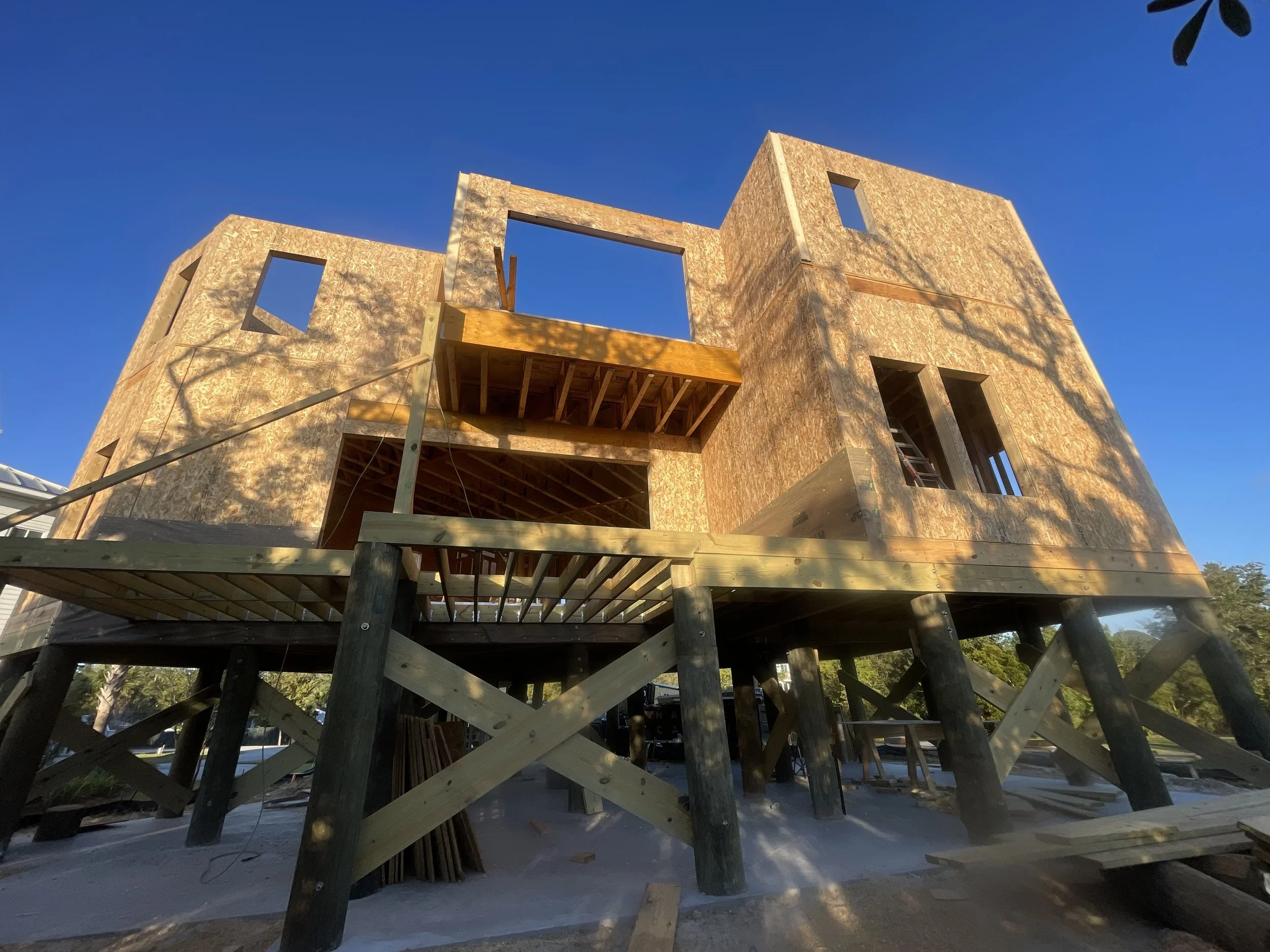
Key Takeaways
SIPs have a higher material cost upfront, but a lower total cost of ownership over 30 years
SIP wall framing is 30 to 50% faster than stick framing; roof framing is 50 to 70% faster, reducing construction loan interest and labor cost
SIP buildings reduce heating costs by 30 to 60% and cooling costs by 20 to 50% compared to stick-framed construction
Buildings designed to FORTIFIED standards using SIPs often qualify for lower insurance premiums due to reduced loss severity
SIP construction generates 1 to 3% material waste compared to 10 to 20% for stick framing
The first-cost premium on SIPs is typically recovered within the first few years of occupancy through energy, maintenance, and possibly insurance savings
Most builders, homeowners, and lenders look at SIP panel prices, compare them to lumber, and stop there. That is not a cost analysis. That is a materials receipt.
The actual question is this: What does it cost to own, operate, insure, and maintain the building for 30 years?
When you ask that question honestly, SIPs do not look expensive. They look like the disciplined financial choice.
Why Comparing SIP Panel Prices to Lumber Is the Wrong Question
A panel-to-lumber comparison is a common shortcut that produces a misleading answer. It captures material costs and ignores everything else that determines what a building actually costs to build and run.
A complete comparison includes:
Framing and insulation labor
Air sealing, sheathing, and weather-resistant barrier
Jobsite waste, hauling, and disposal
Equipment and weather delay exposure
Construction loan carrying costs
Callbacks and warranty costs
Energy performance over the life of the building
Insurance, maintenance, and operating costs
When you compare full finished assemblies, not just materials, SIPs are often cost-competitive at the outset. Over time, they are typically less expensive. The builder who walks away from SIPs based on panel price alone is making the building owner pay for that decision every month for the life of the building.
Understanding what goes into a SIP panel matters when evaluating true assembly cost. [See our guide to SIP core types and materials →]
How SIPs Cut Construction Time by Up to 70% and Why That Saves Real Money
Speed is not a soft benefit. In construction, speed is a direct cost driver.
SIP panels arrive pre-cut and ready to install. That changes the math on a jobsite immediately.
Wall framing: 30 to 50% faster than stick framing
Roof framing: 50 to 70% faster than stick framing
Every day shaved off a construction schedule reduces:
Construction loan interest accruing daily
General conditions: supervision, equipment rentals, portable facilities, site costs
Exposure to weather delays that trigger cascading schedule problems
Billable labor hours on tasks that SIPs eliminate
For rental, commercial, and multifamily projects, faster time to occupancy means faster time to revenue. That is a measurable financial return that has nothing to do with panel prices.
The modular construction industry built its entire business model on this logic. SIPs bring the same economic advantage to site-built construction.
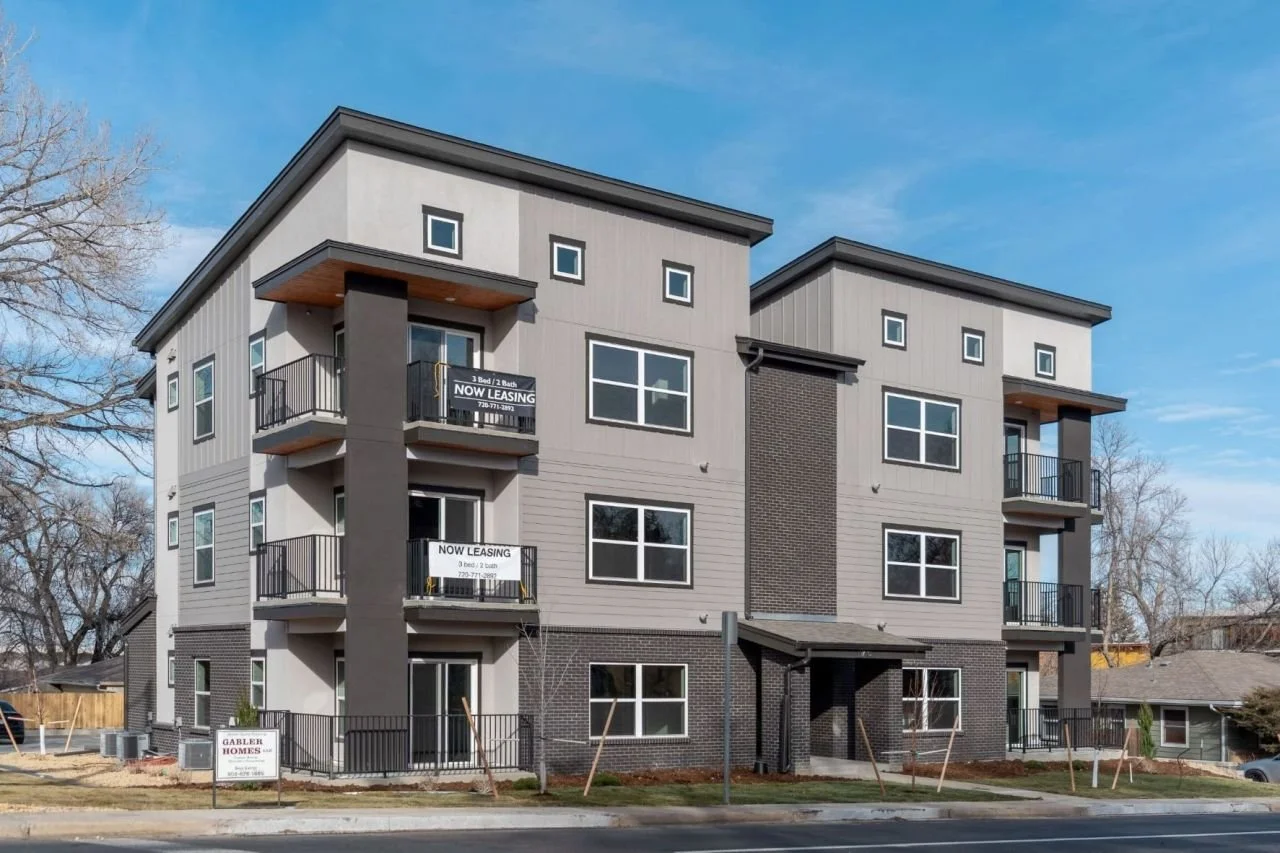
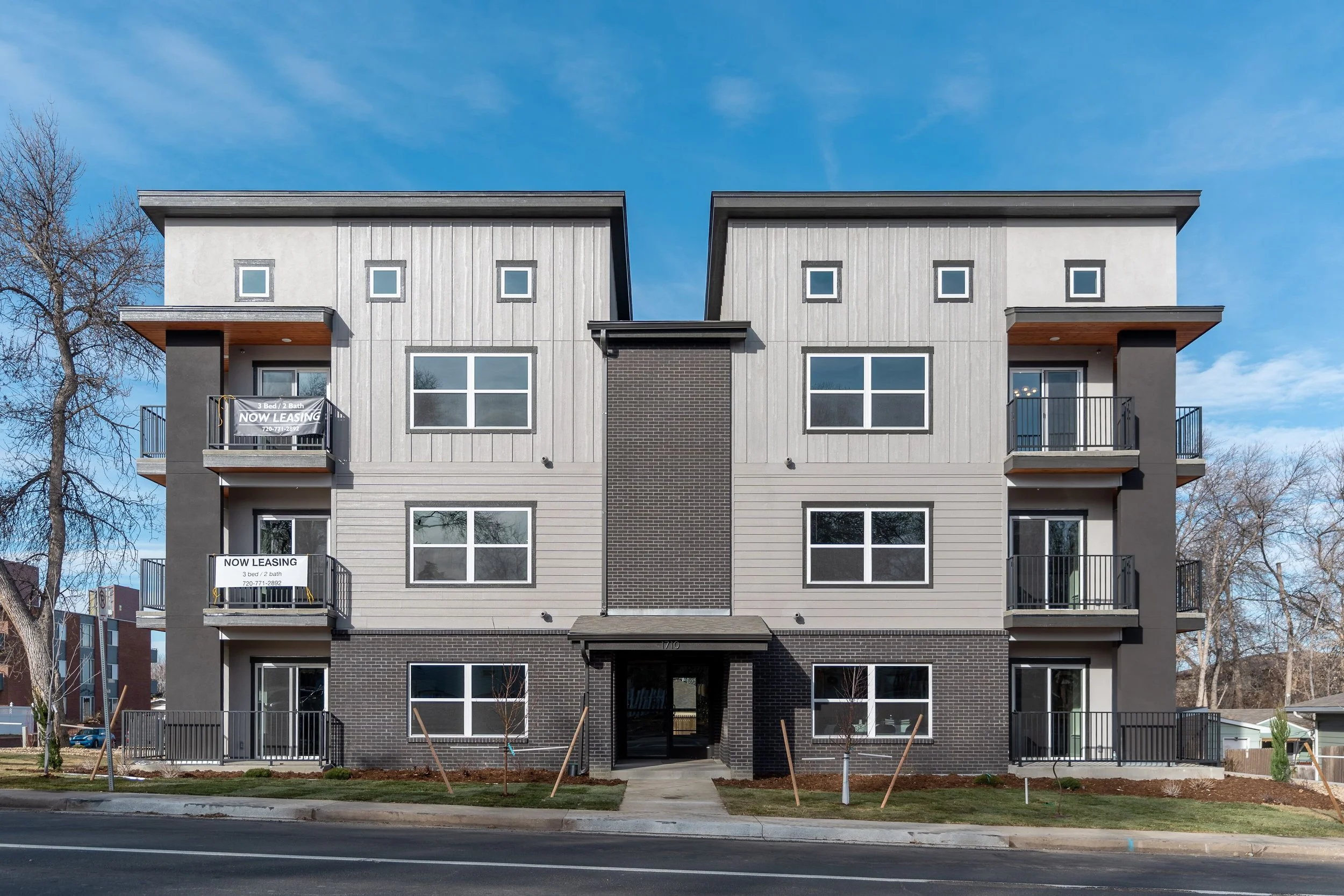
How FORTIFIED-Certified SIP Buildings Qualify for Lower Insurance Premiums
This financial advantage rarely gets the attention it deserves.
The FORTIFIED Home and FORTIFIED Commercial programs, developed by the Insurance Institute for Business and Home Safety (IBHS), certify buildings that resist wind uplift, limit water intrusion, and maintain structural continuity under severe load conditions. The result for the owner: lower loss severity when events occur, and lower premiums because of it.
SIP construction aligns naturally with FORTIFIED criteria:
Continuous load paths that reduce structural failure risk
Fewer joints and seams that reduce water intrusion pathways
Superior airtightness that limits moisture accumulation inside the assembly
High wind resistance when properly engineered and detailed
Builders and owners who design SIP buildings to FORTIFIED standards often qualify for lower premiums, better coverage terms, reduced deductibles, and market-specific incentives in hurricane-prone and high-wind regions.
Insurance underwriters do not care about your building material. They care about expected loss severity. SIPs reduce expected loss severity. That reduction has a dollar value, and it shows up on every insurance renewal for the life of the building.

The Real Energy Cost Savings: SIPs vs. Stick Framing Over 30 Years
Stick-framed walls leak energy in ways that are almost invisible until you see the utility bill. Thermal bridging through studs and plates. Air infiltration through gaps, penetrations, and settling joints. Insulation that sags, shifts, and leaves voids over time.
SIPs eliminate all three failure modes. The building envelope is continuous, airtight, and stable from day one.
The financial result, compared to stick-framed construction:
Heating costs: 30 to 60% reduction
Cooling costs: 20 to 50% reduction
HVAC equipment: Right-sized to a tighter load, which means lower equipment cost, lower operating cost, and longer system lifespan
Peak demand charges: Reduced thermal load lowers peak draw, which matters in time-of-use utility rate structures
Over 30 years, those monthly savings compound into tens of thousands of dollars per building. The energy savings alone often recover the first-cost premium within a few years of occupancy. After that, every month is margin.
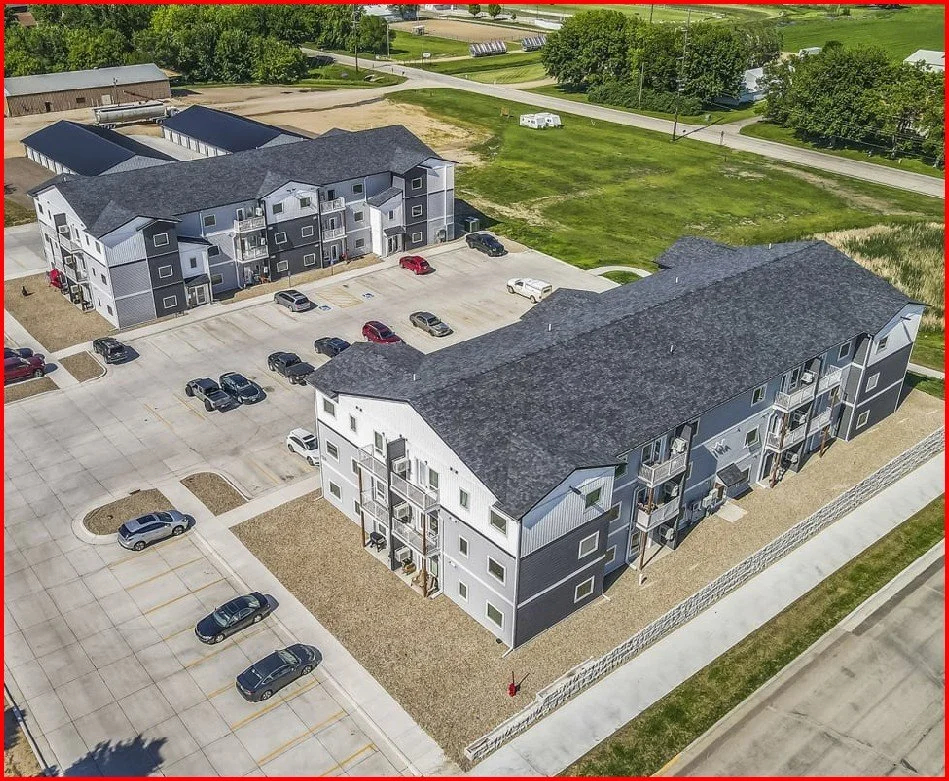
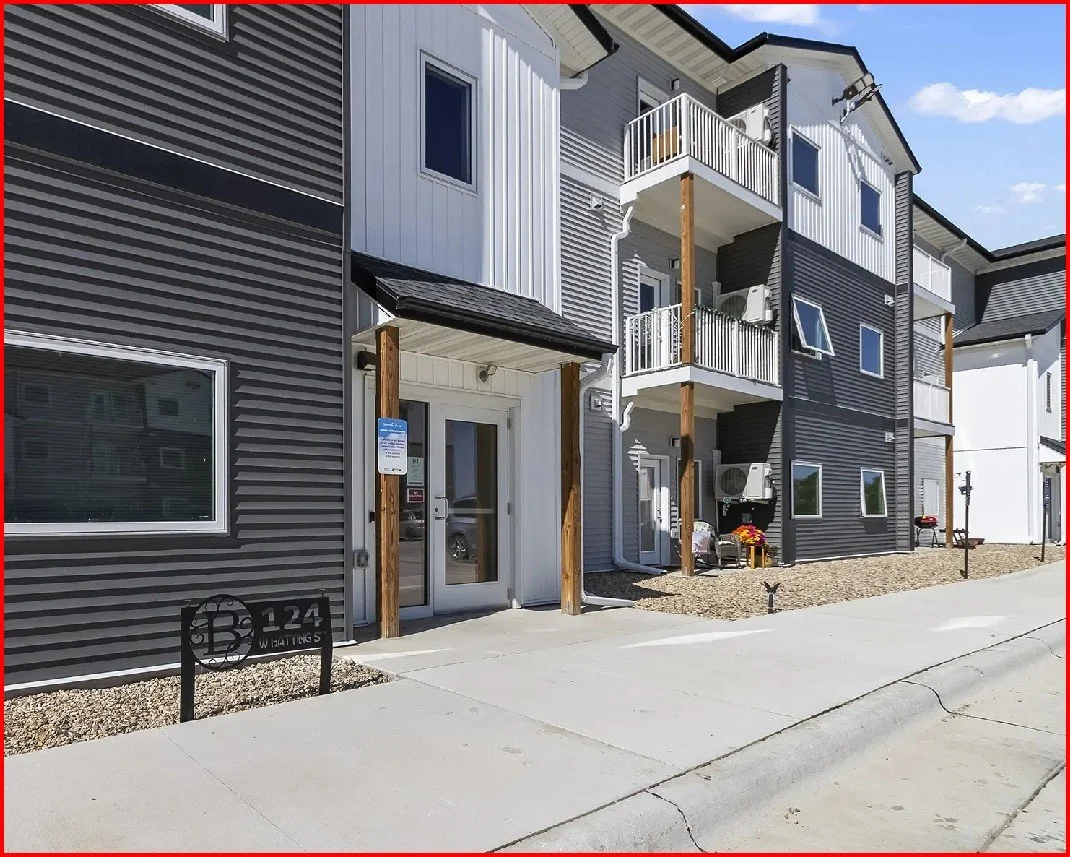
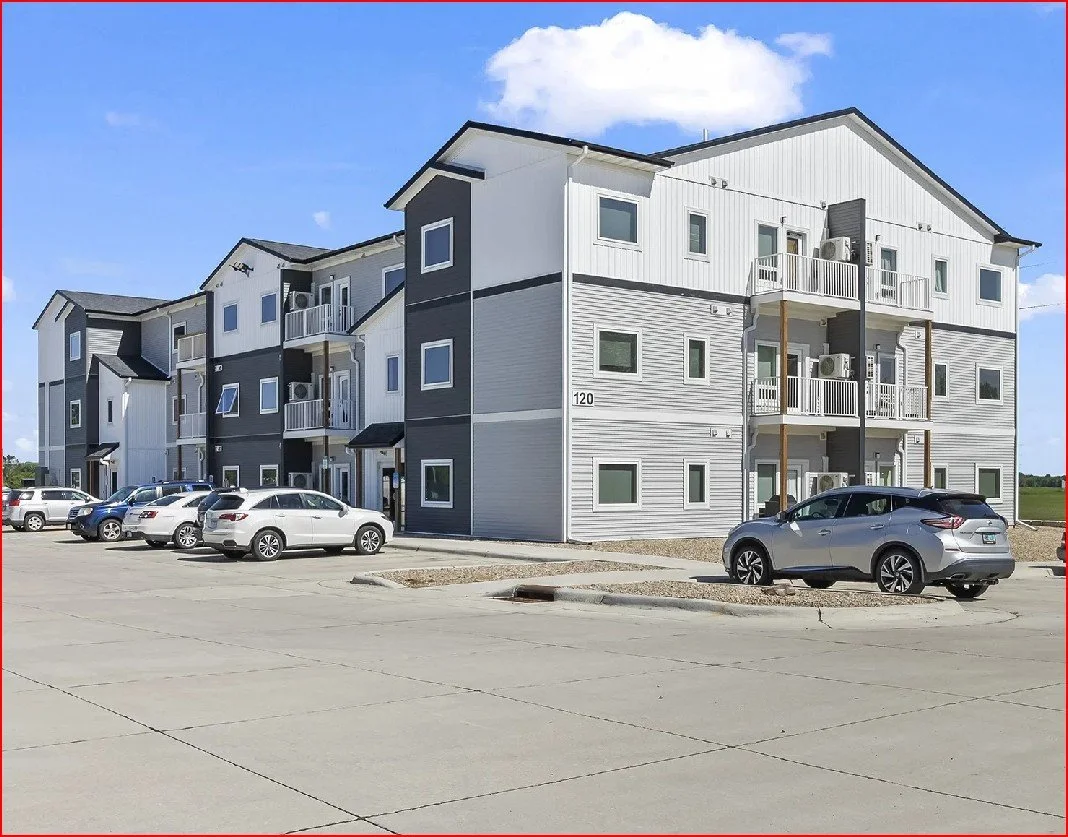
Why SIP Buildings Require Less Maintenance (and Why That Is a Financial Argument)
Every building system has failure modes. Stick framing has several that are expensive and predictable:
Thermal bridging through framing members causes differential expansion, movement, and finish damage
Seasonal wood movement and settling crack drywall and stress connections
Air leakage carries moisture into wall cavities, creating mold and rot conditions over time
Insulation degrades, shifts, and leaves performance gaps
SIPs eliminate or substantially reduce all of these. What that means in practice:
Fewer warranty callbacks during the first years of occupancy
Less drywall cracking and finish damage
Reduced HVAC strain and lower repair frequency
Lower risk and cost of mold and moisture remediation
A building that performs closer to its original specification 20 years out
Maintenance is not a preference issue. It is a recurring cost. Choosing a building system that minimizes long-term failure modes is a financial decision with a compounding return.
Less Waste, Lower Cost: The Factory Precision Advantage
Stick framing generates material waste by design. Pieces are cut to fit in the field, off-cuts accumulate, and cleanup is built into the schedule.
Typical waste profile for stick framing:
10 to 20% material waste per project
Two to three dumpsters of debris
Significant labor hours for cutting, hauling, and disposal
SIP waste looks completely different:
1 to 3% of materials, controlled in the factory
Minimal jobsite cleanup required
Predictable and plannable, not variable
That difference is not cosmetic. On a mid-size residential or commercial project, waste reduction translates directly to lower material cost, lower disposal cost, and faster site throughput.
The Bottom Line: SIPs Are a Financial Strategy, Not Just a Building Material
"SIPs do not just change how you build. They change the economics of building."
Choosing SIPs is choosing a different financial structure for your project:
Compressed construction schedule and lower financing cost
Reduced insurance exposure through FORTIFIED alignment
Lower utility bills compounding over the life of the building
Fewer maintenance failures and lower callback cost
A more durable building that holds its performance longer
Lower risk exposure across every phase of the project
This is not a materials argument. It is an economics argument. And the numbers support it.
First Cost vs. Total Cost of Ownership
First cost gets a building out of the ground. Total cost of ownership is what you actually pay. The table below compares SIPs and stick framing across eight cost categories — from materials and labor to insurance, energy, and maintenance — to show true 30-year cost of ownership rather than first cost alone. On mobile, swipe left to view the full table.
On mobile, swipe left to view the full table.
| Category | SIPs | Stick Framing |
|---|---|---|
| Material cost | Higher | Lower |
| Labor and construction time | Lower | Higher |
| Construction financing cost | Lower | Higher |
| Annual energy cost | Significantly lower | Higher |
| Insurance premiums | Often lower | Standard |
| Maintenance and callbacks | Lower | Higher |
| Durability and useful life | Longer | Standard |
| Total 30-year cost | Lower | Higher |
SIPs win on every category except first cost. First cost is the number that gets buildings started. Total cost of ownership is the number that matters.
Three-Way Cost Comparison: SIPs vs. Stick Framing vs. Modular
SIPs sit between stick framing and modular in first cost. In economic outcomes, they perform much closer to modular. The table below compares stick framing, SIPs, and modular construction across six factors including first cost, construction speed, energy performance, waste generation, insurance alignment, and 30-year total cost. On mobile, swipe left to view the full table.
On mobile, swipe left to view the full table.
| Factor | Stick Framing | SIPs | Modular |
|---|---|---|---|
| First cost | Lowest | Moderate | Highest |
| Construction speed | Slowest | Fast | Fastest |
| Energy performance | Standard | High | High |
| Waste generation | High | Low | Lowest |
| Insurance alignment | Standard | Strong | Strong |
| 30-year total cost | Highest | Competitive | Competitive |
Thinking About SIPs for Your Next Project?
If you are evaluating Structural Insulated Panels for a residential, commercial, or multifamily project, Joe Pasma, PE is glad to help you work through the engineering, cost, and performance considerations specific to your situation.
Frequently Asked Questions: SIP Cost and Value
Are SIPs more expensive than stick framing?
SIPs carry a higher first cost for materials. The total cost of ownership is typically lower. When you account for faster construction, reduced financing cost, lower insurance, lower utility bills, and reduced maintenance over the life of the building, SIPs usually cost less than stick framing. The mistake most buyers make is comparing panel prices to lumber prices and treating that as a complete analysis. It is not.
Do SIPs reduce construction time?
Yes, significantly. SIP panels arrive pre-cut and ready to install. Wall framing runs 30 to 50% faster than stick framing. Roof framing runs 50 to 70% faster. That speed reduces construction loan interest, labor hours, general conditions costs, and weather exposure. On every project, faster completion is a real financial return.
Do SIPs qualify for lower insurance rates?
Often yes, particularly when the building is designed to FORTIFIED Home or FORTIFIED Commercial standards. FORTIFIED certification recognizes buildings with continuous load paths, fewer seams, and reduced water intrusion risk. Well-designed SIP construction meets those criteria naturally. Lower expected loss severity translates to lower premiums in many markets, particularly in coastal and high-wind regions.
Are SIPs cheaper to heat and cool?
Yes. SIP buildings consistently reduce heating costs by 30 to 60% and cooling costs by 20 to 50% compared to stick-framed construction. Continuous insulation and superior airtightness mean less conditioned air escapes. HVAC systems can be right-sized to a lower load, reducing both equipment cost and monthly operating cost.
Do SIPs reduce maintenance costs?
Yes. SIPs eliminate the failure modes that drive long-term maintenance in stick-framed buildings: thermal bridging, seasonal wood movement, insulation voids, and moisture infiltration pathways. Fewer failure modes means fewer callbacks, less drywall damage, less HVAC wear, and lower remediation risk over the life of the building.
Are SIPs worth the investment?
For most projects, yes. When total cost of ownership is evaluated across construction time, insurance, utilities, maintenance, and durability, SIPs frequently cost less over the life of the building than conventional framing. The first-cost premium is typically recovered within the first few years of occupancy through energy and maintenance savings. After that point, the building continues to outperform on every cost line.
About the Author
Joe Pasma, PE is a licensed professional engineer with more than 40 years of experience in Structural Insulated Panels and advanced building systems. His background includes engineering, manufacturing systems, installation oversight, and forensic engineering.
Through PGS Consulting LLC, Joe helps manufacturers, builders, architects, building owners, and project teams improve system performance, reduce risk, and bring clarity to complex building challenges.

Understanding Structural Insulated Panels (SIPs): Core Types, Skins, Adhesives, and System Performance
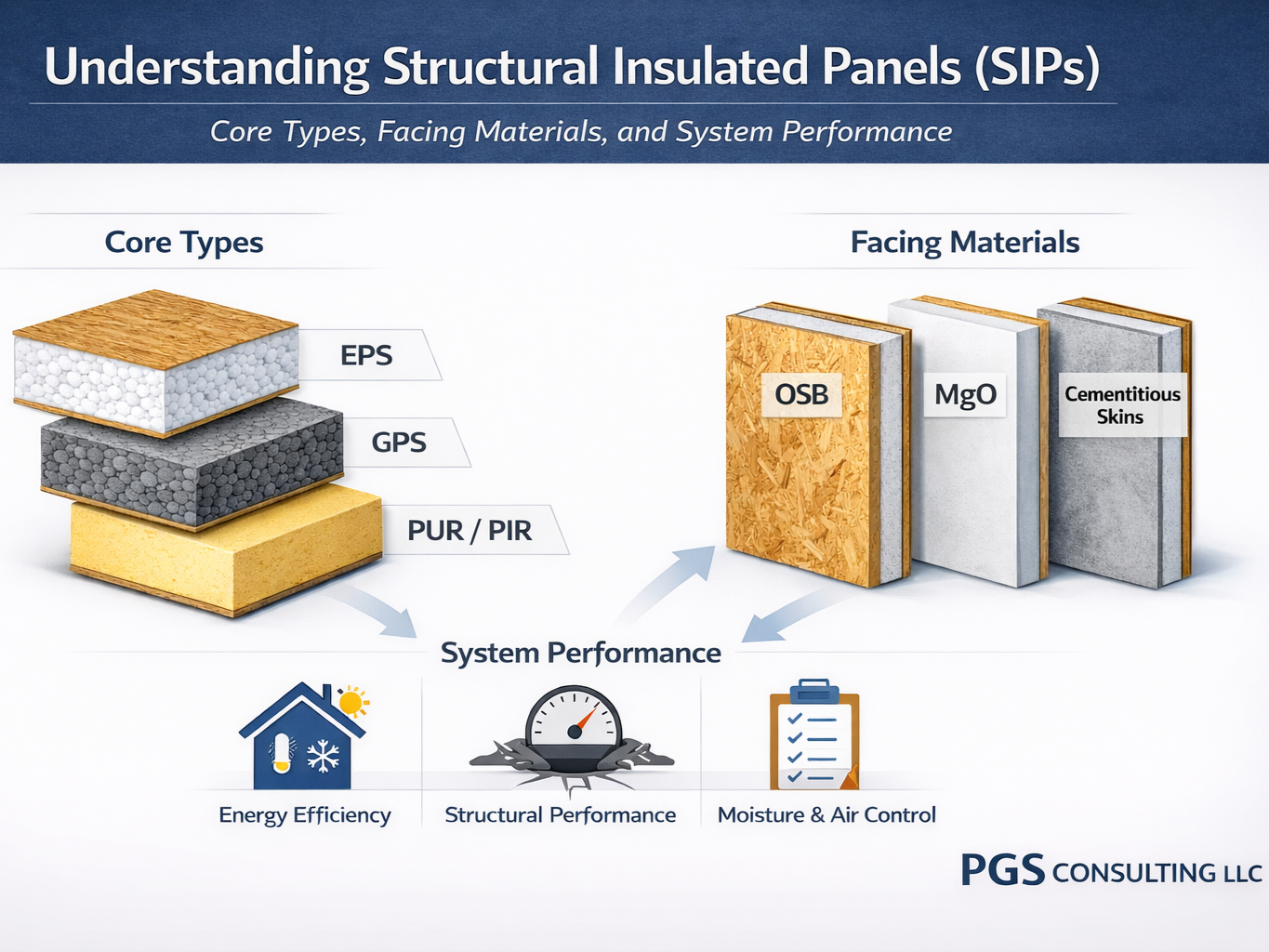
Understanding Structural Insulated Panels (SIPs) requires more than just knowing the materials. SIP performance depends on how core types, facing materials, adhesives, and system design work together. This guide breaks down EPS, GPS, and PUR/PIR cores alongside OSB, MgO, and cementitious facings to help builders, architects, and manufacturers make informed, system-based decisions.
By Joe Pasma, PE | PGS Consulting LLC, Licensed Professional Engineer | 40+ Years in SIP Engineering, Manufacturing, and Forensic Analysis | Published April 7, 2026 | Updated October 19, 2026
Structural Insulated Panels (SIPs) are often described as simple. Foam and skins.
But in real projects, they are anything but simple.
Performance depends on how the core, facings, adhesive, and code pathway work together. When those pieces align, SIPs deliver strong structural performance and energy efficiency. When they don’t, problems tend to show up quickly.
This guide breaks down SIP core types, SIP panel materials, adhesives, and system considerations so builders, architects, and manufacturers can make informed decisions.
Who This Guide Is For
Builders evaluating SIP systems
Architects and designers designing high-performance envelopes
Manufacturers refining production and QA
Owners comparing building systems
Key Takeaways
SIPs are a composite building material, not just foam and skins
EPS is the most common and stable SIP core
GPS improves thermal performance by reducing radiant heat transfer
PUR/PIR offer higher R-values but include thermal drift and higher cost
OSB is the most widely used structural facing
Facing materials impact structure, fire resistance, and durability
Adhesive type matters tremendously
SIP performance depends on system alignment, not individual materials
In simple terms:
SIP performance is not about one material. It is about how the core, facings, and adhesive work together as a composite.
What Are Structural Insulated Panels (SIPs)?
Structural Insulated Panels (SIPs) are high-performance building panels made of an insulation core bonded between two structural facings, typically OSB. SIPs function as both structure and insulation, creating a strong, energy-efficient building envelope.
As the name states, SIPs are structural. This means the panels don’t just enclose a building — they actually support loads. The reason they can do this is the stiff, thick facings (typically OSB, MgO, or other engineered skins) bonded to the insulation core. These skins do not buckle locally when axial loads are applied, which allows the panel to carry gravity loads such as snow, people, and the everyday weight of the building. Working together with the foam core as a composite member, SIPs also resist wind and other transverse forces, and provide in‑plane strength that helps the building stand up to racking and lateral movement. In wall assemblies, SIPs can function as shear walls, and in floors and roofs they act as diaphragms that transfer loads across the structure.
This structural behavior is very different from thin‑skin metal “cooler panels,” which may look similar but are not structural. Cooler panels use very thin metal facings that buckle easily under axial load, meaning they can only handle transverse pressure inside refrigerated spaces. Because these skins cannot resist compression or shear, cooler panels cannot carry axial loads, cannot resist racking, and cannot function as shear walls or diaphragms in a building. They are enclosure products only — not load‑bearing components.
What Are the Main Types of SIP Core Materials?
The three primary SIP core materials are EPS (expanded polystyrene), GPS (graphite polystyrene), and PUR/PIR (polyurethane-based foam). Each core type differs in thermal performance, cost, long-term stability, and manufacturing complexity.
EPS (Expanded Polystyrene): The most widely used SIP core, known for stability, predictability, and cost efficiency
GPS (Graphite Polystyrene): An enhanced version of EPS with higher R-value and improved thermal performance
PUR/PIR (Polyurethane-based cores): Higher R-value per inch with more complex manufacturing and long-term performance considerations
Which SIP Core Has the Best R-Value?
PUR/PIR SIP cores have the highest initial R-value, typically between R-6.5 and R-7.2 per inch. However, EPS and GPS provide more stable long-term R-values because they do not experience thermal drift.
What Is the Best SIP Core Type?
There is no single best SIP core type. EPS is the most widely used and stable, GPS offers improved thermal performance, and PUR/PIR provides higher R-value per inch with additional cost and complexity. The right choice depends on project goals and system requirements.
SIP Core Types Comparison
The table below compares the main SIP core types based on thermal performance, stability, moisture behavior, manufacturing implications, and typical applications. On mobile, swipe left to view the full table.
| Core Type | R-Value | Stability | Moisture Behavior | Manufacturing / Adhesion | Cost | Best Use | Key Tradeoffs |
|---|---|---|---|---|---|---|---|
| EPS |
* R-3.6 to R-4.2/in * Stable over time |
* Predictable long-term behavior * Well-supported by engineering tables |
* Slow vapor diffusion * Does not move liquid water laterally * Requires proper sealing at joints |
* Bonds very well to OSB * Forgiving during lamination * Strong manufacturing consistency |
$ |
* Both Residential & commercial envelopes * Large-format panels * Cold climates |
* Lower R-value per inch * Most proven and code-supported option |
| GPS |
* R-4.7 to R-5.1/in * Higher thermal performance than EPS |
* Stable like EPS * No thermal drift |
* Similar to EPS * Slow, predictable diffusion * Good dimensional stability |
* Bonds very well to OSB * Uses same adhesives and equipment * Easy upgrade from EPS production |
$$ |
* Higher-performance envelopes * Energy-focused projects * Cold climates |
* More limited availability * Slightly higher cost than EPS |
| PUR / PIR |
* Initial: R-6.5 to R-7.2/in * Aged: R-5.0 to R-6.5/in |
* Higher initial performance * Long-term thermal drift must be considered |
* Less vapor permeable * Moisture behavior depends on assembly design |
* More complex chemistry * Tighter manufacturing control required * Different processing behavior than EPS/GPS |
$$$$ |
* Thin wall assemblies * Commercial applications * High-performance projects |
* Higher cost * Thermal drift over time * More complex production |
Each SIP core type should be evaluated as part of the full building system, not as a standalone material decision.
Looking for specific manufacturers that produce these SIP systems?
Explore the list of SIP manufacturers in both North America and Internationally→
EPS SIP Panels: The Industry Standard
EPS (expanded polystyrene) is the most widely used SIP core in North America. It is reliable, predictable, and well-supported by building codes.
Why EPS Works Well
Stable R-value over time
Strong adhesion to OSB
Predictable structural behavior
Performs well in cold climates
Best Use Cases
Residential construction
Commercial construction
Large-format panels
Cost-sensitive projects
GPS SIP Panels: Higher Performance Without Changing the System
GPS is a modified version of EPS that includes graphite to improve thermal performance.
Key Advantages
10 to 20 percent higher R-value than EPS
Same structural and installation behavior
Improved energy performance without changing system design
Best Use Cases
Higher performance buildings
Projects targeting higher insulation performance
PUR/PIR SIP Panels: High Performance With Tradeoffs
PUR and PIR SIP cores provide higher R-values but introduce additional considerations.
Key Considerations
Higher initial R-value
Thermal drift over time
Higher cost
More complex manufacturing requirements
Roof spans maybe limited due to panel thickness limitations
Best Use Cases
Thin wall assemblies
Commercial or high-performance applications
What Are SIP Facing Materials?
SIP facing materials provide the structural strength of the panel and play a major role in durability, fire performance, and long-term behavior.
OSB (Oriented Strand Board): The most common facing, offering strong structural performance and large panel sizes
MgO (Magnesium Oxide Board): A non-combustible option used in fire-resistant and specialty applications
Cementitious Skins: Durable, non-combustible facings used in high-demand or specialty environments
The table below compares common SIP facing materials based on structural performance, fire characteristics, moisture behavior, and typical applications. On mobile, swipe left to view the full table.
| Facing Material | Structural Performance | Fire / Heat Behavior | Moisture Behavior | Panel Size | Best Use | Key Tradeoffs |
|---|---|---|---|---|---|---|
| OSB |
* Excellent shear strength * Strong diaphragm performance * Enables large structural panels |
* Combustible * Requires code-compliant thermal barriers * Well understood in building codes |
* Performs well when properly detailed * Sensitive to prolonged exposure during construction * Requires weather protection |
* Large format panels * Often up to 8 × 24 ft |
* Most residential and commercial SIPs * Roof, wall, and floor systems * Large-scale panelized construction |
* Requires proper moisture management * Not fire-resistant without protection |
| MgO |
* Good structural performance * Varies significantly by manufacturer * Requires verification of testing |
* Non-combustible surface * Transfers heat to the core * Fire performance depends on full assembly |
* Moisture resistant * Can contain chlorides * Potential corrosion risk if poorly manufactured |
* Typically smaller panels than OSB * More limited large-format availability |
* Fire-resistant assemblies * Specialty commercial applications * Projects with specific durability needs |
* Quality varies widely * Requires careful sourcing and evaluation |
| Cementitious |
* Strong in compression * More brittle in flexure * Less forgiving than OSB systems |
* Non-combustible * Heat still transfers to the core * Assembly design is critical |
* Highly durable * Resistant to moisture and impact * Performs well in harsh environments |
* Smaller panels * Typically 4 × 8 or 4 × 10 |
* High-durability applications * Fire-critical environments * Specialty construction |
* Heavier panels * More labor-intensive installation * More seams and connections |
Facing materials should always be evaluated as part of the full SIP system, not as a standalone material choice. Structural performance, fire behavior, and durability are influenced by how the facing, core, adhesive, and assembly details work together.
Although insulated metal panels (IMPs) may look similar to SIPs, they are not structural panels. As the Metal Construction Association notes, IMPs perform very well under transverse loading such as wind or snow, but their thin metal facings buckle easily under axial compression and provide low resistance to racking loads. Because of this, cooler‑type IMPs cannot function as load‑bearing walls, shear walls, or diaphragms. They are excellent enclosure products, but they are not designed to carry building structural loads. (See MCA Technical Bulletin: Insulated Metal Panels – Structural Loading.)
Why Are Adhesives Critical in SIP Systems?
Adhesives are what allow Structural Insulated Panels to function as a single composite structural unit.
Without a reliable bond between the insulation core and the facings, the panel cannot transfer loads effectively. In that case, it is no longer acting as a composite structural unit.
Picture a SIP panel as a ream of copy paper with a plastic wrapper on top and bottom of the ream. The two OSB skins on the outside of the SIP act like the plastic wrapper of the ream of paper when the ream is bent. They stretch and compress as the panel (ream) bends under load. The bottom stretches and the top compresses. The foam core in the middle (the sheets of paper) does a different job: it resists shear, which is the sliding force between the top and bottom skins. The two only work well together because they're glued into one solid unit. That teamwork is called composite action, and it's the reason a panel just a few inches thick can be so stiff for how little it weighs. It's also why the foam core's own flexibility matters more in a SIP than it would in a solid wood beam or an engineered I-joist.


Adhesives: Performance Characteristics
Polyurethane Adhesives
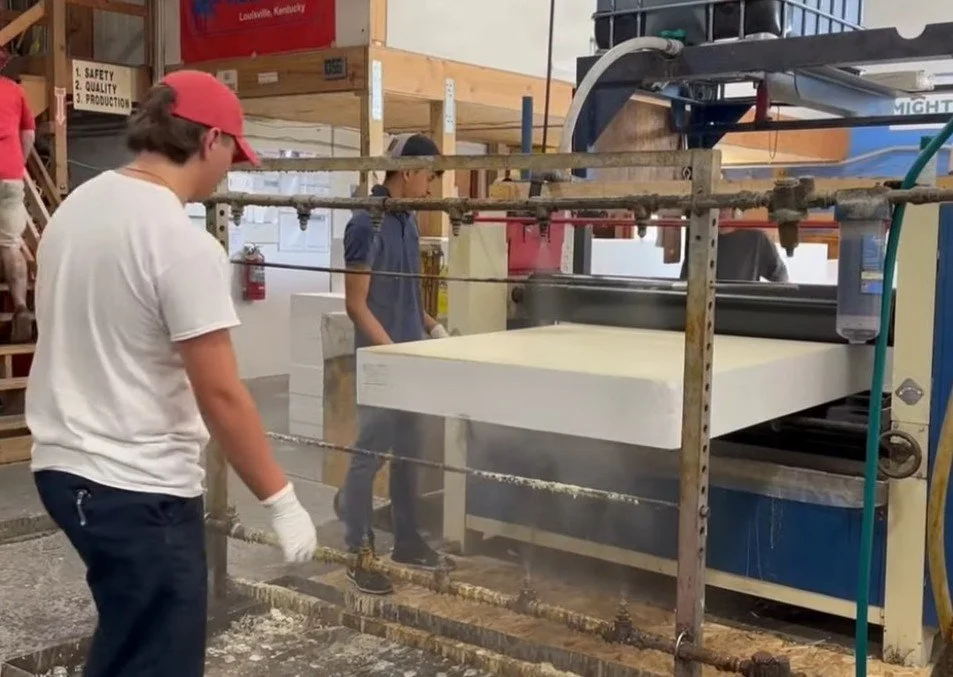
Polyurethane (PU) adhesives are the backbone of modern SIP manufacturing in the U.S. They provide robust, flexible bonds between facers and foam cores, are available in one- and two-part formulations, and are favored for their chemical and moisture resistance. To date, only Bostik and DuPont are listed as component material sources for the SIPA ESR-4689 Evaluation Report.
Application Methods
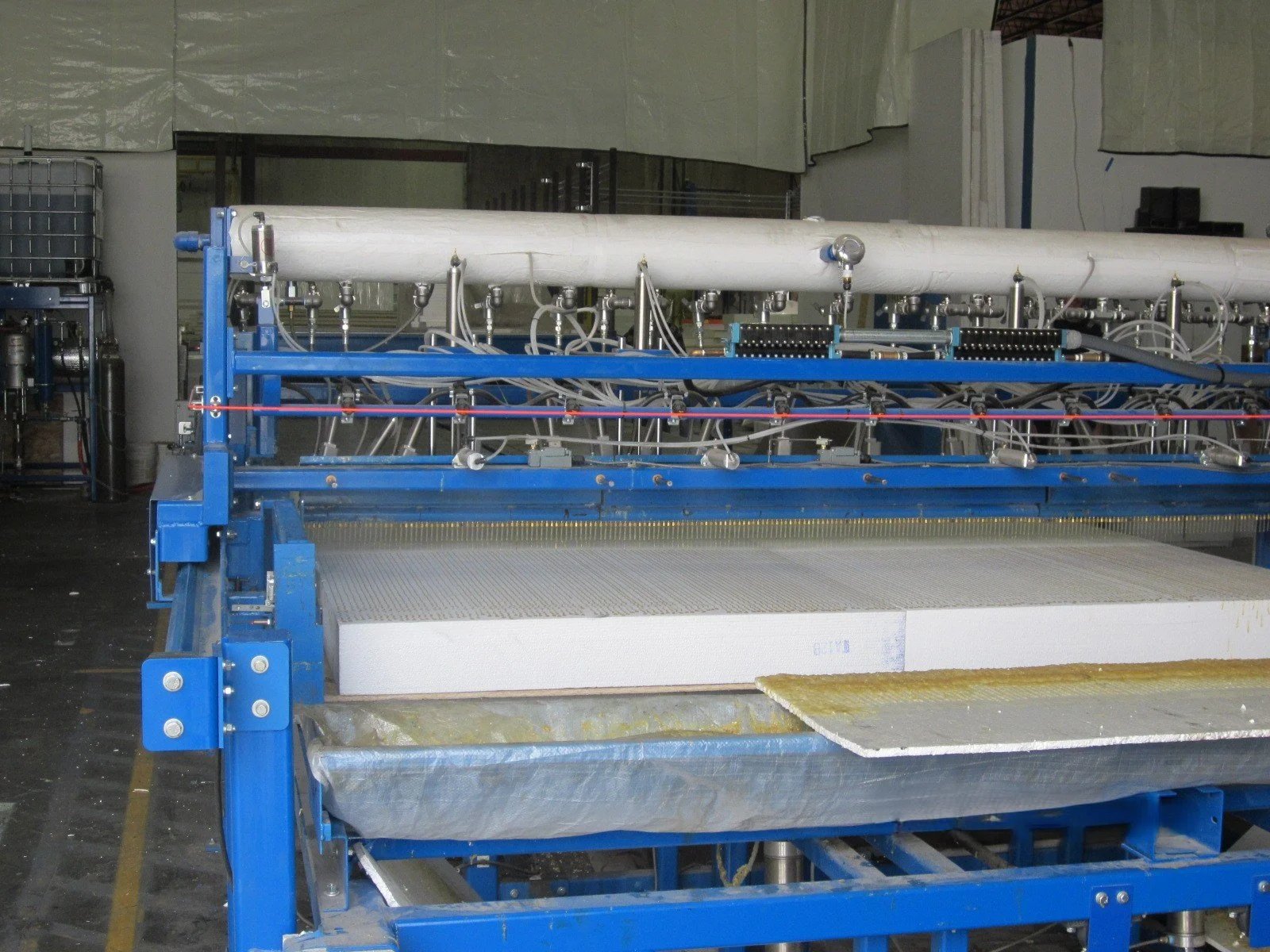
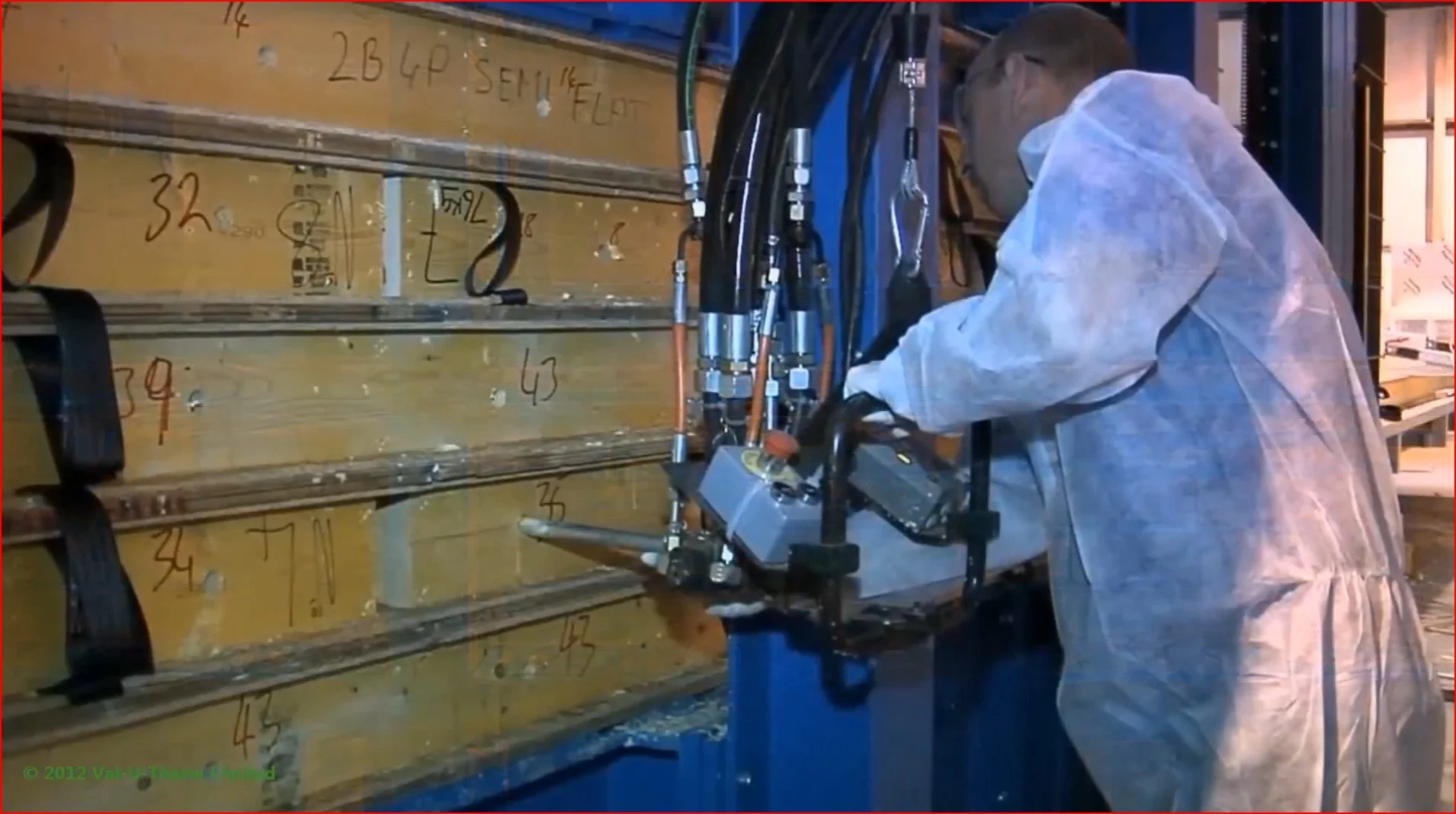
PU adhesives can be applied manually, by spray, or with automated bead or roller systems. In PUR-core SIPs, liquid foam is often injected and expands to adhere to both facers. With EPS and XPS cores, bead or roller applied adhesives with pressure lamination is standard.
Epoxy Adhesives
Epoxy resin adhesives, while less common than PU in mass SIP production due to cost and slower cure times, offer superior bond strength, chemical resistance, and thermal stability. They are prevalent in specialty, high-performance, or retrofit assemblies and for anchoring or reinforcement applications.
Polyvinyl Acetate (PVA) Adhesives
PVA adhesives persisted through the 1980s–1990s for foam-to-wood bonding in lower-performance or non-critical applications, especially in site-assembled panels. Modern iterations (Type II water-resistant PVA) offer improved environmental and handling characteristics, but are typically reserved for interior applications and non-structural SIPs .
PVA adhesives are not generally used as the primary adhesive for high-performance SIPs due to lower resistance to sustained moisture, cold, and heat cycles. However, certain manufacturers still specify PVA in interior and non-loadbearing applications, or for field joint sealing.
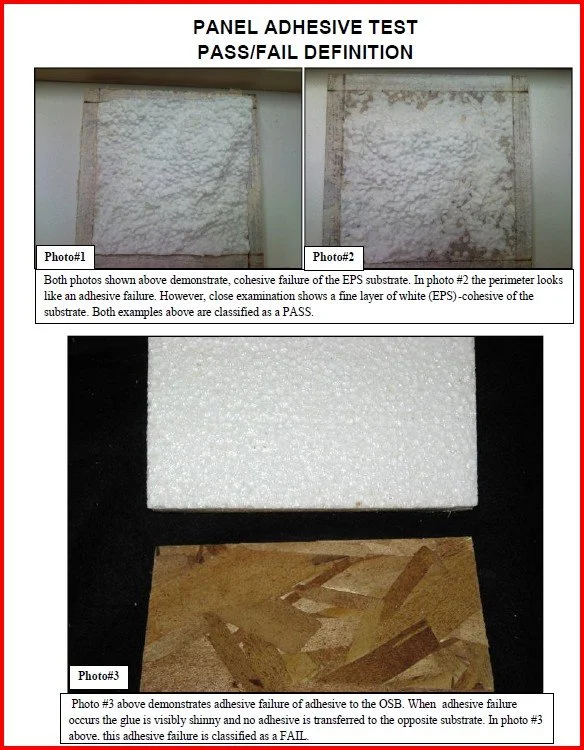
The Bond Line Is Structural
In SIP construction, the adhesive bond line is responsible for transferring shear forces between the facings and the core.
This is what allows the panel to behave as a composite structural element rather than separate materials.
If the bond line fails, the panel loses structural integrity.
What Can Go Wrong
Adhesive performance is highly dependent on manufacturing control.
Common issues include:
Inconsistent adhesive application
Poor surface preparation
Incorrect curing conditions (temperature, pressure, time)
Incompatible materials
These issues can lead to:
weak bond strength
localized failures
long-term delamination
Why Manufacturing Matters
Adhesives do not perform the same way in every environment. Performance depends on:
core material (EPS, GPS, PUR/PIR)
facing material (OSB, MgO, cementitious)
plant conditions and quality control
This is why SIP performance starts in the factory, not on the jobsite.
What Most People Overlook
Adhesives are often treated as a secondary component. In reality, they are one of the most critical parts of the system.
Most SIP manufacturers use moisture-cure polyurethane adhesives because they provide strong, durable bonds across a range of materials. But even the right adhesive will fail if the process is not controlled.
In many cases, bond line failures are not isolated issues, but indicators of deeper manufacturing or system-level problems.
The System Perspective
Adhesive performance cannot be evaluated in isolation. It must be considered as part of the full system:
core behavior
facing material
environmental exposure
manufacturing consistency
When these align, SIPs perform extremely well.
When they do not, problems are often traced back to the bond line.
In forensic investigations, bond line failures are one of the most common indicators of deeper system or manufacturing issues.
How Do You Choose the Right SIP System?
Choosing a SIP system is not just about materials. It is about system alignment.
Evaluate:
Core type
Facing material
Adhesive type
Code compliance
Climate and performance goals
Manufacturer capabilities
Installation requirements
The best SIP system is the one where all components work together for your specific project.
PGS Consulting works with SIP manufacturers, builders, and design teams to evaluate building system performance, manufacturing processes, and installation practices. Learn more about PGS Consulting →
What Is a SIP Code Pathway?
A SIP code pathway is the method used to demonstrate that a Structural Insulated Panel system complies with building codes such as the International Building Code (IBC) or International Residential Code (IRC).
Unlike traditional framing, SIPs often require additional documentation or engineering to show compliance.
Why Code Pathways Matter
Code approval is not just a formality. It directly impacts:
how quickly a project gets approved
how much engineering is required
who carries responsibility for performance
how risk is managed across the project team
Misunderstanding the code pathway is one of the most common sources of delays and confusion in SIP projects.
The Two Primary SIP Code Pathways
1. Prescriptive Code
Some SIP applications are addressed directly in building codes.
Limited to specific conditions
Typically applies to residential construction
Less flexibility in design
This is the simplest pathway, but also the most restrictive.
2. Engineered Design (Performance-Based)
SIPs can also be approved through engineering analysis.
Based on 2024 IBC Section 104.2.3 or similar provisions
Allows design flexibility
Requires a licensed engineer
This pathway is often used for:
commercial buildings
complex geometries
projects outside prescriptive limits
Evaluation Reports (ICC-ES, CCMC, Etc.) - Not a Pathway by themselves
Evaluation Reports by themselves are not a pathway to code compliance. An evaluation report demonstrates that the described material properties meet the building code requirements. However each project must demonstrate that it, itself, meets the requirements of the building code as a system. An evaluation report is used with the engineered design pathway.
Most SIP manufacturers rely on third-party evaluation reports.
Documents compliance with building codes
Includes structural, thermal, and material performance data
Widely accepted by building officials
These reports provide a standardized way to demonstrate compliance, but they are specific to each manufacturer’s system.
Where Projects Get Into Trouble
Problems typically occur when the code pathway is not clearly defined early in the project.
Common issues include:
assuming SIPs are fully prescriptive in all cases
mismatching manufacturer reports with project design
incomplete or incorrect submittals
lack of coordination between design, engineering, and installation
These issues can lead to:
delayed approvals
redesign work
increased project risk
The Role of Engineering and Documentation
SIP systems rely heavily on:
engineering assumptions
manufacturer data
installation details
project-specific conditions
Clear documentation is essential to align all of these pieces. This includes:
load paths and structural design
connection details
thermal and moisture considerations
compliance documentation
The System Perspective
Code compliance should not be treated as a standalone step. It is part of the overall system that includes:
design
manufacturing
installation
performance expectations
When the code pathway is clear, projects move more efficiently. When it is not, problems tend to surface later in the process.
Many SIP-related project issues are not caused by the panels themselves, but by gaps between design intent, code compliance, and system execution.
Talk to Joe About Your SIP Project
PGS Consulting works with manufacturers, builders, and design teams to evaluate SIP systems, manufacturing processes, and installation practices.
If you are planning a project, refining a process, or working through a performance issue, clear guidance early can prevent costly problems later.
Joe Pasma, PE brings more than 40 years of experience in SIP engineering, manufacturing, installation, and forensic analysis.
Frequently Asked Questions About SIP Panels
What is the most common SIP core?
EPS (expanded polystyrene) is the most common SIP core in North America. It is stable, cost-effective, and has the longest track record in SIP manufacturing, testing, and code evaluation. Most SIP manufacturers build their standard panel lines around EPS, which also makes it the easiest core to source and specify.
Can I switch from an EPS core to GPS or PUR/PIR?
Often yes, but the two switches are not the same. GPS (graphite polystyrene) generally improves thermal performance without changing how the panel is manufactured, detailed, or installed. PUR/PIR delivers the highest initial R-value, typically R-6.5 to R-7.2 per inch, but it is a different manufacturing process with its own tradeoffs. Confirm the change with your manufacturer and engineer before you commit.
Why does the adhesive matter in a SIP?
The adhesive is what makes a SIP structural. The bond between the core and the facings lets the panel act as one composite unit instead of three separate layers, which is where its strength and stiffness come from. Adhesive type, application method, and manufacturing quality control all affect how well that bond holds up over the life of the building.
Do SIPs require special approval?
SIPs are approved through one of two code pathways: prescriptive code or engineered design. The prescriptive pathway applies when a project falls within the limits the residential code sets for SIP construction. Projects outside those limits need an engineered design. Evaluation reports, such as ICC-ES, document how a specific panel performs and support approval, but they are not a pathway on their own.
Are SIPs better than traditional framing?
SIPs offer clear advantages over traditional framing: continuous insulation, lower air leakage, and faster installation with fewer job-site steps. Those benefits depend on the system being designed, detailed, and installed correctly, so the panels and the details around them need to be treated as one system from the start.
About the Author
Joe Pasma, PE is a licensed professional engineer with more than 40 years of experience in Structural Insulated Panels and advanced building systems. His background includes engineering, manufacturing systems, installation oversight, and forensic engineering.
Through PGS Consulting LLC, Joe helps manufacturers, builders, architects, building owners, and project teams improve system performance, reduce risk, and bring clarity to complex building challenges.

Can Structural Insulated Panels (SIPs) Be Used in Moist or Cold Climates?
Structural Insulated Panel (SIP) building under construction, showing panelized wall and roof assembly during installation.
Editor’s Note: This article is adapted from an “Ask the Expert” column originally written by Joe Pasma, PE, and published in Facility Magazine in 2013. The content has been updated to reflect current building practices and industry context.
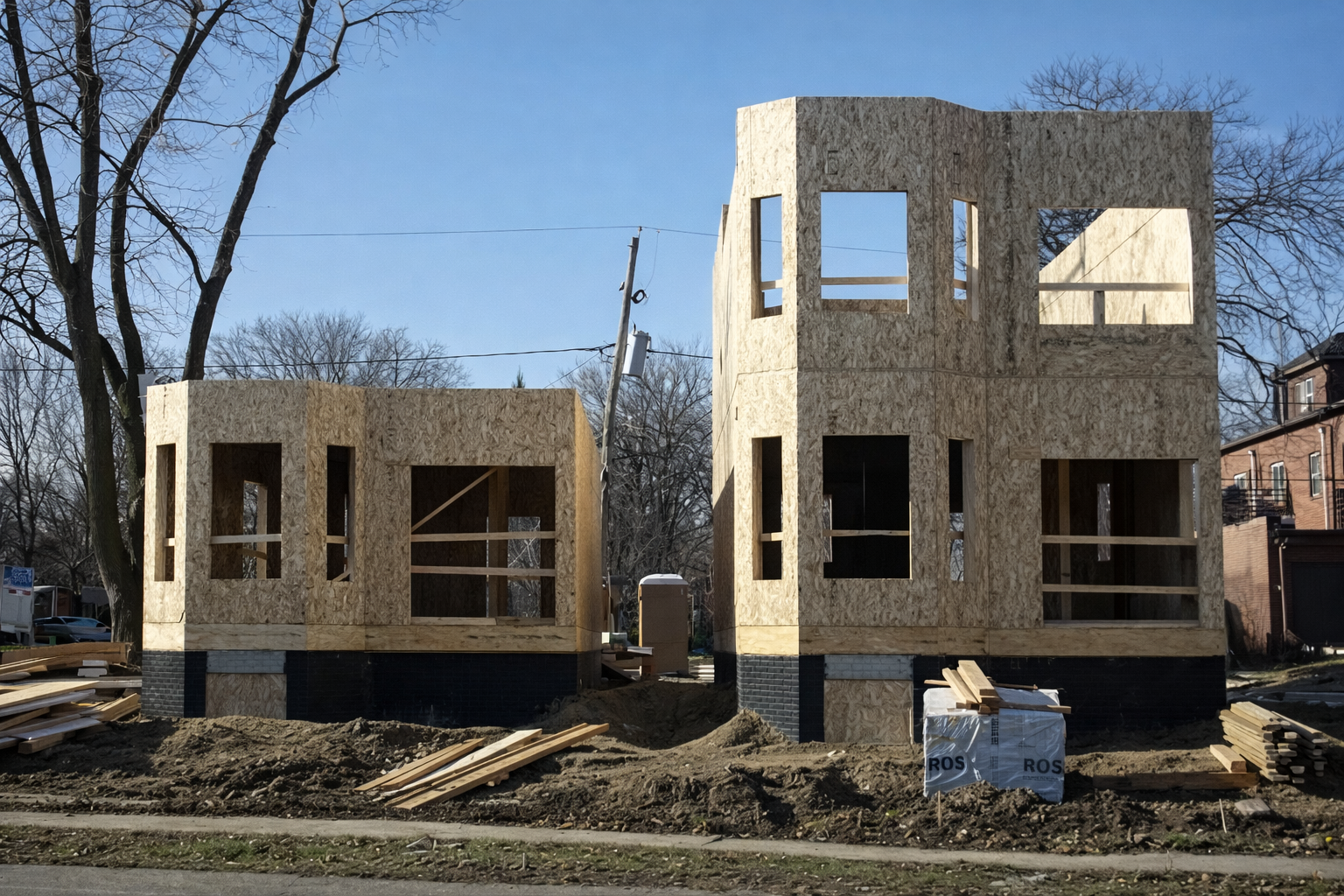
Structural Insulated Panel (SIP) building under construction, showing panelized wall assembly during installation.
One of the most common questions people ask about Structural Insulated Panels is whether they can be used in wet, humid, or cold climates.
The real question behind that concern is much simpler: Can you safely build with wood in these climates?
The answer has always been yes.
Wood-framed buildings exist everywhere from the Louisiana Gulf Coast to communities above the Arctic Circle in Alaska. Structural Insulated Panels use the same fundamental materials, but combine them into a high-performance panelized building system.
When properly designed and installed, SIPs perform extremely well in demanding climates.
SIP Construction in Challenging Climates
Across North America, there are many examples of successful SIP buildings located in cold, wet, and humid environments.
Examples include:
• George Morgan High School in Kalskag, Alaska, where the region receives heavy snowfall and regularly experiences sub-zero temperatures
• Cody Cattle Company restaurant in northern Wyoming near Yellowstone National Park
• Little Big Horn College Health and Wellness Center on the plains of Montana
• Finn Hill Junior High School in Kirkland, Washington, an area that receives nearly 40 inches of rain annually
• Portland Community College Newberg Center in Oregon, recognized as an AIA Committee on the Environment Top Ten Green Project
These projects demonstrate that SIP construction can perform reliably in climates where moisture control and durability are critical.
Why People Question SIPs in Moist Climates
The concern usually centers around the oriented strand board (OSB) skins used in SIP panels.
Because OSB is a wood-based material, some assume it may be vulnerable to moisture.
In reality, SIP panels are manufactured using OSB with an Exposure 1 rating under APA standards. This rating means the adhesive bonds are designed to withstand temporary exposure to moisture during construction before the building is fully enclosed.
This is the same type of rating used in many conventional wood framing materials.
Like any building system, the long-term durability of SIPs depends on proper building envelope design and installation practices.
Moisture Management Still Matters
Whether a building is framed with studs or panels, controlling water and air movement is essential.
The International Building Code requires several components that protect the building envelope from moisture intrusion:
• Proper flashing at windows, doors, and penetrations
• A weather-resistant barrier to protect the wall assembly
• Drainage pathways that allow water to exit the wall system
These practices apply equally to SIP construction.
For SIP walls, builders typically use synthetic weather barriers or building wraps as the weather-resistant barrier.
For roof assemblies, breathable roofing underlayments often replace traditional felt paper. These materials allow water vapor to escape while keeping bulk water out, similar to how a high-quality rain jacket works.
This can be particularly beneficial if SIP roof panels experience temporary exposure during construction.
Read more about the relationship between air control, moisture management, and building envelope performance in an article published in The Construction Specifier.
Air Sealing Is a Major Advantage of SIPs
One reason SIPs perform so well in demanding climates is their airtight construction.
The panels contain continuous insulation and fewer joints than conventional framing systems. When the panel joints are properly sealed with mastics and tapes, the building envelope becomes extremely tight.
This helps prevent warm, humid air from entering wall and roof cavities where condensation can occur.
In many climates, building codes may also require a vapor retarder depending on the wall assembly and local conditions. Builders should always confirm requirements with the local building official and SIP manufacturer.
A Quick Word for Builders Evaluating SIP Construction
SIPs are sometimes viewed as a futuristic or unfamiliar technology. In reality, the system has been studied extensively and used successfully for decades.
The primary reasons builders choose SIPs typically come down to two practical benefits:
Energy efficiency and construction speed.
Because SIPs provide continuous insulation and exceptional airtightness, they can significantly reduce heating and cooling energy use. Studies from the U.S. Department of Energy have shown SIP buildings can dramatically outperform conventional framing in air leakage and thermal performance.
SIPs also streamline construction. Panels arrive pre-cut and labeled, allowing crews to assemble walls and roofs much faster than traditional framing.
This can be especially valuable in an industry facing ongoing labor shortages.
Have questions about using SIPs on a project?
If you have questions about SIP construction or panelized building systems, feel free to reach out. Joe is always glad to help teams think through the technical considerations that affect project performance.
The Bottom Line
Structural Insulated Panels can perform very well in wet, cold, or humid climates when the building envelope is properly designed and installed.
The same principles that protect conventional wood framing also apply to SIP construction. Proper flashing, weather barriers, drainage, and air sealing ensure the building remains durable and efficient over the long term.
When these practices are followed, SIPs offer a strong combination of durability, energy efficiency, and construction speed that continues to attract builders, architects, and facility owners across North America.
Frequently Asked Questions About SIPs in Moist Climates
Can Structural Insulated Panels be used in humid climates?
Yes. SIP buildings perform well in humid climates when the building envelope is properly designed and installed. Proper flashing, weather barriers, and sealed panel joints prevent moisture intrusion and air leakage.
Do SIP panels absorb water?
SIP panels use oriented strand board (OSB) skins that are manufactured with an Exposure 1 rating under APA standards. This rating allows for temporary exposure to moisture during construction before the building is fully enclosed.
Like any wood-based building material, long-term durability depends on proper moisture management in the building envelope.
Are SIP roofs suitable for rainy climates?
Yes. SIP roof systems are commonly used in regions with heavy rainfall or snow. Breathable roofing underlayments help protect the roof assembly while allowing water vapor to escape.
Are SIP buildings more airtight than traditional framing?
Yes. SIP panels have continuous insulation and fewer joints than conventional framing systems. When the panel joints are properly sealed, SIP structures can achieve very high levels of airtightness, which improves energy efficiency and building durability.
Do SIP buildings work in cold climates?
SIPs are widely used in cold climates because they provide excellent insulation and airtightness. Many buildings in northern regions of North America use SIP construction to reduce heating energy consumption and improve indoor comfort.
Have Questions About SIP Construction?
If you are exploring Structural Insulated Panels or evaluating panelized construction for a project, Joe Pasma, PE is always glad to help. With more than 40 years of experience across engineering, manufacturing, installation, and forensic investigation, Joe provides practical guidance to help project teams avoid costly mistakes and build better-performing structures.
About the Author
Joe Pasma, PE, is a licensed professional engineer with more than 40 years of experience working with Structural Insulated Panels and advanced building systems. His background spans structural engineering, manufacturing systems, installation oversight, and forensic investigation.
Through PGS Consulting LLC, Joe advises manufacturers, builders, architects, building owners, and project teams on the technical and operational challenges associated with high-performance building systems.

Why Structural Insulated Panels (SIPs) Create Faster, More Energy Efficient Building Envelopes
Why Structural Insulated Panels (SIPs) Create Faster, More Energy Efficient Building Envelopes
Editor’s Note: This article is adapted from an article originally written by Joe Pasma, PE, and published in Green Homebuilder in 2015. The content has been updated to reflect current building practices and industry context.
For most residential construction in the United States, stick framing has long been the standard approach. Builders understand it, materials are widely available, and the process is familiar across the industry.
At the same time, the expectations placed on buildings today have changed. Energy codes are stricter, labor shortages are affecting job sites, and builders are under increasing pressure to deliver homes that perform better and waste less energy.
Because of these changes, more builders are exploring advanced building envelope systems such as Structural Insulated Panels, commonly known as SIPs.
SIPs combine structure and insulation into a single panel system. When designed and installed correctly, they simplify the building envelope while improving performance and construction efficiency.
Builders often discover that SIPs solve several problems at the same time. They help create tighter buildings, improve insulation performance, and speed up the framing stage of construction.
Key Takeaways: Why Builders & Developers Use SIP Building Envelopes
• SIPs create tighter building envelopes because they reduce the number of joints where air leakage can occur.
• Continuous insulation across the panel reduces thermal bridging that occurs with traditional framing.
• Factory-manufactured panels allow builders to install walls and roofs significantly faster.
• Pre-cut openings and integrated electrical chases simplify construction.
• Reduced framing labor helps address the skilled labor shortages affecting the construction industry.
• Improved airtightness and insulation can reduce heating and cooling demand.
Why Airtightness Matters in Building Performance
One of the biggest advantages of SIP construction is airtightness.
Energy codes across the United States continue to place greater emphasis on controlling air leakage. Air that moves uncontrolled through a building envelope carries heat, moisture, and energy costs with it.
For example, California’s Title 24 Building Energy Efficiency Standards require that joints, penetrations, and openings in the building envelope be sealed to limit infiltration and exfiltration.
Similarly, the International Energy Conservation Code (IECC) requires blower door testing to verify air tightness in residential construction.
Meeting these air leakage targets with traditional framing is possible, but it requires careful detailing and significant attention during construction.
SIP construction simplifies the process.
Because SIP walls consist of continuous insulation sandwiched between structural facings, there are fewer joints and fewer pathways for air to move through the wall assembly. When the panels are sealed properly during installation, the building envelope becomes much easier to tighten.
Research from Oak Ridge National Laboratory
Research from the U.S. Department of Energy’s Oak Ridge National Laboratory (ORNL) has demonstrated how airtight SIP construction can be.
Testing conducted by ORNL found that SIP structures can be significantly more airtight than traditionally framed walls insulated with fiberglass batts.
In one evaluation, a SIP structure showed an air leakage rate of only eight cubic feet per minute at 50 Pascals of pressure. A comparable stick-framed wall showed a leakage rate of 121 cubic feet per minute. This is saying that the stick-framed walls were 15 times leakier than the SIP structure.
Research like this highlights one of the key benefits of SIP construction. Fewer joints and simpler wall assemblies make it easier to create a tight building envelope.
For homeowners, that typically means lower heating and cooling demands and a more comfortable indoor environment.
Whole Wall Performance Matters
Another important difference between SIP construction and traditional framing involves how insulation performance is measured.
Many discussions about insulation focus on the R value of the insulation material itself. In reality, what matters most is the performance of the entire wall assembly.
Traditional framing introduces thermal bridges through studs, plates, and headers. Heat moves through those structural members much more easily than it moves through insulation.
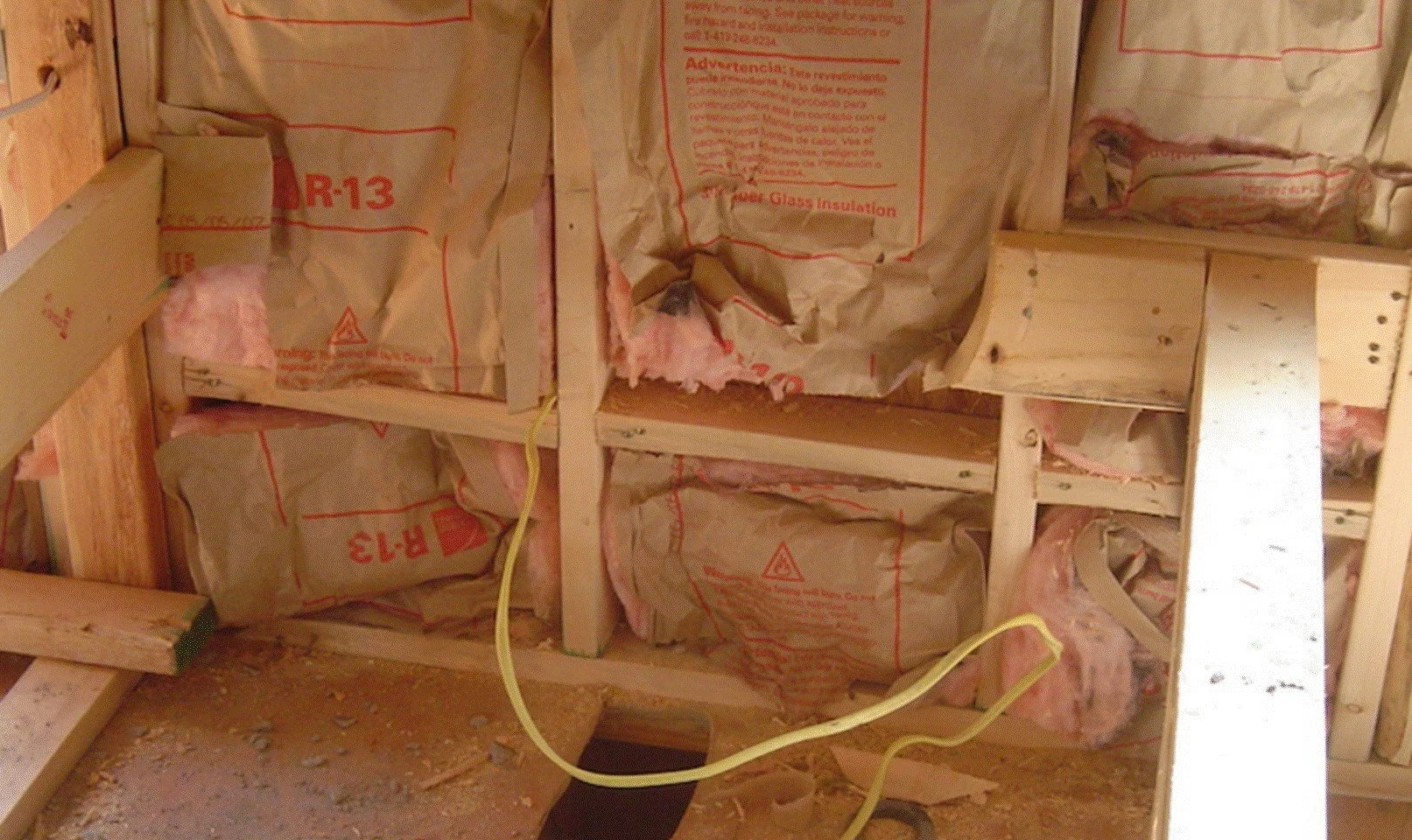
Traditionally framed wall with poorly installed batt insulation and thermal bridging of the 2x framing members.
SIPs reduce this problem because the insulation layer is continuous across the panel.
Because there are fewer framing interruptions, the insulation performs closer to its intended value across the entire wall.
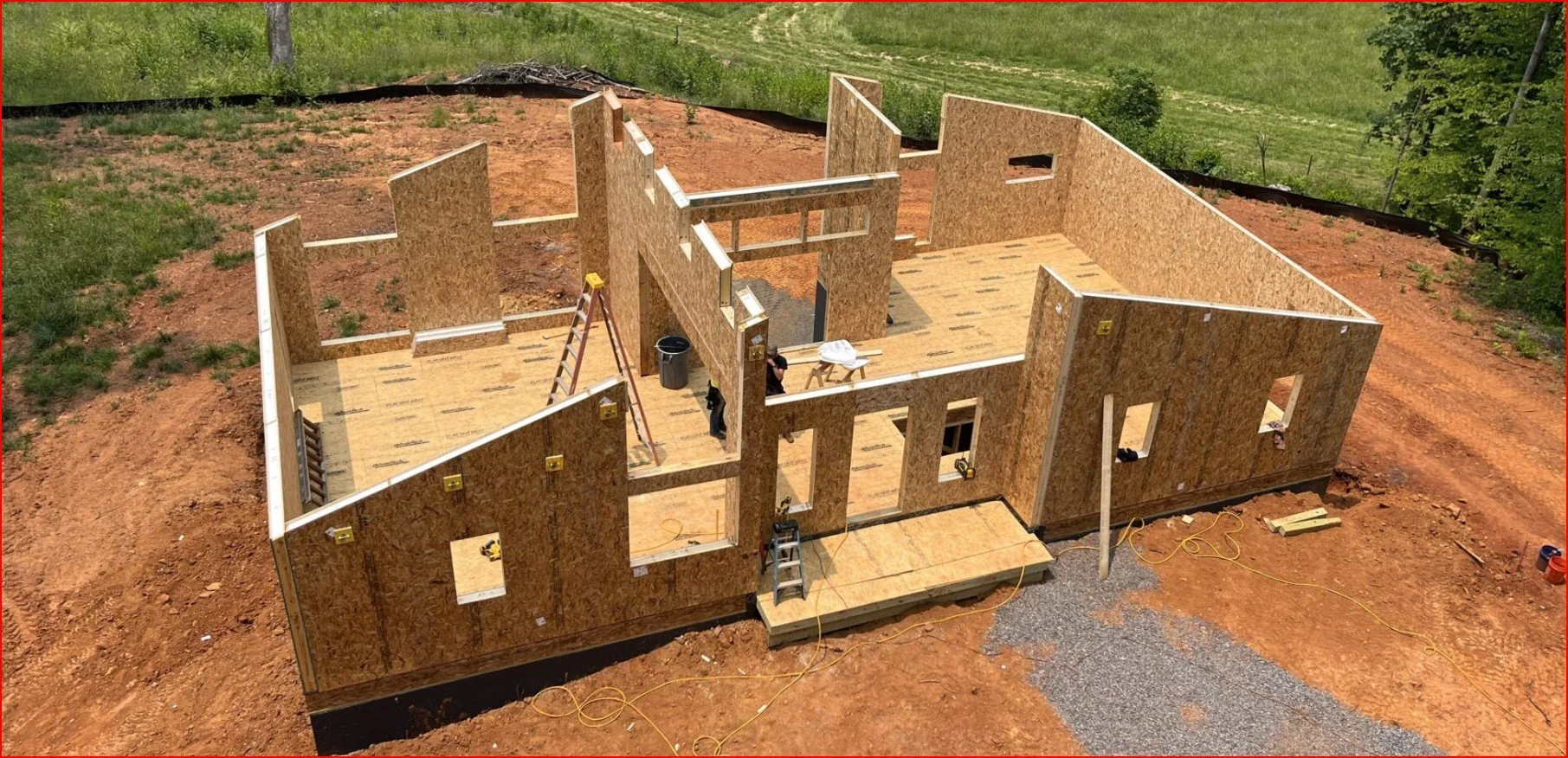
SIPs with reduced thermal bridging.
For builders and homeowners, that means a building envelope that holds conditioned air more effectively and reduces heating and cooling demand.
Thinking about using SIPs on a project?
If you are evaluating Structural Insulated Panels or exploring panelized construction, Joe is always happy to talk through the technical considerations and help teams understand their options.
Why SIP Construction Speeds Up the Framing Process
In addition to energy performance, SIP construction can significantly reduce framing time.
Panels are manufactured off-site and delivered to the jobsite pre-cut according to the project plans. Window and door openings are typically cut during manufacturing, and electrical chases are often built into the panels.
Instead of assembling walls one stud at a time, crews install large structural panels that can span several feet in both directions.
Entire wall and roof sections can often be installed in hours rather than days.
Builders often describe the process as assembling a structure like a puzzle. Each panel is labeled and corresponds to a specific location in the building.
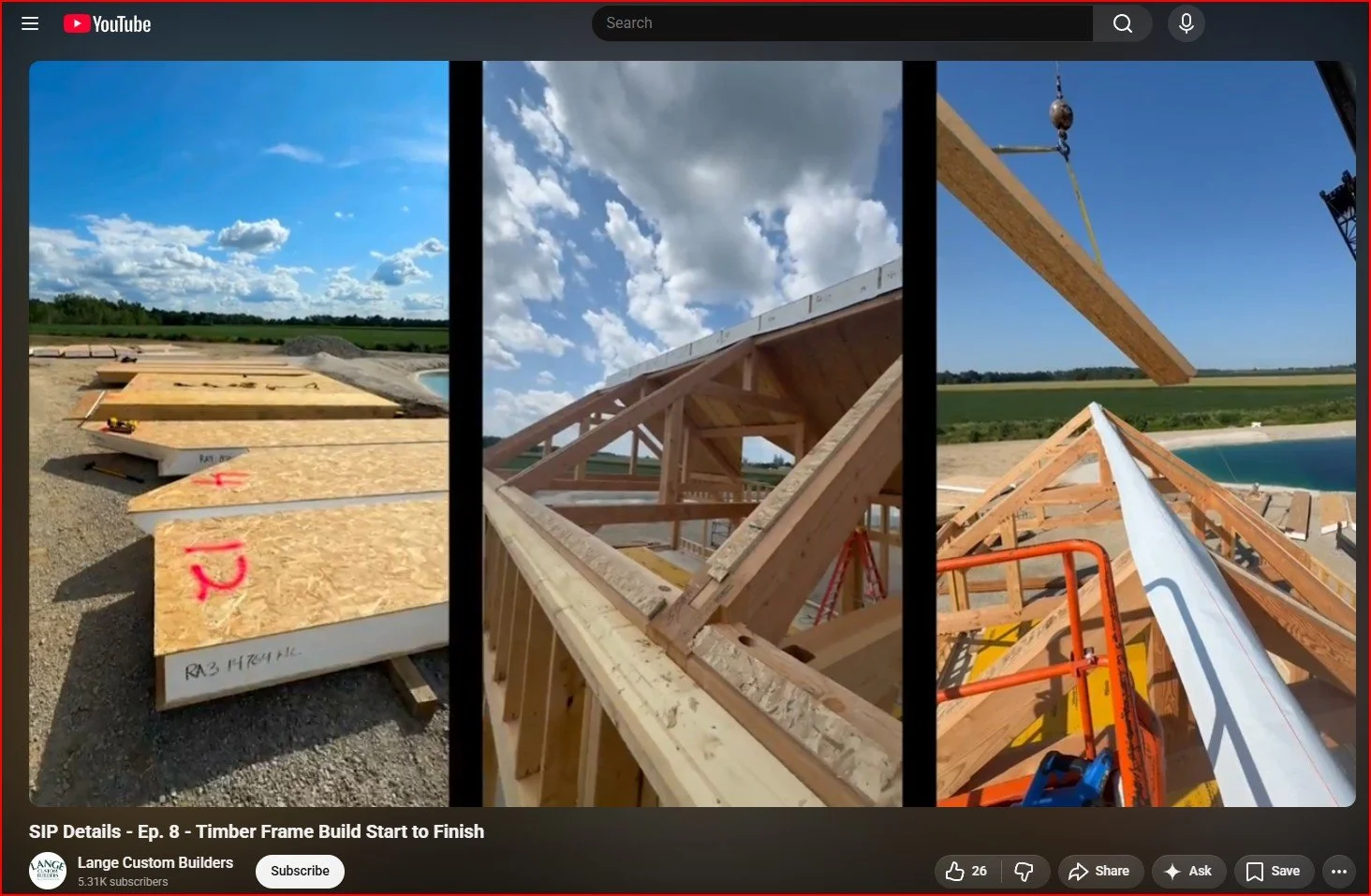
Lange Construction setting large format SIP roof panels.
This approach reduces on-site cutting, limits jobsite waste, and helps construction crews move through the framing stage more efficiently.
Addressing the Skilled Labor Shortage
Labor shortages continue to affect construction projects across the United States.
Traditional framing requires crews to measure, cut, and assemble large quantities of lumber on site.
SIP construction reduces much of that complexity.
Because the panels arrive ready for installation, crews spend less time performing repetitive framing tasks. Openings are already cut, and the structural and insulation components are combined into a single system.
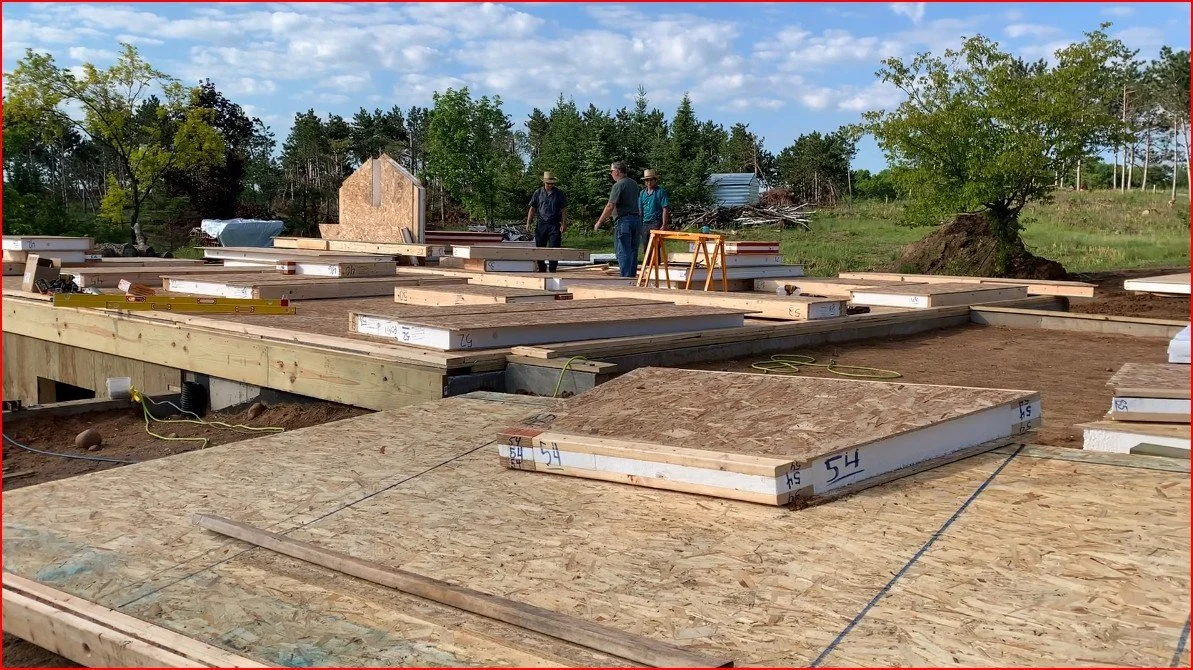
SIP panels arrive ready for installation
This does not eliminate the need for skilled tradespeople, but it can significantly reduce the amount of labor required to complete the framing stage of a project.
For many builders, this efficiency is becoming just as important as the energy performance advantages.
What Builders & Developers Should Know About Cost
Builders often ask whether SIP construction costs more than traditional framing.
The answer depends on how the project is evaluated.
Panel materials may cost more than the lumber used in stick framing. However, when labor savings, shorter construction timelines, and reduced jobsite waste are considered, the overall project cost is often comparable.
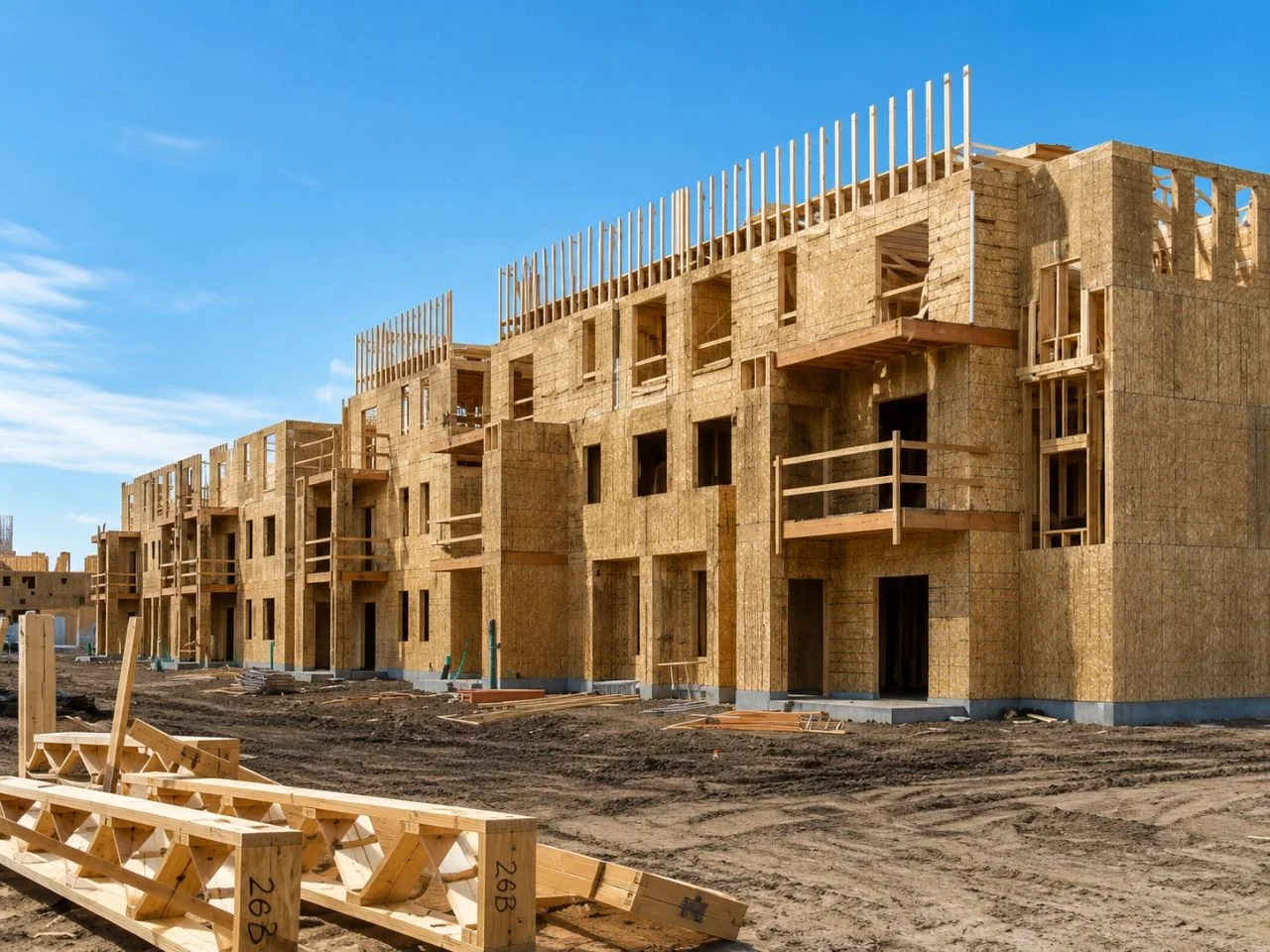
Grand Families Place - Phoenix, AZ
SIPs designed, manufactured and supplied by Premier SIPs
A tighter building envelope can also enable smaller heating and cooling systems, potentially reducing mechanical equipment costs.
Over the life of the building, improved insulation and airtightness can also reduce energy expenses for homeowners.
For many projects, the conversation shifts from the cost of materials to the value of the complete building system.
A Systems Approach to Building Performance
One of the most important lessons from working with SIP systems over many years is that building performance rarely depends on a single component.
Performance depends on how the entire system works together.
When SIP panels are properly designed, manufactured, and installed, they offer a straightforward way to build strong, energy-efficient building envelopes with fewer complications during construction.
7-Eleven, Queen Creek, AZ
SIPs designed, manufactured, and supplied by PorterSIPs of Holland MI
That combination of simplicity and performance is one reason many builders and developers continue to explore SIP systems as a practical alternative to conventional framing methods.
Frequently Asked Questions About SIP Building Envelopes
Are SIP buildings more airtight than stick-framed homes?
Yes. Research from the U.S. Department of Energy’s Oak Ridge National Laboratory has shown that SIP structures can be significantly more airtight than traditionally framed walls because there are fewer joints and gaps where air can leak through the building envelope.
Do SIPs install faster than traditional framing?
In many projects, they do. SIP panels are manufactured off-site and delivered to the jobsite pre-cut according to the construction drawings. Large structural panels allow crews to assemble walls and roofs much faster than building them piece by piece with traditional framing.
Do SIPs cost more than stick framing?
Panel materials may cost more than traditional lumber, but overall project costs are often similar when labor savings, shorter construction schedules, and reduced waste are considered.
Why do builders & developers choose SIP construction?
Builders and developers often choose SIPs because they provide a strong, well-insulated building envelope that installs quickly and performs well under modern energy code requirements.
Discussing a SIP Project
If you are exploring Structural Insulated Panels or evaluating panelized construction for a project, feel free to reach out. I’m always glad to help teams think through the engineering, manufacturing, and installation considerations that can affect project performance.
About the Author
Joe Pasma, PE is a structural engineer with more than 40 years of experience working with Structural Insulated Panels, advanced building systems, manufacturing processes, and forensic investigations. Through PGS Consulting LLC, he provides advisory support to manufacturers, builders, architects, building owners, and project teams navigating complex building system decisions.