

Understanding Structural Insulated Panels (SIPs): Core Types, Skins, Adhesives, and System Performance
Understanding Structural Insulated Panels (SIPs) requires more than just knowing the materials. SIP performance depends on how core types, facing materials, adhesives, and system design work together. This guide breaks down EPS, GPS, and PUR/PIR cores alongside OSB, MgO, and cementitious facings to help builders, architects, and manufacturers make informed, system-based decisions.
By Joe Pasma, PE | PGS Consulting LLC, Licensed Professional Engineer | 40+ Years in SIP Engineering, Manufacturing, and Forensic Analysis | Published April 7, 2026 | Updated October 19, 2026
Structural Insulated Panels (SIPs) are often described as simple. Foam and skins.
But in real projects, they are anything but simple.
Performance depends on how the core, facings, adhesive, and code pathway work together. When those pieces align, SIPs deliver strong structural performance and energy efficiency. When they don’t, problems tend to show up quickly.
This guide breaks down SIP core types, SIP panel materials, adhesives, and system considerations so builders, architects, and manufacturers can make informed decisions.
Who This Guide Is For
Builders evaluating SIP systems
Architects and designers designing high-performance envelopes
Manufacturers refining production and QA
Owners comparing building systems
Key Takeaways
SIPs are a composite building material, not just foam and skins
EPS is the most common and stable SIP core
GPS improves thermal performance by reducing radiant heat transfer
PUR/PIR offer higher R-values but include thermal drift and higher cost
OSB is the most widely used structural facing
Facing materials impact structure, fire resistance, and durability
Adhesive type matters tremendously
SIP performance depends on system alignment, not individual materials
In simple terms:
SIP performance is not about one material. It is about how the core, facings, and adhesive work together as a composite.
What Are Structural Insulated Panels (SIPs)?
Structural Insulated Panels (SIPs) are high-performance building panels made of an insulation core bonded between two structural facings, typically OSB. SIPs function as both structure and insulation, creating a strong, energy-efficient building envelope.
As the name states, SIPs are structural. This means the panels don’t just enclose a building — they actually support loads. The reason they can do this is the stiff, thick facings (typically OSB, MgO, or other engineered skins) bonded to the insulation core. These skins do not buckle locally when axial loads are applied, which allows the panel to carry gravity loads such as snow, people, and the everyday weight of the building. Working together with the foam core as a composite member, SIPs also resist wind and other transverse forces, and provide in‑plane strength that helps the building stand up to racking and lateral movement. In wall assemblies, SIPs can function as shear walls, and in floors and roofs they act as diaphragms that transfer loads across the structure.
This structural behavior is very different from thin‑skin metal “cooler panels,” which may look similar but are not structural. Cooler panels use very thin metal facings that buckle easily under axial load, meaning they can only handle transverse pressure inside refrigerated spaces. Because these skins cannot resist compression or shear, cooler panels cannot carry axial loads, cannot resist racking, and cannot function as shear walls or diaphragms in a building. They are enclosure products only — not load‑bearing components.
What Are the Main Types of SIP Core Materials?
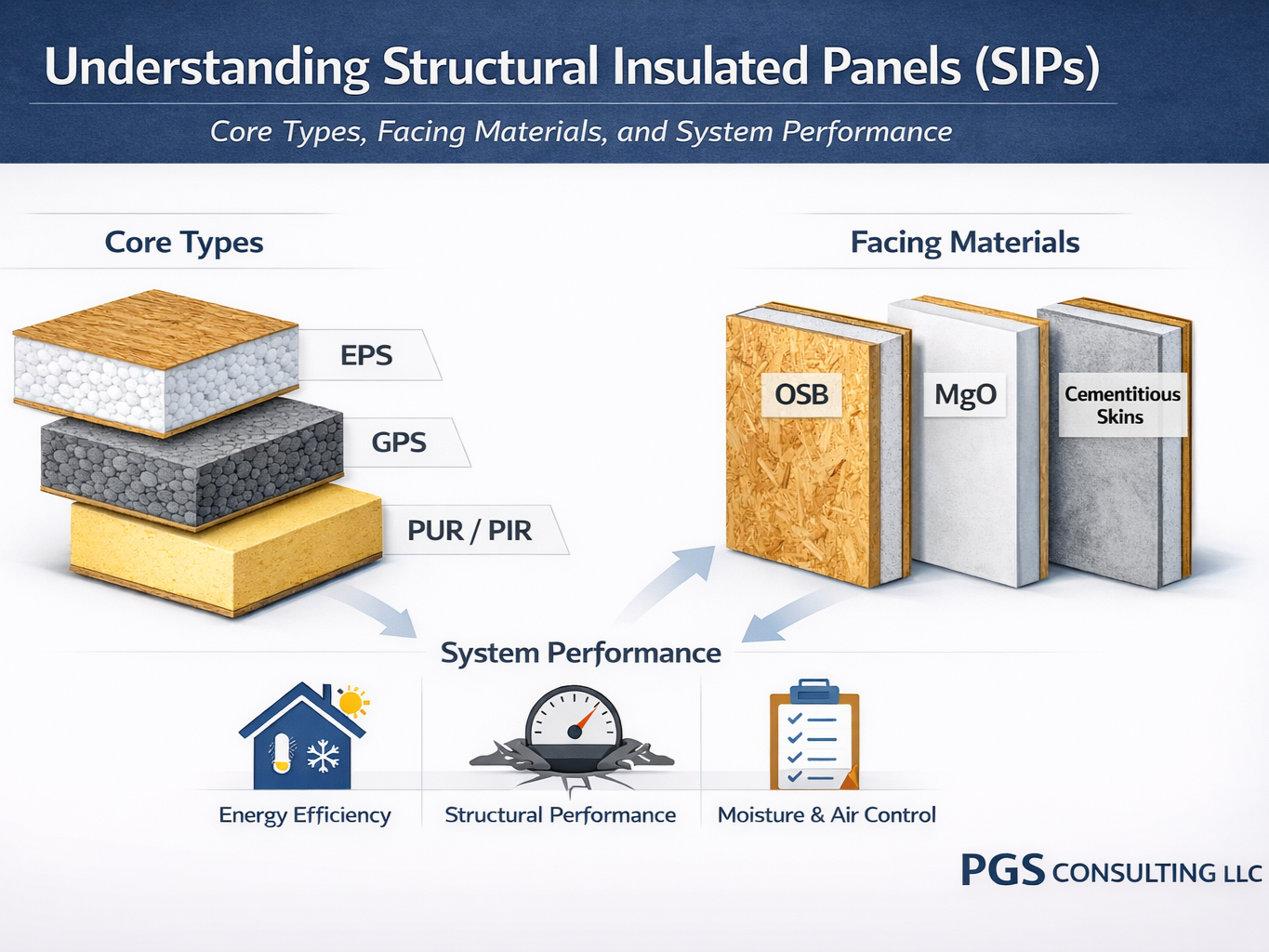
The three primary SIP core materials are EPS (expanded polystyrene), GPS (graphite polystyrene), and PUR/PIR (polyurethane-based foam). Each core type differs in thermal performance, cost, long-term stability, and manufacturing complexity.
EPS (Expanded Polystyrene): The most widely used SIP core, known for stability, predictability, and cost efficiency
GPS (Graphite Polystyrene): An enhanced version of EPS with higher R-value and improved thermal performance
PUR/PIR (Polyurethane-based cores): Higher R-value per inch with more complex manufacturing and long-term performance considerations
Which SIP Core Has the Best R-Value?
PUR/PIR SIP cores have the highest initial R-value, typically between R-6.5 and R-7.2 per inch. However, EPS and GPS provide more stable long-term R-values because they do not experience thermal drift.
What Is the Best SIP Core Type?
There is no single best SIP core type. EPS is the most widely used and stable, GPS offers improved thermal performance, and PUR/PIR provides higher R-value per inch with additional cost and complexity. The right choice depends on project goals and system requirements.
SIP Core Types Comparison
The table below compares the main SIP core types based on thermal performance, stability, moisture behavior, manufacturing implications, and typical applications. On mobile, swipe left to view the full table.
| Core Type | R-Value | Stability | Moisture Behavior | Manufacturing / Adhesion | Cost | Best Use | Key Tradeoffs |
|---|---|---|---|---|---|---|---|
| EPS |
* R-3.6 to R-4.2/in * Stable over time |
* Predictable long-term behavior * Well-supported by engineering tables |
* Slow vapor diffusion * Does not move liquid water laterally * Requires proper sealing at joints |
* Bonds very well to OSB * Forgiving during lamination * Strong manufacturing consistency |
$ |
* Both Residential & commercial envelopes * Large-format panels * Cold climates |
* Lower R-value per inch * Most proven and code-supported option |
| GPS |
* R-4.7 to R-5.1/in * Higher thermal performance than EPS |
* Stable like EPS * No thermal drift |
* Similar to EPS * Slow, predictable diffusion * Good dimensional stability |
* Bonds very well to OSB * Uses same adhesives and equipment * Easy upgrade from EPS production |
$$ |
* Higher-performance envelopes * Energy-focused projects * Cold climates |
* More limited availability * Slightly higher cost than EPS |
| PUR / PIR |
* Initial: R-6.5 to R-7.2/in * Aged: R-5.0 to R-6.5/in |
* Higher initial performance * Long-term thermal drift must be considered |
* Less vapor permeable * Moisture behavior depends on assembly design |
* More complex chemistry * Tighter manufacturing control required * Different processing behavior than EPS/GPS |
$$$$ |
* Thin wall assemblies * Commercial applications * High-performance projects |
* Higher cost * Thermal drift over time * More complex production |
Each SIP core type should be evaluated as part of the full building system, not as a standalone material decision.
Looking for specific manufacturers that produce these SIP systems?
Explore the list of SIP manufacturers in both North America and Internationally→
EPS SIP Panels: The Industry Standard
EPS (expanded polystyrene) is the most widely used SIP core in North America. It is reliable, predictable, and well-supported by building codes.
Why EPS Works Well
Stable R-value over time
Strong adhesion to OSB
Predictable structural behavior
Performs well in cold climates
Best Use Cases
Residential construction
Commercial construction
Large-format panels
Cost-sensitive projects
GPS SIP Panels: Higher Performance Without Changing the System
GPS is a modified version of EPS that includes graphite to improve thermal performance.
Key Advantages
10 to 20 percent higher R-value than EPS
Same structural and installation behavior
Improved energy performance without changing system design
Best Use Cases
Higher performance buildings
Projects targeting higher insulation performance
PUR/PIR SIP Panels: High Performance With Tradeoffs
PUR and PIR SIP cores provide higher R-values but introduce additional considerations.
Key Considerations
Higher initial R-value
Thermal drift over time
Higher cost
More complex manufacturing requirements
Roof spans maybe limited due to panel thickness limitations
Best Use Cases
Thin wall assemblies
Commercial or high-performance applications
What Are SIP Facing Materials?
SIP facing materials provide the structural strength of the panel and play a major role in durability, fire performance, and long-term behavior.
OSB (Oriented Strand Board): The most common facing, offering strong structural performance and large panel sizes
MgO (Magnesium Oxide Board): A non-combustible option used in fire-resistant and specialty applications
Cementitious Skins: Durable, non-combustible facings used in high-demand or specialty environments
The table below compares common SIP facing materials based on structural performance, fire characteristics, moisture behavior, and typical applications. On mobile, swipe left to view the full table.
| Facing Material | Structural Performance | Fire / Heat Behavior | Moisture Behavior | Panel Size | Best Use | Key Tradeoffs |
|---|---|---|---|---|---|---|
| OSB |
* Excellent shear strength * Strong diaphragm performance * Enables large structural panels |
* Combustible * Requires code-compliant thermal barriers * Well understood in building codes |
* Performs well when properly detailed * Sensitive to prolonged exposure during construction * Requires weather protection |
* Large format panels * Often up to 8 × 24 ft |
* Most residential and commercial SIPs * Roof, wall, and floor systems * Large-scale panelized construction |
* Requires proper moisture management * Not fire-resistant without protection |
| MgO |
* Good structural performance * Varies significantly by manufacturer * Requires verification of testing |
* Non-combustible surface * Transfers heat to the core * Fire performance depends on full assembly |
* Moisture resistant * Can contain chlorides * Potential corrosion risk if poorly manufactured |
* Typically smaller panels than OSB * More limited large-format availability |
* Fire-resistant assemblies * Specialty commercial applications * Projects with specific durability needs |
* Quality varies widely * Requires careful sourcing and evaluation |
| Cementitious |
* Strong in compression * More brittle in flexure * Less forgiving than OSB systems |
* Non-combustible * Heat still transfers to the core * Assembly design is critical |
* Highly durable * Resistant to moisture and impact * Performs well in harsh environments |
* Smaller panels * Typically 4 × 8 or 4 × 10 |
* High-durability applications * Fire-critical environments * Specialty construction |
* Heavier panels * More labor-intensive installation * More seams and connections |
Facing materials should always be evaluated as part of the full SIP system, not as a standalone material choice. Structural performance, fire behavior, and durability are influenced by how the facing, core, adhesive, and assembly details work together.
Although insulated metal panels (IMPs) may look similar to SIPs, they are not structural panels. As the Metal Construction Association notes, IMPs perform very well under transverse loading such as wind or snow, but their thin metal facings buckle easily under axial compression and provide low resistance to racking loads. Because of this, cooler‑type IMPs cannot function as load‑bearing walls, shear walls, or diaphragms. They are excellent enclosure products, but they are not designed to carry building structural loads. (See MCA Technical Bulletin: Insulated Metal Panels – Structural Loading.)
Why Are Adhesives Critical in SIP Systems?
Adhesives are what allow Structural Insulated Panels to function as a single composite structural unit.
Without a reliable bond between the insulation core and the facings, the panel cannot transfer loads effectively. In that case, it is no longer acting as a composite structural unit.
Picture a SIP panel as a ream of copy paper with a plastic wrapper on top and bottom of the ream. The two OSB skins on the outside of the SIP act like the plastic wrapper of the ream of paper when the ream is bent. They stretch and compress as the panel (ream) bends under load. The bottom stretches and the top compresses. The foam core in the middle (the sheets of paper) does a different job: it resists shear, which is the sliding force between the top and bottom skins. The two only work well together because they're glued into one solid unit. That teamwork is called composite action, and it's the reason a panel just a few inches thick can be so stiff for how little it weighs. It's also why the foam core's own flexibility matters more in a SIP than it would in a solid wood beam or an engineered I-joist.


Adhesives: Performance Characteristics
Polyurethane Adhesives
Polyurethane (PU) adhesives are the backbone of modern SIP manufacturing in the U.S. They provide robust, flexible bonds between facers and foam cores, are available in one- and two-part formulations, and are favored for their chemical and moisture resistance. To date, only Bostik and DuPont are listed as component material sources for the SIPA ESR-4689 Evaluation Report.
Application Methods
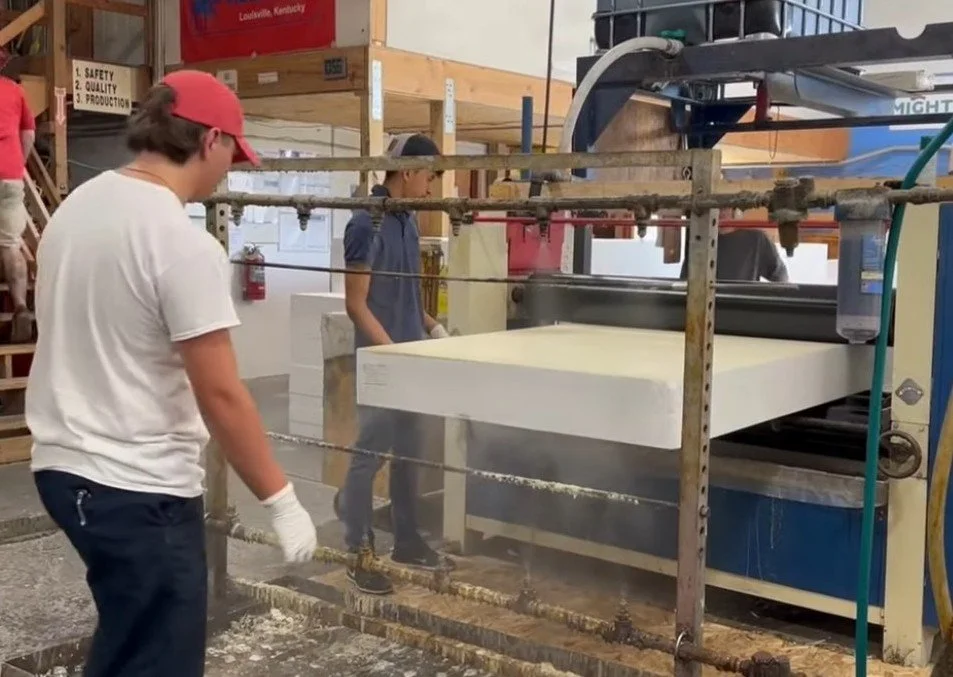
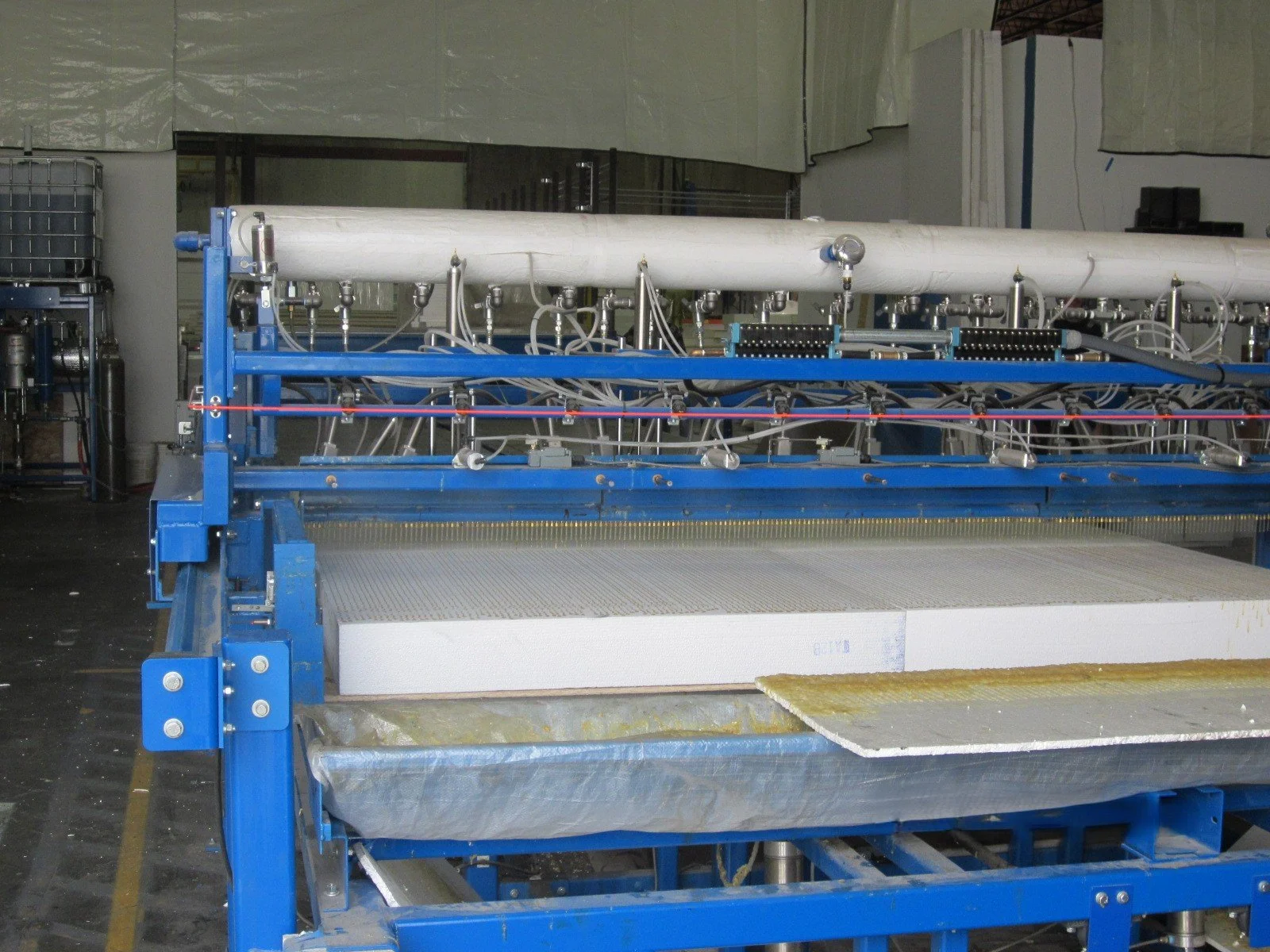
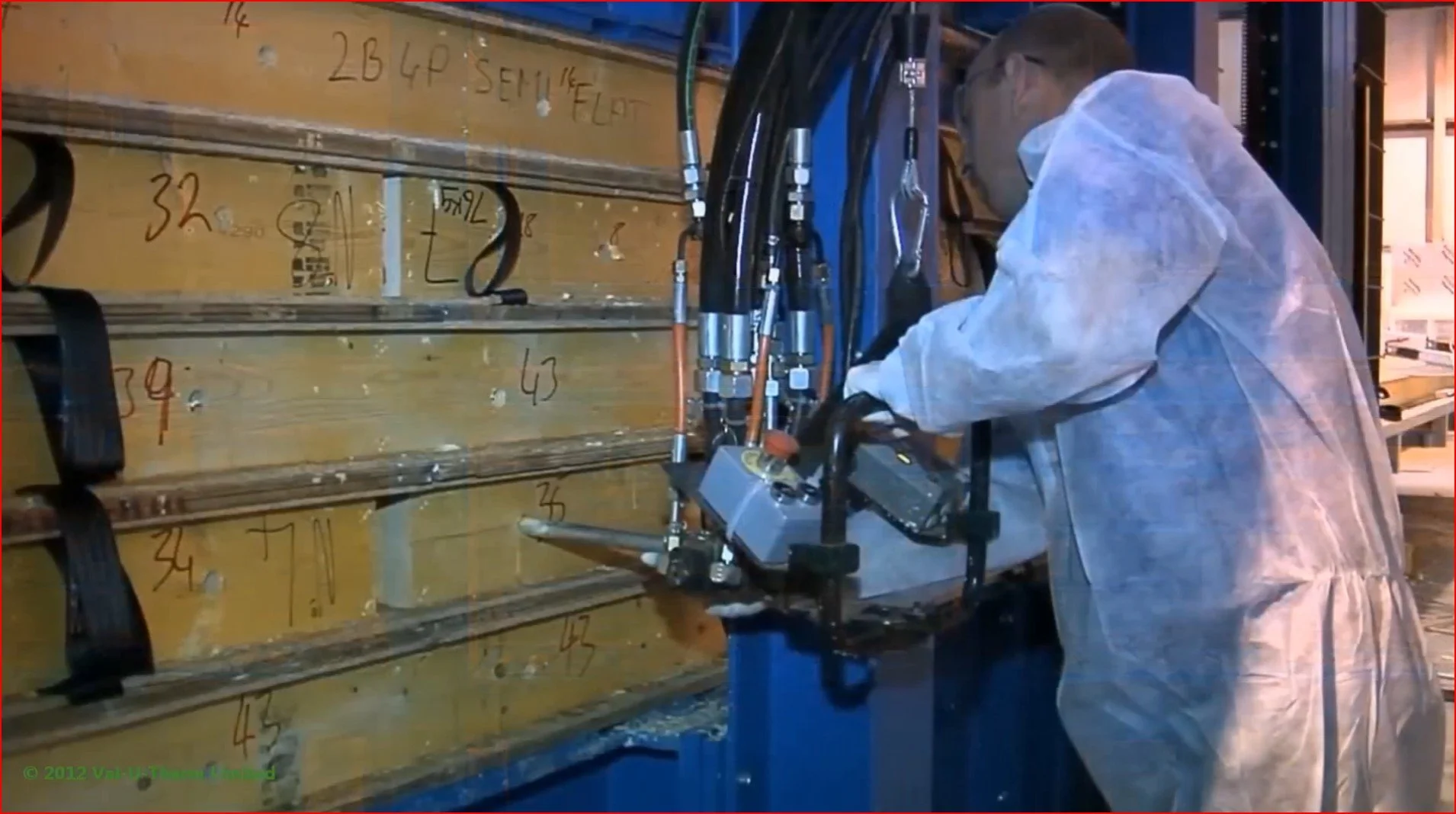
PU adhesives can be applied manually, by spray, or with automated bead or roller systems. In PUR-core SIPs, liquid foam is often injected and expands to adhere to both facers. With EPS and XPS cores, bead or roller applied adhesives with pressure lamination is standard.
Epoxy Adhesives
Epoxy resin adhesives, while less common than PU in mass SIP production due to cost and slower cure times, offer superior bond strength, chemical resistance, and thermal stability. They are prevalent in specialty, high-performance, or retrofit assemblies and for anchoring or reinforcement applications.
Polyvinyl Acetate (PVA) Adhesives
PVA adhesives persisted through the 1980s–1990s for foam-to-wood bonding in lower-performance or non-critical applications, especially in site-assembled panels. Modern iterations (Type II water-resistant PVA) offer improved environmental and handling characteristics, but are typically reserved for interior applications and non-structural SIPs .
PVA adhesives are not generally used as the primary adhesive for high-performance SIPs due to lower resistance to sustained moisture, cold, and heat cycles. However, certain manufacturers still specify PVA in interior and non-loadbearing applications, or for field joint sealing.
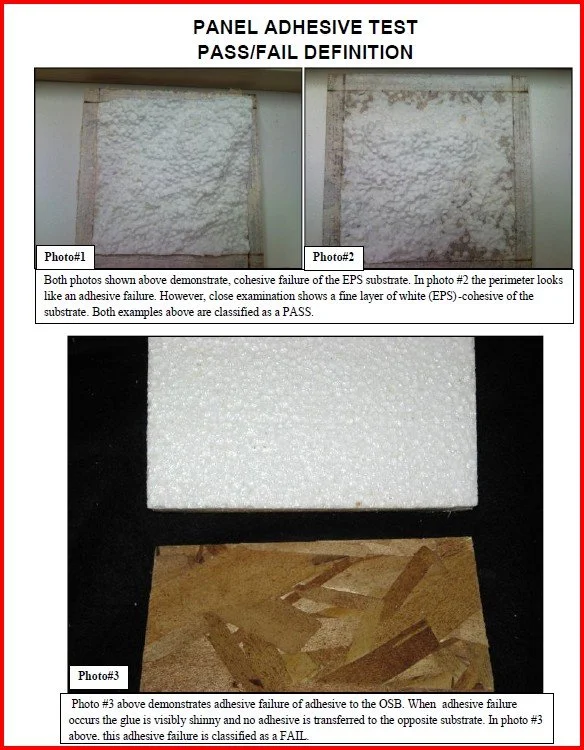
The Bond Line Is Structural
In SIP construction, the adhesive bond line is responsible for transferring shear forces between the facings and the core.
This is what allows the panel to behave as a composite structural element rather than separate materials.
If the bond line fails, the panel loses structural integrity.
What Can Go Wrong
Adhesive performance is highly dependent on manufacturing control.
Common issues include:
Inconsistent adhesive application
Poor surface preparation
Incorrect curing conditions (temperature, pressure, time)
Incompatible materials
These issues can lead to:
weak bond strength
localized failures
long-term delamination
Why Manufacturing Matters
Adhesives do not perform the same way in every environment. Performance depends on:
core material (EPS, GPS, PUR/PIR)
facing material (OSB, MgO, cementitious)
plant conditions and quality control
This is why SIP performance starts in the factory, not on the jobsite.
What Most People Overlook
Adhesives are often treated as a secondary component. In reality, they are one of the most critical parts of the system.
Most SIP manufacturers use moisture-cure polyurethane adhesives because they provide strong, durable bonds across a range of materials. But even the right adhesive will fail if the process is not controlled.
In many cases, bond line failures are not isolated issues, but indicators of deeper manufacturing or system-level problems.
The System Perspective
Adhesive performance cannot be evaluated in isolation. It must be considered as part of the full system:
core behavior
facing material
environmental exposure
manufacturing consistency
When these align, SIPs perform extremely well.
When they do not, problems are often traced back to the bond line.
In forensic investigations, bond line failures are one of the most common indicators of deeper system or manufacturing issues.
How Do You Choose the Right SIP System?
Choosing a SIP system is not just about materials. It is about system alignment.
Evaluate:
Core type
Facing material
Adhesive type
Code compliance
Climate and performance goals
Manufacturer capabilities
Installation requirements
The best SIP system is the one where all components work together for your specific project.
PGS Consulting works with SIP manufacturers, builders, and design teams to evaluate building system performance, manufacturing processes, and installation practices. Learn more about PGS Consulting →
What Is a SIP Code Pathway?
A SIP code pathway is the method used to demonstrate that a Structural Insulated Panel system complies with building codes such as the International Building Code (IBC) or International Residential Code (IRC).
Unlike traditional framing, SIPs often require additional documentation or engineering to show compliance.
Why Code Pathways Matter
Code approval is not just a formality. It directly impacts:
how quickly a project gets approved
how much engineering is required
who carries responsibility for performance
how risk is managed across the project team
Misunderstanding the code pathway is one of the most common sources of delays and confusion in SIP projects.
The Two Primary SIP Code Pathways
1. Prescriptive Code
Some SIP applications are addressed directly in building codes.
Limited to specific conditions
Typically applies to residential construction
Less flexibility in design
This is the simplest pathway, but also the most restrictive.
2. Engineered Design (Performance-Based)
SIPs can also be approved through engineering analysis.
Based on 2024 IBC Section 104.2.3 or similar provisions
Allows design flexibility
Requires a licensed engineer
This pathway is often used for:
commercial buildings
complex geometries
projects outside prescriptive limits
Evaluation Reports (ICC-ES, CCMC, Etc.) - Not a Pathway by themselves
Evaluation Reports by themselves are not a pathway to code compliance. An evaluation report demonstrates that the described material properties meet the building code requirements. However each project must demonstrate that it, itself, meets the requirements of the building code as a system. An evaluation report is used with the engineered design pathway.
Most SIP manufacturers rely on third-party evaluation reports.
Documents compliance with building codes
Includes structural, thermal, and material performance data
Widely accepted by building officials
These reports provide a standardized way to demonstrate compliance, but they are specific to each manufacturer’s system.
Where Projects Get Into Trouble
Problems typically occur when the code pathway is not clearly defined early in the project.
Common issues include:
assuming SIPs are fully prescriptive in all cases
mismatching manufacturer reports with project design
incomplete or incorrect submittals
lack of coordination between design, engineering, and installation
These issues can lead to:
delayed approvals
redesign work
increased project risk
The Role of Engineering and Documentation
SIP systems rely heavily on:
engineering assumptions
manufacturer data
installation details
project-specific conditions
Clear documentation is essential to align all of these pieces. This includes:
load paths and structural design
connection details
thermal and moisture considerations
compliance documentation
The System Perspective
Code compliance should not be treated as a standalone step. It is part of the overall system that includes:
design
manufacturing
installation
performance expectations
When the code pathway is clear, projects move more efficiently. When it is not, problems tend to surface later in the process.
Many SIP-related project issues are not caused by the panels themselves, but by gaps between design intent, code compliance, and system execution.
Talk to Joe About Your SIP Project
PGS Consulting works with manufacturers, builders, and design teams to evaluate SIP systems, manufacturing processes, and installation practices.
If you are planning a project, refining a process, or working through a performance issue, clear guidance early can prevent costly problems later.
Joe Pasma, PE brings more than 40 years of experience in SIP engineering, manufacturing, installation, and forensic analysis.
Frequently Asked Questions About SIP Panels
What is the most common SIP core?
EPS (expanded polystyrene) is the most common SIP core in North America. It is stable, cost-effective, and has the longest track record in SIP manufacturing, testing, and code evaluation. Most SIP manufacturers build their standard panel lines around EPS, which also makes it the easiest core to source and specify.
Can I switch from an EPS core to GPS or PUR/PIR?
Often yes, but the two switches are not the same. GPS (graphite polystyrene) generally improves thermal performance without changing how the panel is manufactured, detailed, or installed. PUR/PIR delivers the highest initial R-value, typically R-6.5 to R-7.2 per inch, but it is a different manufacturing process with its own tradeoffs. Confirm the change with your manufacturer and engineer before you commit.
Why does the adhesive matter in a SIP?
The adhesive is what makes a SIP structural. The bond between the core and the facings lets the panel act as one composite unit instead of three separate layers, which is where its strength and stiffness come from. Adhesive type, application method, and manufacturing quality control all affect how well that bond holds up over the life of the building.
Do SIPs require special approval?
SIPs are approved through one of two code pathways: prescriptive code or engineered design. The prescriptive pathway applies when a project falls within the limits the residential code sets for SIP construction. Projects outside those limits need an engineered design. Evaluation reports, such as ICC-ES, document how a specific panel performs and support approval, but they are not a pathway on their own.
Are SIPs better than traditional framing?
SIPs offer clear advantages over traditional framing: continuous insulation, lower air leakage, and faster installation with fewer job-site steps. Those benefits depend on the system being designed, detailed, and installed correctly, so the panels and the details around them need to be treated as one system from the start.
About the Author
Joe Pasma, PE is a licensed professional engineer with more than 40 years of experience in Structural Insulated Panels and advanced building systems. His background includes engineering, manufacturing systems, installation oversight, and forensic engineering.
Through PGS Consulting LLC, Joe helps manufacturers, builders, architects, building owners, and project teams improve system performance, reduce risk, and bring clarity to complex building challenges.

How to Choose the Right SIP Manufacturer
There are more than 40 active SIP manufacturers in North America. Picking the wrong one affects your project for decades. Joe Pasma, PE breaks down the five things that actually predict manufacturer performance -- and the red flags he has seen in 40 years of being inside the plants.
By Joe Pasma, PE | PGS Consulting LLC, Licensed Professional Engineer | 40+ Years in SIP Engineering, Manufacturing, and Forensic Analysis | Published April 2, 2026, Updated June 6, 2026
Key Takeaways
There are roughly 40 to 45 active Structural Insulated Panel (SIP) manufacturers in North America -- and they are not all the same.
The right manufacturer for your project depends on five things: core type and facer, code compliance, manufacturing quality, engineering support, and project fit.
A current third-party compliance report like an ICC-ES evaluation report or CCMC report is the clearest indicator that a manufacturer's panels have been independently tested and verified to comply with the intent of the building codes.
SIPA membership is voluntary. It is a useful indicator of industry engagement, but it does not tell you whether a manufacturer's panels will perform on your specific project.
The most common mistake is choosing a SIP manufacturer based on price or proximity alone -- without asking the questions that actually predict performance.
An independent SIP engineer who has been inside the plants and reviewed the code reports can compress your evaluation process significantly.
There are more than 40 active Structural Insulated Panel (SIP) manufacturers in North America. A complete, verified list of those manufacturers is available on the PGS Consulting SIP Manufacturers resource page.
But knowing who makes SIPs and knowing which one is right for your project are two very different things.
Choosing a SIP manufacturer is not like ordering lumber. You are not picking a commodity off a price sheet. You are choosing a building system -- one that affects structural performance, energy efficiency, code compliance, and long-term durability. That decision follows the building for its entire life.
After 40 years working in SIP engineering, manufacturing, and forensic analysis, Joe Pasma, PE has seen what separates good manufacturer decisions from expensive ones. This article breaks it down into a clear, practical framework -- five steps, plain language, no engineering degree required.
Not All SIP Manufacturers Are the Same -- Here Is What to Look For
On the surface, most SIP manufacturers look similar. Websites show clean panels, finished homes, and lists of specs. It is hard to tell from a homepage whether a manufacturer runs a tight production line or a loose one.
The differences that actually matter are not necessarily visible on a spec sheet:
How consistent is the bond between the core and the facing?
What does their quality control process actually look like?
Do they have the engineering resources to support your specific project?
What happens when something does not go as planned in the field?
What type of panels are supplied? Blanks, Prefabricated, Ready To Assemble (RTA)?
What types of facer is supplied?
These are not questions a website answers. They are questions you either know how to ask -- or you don't find out until there is a problem.
Step 1: Start With Core Type & Facers
The first filter is the insulation core. Most SIP manufacturers specialize in one or two core types, and the core type you need is partly determined before you even call a manufacturer.
EPS (Expanded Polystyrene)
The most widely used SIP core. Cost-effective, dimensionally stable, and broadly recognized in building codes. R-value holds steady over the life of the building. Most first-time SIP builders work with EPS.
Best for: Residential and light commercial, budget-conscious projects, broad code compliance.
GPS (Graphite Polystyrene)
EPS with graphite added. Higher R-value per inch than standard EPS. Installs exactly like EPS -- no new tools or processes. Used on projects targeting higher performance or net-zero certification.
Best for: High-performance residential, energy-intensive climate zones, green certification projects.
PUR / PIR (Polyurethane-Based)
Highest initial R-value per inch. Thermal performance drifts over time -- long-term aged R-values are lower than the initial rating. EPS and GPS do not drift.
Best for: Commercial, cold storage, projects with tight space constraints and high performance requirements.
OSB (Oriented Strand Board)
The most common facing, offering strong structural performance and large panel sizes.
Best for: Most residential and commercial SIP roof, wall, and floor applications. Large-scale panelized construction.
MgO (Magnesium Oxide Faced)
MgO board used in place of traditional OSB facing. Different fire resistance and moisture characteristics. Growing category for non-combustibility requirements or enhanced durability.
Best for: Fire-sensitive projects, specific moisture environments, applications where OSB facing is not acceptable.
Once you know which core type fits your project, the list of manufacturers worth evaluating gets much shorter. Most manufacturers produce EPS panels. Fewer produce GPS. PUR/PIR cores and MgO-faced systems come from a smaller subset of producers.
For a deeper look at how R-values and thermal performance work across core types, the SIP R-Value and Energy Performance guide covers the details without the engineering jargon.
Step 2: Check the Code Report
Once you have a short list based on core type and facers, the next filter is code compliance.
An ICC-ES evaluation report (used in the U.S.) or CCMC report (used in Canada) is a third-party document confirming that a manufacturer's panels have been independently tested and evaluated against specific code requirements. Other third-party compliance reports are used by some manufacturers It is the most reliable external signal you have.
A current code report tells you three things:
The panels have been tested by someone other than the manufacturer.
The system meets code defined structural and thermal performance criteria.
You have documentation to bring to your building department without a fight.
If a manufacturer does not have a current code report, that does not automatically disqualify them -- but the burden of demonstrating compliance shifts to the builder, the engineer, or the project team. That burden has a cost. For a full breakdown of how SIP code compliance works, the SIP Building Codes and Compliance guide is worth reading before you start any project.
Step 3: Ask About Manufacturing Quality
A code report tells you the system was tested. It does not tell you whether the plant you are ordering from is running well this month.
SIP performance starts on the factory floor. Bond quality between the core and the facing, adhesive consistency, dimensional accuracy, and how panels are handled and stored before shipping -- these are not things you can assess from a website or a brochure.
The manufacturers that perform consistently over the long term tend to share a few characteristics: defined quality control checkpoints during production (not just at final inspection), consistent adhesive application that does not vary by shift or operator, dimensional tolerances that are tracked and enforced, and clear documentation that travels with the panels to the jobsite.
You cannot fully evaluate this from the outside. But you can ask about it directly -- and the quality of the answer tells you a lot.
Questions Worth Asking Before You Commit
- Do you have a current ICC-ES evaluation report or CCMC report? If yes, ask for the report number and check it yourself at icc-es.org.
- What is your quality control process during production? A manufacturer with a real QC system can describe it in plain terms. One that can't is telling you something.
- What dimensional tolerances do you hold? Tight tolerances matter on projects with complex geometries or engineered connections.
- What engineering support do you provide for my project? This means project-specific support, not just a generic installation manual.
- What happens if panels arrive with damage or don't match the drawings? How a manufacturer handles problems tells you more than how they describe their normal process.
- Have you produced panels for projects similar to mine? Climate zone, building type, and structural loads all affect whether a given manufacturer is a good fit.
Step 4: Evaluate Engineering Support
A SIP manufacturer is not just a panel supplier. The best ones function as a technical partner on your project -- providing layout drawings, connection details, sequencing guidance, and support when field questions come up.
What good engineering support actually looks like: panel layout drawings specific to your project (not generic templates), connection details that align with your structural loads and spans, a clear point of contact for field questions during installation, and documentation your installer can actually use on site -- not a 60-page technical manual.
What it does not look like: a general installation guide and a phone number, recommendations to "consult a local engineer" for every question, or slow response times when the crew is waiting on an answer.
The level of engineering support varies widely across manufacturers. Some have in-house engineering teams with decades of SIP-specific experience. Others have limited technical resources and rely on the builder to fill the gaps. Knowing which you are working with before the job starts matters. For a clear picture of what proper SIP installation documentation looks like, the SIP Installation Guide is a useful reference.
Step 5: Match the Manufacturer to Your Project
There is no universally best SIP manufacturer. The right choice is the one that fits your specific project -- not the one with the most polished website or the biggest name in the industry.
Climate zone. A manufacturer that is ideal for a cold-climate residential project in Minnesota may not be the right fit for a commercial build in coastal Florida. Core type, facer type, panel thickness, and sealing systems all interact with climate.
Building type. Residential single-family, multi-family, light commercial, and agricultural builds all have different structural and code requirements. Not every manufacturer's system is evaluated for every application.
Installation team experience. If your crew has never installed SIPs, a manufacturer with strong field support and detailed installation documentation is worth more than one that assumes you already know what you are doing.
Project size and timeline. A small regional manufacturer may be a perfect fit for a custom home and completely wrong for a 50-unit development on a tight schedule. Production capacity and lead times are real constraints.
Your code jurisdiction. Some evaluation reports cover specific building types or climate zones. Verify that a manufacturer's code report actually covers your jurisdiction and project type before assuming it does.
Red Flags Joe Has Actually Seen
After 40 years inside SIP plants and on SIP jobsites, a few patterns show up consistently when manufacturer selection goes wrong.
Choosing on price alone. Panel cost is one line item in a full project package. The cost of a bad manufacturer decision -- in field repairs, schedule delays, code compliance battles, and long-term performance problems -- is a much bigger number. The SIP Cost Guide breaks down how to think about SIP costs across the full project, not just the panel line.
Taking spec sheets at face value. Manufacturers publish the performance numbers their systems achieve under test conditions. Whether those numbers translate to consistent field performance depends on manufacturing quality and installation precision -- neither of which appears on a spec sheet.
Assuming SIPA membership means quality. SIPA membership is voluntary. Several long-standing, well-regarded manufacturers are not SIPA members. Several SIPA members have had well-documented performance issues. Membership is a useful data point, not a quality guarantee.
Skipping the code report check. The most common oversight. A manufacturer tells you their panels are code-compliant. You believe them. Later, the building department asks for documentation and the project stalls. A simple check at icc-es.org or the third-party agency takes five minutes and prevents a serious problem.
Not asking about manufacturing consistency. Two panels from the same manufacturer can perform very differently if production quality is not tightly controlled. Bond failures, dimensional variation, and adhesive inconsistency are not visible when the panels arrive -- they show up later in the building's performance and longevity. The SIP Problems and Failures guide covers what these failures actually look like and what drives them.
Have Questions About a SIP Manufacturer?
Joe Pasma, PE has worked with manufacturers, builders, and design teams across North America for more than 40 years. He has been inside the plants, reviewed the code reports, and seen what separates consistent performers from inconsistent ones.
Contact Joe →Frequently Asked Questions About SIP Manufacturers
How many SIP manufacturers are there in North America?
There are roughly 40 to 45 active Structural Insulated Panel manufacturers in North America, spanning the United States, Canada, and Mexico. This includes companies producing EPS, GPS, PUR/PIR, and MgO-based SIP systems. A full verified list is available on the PGS SIP Manufacturers page.
Is SIPA membership a reliable indicator of manufacturer quality?
Not on its own. SIPA membership is voluntary, and several long-standing, well-regarded manufacturers are not members. A current ICC-ES evaluation report or CCMC report is a more reliable indicator of independent third-party verification than membership status alone.
What is an ICC-ES evaluation report and why does it matter?
An ICC-ES evaluation report is a third-party document confirming that a manufacturer's panels have been independently tested and evaluated against specific code requirements. If a manufacturer does not have a current report, the burden of demonstrating compliance falls on the builder, engineer, or project team -- and that burden has a real cost.
Can I choose a SIP manufacturer based on price alone?
Panel cost is one line item in a full project package. The cost of a poor manufacturer decision -- field repairs, schedule delays, code compliance problems, long-term performance issues -- is typically far larger than the initial savings. Price is worth comparing after you have narrowed the field using code compliance, core type, and engineering support.
What is the difference between EPS, GPS, and PUR/PIR SIPs?
EPS is the most common and cost-effective core -- stable R-value, widely code-recognized. GPS adds graphite to boost R-value per inch without changing the installation process. PUR/PIR offers the highest initial R-value but experiences thermal drift over time, meaning long-term performance is lower than the initial rating. EPS and GPS do not drift. For a full breakdown, see the SIP R-Value and Energy Performance guide.
Does the right SIP manufacturer depend on my climate zone?
Yes, indirectly. Core type, facer type, panel thickness, and sealing system requirements all interact with climate. A manufacturer ideal for a cold-climate project in Minnesota may not be the right fit for a coastal build in Florida. Matching the manufacturer to your climate zone -- and verifying that their code report covers your jurisdiction -- is part of the evaluation process.
How do I evaluate a SIP manufacturer I have never worked with before?
Start with three questions: 1.) Do they have a current code report? 2.) What does their quality control process look like in production? 3.) What engineering support do they provide for your specific project type? Working with an independent SIP consultant who has direct manufacturing experience can compress the evaluation considerably and surface things a website or sales call will not reveal.
What are the most common SIP manufacturer problems Joe Pasma has seen?
The most consistent ones: choosing on price without checking the code report, taking spec sheet performance numbers at face value without understanding manufacturing consistency, assuming SIPA membership indicates quality, and not asking the right questions about what happens when something goes wrong in the field. The SIP Problems and Failures guide covers what these issues look like when they surface in a building.
About the Author
Joe Pasma, PE is a licensed professional engineer with more than 40 years of experience working with Structural Insulated Panels and advanced building systems. His background includes structural engineering, manufacturing operations, installation oversight, and forensic investigation.
Through PGS Consulting LLC, Joe works with manufacturers, builders, architects, building owners, and project teams to improve technical systems, reduce risk, and strengthen building performance.